
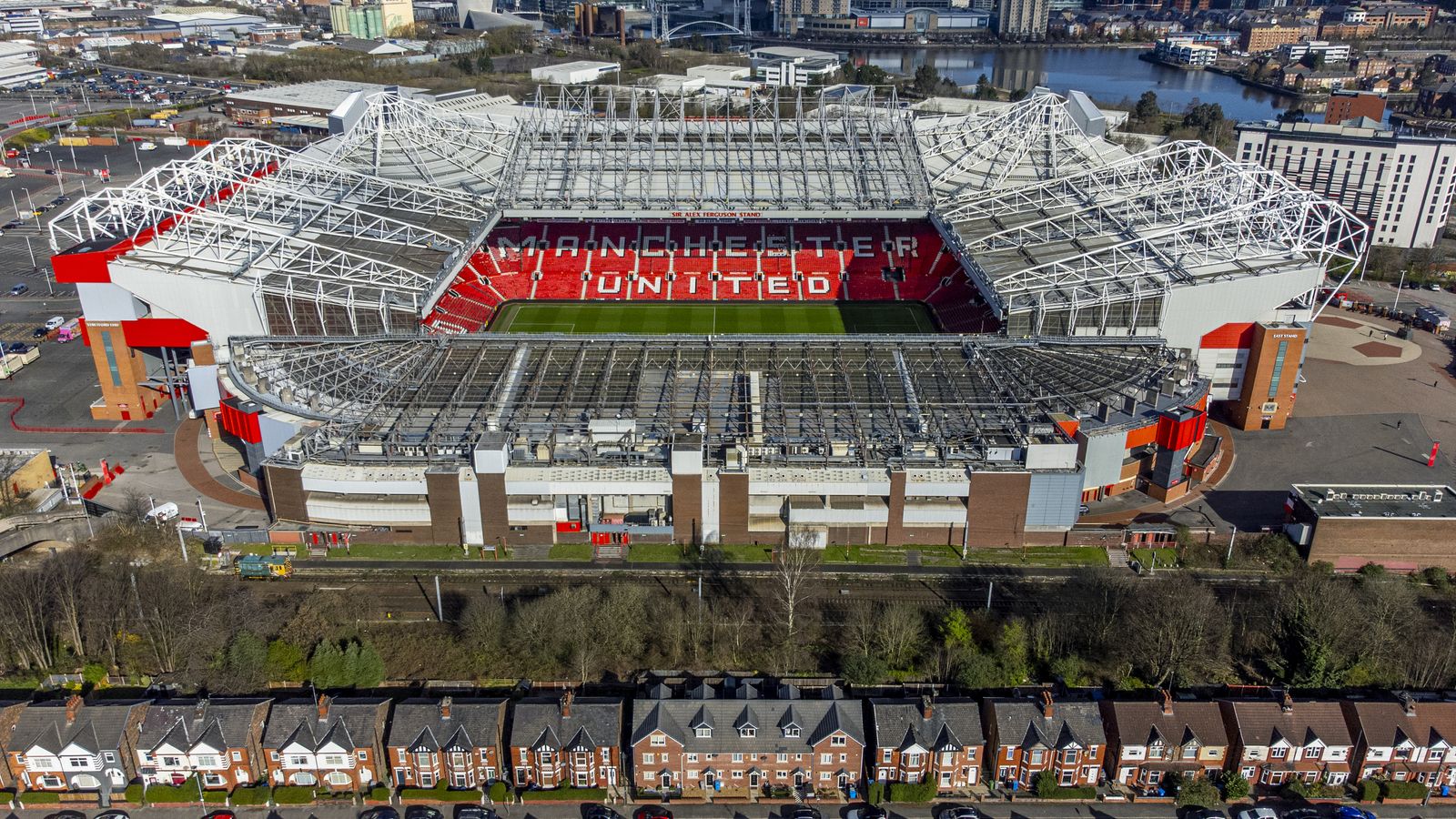
Ratcliffe mulls buying Manchester United minority stake

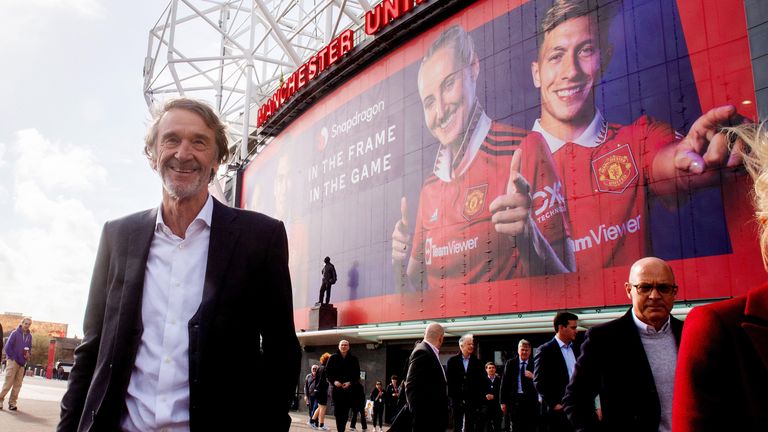
Sir Jim Ratcliffe, the petrochemicals billionaire, is contemplating buying a minority stake in Manchester United Football Club rather than seeking full control, in an effort to end a nearly 10 months-long process to resolve the club’s future ownership.
Sky News has learnt Sir Jim’s Ineos Sports vehicle has proposed to the controlling Glazer family a deal that would see it acquiring chunks of both their shares and the stock publicly traded on the New York Stock Exchange (NYSE) in equal proportion.
That offer would entail making an offer at the same price for both sets of shares, with one suggestion on Monday evening being that Sir Jim could seek a roughly 25% stake in the club as part of his latest proposal.
It would need to be pitched at a valuation that the Glazers would accept, implying that Ineos Sports could spend in the region of £1.5bn if it was to acquire a quarter of United’s shares – based on earlier reports that they were seeking a minimum valuation of £6bn.
If such a deal was to be implemented, however, the Glazers would almost certainly remain in control at Old Trafford, having taken control of the club in 2005.
Sir Jim Ratcliffe could seek a 25% stake in the club as part of his latest proposal
That would anger United supporters who have been vocal in their opposition to the family’s continued ownership, and would in turn raise a series of further questions about the club’s future.
On the pitch, the men’s team has had an indifferent start to the 2023-24 campaign, being beaten at home by Crystal Palace in the Premier League last weekend, and losing their first Champions League fixture of the season.
One uncertainty on Monday evening related to the extent to which the Glazers and their advisers at Raine Group were engaged with Sir Jim on his minority stake proposal.
The family, who paid just under £800m in 2005, has remained inscrutable throughout the process and has said nothing of substance to the NYSE since the process of engaging with prospective buyers kicked off last November.
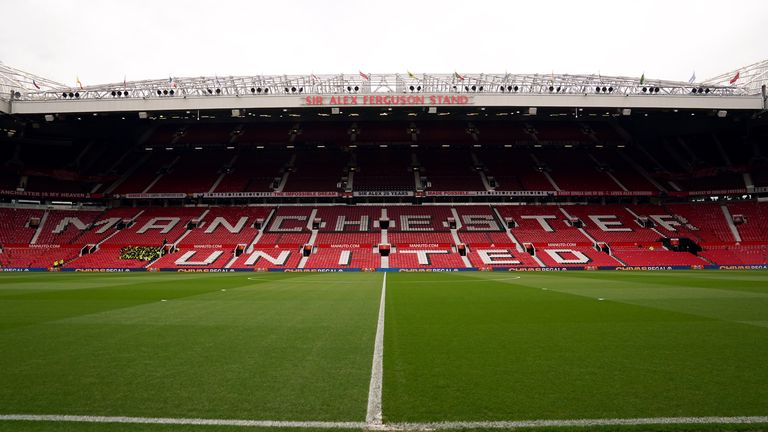
Another would be whether an offer to bring Sir Jim in as a major shareholder would raise any new capital to invest in the club, which is working towards a major renovation of Old Trafford.
The structure of an offer to acquire a minority stake is also unclear, with one analyst suggesting it could be undertaken through a process known as a tender offer.
Bloomberg News reported last week that Ineos was looking to restructure its bid without specifying details of how this would be achieved.
Some holders of the publicly traded stock – called A shares – have raised concerns about Sir Jim’s previous proposals, which focused on acquiring a majority stake in the club by buying shares from the six Glazer siblings who own the class of B shares which carry disproportionate voting rights.
Another uncertainty would centre on whether a minority deal, if agreed and implemented, would give Ineos Sports an eventual path to full control of Manchester United.
Sky News revealed in May that its offer at the time included put-and-call arrangements that would become exercisable three years after a takeover to enable Sir Jim to acquire the remainder of the club’s shares.
The Monaco-based billionaire, who owns the Ligue 1 side Nice, had been focused on gaining control of Manchester United, meaning that switching his offer to a minority deal would represent a significant shift.
He is still understood to want to buy a majority stake but has pitched a restructured deal in an attempt to unblock the ongoing impasse over United’s future.
An Ineos spokesperson declined to comment on Monday, citing the terms of the non-disclosure agreement the bidders had signed as part of the process.
For months, Ineos has been pitched in a two-way battle for control of Manchester United against Sheikh Jassim bin Hamad al-Thani, a Qatari businessman who chairs the Gulf state’s Qatar Islamic Bank.
Sheikh Jassim’s bid is reported to remain on the table, and the convoluted nature of the strategic review initiated by the Glazers late last year means that a revised proposal from the Middle East cannot entirely be ruled out.
The club’s executive co-chairmen, Avram and Joel Glazer, have been reported during the course of the process to be more reluctant to sell than their siblings.
In addition to the competing bids from Sir Jim and Sheikh Jassim, the Glazers received several credible offers for minority stakes or financing to fund investment in the club.

Avram Glazer is the club’s co-executive chairman
These include an offer from the giant American financial investor Carlyle; Elliott Management, the American hedge fund which until recently owned AC Milan; Ares Management Corporation, a US-based alternative investment group; and Sixth Street, which recently bought a 25% stake in the long-term La Liga broadcasting rights to FC Barcelona.
These were designed to provide capital to overhaul United’s ageing physical infrastructure.
Part of the Glazers’ justification for attaching such a huge valuation to the club resides in the possibility of it gaining greater control in future of its lucrative broadcast rights, alongside a belief that arguably the world’s most famous sports brand can be commercially exploited more effectively.
United’s New York-listed shares have gyrated wildly in recent months as reports have suggested that either a deal is close or that the Glazers were about to formally cancel the sale process.
On Monday, they were trading at around $19.43, giving the club a market valuation of $3.25bn.
Earlier this year, Manchester United’s largest fans’ group, the Manchester United Supporters Trust, called for the conclusion of the auction “without further delay”.
The Glazers’ tenure has been dogged by controversy and protests, with the lack of a Premier League title since Sir Alex Ferguson’s retirement as manager in 2013 fuelling fans’ anger at the debt-fuelled nature of their takeover.
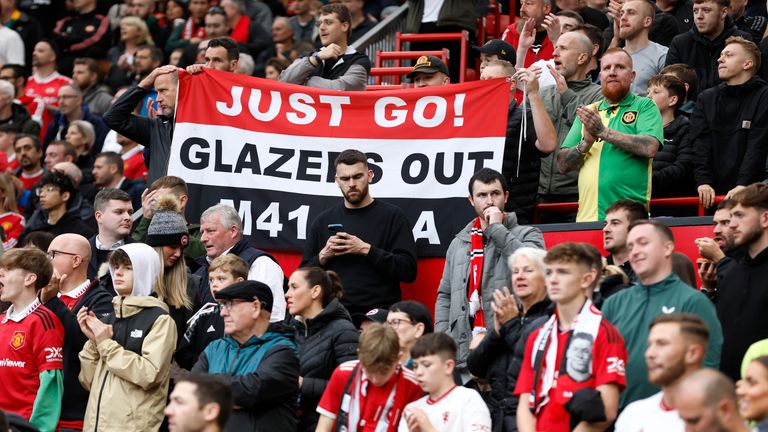
Manchester United fans want the Glazer family to sell the club
Fury at its participation in the ill-fated European Super League crystallised supporters’ desire for new owners to replace the Glazers.
Confirming the launch of the strategic review in November, Avram and Joel Glazer said: “The strength of Manchester United rests on the passion and loyalty of our global community of 1.1bn fans and followers.
“We will evaluate all options to ensure that we best serve our fans and that Manchester United maximizes the significant growth opportunities available to the club today and in the future.”
The Glazers listed a minority stake in the company in New York in 2012 but retained overwhelming control through a dual-class share structure which means they hold almost all voting rights.
“Love United, Hate Glazers” has become a familiar refrain during their tenure, with supporters critical of a perceived lack of investment in the club, even as the owners have reaped large dividends as a result of its continued profitability.
A Manchester United spokesman declined to comment on Monday.

The rate of inflation hit a much lower than expected 3.2% last month, according to official figures which should lock in an interest rate cut by the Bank of England on Thursday.
The Office for National Statistics (ONS) reported an easing in the pace of the main consumer prices index measure from the 3.6% annual rate seen in October.
The main downwards pressure came from food costs amid a supermarket price war to secure custom ahead of the core Christmas season.
Money latest: What the fall in inflation means for you
ONS chief economist Grant Fitzner noted decreases in the prices paid for cakes, biscuits and breakfast cereals in particular.
“Tobacco prices also helped pull the rate down, with prices easing slightly this month after a large rise a year ago”, he wrote.
“The fall in the price of women’s clothing was another downward driver.
“The increase in the cost of goods leaving factories slowed, driven by lower food inflation, while the annual cost of raw materials for businesses continued to rise.”
The data marked further downwards progress for the headline rate after a spike this year which economists have partly attributed to higher employment costs, imposed after the government’s first budget, being passed on to consumers.
This price wave has muddied the waters over the pace of interest rate reductions by the Bank, which has wanted to see more evidence that inflation is not being further stoked by factors including strong wage growth.
It will be encouraged by better than expected slowdowns in other closely-watched inflation measures which strip out volatile elements, such as food and energy, as well as services inflation.
Recent data has also shown intensifying weakness in the labour market, with the unemployment rate surging by a percentage point to 5.1% since Labour took office.
Separate ONS figures have also found that the economy contracted for two consecutive months in the run-up to Rachel Reeves’s second budget.
London Stock Exchange Group Data shows more than 90% of financial market participants are expecting the Bank to agree a rate cut to 3.75% – the lowest level in almost three years – from 4%.
The inflation data will come as a relief to the chancellor after a tough few months for her politically given the wider economic data and backlash over the Treasury’s handling of the lead up to the budget.
Ms Reeves said: “I know families across Britain who are worried about bills will welcome this fall in inflation.
“Getting bills down is my top priority. That is why I froze rail fares and prescription fees and cut £150 off average energy bills at the budget this year.
“The Bank of England agree this will help cut prices and expect inflation to fall faster next year as a result.”
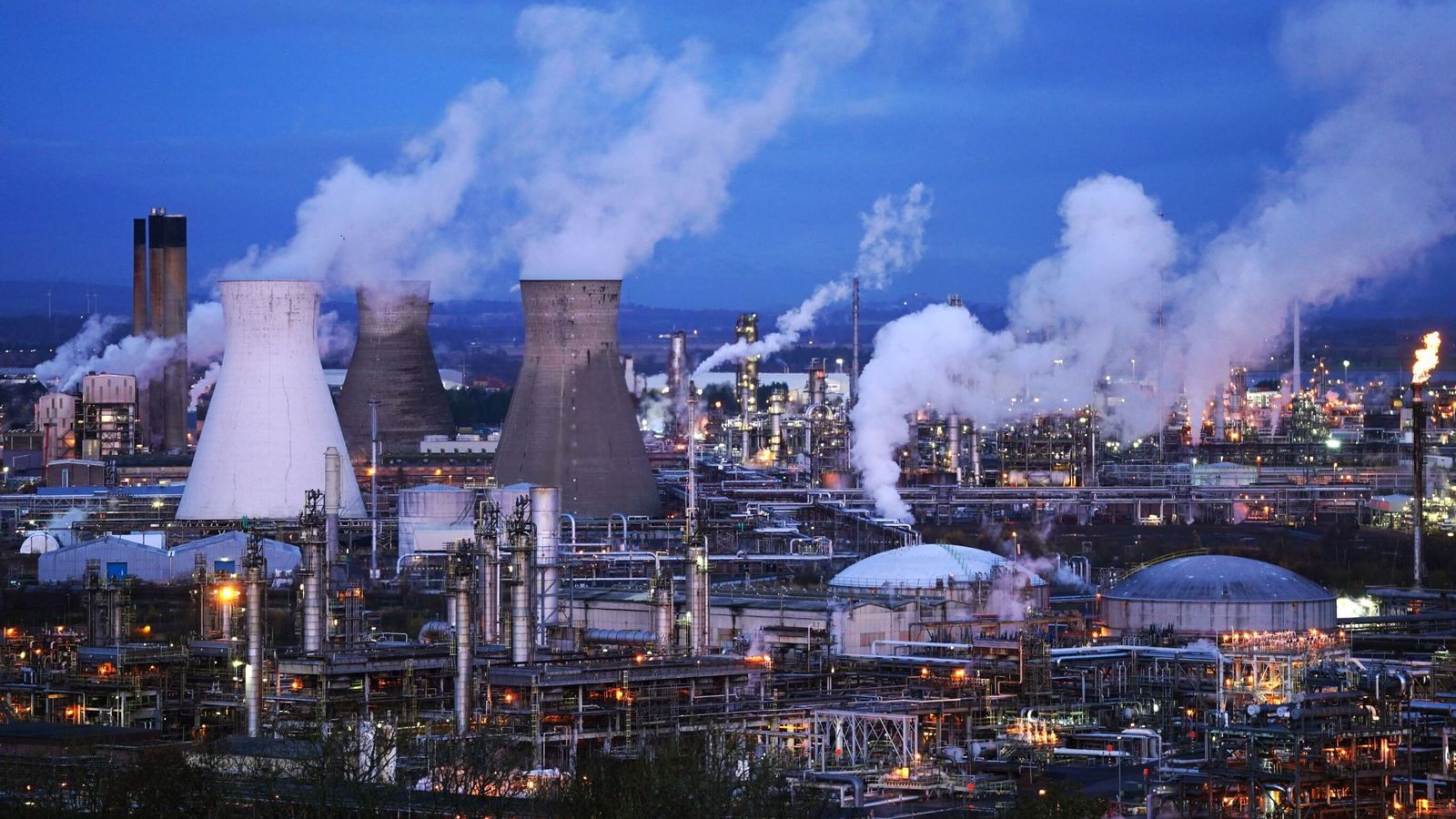
You’ve doubtless heard of the National Grid, the network of pylons and electricity infrastructure ensuring the country is supplied with power. You’re probably aware that there is a similar national network of gas pipelines sending methane into millions of our boilers.
But far fewer people, even among the infrastructure cognoscenti, are even faintly familiar with the UK Ethylene Pipeline System. Yet this pipeline network, obscure as it might be, is one of the critical parts of Britain’s industrial infrastructure. And it’s also a useful clue to help explain why the government has just announced it’s spending more than £120m to bail out the chemical plant at Grangemouth in Scotland.
Ethylene is one of those precursor chemicals essential for the manufacture of all sorts of everyday products. React it with terephthalic acid and you end up with polyester. Combine it with chlorine and you end up with PVC. And when you polymerise ethylene itself you end up with polyethylene – the most important plastic in the world.
Why Grangemouth matters
Ethylene is, in short, a very big deal. Hence, why, many years ago, a pipeline was built to ensure Britain’s various chemical plants would have a reliable supply of the stuff. The pipes connected the key nodes in Britain’s chemicals infrastructure: the plants in the north of Cheshire, which derived chemicals from salt, the vast Wilton petrochemical plant in Teesside and, up in Scotland, the most important point in the network – Grangemouth.
The refinery would suck in oil and gas from the North Sea and turn it into ethane, which it would then “crack”, an energy-hungry process that involves heating it up to phenomenally high temperatures. Some of that ethylene would be used on site, but large volumes would also be sent down the pipeline. It would be pumped down to Runcorn, where the old ICI chlor-alkali plant, now owned by INEOS, would use it to make PVC. It would be sent to Wilton, where it would be turned into polyethylene and polyester.
Read more from Ed Conway:
The reality of Trump’s trade war
The reason for Trump’s Venezuela exploits
That’s the first important thing to grasp about this network – it is essential for the operation of a whole series of plants, many of them run by entirely different companies.
The second key thing to note is that, after the closure of the cracker at Wilton (now owned by Saudi company Sabic) and the ExxonMobil plant at Mossmorran in Fife, Grangemouth is the last plant standing. While the refinery no longer uses North Sea oil and gas, instead shipping in ethane from the US, it still makes its own ethylene.
So when INEOS began consulting on plans to close that ethylene cracker, officials down south in Westminster began to panic. The problem wasn’t just the 500 or so jobs that might have been lost in Grangemouth. It was the domino effect that would feed throughout the sector. All of a sudden, all those plants at the other ends of the pipeline would be affected too. In practice, the closure might have eventuated in more than a thousand job losses – maybe more.
What’s happening now?
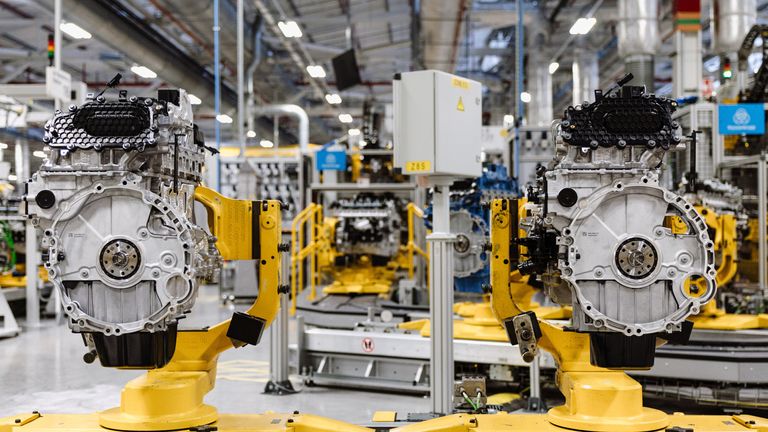
All of which helps explain the news today – that the Department for Business and Trade is putting more than £120m of taxpayer money into the site. The bailout (it’s hard to see it as anything but) is not the first. The government has also put hundreds of millions of pounds of taxpayer money into British Steel, which it quasi-nationalised earlier this year, not to mention extra cash into Tata Steel at Port Talbot and loan guarantees to help Jaguar Land Rover after it faced an unprecedented cyber attack.
Work ground to a halt at JLR’s Wolverhampton factory after a cyber attack. Pic: PA
But while this package will undoubtedly provide Christmas cheer here in Grangemouth today, the government is left facing two distinct problems.
Reactive rather than strategic
The first is that for all that the chancellor and business secretary (who are themselves planning to visit Grangemouth today) are keen to pitch this latest move as a coherent part of their industrial strategy, it’s hard not to see it as something else. Far from appearing strategic, instead they seem reactive. To the extent that they have a coherent industrial strategy, it mostly seems to involve forking out public money when a given plant is close to closure. If they weren’t already, Britain’s industrialists will today be wondering to themselves: what would it take to get ourselves some of this money in future?
The crisis continues
The second issue is that the Grangemouth bailout is very unlikely to end the crisis spreading across Britain’s chemicals sector. A series of plants – some prominent, others less so – have closed in the past few years. The chemicals sector – once one of the most important in the economy – has seen its economic output drop by more than 20% in the past three years alone.
This is not just a UK-specific story. Something similar is happening across much of Europe. But for many chemicals companies, it simply doesn’t add up to invest and build in the UK any more – a product in part of regulations and in part of high energy costs. In short, this story isn’t over yet. There will be more twists and turns to come.
Britain loves chocolate.
We’re estimated to consume 8.2kg each every year, a good chunk of it at Christmas, but the cost of that everyday luxury habit has been rising fast.
Whitakers have been making chocolate in Skipton in north Yorkshire for 135 years, but they have never experienced price pressures as extreme as those in the last five.
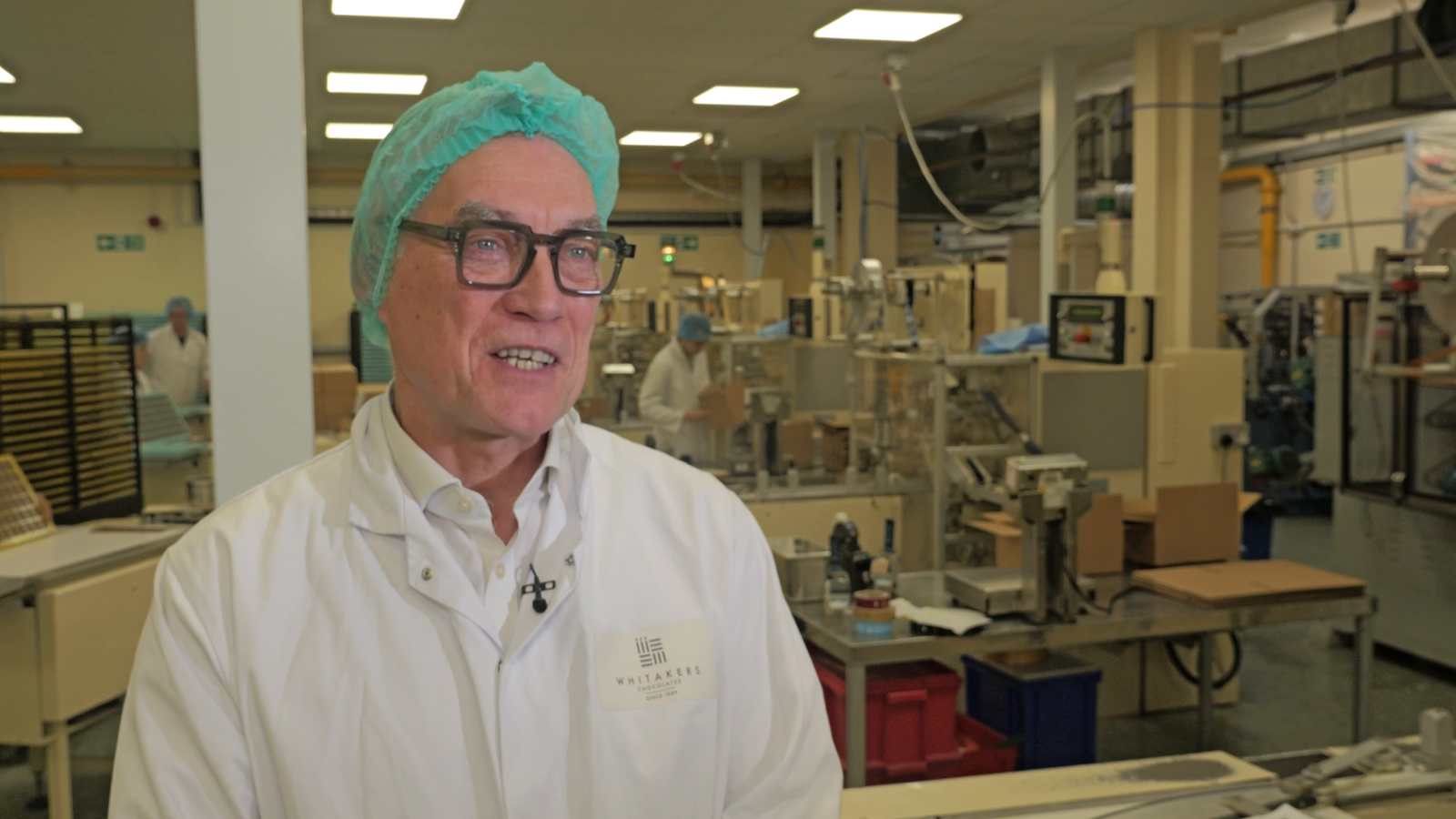
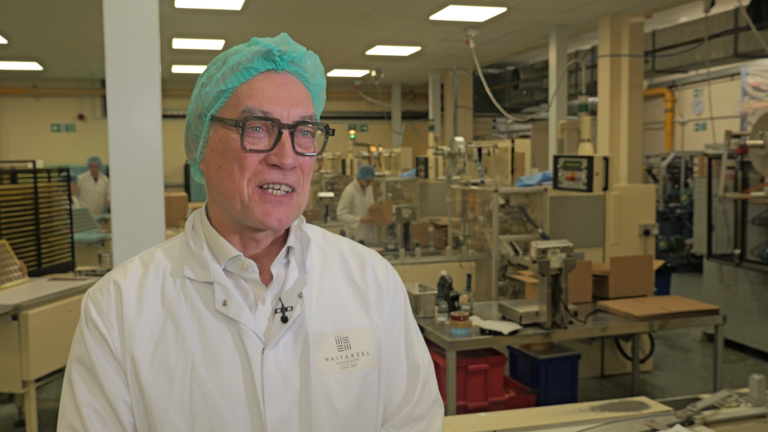
“We buy liquid chocolate and since 2023, the price of our chocolate has doubled,” explains William Whitaker, the real-life Willy Wonka and the fourth generation of the family to run the business.
William Whitaker, managing director of the company
“It could have been worse. If we hadn’t been contracted [with a supplier], it would have trebled.
“That represents a £5,000 per-tonne increase, and we use a thousand tonnes a year. And we only sell £12-£13m of product, so it’s a massive effect.”
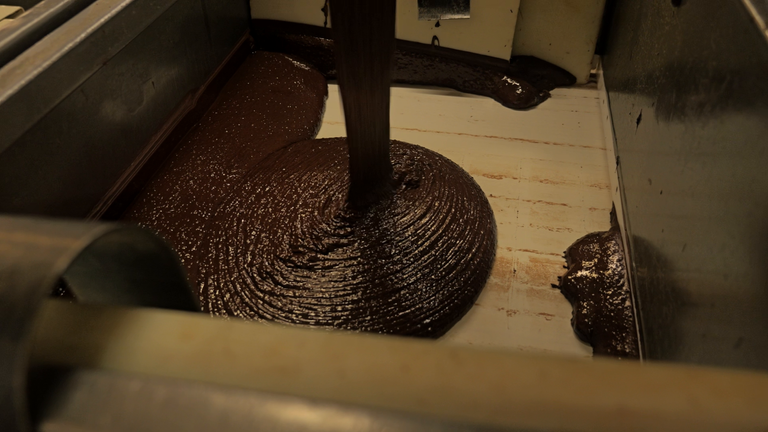
Whitakers makes 10 million pieces of chocolate a week in a factory on the much-expanded site of the original bakery where the business began.
Automated production lines snake through the site moulding, cutting, cooling, coating and wrapping a relentless procession of fondants, cremes, crisps and pure chocolate products for customers, including own-brand retail, supermarkets, and the catering trade.
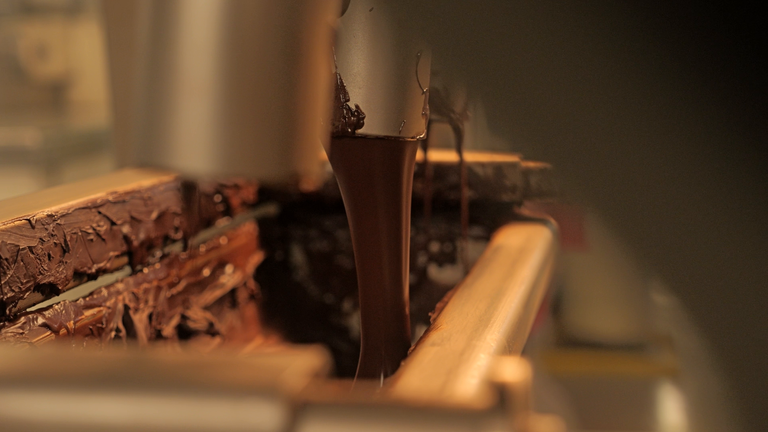
Mmmmm….
Steepest inflation in the business
All of them have faced price increases as Whitakers has grappled with some of the steepest inflation in the food business.
Cocoa prices have soared in the last two years, largely because of a succession of poor cocoa harvests in West Africa, where Ghana and the Ivory Coast produce around two-thirds of global supply.
A combination of drought and crop disease cut global output by around 14% last year, pushing consumer prices in the other direction, with chocolate inflation passing 17% in the UK in October.

…chocolate….
Skimpflation and shrinkflation
Some major brands have responded by cutting the chocolate content of products – “skimpflation” – or charging more for less – “shrinkflation”.
Household-name brands including Penguin and Club have cut the cocoa and milk solid content so far they can no longer be classified as chocolate, and are marketed instead as “chocolate-flavour”.
Whitakers have stuck to their recipes and product sizes, choosing to pass price increases on to customers while adapting products to the new market conditions.
“Not only are major brands putting up prices over 20%, sometimes 40%, they’ve also reduced the size of their pieces and sometimes the ingredients,” says William Whitaker.
“We haven’t done any of that. We knew that long-term, the market will fall again, and that happier days will return.
“We’ve introduced new products where we’ve used chocolate as a coating rather than a solid chocolate because the centre, which is sugar-based, is cheaper than the chocolate.
“We’ve got a big product range of fondant creams, and others like gingers and Brazil nuts, where we’re using that chocolate as a coating.”
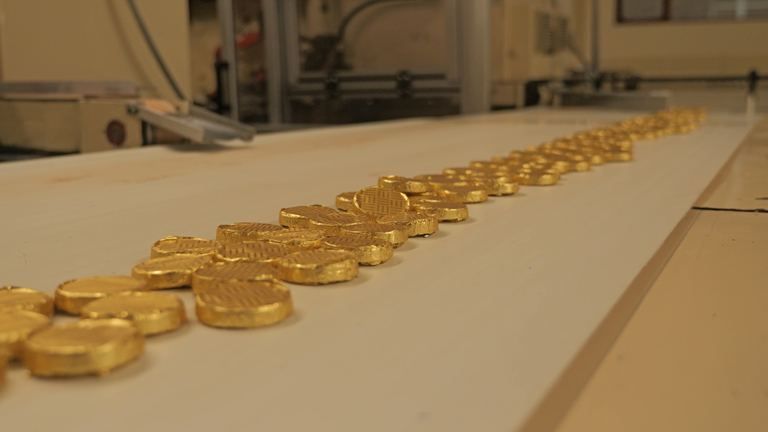
The costs are adding up
A deluge of price rises
Brazil nuts have enjoyed their own spike in price, more than doubling to £15,000 a tonne at one stage.
On top of commodity prices determined by markets beyond their control, Whitakers face the same inflationary pressures as other UK businesses.
“We’ve had the minimum wage increasing every year, we had the national insurance rise last year, and sort of hidden a little bit in this budget is a business rate increase.
“This is a small business, we turn over £12m, but our rates will go up nearly £100,000 next year before any other costs.
“If you add up all the cocoa and all the other cost increases in 2024 and 2025, it’s nearly £3m of cost increases we’ve had to bear. Some of that is returning to a little normality. It does test the relevance of what you do.”
-
 Sports2 years ago
Story injured on diving stop, exits Red Sox game
-
 Sports3 years ago
‘Storybook stuff’: Inside the night Bryce Harper sent the Phillies to the World Series
-
 Sports2 years ago
Game 1 of WS least-watched in recorded history
-
 Sports3 years ago
Button battles heat exhaustion in NASCAR debut
-
 Sports3 years ago
MLB Rank 2023: Ranking baseball’s top 100 players
-
Sports4 years ago
Team Europe easily wins 4th straight Laver Cup
-
 Environment3 years ago
Japan and South Korea have a lot at stake in a free and open South China Sea
-
 Environment1 year ago
Here are the best electric bikes you can buy at every price level in October 2024