
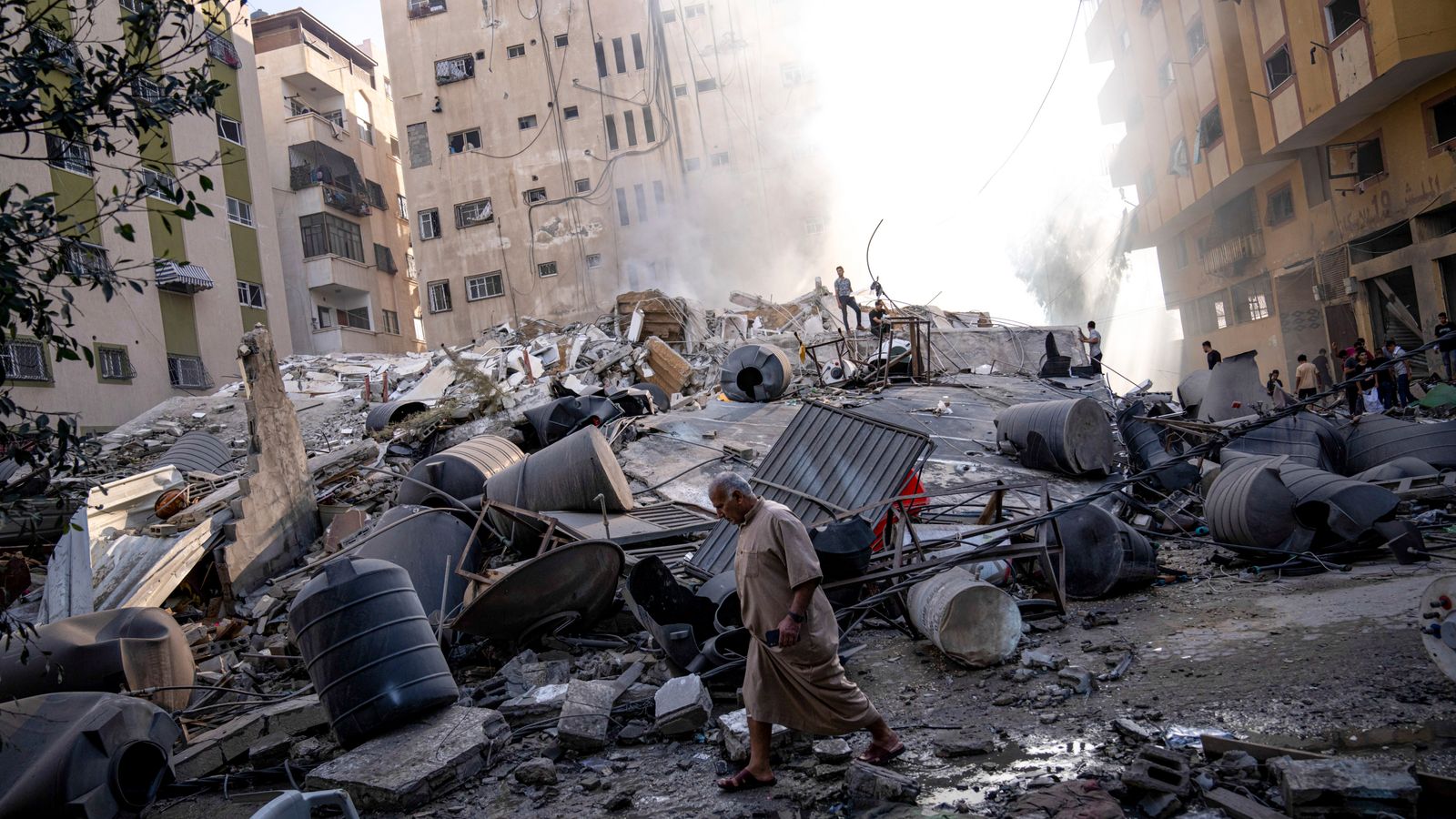
An astonishing unravelling of a situation that’s long been forgotten, ignored, or tolerated. What next?


It was 2.30am in Washington DC when White House officials were first alerted to a situation which will come to represent a truly bloody turning point.
Throughout the remainder of the night, the phone lines were hot. Israel’s most important ally was in constant contact with military officials in Tel Aviv and the political leaders in Jerusalem trying to determine what was unfolding.
By 7am, America’s National Security Advisor Jake Sullivan was speaking by phone to his Israeli counterpart. By just after 8am, the full national security team including the secretary of state, the defence secretary, the CIA chief and others were talking to President Biden relaying the unprecedented gravity of the situation.
The president then called Israeli Prime Minister Netanyahu and made clear his total commitment and full unequivocal support for Israel.
Joe Biden and Antony Blinken at the White House in Washington on Saturday
By mid-morning, US time, as the attacks in Israel continued, President Biden spoke to King Abdullah of Jordan, a key conduit for all sides in this long conflict now taking a new alarming twist.
In parallel, US Secretary of State Anthony Blinken was on the phone to his counterparts in the UK, Germany and Italy as well as key calls to Saudi Arabia, Egypt and to Palestinian Authority President Mahmood Abbas in the West Bank.
Airstrike flattens high-rise in Gaza; follow Israel-Gaza latest
This was a Saturday morning of high diplomatic tension to reflect an astonishing unravelling of a situation that’s been forgotten, ignored, or tolerated by too many for too long.
There is no question that this multi-layered Palestinian attack represents a huge Israeli intelligence failure. Israel has been too consumed in its internal political meltdown. It reflects badly on the intelligence capabilities of America too. They didn’t have Israel’s back.

A Palestinian boy in the Gaza Strip
But does it also reflect failure of diplomacy too? A rush to cement the Abraham Accords (a hugely significant Trump-era normalisation deal between Israel, the UAE and Bahrain) by expanding it to include Saudi Arabia.
American officials insist they have been central in keeping the Palestinians a key part of the conversation. True, maybe, for West Bank Palestinians. But as always, the Palestinian Gaza situation was a nettle no one would, or could, grasp.
Short term, we can predict what will happen. The civilian loss of life will be huge. The consequence of Saturday’s terrorism against Israel will be truly terrifying for the people of Gaza.
Prime Minister Netanyahu’s overnight statement spelt out with characteristic blunt clarity what it will look like.
“We will destroy [Hamas] and we will forcefully avenge this dark day…” he said, adding “As Bialik [a Jewish poet] wrote: ‘Revenge for the blood of a little child has yet been devised by Satan’.”
To the residents of Gaza, he said: “Leave now because we will operate forcefully everywhere.”
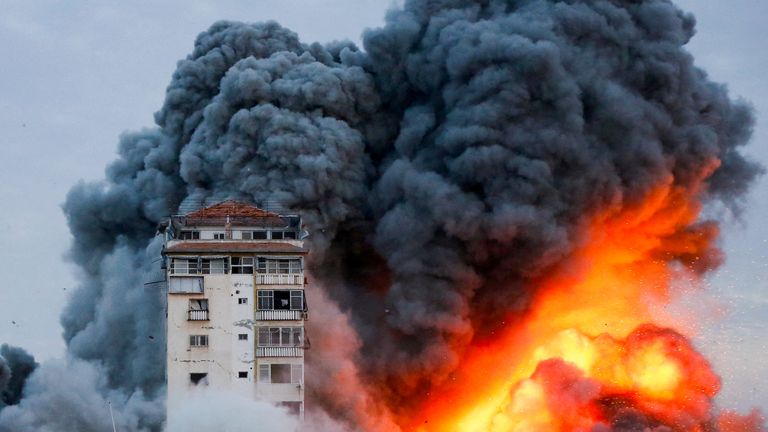
Israel: How the attack unfolded
The problem is, where do they go? They cannot leave the Gaza Strip. Could Egypt open its Rafah border crossing? Would they allow nearly a million people across?
This is a key question which American officials are trying to answer. A presidential call between Joe Biden and Abdel Fattah el-Sisi of Egypt is likely.
Through previous iterations of this long conflict, Western unequivocal support for Israel becomes more nuanced as the civilian casualties mount.
This Saturday, the Israeli civilian casualties have been unprecedented. We can expect the Israeli response to be equally unprecedented.
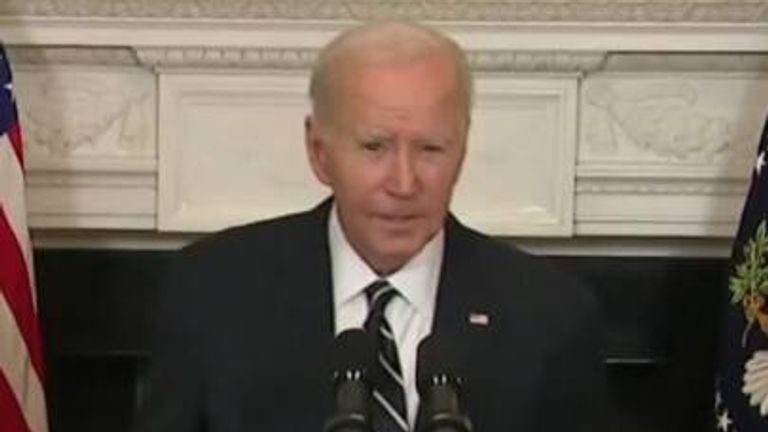
‘Israel has right to defend itself’
On this point, an American administration official said: “I am not going to comment on what the Israelis might do, might not do, should do, should not do. I am just not going to get into that tonight.”
You can bet though that they will want to know precisely what the Israelis will do.
Read more:
Explainer: How Hamas attack unfolded
Analysis: Unprecedented attack has caused chaos
Sunak says Israel has ‘right to defend itself’
Beyond the immediate focus on Gaza, there are so many unknowns.
To what extent will the West Bank be drawn into the conflict? The Palestinian Authority which runs the West Bank (and cooperates with Israel) is distinct from Hamas who run Gaza. But across the West Bank, hopelessness has pushed people away from the moderation of their own leaders to the extremism of Hamas.
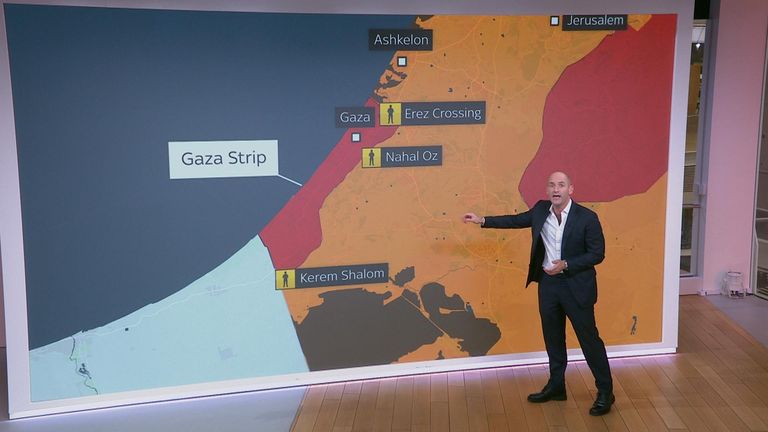
Israel attack: What we know so far
To the north, how will Hezbollah in Lebanon respond? Their well-rehearsed opportunist tactics are to attack from the north, to pressure Israel on another front. Lebanon’s broken politics and economy make things even more dangerous.
Then there is Iran. How will Israel respond to their conviction that all this is, in the end, an Iran problem?
The potential for spillover in the Israel-Palestinian conflict is always there. It’s just got so much more real.

“Many options” are on the table to deal with Venezuelan drug gangs, the White House has said, as the US considers attacking on land.
President Trump is meeting his national security team on Monday and could discuss what would be a major escalation in strikes that have so far only targeted boats.
Karoline Leavitt, the president’s press secretary, did not detail what the meeting would focus on. However, Mr Trump said last week that land strikes would start “very soon”.
“There’s many options at the president’s disposal that are on the table – and I’ll let him speak on those,” Ms Leavitt told reporters.
Three killed as US strikes another alleged drug boat
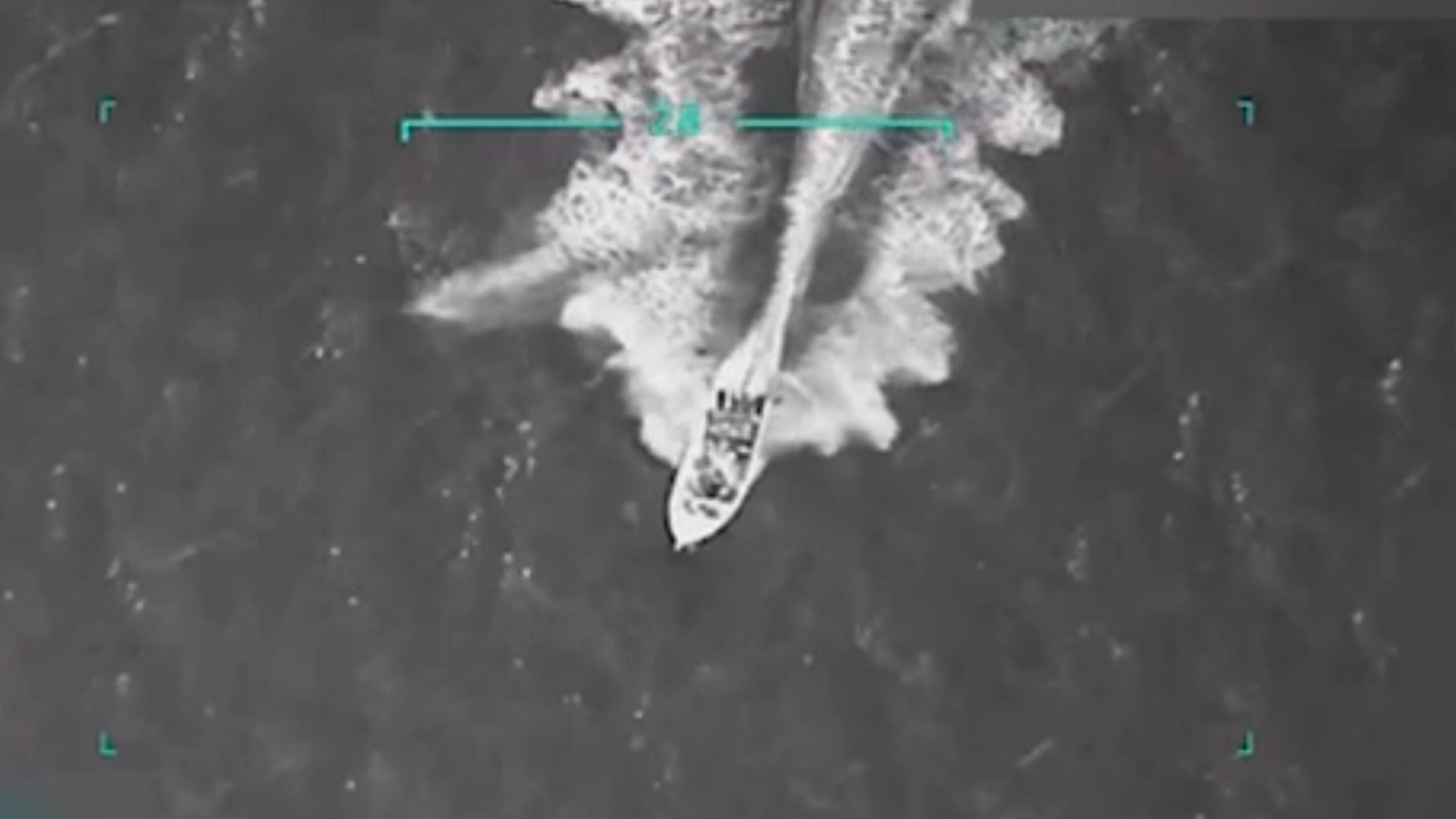
American forces have carried out at least 21 strikes on boats it claims were carrying narcotics to its shores over the last few months.
The US has accused Venezuelan President Nicolas Maduro of being involved in the drugs trade – a claim he denies.
Venezuela has said the attacks, which have killed more than 80 people, amount to murder and that President Trump’s true motivation is to oust Mr Maduro and access its oil.
President Maduro – widely considered a dictator by the West – said on Monday that Venezuelans are ready “to defend [the country] and lead it to the path of peace”.
“We have lived through 22 weeks of aggression that can only be described as psychological terrorism,” he said.
Concerns have been raised over the legality of the US attacks, which the Pentagon has sought to justify by designating the gangs as foreign terror organisations.
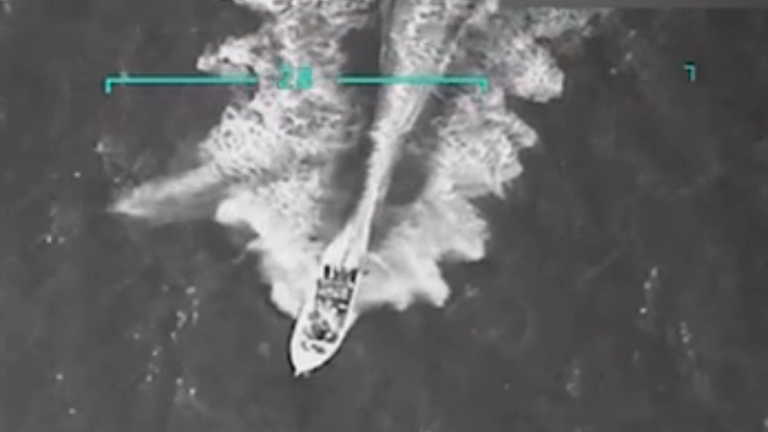
Image of an alleged drug boat being targeted by the US military. Pic: Truth Social
Tensions remain high over America’s large deployment in the Caribbean Sea and eastern Pacific, which includes its flagship aircraft carrier and thousands of troops.
The US has released videos of boats being blown up but has not provided evidence – such as photos of drugs – to support the smuggling claims.
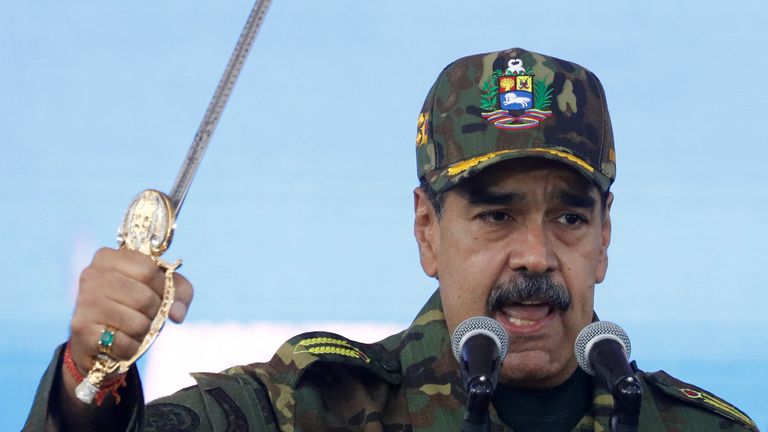
President Maduro is widely considered a dictator by the West. Pic: Reuters
Controversy also surrounds the first incident, on 2 September, in which 11 people were killed – with a follow-up strike targeting the boat after the first attack left two survivors in the water.
US media reported defence secretary Pete Hegseth gave an order beforehand that everyone on board should be killed.
However, there are concerns about the legality of the second strike if the survivors posed no threat.
Mr Hegseth dismissed the reporting as “fake news” and insisted all actions in the region are compliant with US and international law.
“Every trafficker we kill is affiliated with a Designated Terrorist Organization,” he said on X.
President Trump said on Sunday he would not have wanted a second strike and that Mr Hegseth had denied giving such an order.
Read more from Sky News:
Hong Kong fire: 13 arrested as death toll hits 151
More than 1,100 confirmed dead in Asia floods
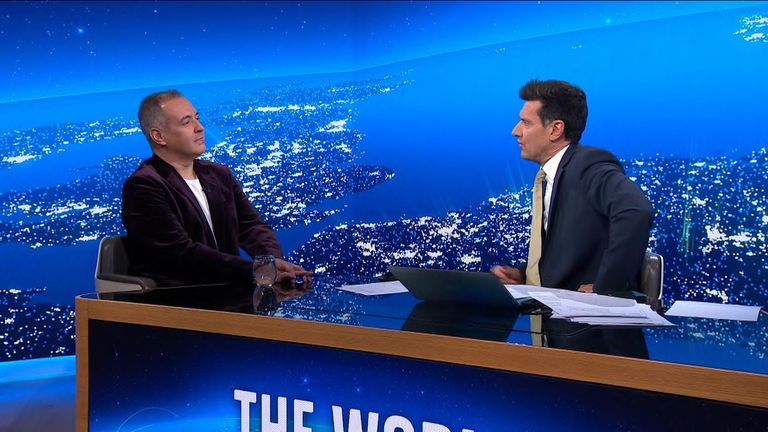
Is US about to go to war with Venezuela?
Ms Leavitt confirmed on Monday that the boat had been hit by a second strike – but denied Mr Hegseth gave the order for the follow-up.
Instead, she said he had authorised US navy vice admiral Frank Bradley to attack and the admiral acted “well within his authority and the law, directing the engagement to ensure the boat was destroyed and the threat to the US was eliminated”.
As the US weighs its next steps, Mr Trump said on Sunday he had spoken to President Maduro by phone and that the conversation went neither “well or badly”.
In recent days, he also stated that Venezuela’s airspace should be considered closed – with the South American nation calling it a “colonial threat” and “illegal, and unjustified aggression”.
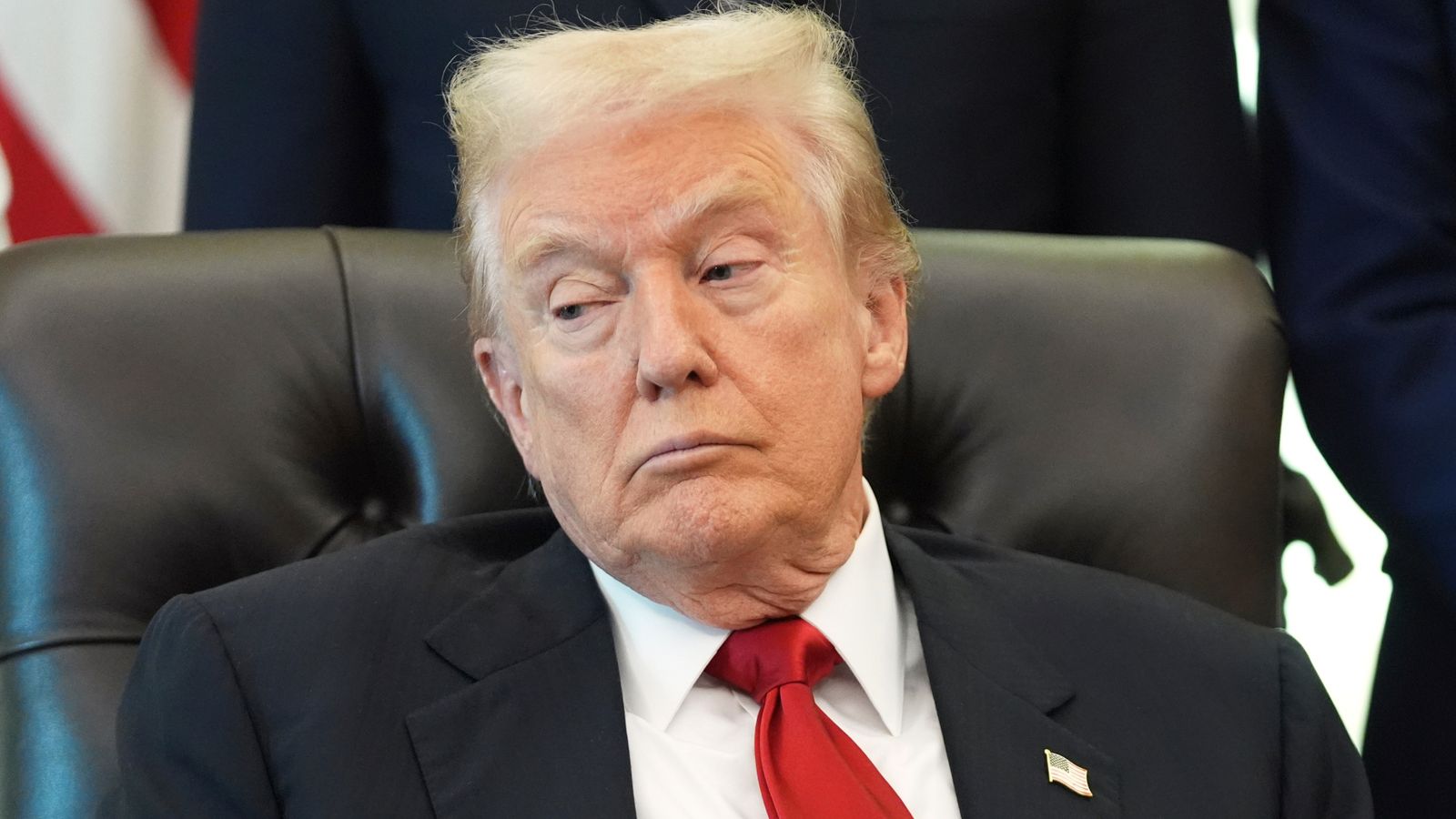

The White House has revealed details of Donald Trump’s recent medical evaluation involving a scan of his cardiovascular system and abdomen.
The US president, 79, underwent a magnetic resonance imaging (MRI) scan in October, which was confirmed in a memo from his doctor, Sean P Barbabella.
The White House physician wrote that the cardiovascular and abdominal imaging was “perfectly normal”.
“The purpose of this imaging is preventive: to identify issues early, confirm overall health, and ensure he maintains long-term vitality and function,” said Dr Barbabella.
He added that there was “no evidence of arterial narrowing impairing blood flow or abnormalities in the heart or major vessels”.
“The heart chambers are normal in size, the vessel walls appear smooth and health, and there are no signs of inflammation, or clotting.”
As for the abdominal imaging, he wrote that “all major organs appear very healthy and well-perfused”.
“Everything evaluated is functioning within normal limits with no acute or chronic concerns.”
He said the imaging was done “because men in his age group benefit from a thorough evaluation of cardiovascular and abdominal health”.
While speaking to reporters on Sunday, the US president said he didn’t know what part of his body was examined but added: “It wasn’t the brain because I took a cognitive test and I aced it.”
He described the results of the MRI as “perfect”.
Read more from Sky News:
Trump targets ‘third world’ immigrants
Venezuela accuses Trump of ‘colonial threat
Trump to cancel all Biden executive orders
Donald Trump in July with a swollen ankle. File pic: AP
In 2022, Donald Trump described himself as “the healthiest president that’s ever lived” but in July was diagnosed with chronic venous insufficiency (CVI) after noticing “mild swelling” in his lower legs.
Dr Barbabella said CVI, which causes blood to pool in the veins, was a “benign and common condition, particularly in individuals over the age of 70”.
Concerns were also raised in July about photos which showed bruising on the back of Mr Trump’s hand that had been covered with make-up.
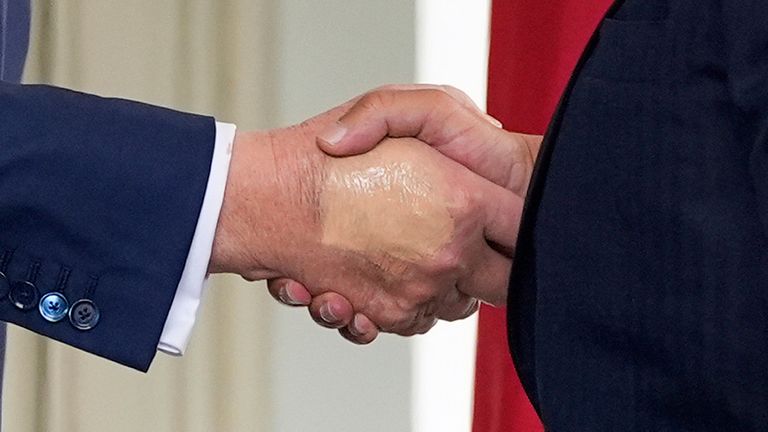
Make-up covering bruising on Mr Trump’s hand. File pic: AP
White House press secretary Karoline Leavitt clarified this was “minor soft tissue irritation from frequent handshaking and the use of aspirin” to reduce the risk of heart attack and stroke.
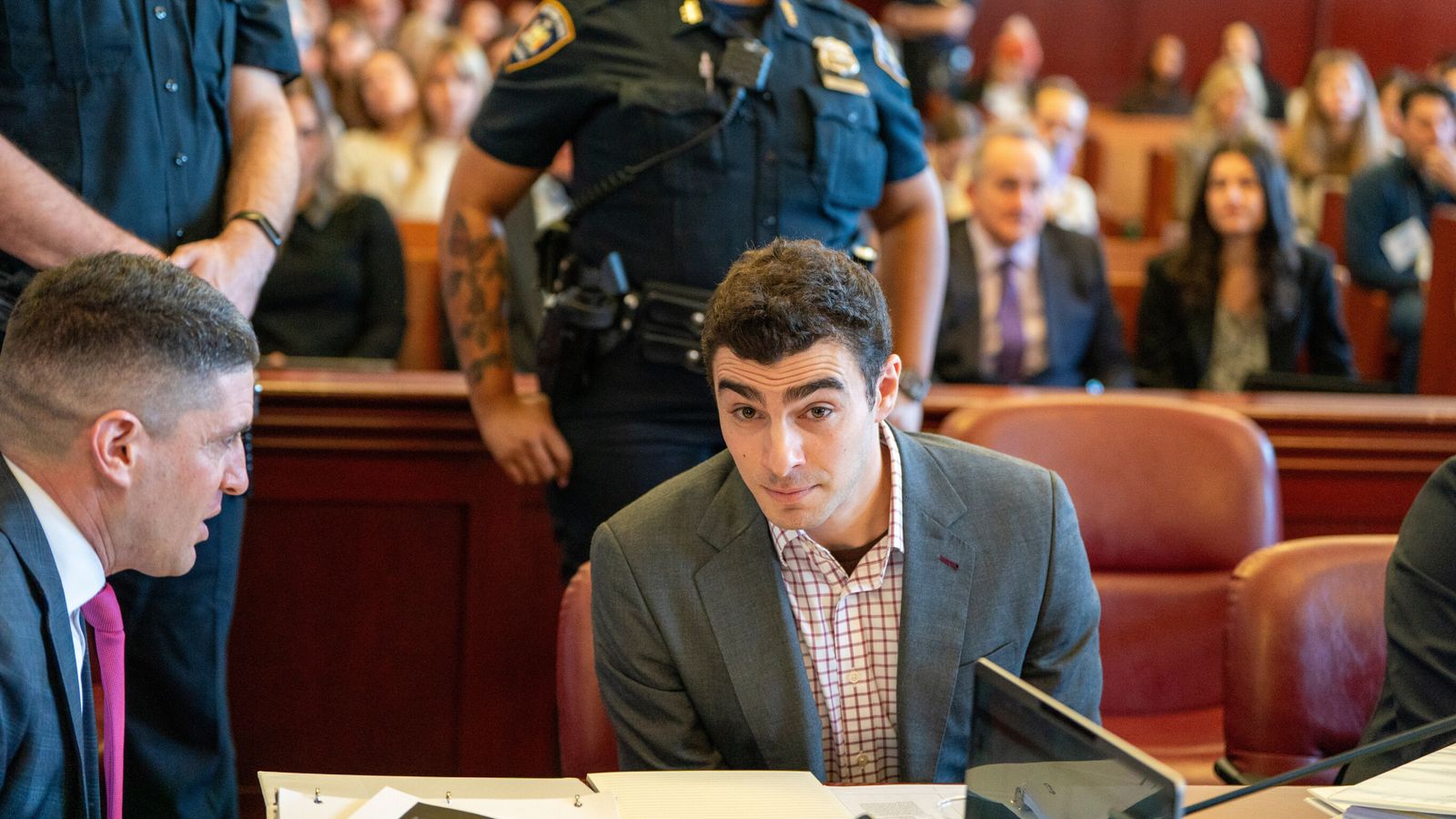
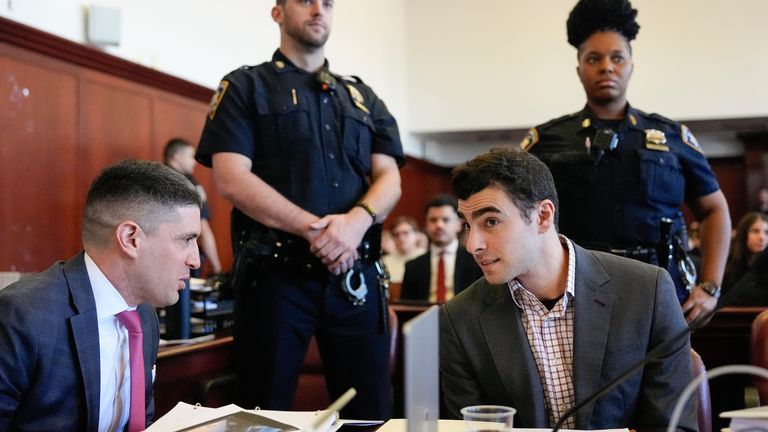
Luigi Mangione has watched surveillance videos of the killing of UnitedHealthcare CEO Brian Thompson at a court appearance.
Mangione has pleaded not guilty to state and federal murder charges over the killing of Mr Thompson. The state charges carry the possibility of life in prison, while federal prosecutors are seeking the death penalty.
The 27-year-old’s lawyers are seeking to bar evidence, including a 9mm handgun and a notebook in which prosecutors say he described his intent to “wack” a health insurance executive, from his New York state trial.
Both were allegedly found in a backpack Mangione had with him when he was arrested.
Mr Thompson, 50, was shot dead on 4 December last year as he walked to a New York City hotel for his company’s annual investor conference, sparking a five-day manhunt.
Mangione was arrested after a McDonald’s employee in Pennsylvania alerted authorities to a customer who looked like the suspect in the killing.
Luigi Mangione was shown a video of the killing of UnitedHealthcare CEO Brian Thompson. Pic: AP
Mangione, wearing a white shirt with a red checked pattern under a grey suit, watched without emotion as prosecutors played surveillance videos showing Mr Thompson’s killing on a Manhattan pavement, as well as his own arrest, at a court appearance in New York on Monday.
The videos, including footage from the McDonald’s restaurant in Pennsylvania where he was arrested, kicked off a hearing on Mangione’s fight to bar evidence from his trial, including the gun prosecutors say matches the one used in the early-hours attack.
Read more from Sky News:
US and UK agree zero tariffs on pharmaceuticals
More than 1,100 confirmed dead in catastrophic Asia floods
After getting state terrorism charges thrown out in September, Mangione’s lawyers are focusing on what they argue was unconstitutional police conduct threatening his right to a fair trial.
They are seeking to block prosecutors from using evidence allegedly discovered in his backpack during his arrest, and statements he made to police, arguing that he was illegally searched and questioned.
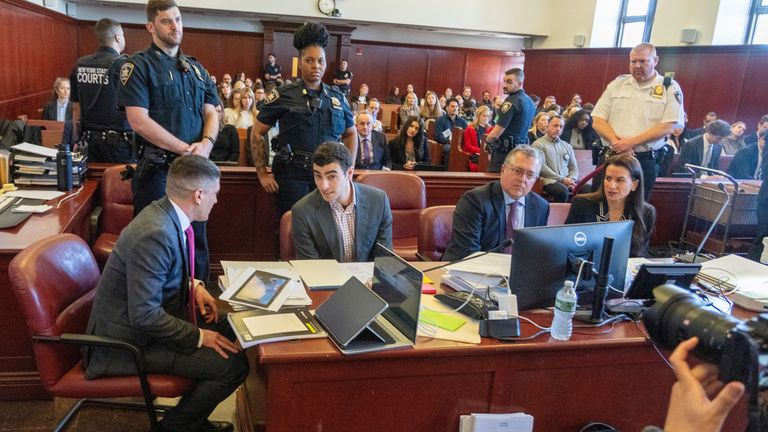
Luigi Mangione appears in court for an evidence hearing on 1 December 2025, in New York. Pic: AP
Eliminating the gun and notebook would be huge wins for Mangione’s defence, and a major setback for prosecutors, depriving them of a possible murder weapon and evidence they say points to motive.
Mangione also faces seven counts of criminal possession of a weapon, and one count of possessing a false identification.
Judge Gregory Carro dismissed two terrorism counts against Mangione in September.
He found that prosecutors had not presented enough evidence that Mangione intended to intimidate health insurance workers or influence government policy.
Trial dates have not been set in either the state or federal cases.
Mangione has been held in federal custody in Brooklyn since his arrest.
-
 Sports2 years ago
Story injured on diving stop, exits Red Sox game
-
 Sports3 years ago
‘Storybook stuff’: Inside the night Bryce Harper sent the Phillies to the World Series
-
 Sports2 years ago
Game 1 of WS least-watched in recorded history
-
 Sports3 years ago
Button battles heat exhaustion in NASCAR debut
-
 Sports3 years ago
MLB Rank 2023: Ranking baseball’s top 100 players
-
Sports4 years ago
Team Europe easily wins 4th straight Laver Cup
-
 Environment3 years ago
Japan and South Korea have a lot at stake in a free and open South China Sea
-
 Environment1 year ago
Here are the best electric bikes you can buy at every price level in October 2024