

UK sending navy ships and spy planes to support Israel and prevent ‘further escalation’


The UK will send RAF aircraft and Royal Navy ships to carry out surveillance over Israel in a show of support following the Hamas incursion over the weekend.
RAF aircraft will begin patrols in the next 24 hours while two ships will be sent to the eastern Mediterranean.
A Royal Navy task group will be moved to the eastern Mediterranean next week and will include two ships – RFA Lyme Bay and RFA Argus.
The military package will also see P8 aircraft, surveillance assets, three merlin helicopters and a company of Royal Marines put on standby “to deliver practical support to Israel and partners in the region, and offer deterrence and assurance”.
Israel ‘strikes Syrian airports’; 447 children killed in Gaza – Israel-Gaza latest
The military package will also see P8 aircraft, surveillance assets, three merlin helicopters and a company of Royal Marines put on standby
The prime minister has also asked for all military teams in Israel, Cyprus and those across the region to be bolstered to support contingency planning and the efforts of neighbouring countries to deal with the impact of instability in Israel.
Rishi Sunak said the “deployment of our world-class military will support efforts to ensure regional stability and prevent further escalation”.

Gaza hospitals ‘risk turning into morgues’
“We must be unequivocal in making sure the types of horrific scenes we have seen this week will not be repeated,” he added.
“Our military and diplomatic teams across the region will also support international partners to re-establish security and ensure humanitarian aid reaches the thousands of innocent victims of this barbaric attack from Hamas terrorists.”
The military support is just the latest provided by the UK in the wake of the surprise attack by Hamas on Saturday.
Analysis: PM has limited options
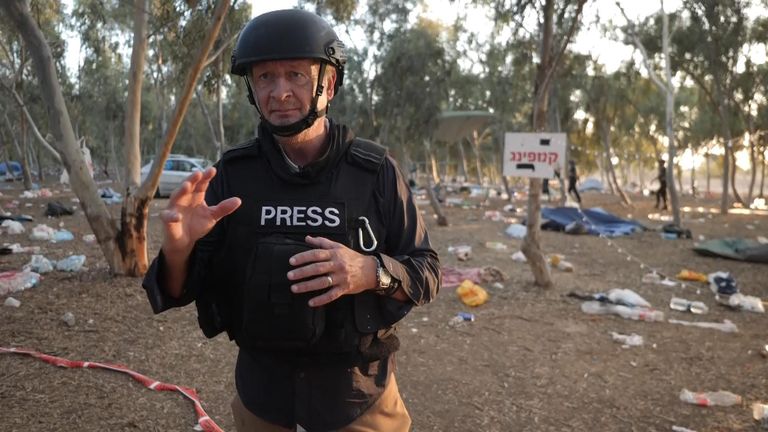
Sky News visits site of music festival massacre
To date,1,300 Israelis have died while 1,417 Palestinians, including 447 children, have been killed in retaliatory strikes in Gaza – where electricity, water and fuel has been cut off.
Israel has said it will keep blocking supplies until Hamas releases nearly 100 hostages.
The Foreign Office said flights have been organised to get British nationals out of Israel, with the first plane for “vulnerable” people expected to depart today.
PM has limited options when it comes to demonstrating military power

A decision by the UK to mobilise spy planes and support ships to the eastern Mediterranean is a solid show of solidarity with Israel – but not a demonstration of potent military strength.
The US deployed a huge aircraft carrier, bristling with fighter jets and flanked by a task group of heavily armed warships in the wake of last weekend’s atrocities by Hamas.
The problem for Rishi Sunak is that a massively reduced Royal Navy and Royal Air Force following decades of cost-saving cuts means his options when it comes to projecting power are pretty limited.
A rapid deployment team is also on its way to assist British citizens on the ground.
Read more:
Hundreds of children and women killed’ in Gaza
Gaza ground offensive will be ‘high-risk and very dangerous’ for Israel
At home, the government also announced it would provide an extra £3m in funding to increase the number of guards at Jewish schools following reports that some had been forced to close over fears of the safety of pupils.
One Jewish charity, the Community Security Trust (CST), said it had seen a 324% increase in reports of antisemitism as a result over the last four days, including six assaults, 14 direct threats, three instances of vandalism, and 66 cases of abusive behaviour.
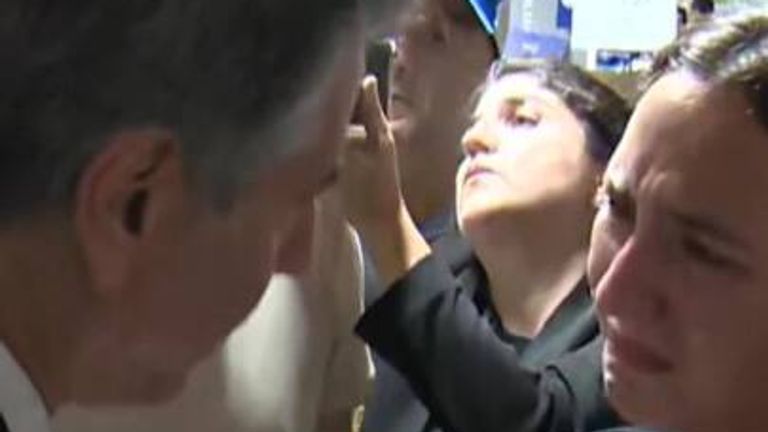
Survivor’s heartfelt talk with Blinken
Mr Sunak is due to speak to northern European leaders about the situation in Israel at the Joint Expeditionary Force summit in Sweden on Friday.
They are expected to discuss the need to work with countries in the Middle East to support stability while also maintaining support for Ukraine from Russian aggression.
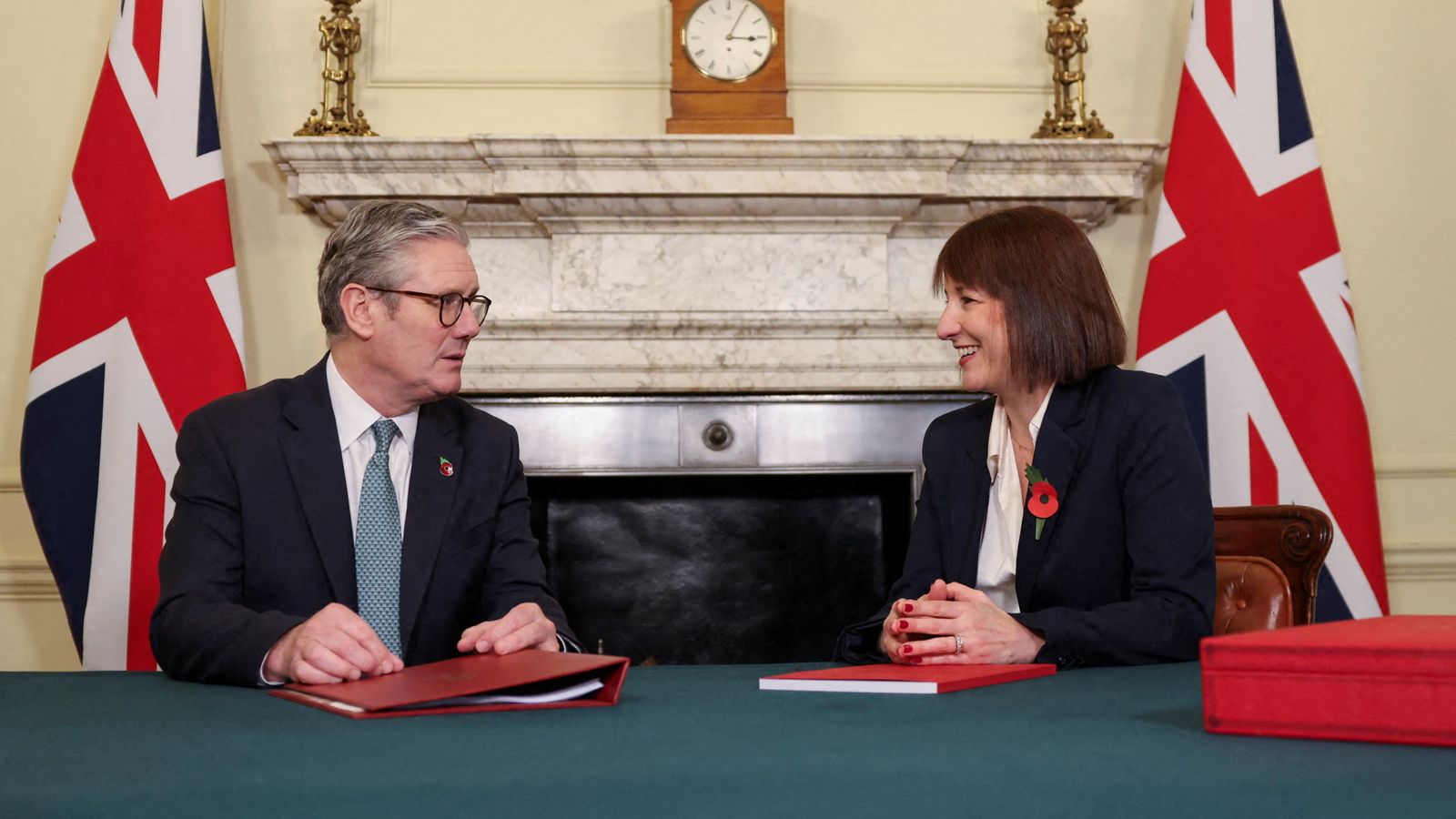
Sir Keir Starmer will deliver a speech today defending the decisions the government made in the budget, following criticisms of sweeping tax rises and accusations the chancellor lied to the country about the state of public finances.
The prime minister is expected to set out how the budget, which saw £26bn of tax rises imposed across the economy, “moves forward the government’s programme of national renewal”, and set “the right economic course” for Britain, Downing Street says.
He will also confirm that ministers will try again to reform the “broken” welfare system, after Labour MPs forced the government to U-turn on its plans to narrow the eligibility for Personal Independence Payments (PIP) earlier this year.
Sir Keir Starmer will give a speech later defending last week’s budget. Pic: Reuters
‘Of course I didn’t’ lie about public finances, says Reeves
“We have to confront the reality that our welfare state is trapping people, not just in poverty, but out of work – young people especially. And that is a poverty of ambition,” Sir Keir will say.
“And so while we will invest in apprenticeships and make sure every young person without a job has a guaranteed offer of training or work, we must also reform the welfare state itself – that is what renewal demands.”
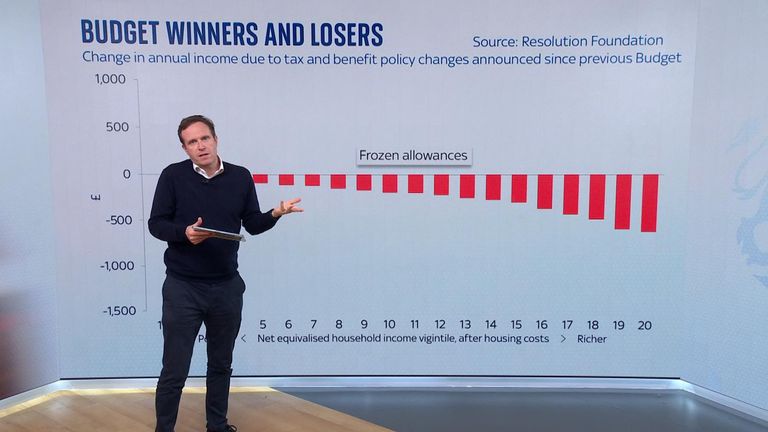
Sky’s Ed Conway looks at the aftermath of the budget and explains who the winners and losers are
The prime minister will add: “This is not about propping up a broken status quo. Nor is it because we want to look somehow politically ‘tough’. The Tories played that game and the welfare bill went up by £88bn. They left children too poor to eat and young people too ill to work. A total failure.”
Instead, he will argue it is about “potential”, saying: “If you are ignored that early in your career, if you’re not given the support you need to overcome your mental health issues, or if you are simply written off because you’re neurodivergent or disabled, then it can trap you in a cycle of worklessness and dependency for decades, which costs the country money, is bad for our productivity, but most importantly of all – costs the country opportunity and potential.
“And any Labour Party worthy of the name cannot ignore that. That is why we have asked Alan Milburn on the whole issue of young people, inactivity and work. We need to remove the incentives which hold back the potential of our young people.”
The announcement will come after the Conservative opposition described the budget as one for “benefits street”, following the chancellor’s decision to lift the two-child benefit cap from April, at a cost of £3bn.
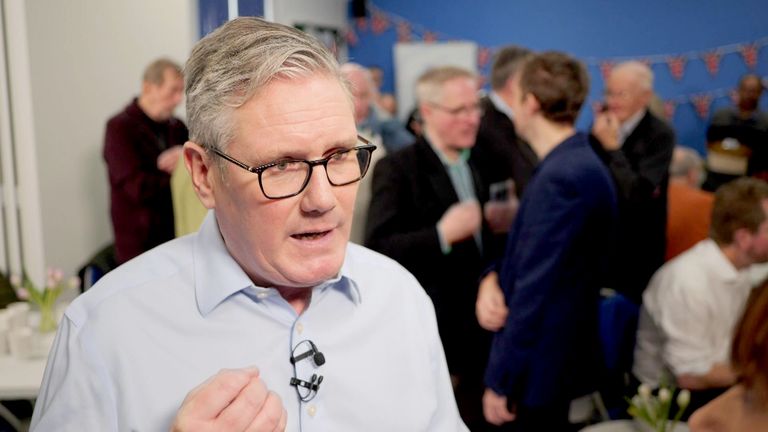
Prime Minister defends the budget
‘Government must go further and faster on growth’
The prime minister is also expected to launch a staunch defence of the budget overall, saying it will bear down on the cost of living through measures like money off energy bills and frozen rail fares; increase economic stability; and protect investment in public services and infrastructure that will drive economic growth.
He will argue that “economic growth is beating the forecasts”, but that the government must go “further and faster” to encourage it.
He will also reiterate his vow to scrap regulation across the economy, which he will argue is not only pro-business, but also a way to deal with the cost of living.

How will your personal finances change following the budget announced by the chancellor?
“Rooting out excessive costs in every corner of the economy is an essential step to lower the cost of living for good, as well as promoting more dynamic markets for business,” the prime minister will say.
He will confirm reforms to the building of nuclear power plants, after the government’s nuclear regulatory taskforce found that “pointless gold-plating, unnecessary red-tape and well-intentioned, but fundamentally misguided environmental regulation had made Britain the most expensive place to build nuclear power”.
“We urgently need to correct this,” the prime minister will say.
Business secretary Peter Kyle will be tasked with applying the same deregulatory approach to major infrastructure schemes and to accelerate the implementation of Labour’s industrial strategy.
In response, Tory shadow chancellor Sir Mel Stride said: “It is frankly laughable to hear the prime minister say Rachel Reeves’s Benefits Street budget has put the country on the right course and that he wants to fix the welfare system.
“His chancellor has just hiked taxes by £26bn to pay for a welfare splurge, penalising people who work hard and making them pay for those who don’t work at all. And she misrepresented why she was doing it, claiming there was a fiscal black hole to fill that she knew didn’t exist.
“Labour’s leadership have repeatedly shown they lack the backbone to tackle welfare and instead are just acting to placate their left-wing backbenchers.”
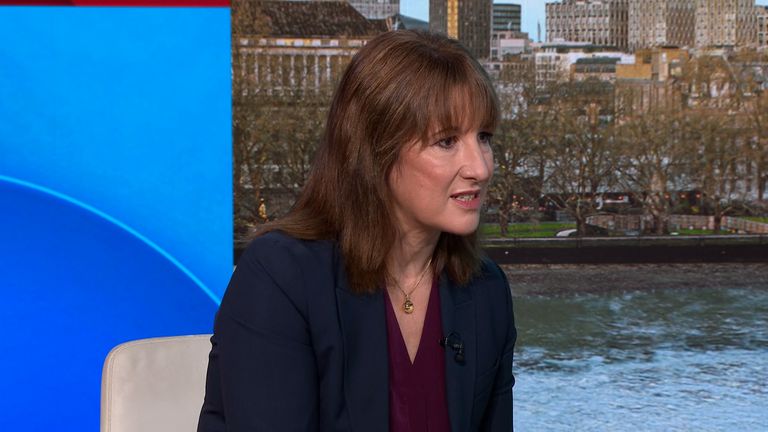
Rachel Reeves tells Sky News she did not lie about the state of the public finances
Chancellor accused of ‘lying’
Sir Mel is referring to the chancellor’s speech on 4 November in which she laid the ground for tax rises due to the decision by the independent Office for Budget Responsibility (OBR) to review and downgrade productivity over recent years, at a cost of £16bn, which led to a black hole in the public finances.
But the OBR revealed on Friday that it had told the Treasury days earlier that there was actually a budget surplus of £4.2bn, leading to outrage and claims that she misled the country about the state of the public finances.
Rachel Reeves was asked directly by Sky’s Trevor Phillips if she lied, and she replied: “Of course I didn’t.”
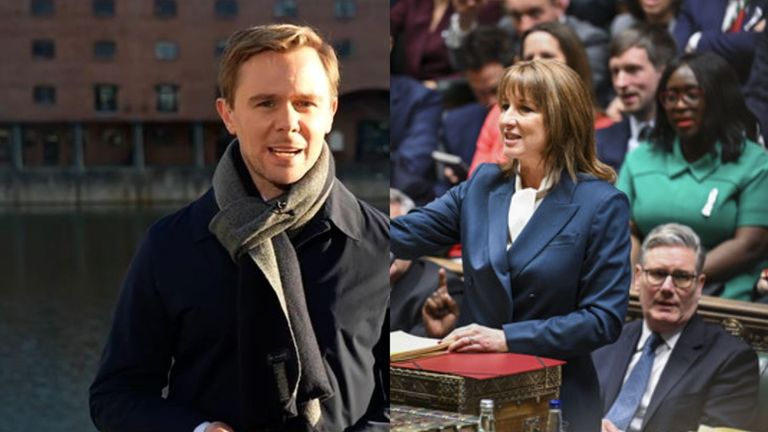
Why did Reeves make the situation sound ‘so bleak’?
She said: “I said in that speech that I wanted to achieve three things in the budget – tackling the cost of living, which is why I took £150 off of energy bills and froze prescription charges and rail fares.
“I wanted to continue to cut NHS waiting lists, which is why I protected NHS spending. And I wanted to bring the debt and the borrowing down, which is one of the reasons why I increased the headroom.
“£4bn of headroom would not have been enough, and it would not give the Bank of England space to continue to cut interest rates.”
Ms Reeves also said: “In the context of a downgrade in our productivity, which cost £16bn, I needed to increase taxes, and I was honest and frank about that in the speech that I gave at the beginning of November.”

Badenoch says Rachel Reeves should resign
But Tory leader Kemi Badenoch said: “I think the chancellor has been doing a terrible job. She’s made a mess of the economy, and […] she has told lies. This is a woman who, in my view, should be resigning.”
Report due on OBR breach
The tumultuous run-up to the 26 November budget culminated in the OBR accidentally publishing its assessment of the chancellor’s measures 45 minutes before the speech began, in what was an unprecedented breach of budget security.
👉 Listen to Sky News Daily on your podcast app 👈
The chair of the OBR, Richard Hughes, apologised for the “error”, and announced an investigation into how it happened.
The chancellor has said that she retains confidence in him, despite the “serious breach of protocol”, and confirmed to Trevor that the investigation report will be delivered to her on Monday, although it is not clear when it will be published.

China’s central bank has flagged stablecoins as a risk and has promised to refresh its crackdown on crypto trading, which it has banned since 2021.
The People’s Bank of China said on Saturday, after a meeting with 12 other agencies, that “virtual currency speculation has resurfaced” due to various factors, posing new challenges for risk control.
“Virtual currencies do not have the same legal status as fiat currencies, lack legal tender status, and should not and cannot be used as currency in the market,” the bank said, according to a translation of its statement.
“Virtual currency-related business activities constitute illegal financial activities.”
China’s central bank banned crypto trading and mining in 2021, citing a need to curb crime and claiming that crypto posed a risk to the financial system.
Bank says stablecoins of concern
China’s central bank highlighted stablecoins as a particular concern, stating that the tokens weren’t meeting legal requirements and were being used in criminal activities.
“Stablecoins are a form of virtual currency, and currently cannot effectively meet requirements for customer identification and Anti-Money Laundering, posing a risk of being used for illegal activities such as money laundering, fundraising fraud, and illegal cross-border fund transfers,” the bank said.


The bank said it would “persistently crack down on illegal financial activities” related to crypto to “maintain the stability of the economic and financial order.”
Related: South Korea targets sub-$680 crypto transfers in sweeping AML crackdown
The 13 agencies that attended the meeting stated that they would “deepen coordination and cooperation” in tracking down crypto users by strengthening information sharing and enhancing monitoring capabilities.
Reuters reported on Wednesday that China had the third-highest share of Bitcoin (BTC) mining, with its market share reaching 14% by the end of October.
In August, China’s financial regulators reportedly instructed brokers to cancel seminars and stop promoting research on stablecoins over concerns that it could be exploited as a tool for fraudulent activities.
Meanwhile, Hong Kong opened the doors to licensing stablecoin issuers in July, but some tech companies suspended plans to launch stablecoins in the region after Chinese regulators reportedly intervened to pause the offerings.
Magazine: Koreans ‘pump’ alts after Upbit hack, China Bitcoin mining surge: Asia Express

White House AI and crypto czar David Sacks has fired back at The New York Times over a report detailing how his government advisory role could benefit his investments and those of his close associates.
Sacks said in a post to X that despite having “debunked in detail” the Times’ reporting over the past five months, the outlet continued to publish the article on Sunday about his supposed conflicts of interest.
“Today they evidently just threw up their hands and published this nothing burger,” Sacks wrote. “Anyone who reads the story carefully can see that they strung together a bunch of anecdotes that don’t support the headline.”
Sacks is a co-founder and partner at the venture firm Craft Ventures, and his special government employee role at the White House has drawn scrutiny in the past, with Democrat Senator Elizabeth Warren saying in May that he is “financially invested in the crypto industry, positioning him to potentially profit from the crypto policy changes he makes at the White House.”

Before he became crypto czar, Sacks and Craft divested over $200 million in crypto and crypto-tied stocks, at least $85 million of which Sacks owned, but Sacks retained an interest in several illiquid investments of “private equity of digital asset-related companies.”
Sacks retains 20 crypto investments, The Times reports
The Times reported that its analysis of Sacks’ financial disclosure found he has retained 708 tech investments, 449 of which are AI-related and 20 are tied to crypto, all of which could benefit from the policies Sacks supports.
In one example of a perceived conflict in Sacks’ role, the outlet stated that Craft Ventures is invested in the crypto infrastructure company BitGo, which offers a stablecoin-as-a-service.
BitGo filed to go public in September, with regulatory filings showing Craft owned 7.8% of the company.
The Times noted that Sacks was a major backer of the stablecoin-regulating GENIUS Act, which was signed into law earlier this year. Many crypto commentators predicted that this would boost the use and adoption of the tokens by institutions.
Related: Trump-linked ALT5 Sigma shakes up leadership amid WLFI scrutiny
Other examples noted by the Times involved Sacks’ and Craft’s ties to companies involved with AI, which have skyrocketed in value as the White House and Wall Street bet on the technology’s potential.
The Times noted that Sacks’ ethics waivers, shared in March, stated he would sell his interests in AI and crypto; however, they don’t disclose when he sold the assets and do not detail the value of his remaining investments.
NYT created “bogus narrative,” says Sacks
In his X post, Sacks shared a letter to the Times sent by his lawyers at Clare Locke accusing the outlet of setting out “to write a hit piece” and giving their reporters “clear marching orders” to find conflicts of interest.
Sacks added it was “very clear how NYT willfully mischaracterized or ignored the facts to support their bogus narrative.”
Sacks’ spokesperson Jessica Hoffman told the Times that he has complied with rules for special government employees, and the Office of Government Ethics said that Sacks should sell his investments in certain types of companies but not others.
Sacks’ role as a special government employee is limited to 130 days, and in September, Democratic lawmakers questioned whether he had exceeded the number of days allowed with his appointment.
However, Sacks reportedly carefully manages the days he spends as a special government employee to ensure that he stays under the limit.
-
 Sports2 years ago
Story injured on diving stop, exits Red Sox game
-
 Sports3 years ago
‘Storybook stuff’: Inside the night Bryce Harper sent the Phillies to the World Series
-
 Sports2 years ago
Game 1 of WS least-watched in recorded history
-
 Sports3 years ago
Button battles heat exhaustion in NASCAR debut
-
 Sports3 years ago
MLB Rank 2023: Ranking baseball’s top 100 players
-
Sports4 years ago
Team Europe easily wins 4th straight Laver Cup
-
 Environment3 years ago
Japan and South Korea have a lot at stake in a free and open South China Sea
-
 Environment1 year ago
Here are the best electric bikes you can buy at every price level in October 2024