

Connect with us

Published

on

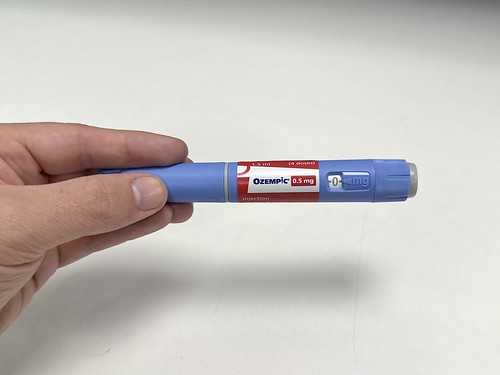
The proliferation of weight-loss drugs like Ozempic is having an unintended side-effect on snack makers — a reduction in sales, according to a report.

Walmart said customers who have been taking the popular meds to slim down are cutting back on high-fat and salty treats because the weight-loss drugs help to suppress appetites.

“We definitely do see a slight change compared to the total population, we do see a slight pullback in overall basket,” John Furner, the CEO of Walmarts US operation, told Bloomberg.

Walmart, which sells weight-loss drugs at its pharmacies, is able to study changes in sales patterns using anonymized data on shopper populations, according to the outlet.

With those data sets, the Bentonville, Ark.-based can see how many customers are on diabetes-turned-weight-loss drugs like Ozempic, Wegovy, and Mounjaro and compare their shopping habits to those not taking the medications.

Furner said people on weight-loss drugs are purchasing “less units, slightly less calories,” but said that it’s too soon to conclude what effect the meds are having on Walmart’s overall sales.

Representatives for Walmart did not immediately respond to The Post’s request for comment.

One woman who takes Mounjaro said the reduction in appetite has cut her grocery bill by as much as 20%.

I still have a fully stocked kitchen, theres chips and pretzels in there. I dont find it tempting, Carolyn MacBain-Waldo told the Wall Street Journal.

Another Mounjaro user said she doesnt think about food all the time anymore and eats far fewer snacks.

The other day I had a single jelly bean, which is unheard of for me, Karyn Carlton, 47, told The Journal, adding that she also recently ordered a kids meal from a fast-food restaurant and felt satiated.

The drug, which stimulates the body to produce insulin and lowers blood sugar, has historically been used to treat Type 2 diabetes but was popularized after patients discovered their slimming effects, and particularly exploded when it was revealed celebrities like Khloe Kardashian and Chelsea Handler admitted to using it.

Their use has filtered to middle America and is only expected to grow, despite disturbing case studies where the medications paralyzed some users’ stomachs and even burned off one woman’s genitals.

Morgan Stanley estimated that 7% of the US population, or 24 million people, will be taking hunger-suppressing weight-loss drugs by 2035 — cutting their daily calorie consumption by as much as 30%, according to the firm, which surveyed over 300 patients.

For a person on an FDA-recommended 2,000-calorie daily diet, that could mean eliminating a one-ounce bag of salted potato chips, a bottle of soda, and more each day.

“The food, beverage, and restaurant industries could see softer demand, particularly for unhealthier foods and high-fat, sweet, and salty options, said Morgan Stanleys tobacco and packaged food analyst Pamela Kaufman.

Kaufman said major food companies like Conagra Brands, Mondelez, and Campbell Soup could see a 3% hit to their bottom lines by 2035.

Kellogg’s Brands, which is behind popular snack foods like Cheez-Its and Pringles, has reportedly been studying the potential impact popular weight-loss drugs could have on consumer behaviors.

“Like everything that potentially impacts our business, well look at it, study it and, if necessary, mitigate,” Kellogg’s chief Steve Cahillane told Bloomberg.

Cahillane called it “very, very early days” for the drugs, but said the company, which also makes Rice Krispie Treats, was “by no means complacent,” suggesting Kellogg’s would make changes to its products if overweight Americans on weight-loss medications continued limiting their calorie intake.

The Post has sought comment from Kellogg’s.

Despite being “early days,” US sales for GLP-1-containing drugs have experienced a whopping 300% increase in prescription volume from 2020 to 2022, according to Trilliant Health.

Of those prescriptions, Ozempic was the most-prescribed GLP-1, and national spending on semaglutide — the peptide name for Ozempic and Wegovy — now exceeds $10 billion, Trilliant Health said.

Continue Reading

Business

COVID schemes’ fraud and error cost taxpayers £11bn

Published

on

By

COVID schemes' fraud and error cost taxpayers £11bn

COVID-19 fraud and error cost the taxpayer nearly £11bn, a government watchdog has found.

Pandemic support programmes such as furlough, bounce-back loans, support grants and Eat Out to Help Out led to £10.9bn in fraud and error, COVID Counter-Fraud Commissioner Tom Hayhoe’s final report has concluded.

Lack of government data to target economic support made it “easy” for fraudsters to claim under more than one scheme and secure dual funding, the report said.

Weak accountability, bad quality data and poor contracting were identified as the primary causes of the loss.

The government has said the sum is enough to fund daily free school meals for the UK’s 2.7 million eligible children for eight years.

An earlier report from Mr Hayhoe for the Treasury in June found that failed personal protective equipment (PPE) contracts during the pandemic cost the British taxpayer £1.4 billion, with £762 million spent on unused protective equipment unlikely ever to be recovered.

Factors behind the lost money had included government over-ordering of PPE, and delays in checking it.

More on Covid-19

This breaking news story is being updated and more details will be published shortly.

Please refresh the page for the latest version.

You can receive breaking news alerts on a smartphone or tablet via the Sky News app. You can also follow us on WhatsApp and subscribe to our YouTube channel to keep up with the latest news.

Continue Reading

Politics

COVID schemes’ fraud and error cost taxpayers £11bn

Published

on

By

COVID schemes' fraud and error cost taxpayers £11bn

COVID-19 fraud and error cost the taxpayer nearly £11bn, a government watchdog has found.

Pandemic support programmes such as furlough, bounce-back loans, support grants and Eat Out to Help Out led to £10.9bn in fraud and error, COVID Counter-Fraud Commissioner Tom Hayhoe’s final report has concluded.

Lack of government data to target economic support made it “easy” for fraudsters to claim under more than one scheme and secure dual funding, the report said.

Weak accountability, bad quality data and poor contracting were identified as the primary causes of the loss.

The government has said the sum is enough to fund daily free school meals for the UK’s 2.7 million eligible children for eight years.

An earlier report from Mr Hayhoe for the Treasury in June found that failed personal protective equipment (PPE) contracts during the pandemic cost the British taxpayer £1.4 billion, with £762 million spent on unused protective equipment unlikely ever to be recovered.

Factors behind the lost money had included government over-ordering of PPE, and delays in checking it.

More on Covid-19

This breaking news story is being updated and more details will be published shortly.

Please refresh the page for the latest version.

You can receive breaking news alerts on a smartphone or tablet via the Sky News app. You can also follow us on WhatsApp and subscribe to our YouTube channel to keep up with the latest news.

Continue Reading

US

Luigi Mangione had handgun, silencer and ‘manifesto’ in backpack during arrest, police say

Published

on

By

Luigi Mangione had handgun, silencer and 'manifesto' in backpack during arrest, police say

Police officers found a handgun, a silencer and a red notebook described as a “manifesto” when they arrested Luigi Mangione.

The 27-year-old was arrested in December 2024 and charged with killing UnitedHealthcare chief executive Brian Thompson in New York City.

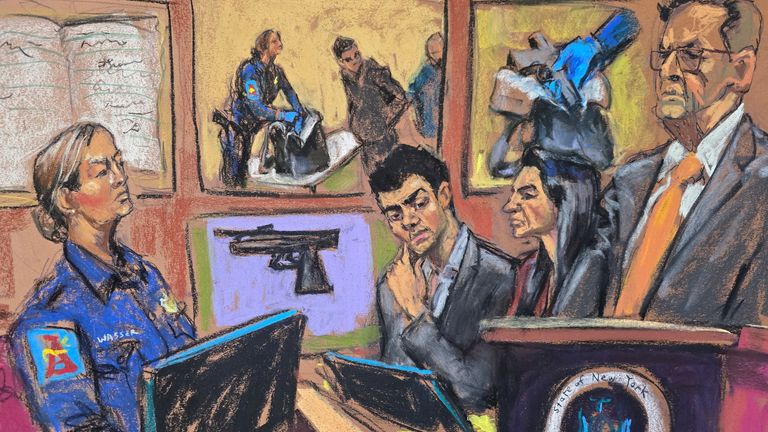
Mangione‘s lawyers want to block prosecutors from showing or telling jurors at his eventual trial in Manhattan about statements he allegedly made and items they said police seized from his backpack during his arrest at a McDonald’s in Pennsylvania.

The objects include a 9mm handgun prosecutors say matches the one used in the killing, a silencer, a magazine with bullets wrapped in underwear and a notebook in which they say Mangione described his intent to “wack” a healthcare executive.

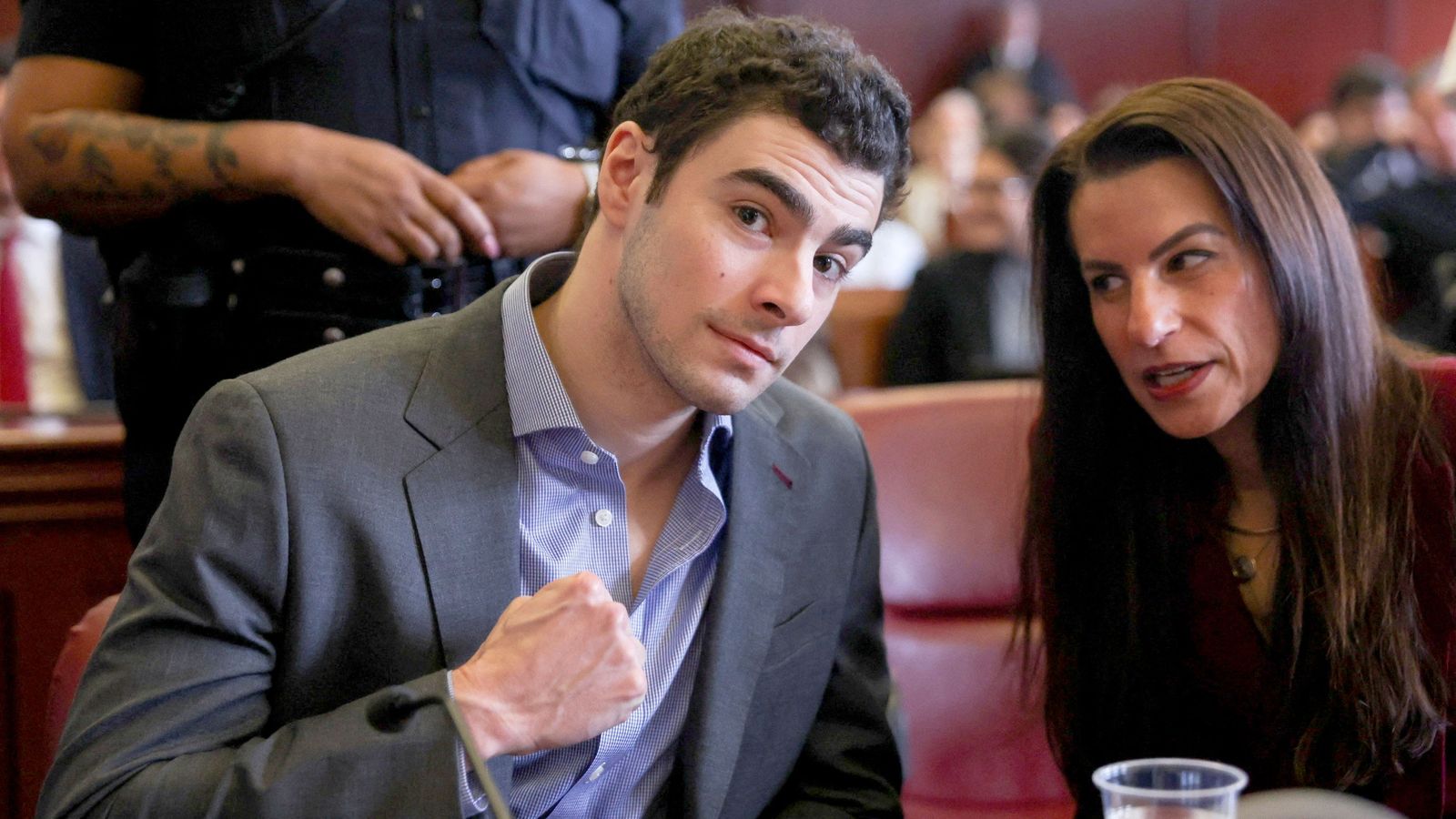
Mangione with his attorney. Pic: Reuters
Image:
Mangione with his attorney. Pic: Reuters

The defence contends the items should be excluded because police did not get a warrant before searching Mangione’s backpack.

Prosecutors deny claims Mangione was illegally searched and questioned.

They also want to suppress some statements he made to police, such as allegedly giving a false name, because officers asked him questions before telling him he had a right to remain silent.

Last week, Mangione watched surveillance videos of the killing of Mr Thompson, 50, as he walked to a New York City hotel for his company’s annual investor conference.

Mangione has pleaded not guilty to state and federal murder charges.

The state charges carry the possibility of life in prison, while federal prosecutors are seeking the death penalty.

This week’s hearing concerns only the state case, but Mangione’s lawyers want to bar evidence from both cases.

Read more:
The reality of Trump’s trade war
Paramount launches hostile takeover bid for Warner Bros

In September, a judge dismissed two terrorism counts against Mangione, finding prosecutors had not presented enough evidence Mangione intended to intimidate health insurance workers or influence government policy.

Trial dates are yet to be set in either the state or federal cases.

Continue Reading

Trending





