Connect with us

Published

on

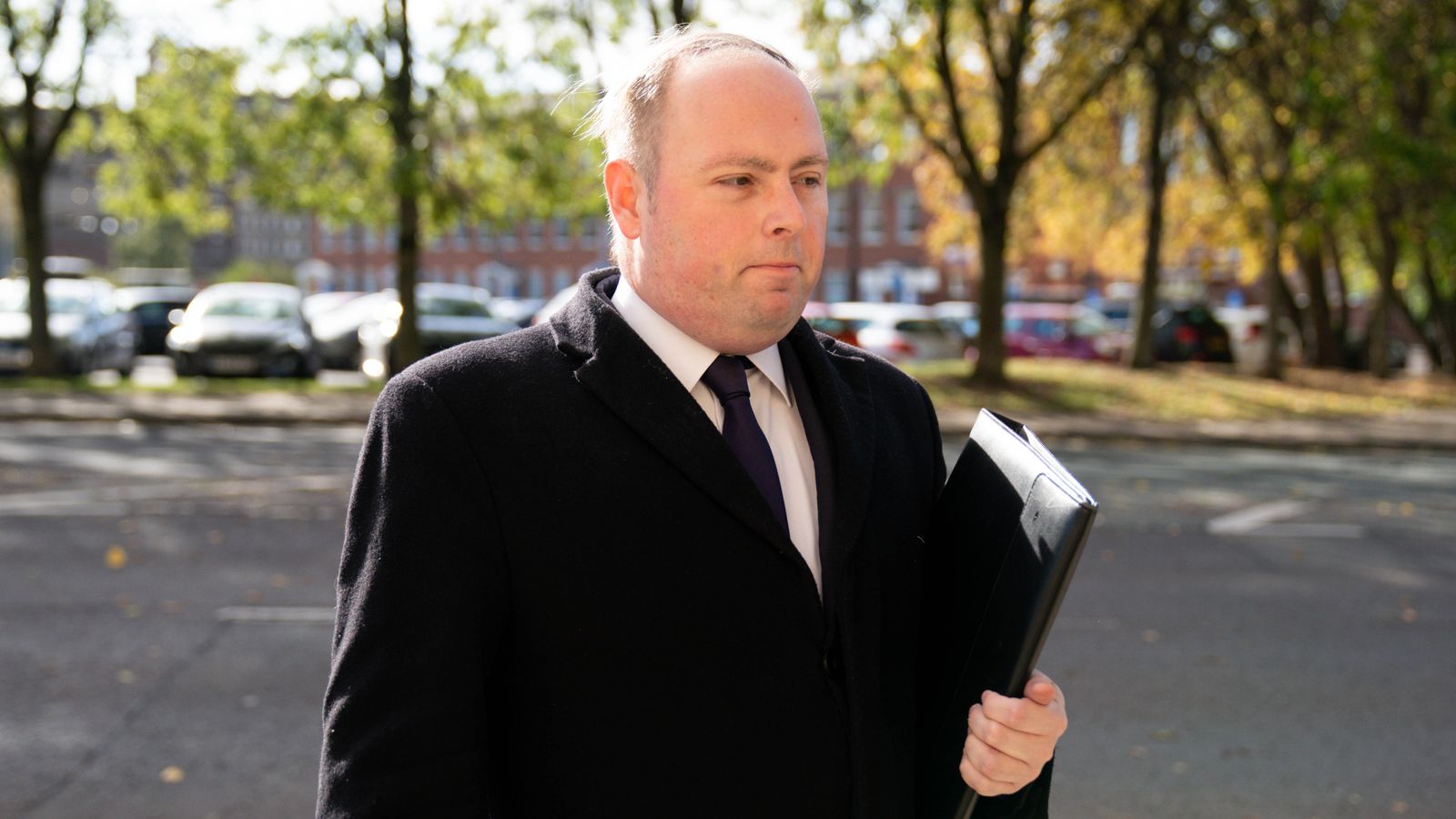
A former Tory MP failed to declare where he received £39,000 in political donations from, a crown court jury has heard.

David Mackintosh, who represented Northampton South between 2015 and 2017, is alleged to have accepted three donations of £10,000 and six of £1,500 that were made in an allegedly “underhand way”, Warwick Crown Court was told on Tuesday.

Mr Mackintosh, the former lead of Northampton Borough Council, is standing trial alongside property developer Howard Grossman, who is accused of using third parties to conceal the source of the nine separate donations to the Northampton South Conservative Association.

Mr Mackintosh and Mr Grossman both deny two counts of failing to ensure details were provided in relation to political donations during 2014.

Prosecutor William Boyce KC said the donations had been made through other people without properly declaring they were from Mr Grossman.

Politics latest: Poll boost for Labour after double by-election success

The prosecutor said Mr Grossman “donated £39,000 to Mr Mackintosh’s fighting fund not in his own name… pretending in essence that they [other people] were the donors”.

More on Conservatives

He alleged Mr Grossman did not want it to be known that he was the source of the funds.

“They were close friends and they worked together,” Mr Boyce said. “The case against Mr Mackintosh is that he received those donations knowing that Mr Grossman was doing it in that underhand way.”

Mr Boyce said Mr Grossman had become friends with Mackintosh after they both worked on a project to develop Northampton Town football club’s Sixfields Stadium, which was funded by council loans.

“On Mr Mackintosh’s case, Mr Grossman’s generosity must have extended to helping him… without telling his friend what he was doing,” Mr Boyce said.

“This case is not about why he [Grossman] wished to donate money – it’s about the methodology he employed in doing so. The prosecution do not have to prove why he did it.”

Mr Boyce said Mr Grossman and Mr Mackintosh met for the first time in 2012 after the former began discussions with the owners of Northampton Town about redeveloping Sixfields Stadium.

The court was told that a year later, the borough council resolved to lend the football club up to £12m.

Mr Boyce said Mr Grossman then became involved in a fundraiser for Mr Mackintosh at London’s Carlton Club in November 2014 – which charged guests £295 each – showcasing their close relationship.

The court was told that when Mr Mackintosh was interviewed by the police in March 2018 he answered “no comment” to the questions asked of him, but said in a statement that two other councillors had also benefitted from funds donated to the local Conservatives.

Mr Grossman also provided investigators with a prepared statement, saying he was “genuinely impressed” by Mr Mackintosh and wished to support him, having first met him in June 2013.

The trial continues.

Continue Reading

Politics

EU may consolidate crypto regulations, IMF warns of stablecoin risk: Global Express

Published

on

By

EU may consolidate crypto regulations, IMF warns of stablecoin risk: Global Express

European tech regulators have fined social media platform X 120 million euros ($140 million) for breaking EU rules pertaining to online content.

The fine follows a two-year investigation under the Digital Services Act (DSA), which reportedly found that X was not doing enough to tackle illegal and harmful material.

Regulators also said that the blue check marks on Elon Musk’s platform were deceiving. They did not follow industry decisions and negatively impacted users’ ability to make informed decisions about the authenticity of an account.

The fine is part of a wider crackdown on Big Tech companies, particularly social media. TikTok reported it had avoided a fine by making concessions.

The actions against X are bound to create tension with the US. Vice President JD Vance said that EU regulators shouldn’t be “attacking” American companies.

Source: JD Vance

The DSA will also apply to crypto platforms, DeFi frontends and NFT marketplaces if they grow to a sufficiently large size. It can influence how these platforms handle ads, user-directed content and market financial instruments.

EU banks launch euro-stablecoin firm as EU considers ESMA crypto oversight

A group of 10 European banks, including institutional heavyweights such as BNP Paribas, is planning to launch a stablecoin backed by the euro by the second half of 2026.

BNP Paribas partnered with Danish Danske Bank, the Netherlands’ ING, Austria’s Raiffeisen Bank International and others to create and incorporate the project as Qivalis. The company will be based in Amsterdam.

Qivalis CEO Jan-Oliver Sell said that stablecoins provide both convenience and monetary autonomy “in the digital age.” He said it will give “new opportunities for European companies and consumers to interact with on-chain payments and digital asset markets in their own currency.”

The new project was announced days before the European Commission proposed expanding the powers of the EU’s key financial regulator, the European Securities and Markets Authority (ESMA).

The proposal, released Thursday, would transfer supervision “over significant market infrastructures such as certain trading venues, Central Counterparties (CCPs), CSDs, and all Crypto-Asset Service Providers (CASPs)” to the ESMA.

The move is part of a broader effort to streamline European market regulation. Three countries — France, Italy and Austria — have requested that the ESMA take over crypto regulations. This followed concerns that there was uneven enforcement of Markets in Crypto-Assets (MiCA) standards across member states.

Related: What is Markets in Crypto-Assets (MiCA)?

Spot crypto assets to begin trading on futures market, CFTC says

In the United States, the Commodity Futures Trading Commission (CFTC) has approved spot cryptocurrency products to trade on futures markets.

Acting Chair Caroline Pham said that the move brings these products onshore to “safe U.S. markets.” She said the approval followed recommendations from the White House’s Working Group on Digital Asset Markets and engagement with the Securities and Exchange Commission (SEC).

Earlier this year, the SEC and CFTC established the “Crypto Sprint” initiative to share recommendations and consult on best practices.

Source: Acting CFTC Chair Caroline Pham

Pham became acting chair at the beginning of the year. She is expected to step down when the Trump administration’s nominee, Michael Selig, is approved by Congress.

South Africa flags crypto risks; new rules in the works

The South African Reserve Bank, the country’s central bank, issued a warning on Nov. 25 about the perceived risks associated with stablecoins and cryptocurrencies. These include a lack of comprehensive regulations.

The bank was concerned that the global and borderless nature of cryptocurrencies would make them ideal for skirting financial regulations.

South Africa is second on the continent for value received in crypto. Source: Chainalysis

Herco Steyn, the bank’s lead macroprudential specialist, reportedly said the risk stemmed from “the lack of a complementary and full regulatory framework, which is not possible at the moment.”

In 2023, he wrote, “Regulatory influence over stablecoin issuers – whether domiciled domestically or abroad – may result in spillovers from the crypto asset ecosystem to the traditional financial system, particularly if South African regulatory authorities are unable to impose prudential requirements on stablecoin issuers.”

To address this, the reserve bank is reportedly working on new rules with the National Treasury to monitor cross-border crypto transactions and change exchange control laws so they fall under regulatory scrutiny.

IMF warns stablecoins could upend fragile financial systems

On Thursday, the International Monetary Fund (IMF) published a report on stablecoins outlining a number of risks, including:

  • Volatility in value and runs

  • Disintermediation of banks

  • Interconnection with the financial system

  • Currency substitution.

It said that the “use of foreign currency-denominated stablecoins, especially in cross-border contexts, could lead to currency substitution and potentially undermine monetary sovereignty, particularly in the presence of unhosted wallets.”

The IMF also noted that many major stablecoin issuers don’t provide or offer any redemption rights for holders. “Uncertainty of treatment in case of insolvency of stablecoin issuer may also accelerate runs,” it said.

Runs would also create first-mover advantages when there is a crisis of confidence, which could result in investors selling their holdings at a significant discount.

The IMF did acknowledge possible benefits of stablecoins, including faster transactions compared to bank transfers, particularly in the context of cross-border transactions and remittances. They can also facilitate digital payment in remote areas and reduce counterparty risk when integrated with smart contracts.

Magazine: Indian investors look beyond Bitcoin, Japan to soften crypto tax: Asia Express