
Allmendinger wins crash-marred Brickyard 200

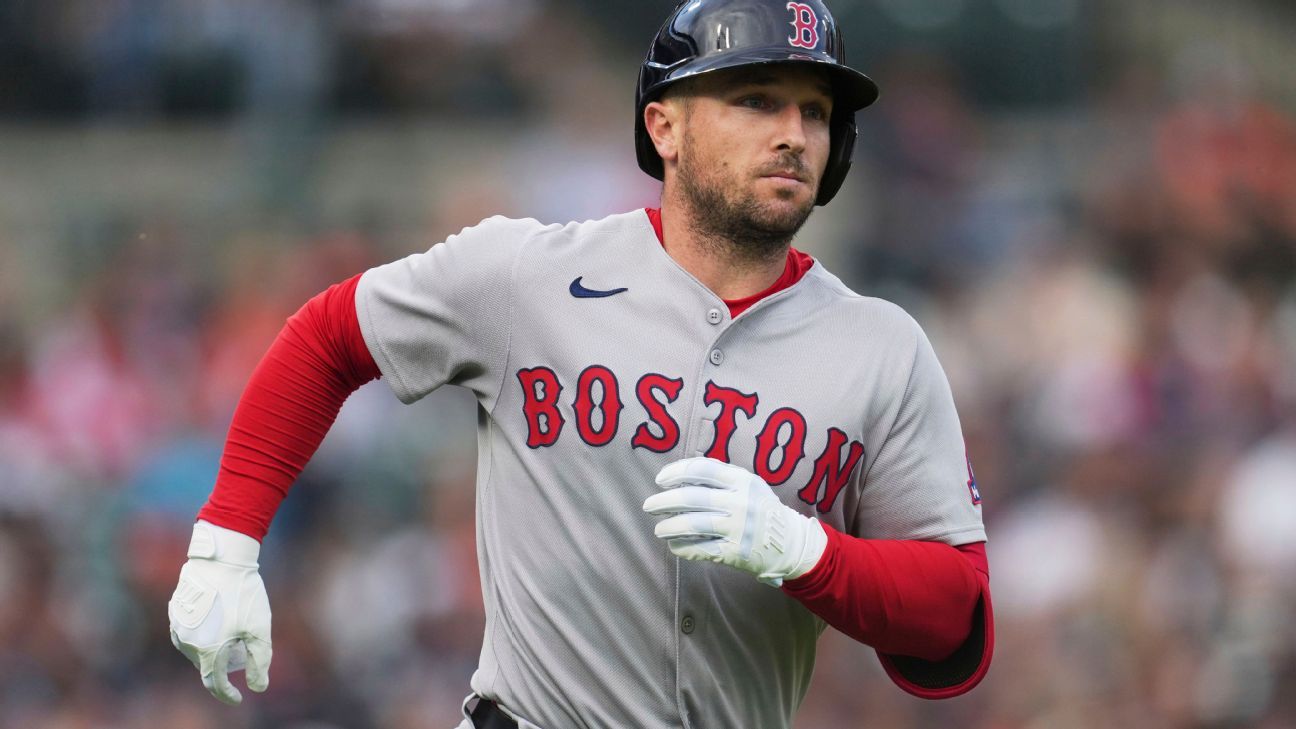

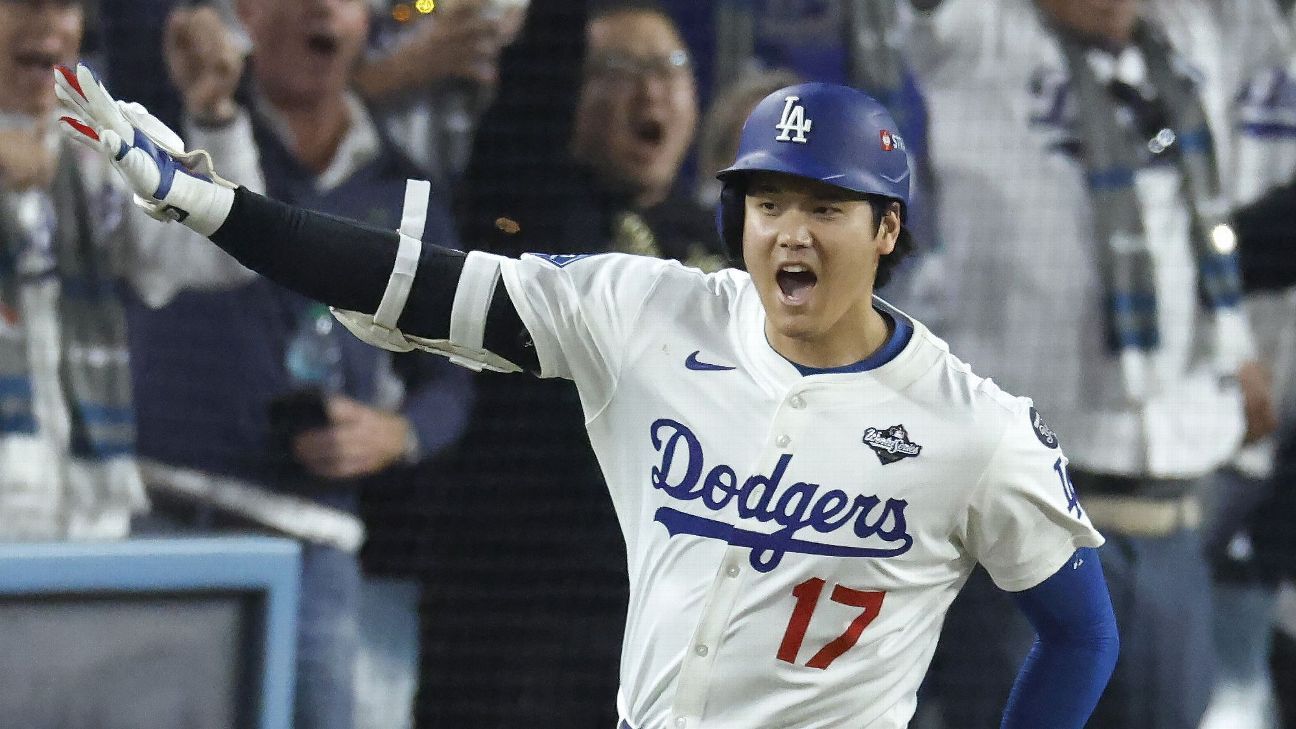
The 2025-26 MLB hot stove was lit just days after the Los Angeles Dodgers hoisted their second consecutive World Series championship trophy.
All eyes this winter are on a free agent hitting class featuring Kyle Tucker, Kyle Schwarber (who is returning to the Phillies on a five-year deal), Cody Bellinger, Alex Bregman and Pete Alonso. But they’re not the only ones who will make a splash in the market.
Which teams will go big to contend for the 2026 World Series title? And who will make the trades and signings that have everyone buzzing?
Below is a running list of notable transactions and updates from throughout the MLB offseason.
Key links: Offseason grades | Top 50 free agents | Fantasy spin | Best fits
Notable MLB offseason transactions
Dec. 9

Closer Edwin Diaz and the Dodgers are in agreement on a three-year, $69 million deal, sources tell ESPN.

Kyle Schwarber and the Philadelphia Phillies are in agreement on a five-year, $150 million contract, sources told ESPN, reuniting the National League home run leader with the team he has played for the past four seasons.
Dec. 8

Left-hander Steven Matz and the Tampa Bay Rays are in agreement on a two-year contract, pending physical, sources tell ESPN.

Free agent pitcher Michael Soroka and the Arizona Diamondbacks are in agreement on a one-year deal, pending a physical, sources tell ESPN.
Dec. 6


The Washington Nationals traded left-hander Jose Ferrer to the Seattle Mariners for top catching prospect Harry Ford and minor league pitcher Isaac Lyon, the teams announced Saturday.
Dec. 4


The Boston Red Sox acquired right-hander Johan Oviedo from the Pittsburgh Pirates in a five-player trade that sent heralded outfield prospect Jhostynxon Garcia to Pittsburgh, the teams announced Thursday.
Dec. 3
Outfielder Cedric Mullins has agreed to a one-year deal with the Tampa Bay Rays, according to multiple reports.

Free agent closer Emilio Pagan has agreed to return to the Cincinnati Reds on a $20 million, two-year contract, according to multiple reports.
World Series hero Miguel Rojas is returning to the Dodgers in 2026, for what will be his final season in the major leagues, sources told ESPN. The infielder agreed to terms on a one-year, $5.5 million deal, after which he will be assisting the front office and helping in player development.

Left-handed reliever Sam Hentges and the San Francisco Giants agreed to a $1.4 million, one-year contract.

Left-hander Anthony Kay and the Chicago White Sox are in agreement on a two-year, $12 million contract with a club option for a third season, sources told ESPN.
Dec. 2

Right-hander Cody Ponce, who won KBO MVP honors last season, and the Toronto Blue Jays are in agreement on a three-year, $30 million contract, sources told ESPN

Former KBO pitcher Ryan Weiss is in agreement with the Houston Astros on a one-year contract that guarantees him $2.6 million, sources told ESPN.

Right-hander Alek Manoah and the Los Angeles Angels are in agreement on a one-year, $1.95 million contract, a source tells ESPN.
Dec. 1

Reliever Devin Williams and the New York Mets are in agreement on a three-year contract that guarantees more than $50 million, sources tell ESPN.
Nov. 29

Closer Ryan Helsley and the Baltimore Orioles agreed on a two-year contract that includes an opt-out after the first season.
Nov. 26
Right-hander Dylan Cease and the Toronto Blue Jays agreed on a seven-year, $210 million contract.
Nov. 25

The Boston Red Sox acquired veteran right-hander Sonny Gray in a trade with the St. Louis Cardinals.
Nov. 23

The New York Mets and Texas Rangers agreed to a trade that would send second baseman Marcus Semien to the Mets and outfielder Brandon Nimmo to the Rangers.
Nov. 21

The Chicago Cubs and right-handed reliever Phil Maton agreed on a two-year deal.

The Giants acquired outfielder Joey Wiemer from the Marlins for cash and agreed to terms with right-hander JT Brubaker on a one-year contract.
The Arizona Diamondbacks agreed to a one-year, $2.75 million deal with veteran catcher James McCann.
Nov. 19

The Braves re-signed closer Raisel Iglesias to a one-year, $16 million contract.
The Atlanta Braves acquired Mauricio Dubon from the Houston Astros for Nick Allen in an exchange of infielders.
Nov. 18
The Baltimore Orioles acquired outfielder Taylor Ward from the Los Angeles Angels in exchange for right-hander Grayson Rodriguez.


New York Yankees outfielder Trent Grisham, Detroit Tigers infielder Gleyber Torres, Milwaukee Brewers pitcher Brandon Woodruff and Chicago Cubs pitcher Shota Imanaga accepted their qualifying offers, meaning they’ll return to their respective teams in 2026 at salaries of $22.025 million.
Nov. 17
Reliever Ryan Yarbrough will be back in the Bronx after agreeing to a one-year deal with the New York Yankees.
Nov. 16
First baseman Josh Naylor and the Seattle Mariners have finalized a five-year, $92.5 million contract that has a full no-trade clause and no deferrals, sources tell ESPN.
Nov. 4
Chicago Cubs SP Shota Imanaga becomes free agent after team, player reject options for 2026
Nov. 3
Milwaukee Brewers exercise option on SP Freddy Peralta; SP Brandon Woodruff declines option
Boston Red Sox 3B Alex Bregman opts out of contract; SP Lucas Giolito declines option
New York Yankees OF Cody Bellinger declines option
New York Mets 1B Pete Alonso, RP Edwin Díaz opt out of contracts
Key offseason dates
Nov. 6: Free agency begins at 5 p.m. ET
Nov. 10-13: GM meetings in Las Vegas
Nov. 18-20: Owners meetings in New York
Nov. 18: Deadline to accept or reject qualifying offer
Nov. 21: Non-tender deadline
Dec. 8-10: Winter meetings in Orlando
Dec. 9: MLB draft lottery
Dec. 10: Rule 5 draft

-
Jorge Castillo
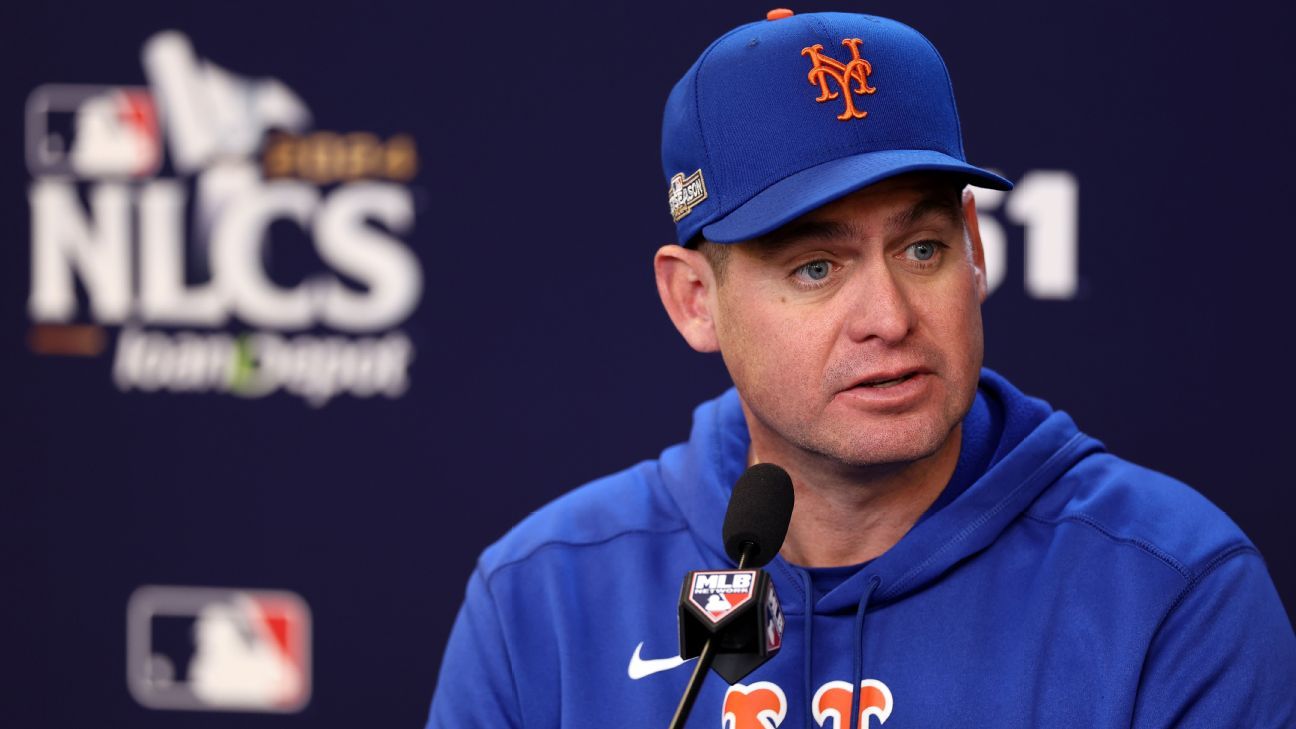
ORLANDO, Fla. — New York Mets manager Carlos Mendoza disputed recent reports of clubhouse issues last season, including a rift between Francisco Lindor and Juan Soto, calling them a “lie” and “wrong” during a news conference at MLB’s winter meetings Monday.
“It’s impressive that nobody talked about our clubhouse and in the last two weeks what we hear is that we were basically fighting every day when it’s completely contrary to the reality,” Mendoza said in Spanish. “It’s a professional clubhouse where the guys respected each other, where the guys came to work and to compete day in and day out.”
Last month, the New York Post reported that Lindor had strong words for second baseman Jeff McNeil after a late-inning defensive mistake against the Philadelphia Phillies on June 20. The incident, confirmed by sources to ESPN, happened in front of teammates in the clubhouse and spawned tension.
The Mets dropped that game in Philadelphia 10-2 for their seventh straight loss. The skid was the beginning of a 3½-month collapse that plummeted the Mets from the best record in baseball to out of the postseason picture despite fielding the second-most expensive roster in the majors.
“What was the difference? We didn’t win baseball games,” Mendoza said. “Nobody talked about our clubhouse for the first 2½ months of the season when we had the best record. Nobody talked about the clubhouse. Two and a half months of bad baseball happened, and so now everyone is talking about the problems. It’s completely a lie. But it’s part of the market. It’s part of what we live with in New York.”
Mendoza also addressed criticism former Mets reliever Adam Ottavino recently levied at him on his “Baseball & Coffee” podcast. Ottavino, who made 60 relief appearances for the 2024 Mets under Mendoza, decried the Mets’ spate of injuries to pitchers, saying Mendoza “has no idea what he’s doing when it comes to bullpen guys and how to keep them healthy or even how to care about them at all.”
Mets relievers ranked third in innings pitched last season. Relievers Reed Garrett, Danny Young, Max Kranick and Dedniel Nunez were among the pitchers lost for the season because of arm injuries. The workload, Mendoza noted, was the product of Mets starters’ inability to pitch deep into games; Mets starters finished 27th in baseball in innings pitched. But Mendoza, who led the Mets to the National League Championship Series as a rookie manager in 2024, insisted he was cautious with reliever usage.
“The facts are right there,” Mendoza said. “We were probably one of the teams that protected the bullpen guys better than anybody. And you’re talking about we were able to do that with so little length that we were getting from the starters. I don’t think this is a Mets issue. I think this is an industry [issue]. This year, we were dealing with a lot of injuries. But like I said, I’m comfortable with the process, too.”
Bolstering the bullpen was a priority for the Mets entering the offseason. The club recently addressed the relief corps by signing Devin Williams to a three-year, $51 million deal. Williams will either close games or serve as a setup man should the Mets re-sign Edwin Diaz. Mets president of baseball operations David Stearns on Monday said other needs include a starting pitcher and an outfielder, though he insisted the door has not closed on a potential reunion with first baseman Pete Alonso.
“As I’ve said all along, he’s a great Met,” Stearns said. “We’d love to have him back.”
-
 Sports2 years ago
Story injured on diving stop, exits Red Sox game
-
 Sports3 years ago
‘Storybook stuff’: Inside the night Bryce Harper sent the Phillies to the World Series
-
 Sports2 years ago
Game 1 of WS least-watched in recorded history
-
 Sports3 years ago
Button battles heat exhaustion in NASCAR debut
-
 Sports3 years ago
MLB Rank 2023: Ranking baseball’s top 100 players
-
Sports4 years ago
Team Europe easily wins 4th straight Laver Cup
-
 Environment3 years ago
Japan and South Korea have a lot at stake in a free and open South China Sea
-
 Environment1 year ago
Here are the best electric bikes you can buy at every price level in October 2024