
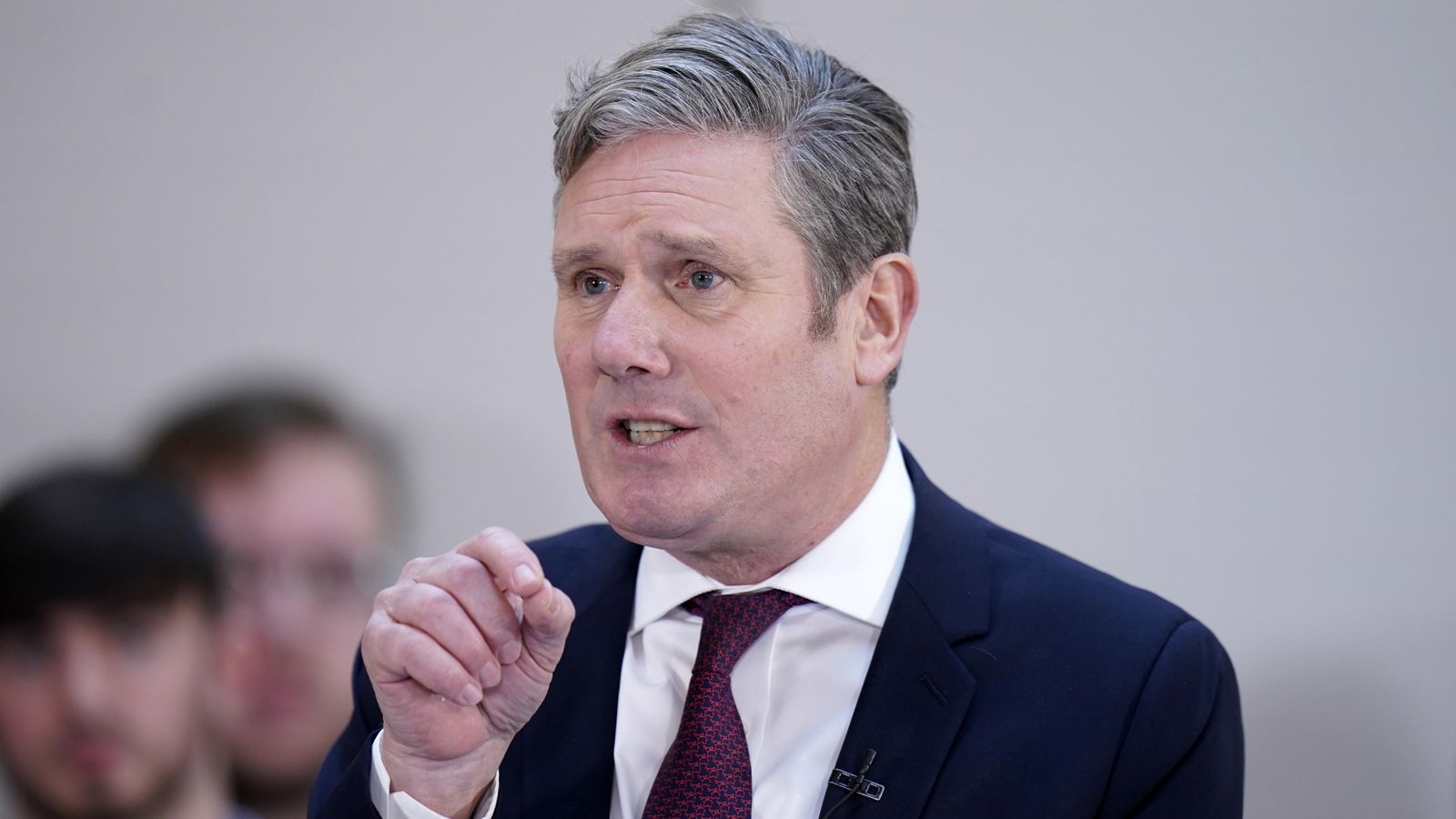
Sir Keir Starmer to pledge end of ‘sticking plaster politics’ in first big speech of 2023

Sir Keir Starmer will promise to end “sticking plaster politics” when he delivers his first speech of the new year.
The Labour leader will claim on Thursday that “a short-term mindset” dominates Westminster under the Conservatives, pointing in particular to its handling of the crisis in the NHS.
He will promise “a completely new way of governing” under his leadership, “driven by clear, measurable objectives” or “national missions”.
Sir Keir will also warn Labour would not be “getting its big government chequebook out again” to solve the problems facing the country.
The Conservatives have said it is “yet another desperate relaunch attempt” by Sir Keir and called on him to “stop playing politics and back our plan for a better future that delivers for all”.
In a preview of Sir Keir’s speech released before his appearance in east London, little concrete policy has been revealed.
Yet a number of promises are set to be made around giving the public “a sense of possibility again” and showing “light at the end of the tunnel” by delivering “a decade of national renewal” and “the economy and the politics Britain deserves”.
The leader will say the pressures on the NHS have been “an iceberg on the horizon” for the government, but it has chosen to stick to short-term fixes rather than long-term change.
“You can’t overstate how much a short-term mindset dominates Westminster,” he will say. “And from there, how it infects all the institutions which try and fail to run Britain from the centre.
“Time and again it’s the same pattern. I call it ‘sticking plaster politics’.
“This year, we’re going to show how real change comes from unlocking the pride and purpose of Britain’s communities.
“No more Westminster hoarding power, no more holding back this country’s economic potential.
“A fairer, greener, more dynamic country is coming and a transformed state and politics will take us there.”
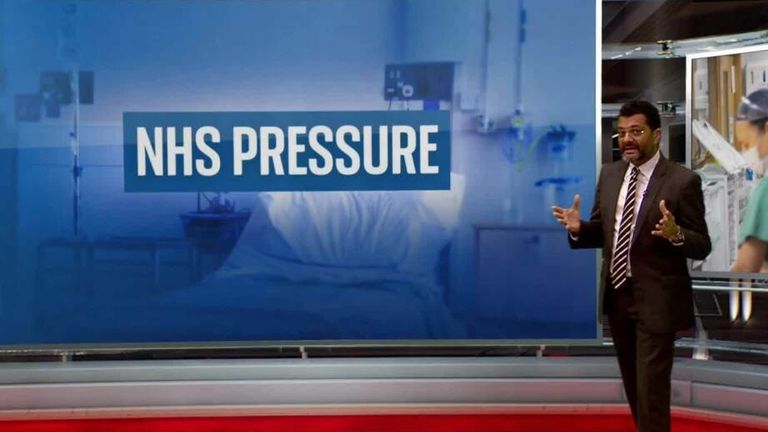
The numbers behind the pressure on the NHS this winter
Labour cannot ‘spend our way’ out of Tory ‘mess’
In what the party describes as a “stark warning over the need for reform”, Sir Keir will say: “Let me be clear – none of this should be taken as code for Labour getting its big government chequebook out again.
“Of course investment is required – I can see the damage the Tories have done to our public services as plainly as anyone.
“But we won’t be able to spend our way out of their mess – it’s not as easy as that. There is no substitute for a robust private sector, creating wealth in every community.”
In that vein, he will promise a “more strategic” and “new approach to the power of government”, that is “more relaxed about bringing in the expertise of public and private, business and union, town and city [and] using that partnership to drive our country forward”.
“For all the challenges we face, I remain optimistic about our future,” Sir Keir will say. “I believe in our country, I believe in our businesses, I believe in our people, I believe in our spirit, in the ambition they have for themselves and their community.
“So this New Year, let us imagine what we could achieve if we match the ambition of the British people, unlock their pride and their purpose, give them an economy and a politics they deserve.”
More detail on the so-called “missions” will be announced in the coming weeks and form the basis of the party’s next election manifesto, with Sir Keir calling them “the driving force of the next Labour government”.
Starmer ‘changes position every week’
Tory chairman Nadhim Zahawi accused Labour of “failing to set out a positive, detailed, long-term plan to secure the future prosperity of Britain”.
Mr Zahawi added: “Every week [Sir Keir] changes his position depending on what he thinks is popular – from supporting free movement to supporting the unions, he’ll say anything if the politics suits him.
“He should stop giving cliché-laden speeches, and instead finally unveil a plan for people’s priorities. He’s got nothing to say on how to cut crime, get immigration down, and reduce borrowing – that’s what the nation wants to see.”
Sir Keir’s speech will come the day after Rishi Sunak, the prime minister, gave his first speech of the year, outlining five promises to deliver “peace of mind” to the public.
He pledged to halve inflation; to grow the economy; to reduce debt; to cut hospital waiting lists; and to stop migrant crossings.
Labour accused him of focusing on areas where progress is already predicted over the coming months, and “failing to tackle the big pressures” the country is facing.
World
More than 800,000 young children seeing social media content ‘designed to hook adults’, figures show


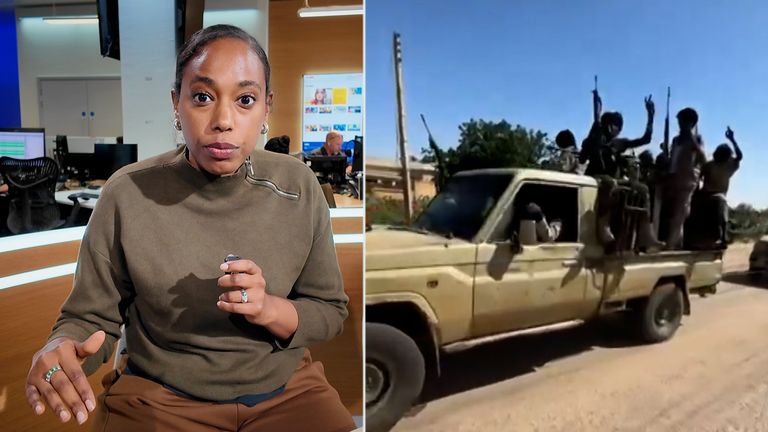
Sudan’s paramilitary Rapid Support Forces says it has captured Babanusa, a transport junction in the south of the country, just a month after the fall of Al Fashir to the same group.
The RSF said in a statement the seizure of the city in West Kordofan state came as it repelled “a surprise attack” by the Sudanese army in what it called “a clear violation of the humanitarian truce”.
The paramilitary group added it had “liberated” the city in the state, which has become the latest frontline in the war in Sudan.
Sky’s Yousra Elbagir explains the unfolding humanitarian crisis
It comes just over a month after the Sudanese Armed Forces (SAF) withdrew from military positions in the heart of Al Fashir, the capital of North Darfur, and the symbolic site was captured by the RSF with no resistance.
The RSF claimed at the time it had taken over the city and completed its military control of the Darfur region, where the administration of former US president Joe Biden has accused the group of committing genocide.
Sky’s Africa correspondent Yousra Elbagir on why evidence suggests there is a genocide in Sudan.
The war between the Sudanese army and the RSF – who were once allies – started in Khartoum in April 2023 but has spread across the country.
About 12 million people are believed to have been displaced and at least 40,000 killed in the civil war, according to the World Health Organization (WHO) – but aid groups say the true death toll could be far greater.
Tom Fletcher, the UN’s under-secretary-general for humanitarian affairs, recently told Sky’s The World With Yalda Hakim the situation was “horrifying”.
“It’s utterly grim right now – it’s the epicentre of suffering in the world,” he said of Sudan.
Read more:
Tens of thousands killed in two days in Sudan city
Sudan’s war: Is it a genocide?
The United States, the United Arab Emirates, Egypt and Saudi Arabia – known as the Quad – earlier in November proposed a plan for a three-month truce followed by peace talks.
The RSF responded by saying it had accepted the plan, but soon after attacked army territory with a barrage of drone strikes.
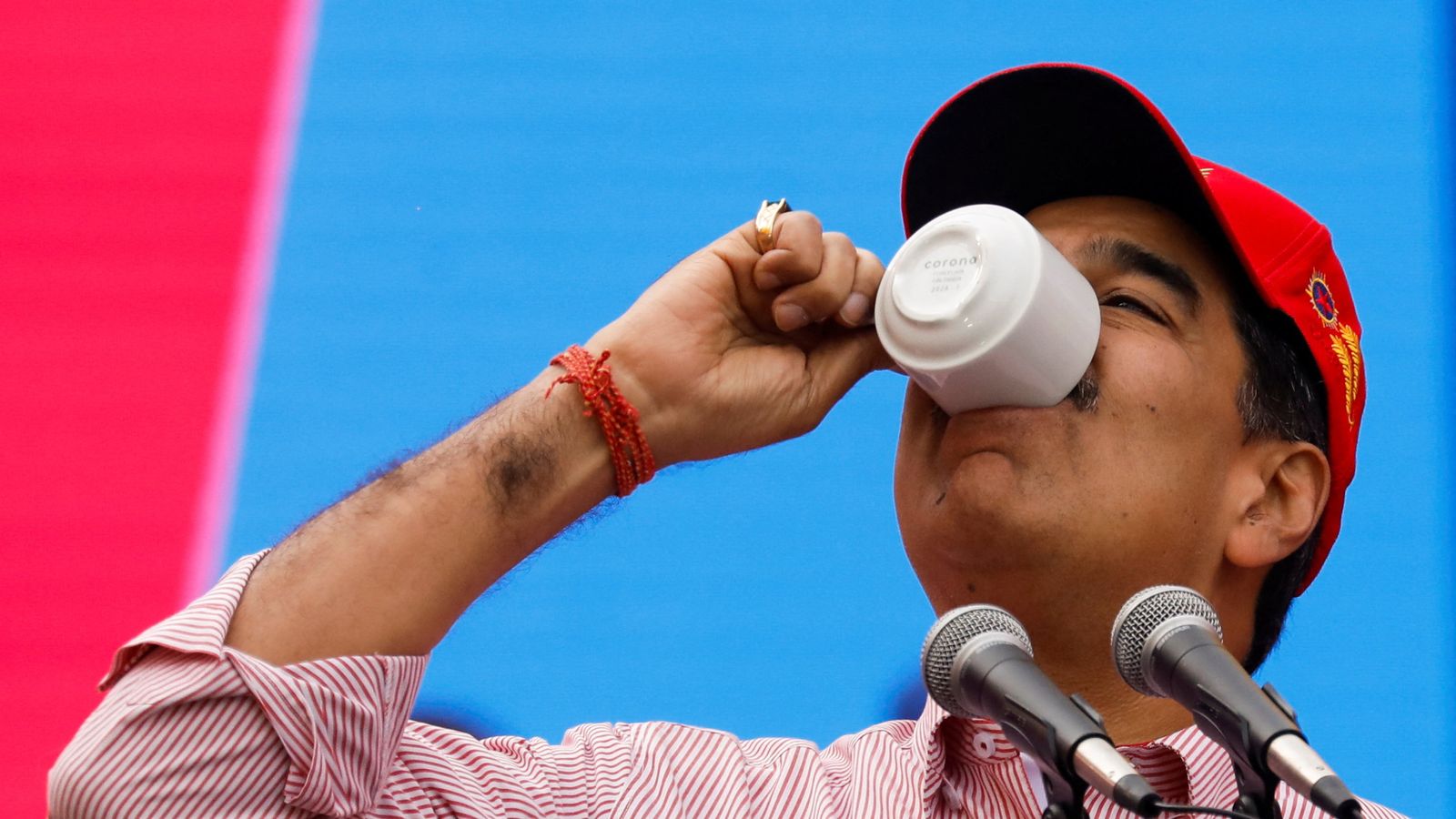
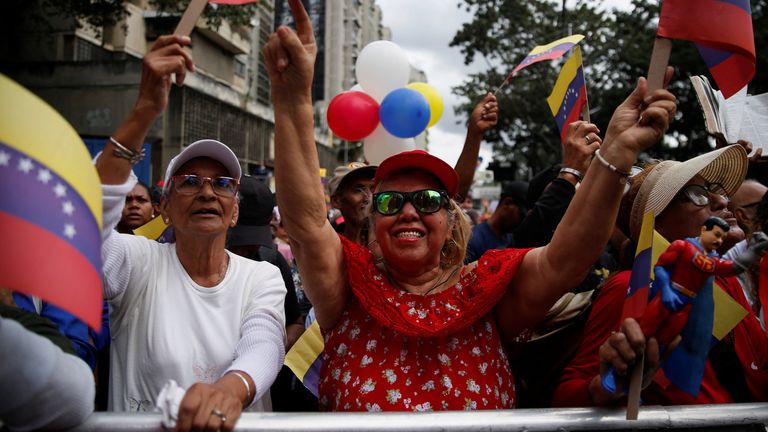
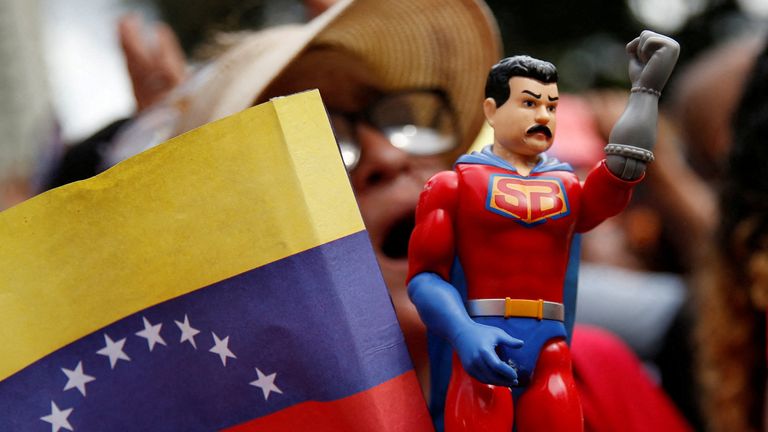
Nicolas Maduro has said Venezuelans are ready to defend their country as the US considers a land attack.
The president held a rally in Caracas amid heightened tensions with Donald Trump’s administration, which has been targeting what it says are boats carrying drug smugglers.
Mr Trump met his national security team on Monday evening, having warned last week that land strikes would start “very soon”.
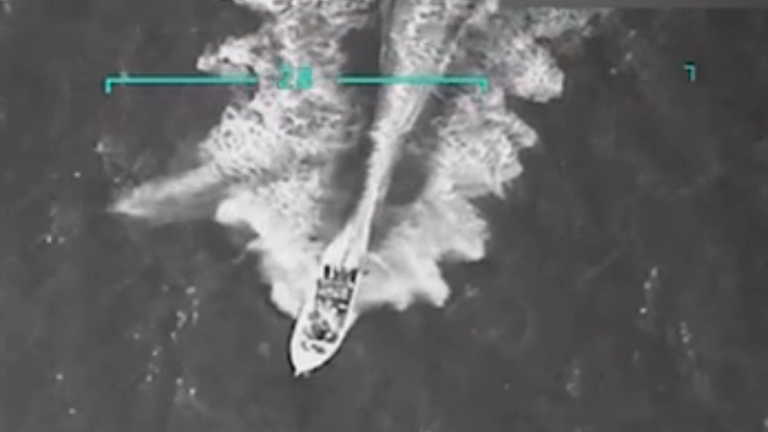
An image of an alleged drug boat being targeted by the US military. Pic: Truth Social
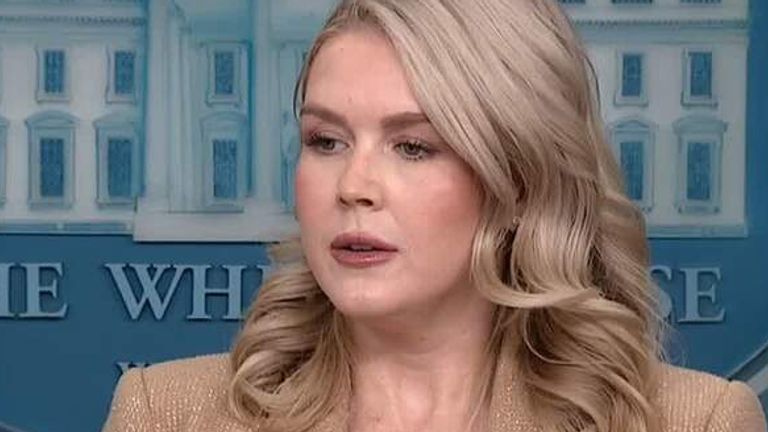
It’s not been confirmed what was discussed at the meeting, but White House press secretary Karoline Leavitt told reporters: “There’s many options at the president’s disposal that are on the table – and I’ll let him speak on those.”
US forces have carried out at least 21 strikes on boats it claims were carrying narcotics to its shores over the last few months, and the White House has accused Mr Maduro of being involved in the drugs trade – a claim he denies.
‘The president has a right to take them out’
‘Psychological terrorism’
Mr Maduro – widely considered a dictator by the West – said on Monday that Venezuelans are ready “to defend [the country] and lead it to the path of peace”.
“We have lived through 22 weeks of aggression that can only be described as psychological terrorism,” he said.
Venezuela has said the boat attacks, which have killed more than 80 people, amount to murder – and that Mr Trump’s true motivation is to oust Mr Maduro and access its oil.
Concerns have been raised over the legality of the US attacks, which the Pentagon has sought to justify by designating the gangs as foreign terror organisations.
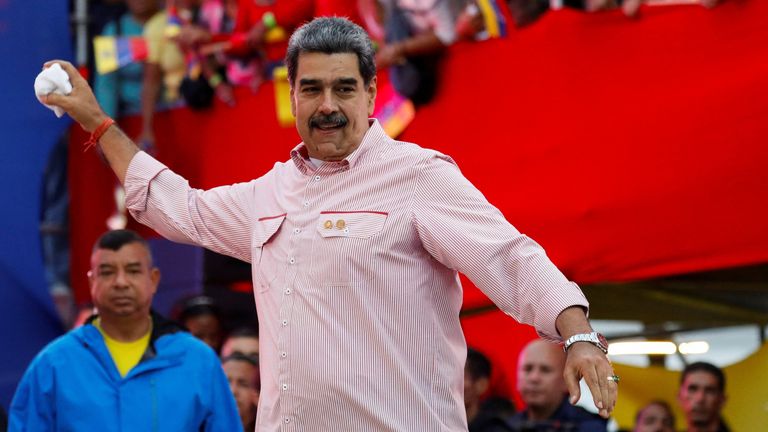
Maduro was championed by supporters as he spoke on Monday. Pics: Reuters
Controversy over US strikes
Tensions remain high over America’s large deployment in the Caribbean Sea and eastern Pacific, which includes its flagship aircraft carrier and thousands of troops.
The US has released videos of boats being blown up but has not provided evidence – such as photos of drugs – to support the smuggling claims.
Controversy also surrounds the first incident, on 2 September, in which 11 people were killed – with a follow-up strike targeting the boat after the first attack left two survivors in the water.
US media reported defence secretary Pete Hegseth gave an order that everyone on board should be killed.
However, there are concerns about the legality of the second strike if the survivors posed no threat.
Mr Hegseth dismissed the reporting as “fake news” and insisted all actions in the region are compliant with US and international law.
“Every trafficker we kill is affiliated with a Designated Terrorist Organization,” he said on X.
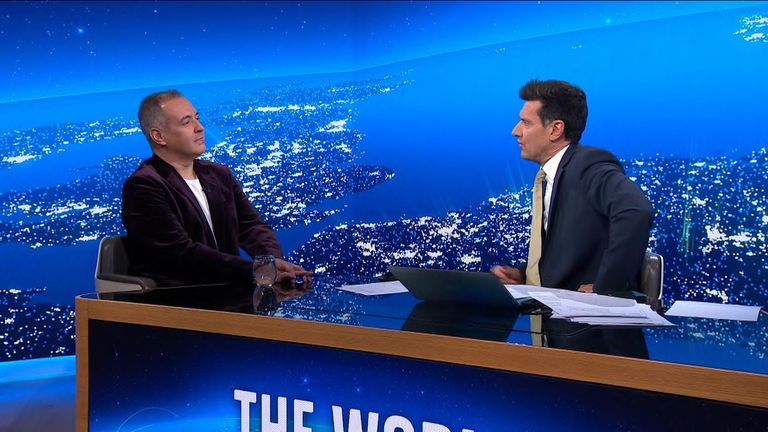
Is US about to go to war with Venezuela?
Mr Trump said on Sunday he would not have wanted a second strike and that Mr Hegseth had denied giving such an order.
Ms Leavitt confirmed on Monday that the boat had been hit by a second strike – but denied Mr Hegseth gave the order for the follow-up.
Instead, she said he had authorised US navy vice admiral Frank Bradley to attack, and the admiral acted “well within his authority and the law, directing the engagement to ensure the boat was destroyed and the threat to the US was eliminated”.
Read more from Sky News:
Hong Kong fire: 13 arrested as death toll hits 151
More than 1,100 confirmed dead in Asia floods
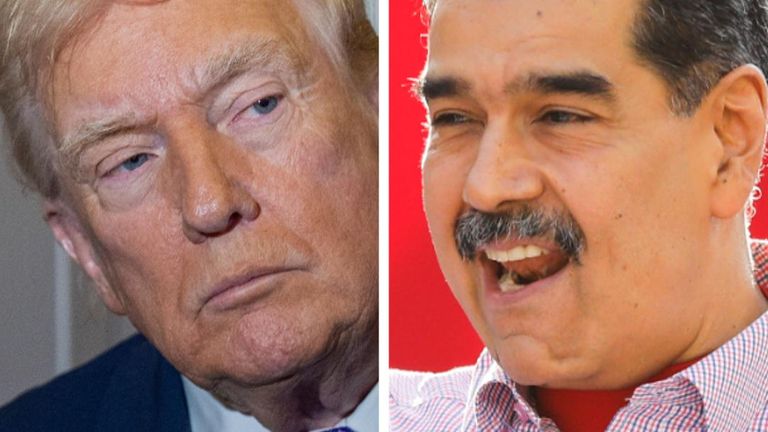
Trump: Maduro call neither ‘went well or badly’
As the US weighs its next steps, Mr Trump said on Sunday he had spoken to Mr Maduro by phone and that the conversation went neither “well or badly”.
In recent days, he also stated that Venezuela’s airspace should be considered closed – with the South American nation calling it a “colonial threat” and “illegal, and unjustified aggression”.
-
 Sports2 years ago
Story injured on diving stop, exits Red Sox game
-
 Sports3 years ago
‘Storybook stuff’: Inside the night Bryce Harper sent the Phillies to the World Series
-
 Sports2 years ago
Game 1 of WS least-watched in recorded history
-
 Sports3 years ago
Button battles heat exhaustion in NASCAR debut
-
 Sports3 years ago
MLB Rank 2023: Ranking baseball’s top 100 players
-
Sports4 years ago
Team Europe easily wins 4th straight Laver Cup
-
 Environment3 years ago
Japan and South Korea have a lot at stake in a free and open South China Sea
-
 Environment1 year ago
Here are the best electric bikes you can buy at every price level in October 2024