
Florida Governor Ron DeSantis enters presidential race with a glitch-filled Twitter chat with Elon Musk

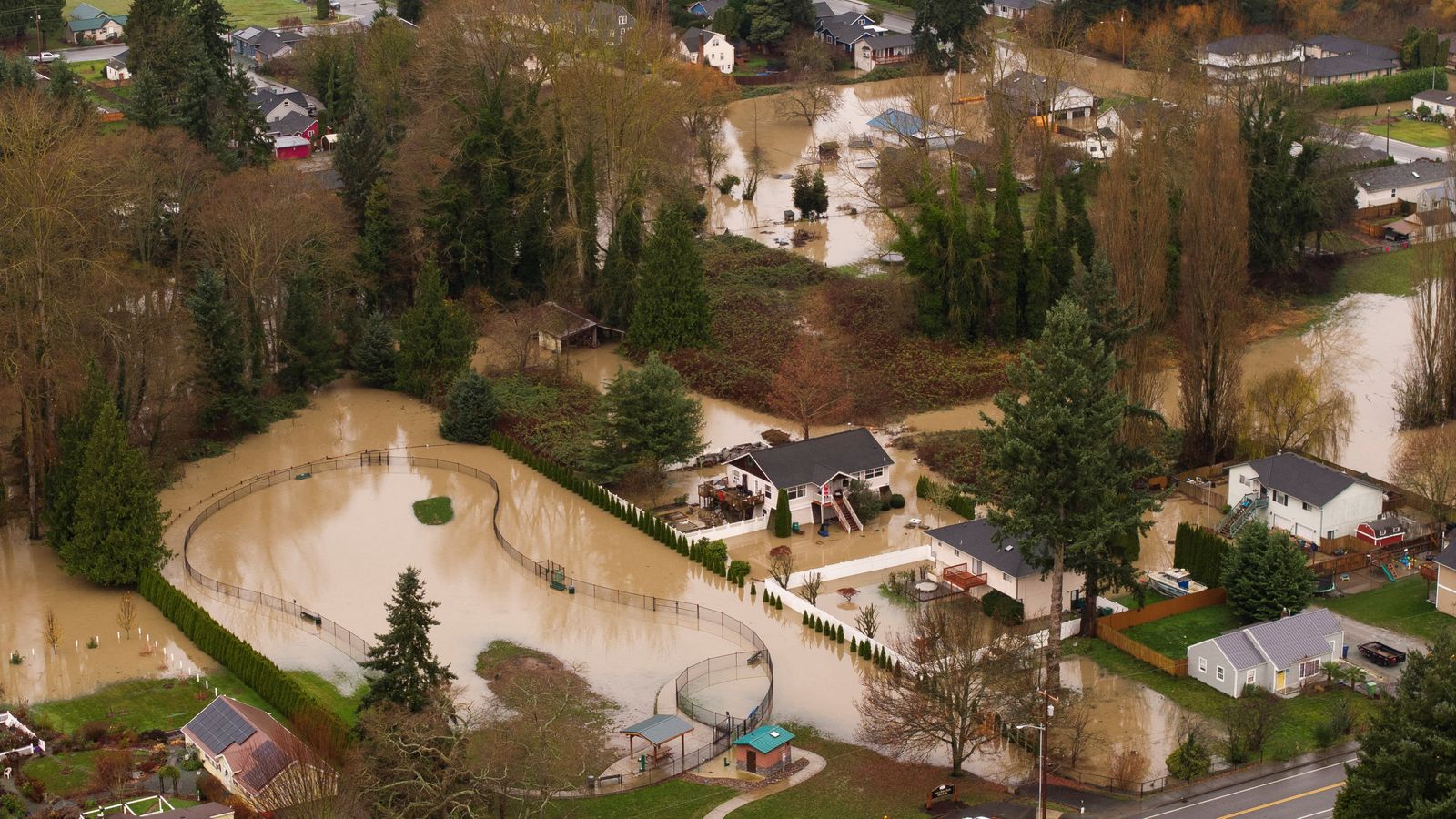
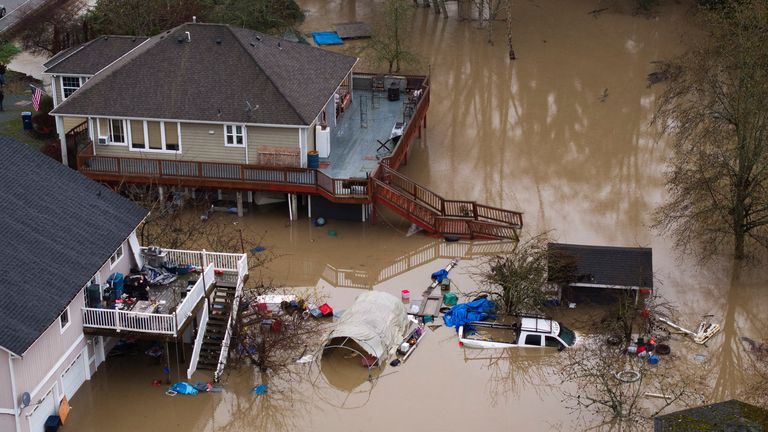
National Guard troops went door-to-door on Friday to evacuate a farming city north of Seattle as severe flooding in western Washington state put levees at risk.
Days of torrential rain have swelled rivers to record or near-record levels, as flooding has stranded families on rooftops, washed over bridges and ripped homes from their foundations.
Burlington, a city of nearly 10,000 residents near Puget Sound – a large inlet of the Pacific Ocean in northwestern Washington – was placed under a full evacuation order with people told to leave immediately and move to higher ground.
The Skagit River, a major waterway that flows from the Cascade Mountains through the Skagit Valley before emptying into Puget Sound, surged to a record high of nearly 38ft (11.6m) at Mount Vernon, about 10 miles south of Burlington.
“We haven’t seen flooding like this ever,” said Karina Shagren, a spokesperson for the state’s emergency management division, adding that there had been no reports of injuries or missing individuals so far.
Pic: Reuters
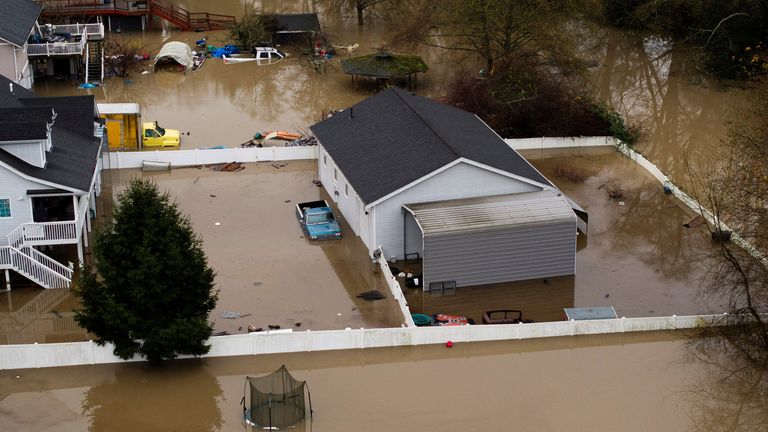
Pic: Reuters
National Guard troops and sheriff’s deputies were going door to assist with the evacuations.
Some responders were seen paddling stranded Burlington residents to safety in inflatable river rafts through the muddy floodwaters.
Later on Friday, the evacuation order was lifted for part of the city, Burlington police department spokesperson Michael Lumpkin said.
However, while water levels appeared to ease a little, Mr Lumpkin said “it’s definitely not an all-clear”.
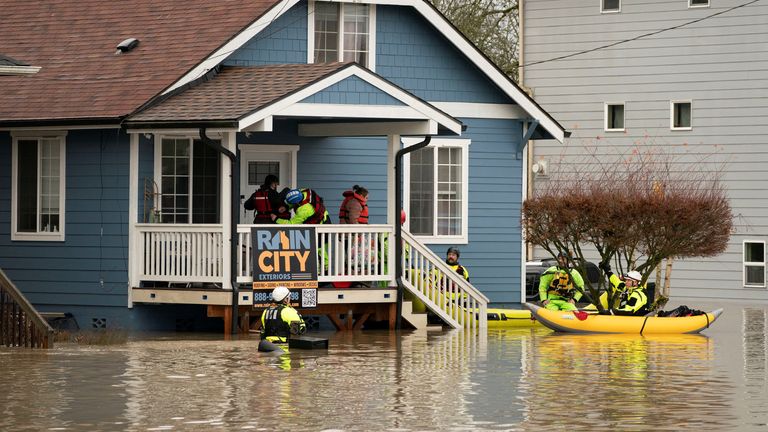
Pic: Reuters
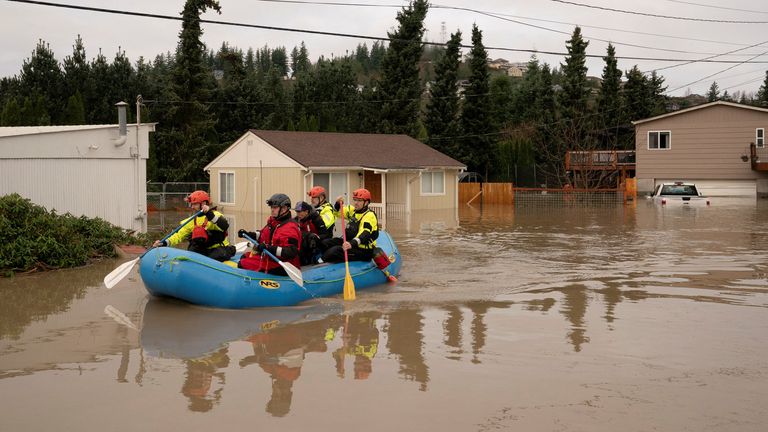
Pic: Reuters
Read more from Sky News:
Heavy rain and floods set to hit parts of UK
King reveals ‘good news’ in his battle with cancer
The intense rainfall was driven by an atmospheric river, a massive stream of moisture drawn from the ocean and carried inland over the Pacific Northwest earlier in the week.
Although rainfall has begun to ease, the National Weather Service has issued a flash-flood warning for the Skagit River basin all the way downstream to its mouth at Puget Sound.
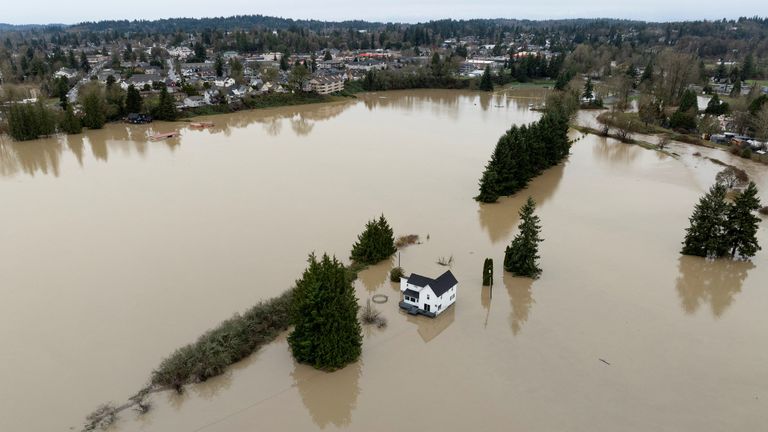
Snohomish, around 40 miles south of Burlington, has also been affected. Pic: Reuters
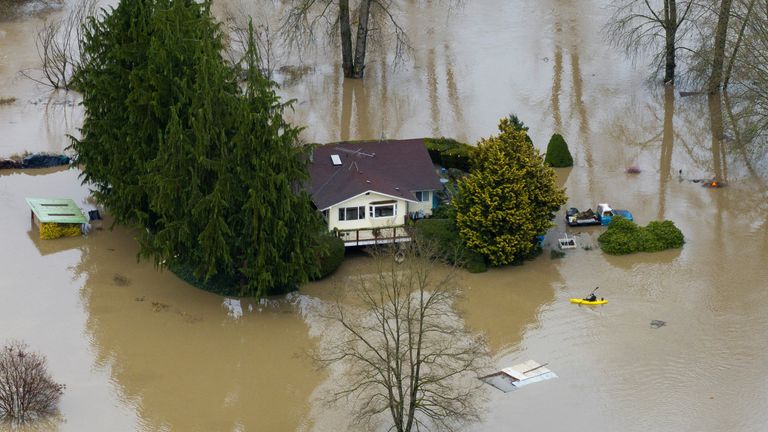
Pic: Reuters
The swollen waters could put enough strain on levees to cause them to fail, the weather service noted.
“Extensive flooding of streets, homes and farmland will be possible” if levees and dikes give way, it said.
The Burlington-Mount Vernon area in Skagit County continues to be the hardest-hit area, facing extensive flooding from days of heavy rainfall stretching from northern Oregon through western Washington and into British Columbia.
National Guard troops were also dispatched to deliver food and check on stranded residents in a number of communities cut off by flooding in adjacent Snohomish County, south of Skagit County.
The flooding washed out or forced the closure of dozens of roads throughout the region, including most of the Canadian highways leading to the port city of Vancouver in British Columbia.
Parts of northern Idaho and western Montana have also been impacted.
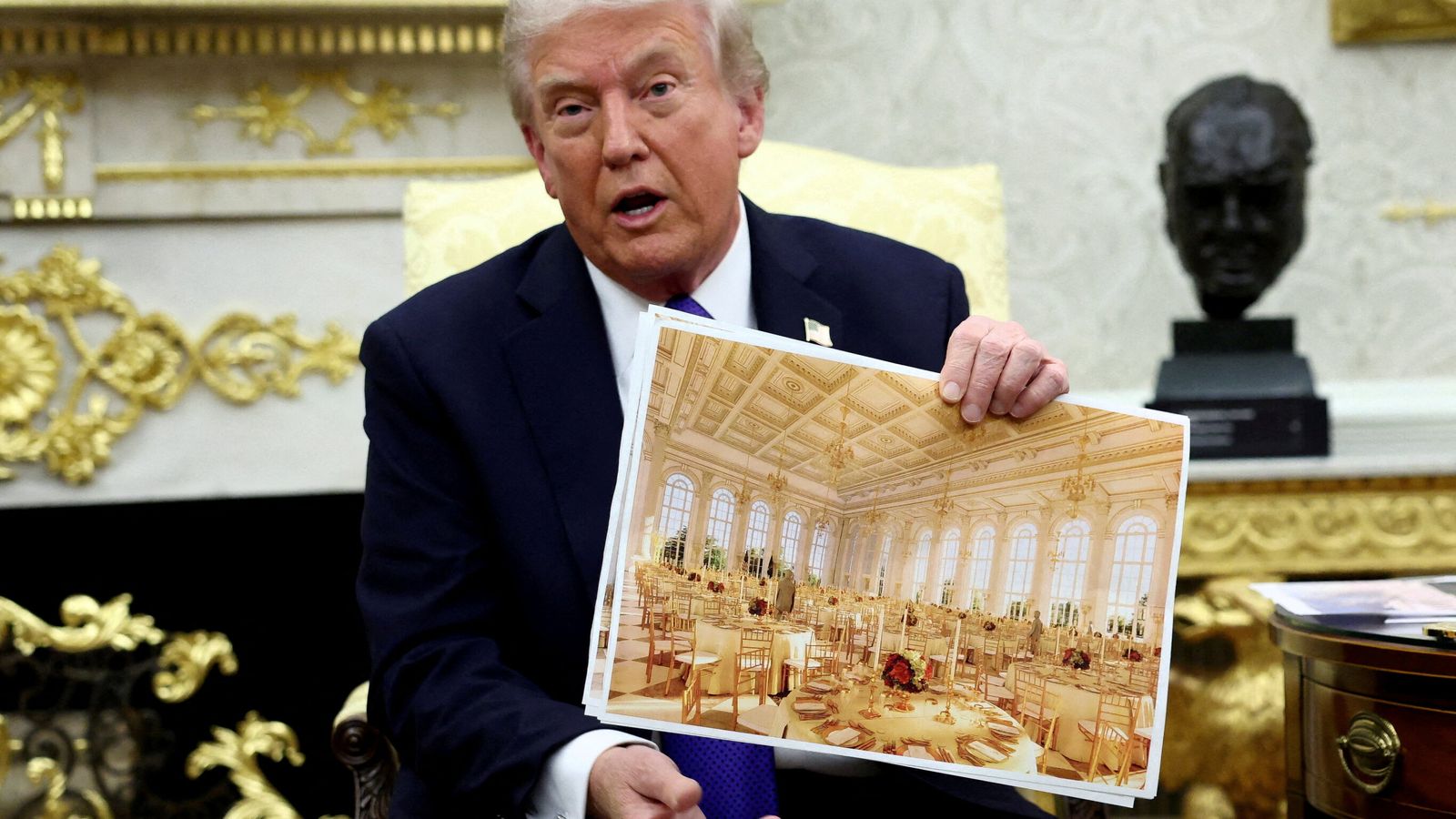
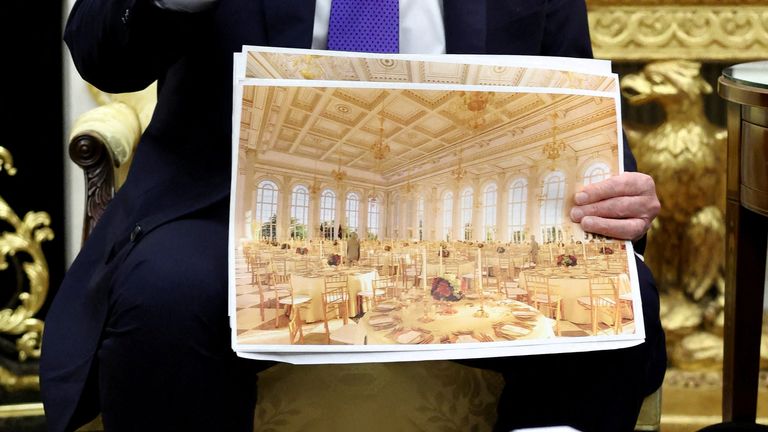
Donald Trump is being sued by a preservation group which wants a federal court to halt the construction of a new ballroom at the White House until it goes through multiple independent reviews and wins approval from Congress.
The National Trust for Historic Preservation’s lawsuit represents the most concrete effort so far to change or stop plans for the new $300m ballroom that would be nearly double the size of the White House before the East Wing was demolished.
“No president is legally allowed to tear down portions of the White House without any review whatsoever – not President Trump, not President [Joe] Biden, and not anyone else,” the non-profit organisation’s lawsuit states.
“And no president is legally allowed to construct a ballroom on public property without giving the public the opportunity to weigh in.”
Pic: Reuters
The ballroom project has drawn criticism from preservationists, architects, and President Trump’s political opponents.
It is among several sweeping changes Mr Trump has made to the White House since he returned to office in January. He has installed gold decorations throughout the Oval Office, and paved over the lawn of the Rose Garden to create a patio similar to the setting at his Mar-a-Lago estate in Florida.
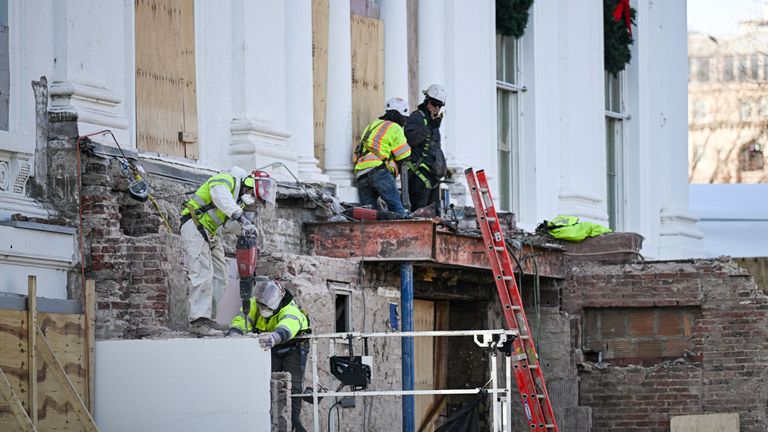
Pic: Reuters
Commenting on the lawsuit, White House spokesman David Ingle said that Mr Trump is within his “full legal authority to modernise, renovate and beautify the White House – just like all of his predecessors did”.
Mr Ingle did not specify whether the president was planning to consult Congress at any point.
While nearly every president alters the White House, Mr Trump’s plans are the most extensive since President Harry Truman’s near-total renovation of its oldest section.
Unlike Mr Trump, Mr Truman obtained explicit congressional approval and funding, consulted engineering and arts authorities, and appointed a bipartisan commission to oversee the work.
Mr Trump has stressed that the project is funded with private money, including his own, but that doesn’t change how federal laws and procedures apply to a US government project.
Federal law cites “express authority of Congress” over DC projects.

Pic: Reuters
Read more from Sky News:
Trump says Epstein photos are ‘no big deal’
Trump threatens Venezuela land strikes ‘soon’
Mr Trump has long maintained that a White House ballroom is overdue, noting that large events are held in tents and guests get wet when it rains.
The lawsuit said Mr Trump never gathered public input and ignored statutes requiring consultation with the National Capital Planning Commission and the Commission of Fine Arts before tearing down the East Wing and starting work on the ballroom.

Donald Trump, Andrew Mountbatten-Windsor and Bill Clinton are among high-profile figures pictured in a new selection of photos from Jeffrey Epstein’s estate, released by Democrats in Congress.
Warning: This article contains images of a sexual nature that some readers may find offensive.
An initial tranche of 19 photos was shared on Friday, and all of the people whose faces had not been redacted were identified by Sky News. They have been contacted for comment.
A second batch of dozens of photos was released the same day, including one of former Israeli prime minister Ehud Barak and another of Epstein himself in the bath.
Former Israeli prime minister Ehud Barak. Pic: @OversightDems
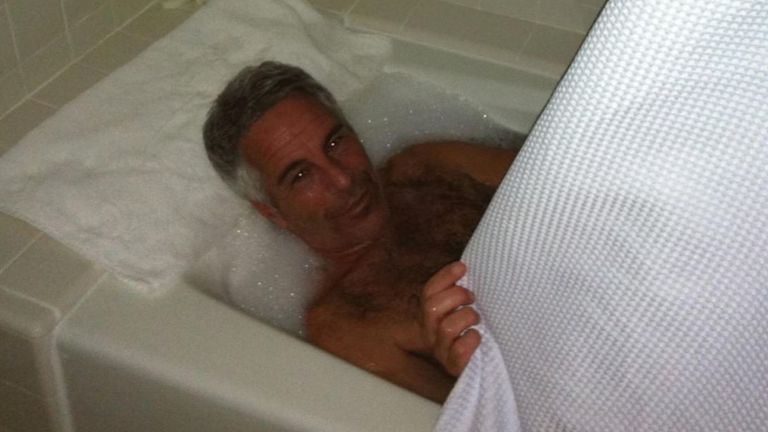
Jeffrey Epstein in the bath. Pic: @OversightDems
Latest updates from release of Epstein photos
The photos were shared by House Oversight Committee Democrats, who said they are reviewing more than 95,000 images from the estate.
There is no suggestion of wrongdoing on the part of those pictured in the images released on Friday and the context surrounding the photos is not known.
Mr Barak told the New York Times this week: “I now deeply regret having any association with him.
“However, not any point in my dealings with him I did ever witness any improper behaviour and certainly I never participated in anything like that.”
In one image, Mr Trump is seen with the late sex offender Jeffrey Epstein and Belgian model Ingrid Seynhaeve.
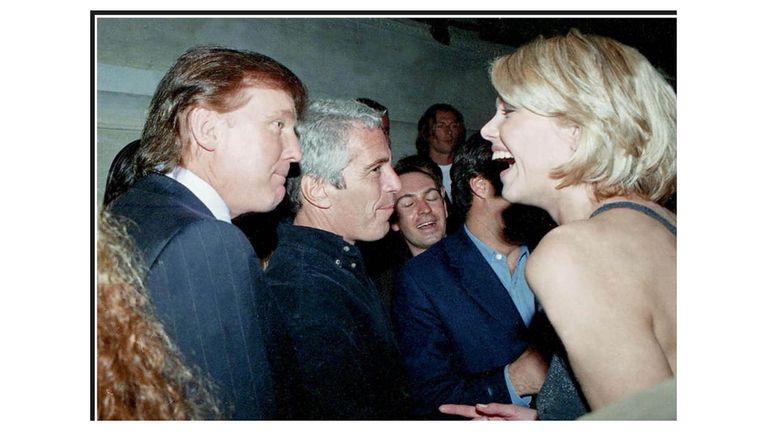
Donald Trump, Jeffrey Epstein, and Belgian model Ingrid Seynhaeve. Pic: @OversightDems
Two further photos show the US president with women whose faces are redacted.
One image is black and white and shows him with six women; three on either side of him. The other is out of focus, and shows him sitting alongside an unidentified woman.

Mr Trump alongside six unidentified women Pic: @OversightDems

Mr Trump with an unidentified woman. Pic: @OversightDems
Speaking after Epstein took his own life in jail in 2019, Mr Trump admitted knowing Epstein, but added: “I had a falling out with him. I haven’t spoken to him in 15 years. I was not a fan of his, that I can tell you.”
In July, the White House also released a statement saying Epstein had been banned from Trump’s Mar-a-Lago resort in Florida for acting like a “creep”.
When asked about the latest release of Epstein material at the White House on Friday, Mr Trump said he “knows nothing about it” and that the disgraced financier “has photos with everybody”.
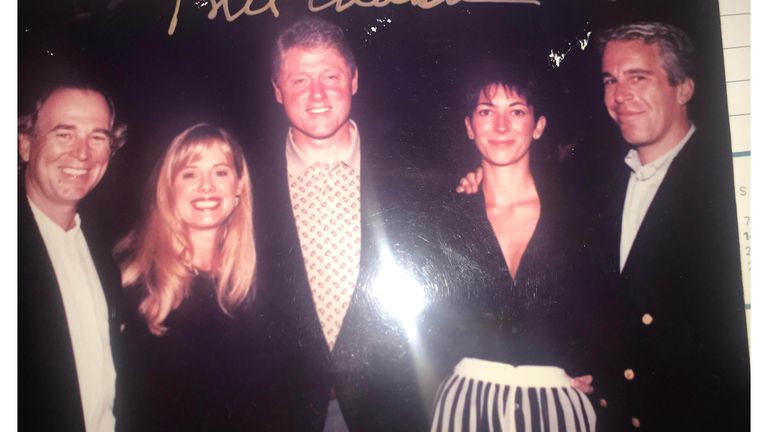
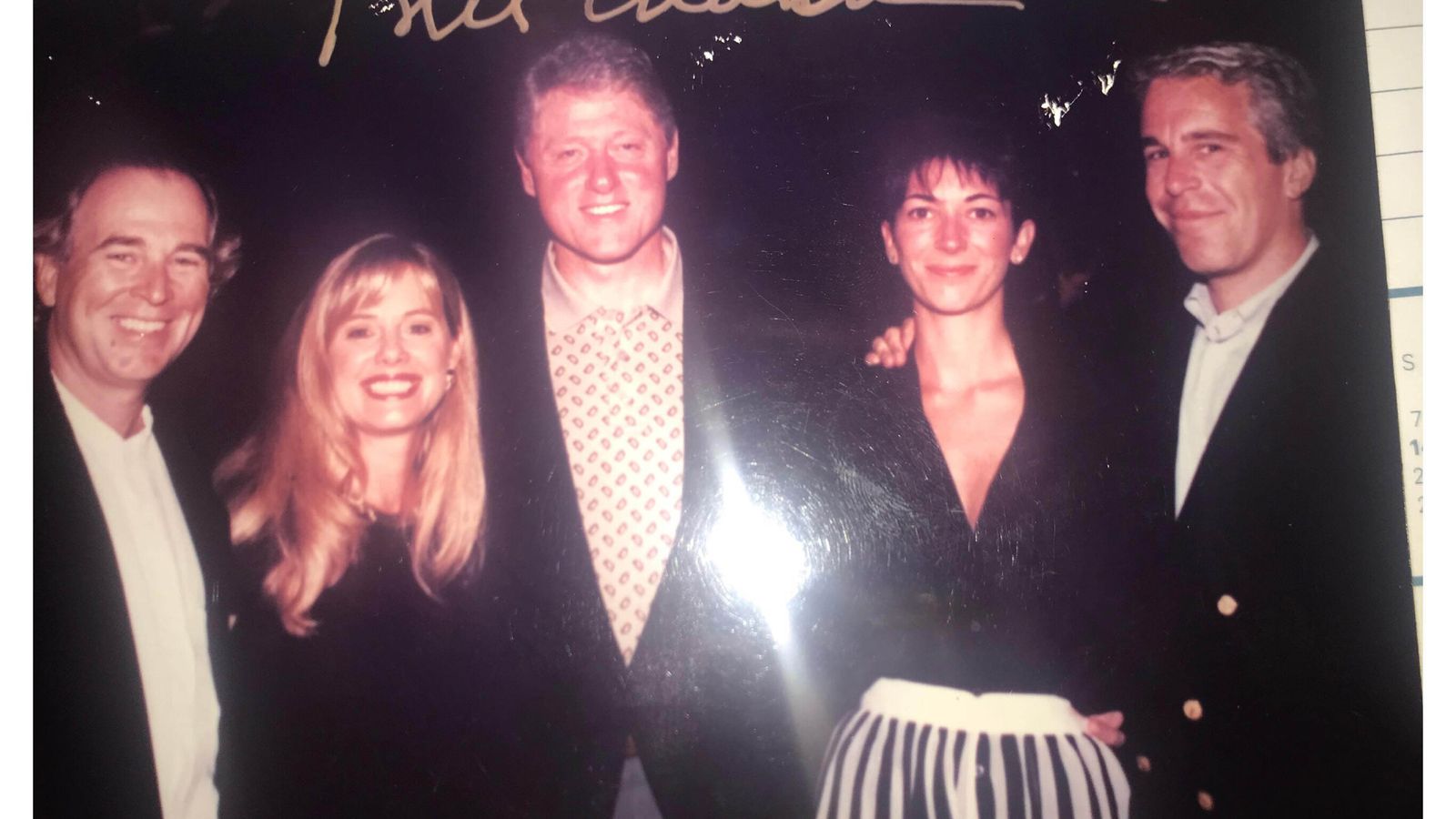
Bill Clinton with Epstein and Ghislaine Maxwell, as well as Jimmy Buffett and Mr Buffett’s wife Jane Slagsvol. Pic: @OversightDems
In another photo released by Democrats, Bill Clinton is seen with Epstein and convicted sex offender Ghislaine Maxwell, as well as singer Jimmy Buffett and Mr Buffett’s wife Jane Slagsvol.
In 2019, a spokesperson for the former US president said he had “not spoken to Epstein in well over a decade” and “knows nothing about the terrible crimes”.
Further images show Epstein with long-time Trump ally, Steve Bannon. In one he sits across from him at his desk, while in another the men are seen side-by-side taking a selfie in a mirror.
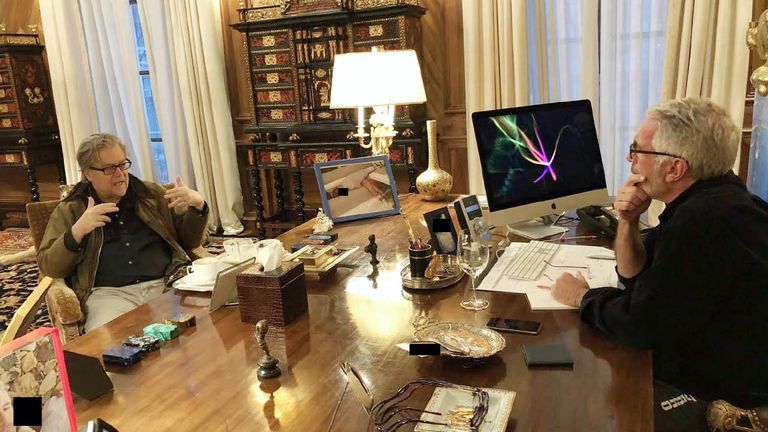
Jeffrey Epstein with long-time Trump ally Steve Bannon. Pic: @OversightDems
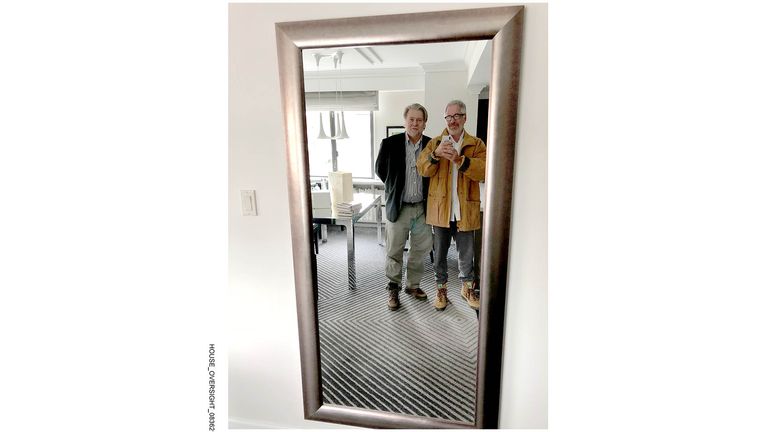
Steve Bannon and Jeffrey Epstein. Pic: @OversightDems
Mr Bannon appeared again in the later batch of images, photographed alongside Noam Chomsky, an American professor perhaps best known for his political activism.

American professor Noam Chomsky and Steve Bannon. Pic: @OversightDems
Hollywood filmmaker Woody Allen appears in four photos; two of them taken with Epstein.
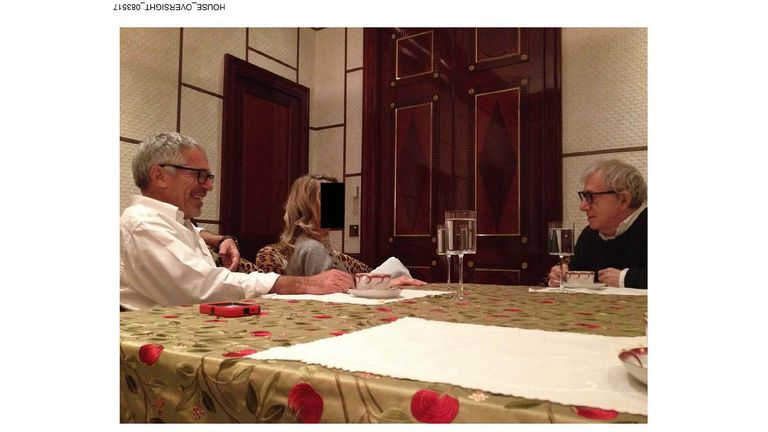
Woody Allen with Jeffrey Epstein and an unidentified woman. Pic: @OversightDems
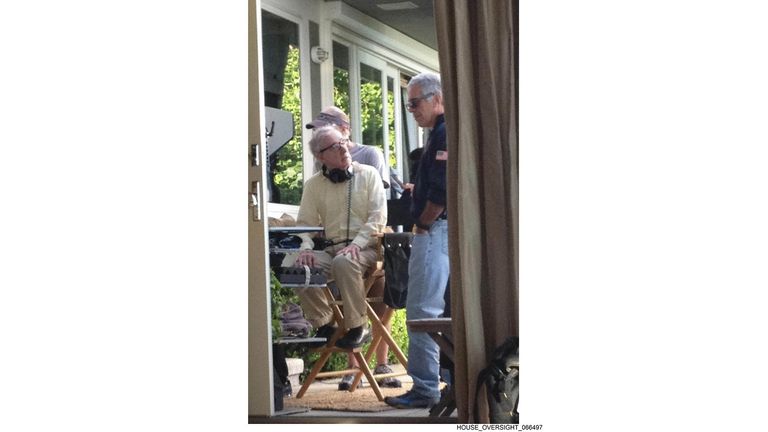
Woody Allen and Jeffrey Epstein. Pic: @OversightDems
In another, Allen is photographed with Mr Bannon, while one more shows him sat with Bill Clinton’s former treasury secretary, Larry Summers, and his wife Elisa New, seemingly on a private plane.
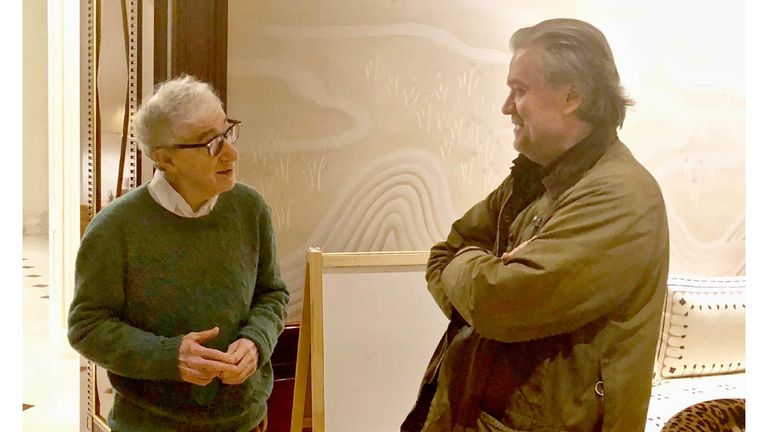
Woody Allen and Steve Bannon. Pic: @OversightDems
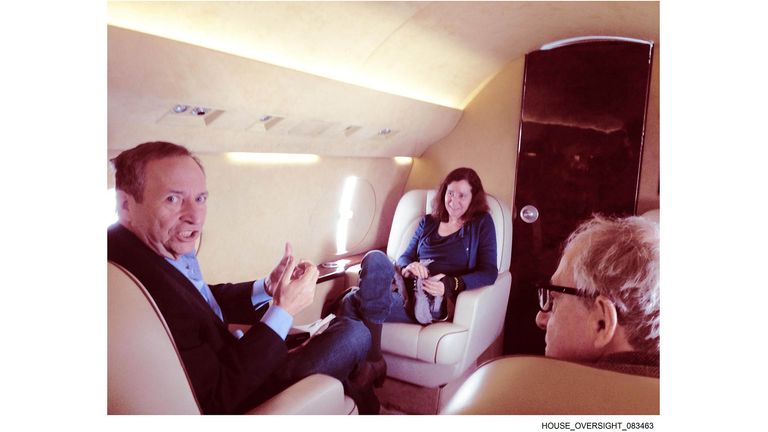
Bill Clinton’s former treasury secretary, Larry Summers, and his wife Elisa New. Pic: @OversightDems
Speaking to The Times in September, Allen said he had been to dinner at Epstein’s home, but suggested he was unaware of the nature of his crimes.
Allen said: “He told us he’d been in jail and that he had been – I can’t remember the word – but that he’d been falsely put in jail in some way.”
Meanwhile, Mr Summers told the Harvard Crimson that his former association with Epstein was “a major error of judgement”.
Andrew Mountbatten-Windsor, then Prince Andrew, is seen just once, alongside tech billionaire Bill Gates. Epstein is not pictured. The original photo at a malaria summit also shows the then Prince Charles but he is cropped out of the version released by the Democrats. It is not clear why the picture has been included in the Epstein files.
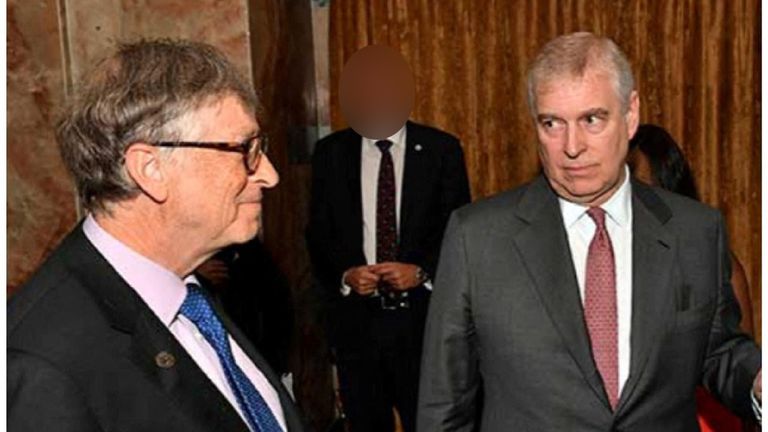
Bill Gates with Andrew Mountbatten-Windsor, then a prince. Pic: @OversightDems
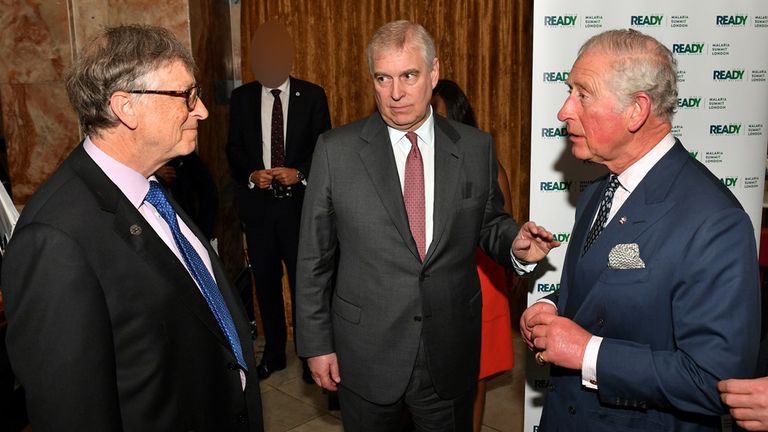
Bill Gates talks to the then Prince Andrew and then Prince Charles during a malaria summit in London on 18 April 2018. Pic: Reuters
Andrew relinquished his titles in October amid continued controversy over his friendship with Epstein, but said at the time: “I vigorously deny the accusations against me”.
Mr Gates himself appears twice more, once alongside Epstein’s long-time pilot, Larry Visoski, and once in a framed photo which appears in an image above a black cabinet.
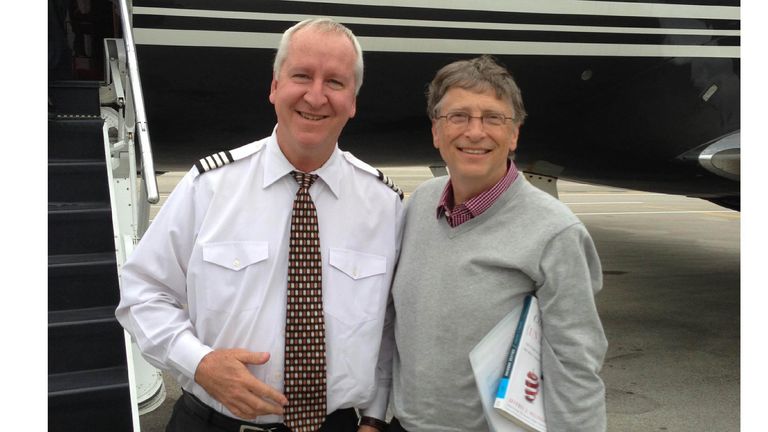
Bill Gates and Epstein’s long-time pilot, Larry Visoski. Pic: @OversightDems
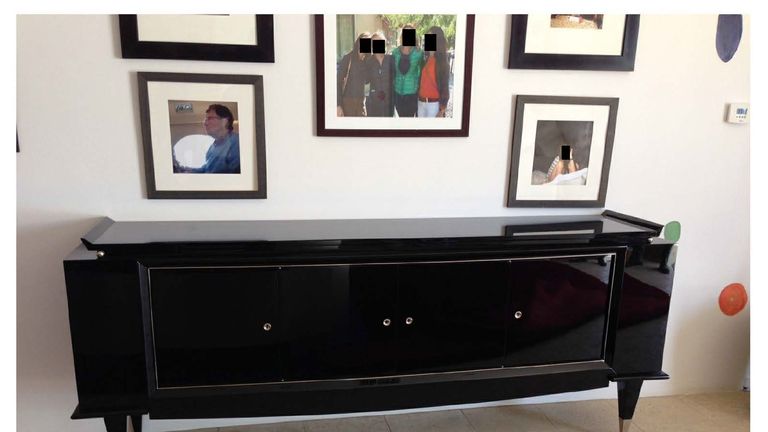
A photo released in the Epstein files shows Bills Gates’s picture framed above a cabinet. Pic: @OversightDems
In 2021, the tech billionaire told the New York Times he had met Epstein to discuss philanthropy and Gates’s spokeswoman said he regretted ever meeting him.
The following year Mr Gates told the BBC: “I made a mistake ever meeting with Jeffrey Epstein.
“Any meeting I had with him could be viewed as almost condoning his evil behaviour. So, that was a mistake.”
Another photo shows British entrepreneur Richard Branson with Epstein and Dean Kamen, an American engineer, inventor, and businessman.
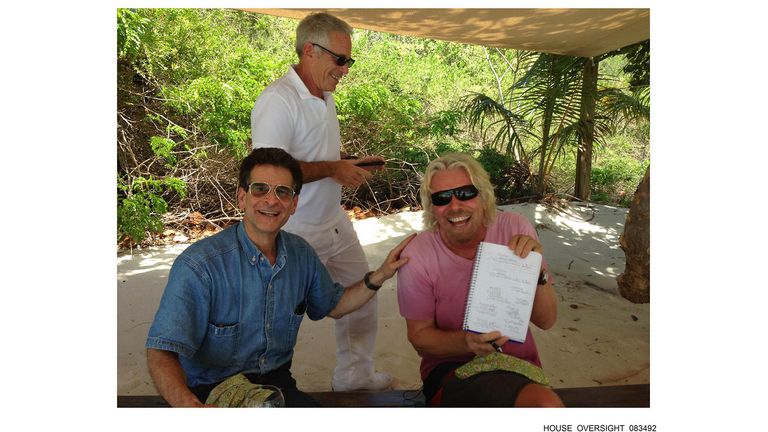
Richard Branson with Epstein and Dean Kamen. Pic: @OversightDems
Epstein is seen with his lawyer, Alan Dershowitz, in one more image.
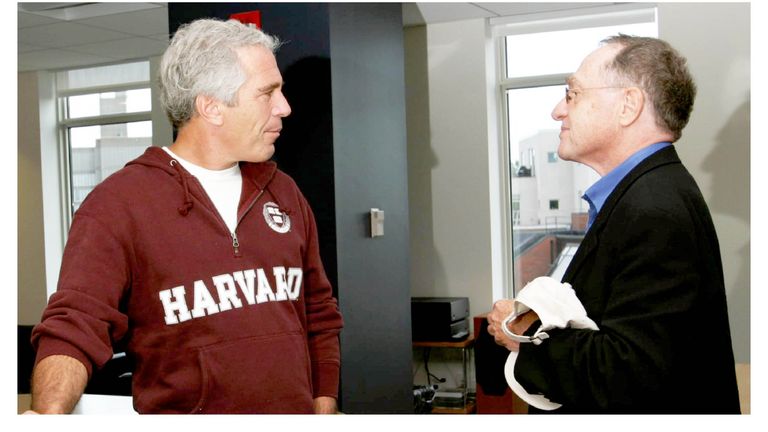
Epstein with his lawyer, Alan Dershowitz. Pic: @OversightDems
Mr Dershowitz said he fell out with Epstein after making a plea deal for him in 2007, leading to his conviction.
He told the Harvard Crimson in November: “Jeffrey Epstein despised me after I had made the deal. Epstein and I did not get along personally after I represented him and helped get the deal.”
Emirati businessman Ahmed bin Sulayem is also among those pictured, appearing twice in the second cache of photos.
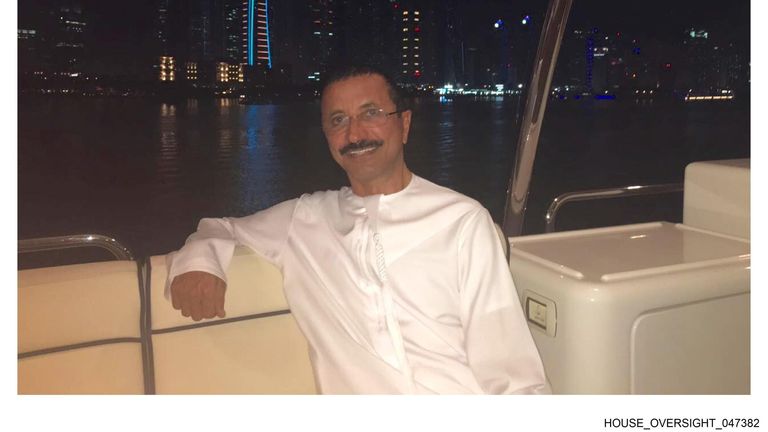
A picture of Sultan Ahmed Bin Sulayem released from the Epstein files. Pic: @OversightDems
A number of images of a sexual nature appear in the first cache.
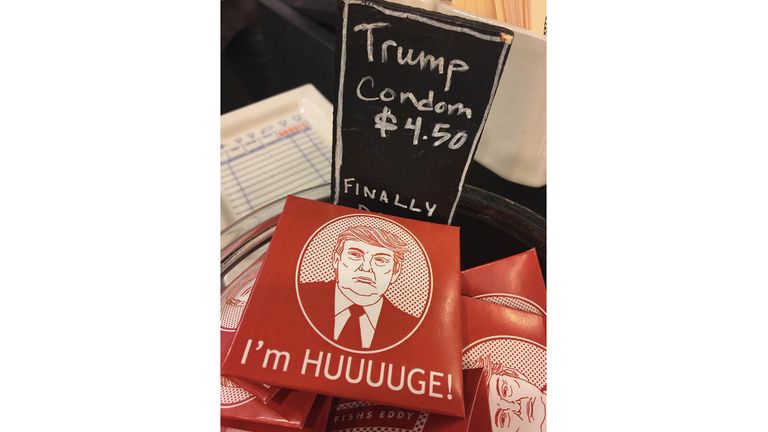
One shows a bowl of novelty condoms with a caricature of Trump’s face, each one bearing the phrase “I’m HUUUUGE!” A handwritten sign reads: “Trump condom $4.50.”
Pic: @OversightDems
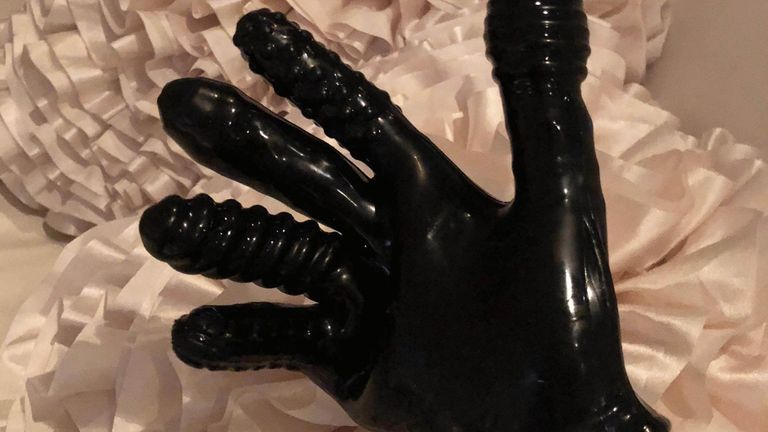
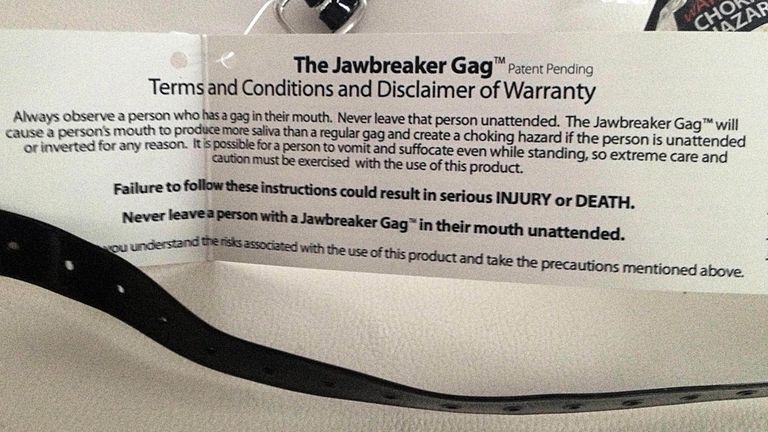
Various sex toys are also featured in pictures, including a glove with ribbed fingers, and a safety notice from a “jawbreaker” gag warning of the risk of injury or death.
Many of the newer batch of photos appear to show parts of Epstein’s properties, including a toilet, various service areas, and a small beachfront construction project.
Among the photos are several additional images which are thought to be from the disgraced financier’s private island, Little Saint James, showing a dental suite previously seen in an earlier release of pictures.
Pic: @OversightDems
Pic: @OversightDems
The images, obtained from the Epstein estate, were released by Democrats on the House Oversight Committee in a bid to pressure the US Justice Department to release the full Epstein files.
President Trump signed a bill in November compelling the department to release case files within 30 days, in a U-turn after he opposed the bill for months. The end of that window is Friday 19 December.
The images released on Friday were described by Democrats as being “of the wealthy and powerful men who spent time with Jeffrey Epstein” and “photographs of women and Epstein properties”.
A spokesperson for the Republican-led House Oversight Committee accused the Democrats of “cherry-picking photos and making targeted redactions” to create a “false narrative” about Donald Trump.
“Democrats’ hoax against President Trump has been completely debunked,” they added.
-
 Sports2 years ago
Story injured on diving stop, exits Red Sox game
-
 Sports3 years ago
‘Storybook stuff’: Inside the night Bryce Harper sent the Phillies to the World Series
-
 Sports2 years ago
Game 1 of WS least-watched in recorded history
-
 Sports3 years ago
Button battles heat exhaustion in NASCAR debut
-
 Sports3 years ago
MLB Rank 2023: Ranking baseball’s top 100 players
-
Sports4 years ago
Team Europe easily wins 4th straight Laver Cup
-
 Environment3 years ago
Japan and South Korea have a lot at stake in a free and open South China Sea
-
 Environment1 year ago
Here are the best electric bikes you can buy at every price level in October 2024