

Ratcliffe remains lead bidder despite inconclusive Manchester United board meeting


The Ineos billionaire Sir Jim Ratcliffe remains the leading candidate to buy Manchester United Football Club despite an inconclusive board meeting held late last week.
Sky News understands that directors of the Premier League club’s holding company met on Thursday to discuss the progress of its £5bn-plus auction.
Controlled by members of the Glazer family but also comprising a number of independent directors, the board was updated on the sale process by Raine, the merchant bank advising Manchester United.
A source close to the auction said the directors did not opt to enter into exclusive negotiations with either Ineos Sports or its principal rival, the Qatari businessman Sheikh Jassim bin Hamad al Thani.
Sir Jim is proposing to buy a majority stake in the Red Devils which would leave two of the Glazers involved, while Sheikh Jassim wants to buy the club outright.
The source said that Ineos remained the “leading” bidder despite a further, improved offer from the Nine Two Foundation – Sheikh Jassim’s bid vehicle – earlier this month.
Nevertheless, a further proposal remains possible, with a signed deal with either bidder said to be unlikely prior to United’s FA Cup Final against local rivals Manchester City next weekend.
Sir Jim’s takeover proposal includes ‘put and call’ arrangements that would allow him to buy the Glazers’ remaining shares after three years.
Ineos’s bid is said to value the whole of United at somewhere between £5bn and £5.5bn.
The Glazers have owned Manchester United since buying it for just under £800m in 2005 – an 18-year tenure marked by protests and a conspicuous dearth of trophies since the retirement of Sir Alex Ferguson, its former manager.
The Red Devils did win their first trophy for six years by beating Newcastle United in this season’s Carabao Cup Final.
In addition to the two proposals which would trigger a change of control, the Glazers have also received at least four credible offers for minority stakes or financing investment in the club.
These include an offer from the giant American financial investor Carlyle, Elliott Management, the American hedge fund which until recently owned AC Milan, and Sixth Street, which recently bought a 25% stake in the long-term La Liga broadcasting rights to FC Barcelona.
These investors’ proposals would provide capital to allow United to revamp the ageing infrastructure of its Old Trafford home and Carrington training ground.
Sky News exclusively revealed last November the Glazer family’s plan to explore a strategic review of the club its members have controlled since 2005, kicking off a six-month battle to buy it.
At a valuation of £5bn or more – which is below the Glazers’ rumoured asking price – a sale of Manchester United would become the biggest sports club deal in history.
Part of the justification for such a valuation resides in potential future control of the club’s lucrative broadcast rights, according to bankers, alongside a belief that arguably the world’s most famous sports brand can be commercially exploited more effectively.
United’s New York-listed shares have gyrated wildly during the process amid mixed views about whether a sale of the club is likely.
On Friday, they closed down at $18.97, giving the club a market valuation of just under $3.1bn.
Fury at its participation in the ill-fated European Super League crystallised supporters’ desire for new owners to replace the Glazers, although any sale to state-affiliated Middle Eastern investors would – like Newcastle United’s Saudi-led takeover – not be without controversy.
Confirming the launch of the strategic review in November, Avram and Joel Glazer said: “The strength of Manchester United rests on the passion and loyalty of our global community of 1.1bn fans and followers.
“We will evaluate all options to ensure that we best serve our fans and that Manchester United maximizes the significant growth opportunities available to the club today and in the future.”
The Glazers listed a minority stake in the company in New York in 2012 but retained overwhelming control through a dual-class share structure which means they hold almost all voting rights.
A Manchester United spokesman declined to confirm that a board meeting had taken place.
The first-ever Capture case has been delayed at the Court of Appeal as the Post Office asks for an extension to respond, Sky News has learned.
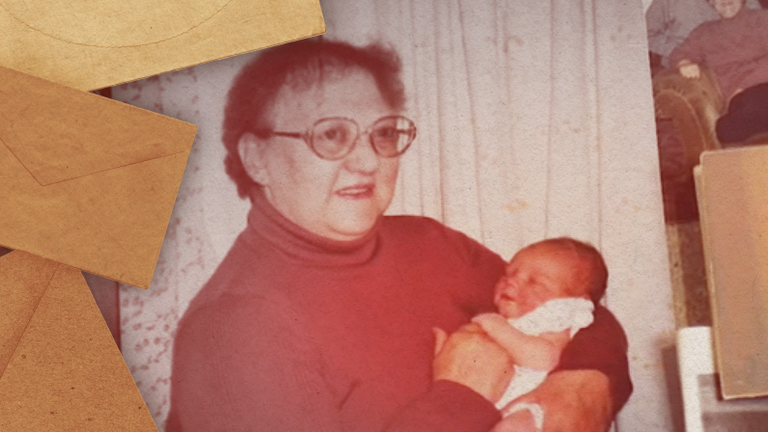
Pat Owen, a former sub postmistress who has since passed away, was convicted of stealing in 1998 based on evidence from computer software.
The system, known as Capture, was used in up to 2,500 branches in the 1990s, before the infamous Horizon system was introduced.
Hundreds of sub-postmasters were wrongfully convicted between 1999 and 2015 as part of the Horizon scandal.
Earlier this year, Sky News unearthed a 1998 report showing the Capture software was also faulty.
That report, commissioned by the solicitors acting for Mrs Owen in 1998, was served on the Post Office and may never have been seen by the jury in her case.
‘All we want is her name cleared’
Ms Owen was given a suspended prison sentence and fought to clear her name subsequently – but died in 2003.
Her case was referred by the Criminal Cases Review Commission (CCRC) to the Court of Appeal in October.
The Post Office had until 5 December to respond to papers put forward by Mrs Owen’s defence team but they have now asked for an extension until 30 January.
Ms Owen’s daughter, Juliet Shardlow, described the family’s suffering at the lengthening wait.
“I need to emphasise the profound impact the ongoing delay is having on our family,” she said.
“The continuous uncertainty only compounds our heartache, stress, and anxiety.
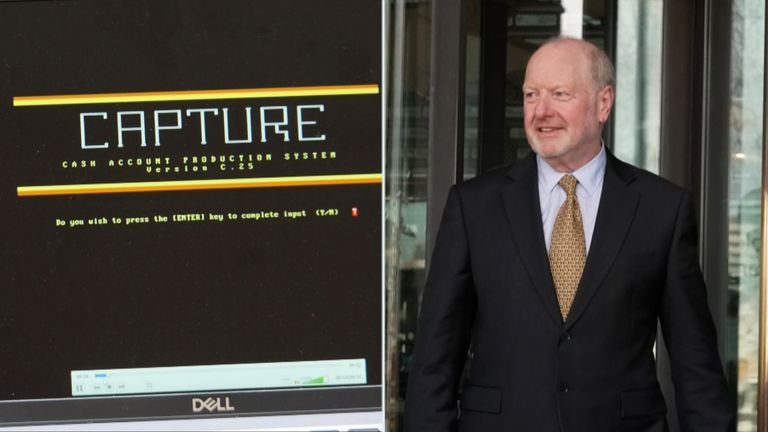
Alan Bates: New redress scheme ‘half-baked’
“It has become the last thing I think about before I go to sleep and the first thing when I wake up.
“We have waited 27 years for justice, and this additional wait feels never-ending.”
Ms Owen’s case is the first time a conviction based on Capture has reached the Court of Appeal since the scandal was exposed.
Read more from Sky News:
Corporate manslaughter charges considered in Post Office scandal
21 ‘Capture’ cases investigated for miscarriages of justice
Lawyers have said that if Ms Owen is exonerated posthumously, it may “speed up” the handling of others.
CCRC chair Dame Vera Baird also told Sky News in the summer it could be a “touchstone case” for other victims.
The CCRC is also continuing to investigate around 30 other “pre-Horizon” convictions.
A Post Office spokesperson said: “We have sought an extension of time to fully consider and respond to the CCRC’s Statement of Reasons in Ms Owen’s case.
“We deeply regret the impact our request for further time will have on Ms Owen’s family.
“We have a duty to carefully consider the evidence presented in the Statement of Reasons submitted by the CCRC and do everything we can to fully assist the Court when it considers this conviction.”
Meanwhile, the first-ever redress scheme for victims of the Post Office Capture IT scandal was launched this autumn.
The Capture Redress Scheme will provide payments of up to £300,000, and more in “exceptional” cases, to former postmasters who suffered financial losses.

-
 Sports2 years ago
Story injured on diving stop, exits Red Sox game
-
 Sports3 years ago
‘Storybook stuff’: Inside the night Bryce Harper sent the Phillies to the World Series
-
 Sports2 years ago
Game 1 of WS least-watched in recorded history
-
 Sports3 years ago
Button battles heat exhaustion in NASCAR debut
-
 Sports3 years ago
MLB Rank 2023: Ranking baseball’s top 100 players
-
Sports4 years ago
Team Europe easily wins 4th straight Laver Cup
-
 Environment3 years ago
Japan and South Korea have a lot at stake in a free and open South China Sea
-
 Environment1 year ago
Here are the best electric bikes you can buy at every price level in October 2024