
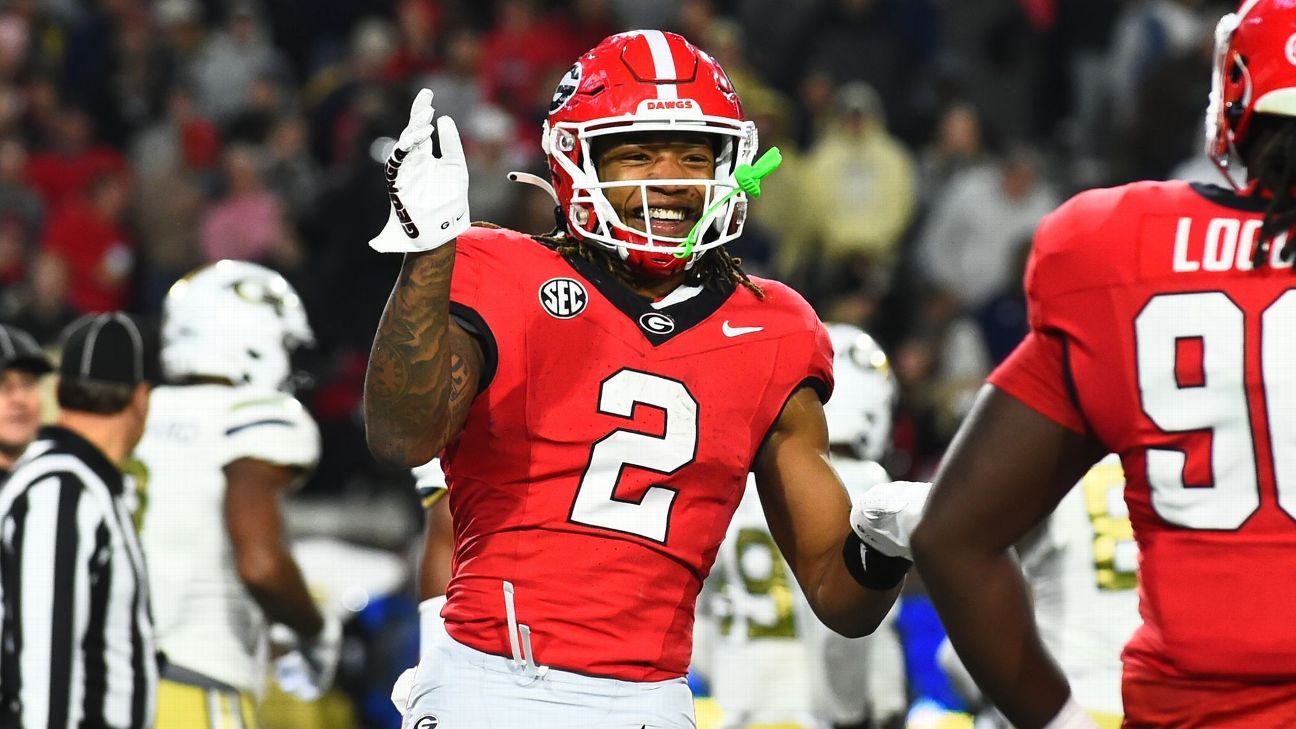
Champ Week preview: CFP stakes and matchups to watch in conference title games


The college football season end is near, but before the postseason commences, it’s time to figure out where and when teams will be playing.
Bring on Championship Week, the week that is sure to clear up the College Football Playoff picture … or give the selection committee a lot to weigh should certain scenarios play out in this weekend’s conference championship games.
It seems simple for the undefeated teams — Washington in the Pac-12, Georgia in the SEC, Michigan in the Big Ten and Florida State in the ACC — win and you’re in. But a loss by any of those teams could mean a difficult decision for the committee.
Our writers break down what’s at stake in the Pac-12, Big 12, SEC, Big Ten and ACC championship games, and matchups to watch in those games plus notable quotes from the week.
Champ Week: What’s at stake
Pac-12


No. 5 Oregon (11-1) vs. No. 3 Washington (12-0)
Friday, 8 p.m. ET, ABC
Allegiant Stadium, Las Vegas
What’s at stake: This is the most high-stakes Pac-12 championship game of all time considering both teams will have the reasonable expectation to go to the College Football Playoff with a win. For Washington, that’s definitely the case. There is no scenario that exists that would see the Huskies get left out with a win. For Oregon, though, there’s one nightmare scenario that could see them get left out even with a win Friday. If Alabama, Texas, Michigan and Florida State all win, the committee would then have three teams for two spots: Alabama (12-1, SEC champ); Texas (12-1, Big 12 champ); Oregon (12-1, Pac-12 champ). Texas beat Alabama on the road, so there is certainly plain logic to go with Texas over Alabama. If that’s the determination, then you have Alabama vs. Oregon for the last spot and all bets are off.
Oregon wins if: The Ducks can maintain their level of play from the second half of the season. Since losing to Washington at Husky Stadium, Oregon has looked the better team. Bo Nix has played himself into a worthy Heisman recipient and has been surrounded by a team humming in all phases of the game. If the Ducks can get pressure on UW quarterback Michael Penix Jr. and get him off schedule in Las Vegas, it would bode well for them.
Washington wins if: It keeps riding the wave. It’s easy to find justification for how Washington wins because it has won 19 straight. Even if some of the Huskies’ recent victories haven’t had the style points like those earlier in the year, this is just a team that makes plays — on both sides — when they matter. That matters. It also helps that receiver Rome Odunze has turned into one of the most clutch players in college football. Whenever the Huskies need a big play, he’s the one they go to, and he has yet to let the team down.
X factor: UW running back Dillon Johnson. For all that has been made of Washington’s passing attack, the value of Johnson has really been understated. Penix could get into trouble if UW is one-dimensional, which makes Johnson’s role massive against the Ducks. — Kyle Bonagura
Big 12


No. 18 Oklahoma State (9-3) vs. No. 7 Texas (11-1)
Saturday, noon ET, ABC
AT&T Stadium, Arlington, Texas
What’s at stake: The two teams did not meet during the regular season, and the only thing standing between Texas winning its first Big 12 championship since 2009 in its last year in the league is Mike Gundy, the same coach who beat Oklahoma in the last Bedlam game between those two schools. Gundy downplayed that angle this week, saying “Texas will be going to the SEC and we’ll be in the Big 12 next year, no matter what,” Gundy said. “The SEC vs. the Big 12 or Big Ten or Pac-12, I just don’t think [the players] care. I don’t think it’s a factor.” But Texas has made it a mission all year to avenge its past losses on the way out the door, with Steve Sarkisian saying his team has a “John Wick mentality.” This game determines whether Texas stakes its claim to a College Football Playoff spot, while OSU has a chance to win its first Big 12 title ever and try to start the post-Texas/Oklahoma era on top of the league.
Texas wins if: The Longhorns stuff OSU running back Ollie Gordon II — the nation’s leading rusher, with 1,580 yards and 20 TDs — and make quarterback Alan Bowman beat them. Oklahoma loaded the box against him and Gordon still got 138 yards and two TDs, but it took 33 carries and a lot of patience. Bowman came up big in that game, throwing for 334 yards. But 6-foot-3, 362-pound UT defensive lineman T’Vondre Sweat leads a cast of large humans up front who allow just 85 rushing yards per game, fifth-best nationally.
Oklahoma State wins if: The Cowboys can figure out a way to get Gordon going and open up the play-action game. OSU will have to try to wear down the Longhorns’ front and make some headway on first and second down because Texas’ defense is the best in the nation on third down, allowing a conversion just 26% of the time. And they’ll have to hold on to the ball. Texas has scored 92 points off turnovers this season, fifth-most in the country. The only game where the Longhorns didn’t score off a turnover was against Oklahoma in their one loss. Being able to run the ball and keep the Texas offense off the field would make a big difference for the Cowboys.
X factor: Quinn Ewers. The Longhorns’ star quarterback is much improved this year, averaging 270.9 yards per game and completing 69.8% of his passes with 17 touchdowns to five interceptions. But last year against OSU on a windy day in Stillwater, he had arguably his roughest game for Texas, completing 19 of 49 passes with two TDs and three INTs as a 34-27 lead slipped away into a 41-34 loss. — Dave Wilson
SEC


No. 1 Georgia (12-0) vs. No. 8 Alabama (11-1)
Saturday, 4 p.m. ET, CBS
Mercedes-Benz Stadium, Atlanta
What’s at stake: The loser is likely out of the College Football Playoff picture, with Alabama for sure gone if the Crimson Tide lose. There is a scenario where both teams could get in should Alabama win the game. The surest way would be for Texas to lose to Oklahoma State in the Big 12 championship game, Florida State to lose to Louisville in the ACC championship game and Washington to beat Oregon in the Pac-12 championship game. Georgia is a playoff lock with a win and would almost certainly secure its second consecutive No. 1 seed.
Georgia wins if: The Bulldogs play like they have all season on the offensive line and dictate the flow of the game. There’s a lot to like about this Georgia team, but the offensive line has been the key, with three or four players who will play in the NFL. Quarterback Carson Beck has looked more in command each game, and one of the main reasons is that he has typically had clean pockets to throw from and plenty of time to throw. Georgia has allowed just two sacks in 12 games. If the Bulldogs are able to protect Beck and mix the run with the pass, keeping Alabama’s pass rush at bay, the Tide will have a hard time matching scores with a Georgia team that has been excellent at finishing games this season.
Alabama wins if: The Crimson Tide stay out of third-and-long situations on offense and don’t turn the ball over. Georgia ranks second in the country in third-down defense and feasts on offenses when they get behind the sticks on third down. Alabama quarterback Jalen Milroe has accounted for 26 touchdowns and turned the ball over just five times since his benching in Week 3 against South Florida. His ability to scramble and extend plays will be a big factor in this game. Georgia Tech quarterback Haynes King rushed for two touchdowns last week against Georgia, and Auburn’s two quarterbacks, Payton Thorne and Robby Ashford, combined for 125 rushing yards in the Bulldogs’ closest game of the season, a 27-24 win over Auburn on Sept. 30.
X factor: Both teams have some key players with injuries that make them questionable for the game and, at the very least, not full speed if they do play. Alabama’s top running back, Jase McClellan, injured his left foot last week against Auburn and is day-to-day depending on how much he’s able to practice this week. For Georgia, star tight end Brock Bowers had some soreness in his surgically repaired left ankle and didn’t play last week against Georgia Tech. Offensive guard Tate Ratledge (knee) was also held out last week. Receivers Ladd McConkey (ankle) and Rara Thomas (foot) would also fall into the questionable category. — Chris Low
Big Ten


No. 2 Michigan (12-0) vs. No. 16 Iowa (10-2)
Saturday, 8 p.m. ET, Fox
Lucas Oil Stadium, Indianapolis
What’s at stake: Michigan can secure its second consecutive 13-0 season, third College Football Playoff spot and third straight outright Big Ten title for the first time in team history. “It’d mean a great deal,” said coach Jim Harbaugh, who will return to the sideline Saturday night after a three-game suspension imposed by the Big Ten. “So many [historic] things about this team, and they all talk about how there’s more to do.” Iowa can spoil Michigan’s CFP chances and win its first outright Big Ten title since 1985 (first of any kind since 2004). A Hawkeyes win would send them to a New Year’s Six bowl game.
Michigan wins if: The defensive line controls Iowa’s run game and quarterback J.J. McCarthy builds on his efficient performance against Ohio State to give Michigan an early lead. McCarthy talked this week about being a natural risk-taker. “A lot of situations in football, if you miss that opportunity to take that chance, you won’t ever get it back,” he said. Like in the Ohio State game, McCarthy can take a few calculated gambles but not too many against an Iowa defense adept at jumping routes out of its zone sets. If Michigan makes Iowa play from behind and have to tackle Blake Corum and Donovan Edwards all night, it should win comfortably.
Iowa wins if: It holds the turnover edge by at least two, records a defensive or special teams touchdown, and shortens the game by extending drives and limiting possessions. Neither offense uses much tempo, so the Hawkeyes simply need to stay on the field. “The ABCs of how we do offense are: Possess the football, advance the football, score the football,” offensive tackle Mason Richman said. “We always want to possess the ball. Shoot, if we can possess the ball for 40 minutes, that’d be great, and obviously, we’d feel pretty dominant, in that sense.” The Hawkeyes are minus-1 in turnover margin for the season and simply can’t afford any giveaways against the Wolverines.
X factors: Michigan defensive back Mike Sainristil and Iowa punter Tory Taylor. Sainristil, a former wide receiver, has become a playmaker in the back end for the Wolverines, recording five interceptions (returning two for touchdowns). Taylor, the inspiration for the “Punting Is Winning” T-shirts worn by Iowa fans, can change field position and bail out Iowa’s offense. He averages 47.7 yards per punt, with 29 placed inside the opponents’ 20-yard line.
ACC


No. 14 Louisville (10-2) vs. No. 4 Florida State (12-0)
Saturday, 8 p.m. ET, ABC
Bank of America Stadium, Charlotte, North Carolina
What’s at stake: Florida State has a chance to reach its first College Football Playoff since 2014 with a win to finish off a 13-0 season. Although there has been much debate about what the committee will do with an undefeated Florida State team missing starting quarterback Jordan Travis, the latest CFP rankings have the Seminoles at No. 4 and in position to finish in the top four with a win over the Cardinals. Does margin of victory matter in this case? It should not, considering the Seminoles would have wins over three top-25 opponents (four if you consider Duke was ranked in the top 25 when the teams played). A Louisville victory secures its first Orange Bowl berth since 2007.
FSU wins if: It controls the line of scrimmage. With Travis out, Florida State relied on running back Trey Benson last week to help beat the Gators, and a dominant defensive front changed the tenor and demeanor in the second half. Florida State had six sacks and held Florida to 48 yards rushing after halftime. The challenge will be greater against a better Louisville offense, which has been dominant itself up front with its run game. Slowing down Jawhar Jordan and Isaac Guerendo and making Jack Plummer uncomfortable enough to make mistakes will be paramount. In its two losses this year, Louisville turned the ball over a combined six times. Creating turnovers is a must.
Louisville wins if: The Cardinals defense has been aggressive for most of the season — with 30 sacks and 54 tackles for loss on the year. Expect maybe even more against Florida State so the Cards can get after QB Tate Rodemaker and make him ineffective. Many of the Louisville defensive players have a familiarity with Rodemaker. He rallied Florida State to a win over the Cardinals last year when Travis got hurt during the game. To be as aggressive as possible, Louisville will have to get back to the way it played against the run in the first nine games. In two of the past three games, the Cards have allowed over 100 yards rushing — and in a loss to Kentucky last week, Ray Davis scored on a 37-yard run straight up the middle of the defense to win the game.
X factor: Keon Coleman. It is hard to call Coleman an X factor when he is so well known and established, but watch for him on special teams, where he has played a huge role for the Seminoles this season. His 34-yard punt return against Florida last week helped set up a go-ahead field goal. In a game that is expected to be close, a huge special teams play could be the difference. — Andrea Adelson
Matchups to watch
Pac-12: Troy Franklin and Tez Johnson vs. Washington’s defensive backs. The Ducks have one of the more prolific wide receiver tandems in the sport with Franklin and Johnson combining for 2,291 receiving yards and 23 touchdowns this season. Franklin, in particular, has 15 catches of 30 yards or more and three of 60 yards or more. The Huskies’ passing defense, however, has been a bit of a trick-or-treat unit this year. Although it ranks 124th in passing defense this season, it also has 15 interceptions so far (good enough to be tied for ninth in the country as a unit). Bo Nix has thrown only two interceptions all season, and although it’s difficult to see how Washington can contain both Johnson and Franklin, if the Huskies can force Nix into an interception at some point, they might be able to overcome their defensive shortcomings in one play and change the complexion of the game. — Paolo Uggetti
Big 12: Ollie Gordon II vs. Texas’ linebackers. Oklahoma State’s offense is backward in a lot of ways, in that the Cowboys get their big plays from an all-or-nothing run game and their efficiency from a quick but mostly low-impact passing game. Gordon is the most explosive RB in college football, but if you’re keeping him contained, OSU isn’t creating chunk plays and is settling for field goals at best. Texas’ linebackers — namely, Jaylan Ford and Anthony Hill Jr. — have been excellent in terms of big-play prevention in the run game, but OSU is going to have to create space for Gordon one way or another. There are almost no other realistic paths to victory. — Bill Connelly
SEC: Georgia’s offensive line vs. Alabama’s front seven on defense. Both units are really talented, but the Crimson Tide have to find a way to make the Bulldogs one-dimensional and pressure quarterback Carson Beck, who has been sacked only eight times this season and has completed 75% of his passes for 3,189 yards and 17 touchdowns when not pressured. The other key will be explosive plays. Alabama has given up far more than Nick Saban would like this season. The Tide have allowed 26 plays of 30 yards or longer, and only Arkansas, LSU, Florida and Vanderbilt have given up more in the SEC. Alabama needs to eliminate the big plays on defense and force Georgia to put together long drives. — Chris Low
Big Ten: Blake Corum and Donovan Edwards vs. Iowa’s defense. When these two teams met in the Big Ten championship in 2021, Corum was a young back who finished the game with 74 yards and a touchdown while Hassan Haskins had 56 yards and two touchdowns in the 42-3 win. Edwards took a backward pass from then-quarterback Cade McNamara and threw a 75-yard touchdown pass to Roman Wilson. In last year’s Big Ten championship game against Purdue, Edwards played without Corum, who was dealing with an injury, and exploded for 185 yards and a touchdown. The run game for Michigan is what drives this team, and it’s going to face a tough test in Iowa’s defense, which ranks 18th in rush yards allowed per game, giving up 106.4 yards. Corum is coming off the Ohio State game, where he had 88 rushing yards and two touchdowns and helped propel the Wolverines to the win. Corum and Edwards are hoping to do much of the same in this game against another good defense in Iowa. — Tom VanHaaren
ACC: Louisville DE Ashton Gillotte vs. FSU QB Tate Rodemaker. It is no secret Louisville will want to come after Rodemaker as much as possible. Here is where Gillotte comes in — as one of the top rush ends in the entire country. Gillotte has 14.5 tackles for loss, 11 sacks and 3 forced fumbles this season. His ability to create havoc is well known around the league. Florida State has done an exceptional job this season protecting the football — ranking No. 1 in the nation with only five turnovers all year. If Gillotte can get to Rodemaker and force a mistake, that could be a game-changer for the Cards. — Adelson
Quotes of the week
“My emotions, my focus has been with the team the entire time. It’s been a tremendous season, right in the exact position that we hoped for, that we worked so hard to be in. It’s onward now. We’ve accomplished many of our goals, but not all of them yet. … The next is winning the conference championship, so that’s where our focus is. I would say it’s good to be back, but I never left.” — Michigan coach Jim Harbaugh on returning from a three-game suspension.
“No offense to Tim Tebow, but this guy’s different. Tim was a different running style, a very different running style in terms of what they did and how they did things. This guy is like when I used to ask my sons who they were playing with on the Madden game, and they would say, ‘I’m playing with the Ravens,’ and I would say, ‘Why are you playing with the Ravens?’ And they would say, ‘They’ve got Lamar Jackson, and nobody can tackle him.’ Well, this guy is a bigger, physical version of that. He’s playing at a different speed than everybody else.” — Georgia coach Kirby Smart on Alabama QB Jalen Milroe.
“It’s been a heck of a journey — to think about where we were when we first started in Year 1 and just kind of changing the culture and kind of building upon from Year 1 to Year 2. Some tough losses along the way, but I thought our culture just continued to build. We continued to bring in talent along the way. This year, the thing that I think we’ve been able to do is find ways to win.” — Texas coach Steve Sarkisian on getting Texas to the Big 12 championship game in his third year in Austin.

-
Dan Wetzel
The purpose of the College Football Playoff selection committee is to sort through the unsortable — deciding between two teams of similar accomplishment.
This sport is a spectacular mess, of course, famously and belovedly so. The FBS level has 136 teams playing 12 regular-season games competing for one championship. The schedules are disparate, even within the current oversize “conferences.”
No one would design such a thing. Big schools. Small schools. State schools. Religious institutions. Even three military academies. From L.A. (Los Angeles) to L.A. (Lower Alabama). It’s glorious.
If a proper computer formula exists to figure out who should or shouldn’t be in a playoff, none has earned the trust of the sport. College football, after all, ain’t much for college.
So, it has a selection committee — 13 people who make the final, difficult, no-truly-correct-answer call. Their thanks comes from a barrage of hate courtesy of whomever they didn’t choose.
That there is controversy, hard feelings and anger doesn’t mean the system isn’t working.
It’s a sign that it is.
A sport that used to leave unbeaten teams out of the title game is now arguing about 10-2 and 9-3 clubs. A postseason that was once a collection of mostly meaningless exhibition bowl games designed as tourism campaigns is now anchored by a 12-team, 11-game free-for-all.
At least half a dozen teams must believe they can actually win the national title. Maybe more. Four playoff games will be staged on campuses, not at antiseptic NFL stadiums. The title will be settled on the field. This is the good stuff.
It’s why everyone needs to exhale for a moment.
Don’t let the pursuit of (unachievable) perfection get in the way of progress. This is always going to be an imperfect operation.
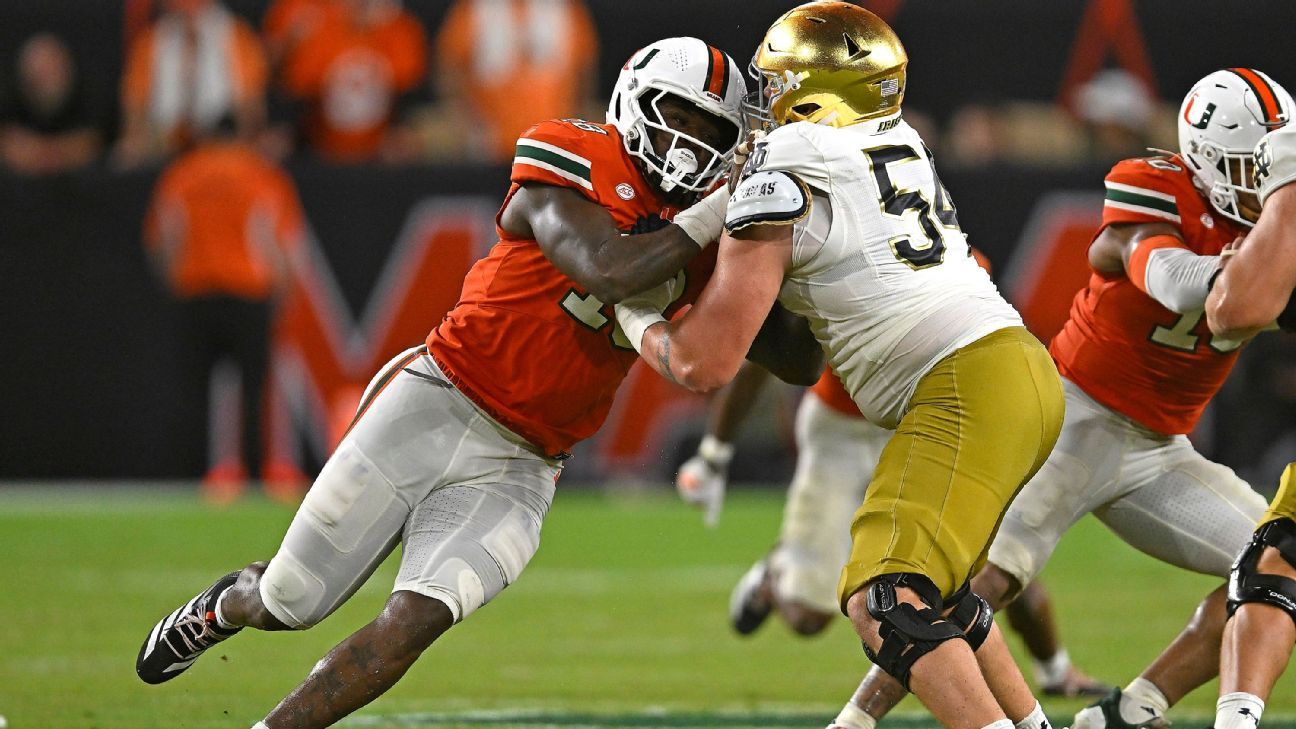
Would it be better if the ACC’s tiebreaker system didn’t malfunction and both Miami (as ACC champ) and Notre Dame (as an at-large selection) were in the field? Of course. But the presence of James Madison and some Fighting Irish disappointment shouldn’t cause anyone to take a wrecking ball to this entire enterprise.
College athletics is famous for knee-jerk decisions that it comes to regret. It too often makes policy via emotional swings and selfish reasoning without vision for the future.
Leagues get blown up (or expanded) for basic cable subscriptions (which are already dwindling). Legal cases are waged on the idea NIL will decrease competitive balance (Indiana is currently ranked No. 1). Congress is lobbied with hysterics that the sport needs “saving” (all while interest, revenue and television ratings rise).
The latest overreaction is to kill off this 2-year-old playoff for a bigger model that will supposedly be controversy-free (impossible) — one with 24 teams, at least, or with four automatic bids to certain conferences or who knows what else.
The committee is the punching bag. Subjectivity is the wedge issue. Conspiracies are everywhere. Emotions are running hot.
Look, there is one sure way for major programs to get into this thing: win your conference. If not, then you get into the knife fight that is the at-large selection process. Anything can happen. Criteria can shift. Decisions can seem unfair or arbitrary.
If, like Notre Dame, you find more overall value in independence, then this is your trade-off. It isn’t going to work as you wish every time.
Are there improvements and tweaks that can be made? Of course.
The committee should no longer release weekly rankings during the back half of the season. A single verdict should come out at the end. The current setup is good for content (including here at ESPN, which broadcasts the weekly rankings), but it undermines the credibility of the process. The week-to-week contradictions are maddening and, even worse, can box in the committee’s final decision.
Bloated leagues could return to divisions in an effort to create scheduling structure or find other ways to fix tiebreakers (ahem, ACC).
Two rounds of home games would increase the importance of seeding and bring more campuses and local communities into the fold. That would serve fans and families rather than bowl directors.
Conference championship weekend could even be eliminated altogether; if Alabama can get beaten soundly and not drop, then was it even a real game? (And yes, BYU, we see you.) That would move the playoff up a week and allow for the semifinals on New Year’s Day and a title game in early January rather than during the heart of the NFL postseason.
Of course, ending conference title games would require leaving money on the table, not to mention unwinding complicated media and hosting contracts, so it’s a heavy lift.
The minor tweaks are fine, though, as long as the regular season continues to matter. That has to be the North Star. This committee maintained that by valuing Miami’s Week 1 victory over Notre Dame. Yes, it should have made that determination weeks earlier, but it’s never too late to do the right thing.
A playoff that gets so big where results don’t matter very much or, as the Big Ten proposal would have, where Michigan and Iowa are still alive via play-in rounds forever alters how the sport is played.
Better to have one or two bitter 10-2 teams out there at the end.
Better to have cries and screams and a little bit of infuriation.
Better to have those 13 people in a meeting room making a decision.
Because in this wonderfully chaotic and disorganized sport, the selection committee, to channel some Winston Churchill, might indeed be the worst system ever, except for all the others.
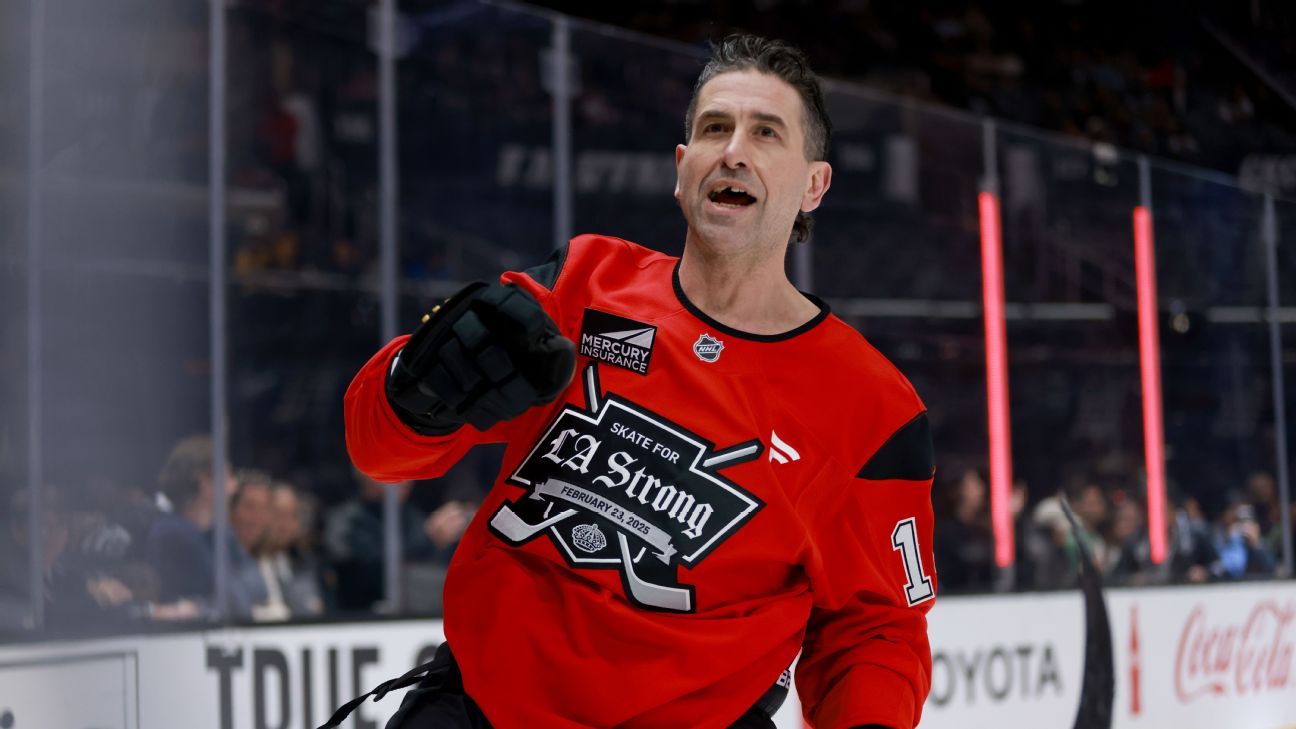

Terry Ryan is living out a hockey player’s dream. It’s just not the exact one he grew up dreaming.
One of the stars of the hit show “Shoresy,” the hockey-centered comedy that has acted as equal parts love letter to the sport and cultural tastemaker, Ryan will join his castmates (all of whom are also hockey players achieving various levels of success) on Dec. 10 at UBS Arena on Long Island as part of the Shoresy Fall Classic, a multistop tour across Canada and the United States where the cast plays games typically against the alumni of that NHL team.
“Aaron Asham is one of my best friends in the world. I played junior and pro with him,” Ryan said of the retired 15-year NHL veteran who played four seasons with the New York Islanders. “So I’m looking forward to that.”
The pace of play is higher than most people think heading in, the 48-year-old noted, adding “we’re not out there trying to hurt each other or anything, but it’s a step up from a regular shinny game.”
“It’s a very unique experience. I don’t know if I’ve ever come across anything like it whereby the fans are cheering for both teams,” he said. “Even though we lose — we’ve been losing most of the games — we’re not getting blown out, and I think people walk away with an appreciation that, you know, we’re all actors in the show, but we’re all hockey players. We’re a pretty good team. We hang in there.”
The event, which also includes a Q&A with the cast, was sparked by the massive popularity of the show, which will release its fifth season in Canada on Christmas Day and on Hulu in early 2026 (its parent show, “Letterkenny,” wrapped up with 12 seasons and 81 episodes).
As for Ryan, he was the No. 8 pick in the 1995 draft of the Montreal Canadiens, and achieved his dream of playing in the NHL — but played only eight games with the Habs. He then spent six seasons with different AHL teams after an ankle injury brought his NHL dreams to a halt.
The Newfoundland native continued to play in various leagues while pursuing another career — film and television. But not as an actor.
“I got an arts degree in folklore and English, and within that there’s a film studies certificate. I worked on a crew, I mean like location [scouting], production assistant, AD. I was like ‘jump how high’ for six years,” he said. “Then I spilled over, I did some stunts, and then because I have no tooth, I got to play some parts like, you know, British soldiers, crackheads, pimps, drug dealers, stuff like that. … My entrance into this world was a lot different than the other guys [on the Shoresy cast].”
Eventually, Ryan did cross paths with one Hollywood star, who took him under his wing.
“There’s a show on Netflix called ‘Frontier.’ I was on crew, I was waiting to get in the union. I met Jason Momoa. He came along with [producers] and gave me a chance,” Ryan said. “I had no tooth, Momoa said, ‘Keep the tooth out. I can get you some stunt gigs.’
“Five seconds into the show, I’m the very first face you see. It’s a British soldier begging for his life, and I’ve got no tooth obviously … they got me that role. That’s how I got in.”
Ryan and Momoa also shared a love for hockey. Ryan taught Momoa and members of the crew how to skate (in Momoa’s case, the finer points).
“I don’t know how many times we went out on the ice, maybe 100 times,” Ryan recalled.
Ryan also taught Momoa the intricacies of a hockey fight.
“When we first [fought], I just shook him and beat him in a fight,” Ryan said. “I said, ‘It’s all about balance, man. You can be as big as you want.’
“Anyway, he laughed … trust me, if he hit me with one, it wouldn’t matter. [Momoa] wanted to get in a hockey fight [in the second season of ‘Frontier’], so, like, I’m [wearing] the British red coat, and he pulls the thing over, and he simulates a hockey fight.”
Momoa helped Ryan get several stunt gigs and even hired Ryan as his assistant for a period of time. Eventually, “Letterkenny” called with the role of Ted Hitchcock, a lovable hockey player from Newfoundland with a penchant for “martoonies,” which led to “Shoresy.”
And now, the show and cast enjoy a level of success that allows them to play in hockey games against NHL players across North America, with thousands of people cheering them from the stands. In a very circuitous way, a version of Ryan’s hockey dreams did come true.
Jump ahead:
Games of the week
What I loved this weekend
Hart Trophy candidates
Social post of the week
Stick taps

Biggest games of the week

I’m getting into “watch every Colorado Avalanche game” territory. I saw them live for the first time this season at Madison Square Garden on Saturday, and it was incredibly fun. Nathan MacKinnon had a pair of goals, including a nasty backhand overtime winner under the crossbar that he made look absolutely effortless.
1:08
Nathan MacKinnon skates through Rangers defense to score dazzling OT winner
Nathan MacKinnon makes a sweet move and scores on the backhand to give the Avalanche an overtime win.
We’ve been focusing a lot on the lack of regulation losses for Denver’s team — only two so far this season. But we can now start keeping an eye on points in general, because the Avs are are currently on pace for 58 wins and 134 points this season.
That would be second-most points by any team in a season in NHL history, behind the 2022-23 Bruins (135).
If things keep rolling, the Avalanche have a chance to make history. They have build a solid foundation for it. They have the players. Could they do it?
Weeks in mid-December can sort of fly under the radar in the course of the regular season, but these are the ones where teams chasing history work in the shadows and build. The Avs visit the Nashville Predators on Tuesday, host the Florida Panthers on Thursday and then have the Preds at home Saturday. It could be a three-win week for the NHL’s premier team.
Other key games this week


Monday, 9 p.m. | ESPN+


Tuesday, 7 p.m. | ESPN+


Tuesday, 7 p.m. | ESPN+

Thursday, 7 p.m. | ESPN+


Thursday, 7 p.m. | ESPN


Thursday, 7 p.m. | ESPN+


Thursday, 8 p.m. | ESPN+


Saturday, 7 p.m. | ESPN+

Saturday, 8 p.m. | ESPN+

Sunday, 6 p.m. | ESPN+
What I loved this weekend
The Athletic’s Murat Ates wrote a story about the mental health journey of Winnipeg Jets forward Gabriel Vilardi. The story, which includes raw and honest reflection from Vilardi, is equal parts fascinating and emotional. This quote from Vilardi was particularly humbling and something that certainly many athletes probably go through during a game:
“For me, negative self-talk is not just panic attacks; it’s something that I deal with a lot. And it drags on. It starts with one play. Then it’s like, ‘Oh s—, I’ve got to make up for that play.’ Then it drags on to three shifts because you’re still thinking in your head that you’ve got to make up for it. Next thing you know, it’s a period and it’s like, ‘F—, I’ve only got two periods left.’ I was in my head the whole first period.”
Sports psychologist Dr. Alicia Naser — who works with NHL players such as Seattle Kraken forward Shane Wright and Calgary Flames center John Beecher along with other professional athletes — has helped to normalize the discussions, particular through her social media content, which includes bite-sized wisdom and actionable items related to mental health and performance that can benefit anyone watching or reading.
Hart Trophy contenders if the season ended today
Nathan MacKinnon times three. That’s it.
But really, MacKinnon obviously remains on the list. He’s currently on pace for 70 goals and 140 points this season; if he reaches those totals, he’d be the fifth player in NHL history to do it, joining Wayne Gretzky (who did it four times), Mario Lemieux (twice), Bernie Nicholls (1988-89) and Phil Esposito (1970-71). MacKinnon would also have the first 70-goal season since Teemu Selanne and Alexander Mogilny did it in 1992-93 (both with 76 goals).
As for the second contender, that goes to Connor McDavid. He pulled into second place in the points race, now six back of MacKinnon with 42; he also leads the league in assists (28).
Indeed, this might be the week it becomes a two-player race. For that reason, I’m giving one more nod in this section to both Connor Bedard and Macklin Celebrini, because one (or both) might be unseated as early as next week. I kind of hope I’m wrong though.
Social media post of the week
It definitely isn’t the 6-7 cam at MSG, or Sam Bennett taking part in the trend.
My choice this week is new hockey fan Big Z on TikTok. It feels as if every few years someone goes viral (at least in the hockey bubble) for finding out how exciting hockey is. It’s fun to live vicariously through someone who is experiencing the same joy we all once did as hockey fans.
Big Z’s joy over seeing Alex Ovechkin and Dustin Byfuglien deliver checks, or lamenting a Red Wings shootout loss (but still saying that he needs to buy a jersey), is fantastic.
Stick taps
The Washington Capitals have partnered with WWE to release a limited edition collab for John Cena’s final WWE match before he retires, taking place Saturday. The shirt features Cena wearing a Caps hat holding a towel in his iconic pose that reads “Let’s Go Caps.”
The time is now for an #ALLCAPS x @JohnCena collaboration in celebration of his final match!
Fans who purchase through the special link will receive the exclusive t-shirt and tickets to #CapsCanes this Thursday, Dec. 11.
🎟️ https://t.co/IzoZjSdSrq pic.twitter.com/iAkVHjBx12
— Washington Capitals (@Capitals) December 5, 2025
I’m all for more partnerships like this. City-specific merchandise is on the rise and often becomes a collector’s item. WWE also has championship belts specific to teams across multiple sports, including the NHL.
Sports
What Buster Olney, Jeff Passan are hearing about Schwarber’s suitors, top free agents and blockbuster trades

-
Buster Olney
Close
Buster Olney
ESPN Senior Writer
- Senior writer ESPN Magazine/ESPN.com
- Analyst/reporter ESPN television
- Author of “The Last Night of the Yankee Dynasty”
MLB’s winter meetings begin Monday in Orlando, Florida, signaling the time when baseball’s offseason activity is likely to take off.
What’s the latest on free agent hitters, including coveted sluggers Kyle Schwarber and Kyle Tucker? Will Framber Valdez find a new home now that fellow top free agent pitcher Dylan Cease is off the board? What’s the latest on a trade market featuring stars such as Ketel Marte and Steven Kwan? And which teams could surprise the sport by making a big splash in Florida?
Here is the latest intel Buster Olney and Jeff Passan are hearing on the players, teams and themes that will rule this year’s meetings.
Last year’s winter meetings were all about Juan Soto — is there one free agent or theme on everyone’s mind going into the meetings this year?
Olney: Some agents and execs are saying the money for free agents is generally locked down. There are outliers, of course — the Toronto Blue Jays are doing their thing, and the Pittsburgh Pirates, A’s and Miami Marlins are all angling for a We Are Trying posture.
The very elite guys, such as Kyle Schwarber, will get their money. But there are early indications that a lot of the teams that are traditionally aggressive might be more conservative this winter, perhaps because of the looming labor situation — and that could lead to more trades, rather than investments in free agents, as teams look to plug holes.
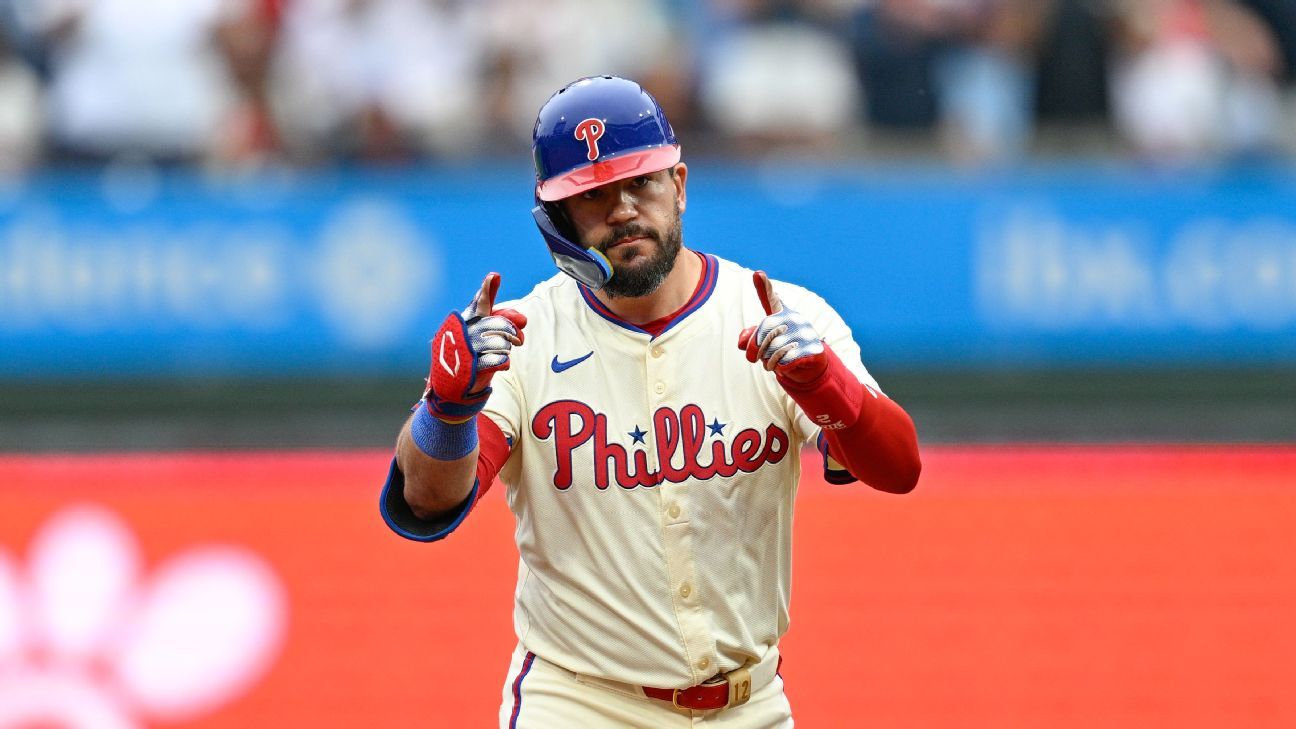
Passan: When does the Kyle Schwarber dam break? Several teams’ fortunes — from Philadelphia to Cincinnati to Pittsburgh to Boston to Baltimore to the New York Mets — depend on where Schwarber goes. The belief among teams is that it will take five years to secure the 32-year-old, and once that happens — perhaps sometime during the meetings — teams will start pivoting, and the action will pick up demonstrably.
Which top free agent hitter is most likely to sign during the winter meetings?
Olney: In recent winters, the Blue Jays wanted to spend big and couldn’t entice Shohei Ohtani or Juan Soto to take their money. Now, some free agents could need Toronto, if some of the big-money teams pass on pricey moves. Kyle Tucker has been projected as a $400 million-plus player, but it might behoove him to move quickly if he gets an early, aggressive bid from the Jays (or some other team).
This is not a winter in which you want to be waiting for the big offers to materialize, as they did for Bryce Harper and Manny Machado in past offseasons.
Passan: Schwarber is the best bet. Tucker isn’t close to done yet. Cody Bellinger has a healthy market but is biding his time. Alex Bregman and Bo Bichette are world-class infielders with ample, moneyed suitors. Pete Alonso‘s signing could go down after Schwarber.
What’s clear is that there’s a group of teams that will spend on a big bat (Phillies, Red Sox, Blue Jays), a number surveying multiple options (Yankees, Mets, Cubs) and a handful that would do so opportunistically (Orioles, Tigers, Reds, Pirates). Others could emerge depending on how the market plays out and what trade possibilities emerge.
Which other hitters could move quickly at the meetings?
Olney: Cedric Mullins‘ choice to sign for a one-year, $7 million, with the Tampa Bay Rays could be a warning sign for this free agent class. Mullins was not a perfect free agent by any measure, after his struggles with the Mets, but the rapidity with which he agreed to a deal could reflect the general feeling that this market could play out like a game of musical chairs — if you’ve got offers in hand, it’d be best to move fast and grab a spot (and money). Jorge Polanco could be among those who sign sooner rather than later — he’s coveted by the Mariners and some other teams. Harrison Bader set himself up well with a strong performance in Philadelphia.
Passan: If Schwarber goes early, everyone is in play. Otherwise, the second tier of hitters includes infielder Jorge Polanco, catcher J.T. Realmuto and Japanese corner infielder Kazuma Okamoto, and teams believe there could be momentum toward deals with them. Another popular hitter: infielder Ha-Seong Kim, who could return to Atlanta — which still needs a shortstop — on a shorter-term deal or seek longer-term security elsewhere.
Now that Dylan Cease has signed, which big-name aces could move next?
Olney: It depends on your definition of “big name.” Max Scherzer and Justin Verlander, future Hall of Famers, will find landing spots, but they are on the downslopes of their remarkable careers; they can wait, and there is a presumption that Scherzer could pitch for his good friend, new San Francisco Giants manager Tony Vitello.
If you’re talking about the guys who will be getting paid the most, Framber Valdez and Ranger Suarez are next up, and there are clearly teams with which they could fit. The Mets need an ace; the Orioles need an ace. But the perceived expectations for Valdez’s next deal are high early in this offseason, evaluators say, and any team that bids on Suarez has to get comfortable with investing in a guy who doesn’t throw hard — which is not common in this era.
Passan: Teams in the mix for Suarez believe he’s the next big-time starter off the board. Though the 30-year-old won’t fetch a Dylan Cease-level deal, he long has been a target for Houston, which balks at deals beyond six years, and Baltimore, which is seeking a top-end rotation piece. Right-hander Michael King has widespread interest because of his frontline potential with a willingness to sign for a shorter term than the top starters. Also worth watching: right-hander Merrill Kelly, who at 37 is in line for a multiyear deal. Arguably the best starter in the class, Valdez is often among the league leaders in innings with a playoff résumé, and his market will unfold alongside the best hitters’.
Will we see a run of reliever signings following Devin Williams and Ryan Helsley getting deals?
Olney: Not necessarily, because there are so many relievers available — more than 100 unsigned free agents. Pete Fairbanks could be among the next to sign, and the 35-year-old Robert Suarez. Edwin Diaz‘s free agency is fascinating because he’s the best available pitcher in an offseason in which there are few teams seemingly prepared to invest a nine-figure contract on a short reliever. He has been linked to the Mets, of course, and the Blue Jays, but each of those teams has been filling other holes, so far.
Passan: The run on relievers is slowing slightly, though Fairbanks and Kyle Finnegan are the closers who could be had sooner than later. Tyler Rogers is primed to get a three-year deal, as is Brad Keller, who could transition to be a starter. Luke Weaver will get multiple years. The left-handed market is thin and led by Steven Matz, Caleb Ferguson, Taylor Rogers, Gregory Soto and Sean Newcomb. Diaz and Robert Suarez are the two best relievers left, and they are likely to wait for the larger market to shake out.
Which players will be mentioned most in winter meetings trade discussions?
Olney: It makes sense for teams that have trade candidates under team control into 2027 to weigh offers now because they might struggle to get proper value for those players next July, given the labor uncertainty after the season. That means players such as Mackenzie Gore of the Nationals — and Paul Toboni, Washington’s president of baseball operations, said in a “Baseball Tonight” podcast interview Wednesday that he has talked with Gore about hearing his name in trade rumors — and Kwan of the Guardians.
Interestingly, other teams report that the Twins haven’t been pushing Joe Ryan in trade discussions. Maybe that’s because they don’t have to, or, in the opinion of some evaluators, Minnesota could prefer to keep Ryan. The Diamondbacks told interested teams in July that they wouldn’t trade Marte, but their posture now is very different; they have to improve their rotation, and the quickest way to do that would be to swap Marte.
Passan: Multiple executives see a flurry of potential trades, headlined by Marte, Arizona’s All-Star second baseman. The Diamondbacks aren’t clamoring to move him. They also know that with five very affordable years under contract, Marte is among the most valuable players in baseball, thanks to his combination of productivity and cost. Another second baseman teams are considering: Tampa Bay’s Brandon Lowe.
Miami is almost certain to move a starting pitcher this winter, and Edward Cabrera has generated the most interest. Boston has been discussing its outfield surplus with multiple teams. Pittsburgh wants to trade a starter for a hitter. The Brendan Donovan market remains conflagrant, as St. Louis considers whether its rebuild will include him or the hefty return he would fetch.
Which is one surprise team to watch at the winter meetings?
Olney: We aren’t accustomed to seeing the Pirates, Marlins or A’s among the most aggressive teams, but they seem to be like college freshmen holding credit cards for the first time — some agents think they’ll add something in the range of $25 million to $30 million in payroll, either in salaries acquired through trades or in free agency.
Passan: After getting Helsley in free agency and Taylor Ward in a trade, the Orioles are looking to land a big player — and though the priority is pitching, they’re not against targeting a hitter, either. The Los Angeles Angels, whose last major free agent signing for more than $65 million was Anthony Rendon in December 2019, are still looking to bolster their rotation after trading for Grayson Rodriguez and signing Alek Manoah.
What else are you hearing that will shape the winter meetings?
Olney: The juiciest rumor I heard this week was the notion that the Mets could push the Phillies for Schwarber, and there are a lot of reasons this could make sense. Beyond Schwarber’s power and on-base capability — can you imagine pitchers working to get through Schwarber and Soto in the same inning? — he is known as someone who works to pull players together. And hell, even if the Mets don’t believe they can beat the Phillies in the bidding for the slugger, they could push Philadelphia’s cost by being involved, as the Braves did with Aaron Nola two winters ago.
There’s a lot of talk among teams about Murakami, the free agent corner infielder who is making his way from Japan — and skepticism, in some front offices, about how his skill set will play in the big leagues, given his big swing-and-miss profile and the perception that his defense could be a problem. But all he needs in this bidding is for one team (or more) to fall in love with his big-time power.
Passan: If Schwarber signs and unclogs the market, expect others to fall — either toward the end of the meetings or in the weeks leading up to Christmas. Japanese right-hander Tatsuya Imai could wind up with a big-market team on the East Coast, and the New York Yankees — with Gerrit Cole and Carlos Rodon expected to miss the start of the season — New York Mets and Philadelphia are reasonable landing spots. All three have interest in Bellinger, too. Another Japanese star, Munetaka Murakami, is more likely to sign in the period between the meetings and holidays. With the paucity of center fielders in free agency and on the trade market, Bader has a healthy market.
-
 Sports2 years ago
Story injured on diving stop, exits Red Sox game
-
 Sports3 years ago
‘Storybook stuff’: Inside the night Bryce Harper sent the Phillies to the World Series
-
 Sports2 years ago
Game 1 of WS least-watched in recorded history
-
 Sports3 years ago
Button battles heat exhaustion in NASCAR debut
-
 Sports3 years ago
MLB Rank 2023: Ranking baseball’s top 100 players
-
Sports4 years ago
Team Europe easily wins 4th straight Laver Cup
-
 Environment3 years ago
Japan and South Korea have a lot at stake in a free and open South China Sea
-
 Environment1 year ago
Here are the best electric bikes you can buy at every price level in October 2024