
Opening Day takeaways: What we learned from a wild start to the 2024 MLB season


What an MLB Opening Day!
All 30 teams were scheduled to be in action Thursday before rain postponed the scheduled Milwaukee Brewers–New York Mets and Atlanta Braves–Philadelphia Phillies openers to Friday.
The Los Angeles Angels and Orioles got things started with Corbin Burnes delivering a dominant debut for Baltimore. Things really heated up with eight games starting just after 4 p.m. ET — highlighted by a thrilling New York Yankees comeback win over the Houston Astros in a showdown in Texas.
The Texas Rangers raised the first World Series banner in franchise history before beating the Chicago Cubs in manager Craig Counsell’s Cubs debut. And finally, the Arizona Diamondbacks made a loud statement with a 14-run inning against the Colorado Rockies.
What did we see — and what did we learn — in the first day of games as the season gets started? We have you covered with the best moments from every game, as well as takeaways from each matchup.
Season preview: Power rankings | Predictions | Moves that rocked offseason
Jump to …
Takeaways | Relive the day
Takeaways from every Opening Day game


Recap | Box score | Highlights
Everyone is discounting Boston’s chances in the AL East, and perhaps over the long haul the Red Sox simply won’t have enough pitching depth, but the lineup has a chance to be very good. Boston battled a tough pitcher in Seattle’s Luis Castillo, getting to him for four runs and three extra-base hits in five innings. Two of those came from Rafael Devers, including an impressive two-run home run to left-center off a high fastball.
The most impressive achievement of the night, however: Former Mariners farmhand Tyler O’Neill, acquired from the Cardinals in the offseason, homered for the fifth consecutive Opening Day, breaking a record he had shared with Yogi Berra, Gary Carter and Todd Hundley (oddly, three catchers). O’Neill had a huge 6.1-WAR, 34-homer season with St. Louis in 2021, but his production dropped the past two seasons as he battled injuries. It’s possible 2021 was a complete fluke, but if O’Neill hits, the Boston lineup is going to score some runs. — David Schoenfield
,


Arizona Diamondbacks 16, Colorado Rockies 1
Recap | Box score | Highlights
We have a clear winner for the wildest “You can’t predict baseball” result of the day. The Diamondbacks began defense of their National League pennant with the most impressive inning of offense on Opening Day since, well, ever. Their 14-run outburst in the bottom of the third is an Opening Day record, the first inning with 10 runs on Opening Day since the Padres in 1997 and just the fifth 14-run inning in any game of the divisional era (since 1969). Arizona did it with 13 hits — none of them home runs.
It was a nice reward for a sellout crowd and for an organization that increased payroll in the offseason trying to build upon last year’s playoff success. Just a couple of days ago, the Diamondbacks agreed to a deal with free agent starter Jordan Montgomery, adding him to a rotation that also brought on Eduardo Rodriguez (although he’s on the IL to start the season). As for the Rockies, the last team to give up 14 runs in an inning was the 2009 Yankees — and they won the World Series that season. — Schoenfield


Cleveland Guardians 8, Oakland Athletics 0
Recap | Box score | Highlights
If the Cleveland Guardians are looking to trade starter Shane Bieber at a premium, they might want to check the market after his Opening Day performance against the Athletics. Bieber, who has been rumored to be on the trading block since before an injury ended his 2023 season, began the final year of his contract with the Guardians by easing his way through six innings, allowing four hits and striking out 11 in Cleveland’s 8-0 win over Oakland. On a night when the focus was on the thousands of A’s fans who chose to protest John Fisher’s ownership by partying in the parking lot rather than attending the game, Bieber — the Cy Young Award winner in the COVID-shortened 2020 season — gave the fans who did choose to enter the gates no reason to celebrate. — Tim Keown


Recap | Box score | Highlights
For a contest that ended with a pedestrian 4-3 final, the opener between the Cubs and Rangers was a wild one, beginning with a ceremony celebrating last year’s heroes and ending with a game-winning hit from one of Texas’ postseason heroes, Jonah Heim.
It was a roller coaster of a game. The early innings in the aftermath of the Texas banner ceremony featured a mini-duel between starters Nathan Eovaldi, who was pitching to contact, and Justin Steele, who mowed down Texas the first time through the order. Then Steele departed in the fifth with hamstring tightness that cropped up when he was fielding a Leody Taveras bunt.
The game opened up from there: Adolis Garcia mashed a homer he punctuated with a bat flip. Wyatt Langford collected his first career RBI and base hit. The Cubs’ Michael Busch stole a run on a two-base wild pitch by Rangers closer Jose Leclerc. New Cubs skipper Craig Counsell, matchup-maximizer extraordinaire, went deep in both his bullpen and his bench. Texas World Series hero Travis Jankowski tied the game in the ninth with a pinch-hit homer off Chicago closer Adbert Alzolay. After the game flipped to the automatic-runner phase, the Cubs left the bases full in the 10th. Christopher Morel nearly clanged a grand slam off the left-field foul pole but it faded into the second deck and he subsequently popped out.
Finally, that set the table for Heim, who drove in Josh Jung with a bases-loaded, 10th-inning, game-ending single off Drew Smyly, setting of a celebration in the middle of the field.
Whew!
What do we make of all this? If Steele’s injury isn’t serious, there wasn’t a whole lot to glean from one opening contest, dramatic as it was. Both teams are deep and have managers who can leverage that depth. Both teams have bullpens well suited to navigate tight, tense contests in the later innings. More than anything though, it was a drama-filled, exciting game that hopefully sets the tone for the season in Arlington, Chicago and across the majors. — Bradford Doolittle


Recap | Box score | Highlights
The Marlins made the playoffs last season on the strength off a 33-14 record in one-run games — one of the best such records in MLB history. Beware of regression, Miami. It looked like the Marlins might pull off a win that would have fit in with their 2023 narrative as first baseman Josh Bell — not known for his defense — threw out Pirates baserunners at home plate in both the 10th and 11th innings, but the Pirates finally scraped across a run in the 12th while the Miami offense kept failing to score.
The news to watch coming out of this game, however, was that David Bednar, the Pirates’ All-Star closer, didn’t get the save and was apparently unavailable even though he’s on the active roster. Second-year lefty Jose Hernandez instead picked up his first career save. Bednar missed time this spring with a lat injury, so let’s see if something is going on with his health. — Schoenfield


Recap | Box score | Highlights
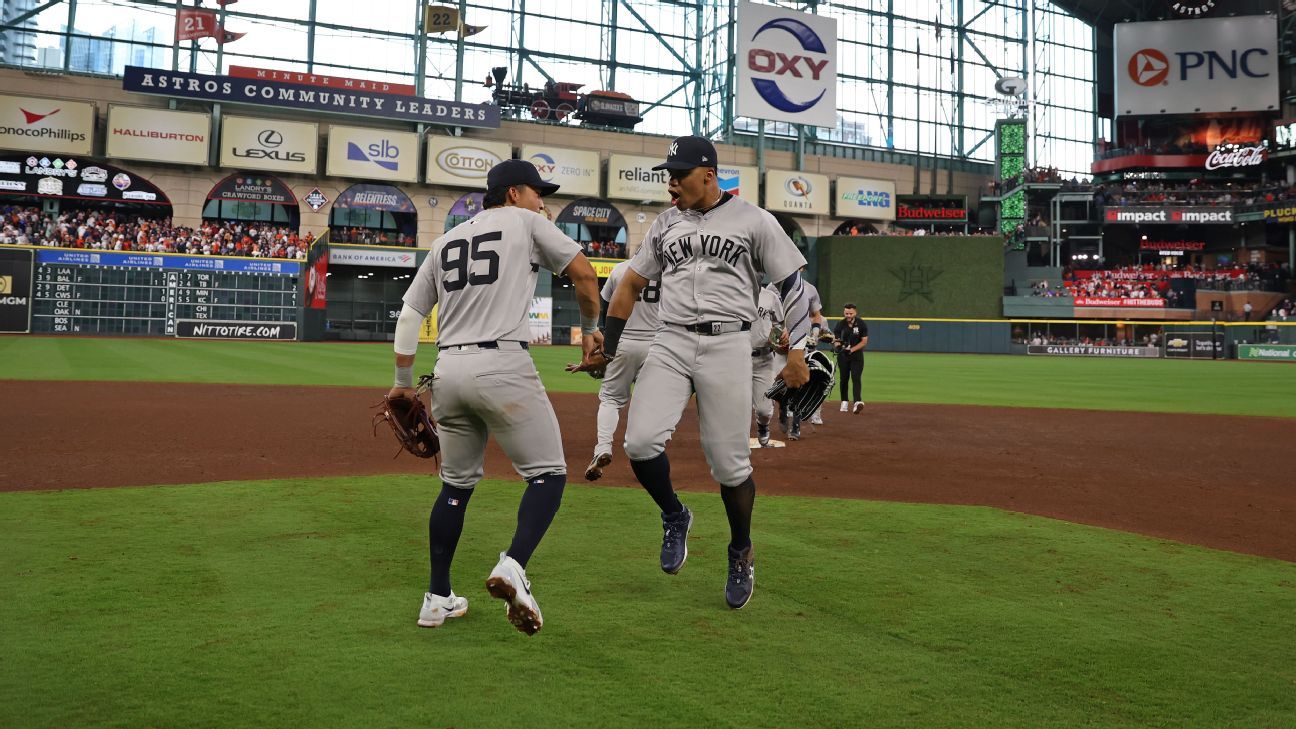
The knock on Juan Soto in recent years — the only blemish on a generational player — has been his defense in the outfield. The numbers supported what eyes indicated: It’s been ugly.
He has insisted he’s better than that, and that he’s worked at it. On Thursday, he showed that off in a huge spot, throwing out Mauricio Dubon, the game-tying run, at home plate from right field in the ninth inning. Soto pounded his chest. He let out a scream. The play was reviewed and stood. Moments later, Clay Holmes secured the game’s final out in the Yankees’ 5-4 comeback win.
Soto had his first signature Yankee moment. And it came on defense — just as we all expected. –– Jorge Castillo


Recap | Box score | Highlights
The Giants retooled their roster as much as any team in the offseason, adding Blake Snell, Matt Chapman, Jorge Soler, Jordan Hicks and Tom Murphy, plus highly touted center fielder Jung Hoo Lee from Korea. Their linchpin, however, remains ace starter Logan Webb, who has a 3.07 ERA over the past three seasons and led the majors with 216 innings last season.
Unfortunately, his 2024 begins with one of the same issues as last season: a lack of support. In 2023, despite a 3.25 ERA that ranked fourth in the NL — plus that workload — Webb finished just 11-13 because of some shaky offensive support (he had 18 games where he allowed two runs or fewer, and won just nine of them). On Thursday, the lack of support came from the bullpen. He left after six innings with a 3-2 lead, but the Padres scored four runs in the seventh inning off the Giants’ bullpen, with Jake Cronenworth delivering a key two-run double off Ryan Walker. Nice comeback for San Diego, tough loss for the Giants. — Schoenfield


Recap | Box score | Highlights
The word from the Blue Jays camp out of spring training painted the picture of a rejuvenated Vladimir Guerrero Jr.: He’s lost some weight, he’s been more joyful, he’s more confident and he put together consistently good at-bats, hitting .463 in Grapefruit League play. The hope is he can find his MVP-level stroke of 2021 after two good-not-great seasons in 2022 and 2023. His first hit of 2024: a mammoth 450-foot blast over the batter’s eye in center field at Tampa off a cutter from Zach Eflin, matching his longest home run of 2023. That will be a nice confidence boost for the young slugger, who reached the majors in 2019 but is still just 25 years old.
The Jays are trying Guerrero in the second spot in the batting order, essentially flipping spots with Bo Bichette. Indeed, you can argue that Bichette has passed Guerrero as the face of the Blue Jays (he’s certainly been more valuable via WAR the past two seasons). You can’t argue with this: The Toronto offense isn’t as deep as it was even a couple years after finishing eighth in runs in the AL last season. They need both of their young starts to deliver. — Schoenfield


Recap | Box score | Highlights
We saw Royce Lewis‘ star-crossed career on full display Thursday: The No. 1 overall pick in the 2017 draft, Lewis twice tore his ACL as a minor leaguer, missing all of 2021 and most of 2022 as a result. He nonetheless remained a top prospect and reached the majors for his first extended stay in 2023 — only to play just 58 games because of an oblique strain and hamstring. But when he did play, he looked like a star — hitting over .300 with power, including four grand slams in less than a month.
He began 2024 with a home run in his first at-bat, ripping a 423-foot blast to left field and then singled in his second at-bat. However, when Carlos Correa then doubled, Lewis limped into third base and was replaced by a pinch runner (and don’t blame cold weather as it was 65 degrees in Kansas City). The Twins’ lineup needs Lewis raking in the 3-hole. Let’s hope it’s not serious. –Schoenfield


Recap | Box score | Highlights
Miles Mikolas caused a bit of a stir earlier this month when he said the Dodgers were playing “checkbook baseball.” On Opening Day, he got a firsthand look at what that checkbook has provided. It got the Dodgers Mookie Betts ($365 million), who reached base three times, including a solo homer. It got them Freddie Freeman ($162 million), who reached base three times, including a two-run homer. It got them Shohei Ohtani ($700 million), who reached base three times, including a double. And it got them Tyler Glasnow ($136.6 million), who allowed three baserunners in six innings. The Dodgers have written a lot of checks lately, especially amid their $1.2 billion offseason. They’re cashing in early. — Alden Gonzalez


Recap | Box score | Highlights
All spring, the Reds said they had enough depth to cover anything that came their way. Little did they know how quickly it would be tested as they opened the season with a suspension and myriad injuries. But up stepped journeyman Nick Martini who hit two home runs to propel Cincinnati to an easy win over Washington. Martini came into the game with 354 career at-bats — and just eight career home runs — but he was the Opening Day spark for a team who has playoff aspirations. On the mound, the Reds got a solid debut from newcomer Frankie Montas who shut out the Nationals over six innings while giving up just four hits without issuing a walk. That Opening Day combination of power and pitching is exactly what the organization drew up this offseason when they added veterans to a young and talented group of prospects. Cincinnati should be in the NL Central race all year. — Jesse Rogers


Recap | Box score | Highlights
Can the Tigers contend in the AL Central? It has been a long standing question as they’ve been in an extended rebuilding phase — but if they get performances on the mound like they did today, they’ll be in good shape. Tarik Skubal and three relievers shut down the one strength the White Sox have: a veteran lineup that has produced in the past. It also helps to have Javy Baez producing. He batted eighth for Detroit on Opening Day — singling to right on an 0-2 pitch from left-hander Garrett Crochet in the third inning and eventually scoring the lone run of the game.
Meanwhile, Crochet was the lone bright spot for the White Sox. In his first career start he struck out eight over six innings, but unfortunately for Chicago, he had no help at the plate. — Rogers


Recap | Box score | Highlights
Corbin Burnes allowed a first-inning home run to Mike Trout but was otherwise absolutely dominant in his Orioles debut. That was the only hit he allowed in his six innings as he struck out 11 of the 19 batters he faced, with seven of those K’s coming with his curveball. The Angels had no chance. With Kyle Bradish and John Means starting the season on the IL, the Orioles are looking for their big offseason acquisition to get off to a hot start — unlike last season with the Brewers, when Burnes uncharacteristically struggled early on with his control and had a so-so 3.97 ERA through his first 10 starts. Even without Bradish and Means, the Orioles have a chance to get off to a blazing start: Of their first 36 games, only six are against teams that made the playoffs last season, and those six are home games against the Brewers and Twins. — Schoenfield
Opening Day sights, sounds and moments

-
Adam Rittenberg
The wildest college football coaching cycle — perhaps ever — has reached the hiring phase.
Schools around the Power 4 that fired their coaches in the first two months of the season — or, in Stanford’s case, way back in late March — are targeting candidates and finalizing deals. Interestingly enough, one of the first major coaches to lose his job, Penn State’s James Franklin, was the first noninterim coach to be hired, as he is headed to Virginia Tech.
New hires always come with hope and optimism, grand proclamations and the chance to get programs on the right track. But not all hiring processes are the same. The financial component with jobs is essential — what schools are willing to spend not just on their head coach, but the assistants and support staff and, perhaps most important, the team roster.
We will be reviewing all of the major coaching hires in the 2025-26 cycle, evaluating how each coach fits in the job, their major challenges and what it will take to be successful. We will also assign an initial letter grade for each hire.
Jump to: LSU | Ole Miss | Florida | Arkansas | Auburn
Stanford | Oklahoma State | Virginia Tech


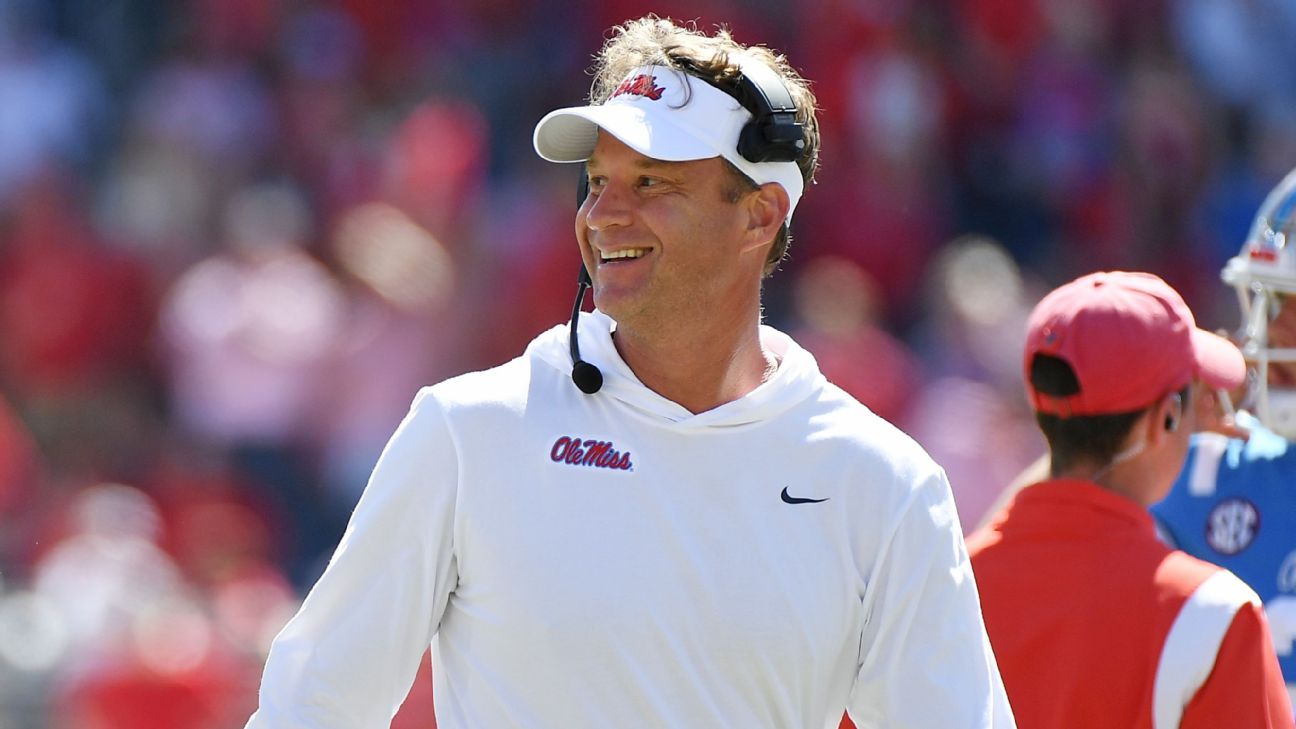
LSU hires Ole Miss’ Lane Kiffin
Why is this a good fit?
LSU got the coach it wanted ahead of other suitors, further confirming that its coaching job, despite the drama and dysfunction, remains one of the best in college football. Kiffin left a great situation at the height of his powers because he knows that LSU can consistently compete for national titles in ways that other programs simply cannot. In Kiffin, LSU gains a coach accustomed to the bright lights and the big stadiums, who can attract and develop talent and potentially restore the program to national powerhouse status. LSU can offer the big stage Kiffin lacked at Ole Miss, and wanted again.
Kiffin hasn’t worked at LSU but knows the SEC well after stops at Ole Miss, Alabama and Tennessee. Like Kiffin did at Ole Miss, he should put together an excellent staff that can scour Louisiana, Texas and the surrounding areas for top talent. He certainly will try to bring some of Ole Miss’ top players with him. Kiffin brings the offensive chops that LSU lacked at the end of Kelly’s tenure. He’s one of the nation’s best at identifying and developing quarterbacks, and the emergence of running back Kewan Lacy and others underscores that the Kiffin plan works on offense. — Adam Rittenberg
Biggest challenges Kiffin will face
LSU has a reputation as a place where it is possible to win championships, and that expectation will be placed on Kiffin immediately – especially with the money he is being paid. The Tigers pride themselves on this fact as Nick Saban, Les Miles, then Ed Orgeron all won national titles. Brian Kelly was an awkward fit from the start and never truly got the vibe down on the Bayou. Kiffin has his own unique way of running a program, but he has to find a way to work with all the different “cooks in the kitchen” so to speak. The entire state is heavily invested in LSU football, and though Kiffin has an extremely high profile, he is moving to an even bigger spotlight in Baton Rouge — the only Power 4 school in the state. Kiffin must embrace that, and everything that comes with it. As coveted as he was in this cycle, Kiffin has never won a conference title and finding a way to get over the hump at a school like LSU has to happen. This will be his best shot to get it done, and the clock will start ticking as soon as his first press conference ends. — Andrea Adelson
Grade: A-
The fixation around Kiffin the past few weeks would normally be attached to a multi-time national championship winner, or at least a coach who has won a Power 4 conference title. Kiffin did tremendous work at Ole Miss but still needs to show he can win the biggest games consistently. LSU is a national championship-or-bust type of program, and Kiffin will be judged at the very highest level, which he craves. He brings the right ingredients to get it done in Baton Rouge, especially his work with quarterbacks. — Rittenberg

Ole Miss makes DC Pete Golding new head coach
Why is this a good fit?
Under normal circumstances, Ole Miss could run a complete coaching search, thoroughly assess candidates currently in head-coaching roles, and others who might help build on the historic success under Lane Kiffin. But these are the strangest of times in Oxford, as Kiffin exits for LSU, a College Football Playoff first-round game looms for the Rebels, and emotions are running extremely high. Kiffin certainly will try to poach the roster for top pieces, and Ole Miss must do what it can to protect as many players as possible. Golding was the lead recruiter for many of them. He’s well-liked by players and won’t need to familiarize himself with Oxford, the administration and how Ole Miss is set up to compete.
Golding, 41, might not have been on the wish list for other SEC jobs just yet, but Ole Miss found itself in a unique situation. He’s a Louisiana native who has spent his entire career in the region, first at his alma mater Delta State and other smaller programs, and then Southern Miss and UTSA before getting his big break with Nick Saban at Alabama in 2018. Golding spent five seasons as a coordinator under Saban, and helped the Crimson Tide to a national title in 2020, before joining Kiffin at Ole Miss. He gives Ole Miss a chance not only for success in this year’s CFP, but can minimize disruptions during a very bumpy coaching transition.
What will be Golding’s biggest challenge?
Golding should be able to handle the next few weeks, but his true readiness for the enormity of the job is unclear. Again, he didn’t emerge as a candidate for the other SEC openings in this cycle, which suggests some external concern about his ability to handle such a role. Any first-time coaching job brings its challenges and even though Golding knows Ole Miss, he hasn’t been the face of the program. He’s also replacing a coach who put together the team’s most successful run since John Vaught in the late 1950s and early 1960s.
Although Golding has shown his talents in recruiting and with schematics, how will he handle the media? How does he do in front of donors and other key stakeholders with the university? Perhaps he just needed the chance, which he now has, but assistant coaches that are shielded from the media often take some time to get fully comfortable.
Grade: B
Coaching hires can’t be evaluated in a vacuum, and Golding’s ultimate success or failure at Ole Miss will be judged by what he accomplishes beyond the 2025 season. But what happens in Ole Miss’ first CFP appearance, after losing Kiffin to a rival SEC school, absolutely does matter, too, and Golding gives Ole Miss a chance to prolong a really special season. There’s little doubt he will continue to compile strong rosters. He will need a strong supporting staff, especially a talented offensive coordinator hire, to ultimately sustain and even elevate the program. The key question here is whether other SEC programs missed out on a great candidate in Golding, or will Ole Miss suffer for making an in-the-moment decision that could backfire long-term? — Rittenberg

Why is this a good fit?
Florida fans: Sumrall isn’t Billy Napier. Yes, he’s another promising Group of 5 coach from a program in Louisiana, just as Napier was when he came to Gainesville. But Sumrall is a different personality who comes from the opposite side of the ball and has more ties to the SEC, where he both played (Kentucky) and coached (Ole Miss, Kentucky). He’s more comfortable than Napier was in being the face of a major program and will delegate to his coordinators while compiling a strong staff. Although Auburn seemed like a more natural spot for Sumrall because of his connections to the state, Florida gives him an even bigger platform at the lone SEC program in one of the nation’s top talent-producing states.
The other thing Sumrall brings is wins. He won Sun Belt titles in both of his seasons at Troy and went to the American Conference title game in his first year at Tulane. Sumrall has succeeded in different ways and with different types of quarterbacks. He hasn’t won in the Power 4 or at a program like Florida, which is an understandable concern. But Sumrall is ready for the opportunity and should be able to foster the consistency Florida has lacked for far too long. Florida didn’t have a talent problem under Napier, and Sumrall should continue to excel in personnel while translating it better on the field. — Rittenberg
Biggest challenges Sumrall will face
Where do we start? First and foremost, Sumrall has to find a way to win over a fan base that thought it had a shot at landing Lane Kiffin. Whether that was a reality or not, Gators fans had their hopes up that Kiffin would choose them. With that, Sumrall has to convince fans he is not another version of Napier. Once Sumrall has done that, he has to find a way to win at what has proved to be one of the hardest jobs to crack in the SEC. Florida has not won an SEC title since 2008, and while there remains a belief it is one of the best jobs in the country, Florida goes through coaches at a fairly frequent clip. If past is precedent, Sumrall will be given a year or two to find success before the fan base starts to turn on him; four years max to compete for a championship. Expectations are sky high, and Sumrall will be given no leeway to learn on the job. — Adelson
Grade: B+
Sumrall has the ingredients to become the next great SEC coach. He’s an excellent communicator who connects with a range of people and should get Florida fans excited about the future, even if they might be skeptical at first because of his background. Florida isn’t where I initially saw him ending up in a wild coaching cycle, but if the school gives him some time, he should stabilize and elevate the Gators’ on-field performance and start getting more out of very talented rosters there. — Rittenberg

Why is this a good fit?
Silverfield has quietly become a really successful coach in the region, and certainly seems ready for a Power 4 opportunity like Arkansas. Although he hasn’t generated as much buzz as Tulane’s Jon Sumrall and other American Conference coaches, he has beaten many of them in head-to-head matchups and boasts a 29-9 record since the start of the 2023 season, including an AP Top 25 finish last fall. Silverfield led Memphis to a win against Arkansas earlier this season and has beaten four consecutive Power 4 opponents, including West Virginia and Iowa State in bowl games the past two seasons.
He has led Memphis since late 2019 but been at the program since 2016, so he understands the recruiting landscape and where Arkansas must look for players. Arkansas’ location can be a challenge for acquiring talent, but Silverfield shouldn’t be intimidated by it. He also brings a strong background on offense to Fayetteville and should compile a staff that has similar knowledge to the area and possibly the SEC.
What are the biggest challenges for Silverfield?
The SEC is only getting tougher with the additions of Texas and Oklahoma, the emergence of Texas A&M, Ole Miss and Vanderbilt, and the pressure on a traditional heavyweight like Florida to start making the CFP. Where does Arkansas really fit in the SEC pecking order? Silverfield likely will have to do more with less initially and win games against programs that have been on steadier footing. His real challenge will be trying to energize and unite the financial hubs around the Arkansas program, which give the program a chance to accelerate but haven’t always been harnessed.
Athletic director Hunter Yurachek was blunt earlier this year about the increased resources needed to better compete in the SEC. Arkansas seemingly could access those individuals and corporations with the right coach and vision. That’s where Silverfield comes in, as Arkansas can use those relationships to overcome some of its baked-in obstacles. Silverfield will need a strong introductory period, as Arkansas fans might not know him that well and need to embrace his personality and leadership style. The first offseason will be critical to make sure the program doesn’t fall further behind.
Grade: B
Silverfield’s consistency and success tended to go under the radar at a program like Memphis, where people have grown accustomed to really strong seasons. But his steady leadership style, shown in 2023, 2024 and most of this year, should help an Arkansas program that needs clear direction. He hasn’t coached in the SEC, and there could be a learning curve, but he shouldn’t be surprised walking in the door at Arkansas after spending so much time with Memphis. — Rittenberg

Why is this a good fit?
Every SEC school asks its head coaches to be engaged in recruiting, and Auburn is no exception. Although Auburn never got the results it wanted with Hugh Freeze, the school’s approach toward NIL and acquiring talent — a major draw when it tried to lure Lane Kiffin from Ole Miss — showed up on the roster. Golesh is the type of head coach who could harness Auburn’s established personnel apparatus and really maximize things going forward. He’s about as hands-on in the recruiting space as head coaches get. When Golesh was offensive coordinator at Tennessee, I remember sitting in his office and seeing him monitor all the recruiting transactions from social media on a giant screen. Golesh will get after it to upgrade Auburn’s roster and use all the resources available to him. He won’t be intimidated by the SEC recruiting scene and has ties to multiple states, including Florida and Ohio.
Golesh also brings an offensive background that should energize Auburn fans, especially after how poorly things went on that side of the ball under Freeze. He spent time with Matt Campbell early in his career, and then with Josh Heuepel at both UCF and Tennessee. South Florida ranks in the top five nationally in both scoring and total offense this season, and its defense shined in wins against Boise State and Florida.
What will be Golesh’s biggest challenge?
The challenge at Auburn is almost always the same. Can the head coach truly capitalize on the best parts of the place — an advantageous recruiting location, strong financial resources and a large and extremely devoted fan base — while navigating the big donors and other significant forces that have clashed too often over time and ultimately held back the program’s progress? Golesh is a strong communicator and brings a good mix of experience to the Plains, most notably his two seasons as an SEC coordinator at Tennessee.
He hasn’t been an SEC head coach, though, and he will need to show he won’t be pushed around or swayed by the forces that have doomed Auburn in the past. Golesh’s staff hires at Auburn will be especially important on defense, as South Florida made strides on that side this season but also struggled in key losses to Memphis and Navy. The other element worth watching is how Golesh balances the personnel element, undoubtedly his passion, with some of the other key responsibilities that come with managing an exciting but complicated program like Auburn.
Grade: B+
Despite no Power 4 head-coaching experience, Golesh checks a lot of boxes with his background, having worked in the Big Ten, Big 12 and SEC, and in the Midwest, South and Southeast. His time at Tennessee should really help him at a program like Auburn, which has a chance to move up in the SEC pecking order but will need a smart, aggressive approach. Golesh’s record of 23-15 doesn’t really jump off the page, and he hasn’t been part of a conference championship just yet. But his assertive vision as a recruiter gives Auburn a chance to quickly improve its roster and win more in an increasingly difficult SEC. — Rittenberg

Why is this a good fit?
Pritchard understands Stanford — its advantages, limitations and possibilities — better than most. He played quarterback for the Cardinal from 2006 to 2009, ahead of Andrew Luck’s run, and then spent the first 13 years of his coaching career with his alma mater, until joining the Washington Commanders‘ staff in 2023. He won’t be blindsided by what he’s walking into at Stanford. He also has a very close relationship with Luck, who is truly directing the program. There will be no feeling-out period between head coach and general manager.
Pritchard, 38, was part of Stanford’s seismic shift under Jim Harbaugh, quarterbacking the team to a signature win against USC in 2007. He then witnessed Stanford’s rise to a consistent contender and, more importantly, saw how things went downhill so quickly after COVID and in the portal/NIL era. His ability to learn from those difficult times and ensure Stanford avoids them will be important. But again, he’s not doing this alone, as he comes in immediately aligned with Luck. — Rittenberg
What will be Pritchard’s biggest challenge?
Generating momentum. Few people share as close an association with some of the biggest moments in Stanford history as Pritchard, but during those heights, the Cardinal never truly resonated broadly within a competitive San Francisco Bay Area sports market. With the collapse of the Pac-12 and six losing seasons in the past seven years, Stanford football has essentially become irrelevant locally. Building a program under those circumstances is difficult.
The academic side of things will always be a draw and should, in theory, help the program limit excessive outgoing transfers, but there also needs to be a robust NIL program. At Stanford that doesn’t have to be a problem. The university’s alumni base is notably wealthy, but it also has not proved to be a group eager to part with large sums of money to help field a better football team. That’s perhaps more of an issue that Luck will be responsible for dealing with, but it is very much part of the hand Pritchard has been dealt.
Beyond the structural challenges, this is just a team that needs a talent upgrade. They don’t have the players right now to compete at a high level. — Kyle Bonagura
Grade: C+
Luck didn’t make the most imaginative hire here. He went with a close friend who needs no introduction to Stanford and the vision for success there. But Pritchard hasn’t been a head coach before and wasn’t mentioned as being on the radar for many other college or NFL jobs. Stanford is really betting on potential here. He only really knows Stanford, which might work out in this case, but he also must learn from what happened toward the end of David Shaw’s tenure and chart out a new path. — Rittenberg

Why is this a good fit?
Oklahoma State needed a coach who knew the Big 12 and the region, and someone who could bring a clear vision, especially on offense. Quarterback play was central to Oklahoma State’s identity under Mike Gundy, and Morris has become one of the best talent identifiers in recent years. Oklahoma State needs to accelerate its recruiting, but likely won’t have the first choice for players, and Morris has repeatedly shown the ability to find and develop under-the-radar players. Ideally, he can bring quarterback Drew Mestemaker and others to Stillwater, and perhaps more importantly, make Oklahoma State an attractive destination for top offensive performers again.
Morris played and coached in the Big 12 at Texas Tech and spent time at Houston early in his career, so he won’t be unfamiliar with the key characteristics of a program like Oklahoma State. He’s not a Gundy disciple, but he can respect what Gundy did to elevate the program, while implementing his own vision, which worked both at Incarnate Word and at North Texas. — Rittenberg
What will be Morris’ biggest challenge?
The answer here is twofold: 1) Morris must live up to the unprecedented levels of consistent success his predecessor brought Oklahoma State; 2) Morris will also have to figure out exactly how to take the Cowboys’ football program to the future.
On the first point, whomever Oklahoma State chose to hire this cycle was going to be replacing a coach who won more — and more consistently — than any other figure in program history. Before 2023, the Cowboys made 18 consecutive bowl appearances under Gundy, winning eight or more games in 13 of those seasons. Past leading Oklahoma State to the very top of the sport and turning the program into a national brand, Gundy’s greatest achievement was transforming a school that had registered back-to-back 10-win seasons only once before he took over in 2005 into a perennial winner. Morris, who made two playoff appearances at Incarnate Word and has North Texas contending for the American this fall, has a history of producing quick turnarounds. Getting Oklahoma State upright — which will likely require a massive roster and staff overhaul — should be his first objective. From there, Morris will be judged on the expectations set by Gundy before him.
How does Morris take Oklahoma State into the future? Gundy’s initial, outspoken reluctance, then too-little, too-late embrace of college football’s NIL/transfer portal era hurt the Cowboys on the field and laid the groundwork for his unceremonious departure earlier this fall. Oklahoma State has fallen behind in terms of roster budgeting compared to its Big 12 counterparts, and industry sources suggested that the Cowboys’ ability to present improved resources would be a key piece of the hiring process. Morris has built a career on making more out of less, and that will serve him well in Stillwater. He has also proven capable of navigating the transfer portal and the current complexities of the sport. With help from Oklahoma State (and its boosters), Morris must take steps to modernize the program. If he can, a Big 12 conference landscape that remains wide open outside of Texas Tech could once again be Oklahoma State’s for the taking. — Eli Lederman
Grade: A-
Morris is only 40 (cue the Gundy memes), hasn’t been a Power 4 head coach, and before this season had only middling results with North Texas. His quarterback track record is his superpower, though, and Oklahoma State needs a renaissance at the position after things fell off too sharply. Morris can recruit Texas and build up the roster. Time will tell if he has the expertise to win one-score games in a league where programs are extremely similar. — Rittenberg
0:32
Paul Finebaum: Is Virginia Tech an upgrade for James Franklin?
Paul Finebaum weighs in on James Franklin reportedly being hired as Virginia Tech’s next coach.

Why is this a good fit?
When Franklin was fired and almost immediately announced his intentions to coach in 2026, Virginia Tech emerged as a natural landing spot for the 53-year-old. He has spent most of his career near the mid-Atlantic region, twice serving as a Maryland assistant, leading programs in Vanderbilt and Penn State and even working within the state at James Madison in 1997.
He understands the key recruiting areas extremely well. Franklin ultimately was fired for not winning the biggest games at Penn State, but he still won a lot of them (104) and understands how to build a consistently successful program. Virginia Tech ultimately had to do more of the selling here and convince a veteran coach that it was financially serious enough to contend in the ACC. Franklin isn’t shy about asking for what he needs, and he wouldn’t take the job if he didn’t feel that Virginia Tech’s investments are sufficient to compete for ACC championships. — Rittenberg
What will be Franklin’s biggest challenge?
This hire would not have happened without the financial investment Virginia Tech is about to make in football. The Hokies have languished behind their ACC counterparts in nearly every area — from staffing to salaries to NIL — and some of that has to do with an outdated way of thinking. The one through line has been the thought that the Hokies could win the way Frank Beamer won. That is a big reason why they hired Brent Pry, who served as Franklin’s defensive coordinator, as head coach in November 2021. That clearly did not work, as Pry never won more than seven games in a season. Virginia Tech pledged to add $229 million to its overall athletics budget over the next four years — a huge concession that the old model no longer works in this new era of college football.
But Franklin has to get the entire athletic department to believe the old Beamer days truly are over and things must be done his way. That is challenge No. 1. The second challenge is to restore Virginia Tech’s prowess in recruiting its home state. Franklin had success taking players out of Virginia Tech’s backyard and turning them into stars at Penn State. Will he be able to do the same now at Virginia Tech, which has lost an enormous amount of ground to powers outside the state? The high school players being recruited now were toddlers the last time Virginia Tech was a nationally respected program playing in BCS games. They don’t remember the Hokies being elite. Convincing players to stay in state will be a challenge, but one that Franklin can achieve given his track record. — Adelson
Grade: A
Virginia Tech’s two post-Frank Beamer hires were a coach who had not led a Power 4 program (Justin Fuente) and a first-time head coach (Brent Pry). In Franklin, Virginia Tech gets a proven winner from the Big Ten and SEC, who knows the region extremely well and will be extremely motivated to compete for league titles and CFP appearances.
Franklin’s big-stage shortcomings are a concern but perhaps not as much for a program like Virginia Tech, which is seeking to become a consistent conference title contender again. — Rittenberg
-
Adam Rittenberg
The wildest college football coaching cycle — perhaps ever — has reached the hiring phase.
Schools around the Power 4 that fired their coaches in the first two months of the season — or, in Stanford’s case, way back in late March — are targeting candidates and finalizing deals. Interestingly enough, one of the first major coaches to lose his job, Penn State’s James Franklin, was the first noninterim coach to be hired, as he is headed to Virginia Tech.
New hires always come with hope and optimism, grand proclamations and the chance to get programs on the right track. But not all hiring processes are the same. The financial component with jobs is essential — what schools are willing to spend not just on their head coach, but the assistants and support staff and, perhaps most important, the team roster.
We will be reviewing all of the major coaching hires in the 2025-26 cycle, evaluating how each coach fits in the job, their major challenges and what it will take to be successful. We will also assign an initial letter grade for each hire.
Jump to: LSU | Ole Miss | Florida | Arkansas | Auburn
Stanford | Oklahoma State | Virginia Tech
LSU hires Ole Miss’ Lane Kiffin
Why is this a good fit?
LSU got the coach it wanted ahead of other suitors, further confirming that its coaching job, despite the drama and dysfunction, remains one of the best in college football. Kiffin left a great situation at the height of his powers because he knows that LSU can consistently compete for national titles in ways that other programs simply cannot. In Kiffin, LSU gains a coach accustomed to the bright lights and the big stadiums, who can attract and develop talent and potentially restore the program to national powerhouse status. LSU can offer the big stage Kiffin lacked at Ole Miss, and wanted again.
Kiffin hasn’t worked at LSU but knows the SEC well after stops at Ole Miss, Alabama and Tennessee. Like Kiffin did at Ole Miss, he should put together an excellent staff that can scour Louisiana, Texas and the surrounding areas for top talent. He certainly will try to bring some of Ole Miss’ top players with him. Kiffin brings the offensive chops that LSU lacked at the end of Kelly’s tenure. He’s one of the nation’s best at identifying and developing quarterbacks, and the emergence of running back Kewan Lacy and others underscores that the Kiffin plan works on offense. — Adam Rittenberg
Biggest challenges Kiffin will face
LSU has a reputation as a place where it is possible to win championships, and that expectation will be placed on Kiffin immediately – especially with the money he is being paid. The Tigers pride themselves on this fact as Nick Saban, Les Miles, then Ed Orgeron all won national titles. Brian Kelly was an awkward fit from the start and never truly got the vibe down on the Bayou. Kiffin has his own unique way of running a program, but he has to find a way to work with all the different “cooks in the kitchen” so to speak. The entire state is heavily invested in LSU football, and though Kiffin has an extremely high profile, he is moving to an even bigger spotlight in Baton Rouge — the only Power 4 school in the state. Kiffin must embrace that, and everything that comes with it. As coveted as he was in this cycle, Kiffin has never won a conference title and finding a way to get over the hump at a school like LSU has to happen. This will be his best shot to get it done, and the clock will start ticking as soon as his first press conference ends. — Andrea Adelson
Grade: A-
The fixation around Kiffin the past few weeks would normally be attached to a multi-time national championship winner, or at least a coach who has won a Power 4 conference title. Kiffin did tremendous work at Ole Miss but still needs to show he can win the biggest games consistently. LSU is a national championship-or-bust type of program, and Kiffin will be judged at the very highest level, which he craves. He brings the right ingredients to get it done in Baton Rouge, especially his work with quarterbacks. — Rittenberg
Ole Miss makes DC Pete Golding new head coach
Why is this a good fit?
Under normal circumstances, Ole Miss could run a complete coaching search, thoroughly assess candidates currently in head-coaching roles, and others who might help build on the historic success under Lane Kiffin. But these are the strangest of times in Oxford, as Kiffin exits for LSU, a College Football Playoff first-round game looms for the Rebels, and emotions are running extremely high. Kiffin certainly will try to poach the roster for top pieces, and Ole Miss must do what it can to protect as many players as possible. Golding was the lead recruiter for many of them. He’s well-liked by players and won’t need to familiarize himself with Oxford, the administration and how Ole Miss is set up to compete.
Golding, 41, might not have been on the wish list for other SEC jobs just yet, but Ole Miss found itself in a unique situation. He’s a Louisiana native who has spent his entire career in the region, first at his alma mater Delta State and other smaller programs, and then Southern Miss and UTSA before getting his big break with Nick Saban at Alabama in 2018. Golding spent five seasons as a coordinator under Saban, and helped the Crimson Tide to a national title in 2022, before joining Kiffin at Ole Miss. He gives Ole Miss a chance not only for success in this year’s CFP, but can minimize disruptions during a very bumpy coaching transition.
What will be Golding’s biggest challenge?
Golding should be able to handle the next few weeks, but his true readiness for the enormity of the job is unclear. Again, he didn’t emerge as a candidate for the other SEC openings in this cycle, which suggests some external concern about his ability to handle such a role. Any first-time coaching job brings its challenges and even though Golding knows Ole Miss, he hasn’t been the face of the program. He’s also replacing a coach who put together the team’s most successful run since John Vaught in the late 1950s and early 1960s.
Although Golding has shown his talents in recruiting and with schematics, how will he handle the media? How does he do in front of donors and other key stakeholders with the university? Perhaps he just needed the chance, which he now has, but assistant coaches that are shielded from the media often take some time to get fully comfortable.
Grade: B
Coaching hires can’t be evaluated in a vacuum, and Golding’s ultimate success or failure at Ole Miss will be judged by what he accomplishes beyond the 2025 season. But what happens in Ole Miss’ first CFP appearance, after losing Kiffin to a rival SEC school, absolutely does matter, too, and Golding gives Ole Miss a chance to prolong a really special season. There’s little doubt he will continue to compile strong rosters. He will need a strong supporting staff, especially a talented offensive coordinator hire, to ultimately sustain and even elevate the program. The key question here is whether other SEC programs missed out on a great candidate in Golding, or will Ole Miss suffer for making an in-the-moment decision that could backfire long-term? — Rittenberg
Why is this a good fit?
Florida fans: Sumrall isn’t Billy Napier. Yes, he’s another promising Group of 5 coach from a program in Louisiana, just as Napier was when he came to Gainesville. But Sumrall is a different personality who comes from the opposite side of the ball and has more ties to the SEC, where he both played (Kentucky) and coached (Ole Miss, Kentucky). He’s more comfortable than Napier was in being the face of a major program and will delegate to his coordinators while compiling a strong staff. Although Auburn seemed like a more natural spot for Sumrall because of his connections to the state, Florida gives him an even bigger platform at the lone SEC program in one of the nation’s top talent-producing states.
The other thing Sumrall brings is wins. He won Sun Belt titles in both of his seasons at Troy and went to the American Conference title game in his first year at Tulane. Sumrall has succeeded in different ways and with different types of quarterbacks. He hasn’t won in the Power 4 or at a program like Florida, which is an understandable concern. But Sumrall is ready for the opportunity and should be able to foster the consistency Florida has lacked for far too long. Florida didn’t have a talent problem under Napier, and Sumrall should continue to excel in personnel while translating it better on the field. — Rittenberg
Biggest challenges Sumrall will face
Where do we start? First and foremost, Sumrall has to find a way to win over a fan base that thought it had a shot at landing Lane Kiffin. Whether that was a reality or not, Gators fans had their hopes up that Kiffin would choose them. With that, Sumrall has to convince fans he is not another version of Napier. Once Sumrall has done that, he has to find a way to win at what has proved to be one of the hardest jobs to crack in the SEC. Florida has not won an SEC title since 2008, and while there remains a belief it is one of the best jobs in the country, Florida goes through coaches at a fairly frequent clip. If past is precedent, Sumrall will be given a year or two to find success before the fan base starts to turn on him; four years max to compete for a championship. Expectations are sky high, and Sumrall will be given no leeway to learn on the job. — Adelson
Grade: B+
Sumrall has the ingredients to become the next great SEC coach. He’s an excellent communicator who connects with a range of people and should get Florida fans excited about the future, even if they might be skeptical at first because of his background. Florida isn’t where I initially saw him ending up in a wild coaching cycle, but if the school gives him some time, he should stabilize and elevate the Gators’ on-field performance and start getting more out of very talented rosters there. — Rittenberg
Why is this a good fit?
Silverfield has quietly become a really successful coach in the region, and certainly seems ready for a Power 4 opportunity like Arkansas. Although he hasn’t generated as much buzz as Tulane’s Jon Sumrall and other American Conference coaches, he has beaten many of them in head-to-head matchups and boasts a 29-9 record since the start of the 2023 season, including an AP Top 25 finish last fall. Silverfield led Memphis to a win against Arkansas earlier this season and has beaten four consecutive Power 4 opponents, including West Virginia and Iowa State in bowl games the past two seasons.
He has led Memphis since late 2019 but been at the program since 2016, so he understands the recruiting landscape and where Arkansas must look for players. Arkansas’ location can be a challenge for acquiring talent, but Silverfield shouldn’t be intimidated by it. He also brings a strong background on offense to Fayetteville and should compile a staff that has similar knowledge to the area and possibly the SEC.
What are the biggest challenges for Silverfield?
The SEC is only getting tougher with the additions of Texas and Oklahoma, the emergence of Texas A&M, Ole Miss and Vanderbilt, and the pressure on a traditional heavyweight like Florida to start making the CFP. Where does Arkansas really fit in the SEC pecking order? Silverfield likely will have to do more with less initially and win games against programs that have been on steadier footing. His real challenge will be trying to energize and unite the financial hubs around the Arkansas program, which give the program a chance to accelerate but haven’t always been harnessed.
Athletic director Hunter Yurachek was blunt earlier this year about the increased resources needed to better compete in the SEC. Arkansas seemingly could access those individuals and corporations with the right coach and vision. That’s where Silverfield comes in, as Arkansas can use those relationships to overcome some of its baked-in obstacles. Silverfield will need a strong introductory period, as Arkansas fans might not know him that well and need to embrace his personality and leadership style. The first offseason will be critical to make sure the program doesn’t fall further behind.
Grade: B
Silverfield’s consistency and success tended to go under the radar at a program like Memphis, where people have grown accustomed to really strong seasons. But his steady leadership style, shown in 2023, 2024 and most of this year, should help an Arkansas program that needs clear direction. He hasn’t coached in the SEC, and there could be a learning curve, but he shouldn’t be surprised walking in the door at Arkansas after spending so much time with Memphis. — Rittenberg
Why is this a good fit?
Every SEC school asks its head coaches to be engaged in recruiting, and Auburn is no exception. Although Auburn never got the results it wanted with Hugh Freeze, the school’s approach toward NIL and acquiring talent — a major draw when it tried to lure Lane Kiffin from Ole Miss — showed up on the roster. Golesh is the type of head coach who could harness Auburn’s established personnel apparatus and really maximize things going forward. He’s about as hands-on in the recruiting space as head coaches get. When Golesh was offensive coordinator at Tennessee, I remember sitting in his office and seeing him monitor all the recruiting transactions from social media on a giant screen. Golesh will get after it to upgrade Auburn’s roster and use all the resources available to him. He won’t be intimidated by the SEC recruiting scene and has ties to multiple states, including Florida and Ohio.
Golesh also brings an offensive background that should energize Auburn fans, especially after how poorly things went on that side of the ball under Freeze. He spent time with Matt Campbell early in his career, and then with Josh Heuepel at both UCF and Tennessee. South Florida ranks in the top five nationally in both scoring and total offense this season, and its defense shined in wins against Boise State and Florida.
What will be Golesh’s biggest challenge?
The challenge at Auburn is almost always the same. Can the head coach truly capitalize on the best parts of the place — an advantageous recruiting location, strong financial resources and a large and extremely devoted fan base — while navigating the big donors and other significant forces that have clashed too often over time and ultimately held back the program’s progress? Golesh is a strong communicator and brings a good mix of experience to the Plains, most notably his two seasons as an SEC coordinator at Tennessee.
He hasn’t been an SEC head coach, though, and he will need to show he won’t be pushed around or swayed by the forces that have doomed Auburn in the past. Golesh’s staff hires at Auburn will be especially important on defense, as South Florida made strides on that side this season but also struggled in key losses to Memphis and Navy. The other element worth watching is how Golesh balances the personnel element, undoubtedly his passion, with some of the other key responsibilities that come with managing an exciting but complicated program like Auburn.
Grade: B+
Despite no Power 4 head-coaching experience, Golesh checks a lot of boxes with his background, having worked in the Big Ten, Big 12 and SEC, and in the Midwest, South and Southeast. His time at Tennessee should really help him at a program like Auburn, which has a chance to move up in the SEC pecking order but will need a smart, aggressive approach. Golesh’s record of 23-15 doesn’t really jump off the page, and he hasn’t been part of a conference championship just yet. But his assertive vision as a recruiter gives Auburn a chance to quickly improve its roster and win more in an increasingly difficult SEC. — Rittenberg
Why is this a good fit?
Pritchard understands Stanford — its advantages, limitations and possibilities — better than most. He played quarterback for the Cardinal from 2006 to 2009, ahead of Andrew Luck’s run, and then spent the first 13 years of his coaching career with his alma mater, until joining the Washington Commanders‘ staff in 2023. He won’t be blindsided by what he’s walking into at Stanford. He also has a very close relationship with Luck, who is truly directing the program. There will be no feeling-out period between head coach and general manager.
Pritchard, 38, was part of Stanford’s seismic shift under Jim Harbaugh, quarterbacking the team to a signature win against USC in 2007. He then witnessed Stanford’s rise to a consistent contender and, more importantly, saw how things went downhill so quickly after COVID and in the portal/NIL era. His ability to learn from those difficult times and ensure Stanford avoids them will be important. But again, he’s not doing this alone, as he comes in immediately aligned with Luck. — Rittenberg
What will be Pritchard’s biggest challenge?
Generating momentum. Few people share as close an association with some of the biggest moments in Stanford history as Pritchard, but during those heights, the Cardinal never truly resonated broadly within a competitive San Francisco Bay Area sports market. With the collapse of the Pac-12 and six losing seasons in the past seven years, Stanford football has essentially become irrelevant locally. Building a program under those circumstances is difficult.
The academic side of things will always be a draw and should, in theory, help the program limit excessive outgoing transfers, but there also needs to be a robust NIL program. At Stanford that doesn’t have to be a problem. The university’s alumni base is notably wealthy, but it also has not proved to be a group eager to part with large sums of money to help field a better football team. That’s perhaps more of an issue that Luck will be responsible for dealing with, but it is very much part of the hand Pritchard has been dealt.
Beyond the structural challenges, this is just a team that needs a talent upgrade. They don’t have the players right now to compete at a high level. — Kyle Bonagura
Grade: C+
Luck didn’t make the most imaginative hire here. He went with a close friend who needs no introduction to Stanford and the vision for success there. But Pritchard hasn’t been a head coach before and wasn’t mentioned as being on the radar for many other college or NFL jobs. Stanford is really betting on potential here. He only really knows Stanford, which might work out in this case, but he also must learn from what happened toward the end of David Shaw’s tenure and chart out a new path. — Rittenberg
Why is this a good fit?
Oklahoma State needed a coach who knew the Big 12 and the region, and someone who could bring a clear vision, especially on offense. Quarterback play was central to Oklahoma State’s identity under Mike Gundy, and Morris has become one of the best talent identifiers in recent years. Oklahoma State needs to accelerate its recruiting, but likely won’t have the first choice for players, and Morris has repeatedly shown the ability to find and develop under-the-radar players. Ideally, he can bring quarterback Drew Mestemaker and others to Stillwater, and perhaps more importantly, make Oklahoma State an attractive destination for top offensive performers again.
Morris played and coached in the Big 12 at Texas Tech and spent time at Houston early in his career, so he won’t be unfamiliar with the key characteristics of a program like Oklahoma State. He’s not a Gundy disciple, but he can respect what Gundy did to elevate the program, while implementing his own vision, which worked both at Incarnate Word and at North Texas. — Rittenberg
What will be Morris’ biggest challenge?
The answer here is twofold: 1) Morris must live up to the unprecedented levels of consistent success his predecessor brought Oklahoma State; 2) Morris will also have to figure out exactly how to take the Cowboys’ football program to the future.
On the first point, whomever Oklahoma State chose to hire this cycle was going to be replacing a coach who won more — and more consistently — than any other figure in program history. Before 2023, the Cowboys made 18 consecutive bowl appearances under Gundy, winning eight or more games in 13 of those seasons. Past leading Oklahoma State to the very top of the sport and turning the program into a national brand, Gundy’s greatest achievement was transforming a school that had registered back-to-back 10-win seasons only once before he took over in 2005 into a perennial winner. Morris, who made two playoff appearances at Incarnate Word and has North Texas contending for the American this fall, has a history of producing quick turnarounds. Getting Oklahoma State upright — which will likely require a massive roster and staff overhaul — should be his first objective. From there, Morris will be judged on the expectations set by Gundy before him.
How does Morris take Oklahoma State into the future? Gundy’s initial, outspoken reluctance, then too-little, too-late embrace of college football’s NIL/transfer portal era hurt the Cowboys on the field and laid the groundwork for his unceremonious departure earlier this fall. Oklahoma State has fallen behind in terms of roster budgeting compared to its Big 12 counterparts, and industry sources suggested that the Cowboys’ ability to present improved resources would be a key piece of the hiring process. Morris has built a career on making more out of less, and that will serve him well in Stillwater. He has also proven capable of navigating the transfer portal and the current complexities of the sport. With help from Oklahoma State (and its boosters), Morris must take steps to modernize the program. If he can, a Big 12 conference landscape that remains wide open outside of Texas Tech could once again be Oklahoma State’s for the taking. — Eli Lederman
Grade: A-
Morris is only 40 (cue the Gundy memes), hasn’t been a Power 4 head coach, and before this season had only middling results with North Texas. His quarterback track record is his superpower, though, and Oklahoma State needs a renaissance at the position after things fell off too sharply. Morris can recruit Texas and build up the roster. Time will tell if he has the expertise to win one-score games in a league where programs are extremely similar. — Rittenberg
0:32
Paul Finebaum: Is Virginia Tech an upgrade for James Franklin?
Paul Finebaum weighs in on James Franklin reportedly being hired as Virginia Tech’s next coach.
Why is this a good fit?
When Franklin was fired and almost immediately announced his intentions to coach in 2026, Virginia Tech emerged as a natural landing spot for the 53-year-old. He has spent most of his career near the mid-Atlantic region, twice serving as a Maryland assistant, leading programs in Vanderbilt and Penn State and even working within the state at James Madison in 1997.
He understands the key recruiting areas extremely well. Franklin ultimately was fired for not winning the biggest games at Penn State, but he still won a lot of them (104) and understands how to build a consistently successful program. Virginia Tech ultimately had to do more of the selling here and convince a veteran coach that it was financially serious enough to contend in the ACC. Franklin isn’t shy about asking for what he needs, and he wouldn’t take the job if he didn’t feel that Virginia Tech’s investments are sufficient to compete for ACC championships. — Rittenberg
What will be Franklin’s biggest challenge?
This hire would not have happened without the financial investment Virginia Tech is about to make in football. The Hokies have languished behind their ACC counterparts in nearly every area — from staffing to salaries to NIL — and some of that has to do with an outdated way of thinking. The one through line has been the thought that the Hokies could win the way Frank Beamer won. That is a big reason why they hired Brent Pry, who served as Franklin’s defensive coordinator, as head coach in November 2021. That clearly did not work, as Pry never won more than seven games in a season. Virginia Tech pledged to add $229 million to its overall athletics budget over the next four years — a huge concession that the old model no longer works in this new era of college football.
But Franklin has to get the entire athletic department to believe the old Beamer days truly are over and things must be done his way. That is challenge No. 1. The second challenge is to restore Virginia Tech’s prowess in recruiting its home state. Franklin had success taking players out of Virginia Tech’s backyard and turning them into stars at Penn State. Will he be able to do the same now at Virginia Tech, which has lost an enormous amount of ground to powers outside the state? The high school players being recruited now were toddlers the last time Virginia Tech was a nationally respected program playing in BCS games. They don’t remember the Hokies being elite. Convincing players to stay in state will be a challenge, but one that Franklin can achieve given his track record. — Adelson
Grade: A
Virginia Tech’s two post-Frank Beamer hires were a coach who had not led a Power 4 program (Justin Fuente) and a first-time head coach (Brent Pry). In Franklin, Virginia Tech gets a proven winner from the Big Ten and SEC, who knows the region extremely well and will be extremely motivated to compete for league titles and CFP appearances.
Franklin’s big-stage shortcomings are a concern but perhaps not as much for a program like Virginia Tech, which is seeking to become a consistent conference title contender again. — Rittenberg

-
Mark Schlabach
Close
Mark Schlabach
ESPN Senior Writer
- Senior college football writer
- Author of seven books on college football
- Graduate of the University of Georgia
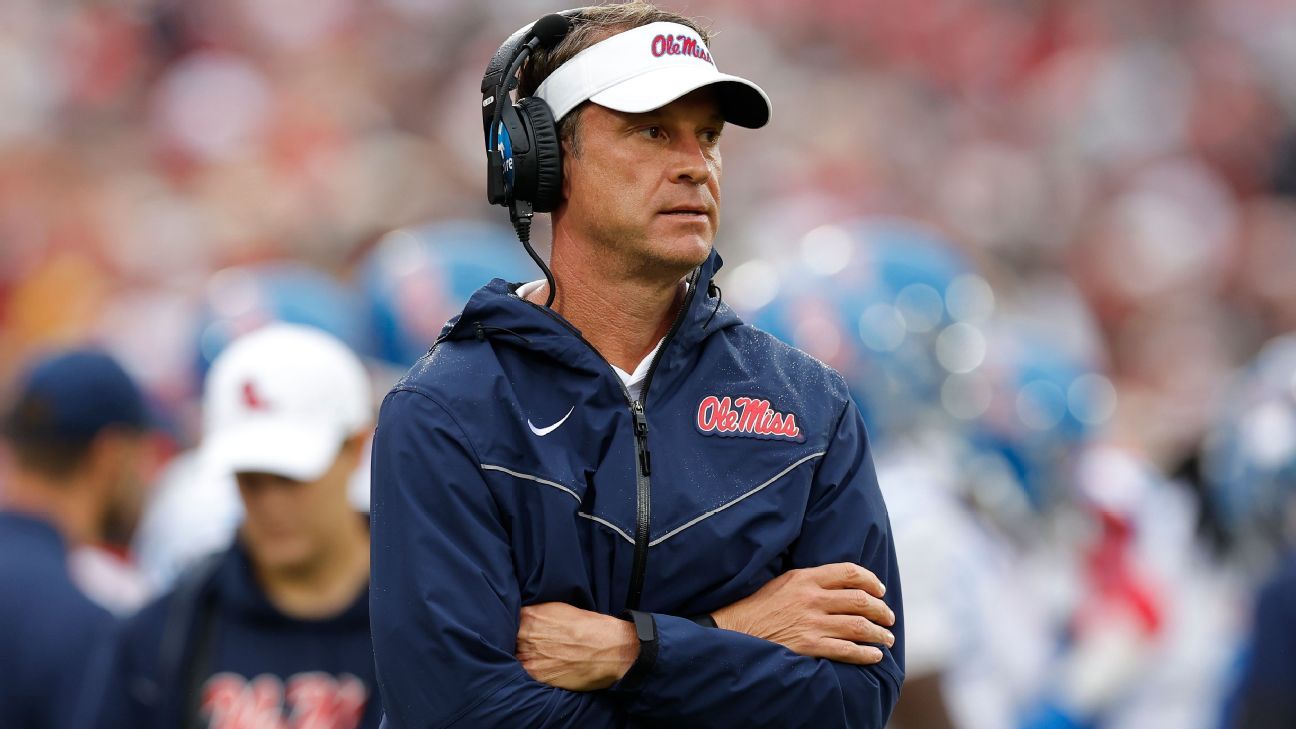
LSU‘s courtship of Lane Kiffin has come to an end, as he’s leaving the school to take the job in Baton Rouge and will not coach Ole Miss in the College Football Playoff.
He announced both things Sunday afternoon, the culmination of a weeks-long saga that hung over the sport, prompted viscous debate and puts Kiffin in the unprecedented position of a head coach leaving his team and not coaching them in the College Football Playoff.
“After a lot of prayer and time spent with family, I made the difficult decision to accept the head coaching position at LSU,” Kiffin said in a statement Sunday.
His deal with LSU is for seven years and is worth approximately $12 million annually, with the potential for bonuses, a source told ESPN’s Pete Thamel. That would make him one of the highest-paid coaches in the sport.
Kiffin, 50, and the Rebels just wrapped up an 11-1 regular season with a 38-19 win over rival Mississippi State, all but assuring them a berth in the 12-team College Football Playoff.
After saying he would decide Saturday whether he’ll coach at Ole Miss or LSU in 2026, Kiffin met with Rebels athletics director Keith Carter and chancellor Glenn Boyce for a couple of hours at the chancellor’s home in Oxford.
He also sought the advice of former Alabama coach Nick Saban and Las Vegas Raiders coach Pete Carroll, his former boss at USC, over the past few weeks.
Kiffin expressed his appreciation for his time at Ole Miss in a statement released on social media. He also took issue with Ole Miss athletic director Keith Carter, who Kiffin said “denied” his request to coach in the College Football Playoff.
“I was hoping to complete a historic six season run with this year’s team by leading Ole Miss through the playoffs, capitalizing on the team’s incredible success and their commitment to finish strong, and investing everything into a playoff run with guardrails in place to protect the program in any areas of concern,” Kiffin said in his statement.
“My request to do so was denied by Keith Carter despite the team also asking him to allow me to keep coaching them so they could better maintain their high level of performance. Unfortunately, that means Friday’s Egg Bowl was my last game coaching the Rebels.”
Ole Miss responded quickly, as sources told ESPN that they’d promoted defensive coordinator Pete Golding to the school’s full-time coach soon after Kiffin left the football building for LSU.
Kiffin’s decision was supposed to come Saturday, and there was a delay in part because the result of the Iron Bowl late Saturday impacted whether or not Ole Miss would have played this week. He met with Rebels athletics director Keith Carter and chancellor Glenn Boyce for a couple of hours at the chancellor’s home in Oxford on Saturday.
Kiffin also met with some players in the football building on Sunday, and he pointed out in his statement that the players wanted him to coach in the CFP.
Part of the drama unfolding Saturday revolved around Ole Miss staff members and who would end up going with Kiffin. The Rebels’ brass wanted to protect their staff to keep things as normal as possible for the postseason. Kiffin would obviously take some of his staff with him, and the timing of those departures came into focus as discussions went on during the day.
Ole Miss officials are being aggressive with staff salaries, as there’s a high focus on retention, sources told ESPN.
On the offensive side for Ole Miss, quarterback coach Joe Judge, a longtime NFL coordinator and head coach, has agreed to stay on staff, sources told ESPN. Judge’s role hasn’t been formalized yet, but Ole Miss officials and Golding made clear early on he was a priority staff member to stay in Oxford. He coached Trinidad Chambliss and Jaxson Dart while in Oxford.
The naming of Golding as the head coach will lead to continuity at Ole Miss in 2026 and beyond, especially on the defensive side of the ball.
A former Ole Miss player himself, Golding is in his third season on the Rebels’ staff after serving five years as a top defensive assistant at Alabama under Saban.
Kiffin’s decision included an only-in-the-SEC drama that ensnared three prominent schools, as Florida had expressed interest in Kiffin earlier in their search. When that wasn’t reciprocated, they hired Tulane coach Jon Sumrall.
Kiffin has guided the Rebels to a 55-19 record in his six seasons — only Alabama (67-12) and Georgia (71-8) have more wins in the SEC since the start of the 2020 season. The Rebels have the eighth-most wins among power-conference teams during that stretch.
LSU has a championship brand in multiple sports; state-of-the-art facilities; a rabid, regional fan following; and a legendary, historic home football venue in Tiger Stadium (nicknamed Death Valley), which towers over the banks of the Mississippi River and holds 102,000 spectators — 38,000 more than Vaught-Hemingway Stadium.
The lone football coach of LSU’s past four who did not win a national championship was Kelly. He was fired in late October during his fourth season — a seismic development that also led then-athletic director Scott Woodward to resign under pressure from Louisiana Gov. Jeff Landry.
The Associated Press contributed to this report.
-
 Sports2 years ago
Story injured on diving stop, exits Red Sox game
-
 Sports3 years ago
‘Storybook stuff’: Inside the night Bryce Harper sent the Phillies to the World Series
-
 Sports2 years ago
Game 1 of WS least-watched in recorded history
-
 Sports3 years ago
Button battles heat exhaustion in NASCAR debut
-
 Sports3 years ago
MLB Rank 2023: Ranking baseball’s top 100 players
-
Sports4 years ago
Team Europe easily wins 4th straight Laver Cup
-
 Environment3 years ago
Japan and South Korea have a lot at stake in a free and open South China Sea
-
 Environment1 year ago
Here are the best electric bikes you can buy at every price level in October 2024