
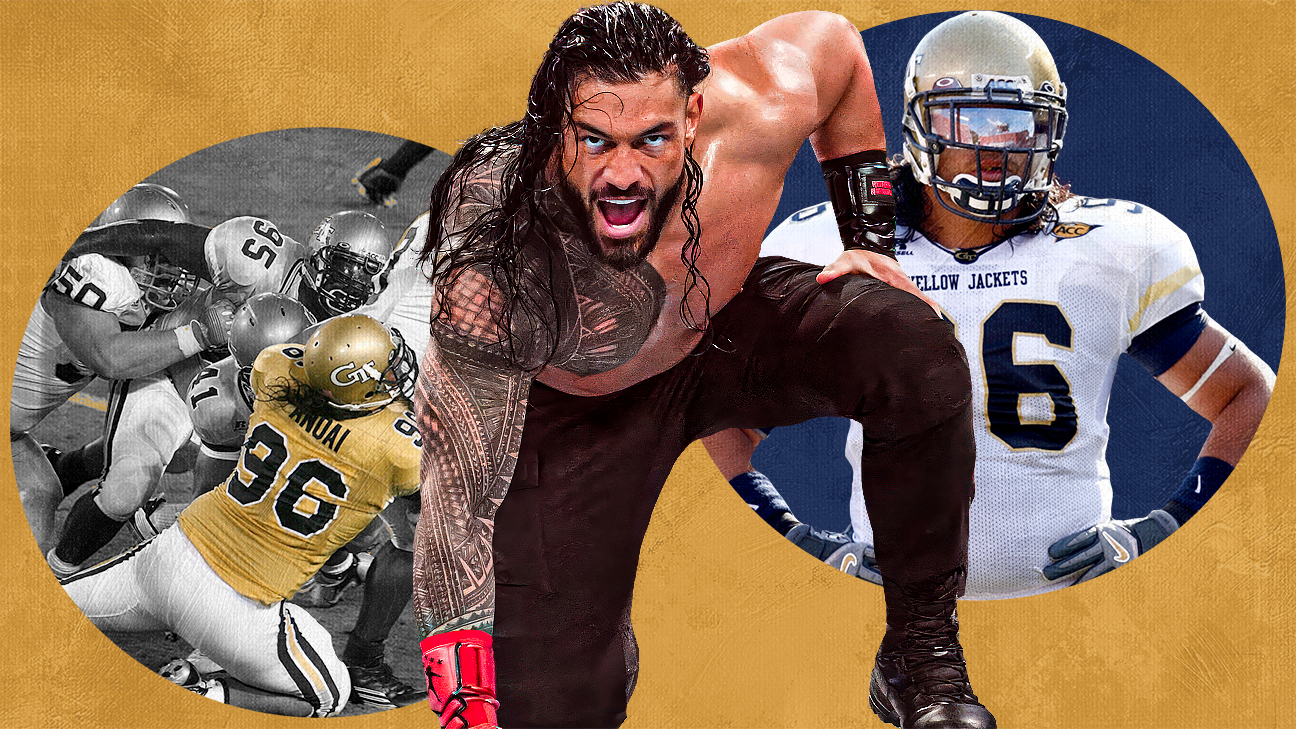
‘I didn’t know what hit me’: Opponents recall Roman Reigns’ playing days at Georgia Tech


-
Harry Lyles Jr., ESPN Staff Writer
ON SEPT. 3, 2005, quarterback Brandon Cox was making his first start for the Auburn Tigers, who were coming off an undefeated season in which they finished No. 2 in the AP poll.
“It’s still a game I have nightmares about,” he said.
With running back Kenny Irons out, Auburn was short-handed in the ground game, meaning Cox would take on a greater role. And the Tigers’ opponent that day, Georgia Tech, had a defense built to make an inexperienced quarterback’s life difficult.
It was led by senior defensive tackle Joe Anoa’i, who would go on to have a first-team All-ACC season for the Yellow Jackets.
“We wound up throwing the ball a lot more than we planned to,” Cox said. “And I was hit a lot, most of the time by Joe.”
One play in particular summed up Cox’s misery. Midway through the fourth quarter, Anoa’i beat Auburn center Joe Cope with a spin move and hit Cox’s elbow as he threw. The pass was intercepted, and as Cox turned to run toward the defender, Anoa’i was standing right there and flattened him.
“I didn’t know what hit me,” Cox said.
Today, Cox has two young sons. While they have become big Auburn fans and know their dad once was the Tigers’ quarterback, he hasn’t shown them the hit that Anoa’i delivered, but said he expects to one day.
“I’ll be like, ‘Yeah, your dad was about beheaded by Roman Reigns back in 2005.'”
JOE ANOA’I HAS found new ways to inflict punishment on his opponents, such as the Superman punch and his signature spear. Under the name Roman Reigns, he is the WWE Universal champion and will headline the main event at WrestleMania 40 this weekend.
The roots of Reigns’ success as a professional wrestler were apparent to those who coached and played with and against him at Georgia Tech, Cox in particular.
“After starting for three years, looking back, that was probably one of the hardest-hitting games I was a part of,” he said. “There were a lot of times that I was peeling myself off the ground.”
Wrestling is in Leati Joseph Anoa’i’s blood. His father, Sika, and his uncle Afa were the Wild Samoans, one of the top tag teams of the 1980s. He is cousins with WWE Hall of Famer Rikishi. Reigns and Dwayne “The Rock” Johnson share a Samoan heritage and consider themselves cousins, even if not by blood.
Given his lineage, it’s not shocking Anoa’i, as Roman Reigns, has become, in wrestling storylines, the Tribal Chief, Head of the Table and leader of The Bloodline, and has held the championship belt for more than three years.
But before wrestling captured his full attention, Anoa’i got bit by the football bug — and he remembers the specific moment it happened.
When he was 7, growing up in Pensacola, Florida, he went to his best friend Henry’s house to play. He knocked on the door, Henry’s mom let him in, and told him her son would be downstairs in a minute.
Anoa’i looked over to the island in the kitchen, and a football helmet sitting on the counter caught his eye. It was green with silver wings on it.
“It looked like a Philadelphia Eagles helmet,” he said. “We were the Myrtle Grove Eagles.
“It was like a movie where it had a halo shining behind it,” Anoa’i recalled, as if seeing it again for the first time. “I was like, ‘Oh, what’s that?’
“And Henry saw me staring, he goes, ‘Hey, I’m playing football this year. Let’s go outside.’ He put it on and just ran right into the house. He’s like, ‘See? I’m all right!’ And that’s how I knew. It wasn’t even about football. It’s just, ‘I gotta get one of these helmets. I’m not even sure what this football thing is all about. But this helmet is the coolest thing ever.'”
AFTER A SUCCESSFUL high school football career, Anoa’i was looking for a place to play college ball. He had interest from some Conference USA schools and potentially some other bigger programs, but the search essentially ended when he visited Georgia Tech.
“Once I went to Tech, I just knew that that’s what it was, man,” he said. “The city of Atlanta just offered so much. It was the city I was looking for, the experience I was looking for.
“There was something about Tech and the legacy of it, being a part of something. A lot of these other schools, one of their sales pitches were, ‘You’re gonna create history here because the program’s not that old.’ But there was just something about being at Tech and you know, being a part of something that’s been around for a century long. … There’s just something about joining that fraternity that just made it an easy close on me.”
When Anoa’i speaks of Atlanta, the second “T” goes silent, just like the locals say it, and he has a variety of local spots he can still rattle off the top of his head.
He and his boys had their go-to bar, Moondogs, in Buckhead. Other favorites were OK Cafe, Willy’s, Rocky Mountain Pizza and Silver Skillet.
And Fellini’s Pizza. “My wife ran track at Tech,” he said, “and that was our first date on Valentine’s Day.
“Even places as mainstream as Waffle House. You go in Waffle House in Atlanta, and at 2:30, 3 a.m.? There’s always a story.”
Of course, Anoa’i and his friends created their own stories during college. With his connections, Anoa’i would take teammates to wrestling events when the WWE came to Atlanta.
Joe Gaston, who met Anoa’i when both were on their recruiting visits to Georgia Tech and later became his roommate, said, “We were backstage hanging out with The Rock and a couple other of those big-name guys. I think they knew Joe just based on his family.
“Those guys, it’s funny because they have their personalities they have to maintain as part of their gig, and then you see them backstage and they’re just regular guys that are doing what they love to do.”
During at least one of those outings, Anoa’i and his teammates got to meet The Undertaker. Former Georgia Tech running back Tashard Choice, who grew up a big wrestling fan, passed.
“This dude Undertaker caused me so many nightmares,” Choice said. “And the first thing Joe said to me, ‘He’s cool as hell, bro. One of the coolest dudes you’ll ever meet.’ I’m sitting there going, ‘Damn, Joe! You know The Undertaker!?’ Because I grew up, that dude scared the hell out of me. To hear Joe talk about dudes that I watched my whole life, and talk to him about who they really are as people, I’m like dawg, that’s cold.”
BUT AT THAT point in his life, Anoa’i’s main focus was football, and it was something he excelled at.
Defensive coordinator Jon Tenuta’s units at Georgia Tech in the early and mid-2000s were known for their toughness, and Anoa’i was exactly the kind of player Tenuta would lean on.
“Jon Tenuta’s that guy,” former Georgia Tech quarterback Reggie Ball said. “And he loved Joe. Joe was one of his guys, and he didn’t hide that, either.”
“He was very fundamentally sound, but he was also very athletic,” Tenuta said of Anoa’i. “He had great feet and he could really shoot his hands.”
Beyond his impact during games, Anoa’i took practice as seriously as anyone.
“Every day at practice you noticed him because he was flipping blocks or he was knocking somebody over,” Tenuta said. “He’s always running to the ball. He was a high-motor guy, that’s just how he was. … He just liked playing football.”
Choice describes Anoa’i’s game in two words: “Physical. Violent.”
“That is who he is,” Choice said. “Joe loved contact because he had to. He played all the way to the fourth quarter. He was a dude you could count on.”
Chan Gailey, Tech’s head coach at the time, recalled, “He was strong as an ox, and he was quicker than you thought he was.”
Anoa’i was an Iron Jacket, an honor given to the strongest players on the team. He was also awarded the team’s Lifter of the Year in 2006, alongside fellow team captain and future Pro Football Hall of Fame wide receiver Calvin Johnson.
“The criteria we had for those awards was you had to be a leader, but you also had to make the people around you better,” then-Georgia Tech strength coach Eric Ciano said. “And Joe obviously always did that.”
Philip Wheeler, who played linebacker for the Yellow Jackets and spent nine years in the NFL, said, “I would be in awe watching him, like, ‘Oh yeah, we’re gonna be good. … I’m good, I’m playing behind Joe.'”
Giff Smith, Georgia Tech’s defensive line coach at the time, remembers the moment he knew Anoa’i would be a great player. Brad Honeycutt, an offensive lineman for the Yellow Jackets, got the better of Anoa’i one day in practice early in his career.
“[Honeycutt] kind of punked Joe in a one-on-one,” Smith said. “I kind of laid into [Anoa’i]. That was when I knew he was gonna be special, because of the look in his eyes. If he could have legally kicked the s— out of me at that point, he would have. And that was the response I was looking forward to. And then he took off after that.
“He had a little fire,” Smith added, “[that would] make you reevaluate your decision for a split second when you’re challenging him.”
Anoa’i’s drive and fire helped him become a three-year starter and first-team All-ACC player and team captain by his senior season in 2006, when Tech went 9-5 overall and 7-1 in conference play.
“Every time we won games, Joe was a part of it,” Choice said. “He was always inspiring, he was somebody when the going got tough, he was always encouraging others.”
“When he talked, everybody listened because he wasn’t a super vocal leader,” fullback Mike Cox said. “But he definitely had a presence. Wherever he went, you knew where he was. It was kind of ominous, or just intimidation. He just oozed confidence.”
And if it came down to telling a teammate what he needed to hear, he’d do that, too.
“That’s what I loved about him,” Choice said. “He was always cool no matter what the situation was, but you knew if he was pissed at someone. He’d tell you, but he didn’t tell you in any way to demean you. He said it straight up, matter of fact.”
After Georgia Tech suffered a close, frustrating loss to Georgia at the end of the 2006 regular season, the Yellow Jackets played Wake Forest in the ACC championship game.
They couldn’t get anything going offensively — they would lose 9-6 — and Anoa’i let Ball know he felt he needed to do more.
“He was pissed,” Ball said. “He wasn’t shy about letting it be known, like, ‘Hey bro, you got to make plays. You need to make it happen. You need to make it work.’ And at the time, you want to do everything that coaches tell you to do. You don’t want to go off script.”
That’s not how Anoa’i saw it.
“We got a Calvin Johnson on our team,” Anoa’i said. “You know what I mean? Screw what they’re calling, I’m just throwing it up. There’s just no excuse. We got T. Choice in the backfield. So let’s just get the job done.
“I guess I said, ‘Let’s just make this work,’ because that’s what we’ve been doing. All this work. And I’m not trying to leave here empty-handed. And unfortunately, it happened.”
Ball took the criticism in stride because of Anoa’i’s credibility as a player and fellow co-captain.
“I know it’s not coming from a spiteful place or a place of demoralizing or trying to tear anybody down,” he said. “It’s coming from a place of somebody who wants to win and somebody who wants the best for their team.”
0:57
Reigns: Cody Rhodes took my ‘storybook ending’ with The Rock
Roman Reigns joins “The Pat McAfee Show” and explains how wrestling The Rock was the WrestleMania “endgame” until Cody Rhodes.
THE 2005 AUBURN Tigers couldn’t forget Joe Anoa’i even if they tried.
“Brandon Cox? Auburn? Oh, hell yeah,” Ball said. “[Joe] was whooping their ass.”
Cope, the Auburn center, recalled the scouting report on Anoa’i being more thorough than usual.
“He was the guy on their defensive line that year that we had circled and said, ‘To win this game, we’re gonna need to really do a good job blocking him,'” Cope said. “Our offensive line coach was telling us that his father was a former wrestler, and that he came from a wrestling background. It was more of, he’s not going to do things by the book that we’re used to. He doesn’t play like a traditional defensive tackle. He’s a playmaker, he’s got that athletic ability to do some wild stuff on the field.”
That became clear to Cope from the first play of the game, which let him know what the Tigers were in for.
“He was a shade to my right side, and we ran a zone to that side. We snapped the ball and all of a sudden [Anoa’i] was by me,” Cope said. “And I was like, ‘Whoa, what just happened here?’ Just super quick, and made a tackle in the backfield. It haunts me to this day.”
The source of Cox’s nightmares came a bit later.
“Nowadays they would have crucified me for what I did to Brandon Cox,” Anoa’i said. “And I apologize, I was caught up in the moment. It’s like one of those things where you’re just in it. You’re in a fight and you’re like, ‘I don’t know how I got into this thing.'”
With about eight minutes left in the fourth quarter and Georgia Tech leading 20-14, Anoa’i again beat Cope, this time with a spin move, pressuring Cox into throwing the ball. Anoa’i hit Cox as he let go of the pass, which was intercepted by KaMichael Hall.
As Cox turned to pursue Hall, Anoa’i delivered a blow that’s always near the top of any highlight reel made of his football career.
Giff Smith summed it up as well as anyone.
“I remember thinking that I was glad I didn’t play quarterback,” he said. “He knocked the ever-living s— out of that guy. Good gracious.”
Gaston added, “It was one of those hits that you hear it in the crowd, that ‘Ahhh!'”
“I was just blindsided by Joe,” Cox said. “I’m on the ground and all of a sudden he jumps on top of me and he has his forearm up underneath my chin. And just laying on top of me.
“I still remember that vividly, thinking in my head, ‘So this is what college football is like?’ A kind of welcome-to-the-game type of hit.”
Georgia Tech won the game 23-14, forcing six Auburn turnovers, including four Cox interceptions. Anoa’i finished with just one solo tackle, but Cox said that doesn’t reflect his impact.
“There were a lot of hits on me that didn’t go down as sacks or tackles in the final book,” he said.
In fact, Cox said he was hit so many times after the whistle that Auburn submitted game film to the ACC, whose officials worked the game, and got a handwritten apology from the league, which acknowledged there were multiple late hits that should have been called penalties.
Anoa’i has an explanation for it all.
“Let me just preface this,” he began. “By the time he’s on the ground, it was dirty what I was doing. It was a little dirty, but the hit was actually legal.
“He goes to throw the ball, I hit his arm, it deflects, we intercept it. Brandon turns to run. He’s now a defender, correct? He’s moving toward the angle, you can watch the film, he does it. And I’m in a perfect position.
“I kind of gather myself, and I just shoot my hands into him like he’s an offensive lineman. For anybody who doesn’t play football, they’ll look at this and be like, ‘That’s ridiculous.’ But if you play defensive line, that’s exactly how you shoot your hands and that’s what I did to him, but he’s just not an offensive lineman.
“But then that momentum took me down with him, and I landed kind of with my forearm on his throat. And I struggled getting off of him. So that was kind of where people would think, ‘Oh, that’s a little dirty,’ but I was trying to get off him. But he was sweaty and slippery, so I kept slipping. So that little bit at the end was probably a bit excessive.
“The play was a great play, in my opinion. It was a turnover, so that speaks for itself.”
GEORGIA TECH OPENED the 2006 season on an even bigger stage. “College GameDay” was in midtown Atlanta, where the Yellow Jackets were hosting No. 2 Notre Dame and Heisman hopeful Brady Quinn at Bobby Dodd Stadium.
“I think that was [Anoa’i’s] coming-out party for everybody around the country,” Ball said. “And I think scouts around the country really started to take note of who [No.] 96 was.”
“I moved Joe up and down the line that game just to screw with their offensive line because he could handle it,” Tenuta said. “He was a very smart football player, and he understood what he had to do to make us successful.”
As with Cox, there is one play from that game that people ask Quinn about. It’s one that — when you learn Joe Anoa’i became Roman Reigns — makes all the sense in the world.
“On that play, like most good quarterbacks, [Quinn] just shifted over a bit,” Anoa’i recalled. “I went to bat the ball and one of his guys just checked my hip. And as my momentum took me, it just kind of did like a wrestling crossbody where you land on him, so it kind of was a perfect wrestling move.”
Despite a flying Anoa’i landing on top of him, Quinn said, “I don’t remember the hit or anything like that at all. I kind of pop right back up.
“The funny thing about the clip is people will show me that all the time who are avid wrestling fans. And I’m like, I wish I could tell you it hurt. But maybe that was the beginning of fake wrestling because it really didn’t hurt, it really didn’t feel real.”
That comment brought a big smile to Anoa’i’s face. “It’s funny that he had his little, smart dig,” he said. “Because it’s simple, we can put Brady Quinn in the wrestling ring, and I’ll boom his ass real quick.”
Anoa’i added, “The fact that we’re 18 to 22 [years old], we’re all like Superman at that point. I’m not surprised that he didn’t feel anything.”
All joking aside, Anoa’i acknowledges that two of the most replayed highlights of his career undoubtedly would be penalties today.
“I support the rules and where the game is now. But that’s just the way we played it back then,” he said. “I was not a dirty player by any means. I wasn’t one of those crazy, emotional intense players, but I was intense. When it’s taken out of context, it doesn’t sound right.
“But when you’re in the middle of what we’re doing out there, you’re kind of ready for war. You take it to that mental level of, ‘Man, I’ll do whatever we got to do to win,’ — obviously without doing stupid stuff. But we were taught whistle to whistle. … And that’s what was expected.
“[Smith] and Tenuta were the best coaches I ever played for, and we reflected that. When you’re in film study with Tenuta, he’s going to call you out,” Anoa’i said. “It’s his ring. He’s cutting the best promos of all time. He would sit there and put you on the spot, just embarrassing people. I didn’t want to be embarrassed.”
Anoa’i said his coaches’ approach gave him extra motivation to study the playbook and tape even more.
“They took it very seriously, what we were doing, and I think we all did, and that’s why we were a top-10 defense, is because we all played from whistle to …” Anoa’i paused. “Slightly after the whistle, just in case I didn’t hear that whistle.”
PRETTY MUCH EVERYBODY who played with or against him thought Anoa’i was going to be an NFL player.
AJ Smith, who played offensive line for the Yellow Jackets, said, “Joe was such a great football player. It was always, ‘Joe’s gonna play in the league. Joe’s gonna be an NFL guy.’ I don’t think it ever crossed our minds that he was gonna be where he is in WWE today.
“But at the same point in time, nobody’s surprised because Joe’s committed to his craft, and the work ethic that he put in to be an elite player in college football, he’s put in that same work ethic to be top of his craft in WWE.”
Anoa’i did get a chance in the NFL, but it was fleeting. While getting his physical at Minnesota Vikings rookie minicamp, he learned that he had chronic myeloid leukemia.
Gaston, who remained close with Anoa’i after their playing days, said, “He dove in headfirst and said, ‘I can’t change the fact, let’s just do everything we can do to try to beat this, and understand it first, and then just attack it.'”
The Vikings released him, and when he got into remission, he signed with the Jacksonville Jaguars with a couple of weeks left of camp in 2007, although he wasn’t in game shape due to his recovery.
After being cut on the final day of camp with Jacksonville, he signed with the Hamilton Tiger-Cats of the Canadian Football League in 2008. He rolled an ankle in practice, and once he was cleared to play, he was cut again.
The challenges of chasing his football dream began to weigh on Anoa’i, who was struggling financially with a 1-year-old now in his life and rent to pay.
“It was more stressful than anything,” he said. “So I just knew it was time to let it go.”
After football, Anoa’i said he was working in a warehouse for his sister, assembling office furniture, building cubicles, loading trucks — “just doing blue-collar work, labor.”
“While I was doing that, I lost my football weight,” he said. “I was kind of starting to peel some of that excessive weight off. I could start to see the guy that went into Tech, the high school version of me.”
Meanwhile, his cousins, current WWE wrestlers Jimmy and Jey Uso, were starting their journeys in independent wrestling while also working at the warehouse.
“It started kind of plugging me back into wrestling because I loved it when I was a kid,” he said. “I loved it until football just took over.”
Eventually, his cousins left the warehouse job.
“I was by myself,” he said. “That was the most depressing part. There was no more camaraderie there. We weren’t having a good time at work. It was just me quietly building office furniture. Terrible.”
One day, while Anoa’i was building office chairs, his dad walked in. Laughing, his father asked, “Oh, you’re just gonna be a chair builder your whole life?”
Trying to be slick, Anoa’i responded, “Well, you never taught me how to wrestle.”
He thought his father was going to leave it there and go to lunch. Instead, he asked, “Well, do you want to learn?”
The former Wild Samoan and future Roman Reigns had a couple of training sessions. After his father made a couple of calls, Reigns said he was “thrown into the deep end” in the WWE developmental program in Tampa, Florida, where he had a tryout.
“And now I’m here,” he said.
Reigns said if football had worked out, he doesn’t think he ever would have gotten into wrestling.
“I wanted to have an impact on young men,” he said. “I wanted to be the way Emmitt Smith and Michael Jordan and Joe Montana and the stars of when I was a child, the way they made me feel. I wanted to make other young athletes feel that way.
“But no matter what, it was either you’re going to be a wrestler, or you’re going to be a football player.
“A superstar of some sort.”

-
David Hale
Twelve years into the College Football Playoff, the committee may have been tasked with its toughest decision yet.
On one hand, there’s Alabama, the bluest of blue bloods, a team that played the sixth-toughest schedule in the country, with seven wins over FPI top-40 opponents, and whose final loss — the one that put the Tide squarely on the bubble — came in the SEC championship game, while others like Miami and Notre Dame sat at home.
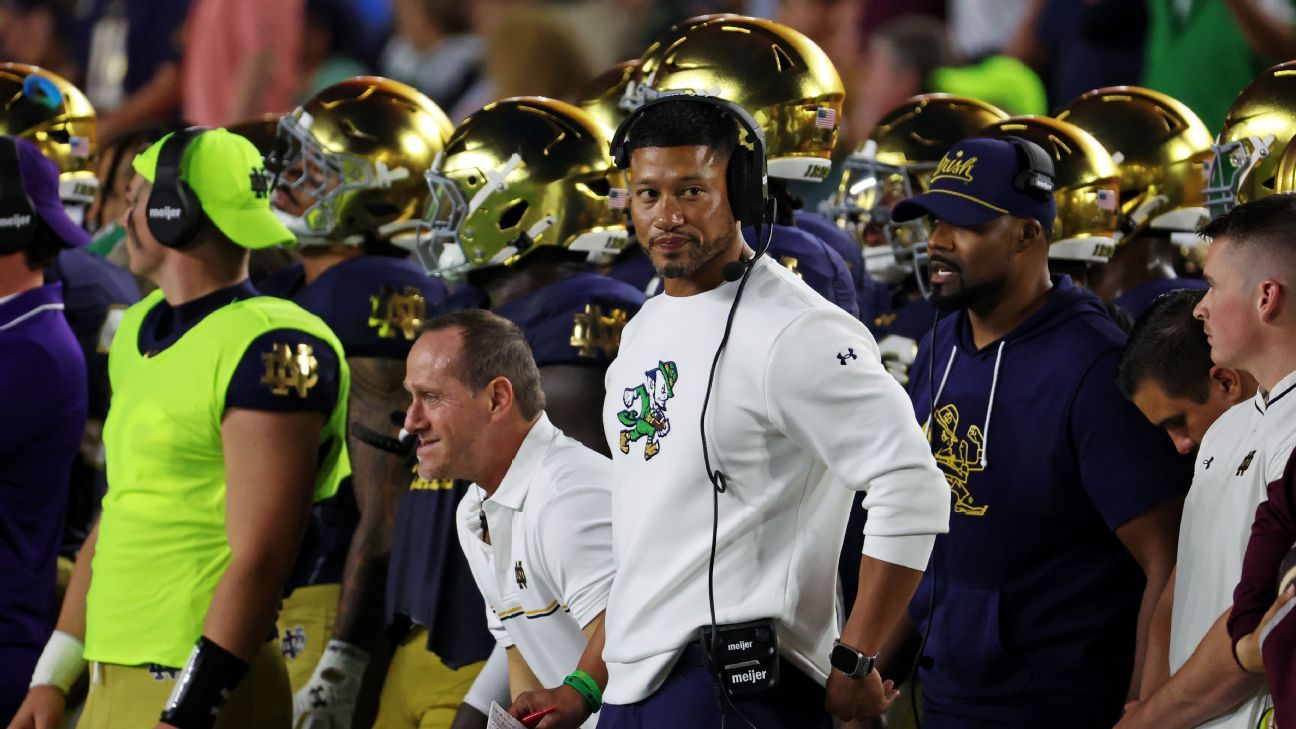
On the other hand, there’s Notre Dame, the most storied program in the sport’s history with a legion of fans from coast to coast. The Irish are playing exceptional football, winning 10 straight all by double digits, and their lone losses, way back in August and early September, came to two other top-tier teams by a combined four points.
Then on the metaphorical third hand is Miami, a team that began the season with fireworks, sagged in the middle, then responded to its No. 18 placement in the first set of rankings by reeling off four straight wins by an average of 27 points per game. Oh, and Miami holds a head-to-head win over Notre Dame, albeit one that came in the first week of the season and that the committee may or may not consider from week to week.
Spread around a few garnishes of Texas, Vanderbilt and BYU on the plate and add a dessert course of a Duke-JMU argument that could result in bumping a Power 4 conference from the playoff entirely and it’s a tough year to be a committee member.
There have been others, of course. In 2014, the committee punted on a tricky Baylor-TCU debate in favor of Ohio State, and the Buckeyes won it all. In 2017, amid a chaotic final week, the committee handed its final bid to Alabama, despite its absence from the SEC championship game, and the Tide went on to win a championship. In 2023, the committee snubbed an undefeated Florida State, because of an injury to QB Jordan Travis, and the Seminoles have gone on to lose 18 of their next 25 games.
The results after a controversial decision always seem to lead to the same conclusion: The committee got things right.
And yet, as the committee so often notes after each rankings release, the results alone don’t tell the whole story. In football, perhaps more than any other sport, the process matters. And the committee’s process, from the outset of that first playoff 12 years ago, has been a mess.
The ultimate verdict of Sunday’s final ranking showcased the disaster vividly.
Step away from the whole process, and the decision to rank Miami ahead of Notre Dame makes perfect sense. They have the same record. Miami won head-to-head. Most rational folks, aligned with neither side, would acknowledge the committee came to a sensible conclusion.
But look at the process and try to follow the committee’s rationale, and it’s like climbing the stairs in an M.C. Escher painting.
In the first ranking, Notre Dame was eight spots ahead of Miami. Both won out, both by big margins, and each week along the way, Notre Dame remained ahead of Miami. Last week, Alabama — fresh off a near disaster in the Iron Bowl — leapfrogged Notre Dame despite the Irish dominating Stanford 49-20. That was a head-scratcher, unless, of course, you believed the minor conspiracy that the committee was setting up a direct comparison between Miami and Notre Dame by having them ranked one right after the other.
And, what do you know, that’s what we got. After BYU lost its conference championship, the Cougars dropped in the rankings — something that didn’t happen to Alabama for a similar blowout defeat, it should be noted — and Notre Dame and Miami were separated by nothing other than the committee’s whims.
1:31
Saban hopes Notre Dame’s snub leads to CFP changes
Nick Saban gives his thoughts on the structure of the College Football Playoff in light of Notre Dame being left out.
So while both sat home on their couches on championship weekend, Miami somehow did enough to push its way into the playoff instead of Notre Dame.
Is it a reasonable conclusion? Yes!
Is it a ridiculous process that got us here? A thousand yeses!
Let’s consider how the committee evaluates teams for a moment. Which variables matter most? We’ve gone from Florida State’s battle against game control in 2014 to Notre Dame’s résumé boasting two quality losses in 2025.
Does head-to-head matter? For five weeks it might not, but in the last week it clearly did.
The committee is supposed to evaluate a school’s entire body of work, but does that mean a September loss can’t be overshadowed by clear and obvious growth throughout a season?
Do conference championships matter? Winning them is supposed to be a factor — though, ask 2023 Florida State about that — so shouldn’t a loss matter, too? A year ago, committee chair Warde Manuel said it might — including docking SMU two spots after a three-point loss to Clemson in the ACC conference championship game, even if it didn’t knock the Mustangs out of the playoff. But Alabama’s 21-point loss Saturday meant nothing.
Ranked wins are great, but of course the committee decides who earns the distinction of being ranked. The eye test is the best argument for one team, the data for another, and no one can be sure which metric matters more, because again, it depends. For a committee composed primarily of former coaches and active ADs, the human element — perceptions, expectations, projections, biases and misunderstandings — loom like a cloud over every mention of strength of record or game control.
Or boil it down to the most basic debate: Are we trying to find the best teams or the most deserving? And how do we even define those two things? From week to week, the answer is a shrug emoji and a Mad Libs of metrics and records pieced together like those magnetic words people put on their refrigerator.
All of this leads to arguments, which is likely a feature of the system, not a bug. Debate is part of the DNA of sports. But ironically, no one seems to contradict the committee more than the committee itself. The case for Team A so often sounds like the mirror image of the case against Team B. Alabama jumped Notre Dame in last week’s rankings after an ugly win over Auburn, but Miami’s dominant victory on the road against a ranked Pitt team made no difference. When Texas A&M needed a Houdini act to beat South Carolina, that wasn’t a knock on the Aggies, the committee chair said, but when Alabama narrowly escaped those same Gamecocks, it was a flaw in the Tide’s résumé. Ranked wins are great — but only if the team was ranked at the time, or maybe if it ends up ranked in the future. Also, the committee does the ranking so, whew.
And when those explanations get parsed by fans in the aftermath of perplexing decisions — Alabama’s “impressive” seven-point win over 5-7 Auburn allowing the Tide to leapfrog Notre Dame after a 29-point Irish win over 4-8 Stanford, for example — the outcome isn’t just disagreements and debate. It’s conspiratorial thinking. It’s a hollowing out of trust in the process. It’s a belief that the deck is stacked ahead of time. And that’s a disservice to the sport, the teams involved, and the committee itself. Good folks work hard and care about their role, but because their process is so immensely flawed, the presumption of nefarious motives isn’t just fodder for the message boards, but increasingly, mainstream thinking.
Imagine for a moment this wasn’t about college football. Imagine instead this was clinical trials for a new drug or a prized astrophysicist trying to explain an anomaly deep in outer space or, heck, assembling a bookshelf you bought from IKEA. Any such endeavor requires not just a result that seems to work, but a process that can be repeated, again and again, by a completely different set of people, before anyone gives it enough credence that a majority of people — even ones who don’t understand the process at all — believe in the work that was done and trust the results provided.
We don’t have to understand Einstein’s theory of relativity to believe in its basic principles. Relativity remains a theory, not a fact, but it is commonly accepted around the world by brilliant scientists and guys watching “Interstellar” at 3 a.m. on cable alike, because we can all appreciate a stringent process, rigorous testing, and an ability to withstand criticism from dissenting voices.
If we can do that for quantum physics, then surely we can do that for a college football playoff, right?
Instead, we’ll continue to argue. That’s OK. The arguments are part of the fun. But at the foundation of those arguments are real people — players, coaches, administrators, support staffs and even the fans. While no result will make everyone happy, the least this sport owes them is a process they can understand.


Way back on Nov. 4, Notre Dame was 6-2 with a three-point loss to Miami on its résumé. The committee believed the Irish were the No. 10 team in the country.
On that same date, Miami was 6-2 with a three-point win over Notre Dame on its résumé. The committee believed the Canes were the No. 18 team in the country.
This isn’t complicated math, but just for clarity’s sake: Five weeks ago, these two teams had the same record, Miami had a head-to-head win, and the committee believed Notre Dame was eight spots better. That would certainly seem to indicate a sincere and strong belief that, the Week 1 result be damned, the Irish were clearly the better team overall.
So, what has happened since then?
Notre Dame is 4-0 with a win over a ranked team and an average margin of 38 points per game. Miami is 4-0 with a win over a ranked team and an average margin of 27.5 points per game.
And yet, when the committee put its rankings together this time around, Miami is one spot ahead of Notre Dame.
There is every reason to be suspicious of the committee’s initial evaluation of these two teams. Perhaps those Nov. 4 rankings were a mistake. But the committee waited five weeks to correct that mistake, and during that span, the Irish absolutely demoralized everyone they played — including two teams that Miami also played, but Notre Dame won by more.
Nothing that has happened between the first rankings and the last suggests Notre Dame got worse relative to Miami, and yet a full nine spots in the rankings have shifted between the two.
If this was all about the committee playing the long game, using the opening scenes to set up a dramatic showdown between Miami and Notre Dame in the final act, then kudos for creating some exceptional TV.
As far as offering an honest weekly evaluation of college football teams, however, this was an absurd farce that served as a slap in the face to coach Marcus Freeman and his team and leaves us without the chance to see arguably the best player in the country, Jeremiyah Love, in the biggest games of the year.

Typically the difference between a No. 6 and a No. 7 ranking is negligible. Both get a home game in the first round, both have a good shot to advance.
This year, however, it’s a little different.
Thanks to the ACC’s pratfall of a season, two Group of 5 teams made the final field. That means both the No. 5 seed and the No. 6 seed get to play teams from outside the big-boy conferences, while the No. 7 seed lands a genuine contender on the docket in Round 1.
The loser of this lottery is Texas A&M, and that’s a pretty tough take to defend.
Let’s look at the résumés.
Team A: No. 10 in FPI, best win vs. FPI No. 3, loss to FPI No. 13, No. 3 strength of record, five wins vs. bowl-eligible teams, six wins vs. FPI top 40
Team B: No. 12 in FPI, best win vs. FPI No. 15, loss to SP+ No. 6, No 6 strength of record, four wins vs. bowl-eligible teams, four wins vs. FPI top 40
They’re close, but the edge in nearly every metric is with Team A. That’s Texas A&M.
Or how about this: Against five common opponents, A&M has a scoring edge of 2 points, including a far better win over LSU, their best common foe.
Is it splitting hairs? Of course, but that’s the committee’s job. And the results of that hair-splitting are the difference between Ole Miss getting a rematch with a Tulane team it beat by 35 in September or facing off against a red-hot Miami eager to prove it belonged in the field.

3. Greg Sankey
On Saturday, the SEC commissioner was asked to state his case for his league’s bubble teams. He offered an inclusive take.
“I view that there are seven of our teams at the conclusion of the 12-game season over 14 weeks that merit inclusion in the playoff,” Sankey said.
And yet, here we are, with just a measly five SEC teams in the field, including one getting a first-round bye and three hosting home games. It’s a slap in the face!
Truth is, Vanderbilt was quite good this year, with a strength of record ahead of both Notre Dame and Miami, and the world would simply be a better place with Diego Pavia in the playoff.
Truth is, if the goal of the playoff is to seed it with the best teams — the teams capable of beating other elite teams and making a run for a championship — then Texas had as good a case as anyone, with head-to-head wins over Oklahoma, Vandy and Texas A&M.
Heck, compare these two résumés:
Team A: Three losses, the worst loss to FPI No. 53 by eight and three wins vs. FPI top-15 teams
Team B: Three losses, the worst loss to FPI No. 74 by 14 and two wins vs. FPI top-15 teams
Team A also has a 17-point win over a team that beat Team B.
So, who would you take?
Don’t ask Sankey. His answer is both. But Team A is Texas and Team B is Alabama, and the Longhorns have looked markedly better over the past month of the season than the flailing Tide.

You have to hand it to Manny Diaz. The man can make a coherent argument for a lost cause.
“We played 10 Power 4 teams. Comparing us to James Madison, for example, who had a fantastic season — their strength of schedule is in the 100s. Ours is in the 50s. Seven wins in our conference. Seven Power 4 wins as opposed to zero Power 4 wins. The ACC champions. … I’m watching them play Troy at home [in the Sun Belt championship] and Troy had a backup quarterback in for most of the game, right? And it’s a three-point game until, really, the last few minutes of the game when they were able to pull away. They won the game and their conference, but you just can’t compare going through the Sun Belt this year — the Sun Belt has been a really good conference in years past, but most of their top teams are just having down years. They’re not challenged the way they would’ve been going through a normal Sun Belt schedule. Then you start comparing strength of schedule — if you simply go into wins and losses, you have to look at who you’re playing against. That’s the whole point of why you play a Power 4 schedule. There’s a reason these coaches are all leaving to take Power 4 jobs. There’s a recognition that’s where the best competition is.”
That was no small jab at JMU, whose coach, Bob Chesney, is leaving for a Power 4 job at UCLA.
It also probably gets Diaz removed from Sun Belt commissioner Keith Gill’s Christmas card list, which given that ACC commissioner Jim Phillips can’t be pleased with Duke torpedoing his conference’s reputation by winning the league with five losses, is going to leave a lot of extra space on Diaz’s mantle this holiday season.

Alabama lost a championship game by 21 points to a top-four team. It didn’t budge in the rankings.
BYU lost a championship game by 27 points to a top-four team. It dropped a spot.
Did it ultimately matter for the Cougars? No. They weren’t sniffing the playoff unless they beat Texas Tech. But on principle, they ought to be angry about the double standard.
Moreover, BYU was the most overlooked team all season — the one that had a good case, a comparable résumé, and virtually no one outside of Provo cheerleading for them.
Which, oddly enough, feels about the same as last year, when BYU had a perfectly good case alongside Alabama, Miami, Ole Miss and South Carolina, and no one seemed to bat an eye when they finished a distant 17th — behind Clemson, even — in the committee’s final ranking.
Also angry this week: Virginia Cavaliers (10-3, No. 19 and dropped two spots — more than any other conference championship game loser, despite playing the closest conference championship game), Tennessee Volunteers, LSU Tigers, Illinois Fighting Illini and Missouri Tigers (all 8-4, all unranked, and all with a better strength of record than the Arizona Wildcats or the Georgia Tech Yellow Jackets), Lane Kiffin (astonished the committee didn’t value his departure more).
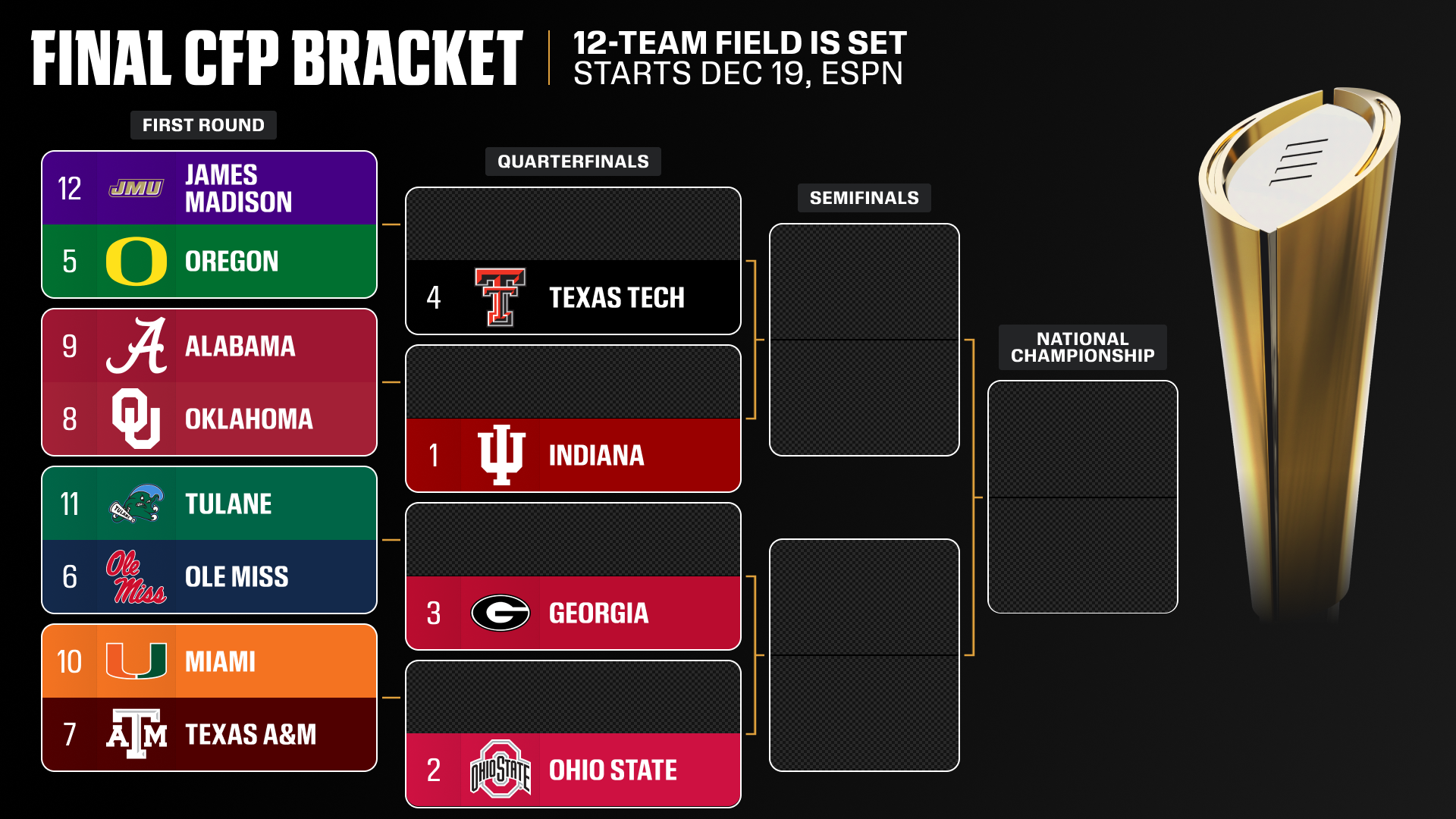
College football’s championship weekend delivered a mix of compelling drama and blowouts.
In Atlanta, Georgia dominated Alabama and won the SEC for a second year in a row. The Bulldogs held the Tide to 209 total yards and locked up a first-round bye. UGA, the No. 3 seed, will play the winner of the matchup of No. 6 Ole Miss vs. No. 11 Tulane in the Allstate Sugar Bowl.
It was a similar story in the Big 12 where Texas Tech broke open the game with BYU in the second half. The Red Raiders forced four turnovers in the 34-7 win. Texas Tech is the No. 4 seed and will face either No. 5 Oregon or No. 12 James Madison in the Capital One Orange Bowl.
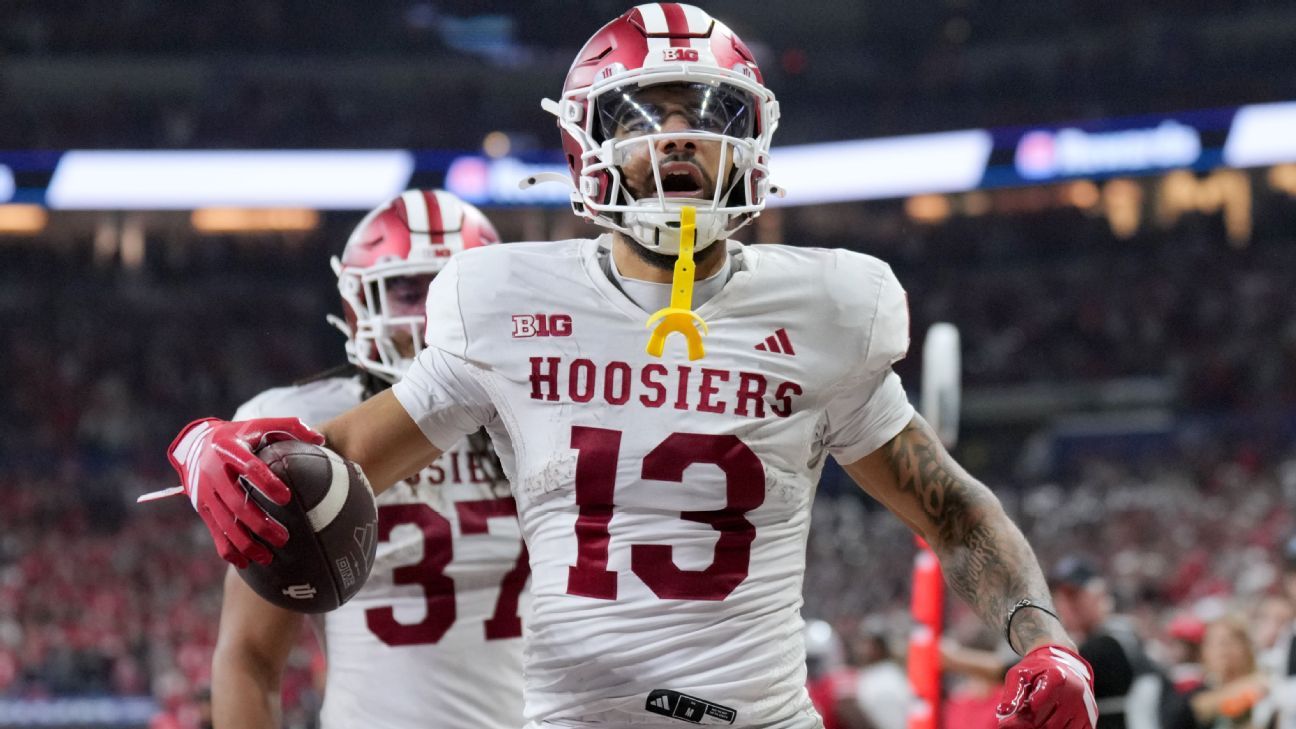
The real drama was reserved for the Big Ten and ACC championships. Indiana won its first conference title since 1967 and took down No. 1 Ohio State. The Hoosiers will be the No. 1 seed while the Buckeyes fell just one spot to No. 2 The undefeated Hoosiers will have their first playoff game at the Rose Bowl presented by Prudential against the winner of the No. 8 Oklahoma-No. 9 Alabama matchup. Ohio State faces the winner of No. 10 Miami vs. No. 7 Texas A&M in the Goodyear Cotton Bowl.
Duke‘s upset of Virginia in the ACC title game opened the door for two Group of 5 teams — Tulane (which won the American) and James Madison (Sun Belt winner).
After months of rankings, seedings and countless debates, we have a 12-team bracket that brings about plenty of enticing questions and intriguing possibilities.
Can Oregon, Indiana, Texas A&M or Texas Tech bring home its first national title? Can Ohio State repeat? Will a Group of 5 team get its first-ever CFP win?
Here are our full picks for the 12-team College Football Playoff.
Andrea Adelson
First round
Oregon 55, JMU 13
Bama 20, Oklahoma 17
Ole Miss 35, Tulane 14
Miami 27, Texas A&M 24
Quarterfinals
Oregon 35, Texas Tech 30
Indiana 30, Alabama 20
Georgia 40, Ole Miss 24
Ohio State 24, Miami 21
Semifinals
Ohio State 27, Georgia 24
Indiana 35, Oregon 31
National title game
Ohio State 21, Indiana 20
Kyle Bonagura
First round
Oregon 49, James Madison 24
Texas A&M 31, Miami 24
Ole Miss 38, Tulane 24
Alabama 31, Oklahoma 28
Quarterfinals
Texas Tech 28, Oregon 27
Georgia 35, Ole Miss 21
Ohio State 24, Texas A&M 14
Indiana 35, Alabama 27
Semifinals
Ohio State 24, Georgia 17
Indiana 28, Texas Tech 24
National title game
Indiana 17, Ohio State 10
Bill Connelly
First round
Oregon 41, James Madison 24
Oklahoma 27, Alabama 17
Ole Miss 35, Tulane 20
Texas A&M 31, Miami 28
Quarterfinals
Texas Tech 38, Oregon 34
Indiana 30, Oklahoma 7
Georgia 27, Ole Miss 23
Ohio State 24, Texas A&M 13
Semifinals
Texas Tech 27, Indiana 23
Georgia 17, Ohio State 16
National title game
Texas Tech 28, Georgia 20
David Hale
First round
Oregon 35, JMU 13
Ole Miss 48, Tulane 24
Alabama 17, Oklahoma 10
Miami 27, Texas A&M 21
Quarterfinals
Texas Tech 24, Oregon 21
Indiana 20, Alabama 10
Georgia 30, Ole Miss 21
Ohio State 34, Miami 24
Semifinals
Indiana 30, Texas Tech 28
Georgia 27, Ohio State 24
National title game
Georgia 24, Indiana 20
Eli Lederman
First round
Oregon 38, James Madison 10
Ole Miss 31, Tulane 20
Alabama 21, Oklahoma 10
Texas A&M 38, Miami 31
Quarterfinals
Oregon 24, Texas Tech 17
Indiana 23, Alabama 10
Georgia 41, Ole Miss 30
Ohio State 30, Texas A&M 17
Semifinals
Indiana 20, Oregon 17
Georgia 27, Ohio State 20
National title game
Georgia 31, Indiana 17
Max Olson
First round
Oregon 34, James Madison 17
Alabama 13, Oklahoma 10
Ole Miss 38, Tulane 14
Texas A&M 27, Miami 24
Quarterfinals
Texas Tech 27, Oregon 20
Indiana 24, Alabama 17
Georgia 41, Ole Miss 31
Ohio State 27, Texas A&M 17
Semifinals
Indiana 17, Texas Tech 16
Georgia 35, Ohio State 31
National title game
Georgia 31, Indiana 20
Adam Rittenberg
First round
Oregon 38, James Madison 13
Ole Miss 34, Tulane 16
Alabama 20, Oklahoma 17
Miami 31, Texas A&M 28
Quarterfinals
Texas Tech 23, Oregon 20
Indiana 24, Alabama 16
Georgia 31, Ole Miss 21
Ohio State 27, Miami 20
Semifinals
Indiana 20, Texas Tech 17
Ohio State 19, Georgia 16
National title game
Ohio State 24, Indiana 20
Mark Schlabach
First round
Oregon 51, JMU 17
Alabama 17, Oklahoma 14
Ole Miss 42, Tulane 20
Miami 28, Texas A&M 20
Quarterfinals
Texas Tech 35, Oregon 31
Indiana 31, Alabama 14
Georgia 35, Ole Miss 28
Ohio State 24, Miami 17
Semifinals
Ohio State 27, Georgia 24
Indiana 42, Texas Tech 38
National title game
Indiana 24, Ohio State 20
Jake Trotter
First round
Oregon 38, James Madison 10
Oklahoma 17, Alabama 16
Ole Miss 30, Tulane 14
Miami 27, Texas A&M 23
Quarterfinals
Texas Tech 25, Oregon 17
Indiana 24, Oklahoma 13
Georgia 35, Ole Miss 14
Ohio State 21, Miami 13
Semifinals
Indiana 19, Texas Tech 17
Ohio State 16, Georgia 14
National title game
Ohio State 21, Indiana 20
Paolo Uggetti
First round
Oklahoma 21, Alabama 17
Oregon 38, JMU 14
Miami 27, Texas A&M 24
Ole Miss 31, Tulane 21
Quarterfinals
Indiana 34, Oklahoma 20
Oregon 24, Texas Tech 21
Georgia 21, Ole Miss 17
Ohio State 27, Miami 20
Semifinals
Indiana 23, Oregon 20
Georgia 24, Ohio State 17
National title game
Indiana 21, Georgia 17
Dave Wilson
First round
Oregon 44, James Madison 13
Texas A&M 27, Miami 17
Ole Miss 31, Tulane 24
Oklahoma 23, Alabama 17
Quarterfinals
Texas Tech 24, Oregon 20
Georgia 44, Ole Miss 17
Ohio State 21, Texas A&M 20
Indiana 24, Oklahoma 10
Semifinals
Georgia 27, Ohio State 17
Indiana 24, Texas Tech 17
National title game
Georgia, 17, Indiana 14

-
Bill Connelly
Championship Week came and went with one last burst of uncertainty. The politicking is mercifully over. The bracket is set for the second 12-team College Football Playoff, and it is an incredible mix of stalwarts and new blood.
Five teams from last year’s field return. Four of the five teams with the most CFP appearances — Alabama (ninth appearance), Ohio State (seventh), Georgia (fifth), Oklahoma (fifth) — are here, too.
But the No. 1 seed is an Indiana team that just won its first Big Ten title in 58 years and had, until earlier this year, lost more games than any other program in the history of college football. No. 4 seed Texas Tech has never finished in the top 10 and just won its first outright conference title since 1955 (when it was in the Border Conference). No. 6 seed Ole Miss has its best record in 63 years, and No. 7 Texas A&M has its best record in 34 years.
Miami, potentially looking at its first top-10 season in 22 years, eked out a bid. Tulane is here! The Green Wave are on their best run since the 1930s! James Madison is here, too! The Dukes were in FCS four years ago!
New blood, bluebloods, great offenses, great defenses. The stakes are set. Let’s talk about why each playoff team will — or won’t — win the national title.
All times Eastern.

Title odds, per SP+: 23.5% (No. 2 favorite)
Quarterfinal opponent: vs. Oklahoma-Alabama winner (first-round bye)
Why they will win it all: No known weakness. Are you a “defense wins championships” person? Indiana ranks second in defensive SP+, third in points allowed per drive and sixth in success rate* allowed. The Hoosiers just held Ohio State to its lowest point total in 18 games. Do you like defensive disruption? They’re second in stuff rate (run stops at or behind the line) and seventh in sack rate.
(* Success rate: How frequently an offense is gaining 50% of necessary yardage on first down, 70% on second and 100% on third or fourth.)
Need to know that your title pick has a QB it can count on in big moments? Fernando Mendoza is third in Total QBR and is, if betting odds are to be believed (and they usually are), the Heisman favorite by a large margin. And in Elijah Sarratt and Omar Cooper Jr., he has maybe the most elite receiving duo in the country outside of Columbus. Does it help to know what a team can ground-and-pound when necessary, or stop its opponent from doing the same? IU’s offense ranks fourth in rushing success rate and 17th in yards per carry (not including sacks); its defense ranks fourth and 12th, respectively, in the same categories.
Third downs are important — what about those? Indiana is first nationally in third-down conversion rate (55.8%) and second on third-down conversion rate allowed (28.1%).
Have they come through away from home? Yeah, I’d say winning at Iowa City and Eugene probably qualifies.
There’s a reason why Indiana is the last unbeaten team standing. This team has aced every test it has been given in 2025.
Why they won’t: Random big-play issues. When you allow just 4.6 yards per play and 0.9 points per drive, you don’t have a serious issue with big plays. But a few teams did still have some success creating chunk plays.
Old Dominion scored on touchdown runs of 78 and 75 yards. Illinois hit on a 59-yard TD pass. Penn State had a 59-yard run and 43-yard pass. Kennesaw State had three completions of 30-plus yards. Hell, 98 of Ohio State’s 322 yards came on two completions (though one was a fruitless end-of-game Hail Mary), as did 93 of Maryland’s 293 yards. Even if it’s not a season-long issue, there are plenty of ultra-explosive offenses in this playoff field, and a couple of glitches could become extremely costly.

Title odds, per SP+: 28.6% (No. 1 favorite)
Quarterfinal opponent: vs. Texas A&M-Miami (first-round bye)
Why they will win it all: They’re Ohio State. The Buckeyes are the defending champions, they have at least two of the five or so best players in the sport (receiver Jeremiah Smith, safety Caleb Downs), their quarterback (Julian Sayin) has the highest Total QBR of any playoff QB, their offense ranks fourth in points per drive (despite having played four games against top-20 defenses, per SP+), and their defense ranks first in defensive SP+ and second in points per drive and yards per play.
They have all the components you could ask for, and despite Saturday night’s loss to Indiana, they enter this year’s CFP with better form and fewer question marks. And hell, after 11 straight comfortable wins, even the loss might be beneficial from the standpoints of focus and motivation. This is the shortest “why they will win it” section in this entire piece, but it’s also the most definitive. We know how good they are.
Why they won’t: Cautious programming. Against the best defense he has faced in his footballing life, Sayin completed 21 of 29 passes for 258 yards, a touchdown and an interception. Granted, those numbers were boosted by the late Hail Mary completion, but he mostly kept the ball out of harm’s way, and in nearly his first genuinely high-consequence drive all season, he drove the Buckeyes 70 yards inside the Indiana 5 in the third quarter and 81 yards inside the 10 in the fourth.
Sayin came up just short on a fourth-down QB sneak on the former drive, however, which evidently prompted Ryan Day to go shockingly conservative on the latter. On fourth-and-1 from the 9, Day elected to attempt a game-tying field goal, one that, even had Jayden Fielding made it, would have given the Hoosiers ample time to drive down for a field goal of their own. Fielding missed it. Ball don’t lie.
Day and offensive coordinator Brian Hartline have played it safe with Sayin for most of the season, easing him in, dialing up mostly quick passes and programming him to throw the ball away if he doesn’t see what he wants. When you have a star-studded receiving corps and an incredible defense backing you up, that makes sense. But you might need to dial the risk factor up in big moments, and it sure felt like Ohio State failed in that regard Saturday night. Will they put their faith in Sayin when it matters the most? Will he back up the faith if they do?

Title odds, per SP+: 9.8% (No. 4 favorite)
Quarterfinal opponent: vs. Ole Miss-Tulane winner (first-round bye)
Why they will win it all: They’re mean again. Georgia was maddening to watch early this season. Kirby Smart’s Bulldogs almost seemed to come out without a game plan, playing things as vanilla as possible, taking some shots from the opponent — and frequently falling behind into the second half — before rallying. It worked, aside from a loss to Alabama, but it made for some underwhelming performances (and undue stress for fans).
Over the past four games, however, the defense has locked in, allowing a paltry 7.3 points per game, 4.3 yards per play and 2.6 yards per carry, not including sacks. The Dawgs have forced three-and-outs 41% of the time in this span (10th nationally), and they’ve allowed touchdowns on just 17% of red zone trips (second).
In Saturday’s SEC championship game, a 28-7 win over Alabama, the Dawgs painted their masterpiece. They allowed just 209 total yards (3.8 per play), including just 20 non-sack rushing yards. On Bama’s first eight possessions, the Tide punted seven times, turned the ball over once and finished just one drive in Georgia territory. They finally moved the ball late but never got closer than 14 points.
After some listless play early on, Georgia is defending as well as it has since the 2022 season, its last national title year.
Why they won’t: A lack of big plays. Despite having faced a schedule featuring five top-20 defenses (per SP+), Georgia’s overall offensive numbers have been solid. It is 14th in offensive SP+, 23rd in points per drive and 22nd in success rate. The run game probably hasn’t helped as much as Smart would prefer, but short, quick passing has bridged the efficiency gap, and the Dawgs have scored at least 28 points nine times. That’s more than enough with the way the defense is playing.
While efficiency levels have been solid, Georgia struggles to create chunk plays. The Dawgs rank 130th in yards per successful play; quarterback Gunner Stockton averages just 10.7 yards per completion, and that sinks to 9.5 per completion against top-20 defenses. He almost never puts the ball in harm’s way, but safety comes with a price, and UGA is not built to move the ball quickly and aggressively if (or when) the need arises.

Title odds, per SP+: 20.9% (No. 3 favorite)
Quarterfinal opponent: vs. Oregon-James Madison winner (first-round bye)
Why they will win it all: They have the best front six in the country. Jacob Rodriguez is the best linebacker in the nation. Fellow linebacker Ben Roberts (two interceptions and a pass breakup) was the Big 12 championship game’s MVP. David Bailey is second in the nation in sacks and third in TFLs. Romello Height is 16th in sacks. And despite losing Skyler Gill-Howard to a midseason injury, tackles Lee Hunter and Anthony Holmes Jr. have prevented any semblance of a drop-off in the middle.
The secondary is good, too, but the front six has been transcendent in Lubbock. The Red Raiders rank third nationally in success rate allowed (31.3%), third in yards allowed per play (4.0) and first in yards allowed per carry, not including sacks (3.3). They’ve allowed more than two offensive touchdowns just once all year (to Kansas State in a game they still won by 23), and they’ve allowed less than 4.0 yards per play eight times in 13 games. Over the previous 15 seasons, Tech’s average defensive SP+ ranking was 83.0; thanks to first-year coordinator Shiel Wood and a transformational transfer class, the Red Raiders enter their first CFP ranked fourth. And since a 26-22 loss to Arizona State — suffered without starting quarterback Behren Morton — the offense has averaged 40.8 points per game. This band of pirates is playing utterly merciless ball at the moment.
Why they won’t: Red zone offense. Tech’s offensive numbers have been good, especially considering Morton was in and out of the lineup in the first two months. The Red Raiders are 15th in points per drive, and they can lean heavily into whatever opponents can’t stop. Cameron Dickey and J’Koby Williams grind out 145 rushing yards per game (5.5 per carry), and four receivers — all 6-foot-2 or taller — have caught between 46 and 55 passes.
They’ve scored TDs on just 56% of red zone trips, however, which is 101st in the nation. Against three top-20 defenses (Utah, plus BYU twice), the Red Raiders turned 14 trips into just five TDs (36%). By settling for field goal attempts, they let BYU hang around into the second half of both their meetings despite total defensive domination, and the level of competition will only rise from here.

Title odds, per SP+: 6.8% (No. 5 favorite)
First-round opponent: vs. No. 12 James Madison (Dec. 20, 7:30 p.m., TNT)
Why they will win it all: Big plays and three-and-outs. Oregon has gained at least 20 yards on 10.4% of its snaps this season, the most in the country. The Ducks have also allowed gains of at least 20 yards on 3.3% of their snaps, the least in the country. They have gone three-and-out just 15.3% of the time (fourth) while forcing three-and-outs 42% of the time (fifth). It is, to say the least, difficult to beat a team that is pummeling you in both the efficiency and explosiveness departments.
Flexibility is the name of the game for Dan Lanning’s Ducks in 2025. For the third straight season, with a third different starting quarterback, they have played beautifully efficient offense: They rank fifth nationally in offensive success rate (they were seventh in 2024 and first in 2023). They’re also in the overall SP+ top four for the third straight year. This year, however, the defense has caught up to the offense. They’re fifth in defensive SP+, their highest ranking since 1958, and while they’ve topped 34 points seven times, they’ve also won Big Ten rock fights with scores of 18-16 and 21-7. You need to have a lot of arrows in the proverbial quiver to work through the CFP, and while Oregon has been really good for a while, it feels like the Ducks have more arrows than ever.
Why they won’t: More disruption needed. As effective as the defense has been, the Ducks haven’t been great at forcing the issue. They rank 98th in stuff rate and 47th in sack rate. They force a lot of passing downs — which I define as second-and-8 or more and third- or fourth-and-5 or more — but they rank 47th in passing-down success rate allowed, and if you can work the ball into the red zone, you’re probably scoring seven points: Oregon’s 75.0% red zone TD rate allowed ranks 129th.
Against defenses without disruption, good offenses are consistent enough to thrive. Against the two top-15 offenses they’ve faced (Indiana and USC), the Ducks allowed 28.5 points per game and 5.1 yards per play — not terrible averages, but not dominant either.

Title odds, per SP+: 4.6% (No. 6 favorite)
First-round opponent: vs. No. 11 Tulane (Dec. 20, 3:30 p.m., TNT)
Why they will win it all: Vengeance (and great passing). Now that the weeks of innuendo and will-he-or-won’t-he questions are over, Ole Miss will head into its first CFP without Lane Kiffin but with most of the rest of the coaching staff. And while the Rebels aren’t the title favorites by any means, they’re capable of beating any team they play, especially if Kiffin’s departure produces a useful chip-on-the-shoulder effect.
The Rebels’ defense regressed from last year’s level, but it defends the pass well and has allowed more than 26 points only twice. When you almost never score fewer than 26 points (also twice all year), that puts you in a pretty good place. Ole Miss hogs the ball and wears opponents down with a solid but unspectacular run game (74th in yards per carry, not including sacks), and when it’s time for Trinidad Chambliss to pass, he often does something great. Chambliss is fifth in Total QBR, the Rebs are sixth in passing success rate and eighth in yards per dropback, and 23.1% of their completions have gained at least 20 yards (fourth). He rarely faces pressure — often because of good downs and distances — and is able to keep his eyes downfield quite a bit. Kewan Lacy and the run game are persistent, but the pass is why the Rebels are here.
Why they won’t: Run defense. The pass defense may be sound, but Ole Miss has been gashed on the ground at times. Not including sacks, the Rebels allow 5.0 yards per carry (83rd). Five opponents produced at least a 47% rushing success rate against them, including the only team to beat them (Georgia) and three that nearly pulled upsets (Kentucky, Washington State and Arkansas). Tackles Will Echoles and Zxavian Harris can both create negative plays, and not every CFP team has a great run game, but enough do for this to become a serious problem.
(One other thing to track, whether it’s a fatal flaw or not: How does new coach Pete Golding handle fourth-down decision-making? Kiffin has been famously aggressive on fourth downs through the years, and Ole Miss has scored 79 points after fourth-down conversions this season while allowing only three points after turnovers on downs. That’s some serious profit, and it could cost the Rebels if Golding chooses to be more conservative.)
Title odds, per SP+: 2.2% (No. 7 favorite)
First-round opponent: vs. No. 10 Miami (Dec. 20, noon, ABC)
Why they will win it all: Leverage. On offense, A&M brilliantly applies both horizontal and vertical leverage in the passing game, using speedsters KC Concepcion and Mario Craver to stretch defenses wide and deep threat Ashton Bethel-Roman and tight ends Theo Melin Öhrström and Nate Boerkircher to stretch them vertically. Once defenses are properly stressed, run lanes begin to open up for running back Rueben Owens II. At his best, quarterback Marcel Reed fires the ball quickly to all these different weapons and provides a solid run threat as well. The Aggies have topped 40 points seven times.
On defense, A&M leverages opponents into passing downs and tees off. Led by Cashius Howell (11.5 sacks), the Aggies rank first nationally in sack rate, and they are nearly impossible to beat on third downs: 73% of opponents’ third downs have required at least 7 yards (first), and A&M has allowed conversions on only 22% (also first). They also force three-and-outs 41% of the time (seventh). Attack, attack, attack.
Why they won’t: They may have peaked early. Following their 38-17 win at Missouri in Week 11, the Aggies proceeded to underachieve against SP+ projections by 20.9 points per game in their final three. Part of that average comes from showing mercy to an outmanned Samford, but they needed a huge second-half comeback to beat 4-8 South Carolina, and they got knocked out in the second half at Texas.
The Aggies’ run game isn’t contributing as much, and Reed is facing more pressure (35.6% pressure rate over the past three games), taking more sacks and throwing more interceptions — two each against South Carolina and Texas. And while their third-down conversion rate was 43.1% over their first nine games, it was 24.0% against the Gamecocks and Longhorns.
Defensively, glitches that have been problematic all season have become downright worrisome:
South Carolina had gains of 80 and 50 yards, and Texas had gains of 54, 48, 35 and 30. A&M now ranks 135th (out of 136) in yards allowed per successful play (14.4) and 127th in rushing yards allowed after contact (3.3). Defensive aggression risks big-play breakdowns, and things didn’t trend well in November. Maybe some rest will help?

Title odds, per SP+: 1.0% (No. 9 favorite)
First-round opponent: vs. No. 9 Alabama (Dec. 19, 8 p.m., ABC)
Why they will win it all: The coolest defense in the country. What if you could combine Texas A&M’s aggression with solid big-play prevention? You can! OU does just about every week. The Sooners rank second in success rate allowed (first against the run), third in stuff rate (run stops at or behind the line), third in sack rate and fourth in three-and-out rate, but they’re also allowing a much more palatable 12.7 yards per successful play (99th, but far ahead of A&M), and they’ve allowed 17 or fewer points eight times.
Linemen Taylor Wein and Gracen Halton have combined for 24 tackles for loss and 22 run stops, and their best lineman, R Mason Thomas, could be close to healthy by the time the playoff rolls around. Meanwhile, the secondary more than carries its weight: Corners Courtland Guillory and Eli Bowen have allowed just a 38% completion rate in coverage with two interceptions, 12 breakups and just two touchdowns allowed.
OU’s offense isn’t very good (we’ll get to that), but the Sooners know themselves as well as anyone in this field. The defense does most of the heavy lifting, and when the offense is given an opportunity, it takes advantage: The Sooners score TDs on 72% of red zone trips (16th). They’ve won in Knoxville and Tuscaloosa, and their reward for that is a first-ever playoff home game. Sooners fans cheered on the move to the SEC because they wanted bigger home games, and here comes the biggest one imaginable. And against an Alabama team the Sooners know they can beat.
Why they won’t: The Sooners can’t score. This seems pretty important. Even with excellent red zone execution, the Sooners rank 87th in success rate (111th rushing), 89th in points per drive and 95th in yards per play. Dreadful stuff.
Quarterback John Mateer‘s numbers were obviously impacted by his early-season hand injury (and how quickly he attempted to come back from it), but downfield passing has been an issue all season. He has completed 30% of passes 20 or more yards downfield, 104th among QBR-eligible QBs. The run game has been dreadful: The Sooners have averaged 3.3 yards per carry over the past three games. Playing well in the red zone is important, but they probably won’t create enough red zone chances to make a major run.

Title odds, per SP+: 0.7% (No. 10 favorite)
First-round opponent: at No. 8 Oklahoma (Dec. 19, 8 p.m., ABC)
Why they will win it all: They’re battle tested. In retrospect, we know Alabama basically clinched its playoff spot in October; in consecutive weeks, the Crimson Tide beat Georgia (24-21), Vanderbilt (30-14), Missouri (27-24) and Tennessee (37-20). They were great early against Georgia, in the middle against Mizzou and late against Vandy, and it looked like all the pieces had come together against the Vols. Ty Simpson was my Heisman points race leader into November, and even with a recent downturn, he has still produced great season stats: 3,268 passing yards, 64% completion rate, 26-to-5 TD-to-INT ratio. Their legs looked a little weary down the stretch, but we know they’re capable of producing form that can beat anyone.
Well, the offense looked weary down the stretch. The defense keeps improving. Against four top-15 offenses (per SP+), the Tide allowed just 20.8 points per game, and they gave up fewer yards per play with each contest — 6.7 against Georgia the first time, then 6.2 against Vandy, then 5.3 against Tennessee, then 4.4 against Georgia the second time. Edge rusher Yhonzae Pierre (11.5 TFLs, six sacks) is one of the SEC’s best playmakers, and safety Bray Hubbard (four interceptions, six breakups) punishes mistakes in the back. The offense won’t have to produce a ton for the Tide to win some playoff games.
Why they won’t: They last looked like a playoff team in Week 8. That’s kind of an issue, isn’t it? Thanks primarily to a fading offense, the Tide have underachieved against SP+ projections in four of their past six games, falling from sixth (after the Vandy game) to 13th in SP+ in the process. The run game has never kicked in — RB Jam Miller hasn’t been able to stay healthy (and hasn’t been great even when he’s available) — and carrying the weight of the offense seemed to wear Simpson down: His Total QBR was 82.7 through seven games, 74.5 over the next four and 54.0 over the past two.
Simpson averaged a ghastly 3.7 yards per dropback against Auburn and Georgia, and both his timing in the pocket and his timing with receivers has been terribly off. Maybe a week off will help, but we haven’t seen Bama’s best for a while — and we certainly didn’t see it the last time the Tide played OU.

Title odds, per SP+: 1.7% (No. 8 favorite)
First-round opponent: at No. 7 Texas A&M (Dec. 20, noon, ABC)
Why they will win it all: Football is an efficiency game. If you’re winning more plays than your opponent, you can win any game you play, and few win more plays than Mario Cristobal’s Hurricanes. They’re 10th in success rate (49.6%) and eighth in success rate allowed (34.5%); Indiana and Ohio State are the only other teams to rank in the top 10 in both categories.
Miami found balance this season. The Hurricanes were first in offensive SP+ in 2024 thanks to Cam Ward and the rest, but the Hurricanes were a dismal 52nd on defense, allowing 37.3 points per game in three losses and even giving up 30-plus in four wins. The offense predictably regressed after Ward’s departure, but Carson Beck, Malachi Toney & Co. are still 16th in offensive SP+, and the defense has carried a far heavier load thanks to a brilliant new coordinator (Corey Hetherman), a junior-year breakthrough from star lineman Rueben Bain Jr. and a number of transfer hits — linebacker Mohamed Toure is a dynamo in the middle, and a number of new DBs (safeties Jakobe Thomas and Zechariah Poyser, corners Keionte Scott and Xavier Lucas) have been stellar.
The Canes have so many more paths to victory now: The offense has scored 34 or more seven times, and the defense has allowed 12 or fewer seven times.
Why they won’t: Individual games are decided by big plays and turnovers (and close-and-late situations). In two losses, the Hurricanes had as many turnovers (six) as 20-yard gains. Beck threw six picks while averaging just 10.7 yards per completion. Turnover risk without any reward will doom you, efficiency or no efficiency.
Cristobal also has so much to prove in close games. Miami is 2-2 in one-score finishes this year, and a close win — in Week 1 against Notre Dame — got the Hurricanes into the playoff field. But Cristobal’s old, overly conservative tendencies backfired in both losses. Down three late against Louisville, the Canes played for a field goal instead of a touchdown; tied with 25 seconds (and a timeout) left against SMU, they kneeled the ball out and played for overtime. They lost both times. Winning four playoff games, including one in the first round against A&M (4-0 in one-score games), will require nailing late-game circumstances, and I wish we had more evidence that Miami is capable of that.

Title odds, per SP+: 0.02% (No. 12 favorite)
First-round opponent: at No. 6 Ole Miss (Dec. 20, 3:30 p.m., TNT)
Why they will win it all: Turnovers and TFLs. Tulane broke through with 12 wins and a Cotton Bowl victory in 2022, and the Green Wave have remained a Group of 5 contender ever since. After enjoying double-digit wins in just one season from 1935 to 2021, they’ve done it three times in the past four seasons.
Second-year coach Jon Sumrall didn’t like his team very much this October: After a tighter-than-necessary win over East Carolina, he told ESPN’s Harry Lyles, “We’re a really sloppy football team that finds ways to win games, and I’m going to lose my mind because we’re so immature.” They would get blown out by UTSA a couple of games later.
Since the start of November, however, the defense has surged. The Green Wave rank sixth in turnover rate (4.0%) and 18th in TFLs per game (7.0) in that span, and they’re allowing just 4.0 yards per carry, not including sacks (22nd). They force loads of passing downs and pounce on whatever mistakes the opposing quarterback makes, while Jake Retzlaff and the offense do lots of whatever the defense can’t stop. They forced five turnovers in Friday’s American championship game against North Texas, returning one for a touchdown, and against a UNT defense that is poor against the run, they simply rushed their way to a 34-21 win.
Why they won’t: You probably need to be elite at something. Tulane looks more like a power conference team than almost any in the Group of 5, and it beat both Northwestern and Duke in nonconference play. Sumrall teams will always problem-solve beautifully, even if they have to move to Plan B or Plan C. There’s a reason Sumrall has won three conference titles in four years as a head coach, and there’s a reason Florida hired him. But the Green Wave don’t have any elite traits this season, and when you have nothing you know you can lean on, sometimes not even Plan C will uncover an answer.
Tulane’s two losses this season were blowouts. Ole Miss (forgivable) and UTSA (less so) outscored them by a combined 93-36 and outgained them by a combined 355 yards. They can win a tight game against just about anyone, but if/when they lose in the CFP, it might not be close. And scaring Ole Miss in a first-round rematch will require a far better performance, especially from Retzlaff.

Title odds, per SP+: 0.2% (No. 11 favorite)
First-round opponent: No. 5 Oregon (Dec. 20, 7:30 p.m., TNT)
Why they will win it all: What, like it’s hard? JMU walked through the FBS door four years ago and immediately started acting like it owns the place. The Dukes are 40-10 in the FBS, and four of those losses came in 2024, as they were transitioning from Curt Cignetti to Bob Chesney. Once Chesney got his footing, so did the Dukes. They’re back in the SP+ top 25 for the second time in three seasons, and their only loss was at Louisville in September. They allowed the Cardinals just 264 total yards, and the game was tied in the fourth quarter until it turned on a fumble.
The Dukes look the part. JMU’s offense is top-30 in most key categories; it can play with high efficiency at times, and when it doesn’t, it bails itself out with big plays like Wayne Knight‘s 73-yard touchdown run Friday night in the Sun Belt championship game.
0:36
Wayne Knight bursts through for a 73-yard JMU TD
Wayne Knight breaks a few tackles on his way to a 73-yard rushing touchdown for James Madison.
The defense is simply dynamite. The Dukes rank first in success rate allowed (29%) and fourth in yards allowed per play (4.1). Colin Hitschler’s defense attacks nonstop, knowing that even if it gives up a big play or two, the flood of three-and-outs and turnovers will balance that out. Redshirt freshman Sahir West leads the team with 14 TFLs — he had 5.5 TFLs and three sacks against Troy on Friday — but eight different Dukes have at least five TFLs, and their trio of cornerbacks in Justin Eaglin, Elijah Culp and DJ Barksdale (slot) compares well to any in the CFP.
Why they won’t: You probably can’t rely on big plays in the CFP. Knight has nine rushes of at least 30 yards (more than 91 FBS teams) and quarterback Alonza Barnett III has added seven rushes of 20-plus yards while completing 17 passes of 30-plus. Chunk plays are fabulous bailouts, but it’s a lot harder to generate those against elite defenses. Against the two SP+ top-30 defenses the Dukes faced (Louisville and Washington State), they averaged just 19 points at 4.5 yards per play. Winning a CFP game (or games) will require dynamite defensive play, and while JMU could deliver that, there is minimal margin for error there. Can they hold Oregon to, say, 24 or fewer points?
-
 Sports2 years ago
Story injured on diving stop, exits Red Sox game
-
 Sports3 years ago
‘Storybook stuff’: Inside the night Bryce Harper sent the Phillies to the World Series
-
 Sports2 years ago
Game 1 of WS least-watched in recorded history
-
 Sports3 years ago
Button battles heat exhaustion in NASCAR debut
-
 Sports3 years ago
MLB Rank 2023: Ranking baseball’s top 100 players
-
Sports4 years ago
Team Europe easily wins 4th straight Laver Cup
-
 Environment3 years ago
Japan and South Korea have a lot at stake in a free and open South China Sea
-
 Environment1 year ago
Here are the best electric bikes you can buy at every price level in October 2024