

Sexism ‘worse than ever’ at GMB as staff in North East threaten to strike

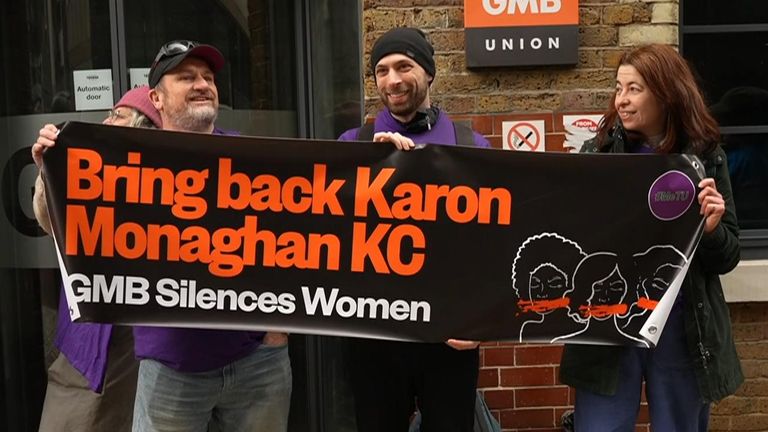
Four years ago a damning report sent shockwaves through the GMB, one of Britain’s biggest trade unions, when it branded the organisation “institutionally sexist”.
For a union that prides itself on representing staff bullied or harassed in their own workplace, it was a shocking and embarrassing revelation.
A new general secretary promised “transformational change” and to take on all the recommendations in the independent report.
But doubts have now been raised over whether that has truly happened.
Employees in the North East said promised reforms had not materialised and have threatened to strike against their own union.
An insider familiar with the talks said action had been suspended for now.
They said the first strikes had been cancelled on the promise Karon Monaghan KC, who originally wrote the report in 2020, would eventually be called back to investigate the Labour-affiliated union.
Issues around the handling, or mishandling, of complaints of harassment and assault seemed to be of particular concern.
There have been protests outside the GMB office
Some women still employed by the union – and some recent former employees – said they still believe sexism is rife and that the Monaghan report had not been implemented in the way they were promised.
One told me “it’s still very toxic” and that the culture is “dysfunctional”. Another said there was “a pattern of abuse” and “it’s worse than ever”.
One former employee said she couldn’t fight for people facing injustice anymore because “how are we meant to fight injustice if we are experiencing it ourselves?”
We spoke to one recently dismissed high-ranking regional secretary in GMB, who we are calling Eleanor, who said she felt bullied into dropping a sexual harassment complaint in 2022.

‘Eleanor’ felt bullied into dropping a sexual harassment complaint
‘Institutional gaslighting’
She said she didn’t feel taken seriously from the start and although she started an employment tribunal case against the union, she later felt pressured into dropping it and signing a non-disclosure agreement (NDA).
“I started to feel like I had suffered abuse and then was abused by the organisation meant to protect me,” said Eleanor.
“Where’s the empathy? Where’s the equality in how they’ve dealt with my case or other women’s cases?
“It’s just institutional gaslighting and someone needs to call it out, but calling it out is a really heavy toll.”
The union categorically denies claims of a culture of bullying or sexism
She was later dismissed for sexual harassment herself and thinks she wasn’t given a fair process of dismissal because she spoke out against the union.
In response to our story, GMB said they categorically deny claims of a culture of bullying or sexism.
They said they have clear, fair and transparent procedures to fully investigate and properly deal with any allegation of bullying or harassment.
Read more from Sky News:
Cameron holds talks with Trump as part of US visit
Twelve arrested over Israel arms protest at Labour HQ
Keep up with all the latest news from the UK and around the world by following Sky News
With regards to Eleanor’s case, the GMB insisted her dismissal was unanimously agreed by a disciplinary panel of three women, chaired by an independent, external female employment judge and that her suggestions that she was unfairly treated or previously pressured out of raising a complaint of sexual harassment are untrue.
They said they don’t use NDAs, but that staff leaving the organisation may sign standard settlement agreements similar to those used by virtually every organisation across the public and private sectors.
They are now reviewing her case to investigate whether fair and transparent procedures were properly followed.


Britain loves chocolate.
We’re estimated to consume 8.2kg each every year, a good chunk of it at Christmas, but the cost of that everyday luxury habit has been rising fast.
Whitakers have been making chocolate in Skipton in north Yorkshire for 135 years, but they have never experienced price pressures as extreme as those in the last five.
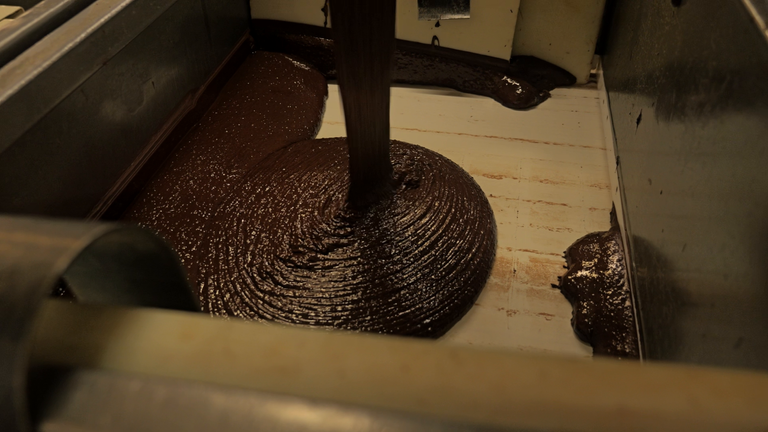
“We buy liquid chocolate and since 2023, the price of our chocolate has doubled,” explains William Whitaker, the real-life Willy Wonka and the fourth generation of the family to run the business.
William Whitaker, managing director of the company
“It could have been worse. If we hadn’t been contracted [with a supplier], it would have trebled.
“That represents a £5,000 per-tonne increase, and we use a thousand tonnes a year. And we only sell £12-£13m of product, so it’s a massive effect.”
Whitakers makes 10 million pieces of chocolate a week in a factory on the much-expanded site of the original bakery where the business began.
Automated production lines snake through the site moulding, cutting, cooling, coating and wrapping a relentless procession of fondants, cremes, crisps and pure chocolate products for customers, including own-brand retail, supermarkets, and the catering trade.

Mmmmm….
Steepest inflation in the business
All of them have faced price increases as Whitakers has grappled with some of the steepest inflation in the food business.
Cocoa prices have soared in the last two years, largely because of a succession of poor cocoa harvests in West Africa, where Ghana and the Ivory Coast produce around two-thirds of global supply.
A combination of drought and crop disease cut global output by around 14% last year, pushing consumer prices in the other direction, with chocolate inflation passing 17% in the UK in October.

…chocolate….
Skimpflation and shrinkflation
Some major brands have responded by cutting the chocolate content of products – “skimpflation” – or charging more for less – “shrinkflation”.
Household-name brands including Penguin and Club have cut the cocoa and milk solid content so far they can no longer be classified as chocolate, and are marketed instead as “chocolate-flavour”.
Whitakers have stuck to their recipes and product sizes, choosing to pass price increases on to customers while adapting products to the new market conditions.
“Not only are major brands putting up prices over 20%, sometimes 40%, they’ve also reduced the size of their pieces and sometimes the ingredients,” says William Whitaker.
“We haven’t done any of that. We knew that long-term, the market will fall again, and that happier days will return.
“We’ve introduced new products where we’ve used chocolate as a coating rather than a solid chocolate because the centre, which is sugar-based, is cheaper than the chocolate.
“We’ve got a big product range of fondant creams, and others like gingers and Brazil nuts, where we’re using that chocolate as a coating.”

The costs are adding up
A deluge of price rises
Brazil nuts have enjoyed their own spike in price, more than doubling to £15,000 a tonne at one stage.
On top of commodity prices determined by markets beyond their control, Whitakers face the same inflationary pressures as other UK businesses.
“We’ve had the minimum wage increasing every year, we had the national insurance rise last year, and sort of hidden a little bit in this budget is a business rate increase.
“This is a small business, we turn over £12m, but our rates will go up nearly £100,000 next year before any other costs.
“If you add up all the cocoa and all the other cost increases in 2024 and 2025, it’s nearly £3m of cost increases we’ve had to bear. Some of that is returning to a little normality. It does test the relevance of what you do.”
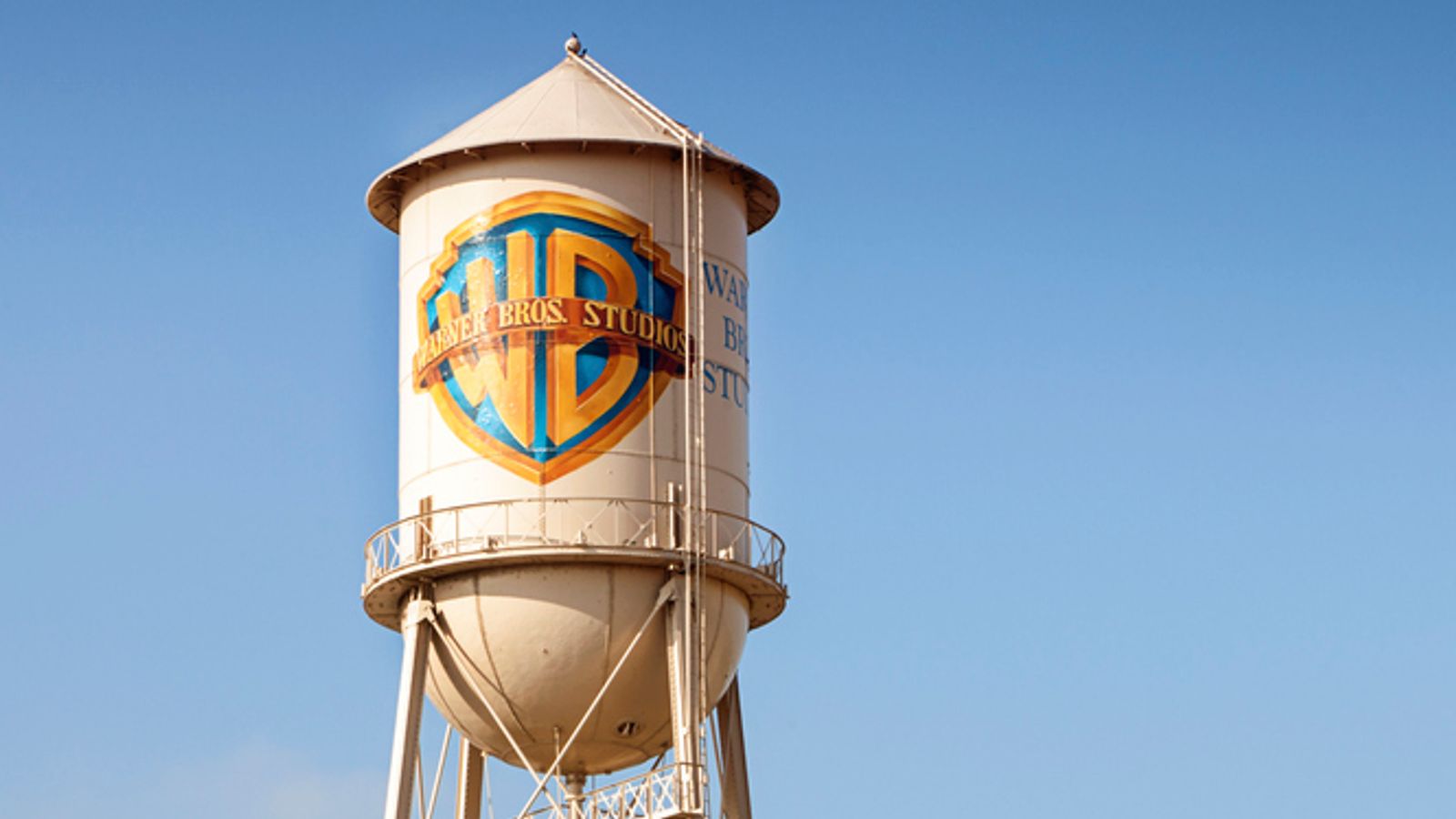

Warner Bros is reportedly set to reject a hostile $108bn (£81bn) takeover bid from Paramount, with one of the prospective buyer’s financing partners confirming it’s pulled out of the offer.
A spokesman for investment firm Affinity, owned by Donald Trump‘s son-in-law Jared Kushner, told Sky News’ US partner network NBC News “the dynamics of investment have changed significantly”.
It had backed Paramount’s bid, along with funds from Saudi Arabia and other Middle Eastern countries.
Bloomberg and The Wall Street Journal report the Warner Bros Discovery board are set to advise shareholders to reject Paramount‘s bid – paving the way for Netflix, which had struck a $72bn (£54bn) deal.
If the takeover goes through, it would give the streaming giant the rights to hit Warner franchises like Harry Potter, Batman, and Game Of Thrones, as well an extensive back catalogue of classic films.
Money latest: Oil prices fall to lowest level since 2021
Pic: iStock
It is the latest twist in a takeover saga where the winner will acquire a huge advantage in the streaming wars.
In June, Warner announced its plan to split into two companies – one for its TV, film studios and HBO Max streaming services, and one for the Discovery element of the business, which primarily comprises legacy TV channels that show cartoons, news, and sports.
Netflix agreed a $27.75 per-share price with the firm, which equates to the $72bn purchase figure deal to secure its film and TV studios, with the deal giving the assets a total value of $82.7bn.
However, Paramount said its offer would pay $30 (£22.50) cash per share, representing $18bn (£13.5bn) more in cash than its rival offered. The offer was made directly to shareholders, asking them to reject Netflix’s deal, in what is known as a hostile takeover.
The Paramount deal would involve rival US news channels CBS and CNN being brought under the same parent company.
Read more:
Why is Warner Bros for sale and how is Trump involved?
The US government will have a big say on the final deal, with the winning company likely facing the Department of Justice’s (DOJ) Antitrust Division, a federal agency which scrutinises business deals to ensure fair competition.
Business
Second Horizon victim Janet Skinner ‘forced’ to sue Post Office as she seeks full redress for wrongful conviction
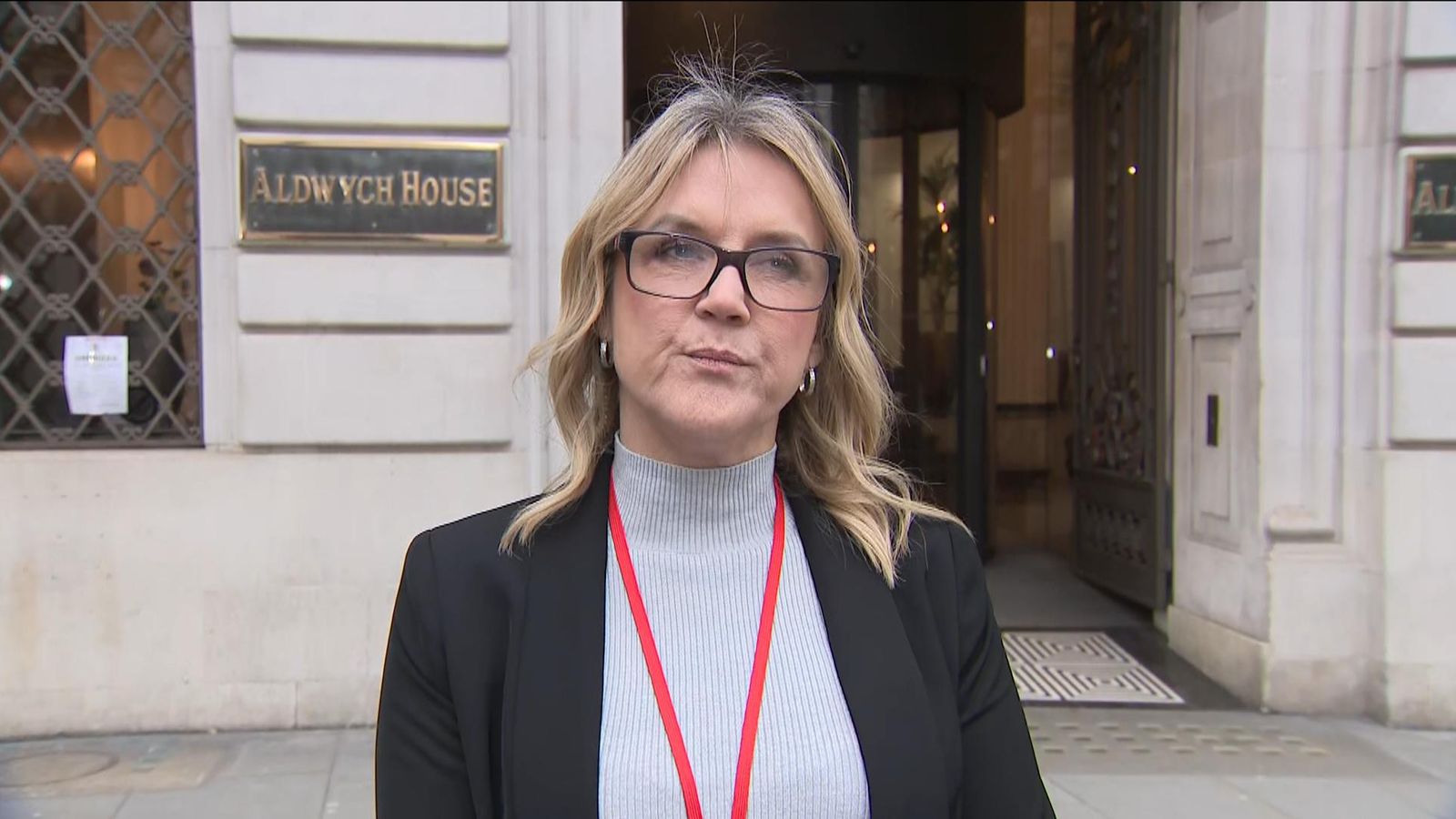
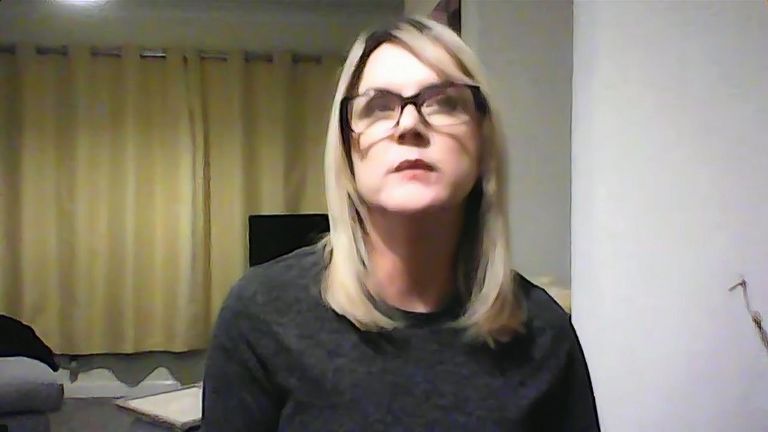
A victim of the Post Office Horizon IT scandal is taking legal action against the government-owned organisation as she seeks full redress for her wrongful conviction.
Janet Skinner is believed to be only the second victim to sue the Post Office.
The former subpostmistress has been “forced” to take the state-owned business to court, her solicitor told Sky News.
Money blog: Oil hit lowest since 2021 with possible impact on filling your car
Ms Skinner has been a campaigner for victims of the faulty Horizon software for nearly two decades.
Around 1,000 people were wrongly prosecuted and convicted throughout the UK between 1999 and 2015 as a result of Horizon.
Despite having her conviction for false accounting overturned in 2021, Ms Skinner has yet to receive a final payment, has been given an insufficient interim sum and is being asked for six different expert reports, said lawyer Simon Goldberg.
Ms Skinner is taking legal action in an attempt to see the issue resolved.
“There’s no sign of resolution. We’re only forced to do it because enough is enough,” Mr Goldberg said.
“It’s cruel and traumatic beyond belief that she should still have to be fighting.”
Ms Skinner’s claim should have been settled within 12 months of the conviction being overturned, he said.
Mr Goldberg added the interim offers are not in keeping with the recommendations of retired High Court judge Sir Wyn Williams, who presided over the public inquiry into the scandal.
Both the Post Office and the Department for Business and Trade, which administers all but one of the victims’ redress schemes, said in October they would “always apply a generous approach” to assessing redress.
But Ms Skinner was initially offered a payment worth only 15% of her total claim.
“They’ve [claim assessors] clearly tried to grind her down and make her give up, and we’re not playing,” her solicitor said.
More legal action to come?
While Ms Skinner is believed to be only the second victim to launch a civil case against the Post Office, she may not be the last.
A postmaster made famous after being portrayed in the ITV drama Mr Bates vs the Post Office, Lee Castleton became the first to take such action in March.
“Unless there’s a sea change, there will definitely be more claims,” Mr Goldberg said.
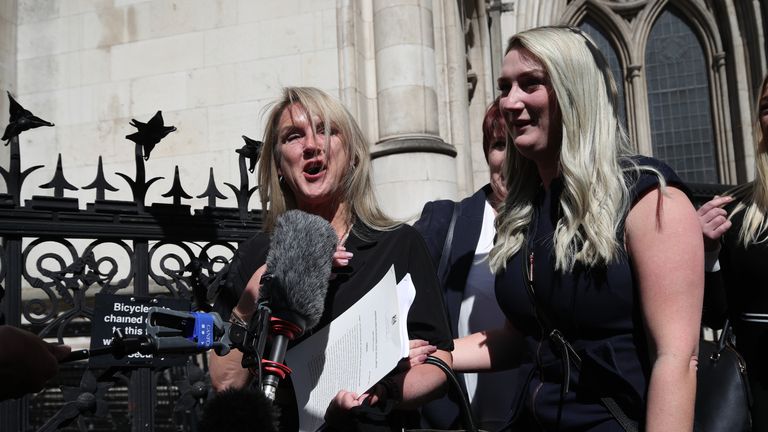
Ms Skinner (L) after having her conviction overturned by the Court of Appeal in 2021
Ms Skinner was given a nine-month custodial sentence in 2007 after the Horizon computer programme, made by Fujitsu, incorrectly generated a £59,000 shortfall.
She was imprisoned when her two children were in their teens, released with an ankle monitor tag, and sold her house when it was due to be repossessed.
Amid the ordeal, Ms Skinner suffered a neurological collapse and was left paralysed from the neck down. She has had to regain the ability to walk.
A Post Office spokesperson said: “We recognise the devastating impact of the Horizon IT Scandal on former postmasters like Ms Skinner and would like to unequivocally apologise for her experiences.
“Responsibility for Ms Skinner’s redress claim moved to the Department for Business and Trade in June 2025.
“We cannot comment on ongoing legal proceedings but once we receive the claim, we will engage fully in the process.”
-
 Sports2 years ago
Story injured on diving stop, exits Red Sox game
-
 Sports3 years ago
‘Storybook stuff’: Inside the night Bryce Harper sent the Phillies to the World Series
-
 Sports2 years ago
Game 1 of WS least-watched in recorded history
-
 Sports3 years ago
Button battles heat exhaustion in NASCAR debut
-
 Sports3 years ago
MLB Rank 2023: Ranking baseball’s top 100 players
-
Sports4 years ago
Team Europe easily wins 4th straight Laver Cup
-
 Environment3 years ago
Japan and South Korea have a lot at stake in a free and open South China Sea
-
 Environment1 year ago
Here are the best electric bikes you can buy at every price level in October 2024