

Save $500 on RadRover 6 Plus e-bike for $1,099, Rachio 3 smart sprinkler controller hits $99, and more

We have have a truly summer-inspired lineup of Green Deals today, headlined by Rad Power’s latest flash sale that is taking up to $500 off four e-bike models, with the RadRover 6 Plus e-bike falling to a new $1,099 low. It is joined by the reappearance of the Rachio 3 3rd Generation Smart 4-Zone Sprinkler Controller that we haven’t seen discounted in a while, now at $99, as well as an even rarer 1-day sale on Anker’s EverFrost Dual-Zone Portable Cooler 50 for $619. Plus all of the other days’ Green Deals that are still going.
Head below for other New Green Deals we’ve found today and, of course, Electrek’s best EV buying and leasing deals. Also, check out the new Electrek Tesla Shop for the best deals on Tesla accessories.
Save $500 on Rad Power’s RadRover 6 Plus High-Step Fat-Tire e-bike at new $1,099 low
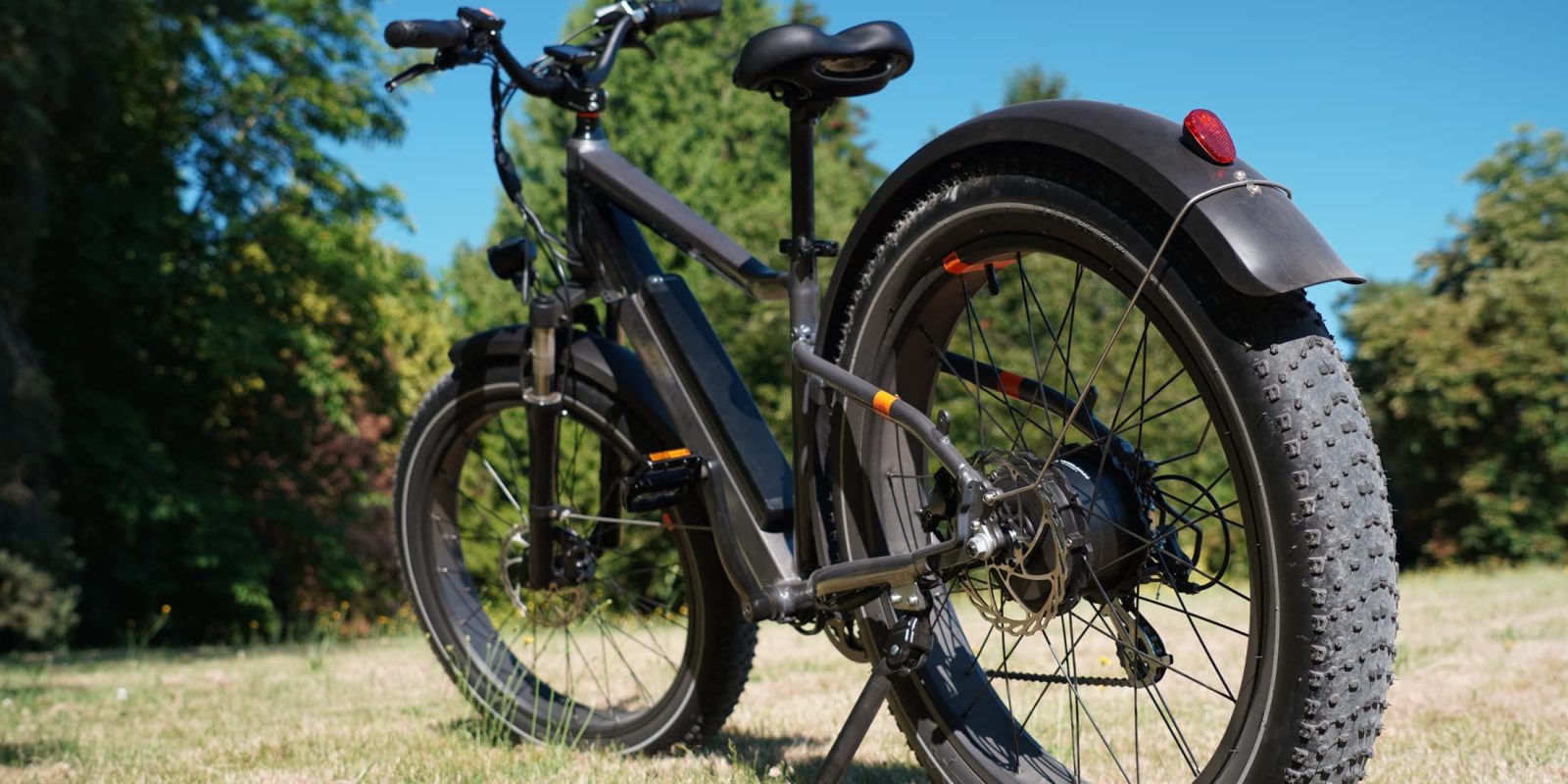
Rad Powers has launched a flash sale through April 29 that is taking up to $500 off four of the brand’s popular e-bike models. The biggest discount is on the RadRover 6 Plus High-Step Fat-Tire e-bike for $1,099 shipped. Usually fetching $1,599 since the company lowered prices across its lineup of models, this e-bike has already seen two flash sales bring costs down to their former lowest points of $1,199, with today’s deal coming in as a 31% markdown off the new going rate that lands at a new all-time low. You can learn more about the RadRover 6 Plus by heading below the fold or checking out our hands-on review.
Equipped with a 750W brushless geared hub motor and a semi-integrated 672Wh battery, the RadRover 6 Plus e-bike is able to reach top speeds of 20 MPH and travels with a range of up to 45 miles on a single charge. It offers a variety of features like the 5-level pedal assist with a 12-magnet cadence sensor, and a full digital display that relays real-time information such as battery level, clock, odometer, speedometer, pedal assist settings, and even a wattage meter to keep track of the motor’s output. It also comes stocked with a pair of 26-inch by 4-inch puncture-resistant fat tires alongside water-resistant connectors and wiring harness for when your joy ride diverts off-road. The frame has been designed for maximum ergonomic comfort and solid handling – especially for riders at the bottom end of the height recommendation range.
Rachio 3 Smart 4-Zone Sprinkler Controller hits $99
Amazon is offering the Rachio 3 Smart 4-Zone Sprinkler Controller for $99 shipped. Down from its $150 price tag, we’ve only seen one previous discount since the new year began, a drop to the new $100 low that beat out Black Friday’s low by less than one dollar. Today’s deal comes in as a repeat of this trend, amounting to a 34% markdown off the going rate, beating our previous mention and etching out a new all-time low all within $1 of the last one in January. With this device you’ll be able to customize your sprinkler or irrigation system’s watering schedule to the specific needs of your yard and plants. Not only will your yard and gardens be vibrant and beautiful, but your water costs will shrink too. It features exclusive weather recognition technology that is programmed to automatically skip unnecessary watering during and after inclement weather, with functions like rain skip, wind skip, freeze skip, and more. It comes ready to use out of the box, with no extra charges or app subscription fees, and you’ll be able to manage everything from the convenience of your phone through the easy-to-use app.
There are a few variations of the above deal for those with larger yards or extra needs. You can increase your coverage with the 8-Zone Sprinkler Controller for $159, down from $230. There is also a 16-Zone Controller that is available for $199, down from $300. And if you want added protection for the controller boxes, there are Waterproof Outdoor Enclosures available for $33 too, down from $40. While the above sprinkler controllers do offer you simple smart controls over your sprinkler and irrigation systems, if you want to take it a step further and have complete control over your water supply as it comes from your spigot, you’ll need to pair any of them alongside the Smart Hose Timer for $78, down from $100.
Anker’s EverFrost Dual-Zone Portable Cooler 50 sees rare discount to $619
Today only, Best Buy is offering the Anker EverFrost Dual-Zone Portable Cooler 50 for $619 shipped. Normally fetching $949, this cooler has seen far fewer discounts since the new year began, with only two previous short-term discounts at Best Buy bringing costs down the lowest, first to $699 in February and again to the $600 low in March. Today’s deal comes in as a 35% markdown off the going rate, giving you $330 in savings on the biggest model in the EverFrost lineup and landing it at the second-lowest price we have tracked – just $19 above the all-time low. You can learn more about this device by heading below or checking our hands-on review from last summer.
The Anker EverFrost cooler requires no ice to keep your food and beverages nice and crisp, able to hold a 39-degree Fahrenheit temperature for up to 27 hours with its 299Wh battery. You’ll even notice that it only takes 30 minutes for it to cool from 77 degrees to 32 degrees. Alongside the 53L capacity for the cooler, which is divided into dual spaces for cooling and freezing, it also sports four different options to recharge the battery: solar (100W solar input), wall outlet, car socket, and through the 60W USB-C port. It’s been designed with two 6-inch wheels as well as an EasyTow handle for more effortless portability, and also includes an extendable table, a built-in bottle opener, and remote control of its settings via the Anker app. Head below to read more.
Spring e-bike deals!
- Super73 RX Electric Motorbike: $2,999 (Reg. $3,695)
- Juiced JetCurrent Pro Foldable e-bike: $2,499 (Reg. $2,799)
- Juiced’s HyperScrambler 2: $1,999 (Reg. $3,499)
- Vanpowers UrbanGlide Ultra e-bike: $1,899 (Reg. $2,499)
- Aventon Aventure.2 All-Terrain e-bike with free extra battery: $1,799 ($2,499 value)
- Aventon Abound Cargo e-bike with $372 in free accessories: $1,799 (Reg. $2,199)
- Hover-1 Altai Pro R750 e-bike: $1,632 (Reg. $3,000)
- Heybike Brawn Fat-Tire e-bike: $1,449 (Reg. $1,800)
- Electric Bike Co. Model J e-bike: $1,299 (Reg. $1,499)
- Lectric XPress 750 High-Step e-bike with extra battery: $1,299 (Reg. $1,799)
- Lectric XPress 750 Step-Thru e-bike with extra battery: $1,299 (Reg. $1,799)
- Vanpowers UrbanGlide Pro e-bike: $1,299 (Reg. $1,899)
- Velotric Nomad 1 e-bike: $1,299 (Reg. $1,799)
- Velotric Discover 1 e-bike: $1,099 (Reg. $1,599)
- Vanpowers UrbanGlide Standard e-bike: $999 (Reg. $1,299)
- Schwinn Ridgewood Electric Mountain Bike: $800 (Reg. $1,500)
- Schwinn Ingersoll Electric Hybrid Bike: $700 (Reg. $1,500)
Other new Green Deals landing this week
The savings this week are also continuing to a collection of other markdowns. To the same tune as the offers above, these all help you take a more energy-conscious approach to your routine. Winter means you can lock in even better off-season price cuts on electric tools for the lawn while saving on EVs and tons of other gear.
- Hover-1 Instinct electric bike falls to new $534 low (Reg. $1,000), more EVs starting from $280
- Save up to $300+ on TENWAYS CGO series e-bikes with bonus savings starting from $1,499
- Save $501 on GoTrax’s Everest electric dirt bike with 53 MPH top speeds
- Husqvarna’s Automower 115H robotic lawn mower with smart controls now $599 (Reg. $700)
- Jetson’s Canyon folding electric scooter with 22-mile range falls to $380 ($520 in savings)
- Greenworks 40V 12-inch compact chainsaw tackles storm cleanup for $124 (Reg. $180)
- Sun Joe’s 1,450 PSI electric pressure washer with detergent tank falls to $142, more from $59
- Amazon Basics 2,000mAh rechargeable AA NiMH battery 16-pack falls 33% to $18
- NIU’s Earth Day Sale takes up to 40% off e-scooters including new KQi Air X pre-orders
- Jackery’s Earth Day sale takes up to $1,800 off power stations, bundles, more starting from $100
- ALLPOWERS Pet Day sale has power stations from $79, solar panels at $99, and bundles at up to $1,600 off
FTC: We use income earning auto affiliate links. More.



After a sluggish stretch, US wind is heading into a pivotal moment, with a near-term rebound colliding with rising power demand, tariffs, and stubborn permitting bottlenecks.
US wind power: the next five years
The US is expected to add more than 7 gigawatts (GW) of new wind capacity in 2025, a 36% increase from this year, according to the latest US Wind Energy Monitor report from Wood Mackenzie and the American Clean Power Association (ACP).
That matters now because the US power grid is under mounting pressure, just as new generation has become harder to build. Electricity demand is rising for the first time in years, mainly driven by data centers and other large loads, while wind developers are navigating higher turbine costs, tariff uncertainty, and permitting delays. How quickly projects can move from the pipeline to completion over the next few years will shape whether wind can help keep the lights on and power prices in check.
Over the longer term, the outlook is steady but increasingly back‑loaded. The report still sees 46 GW of new wind capacity coming online between 2025 and 2029. What has changed is timing. More projects are now expected to reach completion in the middle of the decade, with 2026 and 2027 shaping up to be especially busy years at 10.7 GW and 12.7 GW, respectively, as projects move through the development pipeline.
That shift helps explain why installations lagged earlier this year. Wind additions in Q3 came in at 932 megawatts (MW), about 23% below forecasts. But activity is picking up fast. Developers have about 3.8 GW queued for Q4 2025 alone, which would account for 52% of the year’s total expected capacity. That kind of late-year rush is typical for wind projects, which tend to reach completion toward the end of the calendar year.
There are also signs of life on the manufacturing side. US turbine order intake rebounded in Q3 to pre–Trump’s big bill act levels, with more than 2 GW of firm commitments, the strongest quarter in the past nine months, and a 79% jump from the previous quarter. But you wouldn’t know it, because turbine makers are increasingly keeping project details close to their chests, and much of the qualifying “start-of-construction” activity is happening off-site through component manufacturing.
Looking further out, the report flags a noticeable slowdown toward the end of the decade. Capacity additions in 2029 are expected to drop sharply following project cancellations and inactive designations, largely due to permitting challenges and broader development constraints.
Power demand takes off
At the same time, the need for new power is growing fast.
After a decade of mostly flat electricity demand, US power demand is now expected to grow by around 3% per year through 2029, compared to just 0.7% over the previous decade. Data centers alone are expected to drive about 59 GW of the roughly 90 GW increase in peak demand. That kind of round-the-clock load makes more wind power a necessity.
“The US power market is facing mounting strain after a decade of flat demand, with utilities committing to 160 GW of large-load additions,” said Leila Garcia da Fonseca, Wood Mackenzie’s director of research. “This represents a significant opportunity for wind energy, which benefits from strengthened economic fundamentals and a compelling business case driven by its competitively low LCOE.”
But she also warned that higher turbine costs and policy uncertainty could slow down progress in the middle of the decade.
Onshore wind: Western states lead
Onshore wind continues to do the heavy lifting. The five-year onshore outlook remains unchanged at 39.8 GW of new capacity, and the 2025–2027 pipeline already has turbine orders in place for every project. More than 60% of that three-year capacity has either been commissioned or is already under construction.
Western states are leading the charge. Wyoming, New Mexico, and neighboring states are expected to account for about 34% of onshore activity over that period. Big projects are driving the numbers, including Pattern Energy’s 3.5 GW SunZia project in New Mexico, which is set to make the company the top wind installer in 2026, and Invenergy’s 998 MW Towner Energy Center in Colorado, the single largest project expected to come online in 2027.
Wind is also spreading into new territory. Arkansas recently brought its first utility-scale onshore wind farm online with Cordelio’s Crossover Wind (pictured).
Repowering older wind farms remains another bright spot. Wood Mackenzie expects 18 repowering projects to add about 2.5 GW of capacity over the next three years.
Offshore wind: progress, but pressure
Offshore wind is a different story. Wood Mackenzie expects offshore installations to slow in Q4 2025 due to harsh winter weather, pushing some capacity into 2026. Still, projects already under construction are making progress. Vineyard Wind connected 15 turbines in Q3 and delivered 200 gigawatt-hours (GWh) of electricity over the first nine months of the year.
“US offshore wind shows diverging momentum,” Garcia da Fonseca said. “Projects under construction with commercial operation dates in 2026 continue to hit key milestones, but post-2027 developments face potential delays amid constrained wind turbine installation vessel capacity, driving delays and contract terminations.”
The offshore sector is also under growing financial strain – and let’s not forget political attack from the Trump administration – with delays and contract terminations weighing on late-decade projects.
Tariffs are making turbines more expensive
Tariffs remain one of the biggest wild cards for the US wind industry. Wood Mackenzie expects tariffs to push turbine costs higher in 2026 before easing in later years. Overall, US onshore wind capital spending is projected to rise by about 5% through 2029.
“US wind turbine pricing is experiencing unprecedented uncertainty as conflicting market and regulatory forces interact,” said Garcia da Fonseca. While domestic manufacturing capacity could eventually bring prices down, tariffs on raw materials and key components are expected to keep costs elevated in the near term.
Read more: Federal judge rules Trump’s offshore wind ban illegal

If you’re looking to replace your old HVAC equipment, it’s always a good idea to get quotes from a few installers. To make sure you’re finding a trusted, reliable HVAC installer near you that offers competitive pricing on heat pumps, check out EnergySage. EnergySage is a free service that makes it easy for you to get a heat pump. They have pre-vetted heat pump installers competing for your business, ensuring you get high quality solutions. Plus, it’s free to use!
Your personalized heat pump quotes are easy to compare online and you’ll get access to unbiased Energy Advisors to help you every step of the way. Get started here. – *ad


FTC: We use income earning auto affiliate links. More.

After Lucid Group’s (LCID) stock price reached a new all-time low this week, the company’s communication boss is out to set the record straight.
Lucid stock hits a new low as investors wait
Lucid is facing new headwinds in the US at a critical time as the EV maker looks to enter its next growth phase. It’s ramping up output of its first electric SUV, the Gravity, and is set to launch its midsize platform in late 2026.
Like all automakers, the company is facing new headwinds in the US under the Trump administration, but that isn’t stopping Lucid from continuing on its mission of “changing the world through innovation and efficiency.”
Lucid’s head of communications, Nick Twork, reassured investors on Thursday that while others are pulling back, the company is still plowing ahead.
“We know it’s been a challenging period for our long-term holders,” Twork said, adding, “We are focused on execution and being transparent.” Twork reaffirmed investors that Lucid has “a strong liquidity runway,” including a $2 billion PIF credit facility, and another $2 billion in refinanced convertible notes that now mature in 2030/31.
$LCID investors: we know it’s been a challenging period for our long-term holders. We are focused on execution and being transparent. As our CFO Taoufiq has said, we have a strong liquidity runway, including an undrawn $2B PIF credit facility, and we refinanced $2B of converts… pic.twitter.com/4gvzFqmpLj
— Nick Twork (@ntwork) December 18, 2025
While other automakers are scaling back EV plans, including Ford most recently, “we’re building through it and ramping,” Lucid’s communications boss said.
After a magnet shortage and other supply chain constraints hampered Gravity production early on, Lucid now expects the electric SUV to make up the majority of production and deliveries in the fourth quarter.
Speaking at the 53rd Annual Nasdaq Investor Conference last week, Lucid’s interim CEO, Marc Winterhoff, said the company “is on track” to hit its guidance of producing 18,000 vehicles this year. That’s at the lower end of its initial 20,000 to 18,000 target, but Winterhoff said output is picking up and Lucid now has “weeks where we are producing 1,000 vehicles” in a single week.”
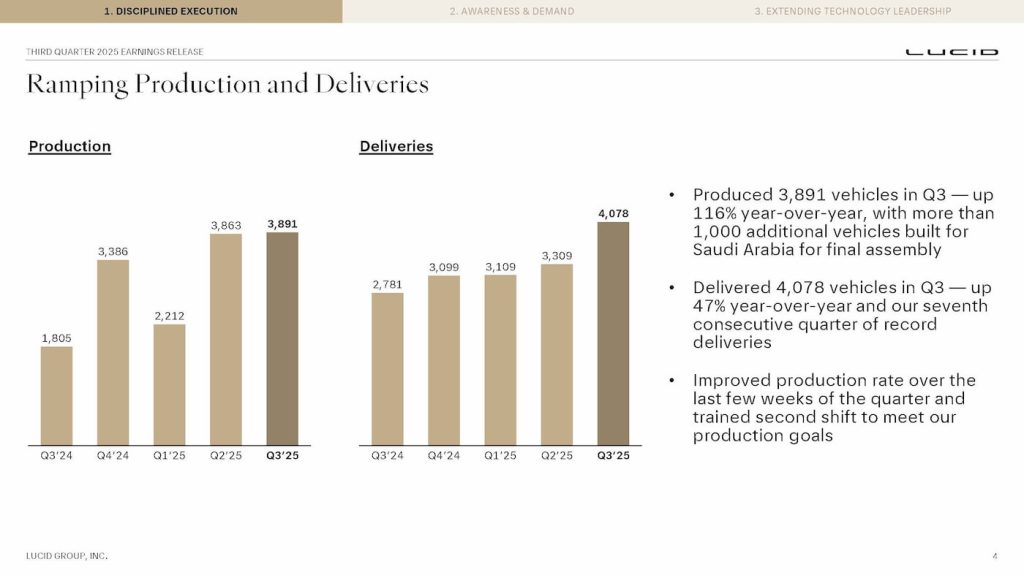
Hitting that 18,000 target won’t be easy. Through the third quarter, Lucid produced 9,966 EVs, meaning it will need to build over 8,000 more in Q4. That’s more than double the 3,891 it made in the third quarter.
Lucid had about $4.2 billion in liquidity at the end of Q3, but after agreeing with PIF to increase the delayed draw term loan credit facility (DDTL), the company said total liquidity would have been around $5.5 billion.
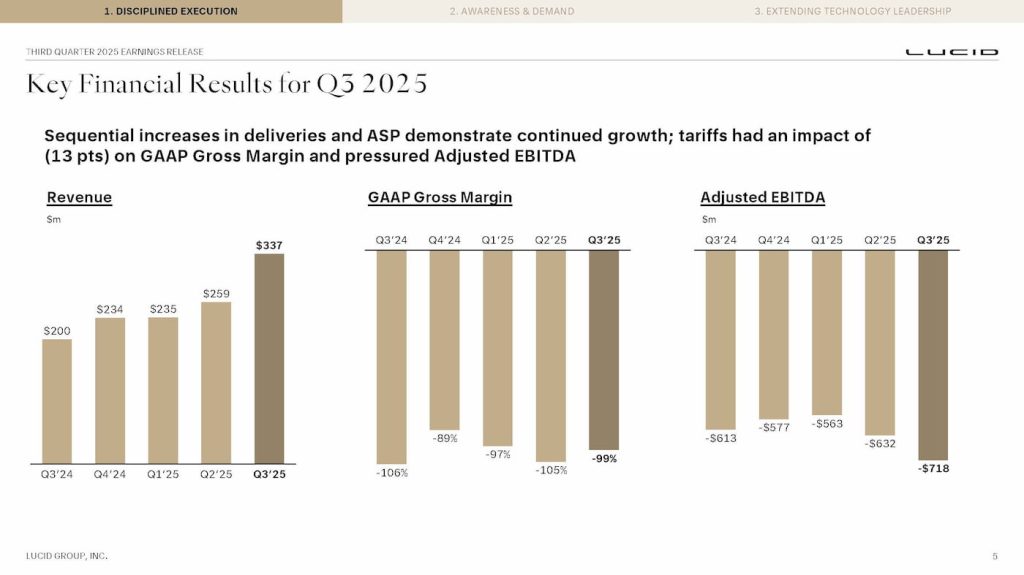
The capital is enough to fund it through the first half of 2027, Lucid said. Later next year, Lucid will begin production of its midsize platform, which will underpin at least three new vehicles priced around $50,000.
Lucid’s first midsize model will be an electric crossover SUV, followed by a more rugged version inspired by the Gravity X concept. The third is rumoured to be a midsize sedan that will compete with the Tesla Model 3.
During a fireside chat at the UBS Global Industrials and Transportation Conference earlier this month, Lucid’s CFO, Taoufiq Boussaid, said the midsize EVs will be positioned in “the heart of the market,” starting at around $50,000.
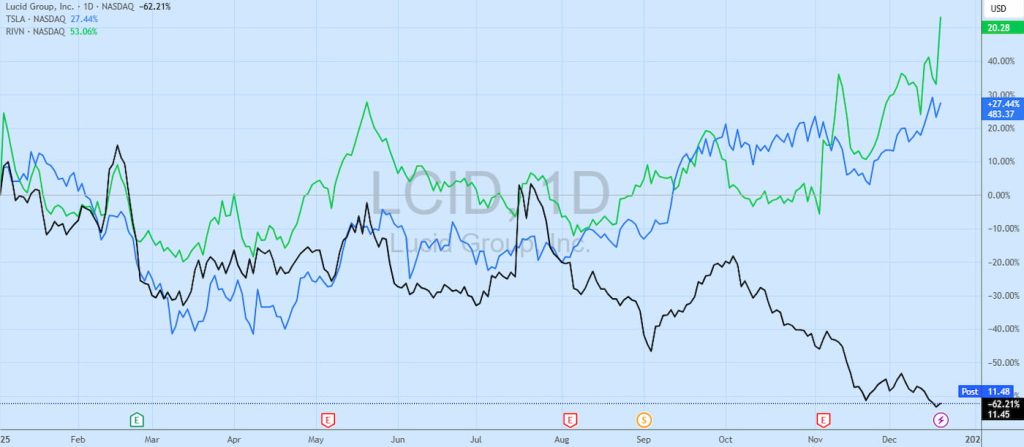
While Rivian (RIVN) and Tesla (TSLA) shares are trading up by over 50% and 27%, respectively, since the beginning of 2025, Lucid’s stock price has fallen by over 60%. Earlier this week, Lucid’s stock touched an all-time low of $11.09 per share.
Twork said Lucid will share more information about its growth plans during its Capital Market Day in the first quarter.
FTC: We use income earning auto affiliate links. More.


Like a 90s “gifted” kid that was supposed to be a lot of things, the electric Jeep Wagoneer S was supposed to be sporty, luxurious, and appeal to a whole new Jeep buyer. Despite being a decent vehicle, it never really found its place — but now that Jeep is offering nearly $17,000 off select models, it might be time to give the go-fast Wagoneer S a second look.
Whether we’re talking about Mercedes-Benz, Cerberus, Fiat, or even Enzo Ferrari, there have been no shortage of corporate outsiders have labeled Jeep as a potentially premium brand that could, “if managed properly,” command luxury-level prices all over the globe. That hasn’t happened, and Stellantis is just the latest in a long line of companies to sink massive capital into the brand only to realize that people will not, in fact, spend Mercedes money on a Jeep.
“Stellantis bet big on electric versions of iconic American brands like Jeep and Dodge, but consumers aren’t buying the premise,” wrote CDG’s Marcus Amick, back in June. “(Stellantis’ dealer body) is now stuck with expensive EVs that need huge discounts to move, eating into already thin margins while competitors focus on [more] profitable gas-powered vehicles.”
To get its prices back in line with the market’s expectations, Jeep is slashing prices with lots of cash on the hood. That includes a hefty $15,250 incentive on select Wagoneer S trims listed as a “2025 National EV Credit Select Inventory Retail Bonus Cash” offer by Greenville Chrysler in Greenville, Texas — which seems like it would be stackable with $1,500 in National Stellantis Loyalty Retail Bonus Cash as well, for a total of $16,750 in incentives before any additional dealer discounts come into play.
All of which is to say: if you’ve found yourself drawn to the Jeep Wagoneer S, but couldn’t quite stomach the $70,000+ window stickers, you might want to check in with your local Jeep dealer and see how you feel about it at a JCPenneys-like 30% off!
Original content from Electrek.

If you’re considering going solar, it’s always a good idea to get quotes from a few installers. To make sure you find a trusted, reliable solar installer near you that offers competitive pricing, check out EnergySage, a free service that makes it easy for you to go solar. It has hundreds of pre-vetted solar installers competing for your business, ensuring you get high-quality solutions and save 20-30% compared to going it alone. Plus, it’s free to use, and you won’t get sales calls until you select an installer and share your phone number with them.
Your personalized solar quotes are easy to compare online and you’ll get access to unbiased Energy Advisors to help you every step of the way. Get started here.
FTC: We use income earning auto affiliate links. More.
-
 Sports2 years ago
Story injured on diving stop, exits Red Sox game
-
 Sports3 years ago
‘Storybook stuff’: Inside the night Bryce Harper sent the Phillies to the World Series
-
 Sports2 years ago
Game 1 of WS least-watched in recorded history
-
 Sports3 years ago
Button battles heat exhaustion in NASCAR debut
-
 Sports3 years ago
MLB Rank 2023: Ranking baseball’s top 100 players
-
Sports4 years ago
Team Europe easily wins 4th straight Laver Cup
-
 Environment3 years ago
Japan and South Korea have a lot at stake in a free and open South China Sea
-
 Environment1 year ago
Here are the best electric bikes you can buy at every price level in October 2024