

Arizona crypto reserve bill passes House committee, heads to third reading

One of Arizona’s crypto reserve bills has been passed by the House and is now one successful vote away from heading to the governor’s desk for official approval.
Arizona’s Strategic Digital Assets Reserve Bill (SB 1373) was approved on April 17 by the House Committee of the Whole, which involves 60 House members weighing in on the bill before a third and final reading and a full floor vote.

SB 1373 seeks to establish a Digital Assets Strategic Reserve Fund made up of digital assets seized through criminal proceedings to be managed by the state’s treasurer.
Arizona’s treasurer would be permitted to invest up to 10% of the fund’s total monies in any fiscal year in digital assets. The treasurer would also be able to loan the fund’s assets in order to increase returns, provided it doesn’t increase financial risks.
However, a Senate-approved SB 1373 may be set back by Arizona Governor Katie Hobbs, who recently pledged to veto all bills until the legislature passes a bill for disability funding.
Hobbs also has a history of vetoing bills before the House and has vetoed 15 bills sent to her desk this week alone.
Arizona is the new leader in the state Bitcoin reserve race
SB 1373 has been passing through Arizona’s legislature alongside the Arizona Strategic Bitcoin Reserve Act (SB 1025), which only includes Bitcoin (BTC).
The bill proposes allowing Arizona’s treasury and state retirement system to invest up to 10% of the available funds into Bitcoin.
SB 1025 also passed Arizona’s House Committee of the Whole on April 1 and is awaiting a full floor vote.
Related: Binance helps countries with Bitcoin reserves, crypto policies, says CEO

Utah passed Bitcoin legislation on March 7 but scrapped the cornerstone provision establishing the Bitcoin reserve in the final reading.
The Texas Senate passed a Bitcoin reserve bill on March 6, while a similar bill recently passed through New Hampshire’s House.
Magazine: Crypto ‘more taboo than OnlyFans,’ says Violetta Zironi, who sold song for 1 BTC

A US judge has granted prediction markets platform Kalshi a temporary reprieve from enforcement after the state of Connecticut sent it a cease and desist order last week for allegedly conducting unlicensed gambling.
The Connecticut Department of Consumer Protection (DCP) sent Kalshi, along with Robinhood and Crypto.com, cease and desist orders on Dec. 2, accusing them of “conducting unlicensed online gambling, more specifically sports wagering, in Connecticut through its online sports event contracts.”
Kalshi sued the DCP a day later, arguing its event contracts “are lawful under federal law” and its platform was subject to the Commodity Futures Trading Commission’s “exclusive jurisdiction,” and filed a motion on Friday to temporarily stop the DCP’s action.

Connecticut federal court judge Vernon Oliver said in an order on Monday that the DCP must “refrain from taking enforcement action against Kalshi” as the court considers the company’s bid to temporarily stop the regulator.
The order adds that the DCP should file a response to the company by Jan. 9 and Kalshi should file further support for its motion by Jan. 30, with oral arguments for the case to be held in mid-February.
Kalshi does battle with multiple US states
Kalshi is a federally regulated designated contract maker under the CFTC and, in January, began offering contracts nationally that allow bets on the outcome of events such as sports and politics.
Related: How prediction markets raise insider trading and credit risks
Its platform has become hugely popular this year and saw a record $4.54 billion monthly trading volume in November, attracting billions in investments, with Kalshi closing a $1 billion funding round earlier this month at a valuation of $11 billion.
However, multiple US state regulators have taken issue with Kalshi’s offerings, which have led to the company being embroiled in lawsuits over whether it is subject to state-level gambling laws.
Kalshi sued the New York State Gaming Commission in October after the regulator sent a cease and desist order claiming it offered a platform for sports wagering without a license.
In September, Massachusetts’ state attorney general sued Kalshi in state court, which the company asked to be tossed. So far this year, Kalshi has sued state regulators in New Jersey, Nevada, Maryland and Ohio, accusing each of regulatory overreach.
Magazine: Can Robinhood or Kraken’s tokenized stocks ever be truly decentralized?
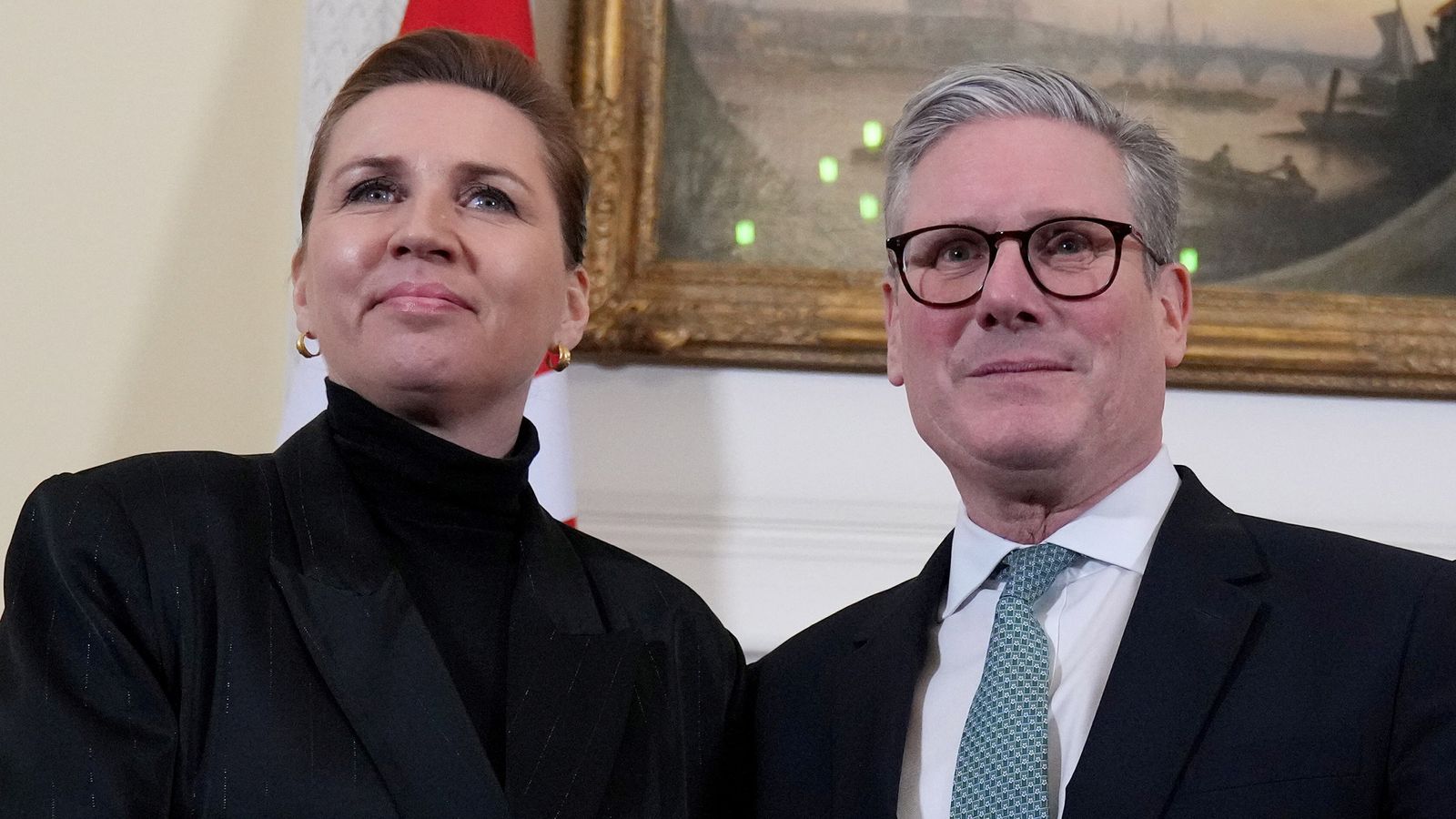

Sir Keir Starmer has called for a tougher approach to policing Europe’s borders ahead of a meeting between leaders to discuss a potential shake-up of the European Convention on Human Rights (ECHR).
The prime minister said the way in which the ECHR is interpreted in courts must be modernised, with critics long claiming the charter is a major barrier to deportations of illegal migrants.
His deputy, David Lammy, will today be in Strasbourg, France, with fellow European ministers to discuss reforms of how the agreement is interpreted in law across the continent.
In an opinion piece for The Guardian, Sir Keir and his Danish counterpart, Mette Frederiksen, said the change was necessary to prevent voters from turning to populist political opponents.
Small boat crossings have risen this year. File pic: PA
What’s the issue with the ECHR?
The ECHR, which is the foundation of Britain’s Human Rights Act, includes the right to family life in its Article 8.
That is often used as grounds to prevent deportations of illegal migrants from the UK.
There has also been a rise in cases where Article 3 rights, prohibiting torture, were used to halt deportations over claims migrants’ healthcare needs could not be met in their home country, according to the Home Office.
The Conservatives and Reform UK have both said they would leave the ECHR if in power, while the Labour government has insisted it will remain a member of the treaty.
But Sir Keir admitted in his joint op-ed that the “current asylum framework was created for another era”.
“In a world with mass mobility, yesterday’s answers do not work. We will always protect those fleeing war and terror – but the world has changed, and asylum systems must change with it,” the two prime ministers wrote, as they push for a “modernisation of the interpretation” of the ECHR.

System ‘more than broken’, says asylum seeker
What is happening today?
Mr Lammy is attending an informal summit of the Council of Europe.
He is expected to say: “We must strike a careful balance between individual rights and the public’s interest.
“The definition of ‘family life’ can’t be stretched to prevent the removal of people with no right to remain in the country [and] the threshold of ‘inhuman and degrading treatment’ must be constrained to the most serious issues.”
It is understood that a political declaration signed by the gathered ministers could carry enough weight to directly influence how the European Court of Human Rights interprets the treaty.
The UK government is expected to bring forward its own legislation to change how Article 8 is interpreted in UK courts, and is also considering a re-evaluation of the threshold for Article 3 rights.
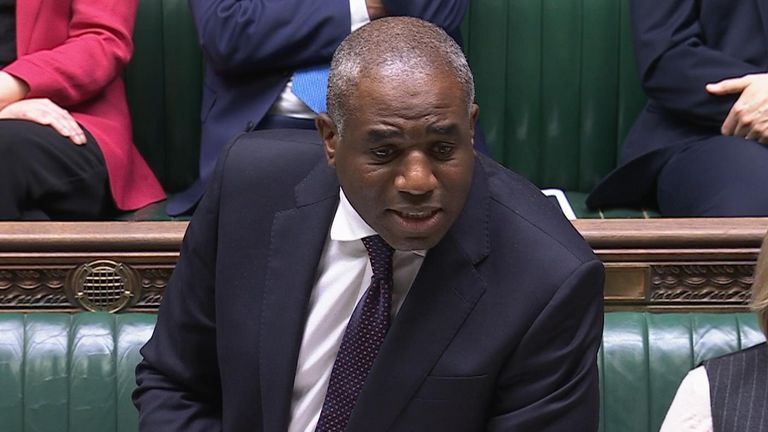
David Lammy will swap Westminster for Strasbourg today
The plans have been criticised by Amnesty International UK, which described them as weakening protections.
“Human rights were never meant to be optional or reserved for comfortable and secure times. They were designed to be a compass, our conscience, when the politics of fear and division try to steer us wrong,” Steve Valdez-Symonds, the organisation’s refugee and migrant rights programme director, said.
Sir Keir’s government has already adopted several hardline immigration measures – modelled on those introduced by Ms Federiksen’s Danish government – to decrease the number of migrants crossing the Channel via small boats.
Read more: UK’s immigration shake-up explained

Beth Rigby: The two big problems with Labour’s asylum plan
Starmer-Macron deal ‘a sticking plaster’
Meanwhile, French far-right leader Jordan Bardella told The Daily Telegraph he would rewrite his country’s border policy to allow British patrol boats to push back small vessels carrying migrants into France’s waters if he were elected.
The National Rally leader called Sir Keir’s “one-in, one-out” agreement with Emmanuel Macron, which includes Britain returning illegal arrivals in exchange for accepting a matching number of legitimate asylum seekers, a “sticking plaster” and “smokescreen”.
Read more from Sky News:
PM warns of ‘lost decade of kids’
Storm Bram brings 90mph winds and rain
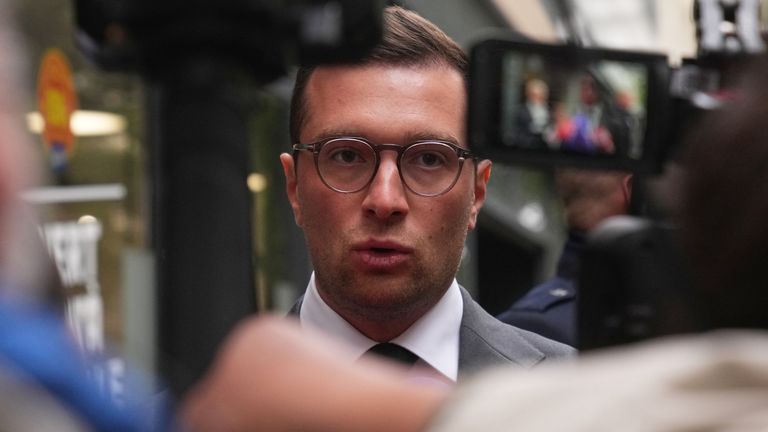
Far-right, 30, and France’s most popular politician
He said that only a complete overhaul of French immigration policy would stop the Channel crossings.
Mr Bardella is currently leading in opinion polls to win the first round of France’s next presidential election, expected to happen in 2027, to replace Mr Macron.

The race for the new US Federal Reserve chair is nearing the finish line, with US President Donald Trump reportedly set to begin interviewing finalists for the top job this week.
According to a report from the Financial Times on Tuesday, Treasury Secretary Scott Bessent has presented a list of four names to the White House.
One of these is former Fed governor Kevin Warsh, whom Bessent is scheduled to meet with on Wednesday. Another is National Economic Council director Kevin Hassett, who is seen as the frontrunner for the role.
Another two names would be picked from a list of other finalists, which includes Fed governors Christopher Waller and Michelle Bowman, and BlackRock chief investment officer Rick Rieder.

Trump and Bessent are expected to hold at least one interview next week, as a decision looks likely to be announced in January.
However, Trump has revealed he already has his eye on one particular candidate.
“We’re going to be looking at a couple different people, but I have a pretty good idea of who I want,” Trump said to journalists on Air Force One on Tuesday.
Kevin Hassett is a frontrunner for Fed chair role
The upcoming round of interviews suggests that Hassett may not be the clear lock in for the role as previously thought, though he is seen as the favorite.
Earlier this month, prediction market odds on Kalshi and Polymarket shot up for Hassett significantly following comments from Trump at the White House on Dec. 2.
While welcoming guests, Trump labeled Hassett as “potential Fed chair” leading many to assume the president had let a major hint slip.
Related: Trump’s national security strategy is silent on crypto, blockchain
With Hassett’s odds spiking to 85% after Trump’s comments last week, they have since declined to around 73% for Hassett, while Warsh’s odds sit at 13% on Kalshi at the time of writing, which has floated around this range over December.

Regardless of who ends up taking over as chair, the move is bound to impact crypto markets under the new leadership.
If elected, Hassett has asserted that he will be apolitical in terms of running the Fed, despite his close ties to Trump. Speaking with The Wall Street Journal this week, Hassett said that “You just do the right thing” when asked if he would blindly follow orders from Trump.
“Suppose that inflation has gotten from, say, 2.5% to 4%. You can’t cut,” Hassett said, adding that he would rely on his own “judgment, which I think the president trusts.”
Magazine: The one thing these 6 global crypto hubs all have in common…
-
 Sports2 years ago
Story injured on diving stop, exits Red Sox game
-
 Sports3 years ago
‘Storybook stuff’: Inside the night Bryce Harper sent the Phillies to the World Series
-
 Sports2 years ago
Game 1 of WS least-watched in recorded history
-
 Sports3 years ago
Button battles heat exhaustion in NASCAR debut
-
 Sports3 years ago
MLB Rank 2023: Ranking baseball’s top 100 players
-
Sports4 years ago
Team Europe easily wins 4th straight Laver Cup
-
 Environment3 years ago
Japan and South Korea have a lot at stake in a free and open South China Sea
-
 Environment1 year ago
Here are the best electric bikes you can buy at every price level in October 2024