
Why four of MLB’s top closers are struggling — and if they can bounce back


-
David Schoenfield
The first month of the 2025 MLB season was a tough one for some of baseball’s elite relievers.
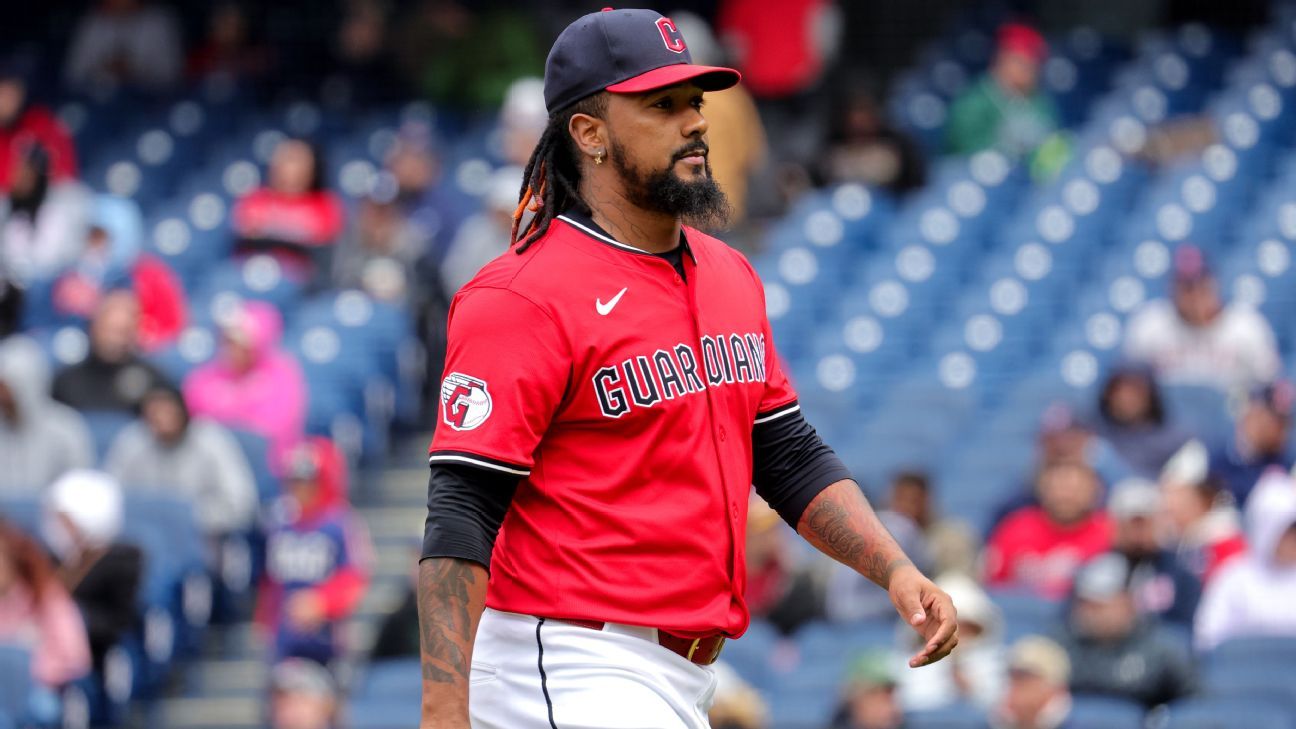
On Opening Day, Cleveland Guardians closer Emmanuel Clase blew a save in the bottom of the ninth inning when he allowed three hits and the tying run against the Kansas City Royals. A week later, he surrendered a couple of runs, including a homer, in a non-save situation. The rest of April was much of the same: Clase gave up 23 hits and 10 runs (all earned) over 13⅓ innings in 14 games in March and April for a 6.75 ERA.
While he appears to be rounding back into form — in his past five appearances, he has picked up a win and four saves while allowing one earned run — what the heck happened in March and April?
This is not the same Clase who had one of the greatest closer seasons of all time in 2024, when he went 4-2 with 47 saves in 50 chances and a 0.61 ERA. He allowed just 10 runs all season, and five of those were unearned (four ghost runners in extra innings and one resulting on a Clase error). Indeed, take away the ghost runners and Clase was nearly perfect: Both losses were the result of ghost runners in extra innings as was one of the blown saves. Batters hit just .154 off him and he yielded just two home runs.
Nearly perfect … at least until the postseason, when Clase shockingly allowed eight runs in 14 innings, served up three home runs and blew one save and lost two other games.
But Clase isn’t the only struggling closer in 2025. Two-time All-Star Devin Williams was traded from the Milwaukee Brewers to the New York Yankees in the offseason and has posted a 9.24 ERA and lost his job. The Chicago Cubs acquired Ryan Pressly from the Houston Astros to fill their ninth-inning role and he just had a historic meltdown, allowing nine runs in one inning without retiring a batter. Atlanta Braves closer Raisel Iglesias has already served up five home runs in just 14 innings — one more than he allowed in all of 2024. New York Mets closer Edwin Diaz hasn’t blown a save but he has looked shaky at times and has surrendered seven runs — two fewer than during his lights-out campaign of 2022.
As the Guardians host the Philadelphia Phillies — a team that has had its own bullpen issues — for “Sunday Night Baseball” on ESPN this weekend, let’s dig into each of these pitchers and break down their struggles, as well as what they can do to recover.

Emmanuel Clase, Cleveland Guardians
After those early bad outings in mid-April, Clase told reporters, “A couple of days ago I was thinking, ‘Hey, I am human.’ I can make mistakes.” At the time, Guardians manager Stephen Vogt said he wasn’t exactly sure what was wrong with his closer: “It’s too early to tell. … Emmanuel just needs to get his confidence back.”
That seemed to be the initial assessment, that perhaps Clase was scarred by his postseason struggles. His velocity has been fine — he’s averaging 99 mph on his cutter, which he throws 71% of the time. Indeed, his swing-and-miss rate on the cutter and slider are up a couple of percentage points from last season, and he’s actually getting slightly more movement overall on both pitches compared to 2024. Still, he’s allowed 25 hits in 16⅓ innings after allowing just 39 in 74⅓ innings in 2024.
Looking back at video for all 25 of those hits, two main things are clear: As Vogt mentioned, Clase was leaving some pitches over the middle and some of those were cutters without much movement. (And as you might expect, there was also some bad luck mixed in.)
Take the blown save against the Pittsburgh Pirates on April 20, when Clase allowed four hits and three runs. Tommy Pham started the rally with a well-struck double over the center fielder’s head, but the next three hits had exit velocities of 76.1 mph, 79.1 mph and 80.4 mph, respectively. Two of those were grounders to the opposite field and one was a one-hopper off Clase’s leg (it doesn’t help that he’s one of the worst-fielding pitchers in the majors). Among the other 21 hits, there were two infield choppers that Jose Ramirez had no play on, one that clanked off the glove of right fielder Angel Martinez and another infield hit off Clase’s glove.
But there were some hard-hit balls, too. Los Angeles Angels catcher Logan O’Hoppe took a 99-mph cutter at the top of the zone and hit it over the center-field fence. His teammate, Jo Adell, hit a good slider below the knees for a ringing double in the gap. Overall, 12 of the 25 hits Clase has allowed were hard-hit balls, those with an exit velocity of 95-plus mph. Last year, he allowed just 18 hits all season on hard-hit balls.
Overall, Clase should be fine. He did go through a similar season in 2023, when he went 3-9 with a 3.22 ERA and allowed 68 hits in 72⅔ innings. Those losses were mostly a matter of bad luck — a lot of soft ground balls in extra innings that went through the infield and allowed ghost runners to score. This year, the issue has been more about location. The stuff is still there, so look for Clase to be fine the rest of the way.

Devin Williams, New York Yankees
Like Clase, Williams had his own postseason meltdown. In Game 3 of the Brewers’ wild-card series against the Mets, he entered with a 2-0 lead in the ninth and walked Francisco Lindor in an eight-pitch battle, gave up a single to Brandon Nimmo on an 0-2 pitch and then served up Pete Alonso‘s go-ahead three-run home run (and then allowed a fourth run). It was a stunning turn of events off a reliever who sported a 1.70 ERA since 2020.
Williams’ first month with the Yankees has been an extended debacle, however: He has allowed 15 runs in 12⅔ innings, giving up 13 hits and 11 walks and hitting two batters. He lost his closer role after allowing seven runs over two outings. He had three good performances after the demotion but then gave up three runs against the San Diego Padres on Monday. Pressed into service in the 10th inning Wednesday, he walked a batter and hit another but got out of the jam with three strikeouts and picked up the win.
Can one outing turn things around?
“I feel like I’m back to where I need to be mentally and physically,” Williams said after the win. “I’m just competing.”
Compared to Clase, the reasons for Williams’ struggles are more obvious. From 2020 to 2024, Williams — also a two-pitch pitcher, with his four-seamer and otherworldly changeup nicknamed the “Airbender” — induced a whiff rate of nearly 48% on his changeup and 41% on his fastball. In 2025, those figures are down to 35% and 27%, respectively. He has always walked a lot of batters, averaging 4.5 walks per nine innings the previous four seasons, but that’s up to 7.8 in 2025.
“Stuff’s there,” Yankees manager Aaron Boone said after Monday’s struggles. “Stuff’s fine and I do believe he’ll get on a roll and be lights-out and dominant. But the command part of it, whether the walks or getting behind in certain situations, have hurt him a little bit.”
The solution seems simple, but the execution hasn’t been. For now, Williams will need a string of good outings before it’s possible to completely believe that Alonso didn’t break his confidence.

Ryan Pressly, Chicago Cubs
The Cubs’ bullpen ranked 25th in win probability added in 2024, so adding more depth and settling on a closer was an offseason goal. Pressly had been the Astros’ closer from 2020 to 2023 before taking a setup role to Josh Hader last season. But in Pressly, the Cubs acquired a pitcher who, while still effective, was also in decline in terms of stuff and results.
His four-seam velocity peaked in 2021 at 95.7 mph but was down to 93.8 in 2024 and is sitting at 93.3 mph in 2025. His strikeout rate had sat well over 30% from 2018 to 2022 but was down to 23.8% in 2024. This season? A miniscule 8.1%. That’s second lowest out of 370 pitchers with at least 10 innings pitched.
The culmination of all of this was on display in Tuesday’s game, when Pressly entered in the top of the 11th inning. He faced eight batters, threw 26 pitches and gave up a double, single, fielder’s choice/sacrifice bunt, hit batter, single, single and another single before manager Craig Counsell finally removed him. Three of the five hits were classified as hard-hit balls while the other two were line drives. Pressly induced no swings-and-misses and became just the eighth reliever in MLB history to face at least eight batters without getting an out.
The Cubs say he will remain in a high-leverage role. He’s also been fighting a balky knee that was drained on April 22 to relieve discomfort. Tuesday’s game was just his third appearance since then — and he had delivered seven consecutive scoreless appearances before that.
Still, the lack of strikeouts and swing-and-misses is alarming. The rest of the Chicago bullpen hasn’t exactly been locking it down either as it ranks 28th in win probability — but, at this point it’s hard to envision Pressly remaining the closer unless he can improve his strikeout rate.

Raisel Iglesias, Atlanta Braves
Iglesias has five 30-save seasons, including the past two with the Braves. The 2024 season was his best yet: 6-2, 1.95 ERA, 34 saves in 38 chances and .160 average allowed. Heck, take away one five-run blowup in September and the numbers look even better.
Iglesias has always been more of a fly ball pitcher — and was homer-prone earlier in his career — but this season his fly ball rate is higher than ever, with 77% of his pitches in play going in the air compared to 55% last season. That’s led to six home runs already. On April 2, Shohei Ohtani beat him on a pretty good changeup away, giving the Dodgers a 6-5 victory with his blast. Four of the other five home runs were off sliders, three of which were hangers in the middle of the plate. Eugenio Suarez took a 97-mph fastball up and away and crushed it to left field.
Outside of that, everything else looks OK: Iglesias’s strikeout rate is up a tick from last year and his walk rate is down. His fastball velocity is down one mph, but it’s the slider that’s been the early problem — he’s thrown 43 of them and batters are 5-for-9 with the four home runs. He had a 42% whiff rate on the slider last year, allowing just one home run, so it was a key asset alongside his fastball, sinker and changeup.
While Iglesias should be fine, it’s worth noting that he was probably lucky last year. He allowed just a 4.8% home run rate on fly balls compared to his career mark of 9.0%. The luck appears to be evening out on the wrong side this year.
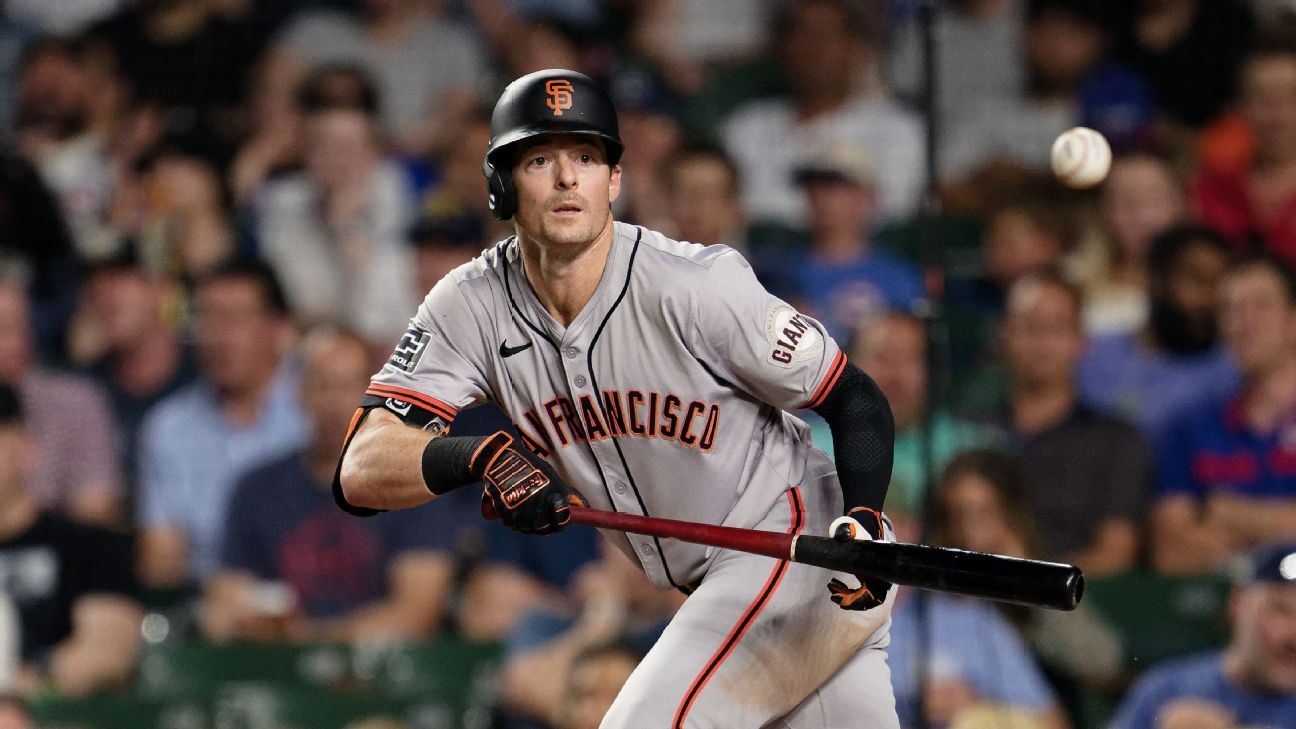

ATLANTA — The Atlanta Braves signed veteran outfielder Mike Yastrzemski to a two-year deal Wednesday that includes a club option for 2028.
The 35-year-old Yastrzemski hit .233 with 17 home runs and 46 RBIs in 146 games last year between San Francisco and Kansas City.
Yastrzemski, who spent the first six-plus seasons of his career with the Giants before being sent to the Royals in July, will make $9 million in 2026 and $10 million in 2027. Atlanta holds a club option for 2028. Yastrzemski will make $7 million if the Braves pick up the option. He will receive a $4 million buyout if they do not.
The versatile Yastrzemski, the grandson of Hall of Famer Carl Yastrzemski, can play all three outfield positions and is a career .238 hitter. His best season came in the COVID-19-shortened 2020 campaign, when he batted .297 with 10 homers in 54 games and finished in the top 10 in NL MVP voting.

-
Jorge Castillo
ORLANDO, Fla. — The New York Yankees made their first selection in a Rule 5 draft since 2011 on Wednesday, taking right-hander Cade Winquest from the St. Louis Cardinals.
Winquest was one of 13 players — and 12 right-handed pitchers — chosen in the major league portion of the draft.
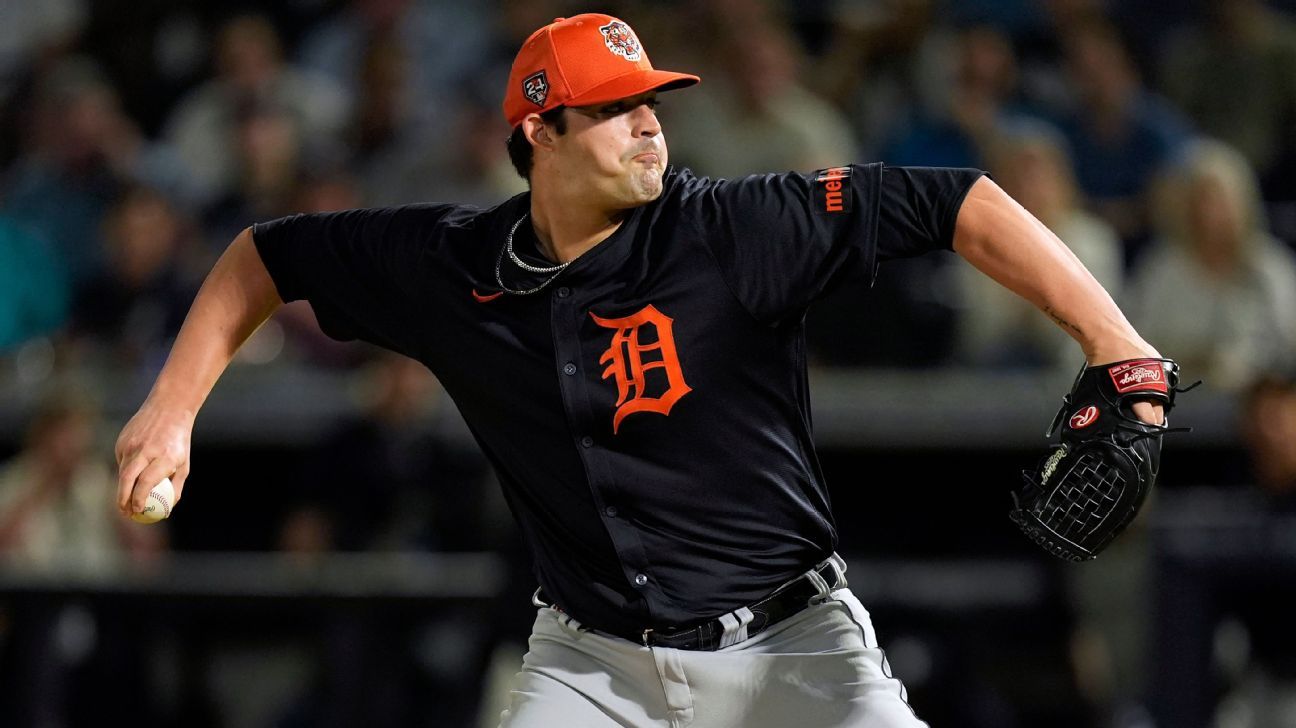
The Rockies took RJ Petit, a 6-foot-8 reliever, with the first pick from the Detroit Tigers. Petit, 26, had a 2.44 ERA in 45 relief appearances and two starts between Double A and Triple A last season. The Minnesota Twins chose the only position player, selecting catcher Daniel Susac from the Athletics.
Clubs pay $100,000 to select a player and must keep him on the active major league roster for the entire following season unless he lands on the injured list. Players taken off the roster must be offered back to the former club for $50,000.
The 25-year-old Winquest recorded a 4.58 ERA with a 48% groundball rate in 106 innings across 25 games, including 23 starts, between Single A and Double A last season. He features a fastball that sits in the mid-90s and touches 98 mph plus a curveball, cutter and sweeper. He is expected to compete for a spot in the Yankees’ bullpen next season.
Right-hander Brad Meyers was the last player the Yankees had chosen in a Rule 5 draft. He suffered a right shoulder injury in spring training and was on the injured list for the entire 2012 season before he was offered back to the Washington Nationals. He never appeared in a major league game.
Also picked were right-hander Jedixson Paez (Colorado from Boston), right-hander Griff McGarry (Washington from Philadelphia), catcher Carter Baumler (Pittsburgh from Baltimore), right-hander Ryan Watson (Athletics from San Francisco), right-hander Matthew Pushard (St. Louis from Miami), right-hander Roddery Munoz (Houston from Cincinnati), right-hander Peyton Pallette (Cleveland from Chicago White Sox), right-hander Spencer Miles (Toronto from San Francisco), right-hander Zach McCambley (Philadelphia from Miami) and right-hander Alexander Alberto (White Sox from Tampa Bay).

-
 Sports2 years ago
Story injured on diving stop, exits Red Sox game
-
 Sports3 years ago
‘Storybook stuff’: Inside the night Bryce Harper sent the Phillies to the World Series
-
 Sports2 years ago
Game 1 of WS least-watched in recorded history
-
 Sports3 years ago
Button battles heat exhaustion in NASCAR debut
-
 Sports3 years ago
MLB Rank 2023: Ranking baseball’s top 100 players
-
Sports4 years ago
Team Europe easily wins 4th straight Laver Cup
-
 Environment3 years ago
Japan and South Korea have a lot at stake in a free and open South China Sea
-
 Environment1 year ago
Here are the best electric bikes you can buy at every price level in October 2024