
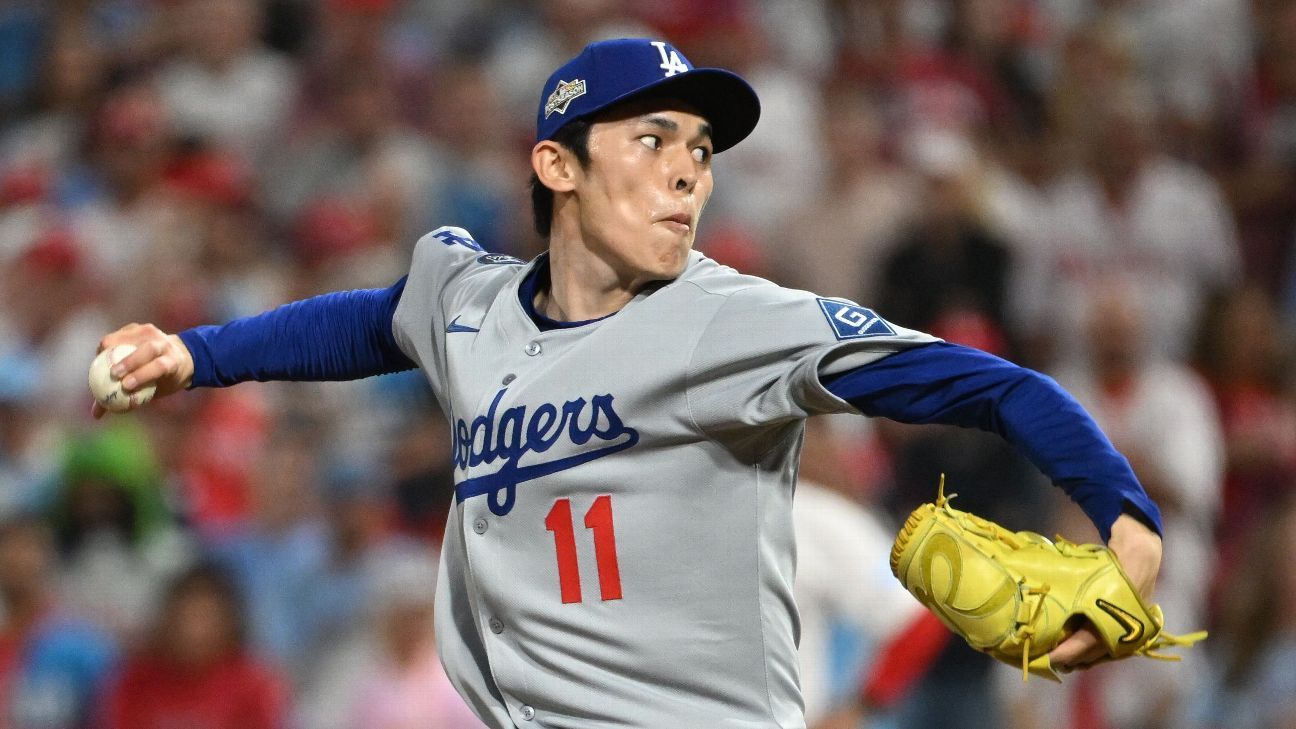
Inside how the Dodgers fixed Roki Sasaki — and possibly saved their World Series repeat hopes

PHILADELPHIA — Halfway across the world, Roki Sasaki had a secret admirer. In 2021, his first season in Nippon Professional Baseball, the Chiba Lotte Marines’ teenaged phenom regularly blew triple-digit fastballs by hitters and complemented them with a split-fingered fastball that behaved like a high-velocity knuckleball. Once a week, new videos of Sasaki’s latest start would find their way onto social media, and when they did, Rob Hill would consume them with equal parts appreciation and awe.
“I keep a mental tab of a lot of pitchers that I like,” said Hill, the Dodgers’ 30-year-old director of pitching, “and I’ll go back and look how they’re doing and see how their bodies are moving and playing, like almost a game of: If they were with me, what would I do?”
On Sept. 4 this year, Hill got the opportunity to answer that question. Over the previous four months, Sasaki’s ballyhooed rookie season with the Dodgers had devolved into a disaster. He struggled through eight starts, hit the injured list with a right shoulder impingement May 13, started throwing again two weeks later and was shut down once more June 16. He returned to the mound for Oklahoma City two months after that with a fastball sitting at just 93 mph in Triple-A and had lost hope of contributing substantively to the Dodgers’ attempt to be the first team in a quarter-century to win back-to-back World Series.
Then came the early-September debrief with Hill at the Dodgers’ complex in Arizona. For months, officials throughout the organization had worked to gain Sasaki’s trust, cognizant of how loath he was to offer it. President of baseball operations Andrew Friedman, general manager Brandon Gomes and manager Dave Roberts all had let Sasaki know they hadn’t lost faith, even as he’d gone from the major league rotation to minor league mediocrity. They would provide whatever tools he needed as the season went on.
Finally, following another middling Triple-A start, Sasaki pronounced himself open to a mechanical overhaul. What happened over the next week changed the course of his season — and the Dodgers’. Small but significant tweaks to Sasaki’s delivery unlocked the monster within. The desire to compete — to win — prompted him to embrace a move to the bullpen. And following a pair of successful big league relief outings to end the regular season, Sasaki found himself thrust into the ninth inning of Los Angeles’ past two playoff wins: a wild-card series clincher against the Cincinnati Reds and Game 1 of the National League Division Series at Philadelphia’s raucous Citizens Bank Park. His fastball sat over 100 mph, his splitter tumbled with ferocity, and he looked the part of dominant closer.
“When he came back, I told him he’s got a different look now,” Roberts said. “He’s got the look of a killer.”
For all of the grief directed at the Dodgers because of their half-billion-dollar payroll and cadre of superstars, their ability to diagnose issues and coach players up, to open clear lines of communication and remain on the same page — to make players better and make that change sticky — is among the best in baseball. The Dodgers’ exceptional financial might makes them behemoths. Their skill at creating other advantages available to even those with much lower payrolls makes them terrifying.
The resurrection of Sasaki is their latest triumph, and they’re confident that with the extra strength he developed during his time off, the cue he found to hone his delivery and the dominance he has experienced in the bullpen, it’s here to stay. Everything coming together in less than a month was fortuitous, yes, but it was no accident.
HILL CALLS IT the deposition. When the Dodgers are looking to extract more from a pitcher, they’ll send him to Hill and Ian Walsh, the organization’s pitching performance coordinator, for a question-and-answer session that can last hours. There are the simple asks: What is your routine, and what are you most comfortable throwing, and what hurts? And then the ones a little more far afield: Was there anything a coach told you in fifth grade you still apply today? Or is there pain in your body you’ve gotten used to that probably isn’t normal?
The transition of the 23-year-old Sasaki to Major League Baseball was atypical. Almost every Japanese player who leaves for MLB does so after a series of high-end accomplishments. Sasaki did throw a perfect game in 2022 followed by eight more blemish-free innings in his next start. But over the next two seasons, he barely threw 200 innings total, with arm and oblique injuries limiting his time on the mound. Sasaki had no desire to follow his forebears in accumulating accolades in Japan before heading to the United States. And even the hundreds of millions of dollars he could have received by coming over after age 25 as an international free agent were not worth delaying what he believed his destiny: to pitch against the world’s best hitters.
He also, the Dodgers recognized, wasn’t himself in his final seasons in Japan. During his meetings with teams, Sasaki wanted one question answered: How would you fix my fastball? It had leaked velocity over the previous two seasons, and teams’ responses, Sasaki figured, would offer him the best insight into their philosophies on pitching. The Dodgers knew Sasaki’s unique leg kick would make his delivery difficult to replicate, but their philosophy on pitching takes that into account.
“I don’t ascribe to a mechanical model,” Hill said. “Mechanics are not something to be modeled. The human body and the way that it moves is going to determine the output of what you do. Your own structural and physical constraints, and then your ability to coordinate your movements, is going to dictate what you do. I’m not going to be a towel-drill guy or a Driveline guy. I’m a get-you-better guy.”
Even though Hill had thoughts on how to upgrade Sasaki’s mechanics during the spring, he didn’t want to overstep his bounds. Shohei Ohtani didn’t look like the most talented player in the game’s history in his first spring. Yoshinobu Yamamoto, the Dodgers’ ace this season, grappled with inconsistency for the first half of his MLB debut last year.
“And Roki’s younger than both of them were when they came,” Dodgers reliever Blake Treinen said. “You come over, you’re young, you’ve got the weight of the world on your shoulders. It’s not the easiest thing. I don’t know if some of it is that, but I don’t think it really matters at this point. I’m just grateful, because it’s not easy for people to come out of where they’re at. Sometimes that can wreck somebody.”
As much as mental wreckage had accrued for Sasaki from the beginning of the season through August, his physical issues had compounded even more. The mechanical changes Hill had noticed were, he said, almost certainly due to his right shoulder. Every big-league-caliber pitcher, Hill said, is an elite compensator. If something is wrong physically, they are capable of finding ways to move their bodies to make up for the deficiency. The problem is that doing so creates instabilities elsewhere in the body. And eventually, under the weight of those stresses, it breaks down.
“Good or bad, right or wrong, he hasn’t had a whole lot of instruction. He’s just been on his own program because of the talent,” Roberts said. “And there was a point where he was in Arizona where the group came together and said, ‘Hey, you’ve got to give Rob a chance.’ And to his credit, he bought into that and just kind of freed himself up.”
During the deposition, Hill did what he called an accusation audit. He understood any skepticism Sasaki might have, and he wanted to address it head on, so Hill laid out all of the potential negatives of working with him. Maybe Sasaki was concerned with how Americans view pitching mechanics. Or the number of Dodgers pitchers who have suffered injuries. Or that they cannot possibly understand what it’s like to be him. And if Sasaki is annoyed by Hill or just doesn’t like him, that’s fine. He wouldn’t be the first. But at the end of the day, Hill said, he needed Sasaki to understand one thing and one thing only: The only thing Hill cared about is making him better.
“You can tell me you want to spin upside down on your head midway through your delivery,” Hill said. “If it comes out 100, I’m going to just sit back and watch. I’m not going to shove you into a box. I’m not going to tell you that you have to move a certain way, you have to use your glute, you have to use your foot. I’m just going to ask you different things that make sense in your head, and then we’re going to find a way to make it come to life.”
It came to life with what Hill calls the buffet. Following the deposition, Hill and Walsh broke down the answers and emerged with a suite of options to help fix the issues. They believed that Sasaki’s troubles stemmed from his pelvis tipping forward, which caused him to rotate too early. During the pitching delivery, energy builds in the body, ripples up to the arm and is projected onto the ball at release. Any disruption — even something that goes unnoticed by the naked eye — can wreak havoc. And with Sasaki, that havoc equaled 7 mph of fastball velocity going AWOL.
On Sept. 5, Hill and Walsh presented the buffet. In particular, they believed the set position of Sasaki’s back leg could fix what ailed him. During the deposition, Sasaki had shown them videos from the 2022 and 2023 seasons, when his stuff was at its best, and his back leg wasn’t nearly as extended. By flexing the back leg, with his knee starting over his toes, Sasaki could avoid hinging his pelvis and delay it from dragging his center of mass forward too early, which prevented his front leg from having enough time to stabilize.
“Rotating the pelvis early is just death to everything,” Hill said.
For three hours that day, they discussed the effect of the flexed back leg. Starting in the new position would allow Sasaki to stand tall with his exaggerated front-leg kick, flare that leg straight down, plunge into a deep position and delay rotation. A specific cue resonated with Sasaki. Up, down, out. Up, down, out. If he lost feel for his delivery, he could remind himself: Up, down, out. Though the new delivery would look similar, the delay allowed him to stabilize and extend, smoothing out an energy transfer that had grown too mushy and eaten away at his fastball velocity.
Typically, the Dodgers will have pitchers work on drills before trying out proposed fixes. Sasaki didn’t want to wait. The two months of not throwing a ball, and the trust he had in Los Angeles’ team physician, Dr. Neal ElAttrache, had his shoulder feeling better than it had in years. With additional strength gained in his lower half in the weight room during his time off, Sasaki was eager to test out the back-leg theory as soon as possible. There was little time to spare if he was to have any chance of contributing in October.
“I think I can do it,” Sasaki said.
Hill and Walsh weren’t going to say no. Players know their bodies and minds better than coaches ever can. On Sept. 6, Sasaki stepped onto the mound at the complex and sat 95 to 97 mph. Hill and Walsh were blown away. Because Sasaki told them during spring training that his bullpen sessions are typically 4 to 5 mph slower than what he throws in a game.
“What I try to do in that deposition is basically figure out if this is a software issue or hardware issue,” Hill said. “Like, is this a skill issue? Or are you hurt? Do you have a bony block in your hip that we don’t have diagnosed properly that is like actually limiting the ability to do things right? Once it’s somewhat determined that it’s not a hardware issue, it can happen quick if you just align the joints in the right way, especially with a guy who’s already produced a crazy amount of velo in his life.”
THREE DAYS AFTER that bullpen session, Sasaki took the mound for his next Triple-A start. He went 4⅔ innings, walked four and allowed three runs. And the Dodgers were ecstatic. Because the stuff was back. His fastball averaged 98.3 mph and topped out at 100.6. His splitter was dastardly. He even threw the cutter Hill helped teach him during spring training.
Almost immediately, the plans for Sasaki changed. The Dodgers’ bullpen was reeling. Tanner Scott, the closer signed to a $72 million deal over the winter, had faltered. Kirby Yates, another high-profile free agent signing, wasn’t much better and later would go on the injured list with a hamstring strain. For all of Los Angeles’ starting pitching depth, the bullpen was a liability. So the Dodgers approached Sasaki and told him that if he wanted to play meaningful baseball this season, there was a clear path through the bullpen.
“He saw what was happening with our starters and said, ‘Sign me up,'” Roberts said. “And so then it was on us.”
Still with Oklahoma City, Sasaki struck out a pair in his first relief outing Sept. 18. He followed three days later with another clean inning. The Dodgers summoned him back to the big leagues and threw him Sept. 24 and 26 to see how his arm would respond to going twice in three days. He punched out four, didn’t walk anyone and cemented his spot on their postseason roster.
“The fun part about relieving,” Sasaki said, “is the opportunity to be able to contribute to the game, to the team every day.”
And contribute he has. While Roberts wouldn’t officially name Sasaki the Dodgers’ closer, Sasaki will pitch in the highest-leverage spots as long as Los Angeles is in the playoffs. Against the Phillies, his fastball sizzled as high as 101 mph. He caught J.T. Realmuto looking on an unfair splitter and shook off a Max Kepler double to induce a Nick Castellanos groundout and Bryson Stott popout, securing the first save of his professional career.
“The goal was to come back fully healthy and just fully ready to pitch again,” Sasaki said. “So I was cognizant that there could be that possibility that I may not pitch in the regular season again. There’s been a lot of support staff, coaching staff, the people around me who helped me get to where I am today. So, yes, very grateful for that.”
He appreciates Hill and Walsh, Friedman and Gomes, Roberts, and Dodgers pitching coaches Mark Prior and Connor McGuiness. Strength coach Travis Shaw, who helped build Sasaki’s body to withstand what would be asked of it. The organization’s biomechanics experts who can point out whether his pelvis starts hinging again. The teammates who, even if they wondered at one juncture whether Sasaki was made to thrive in MLB, no longer have any doubts.
Now it’s about performing. Even if Sasaki will transition back to starting pitching next year, he is a reliever this month, a vital piece of the Dodgers’ plans to conquer October again. More than that, he’s a reminder that with trust and competence, what’s lost can be found.
“Never, ever write somebody off, never give up on somebody, regardless of how bad the circumstances look,” Hill said. “Because you truly never know.”


-
Bradford Doolittle
ORLANDO, Fla. — There were a number of ironies surrounding the results of the contemporary baseball era committee’s Hall of Fame ballot, announced Sunday night at MLB’s winter meetings.
Perhaps the most poignant is this: If not for Barry Bonds, Jeff Kent — the only one of the eight players under consideration selected Sunday — might not be bound for Cooperstown. While Kent is the all-time home run hitter among second basemen, he was on the same ballot as Bonds — who hit more homers than anyone, at any position.
During a post-announcement news conference, Kent recalled the way he and Bonds used to push, prod and sometimes annoy each other during their six seasons as teammates on the San Francisco Giants. Those were Kent’s best seasons, a fairly late-career peak that ran from 1997 to 2002, during which Kent posted 31.6 of his 55.4 career bWAR.
The crescendo was 2000, when Kent enjoyed his career season at age 32, hitting .334 with a 1.021 OPS, hammering 33 homers with 125 RBIs and compiling a career-best 7.2 bWAR. Hitting fourth behind Bonds and his .440 OBP, Kent hit .382 with runners on base and .449 with a runner on first base.
During Kent’s six years in San Francisco, he was one of five players in baseball to go to the plate with at least one runner on base at least 2,000 times, and the other four all played at least 48 more games than he did. Turns out, hitting behind Bonds is a pretty good career move.
To be clear, Kent was an outstanding player and the numbers he compiled were his, and his alone. When you see how the news of election impacts players, it’s a special thing. I am happy Jeff Kent is now a Hall of Famer.
But I am less happy with the Hall of Fame itself. While Kent’s overwhelming support — he was named on 14 of the 16 ballots, two more than the minimum needed for induction — caught me more than a little off guard, what didn’t surprise me was the overall voting results. In what amounted to fine print, there was this mention in the Hall’s official news release: “Barry Bonds, Roger Clemens, Gary Sheffield and Fernando Valenzuela each received less than five votes.”
By the new guidelines the Hall enacted for its ever-evolving era committee process — guidelines that went into effect with this ballot — Bonds, Clemens, Sheffield and Valenzuela aren’t eligible in 2028, the next time the contemporary era is considered. They can be nominated in 2031, and if they are, that’s probably it. If they don’t get onto at least five ballots then, they are done. And there is no reason to believe they will get more support the next time.
I thought that the makeup of this committee was stacked against the PED-associated players, but that’s a subjective assessment. And who knows what goes on in those deliberations. With so many players from the 1970s and 1980s in the group, it seemed to bode well for Don Mattingly and Dale Murphy. But they were both listed on just six ballots. Carlos Delgado had the second most support, at nine.
Why? Beats me. I’ve given up trying to interpret the veterans committee/era committee processes that have existed over the years. But the latest guidelines seem perfectly designed to ensure that for the next six years, there’s no reason to wail about Bonds and Clemens being excluded. Then in 2031, that’s it.
Meanwhile, the classic era will be up for consideration again in 2027, when Pete Rose can and likely will be nominated. Perhaps Shoeless Joe Jackson as well. What happens then is anybody’s guess, but by the second week of December 2031, we could be looking at a Hall of Fame roster that includes the long ineligible (but no more) Rose and maybe Jackson but permanently excludes the never-ineligible Bonds and Clemens — perhaps the best hitter and pitcher, respectively, who ever played.
If and when it happens, another kind of symbolic banishment will take place: The Hall will have consigned itself, with these revised guidelines, to always being less than it should be. And the considerable shadows of Bonds and Clemens will continue to loom, larger and larger over time, just as they happened with Rose and Jackson.
Ironic, isn’t it?
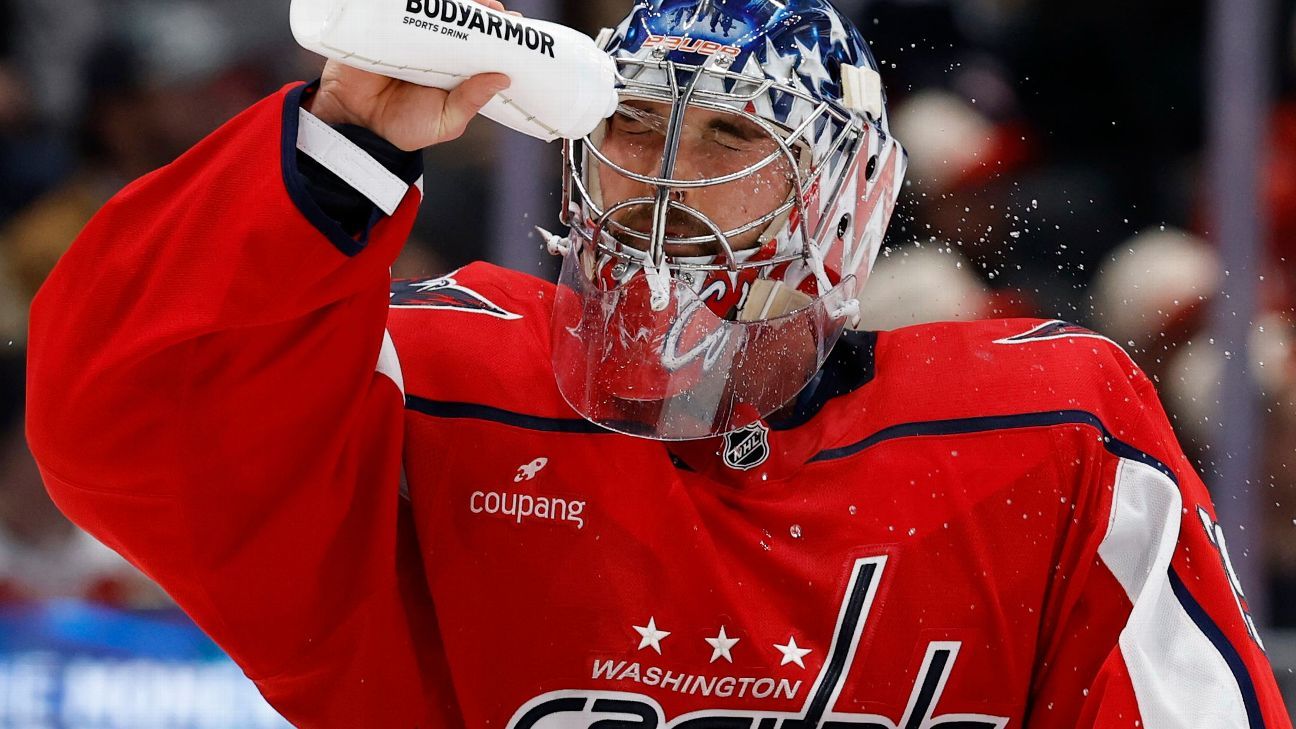

WASHINGTON — The Washington Capitals placed goaltender Charlie Lindgren and forward Ryan Leonard on injured reserve Sunday night before their game against the Columbus Blue Jackets.
Washington recalled forward Bogdan Trineyev and goaltender Clay Stevenson from Hershey of the American Hockey League.
Lindgren (upper body) was a late scratch Friday night before a 4-3 shootout loss at Anaheim. Leonard (upper body) didn’t return after his face was bloodied on an unpenalized first-period check from Jacob Trouba.
“He’s going to miss an extended period of time,” Capitals coach Spencer Carbery said about Leonard, the rookie who has seven goals and 11 assists after having two each Wednesday night in a 7-1 win at San Jose.
Lindgren is 5-3 with a 3.11 goals-against average in his 10th NHL season and fifth with Washington.
“We’ll see once he gets back on the ice,” Carbery said. “But [we] put him on the IR, so he’s going to miss, what is it, seven days at the bare minimum. And then we’ll see just how he progresses.”
-
Bradford Doolittle
ORLANDO, Fla. — Jeff Kent, who holds the record for home runs by a second baseman, was elected to the National Baseball Hall of Fame on Sunday.
Kent, 57, was named on 14 of 16 ballots by the contemporary baseball era committee, two more than he needed for induction.
Just as noteworthy as Kent’s selection were the names of those who didn’t garner enough support, which included all-time home run leader Barry Bonds, 354-game winner Roger Clemens, two MVPs from the 1980s, Don Mattingly and Dale Murphy, and Gary Sheffield, who slugged 509 career homers.
Bonds, Clemens, Sheffield and Dodgers great Fernando Valenzuela were named on fewer than five ballots. According to a new protocol introduced by the Hall of Fame that went into effect with this ballot, players drawing five or fewer votes won’t be eligible the next time their era is considered. They can be nominated again in a subsequent cycle, but if they fall short of five votes again, they will not be eligible for future consideration.
The candidacies of Bonds and Clemens have long been among the most hotly debated among Hall of Fame aficionados because of their association with PEDs. With Sunday’s results, they moved one step closer to what will ostensibly be permanent exclusion from the sport’s highest honor.
If Bonds, Clemens, Sheffield and Valenzuela are nominated when their era comes around in 2031 and fall short of five votes again, it will be their last shot at enshrinement under the current guidelines.
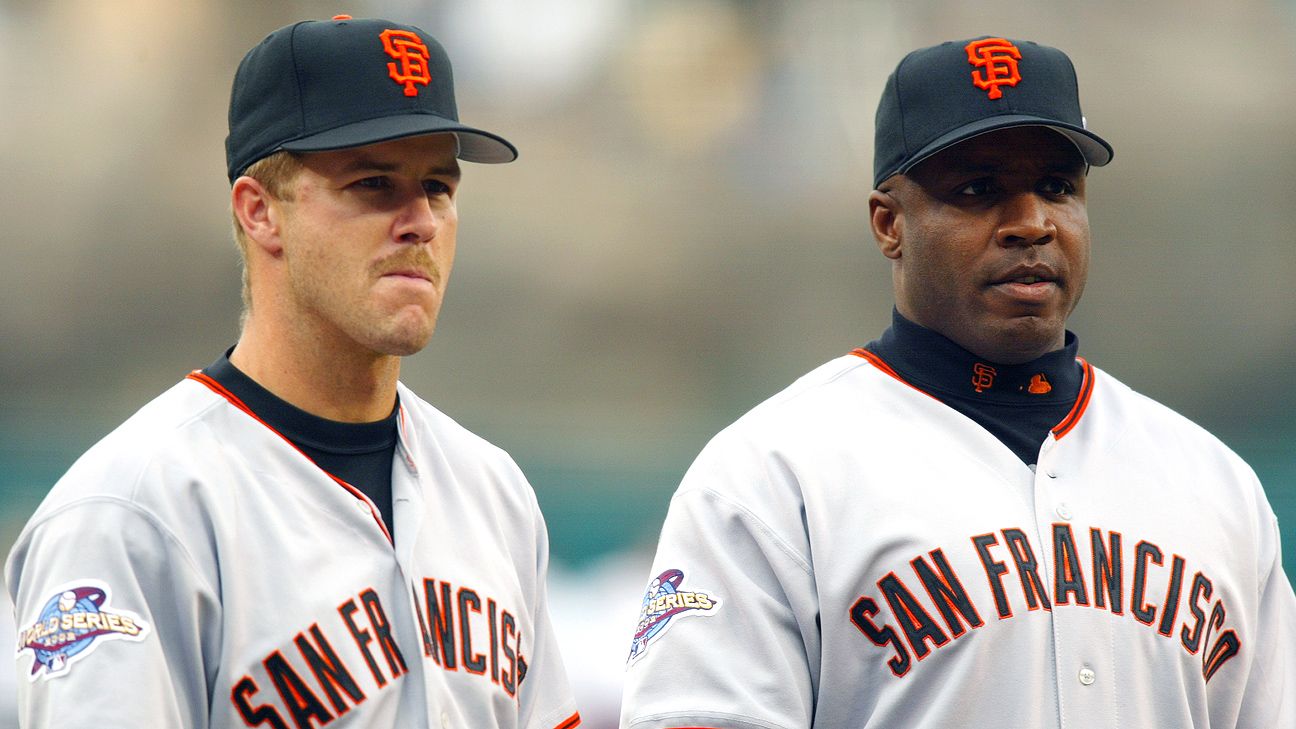
Kent, whose best seasons were with the San Francisco Giants as Bonds’ teammate, continued his longstanding neutral stance on Bonds’ candidacy, declining to offer an opinion on whether or not he believes Bonds should get in.
“Barry was a good teammate of mine,” Kent said. “He was a guy that I motivated and pushed. We knocked heads a little bit. He was a guy that motivated me at times, in frustration, in love, at times both.
“Barry was one of the best players I ever saw play the game, amazing. For me, I’ve always said that. I’ve always avoided the specific answer you’re looking for, because I don’t have one. I don’t. I’m not a voter.”
Kent played 17 seasons in the majors for six different franchises and grew emotional at times as he recollected the different stops in a now-Hall of Fame career that ended in 2008. He remained on the BBWAA ballot for all 10 years of his eligibility after retiring, but topped out at 46.5% in 2023, his last year.
“The time had gone by, and you just leave it alone, and I left it alone,” Kent said. “I loved the game, and everything I gave to the game I left there on the field. This moment today, over the last few days, I was absolutely unprepared. Emotionally unstable.”
A five-time All-Star, Kent was named NL MVP in 2000 as a member of the Giants, who he set a career high with a .334 average while posting 33 homers and 125 RBIs. Kent hit 377 career homers, 351 as a second baseman, a record for the position.
Kent is the 62nd player elected to the Hall who played for the Giants. He also played for Toronto, the New York Mets, Cleveland, Houston and the Dodgers. Now, he’ll play symbolically for baseball’s most exclusive team — those with plaques hanging in Cooperstown, New York.
“I have not walked through the halls of the Hall of Fame,” Kent said. “And that’s going to be overwhelming once I get in there.”
Carlos Delgado was named on nine ballots, the second-highest total among the eight under consideration. Mattingly and Murphy received six votes apiece. All three are eligible to be nominated again when the contemporary era is next considered in 2028.
Next up on the Hall calendar is voting by the BBWAA on this year’s primary Hall of Fame ballot. Those results will be announced on Jan. 20.
Anyone selected through that process will join Kent in being inducted on July 26, 2026, on the grounds of the Clark Sports Center in Cooperstown.
-
 Sports2 years ago
Story injured on diving stop, exits Red Sox game
-
 Sports3 years ago
‘Storybook stuff’: Inside the night Bryce Harper sent the Phillies to the World Series
-
 Sports2 years ago
Game 1 of WS least-watched in recorded history
-
 Sports3 years ago
Button battles heat exhaustion in NASCAR debut
-
 Sports3 years ago
MLB Rank 2023: Ranking baseball’s top 100 players
-
Sports4 years ago
Team Europe easily wins 4th straight Laver Cup
-
 Environment3 years ago
Japan and South Korea have a lot at stake in a free and open South China Sea
-
 Environment1 year ago
Here are the best electric bikes you can buy at every price level in October 2024