

‘I’ve never seen a D-line like this’: Texas Tech’s $7M offseason overhaul paying off


-
Max Olson
LUBBOCK, Texas — I have the deal of a lifetime for you. Give me a call, bro.
Minutes after David Bailey entered the transfer portal March 28, Texas Tech general manager James Blanchard sent him that text message. The pass rusher from Stanford didn’t respond. He wasn’t answering calls, either.
Blanchard reached out to Bailey’s agent, who informed him that the coveted transfer was leaning toward going to UCLA. But Blanchard wasn’t giving up that easily. That night, he tried appealing to Bailey with one more text.
David, give me 120 seconds to have a convo with you. If you’re not interested after that, I’ll leave you alone.
Bailey remembers he was hanging out at a friend’s house on a Friday night, back home after recently graduating from Stanford. He took the phone call out of curiosity. Bailey had been at the top of Blanchard’s list of edge rusher targets in December, and the GM was willing to pay whatever he wanted.
Texas Tech wasn’t just talking about going to $2 million. They were ultimately willing to make him the highest-paid defensive player in college football with a deal exceeding $3 million in compensation, sources familiar with the negotiation told ESPN. It’s possible no defender in college football has earned more in the NIL era.
“I took that call,” Bailey said, “and, yeah, everything changed for me.”
Within two days, Bailey was on Texas Tech’s campus for a visit. He still went on trips to Texas and UCLA, trying to gather as much information as he could ahead of a life-changing decision. But in the end, the Red Raiders made an offer he couldn’t refuse.
And just like that, Texas Tech has built what it believed to be the best defensive line in college football. Bailey and Romello Height (Georgia Tech) bringing nonstop pressure off the edge. Lee Hunter (UCF), Skyler Gill-Howard (Northern Illinois) and A.J. Holmes Jr. (Houston) wreaking havoc inside. Five hand-picked players out of the portal who could transform not just their front but their entire defense.
Blanchard knew it when he first spoke with Bailey. “I’m telling you this is going to be the outcome,” he remembers saying. Bailey asked what made him so certain.
“The Big 12 isn’t equipped to deal with this,” Blanchard said.
The Red Raiders invested more than $7 million to secure these newcomers along the defensive line. They’ve been worth every penny for a program chasing its first Big 12 title and now ranks No. 8 in the College Football Playoff rankings ahead of Saturday’s game with unbeaten BYU (12 p.m. ET, ABC).
Bailey is the national sack leader with 11.5 and well on his way to becoming a first-round pick. He and Height, whom Texas Tech coach Joey McGuire lovingly refers to both as “Velociraptors,” are two of the most destructive pass rushers in the sport. Hunter, their star defensive tackle, is enjoying a career-best year. The Red Raiders have generated an FBS-high 175 pressures through nine games and needed just seven games to surpass their 2024 season sack total.
Now, BYU and “College GameDay” come to town in the Red Raiders’ most anticipated and consequential home game since they stunned Texas in 2008. Texas Tech assembled the most talented defensive line this program has seen — and spent all those millions — for moments like these.
“Ever since we walked in the building, I told Lee, ‘Man, this team is going to be special. We’re going to go a long way. This team is going to go far,'” Height said. “Lee was like, ‘We’re going to see.’ But now we all see.”
ROMELLO HEIGHT DOESN’T hesitate to explain why he picked Texas Tech last December.
“I’m not shy to tell you about this NIL,” he said. “It’s all over the internet now.”
Height said he made $250,000 last year at Georgia Tech. His agent was seeking a raise to $500,000 ahead of Height’s senior season, a number he felt was fair market value, but was rebuffed. The 6-foot-3, 240-pound outside linebacker had a good year for the Yellow Jackets after transferring from USC, totalling a team-high 29 pressures off the edge, but finished with only 2.5 sacks. Height insists he wasn’t looking to leave.
“They were like, ‘Nah, we overpaid him already,'” Height said. “So, my agent was like, ‘All right, we’re going to go get overpaid somewhere else.'”
Height was a big priority for Blanchard. He had watched tape of 50 other defensive ends and outside linebackers, and felt strongly that Height had all the traits he was looking for as the top pass rusher available in the December portal period. Blanchard wasn’t concerned about the lack of sack production. The way he sees it, sacks are 1% of the equation, and Height does the other 99% of his job at a high level, consistently forcing QBs to move off their spot.
“People were trying to say it was other guys, but Romello was the best one,” Blanchard said. “Y’all don’t know what y’all are looking at.”
His value in Texas Tech’s estimation: $1.5 million.
“Super jaw-dropping,” Height said.
The Red Raiders made the decision even easier for Height when they signed Hunter. The two were close friends from playing together at Auburn in 2021 and eager to reunite.
Hunter, the massive 6-foot-4, 330-pound defensive tackle from UCF whom teammates nicknamed “The Fridge,” entered the portal after coach Guz Malzahn left to become the OC at Florida State. Hunter had a lot of loyalty to Malzahn, who had recruited him since he was a high school freshman, and felt ready for a fresh start.
He lined up visits to Texas Tech followed by Texas, but committed during his trip to Lubbock. While he felt at home on the visit, he credits his mother for encouraging his decision. He said she has always been good at reading people and their “energy and vibe,” and she was totally won over by the warmth and authenticity of McGuire.
“When your mama keeps telling you something, you got to go with it, you know?” Hunter said. “Probably one of the best decisions I ever made in my life.”
The next morning, Hunter and Blanchard were at breakfast, and Texas kept calling.
“He said, ‘Don’t worry, Blanch, I gave my word, we good,'” Blanchard said.
Hunter flew to DFW International Airport on his way home to Mobile, Alabama. He said Longhorn coaches were waiting for him at the airport, in a last-ditch effort to get him on a flight to Austin.
“Me and my mom didn’t have much time to talk because we had like 10 minutes to get to the next gate,” Hunter said. “We kept walking. I got on a plane and went to Alabama and came back a Red Raider.”
Texas Tech paired him with two more key defensive tackles in Gill-Howard from Northern Illinois and Holmes from Houston. Many coaches were hesitant to pursue Gill-Howard based on his size (he was listed at 6-foot-1 and 285 pounds), lack of starting experience and concerns he might not perform at the Power 4 level.
Blanchard had stumbled upon him during the scouting process and trusted what he saw on tape, a disruptive player on a top-25 defense who played well against Notre Dame. He felt comfortable taking a chance on Holmes, a 16-game starter who had just played for new Red Raiders defensive coordinator Shiel Wood at Houston. Wood believed he hadn’t come close to reaching his ceiling.
All four of those moves might’ve been more than enough for Texas Tech as it aspired to build the top portal recruiting class in college football. But then, in the middle of spring practice, Bailey hit the portal after Stanford fired coach Troy Taylor.
It wasn’t hard for Blanchard to sell him to Wood. The defensive coordinator said Bailey was a “two-clipper.”
“You watch two clips and say, ‘Yeah, I like him. Absolutely,'” Wood said with a laugh. “I was like, ‘If there’s a possibility of getting this guy to come here and y’all think you can make that happen, please do so. We’ll find a spot for him to play.'”
Height was a big fan of that idea, too. McGuire needed a little more convincing.
“We’re halfway through the spring, and Romello is just unblockable,” McGuire said. “I go, ‘You’re telling me he’s better than him?'”
As they watched Bailey’s Stanford film together, McGuire knew he was a “no-brainer” evaluation just like Height and Hunter. But did Tech really need him? Blanchard kept talking him up and explaining how they could get Bailey enrolled immediately for spring practice. Then, Blanchard brought up the defending Super Bowl champs.
“What would the Eagles do? They’d take another defensive lineman.”
Bailey arrived in Lubbock in time to go through the Red Raiders’ final spring practices. As he watched Height, Hunter and Gill-Howard compete in one-on-ones, Bailey was blown away.
“I’ve never seen a D-line like this,” he said. “I’ve seen some high-caliber skill players. But a D-line like this? This is different.”
BAILEY CAME TO Texas Tech to finally win some football games.
He hasn’t seen anything close to this, enduring three consecutive 3-9 seasons at Stanford. He was underutilized last year, playing 20 to 30 snaps a game and special teams for much of the season. What he sought most in the portal — more than the money — was a team that would play as much as possible.
“I’m playing free and I’m playing fast,” he said, “because I know I got guys around me.”
Jacob Rodriguez, Texas Tech’s All-America senior linebacker, keeps coming back to the word “unreal” as he attempts to describe what the Red Raiders have put together on defense.
“I’ve never played football like this,” Rodriguez said. “It’s all 11 people on the field flying around and doing their job and executing at a high level. It makes football so simple and so easy. I’ve never had this much fun playing football ever.”
It wasn’t fun for Texas Tech’s offense in practices this offseason.
Offensive coordinator Mack Leftwich said there were a few days when his unit couldn’t get a first down. After Texas Tech’s second spring scrimmage, he overheard tackle Howard Sampson lamenting to Blanchard, “Man, I don’t know, we’re going to suck on offense.” McGuire reminded a frustrated Clay McGuire, Tech’s offensive line coach, that it wasn’t a fair fight for the No. 2 offensive line in practice because Texas Tech’s No. 2 defensive line was made up of last year’s starters.
“Mello and David were running so fast around the edge, beating the tackle so bad, that they were running into each other before they hit the quarterback,” Texas Tech quarterback Behren Morton said.
“I’m telling him to slow down, bro!” Height said with a laugh. “It takes me three seconds. It takes him 1½ seconds.”
Any concerns about how these highly paid free agents might be welcomed by this new team were squashed from the start. Morton said the newcomers didn’t act like mercenaries “just trying to get money.” They fit right in far better than most would expect in the increasingly transactional portal era.
“They’ve connected so well with this team that it really does feel like Lee Hunter and Romello Height have been here their entire career,” McGuire said. “I hope they feel that way, that they feel at home.”
McGuire and Blanchard did their homework on these transfers, calling their former coaches to find out everything they needed to know. The process of identifying the right players for Texas Tech went far beyond the tape and included input from a sports analytics firm — as well as from the folks cutting the checks.
Blanchard kept billionaire boosters Cody Campbell and John Sellers involved in the portal process from start to finish, getting together for countless meetings and videoconference sessions where they’d watch film and discuss targets and what it would cost to go get them. Campbell would even queue up film on his tablet to break down at home.
“That was a lot of fun, to be honest with you,” Campbell said.
Campbell, Texas Tech’s board chairman, was a starting offensive lineman for the Red Raiders during his playing days and tends to keep his eyes affixed on the line of scrimmage during games. As exciting as it was to piece together a highly touted portal class, Campbell’s objective from the start was winning in the trenches.
Once Bailey was on board, Campbell was confident they’d assembled the best defensive line in Texas Tech history. That’s what he’s seeing every Saturday.
“They didn’t miss on anybody,” Campbell said. “It helps a lot with keeping donors happy whenever they see that return on investment.”
Blanchard has a theory about guys such as Bailey and Hunter and why they’ve proven to be ideal fits, something he picked up as a scout with the Carolina Panthers in 2020: He likes the best players on losing teams.
All they’ve ever done during their careers is go above and beyond to help make up for the talent around them. They’re used to having to strain, sacrifice and do more for their team to be competitive.
“Let’s put them in an environment where now they’ve got dudes around them,” Blanchard said, “and let’s see what happens.”
As the Red Raiders made their way through the tunnel into Jones AT&T Stadium to a sold-out crowd for a Saturday night kickoff against Kansas earlier this season, Hunter ran beside Height and let out a roar.
“I looked up,” Hunter remembers, “and I said, ‘This is what the f— we signed up for!'”
IT’S A RACE to the quarterback every time Texas Tech’s defensive line gets an opportunity to rush the passer.
“Nobody’s looking at each other,” Height said. “We’re looking at the ball. It’s time to go get it. It’s money time.”
Against Kansas State on Saturday, Bailey burst past the Wildcats’ right tackle on a third down and crashed into quarterback Avery Johnson within 2.2 seconds. In the fourth quarter, Height hunted him down from behind for a sack and forced fumble that Tech linebacker John Curry scooped up for a score.
After a long afternoon of hard hits, scrambles and incompletions in a 43-20 defeat, Johnson was asked if Texas Tech’s D-line was as good as advertised.
“Uh, yeah, I would say so,” Johnson said. “That’s probably the best defense I’ve faced in my three years in college.”
Texas Tech has built a top-five scoring defense thanks to an overwhelming amount of pressure up front.
The Red Raiders have generated 175 pass rush pressures this season, according to ESPN Research, despite blitzing only 20% of the time. Bailey (46) and Height (37) rank first and third, respectively, in edge pressures this season, and Holmes ranks fourth in defensive tackle pressures (18) since stepping in for Gill-Howard, who’s sidelined after undergoing surgery for an ankle injury last month. Together, they’ve already broken Texas Tech’s single-game record with nine sacks against Kansas.
“It’s a tremendous advantage when you can get pressure with four, and that’s what we’re able to do,” Wood said. “We’re able to affect the quarterback with rushing four guys on first, second and third down. It changes the complexion of the game when you can do that.”
From Day 1, though, Wood preached to his players that they had to earn the right to rush the passer. If they wanted to be a championship defense, he said, they had to stop the run. The Red Raiders have the No. 1 run defense in the country, holding six of nine opponents under 100 rushing yards, and have an FBS-high 16 forced fumbles.
But ask anyone in the program why they’re elite against the run and they point to Hunter. He’s doing the dirty work, taking on two or three linemen and creating clear gaps and easy plays for Rodriguez and the linebackers.
“I know I’m going to get two,” Hunter said. “If two people are on me, my linebackers can eat. My brothers can eat. As long as everybody around me is eating and we’re winning, I’m happy.”
Another critical byproduct of the dominance up front: Texas Tech has the most improved pass defense in the country, allowing 111 fewer passing yards per game than a year ago. Tie it all together, like Wood has with sharp in-game adjustments and a variety of creative alignments, and you get a defense that makes game-changing plays and has helped create 88 points off turnovers.
“It’s not easy to get something built and up and running at a high level in Year 1,” Wood said, “We’re sitting here because of the great effort that our players have put in.”
Blanchard knew if he got the right players up front, Tech could overwhelm its conference foes. Over the past decade, the Big 12 has produced two offensive linemen selected in the first round of the NFL draft. Both came from Oklahoma, now in the SEC. The first big test came in the Big 12 opener at Utah, against two potential first-round tackles in Spencer Fano and Caleb Lomu and an offensive line that Utah’s Kyle Whittingham called the best he has ever coached.
“That week, everybody was hyping us up, saying, ‘Y’all are going to kill them,'” Height said. “I didn’t hear David say a word about killing them that whole week. I dang sure didn’t say a word about killing them. We have a humble mindset going into every game, knowing we just got to do our job.”
The results? Texas Tech’s defense got 19 pressures and forced six three-and-outs and four turnovers in a 34-10 rout.
“I never would’ve believed it if you would’ve said we would lose the line of scrimmage,” Whittingham said afterward. “Never would’ve believed that in a million years. But we did.”
Bailey is performing like a first-rounder and is the No. 12 pick in Jordan Reid’s latest 2026 mock draft. Hunter is Mel Kiper’s third-ranked defensive tackle prospect, and Height is his No. 5 outside linebacker. All three have significantly boosted their draft status at Texas Tech. And that proof of concept is making it even easier for Blanchard to assemble next year’s defensive line.
Texas Tech has landed commitments from LaDamion Guyton, ESPN’s No. 1 outside linebacker in the 2026 class, and top-ranked 2027 defensive tackle Jalen Brewster. And through his daily conversations with agents, Blanchard already knows which potential transfers he wants for 2026.
“We say it all the time now,” McGuire said. “I was literally just saying to him, ‘Blanch, just go get the D-linemen and O-linemen.'”
Texas Tech’s defense used to be a punchline in the Big 12, the second worst among all Power 5 programs in scoring defense over the past decade. Not anymore. The Red Raiders will keep spending and keep bringing blue-chip big men to Lubbock. That’s what it takes to contend with the best and do what has never been done in program history.
“We told Joey to spend what it takes,” Campbell said. “We were willing to do it to be in this position we’re in now.
“We got our money’s worth.”

-
Dan Wetzel
The purpose of the College Football Playoff selection committee is to sort through the unsortable — deciding between two teams of similar accomplishment.
This sport is a spectacular mess, of course, famously and belovedly so. The FBS level has 136 teams playing 12 regular-season games competing for one championship. The schedules are disparate, even within the current oversize “conferences.”
No one would design such a thing. Big schools. Small schools. State schools. Religious institutions. Even three military academies. From L.A. (Los Angeles) to L.A. (Lower Alabama). It’s glorious.
If a proper computer formula exists to figure out who should or shouldn’t be in a playoff, none has earned the trust of the sport. College football, after all, ain’t much for college.
So, it has a selection committee — 13 people who make the final, difficult, no-truly-correct-answer call. Their thanks comes from a barrage of hate courtesy of whomever they didn’t choose.
That there is controversy, hard feelings and anger doesn’t mean the system isn’t working.
It’s a sign that it is.
A sport that used to leave unbeaten teams out of the title game is now arguing about 10-2 and 9-3 clubs. A postseason that was once a collection of mostly meaningless exhibition bowl games designed as tourism campaigns is now anchored by a 12-team, 11-game free-for-all.
At least half a dozen teams must believe they can actually win the national title. Maybe more. Four playoff games will be staged on campuses, not at antiseptic NFL stadiums. The title will be settled on the field. This is the good stuff.
It’s why everyone needs to exhale for a moment.
Don’t let the pursuit of (unachievable) perfection get in the way of progress. This is always going to be an imperfect operation.
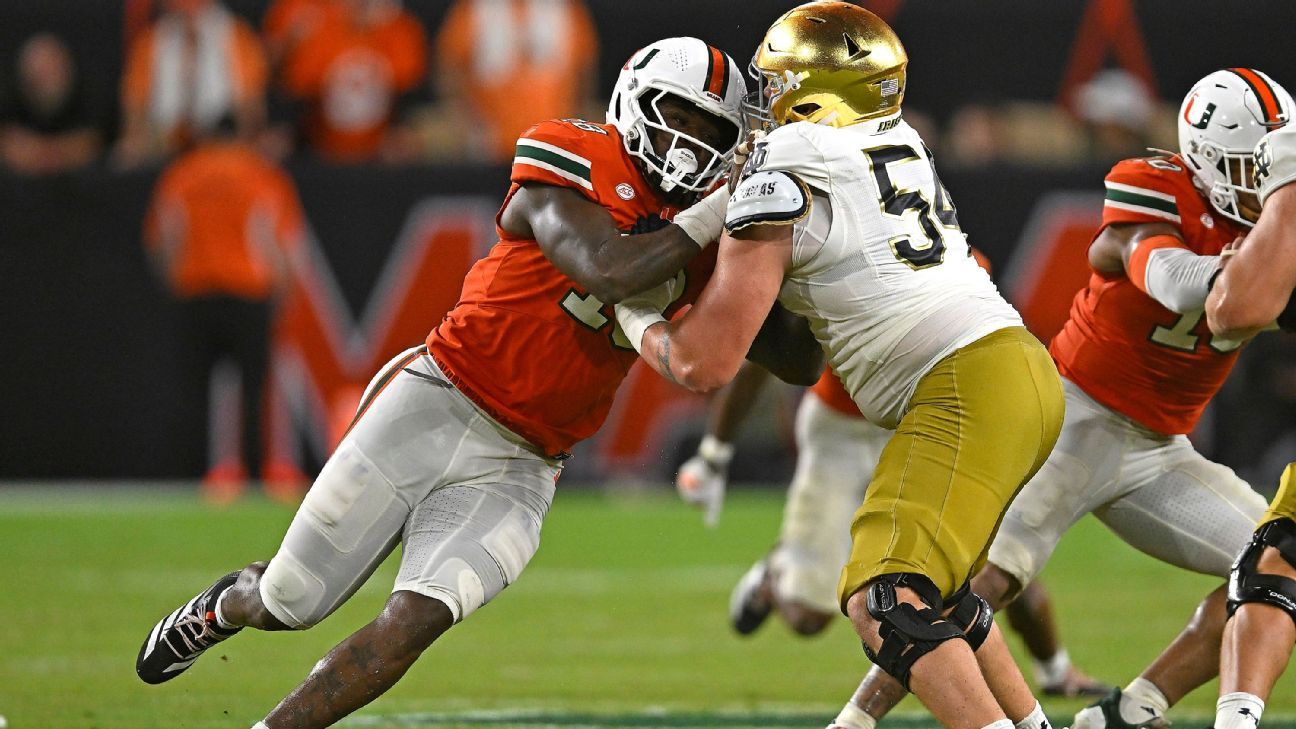
Would it be better if the ACC’s tiebreaker system didn’t malfunction and both Miami (as ACC champ) and Notre Dame (as an at-large selection) were in the field? Of course. But the presence of James Madison and some Fighting Irish disappointment shouldn’t cause anyone to take a wrecking ball to this entire enterprise.
College athletics is famous for knee-jerk decisions that it comes to regret. It too often makes policy via emotional swings and selfish reasoning without vision for the future.
Leagues get blown up (or expanded) for basic cable subscriptions (which are already dwindling). Legal cases are waged on the idea NIL will decrease competitive balance (Indiana is currently ranked No. 1). Congress is lobbied with hysterics that the sport needs “saving” (all while interest, revenue and television ratings rise).
The latest overreaction is to kill off this 2-year-old playoff for a bigger model that will supposedly be controversy-free (impossible) — one with 24 teams, at least, or with four automatic bids to certain conferences or who knows what else.
The committee is the punching bag. Subjectivity is the wedge issue. Conspiracies are everywhere. Emotions are running hot.
Look, there is one sure way for major programs to get into this thing: win your conference. If not, then you get into the knife fight that is the at-large selection process. Anything can happen. Criteria can shift. Decisions can seem unfair or arbitrary.
If, like Notre Dame, you find more overall value in independence, then this is your trade-off. It isn’t going to work as you wish every time.
Are there improvements and tweaks that can be made? Of course.
The committee should no longer release weekly rankings during the back half of the season. A single verdict should come out at the end. The current setup is good for content (including here at ESPN, which broadcasts the weekly rankings), but it undermines the credibility of the process. The week-to-week contradictions are maddening and, even worse, can box in the committee’s final decision.
Bloated leagues could return to divisions in an effort to create scheduling structure or find other ways to fix tiebreakers (ahem, ACC).
Two rounds of home games would increase the importance of seeding and bring more campuses and local communities into the fold. That would serve fans and families rather than bowl directors.
Conference championship weekend could even be eliminated altogether; if Alabama can get beaten soundly and not drop, then was it even a real game? (And yes, BYU, we see you.) That would move the playoff up a week and allow for the semifinals on New Year’s Day and a title game in early January rather than during the heart of the NFL postseason.
Of course, ending conference title games would require leaving money on the table, not to mention unwinding complicated media and hosting contracts, so it’s a heavy lift.
The minor tweaks are fine, though, as long as the regular season continues to matter. That has to be the North Star. This committee maintained that by valuing Miami’s Week 1 victory over Notre Dame. Yes, it should have made that determination weeks earlier, but it’s never too late to do the right thing.
A playoff that gets so big where results don’t matter very much or, as the Big Ten proposal would have, where Michigan and Iowa are still alive via play-in rounds forever alters how the sport is played.
Better to have one or two bitter 10-2 teams out there at the end.
Better to have cries and screams and a little bit of infuriation.
Better to have those 13 people in a meeting room making a decision.
Because in this wonderfully chaotic and disorganized sport, the selection committee, to channel some Winston Churchill, might indeed be the worst system ever, except for all the others.
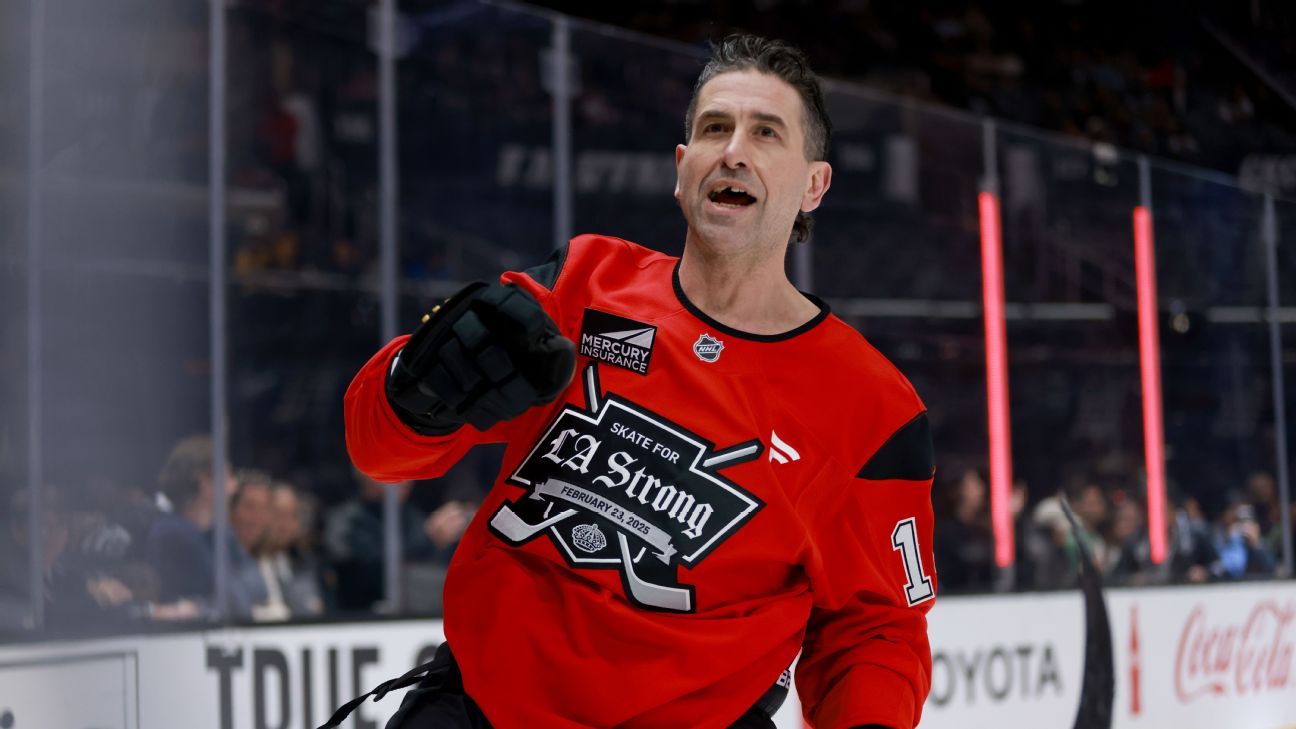

Terry Ryan is living out a hockey player’s dream. It’s just not the exact one he grew up dreaming.
One of the stars of the hit show “Shoresy,” the hockey-centered comedy that has acted as equal parts love letter to the sport and cultural tastemaker, Ryan will join his castmates (all of whom are also hockey players achieving various levels of success) on Dec. 10 at UBS Arena on Long Island as part of the Shoresy Fall Classic, a multistop tour across Canada and the United States where the cast plays games typically against the alumni of that NHL team.
“Aaron Asham is one of my best friends in the world. I played junior and pro with him,” Ryan said of the retired 15-year NHL veteran who played four seasons with the New York Islanders. “So I’m looking forward to that.”
The pace of play is higher than most people think heading in, the 48-year-old noted, adding “we’re not out there trying to hurt each other or anything, but it’s a step up from a regular shinny game.”
“It’s a very unique experience. I don’t know if I’ve ever come across anything like it whereby the fans are cheering for both teams,” he said. “Even though we lose — we’ve been losing most of the games — we’re not getting blown out, and I think people walk away with an appreciation that, you know, we’re all actors in the show, but we’re all hockey players. We’re a pretty good team. We hang in there.”
The event, which also includes a Q&A with the cast, was sparked by the massive popularity of the show, which will release its fifth season in Canada on Christmas Day and on Hulu in early 2026 (its parent show, “Letterkenny,” wrapped up with 12 seasons and 81 episodes).
As for Ryan, he was the No. 8 pick in the 1995 draft of the Montreal Canadiens, and achieved his dream of playing in the NHL — but played only eight games with the Habs. He then spent six seasons with different AHL teams after an ankle injury brought his NHL dreams to a halt.
The Newfoundland native continued to play in various leagues while pursuing another career — film and television. But not as an actor.
“I got an arts degree in folklore and English, and within that there’s a film studies certificate. I worked on a crew, I mean like location [scouting], production assistant, AD. I was like ‘jump how high’ for six years,” he said. “Then I spilled over, I did some stunts, and then because I have no tooth, I got to play some parts like, you know, British soldiers, crackheads, pimps, drug dealers, stuff like that. … My entrance into this world was a lot different than the other guys [on the Shoresy cast].”
Eventually, Ryan did cross paths with one Hollywood star, who took him under his wing.
“There’s a show on Netflix called ‘Frontier.’ I was on crew, I was waiting to get in the union. I met Jason Momoa. He came along with [producers] and gave me a chance,” Ryan said. “I had no tooth, Momoa said, ‘Keep the tooth out. I can get you some stunt gigs.’
“Five seconds into the show, I’m the very first face you see. It’s a British soldier begging for his life, and I’ve got no tooth obviously … they got me that role. That’s how I got in.”
Ryan and Momoa also shared a love for hockey. Ryan taught Momoa and members of the crew how to skate (in Momoa’s case, the finer points).
“I don’t know how many times we went out on the ice, maybe 100 times,” Ryan recalled.
Ryan also taught Momoa the intricacies of a hockey fight.
“When we first [fought], I just shook him and beat him in a fight,” Ryan said. “I said, ‘It’s all about balance, man. You can be as big as you want.’
“Anyway, he laughed … trust me, if he hit me with one, it wouldn’t matter. [Momoa] wanted to get in a hockey fight [in the second season of ‘Frontier’], so, like, I’m [wearing] the British red coat, and he pulls the thing over, and he simulates a hockey fight.”
Momoa helped Ryan get several stunt gigs and even hired Ryan as his assistant for a period of time. Eventually, “Letterkenny” called with the role of Ted Hitchcock, a lovable hockey player from Newfoundland with a penchant for “martoonies,” which led to “Shoresy.”
And now, the show and cast enjoy a level of success that allows them to play in hockey games against NHL players across North America, with thousands of people cheering them from the stands. In a very circuitous way, a version of Ryan’s hockey dreams did come true.
Jump ahead:
Games of the week
What I loved this weekend
Hart Trophy candidates
Social post of the week
Stick taps

Biggest games of the week

I’m getting into “watch every Colorado Avalanche game” territory. I saw them live for the first time this season at Madison Square Garden on Saturday, and it was incredibly fun. Nathan MacKinnon had a pair of goals, including a nasty backhand overtime winner under the crossbar that he made look absolutely effortless.
1:08
Nathan MacKinnon skates through Rangers defense to score dazzling OT winner
Nathan MacKinnon makes a sweet move and scores on the backhand to give the Avalanche an overtime win.
We’ve been focusing a lot on the lack of regulation losses for Denver’s team — only two so far this season. But we can now start keeping an eye on points in general, because the Avs are are currently on pace for 58 wins and 134 points this season.
That would be second-most points by any team in a season in NHL history, behind the 2022-23 Bruins (135).
If things keep rolling, the Avalanche have a chance to make history. They have build a solid foundation for it. They have the players. Could they do it?
Weeks in mid-December can sort of fly under the radar in the course of the regular season, but these are the ones where teams chasing history work in the shadows and build. The Avs visit the Nashville Predators on Tuesday, host the Florida Panthers on Thursday and then have the Preds at home Saturday. It could be a three-win week for the NHL’s premier team.
Other key games this week


Monday, 9 p.m. | ESPN+


Tuesday, 7 p.m. | ESPN+


Tuesday, 7 p.m. | ESPN+

Thursday, 7 p.m. | ESPN+


Thursday, 7 p.m. | ESPN


Thursday, 7 p.m. | ESPN+


Thursday, 8 p.m. | ESPN+


Saturday, 7 p.m. | ESPN+

Saturday, 8 p.m. | ESPN+

Sunday, 6 p.m. | ESPN+
What I loved this weekend
The Athletic’s Murat Ates wrote a story about the mental health journey of Winnipeg Jets forward Gabriel Vilardi. The story, which includes raw and honest reflection from Vilardi, is equal parts fascinating and emotional. This quote from Vilardi was particularly humbling and something that certainly many athletes probably go through during a game:
“For me, negative self-talk is not just panic attacks; it’s something that I deal with a lot. And it drags on. It starts with one play. Then it’s like, ‘Oh s—, I’ve got to make up for that play.’ Then it drags on to three shifts because you’re still thinking in your head that you’ve got to make up for it. Next thing you know, it’s a period and it’s like, ‘F—, I’ve only got two periods left.’ I was in my head the whole first period.”
Sports psychologist Dr. Alicia Naser — who works with NHL players such as Seattle Kraken forward Shane Wright and Calgary Flames center John Beecher along with other professional athletes — has helped to normalize the discussions, particular through her social media content, which includes bite-sized wisdom and actionable items related to mental health and performance that can benefit anyone watching or reading.
Hart Trophy contenders if the season ended today
Nathan MacKinnon times three. That’s it.
But really, MacKinnon obviously remains on the list. He’s currently on pace for 70 goals and 140 points this season; if he reaches those totals, he’d be the fifth player in NHL history to do it, joining Wayne Gretzky (who did it four times), Mario Lemieux (twice), Bernie Nicholls (1988-89) and Phil Esposito (1970-71). MacKinnon would also have the first 70-goal season since Teemu Selanne and Alexander Mogilny did it in 1992-93 (both with 76 goals).
As for the second contender, that goes to Connor McDavid. He pulled into second place in the points race, now six back of MacKinnon with 42; he also leads the league in assists (28).
Indeed, this might be the week it becomes a two-player race. For that reason, I’m giving one more nod in this section to both Connor Bedard and Macklin Celebrini, because one (or both) might be unseated as early as next week. I kind of hope I’m wrong though.
Social media post of the week
It definitely isn’t the 6-7 cam at MSG, or Sam Bennett taking part in the trend.
My choice this week is new hockey fan Big Z on TikTok. It feels as if every few years someone goes viral (at least in the hockey bubble) for finding out how exciting hockey is. It’s fun to live vicariously through someone who is experiencing the same joy we all once did as hockey fans.
Big Z’s joy over seeing Alex Ovechkin and Dustin Byfuglien deliver checks, or lamenting a Red Wings shootout loss (but still saying that he needs to buy a jersey), is fantastic.
Stick taps
The Washington Capitals have partnered with WWE to release a limited edition collab for John Cena’s final WWE match before he retires, taking place Saturday. The shirt features Cena wearing a Caps hat holding a towel in his iconic pose that reads “Let’s Go Caps.”
The time is now for an #ALLCAPS x @JohnCena collaboration in celebration of his final match!
Fans who purchase through the special link will receive the exclusive t-shirt and tickets to #CapsCanes this Thursday, Dec. 11.
🎟️ https://t.co/IzoZjSdSrq pic.twitter.com/iAkVHjBx12
— Washington Capitals (@Capitals) December 5, 2025
I’m all for more partnerships like this. City-specific merchandise is on the rise and often becomes a collector’s item. WWE also has championship belts specific to teams across multiple sports, including the NHL.
The MLB winter meetings are underway in Orlando, Florida, with the baseball industry gathering for an action-packed week of rumors, signings and trades.
We’ve got it all covered for you, from our predictions going into the meetings to the latest updates and analysis as the moves go down.
Which big free agents will pick a team? Who will be mentioned in blockbuster trade discussion? And what rumors will rule the week? Check out our predictions and refresh often for the latest intel and reaction as the week unfolds.
Key links: Olney, Passan: Latest intel | Every team’s plan | FA tracker | Grades
Winter meetings predictions
Who will be the biggest name to sign (or get traded) in Orlando?
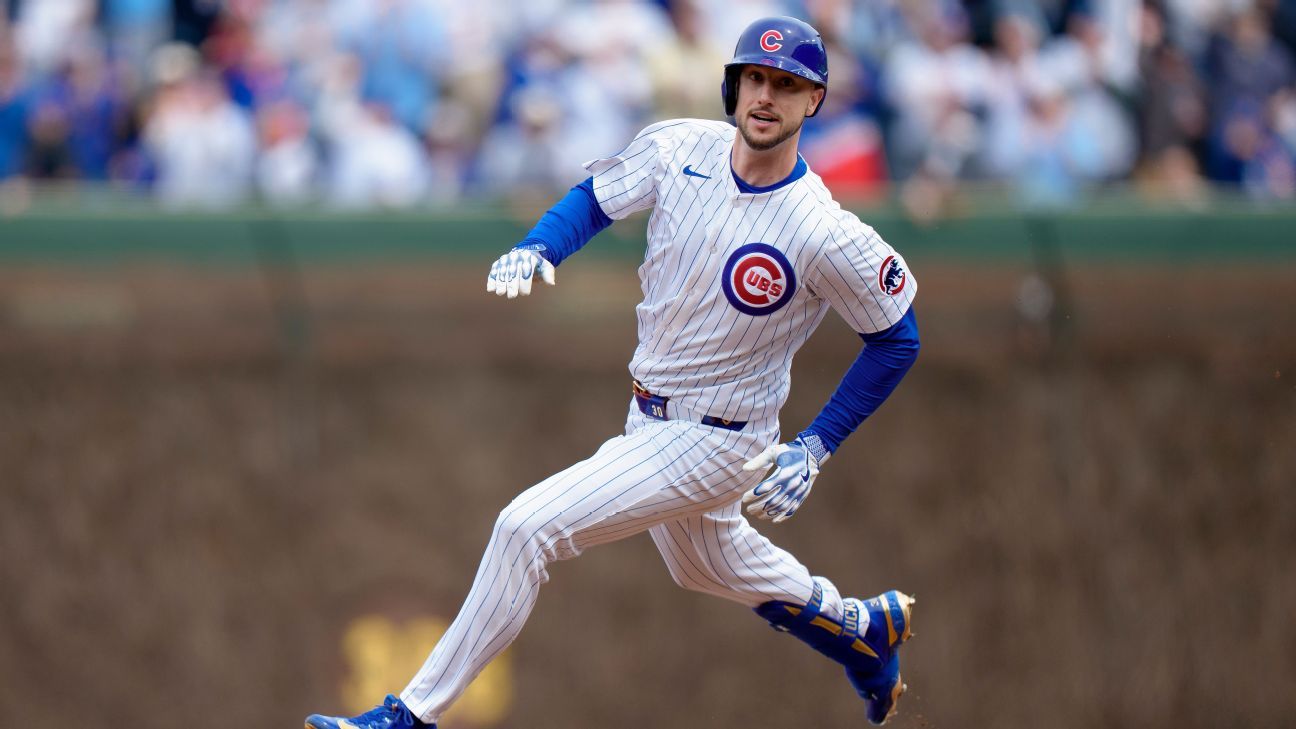
Jorge Castillo: I root for action at the winter meetings, so let’s pick the biggest name on the free agent market: Kyle Tucker. There aren’t many suitors that, whether it’s for fit or financial reasons, are in the mix, but there’s still interest for an ultra-talented player who can alter the championship landscape. And it starts with Toronto.
The Blue Jays whiffed on the brightest stars of the past two free agent classes — Shohei Ohtani and Juan Soto — and Rogers Communications still has money to spend after investing $500 million in Vladimir Guerrero Jr. in April and another $210 million recently in free agent starter Dylan Cease. Tucker visited the Blue Jays’ facility in Florida last week. Pairing the left-handed-hitting outfielder with the right-handed-hitting Guerrero would give Toronto a scary tandem for years.
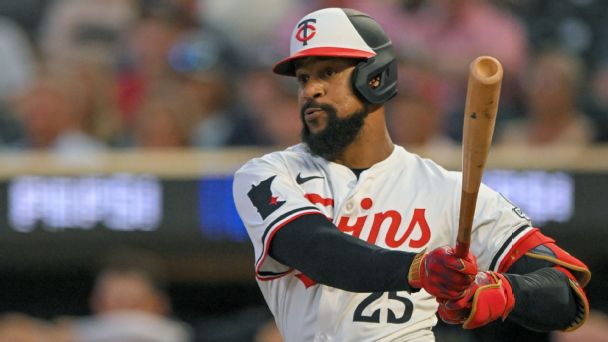
Bradford Doolittle: The inclusion of Byron Buxton on our trade candidates ranking took me aback, mostly because Buxton has been insistent that he will remain a Twin. It’s surprising that he’s willing to waive his no-trade clause, but Buxton is 31, and the Twins don’t seem all-in on winning. Several leading contenders could use a bump in center field — the Houston Astros and New York Mets jump out as clear fits — and if the Twins are heading down this road, dealing Buxton soon would start those dominoes to fall.
Alden Gonzalez: A game of chicken might be brewing at the moment. On one side it’s Cody Bellinger, represented by the Boras Corporation. On the other it’s Tucker, whose free agency is overseen by Excel Sports Management. They’re arguably the two biggest names available, both of them versatile, multi-dimensional, dynamic outfielders, their markets naturally intertwined. And I think Bellinger goes first.
His price point — ESPN’s Kiley McDaniel predicts a six-year, $165 million contract — is more reasonable, and his list of suitors is seemingly more robust because of it. The New York Yankees want him back. The Los Angeles Dodgers, Toronto Blue Jays and New York Mets are all a fit, to varying degrees. Given Bellinger’s ability to also play first base, other teams will undoubtedly emerge. Jumping on Bellinger before Tucker comes off the board and further inflates his market would be smart. And one team will do so this week.
Jesse Rogers: Ranger Suarez. Scott Boras clients usually take longer to come off the board, but not all of them can wait until the new year. Suarez isn’t staring at a megadeal, so checking him off the free agent list by late next week seems more than plausible.
The chatter surrounding the left-hander’s free agency from potential suitors such as the Astros, Mets, Orioles and others is picking up. He’s in line for at least a solid four-year deal — and if a team offers five or even six, it’ll likely land him.
What is one move fans might not expect you to predict will go down this week?
Castillo: Pete Alonso will probably wait until Kyle Schwarber decides on his destination, but I predict Alonso will sign with the Red Sox. Craig Breslow, Boston’s chief baseball officer, has been clear about his desire to acquire a right-handed slugger for the middle of the order. Not many players are better qualified for that role than the right-handed-hitting Alonso, whose 264 home runs since his debut in 2019 are the third most in baseball behind Aaron Judge and Schwarber.
Alonso is coming off a rebound All-Star season in which he clubbed 38 home runs with 126 RBIs, an NL-leading 41 doubles and an .871 OPS for the Mets. Defensively, Alonso is below average, but he could split time with Triston Casas at first base and designated hitter.
The Mets, on the other hand, are determined to improve their defense and would seemingly be in play for Alonso only if his market collapses for the second straight offseason.
Doolittle: Maybe it’s because I am overly susceptible to rumors that tickle my penchant for anti-Wolfean narratives, but I’ll say Schwarber will sign with his hometown Cincinnati Reds. It’s such a perfect fit, and not just because of Schwarber’s ties to Cincinnati. The Reds have a real chance to contend in the NL Central with the right upgrade on offense. And what an upgrade — Schwarber’s swing is perfect for Great American Ballpark, which has featured more homers from visiting lefty hitters over the past five years than any other venue (including 96 more than Citizens Bank Park). Even at 32, give Schwarber five healthy seasons at that park and he’ll reach 500 career bombs.
Gonzalez: This year’s market seems especially ripe for trades, and I think we’re going to see some big-name starting pitchers dealt during the winter meetings. Who, exactly, is anybody’s guess at this point, but there are a bevy of names to choose from, whether it’s two of the Miami Marlins‘ frontline guys (Sandy Alcantara and Edward Cabrera), three steady veterans (Freddy Peralta, Luis Castillo and Pablo Lopez), two budding aces (Joe Ryan and MacKenzie Gore) or two Cy Young-caliber arms who are unlikely to move but are fascinating nonetheless (Tarik Skubal and Hunter Greene). All eyes will be on the big free agents this week, but the trade market will dominate. And the starting pitchers will be featured in it.
Rogers: How about a bold one: Nick Castellanos gets traded. Perhaps it won’t land as the biggest of surprises, considering how things went down in Philadelphia last year, but a deal would further show that the Phillies are turning things over a bit as they continue to chase a ring.
Castellanos could be the perfect fit for Pittsburgh, which is desperate for hitting. In a recent interview on MLB Network, Castellanos discussed the idea of playing first base. That opens the door to even more possibilities outside of Philadelphia.
What is the one rumor that will dominate the week?
Castillo: Arizona Diamondbacks second baseman Ketel Marte, if moved, would be the best position player to move this offseason — Tucker and Schwarber included. So the fact that he is available will undoubtedly generate rumors all week.
First, Marte produces. His 15.3 WAR over the past three seasons is 13th in the majors. He has made the NL All-Star team each of the past two seasons. He finished third in the NL MVP race in 2024. He owns a .289/.363/.510 slash line since 2019. Second, his economical contract — he has five years and $91 million plus a sixth-year player option at $11.5 million remaining — only adds to the allure and makes him palpable for several clubs. Marte is 32 and drew anonymous criticism from teammates for his behavior last season, but a player of his caliber will draw substantial interest.
Doolittle: Something about Tucker? It doesn’t feel like there have been many concrete reports regarding Tucker’s possible destination, but he’s the top free agent, so the rumor mill is more likely to focus on his wanderings than anyone else until he signs. News about him will pick up in Orlando.
Gonzalez: There is no bigger name on the trade market than Skubal. On one end, he is beloved in Detroit, where he has established himself as the type of cornerstone who should never pitch anywhere else. On the other is the cold reality — that he is a Boras client who would command the types of sums in the open market that the Tigers are either unwilling or unable to pay him. And though the Tigers intend to contend in 2026 and would undoubtedly have a better chance of doing so with Skubal fronting their rotation, it would be foolish not to at least explore a trade and attempt to get major talent back in return. It’s the responsible thing to do — and yet Tigers fans have every right to be enraged about this even being a possibility.
Rogers: Where Kyle Schwarber will play in 2026 and beyond. His next contract should be in the $150 million range, though if a new team steps up and is willing to pay big time for not only his power but his leadership, then all bets are off. But as intriguing as a smaller market might be, the Phillies need him as much as anyone during their current window to win. His return there isn’t a guarantee, but it still makes the most sense.
-
 Sports2 years ago
Story injured on diving stop, exits Red Sox game
-
 Sports3 years ago
‘Storybook stuff’: Inside the night Bryce Harper sent the Phillies to the World Series
-
 Sports2 years ago
Game 1 of WS least-watched in recorded history
-
 Sports3 years ago
Button battles heat exhaustion in NASCAR debut
-
 Sports3 years ago
MLB Rank 2023: Ranking baseball’s top 100 players
-
Sports4 years ago
Team Europe easily wins 4th straight Laver Cup
-
 Environment3 years ago
Japan and South Korea have a lot at stake in a free and open South China Sea
-
 Environment1 year ago
Here are the best electric bikes you can buy at every price level in October 2024