

Best run ever? How Shohei Ohtani’s five-year stretch compares to baseball’s greats


-
David Schoenfield
In the fifth year of his utter domination of Major League Baseball, Shohei Ohtani only padded an already astounding résumé.
He hit 55 home runs and led the National League in runs scored, slugging percentage, OPS and total bases; he returned to pitching and posted a 2.87 ERA in 47 innings with 62 strikeouts; he became the first player to hit three home runs and strike out 10 batters in one game (and it came in a playoff game); he went to bat nine times in a World Series game and got on base nine times (tying a World Series record with four extra-base hits along the way); and he was the starting pitcher in Game 7 of the World Series, which his Los Angeles Dodgers won to become the first repeat champion in 25 years.
Ohtani is the heavy favorite to win his fourth MVP award Thursday. (Only Barry Bonds has won more than three.) And with three unanimous selections, Ohtani is already the only player with more than one such selection — and there’s a good chance this will be his fourth.
The latest MVP honor will cap a remarkable past five seasons for Ohtani, four of which he has spent as both one of the best hitters in the game and one of the best pitchers. The postseason run was a reminder, as Jeff Passan wrote after Ohtani’s three-homer game in the NLCS, “that one of the greatest athletes in the world, and the most talented baseball player ever, is playing right now, doing unfathomable things, redefining the game in real time.”
It raises the question: How does Ohtani’s five-year stretch compare to the best five-year runs in MLB history? Is this the greatest ever? This is an impossible question to answer, but let’s explore it by picking one player to represent each decade and see how he compares to Ohtani. While we’ll focus on overall value, there are other pieces, like championships and achievements, that are part of the equation.
We’ll start with Ohtani and then go back to the 1900s and go decade by decade. The point here isn’t so much to declare the “winner” but to look at baseball’s best side by side, so consider the arguments we lay out and make your own proclamation.
Shohei Ohtani, DH/SP, 2021-25: 45.2 WAR
Five-year average: .285 BA, 171 OPS+, 47 HR, 104 RBIs, 115 R, 27 SB, 6.0 WAR
Four-year pitching average: 9-4, 2.84 ERA, 119 IP, 87 H, 151 SO, 151 ERA+, 3.8 WAR
Led league: 3x WAR, 2x R, 2x HR, 3x OPS
Achievements: 3x MVP, 2x WS champ, 50/50 season
WAR percentage over No. 2 player in span: +8.4% (Aaron Judge)
The case for Ohtani: He does it all. He hits for power, including back-to-back 50-homer seasons. He steals bases, notching the first 50/50 season in MLB history in 2024. He hits for average in a low-average era, ranking second in the NL in 2024 and fourth in the American League in 2023.
Over the past five seasons, he’s second in the majors in home runs, first in runs, fourth in RBIs, second in OPS, first in total bases and seventh in stolen bases. Oh, and he has done a little pitching on the side, going 35-17 with a 2.84 ERA. Despite not pitching at all in 2024 and not throwing that many innings in 2025, he’s still 14th in pitching WAR since 2021. All told, his offense accounts for 30.2 WAR and his pitching for 15.2 WAR. Throw in two World Series titles and the three (soon-to-be four) MVP awards to go with the two-way performance and we’ve never seen anything like it.
The case against Ohtani: As we’ll see, Ohtani’s five-year WAR total — while obviously outstanding — is not at the top of this list. It’s not even in the top five. Value is value, no extra credit here just because he has been outstanding on both sides of the ball. And looming over his shoulder is this fact: Judge has had the higher WAR in three of the five seasons:
2022: 10.8 to 9.6
2024: 10.8 to 9.2
2025: 9.7 to 7.7
Can you have the greatest five-year stretch of all time when Judge is right there putting up his own historic seasons? Ohtani has been more valuable overall — and, of course, has won the titles that have eluded Judge — but it’s close.
OK, now let’s turn back the clock …
Honus Wagner, SS, 1905-1909: 49.2 WAR
Five-year average: .349 BA, 183 OPS+, 6 HR, 93 RBIs, 101 R, 52 SB, 9.8 WAR
Led league: 5x WAR, 4x BA, 4x 2B, 2x RBI, 2x SB, 4x OPS
Achievements: 1x WS champ
WAR percentage over No. 2 player in span: +40.6% (Nap Lajoie)
The case for Wagner over Ohtani: Wagner might be better known today for his ultra-rare baseball card that has sold for as high as $7.25 million than his exploits on the field, but he dominated the NL in the first decade of the 20th century, retroactively leading NL position players in WAR all five seasons. The second-best position player in the majors was way behind Wagner, and only pitcher Christy Mathewson came within even 10 WAR of Wagner’s value over this stretch. His 1908 season is one of the all-time best: He hit .354 with a .957 OPS when the league average was .239 with a .605 OPS.
The case for Ohtani over Wagner: Wagner was fast, powerful and a well-conditioned athlete (he was an early proponent of weightlifting, with this five-year run starting when he was 31 years old), but the dead ball era was more than 100 years ago and it’s difficult to know how his game might transition to different eras of baseball. We don’t want to go too deep into making timeline adjustments, but that has to be a consideration in Ohtani’s favor.
Ty Cobb, CF, 1909-1913: 47.7 WAR
Five-year average: .396 BA, 198 OPS+, 7 HR, 95 RBIs, 112 R, 67 SB, 9.5 WAR
Led league: 3x WAR, 5x BA, 2x RBIs, 2x SB, 4x OPS
Achievements: 1x Triple Crown, 1x MVP
WAR percentage over No. 2 player in span: +7.2% (Eddie Collins)
The case for Cobb over Ohtani: The man hit nearly .400 over this five-year period — including .419 in 1911 and .409 in 1912 — that featured mushy baseballs, pitchers throwing legal spitballs, and baggy wool uniforms soaked in dirt and sweat. As Joe Posnanski put it, “As a ballplayer, Cobb was his own species. … He was not just the dominant player [of his era]. He was the only one who mattered.” Cobb won a Triple Crown in 1909, and while home runs were scarce in the dead ball era, he still belted 79 extra-base hits in 1911, including 47 doubles and 24 triples. He mastered the science of small ball — at the plate and on the bases. In the first Hall of Fame election in 1936, it was Cobb — and not Babe Ruth or Wagner — who received the most votes.
The case for Ohtani over Cobb: As great as Cobb was, Collins wasn’t far behind in value in this stretch, and pitcher Walter Johnson was actually ahead. Joe Jackson put up similar offensive numbers in 1911 (.408) and 1912 (.395). Starting in 1912, Tris Speaker would lead the AL in WAR in three of the next five seasons, as he was close to Cobb as a hitter and better in the field. In other words, Cobb’s achievements weren’t quite singular, even if he did it in a singular, brilliant, aggressive fashion that was never forgotten.
Babe Ruth, RF/LF, 1920-24: 56.6 WAR
Five-year average: .370 BA, 229 OPS+, 47 HR, 131 RBIs, 145 R, .777 SLG, 11.3 WAR
Led league: 4x WAR, 1x BA, 4x HR, 3x RBIs, 5x OPS
Achievements: 1x MVP, 1x WS champ
WAR percentage over No. 2 player in span: +14.3% (Rogers Hornsby)
The case for Ruth over Ohtani: You knew the Babe was going to pop up here, and his best five-year stretch begins with his first season with the New York Yankees, when he increased his own single-season home run record from 29 to 54 (and then to 59 in 1921). His 56.6 WAR during this five-year span is the highest of anyone on the list and well above Ohtani’s totals, achieved even with a down year — for him — in 1922, when he played 110 games and was worth 6.4 WAR after getting suspended for an unauthorized offseason barnstorming tour. He returned in 1923 to produce the highest single-season WAR for a position player on Baseball-Reference at 14.1, a year he hit .393 with 41 home runs. Let’s see Ohtani post a 14-WAR season.
The case for Ohtani over Ruth: There’s no doubt Ruth changed the game, from small ball to power ball, but even Ruth gave up pitching after less than two full seasons of doing both in 1918 and 1919. He would lead all players in WAR in every five-year stretch starting from 1920-24 through 1929-33, except 1921-25, when Hornsby topped him (50.1 to 48.2). Indeed, as great as Ruth was, Hornsby wasn’t too far behind as a hitter. From 1920 to 1924, Hornsby hit .395 with a 199 OPS+; from 1921 to 1925, he hit .402 with a 204 OPS+. Ruth also went just 1-2 in World Series in this stretch, so Ohtani has the edge in championships.
Joe DiMaggio, CF, 1937-41: 38.7 WAR
Five-year average: .350 BA, 168 OPS+, 34 HR, 138 RBIs, 121 R, .638 SLG, 7.7 WAR
Led league: 3x WAR, 2x BA, 1x HR
Achievements: 2x MVP, 4x WS champ, 56-game hit streak
WAR percentage over No. 2 player in span: +16.9% (Johnny Mize)
The case for DiMaggio over Ohtani: DiMaggio was the ultimate winner: In his 13 years in the majors, he played in 10 World Series, winning nine times, including going 4-for-4 in this stretch. In these five years, he finished second, sixth, first, third and first, respectively, in the MVP voting. He had more home runs than strikeouts over all five seasons (169 home runs, 121 strikeouts) and holds perhaps the greatest — or at least the most famous — record in baseball history, his 56-game hitting streak in 1941.
The case for Ohtani over DiMaggio: When you dig into the advanced metrics, DiMaggio’s value just isn’t quite as impressive as some other players here. This was a high offensive era, so DiMaggio’s adjusted OPS topped out at 185 in 1941 — a figure Ohtani matched in 2023, beat in 2024 and just missed in 2025. DiMaggio’s total WAR is also lowest on the list. The Yankees won all four World Series in this period, but DiMaggio didn’t hit particularly well at .278/.316/.403 with 10 RBIs in 18 games. Oh, and while Ohtani stole 59 bases in 2024, DiMaggio stole 30 in his entire career.
Ted Williams, LF, 1941-48: 49.3 WAR
Five-year average: .362 BA, 212 OPS+, 34 HR, 124 RBIs, 133 R, .508 OBP, 9.9 WAR
Led league: 4x WAR, 4x BA, 3x HR, 2x RBIs, 5x OPS
Achievements: 1x MVP, 2x Triple Crown
WAR percentage over No. 2 player in span: +51.2% (DiMaggio)
The case for Williams over Ohtani: Williams’ peak was interrupted by three missing seasons while he served in World War II (as was the case with DiMaggio), but we’ll give him credit for his five consecutive seasons played when he towered over the sport, at least in value: an incredible 50% higher WAR than DiMaggio over the five seasons in question, the largest gap on the list. In 1941, he became the last player to hit .400. While he won just one MVP award in these years, he finished second three times and third in the other year — not winning it in either Triple Crown season or the year he hit .406. Williams famously said he wanted to be known as the greatest hitter who ever lived. He might have been.
The case for Ohtani over Williams: No rings. That was the knock against Williams while he was active, especially in comparison to DiMaggio, as Williams played in just one World Series in 1946. (The Boston Red Sox lost in seven games.) He was indifferent in the field and on the basepaths. While Ohtani has become one of the most riveting players in the sport — even having his dog “throw” out the first pitch at a Dodgers game — Williams never connected with the fans in the same way. “Though we thumped, wept, and chanted ‘We want Ted’ for minutes after he hid in the dugout, he did not come back,” John Updike wrote in his essay on Williams’ final home game. “Gods do not answer letters.”
Mickey Mantle, CF, 1954-58: 47.7 WAR
Five-year average: .325 BA, 191 OPS+, 38 HR, 104 RBIs, 126 R, .451 OBP, 9.5 WAR
Led league: 4x WAR, 1x BA, 3x HR, 2x OPS
Achievements: 2x MVP, 1x Triple Crown, 2x WS champ
WAR percentage over No. 2 player in span: +4.1% (Willie Mays)
The case for Mantle over Ohtani: If part of the answer to our question is some undefinable combination of popularity, adoration and just pure presence, then Mantle rises to the top of the list. Until his knees went bad, he could run like the wind, regarded as the fastest player in the game. Nobody hit longer home runs — and he did it from both sides of the plate. “No man in the history of baseball had as much power as Mickey Mantle,” Billy Martin, his teammate on the Yankees, once said. Mantle’s Triple Crown season in 1956 — .353, 52 home runs, 130 RBIs, 11.3 WAR — is one of the greatest seasons ever. He matched that with another 11.3-WAR season in 1957, when he hit .363. He had a .935 OPS in 23 World Series games in this period.
The case for Ohtani over Mantle: Well, Billy Martin never saw Ohtani hit home runs — like the home run he hit in the National League Championship Series that became the eighth to ever leave Dodger Stadium. If only we could add Mantle’s 1961 season (10.5 WAR) to his 1955-58 peak, rather than using 1954 (6.9 WAR) or 1959 (6.6 WAR). Of course, even then, Mays would still be right there alongside him in value. The Yankees went 2-2 in the World Series in this period, losing twice when Mantle missed games with injuries. That speaks to his value but also to his inability to always be at his best.
Willie Mays, CF, 1962-66: 52.3 WAR
Five-year average: .304 BA, 169 OPS+, 45 HR, 114 RBIs, 117 R, .601 SLG, 10.5 WAR
Led league: 5x WAR, 3x HR, 2x SLG, 2x OPS
Achievements: 1x MVP, 5x Gold Glove
WAR percentage over No. 2 player in span: +30% (Henry Aaron)
The case for Mays over Ohtani: Whoa … 30% better than Aaron? 53% more valuable than Frank Robinson? 64% more valuable than Roberto Clemente? And this is when they were all still in their peak years. Yes, Willie could ball. This stretch includes four 10-WAR seasons, and while Mays won just one MVP award, the voters could have given it to him every season. Amazingly, this also covers Mays’ age-31-to-age-35 seasons, a testament to his conditioning and durability. “I think I was the best ballplayer I ever saw,” Mays himself would say after he retired. He might be right. His five-year WAR trails only Ruth on this list and easily beats Ohtani.
The case for Ohtani over Mays: There’s no denying Mays’ all-around brilliance, but even adjusted for the low offensive environment of this period, he wasn’t as valuable a hitter as some others here and is basically equal to Ohtani: Mays created about 267 more runs than the average hitter while Ohtani is at 260. Does Mays’ defense in center field trump Ohtani’s pitching? You could also argue the biggest star in the game over these five seasons was Sandy Koufax, who won three Cy Young Awards and two World Series. (Mays’ Giants played in one in this period and lost.)
Joe Morgan, 2B, 1972-76: 47.8 WAR
Five-year average: .303 BA, 163 OPS+, 22 HR, 85 RBIs, 113 R, 62 SB, 9.6 WAR
Led league: 4x WAR, 4x OBP, 2x OPS
Achievements: 2x MVP, 4x Gold Glove, 2x WS champ
WAR percentage over No. 2 player in span: +36.6% (Bobby Grich)
The case for Morgan over Ohtani: Perhaps the most underrated all-time great player, Morgan excelled in secondary skills: He averaged 118 walks per season in this period, stole bases at a high percentage and won four Gold Gloves. His power numbers don’t jump out, but this was a low-offense period, with the NL averaging just 4.06 runs per game from 1972 to 1976. (The MLB average in 2025 was 4.45.) Morgan’s 1.020 OPS in 1976 was more than 100 points higher than the next guy. It all added up to an enormously valuable player who was head and shoulders above the No. 2 player in WAR over this period. Oh, and like the Dodgers, the Cincinnati Reds won back-to-back World Series in 1975 and 1976, Morgan’s two MVP years.
The case for Ohtani over Morgan: OK, we understand now that Morgan was underappreciated in his own time and his skills more subtle than obvious, but it’s also true that in the 1970s, his Reds teammates Johnny Bench and Pete Rose were regarded as the bigger stars. In terms of raw numbers, Ohtani wins in a landslide: Morgan hit 108 home runs and drove in 427 runs compared with 233 and 522 for Ohtani (and Ohtani’s adjusted OPS was also higher). Again, it’s a question of whether Morgan’s defense and position was more valuable than Ohtani’s pitching.
Mike Schmidt, 3B, 1977-81: 39.5 WAR
Five-year average: .274 BA, 157 OPS+, 37 HR, 101 RBIs, 100 R, 7.9 WAR
Led league: 3x WAR, 2x HR, 2x OPS
Achievements: 2x MVP, 5x Gold Glove, 1x WS champ
WAR percentage over No. 2 player in span: +15.2% (George Brett)
The case for Schmidt over Ohtani: As Bill James once wrote of Schmidt, “True, he didn’t hit .320. If he had, he would be the greatest player who ever lived.” Schmidt was a 2020s-type player — a Three True Outcomes slugger — trapped in an era of big, multipurpose stadiums. If he had played in a different era, like today’s with smaller parks, he would have had a bunch of 50-home run seasons. (He led the NL eight times in home runs over his career.) Schmidt also drew 100 walks a year, won 10 Gold Gloves and is regarded as the greatest third baseman of all time.
The case for Ohtani over Schmidt: Ohtani’s total value easily eclipsed Schmidt’s run. Indeed, it was difficult coming up with a player to represent the 1980s. Rickey Henderson spread out his three best seasons (1980, 1985, 1990). Wade Boggs had a great five-year stretch from 1985 to 1989, when he averaged 8.4 WAR, but nobody would call Boggs the player of the decade. As for Schmidt, his best season would have been 1981 — when he hit .316, the only time he hit .300, and his second of back-to-back MVP years — but the strike interrupted the season, and he played just 102 games. If we could pick Schmidt’s five best nonconsecutive seasons, he’d have a better argument.
Barry Bonds, LF, 1990-94: 42.9 WAR
Five-year average: .310 BA, 185 OPS+, 35 HR, 107 RBIs, 105 R, 38 SB, 8.6 WAR
Led league: 4x WAR, 1x HR, 1x RBIs, 4x OPS
Achievements: 3x MVP, 5x Gold Glove
WAR percentage over No. 2 player in span: 26.9% (Ken Griffey Jr.)
The case for 1990s Bonds over Ohtani: Let’s call this Bonds I. For most of the decade, the argument was Bonds vs. Griffey. Well, even Griffey’s five best seasons from the 1990s (41.6 WAR) don’t quite match Bonds’ five-year run from 1990 to 1994, which includes the strike-shortened 1994 season. Bonds won three MVP awards (and probably should have won a fourth in 1991) and posted OPS+ figures over 200 in 1992 and 1993 — which Ohtani has never done. This Bonds was an annual Gold Glove winner and one of the best baserunners in the game (stealing as many as 52 bases in 1990).
The case for Ohtani over 1990s Bonds: As good as Bonds was, and as terrific as his all-around game was, Ohtani’s still had more value. And we have to factor in Ohtani’s two titles here versus Bonds’ zero. The Pittsburgh Pirates made the playoffs three straight years from 1990 to 1992, and Bonds completely flopped, hitting .191/.337/.265 with six RBIs in 20 games. Case closed.
Barry Bonds, 2000-04: 51.1 WAR
Five-year average: .339 BA, 241 OPS+, 52 HR, 109 RBIs, 123 R, 10.2 WAR
Led league: 4x WAR, 1x HR, 4x OPS
Achievements: 4x MVP, record 73 HRs
WAR percentage over No. 2 player in span: +17.5% (Alex Rodriguez)
The case for 2000s Bonds over Ohtani: And now we have Bonds II, when he put up a five-year run at the plate that neither Ruth nor Williams even matched. In 2001, Bonds mashed 73 home runs with an 0.863 slugging percentage. The next year, he hit .370 with a .582 OBP. He “slumped” all the way to .341 with a 1.278 OPS in 2003 and then hit .362 with 232 walks, a .609 (!) OBP and 1.422 OPS in 2004. The numbers don’t seem real. His combined WAR, including 11.9 in 2001, 11.7 in 2002 and 10.6 in 2004, is third behind Ruth and Mays and still significantly ahead of Ohtani. Bonds is the only player to win four straight MVP awards — oh, and he finished second the year he didn’t win.
The case for Ohtani over 2000s Bonds: Well, Bonds didn’t pitch. His defense and baserunning had declined. He still didn’t win — although the San Francisco Giants did reach the World Series in 2002 and Bonds had one of the best postseasons ever. And he certainly couldn’t match Ohtani in popularity.
Five-year average: .310 BA, 173 OPS+, 33 HR, 96 RBIs, 116 R, 28 SB, 9.4 WAR
Led league: 5x WAR, 4x R, 1x RBIs, 1x SB, 1x OPS
Achievements: 2x MVP
WAR percentage over No. 2 player in span: +44.9% (Robinson Cano)
The case for Trout over Ohtani: Young Trout was truly something, deservedly drawing comparisons to the best players of all time, starting with a 10.5-WAR season as a rookie in 2012 and another 10.4-WAR season in 2016 (both figures slightly higher than Ohtani’s best of 10.0). He won his two MVPs in this stretch and finished second in the voting the other three years. He hit for average, drew walks, stole bases and played solid defense. (And when the ball got a little livelier later in the decade, his OPS would climb even higher.) His five-year WAR crushes Cano, the No. 2 position player, and also beats out Ohtani’s five-year total. While the Los Angeles Angels made the playoffs only in 2014, Trout was still unquestionably viewed as the best player in the game, a title he would hold down all the way through 2019, when he captured his third MVP award. Alas, injuries would mar his career after that.
The case for Ohtani over Trout: Ohtani left the Angels, Trout stayed. The two World Series titles add a vital element to Ohtani’s legacy and stardom that Trout will always lack. As good as Trout was, it’s also probably fair to say he lacked the magnetism of Ohtani (or the charisma of Griffey, to whom he was so often compared early on).


-
Bradford Doolittle
ORLANDO, Fla. — There were a number of ironies surrounding the results of the contemporary baseball era committee’s Hall of Fame ballot, announced Sunday night at MLB’s winter meetings.
Perhaps the most poignant is this: If not for Barry Bonds, Jeff Kent — the only one of the eight players under consideration selected Sunday — might not be bound for Cooperstown. While Kent is the all-time home run hitter among second basemen, he was on the same ballot as Bonds — who hit more homers than anyone, at any position.
During a post-announcement news conference, Kent recalled the way he and Bonds used to push, prod and sometimes annoy each other during their six seasons as teammates on the San Francisco Giants. Those were Kent’s best seasons, a fairly late-career peak that ran from 1997 to 2002, during which Kent posted 31.6 of his 55.4 career bWAR.
The crescendo was 2000, when Kent enjoyed his career season at age 32, hitting .334 with a 1.021 OPS, hammering 33 homers with 125 RBIs and compiling a career-best 7.2 bWAR. Hitting fourth behind Bonds and his .440 OBP, Kent hit .382 with runners on base and .449 with a runner on first base.
During Kent’s six years in San Francisco, he was one of five players in baseball to go to the plate with at least one runner on base at least 2,000 times, and the other four all played at least 48 more games than he did. Turns out, hitting behind Bonds is a pretty good career move.
To be clear, Kent was an outstanding player and the numbers he compiled were his, and his alone. When you see how the news of election impacts players, it’s a special thing. I am happy Jeff Kent is now a Hall of Famer.
But I am less happy with the Hall of Fame itself. While Kent’s overwhelming support — he was named on 14 of the 16 ballots, two more than the minimum needed for induction — caught me more than a little off guard, what didn’t surprise me was the overall voting results. In what amounted to fine print, there was this mention in the Hall’s official news release: “Barry Bonds, Roger Clemens, Gary Sheffield and Fernando Valenzuela each received less than five votes.”
By the new guidelines the Hall enacted for its ever-evolving era committee process — guidelines that went into effect with this ballot — Bonds, Clemens, Sheffield and Valenzuela aren’t eligible in 2028, the next time the contemporary era is considered. They can be nominated in 2031, and if they are, that’s probably it. If they don’t get onto at least five ballots then, they are done. And there is no reason to believe they will get more support the next time.
I thought that the makeup of this committee was stacked against the PED-associated players, but that’s a subjective assessment. And who knows what goes on in those deliberations. With so many players from the 1970s and 1980s in the group, it seemed to bode well for Don Mattingly and Dale Murphy. But they were both listed on just six ballots. Carlos Delgado had the second most support, at nine.
Why? Beats me. I’ve given up trying to interpret the veterans committee/era committee processes that have existed over the years. But the latest guidelines seem perfectly designed to ensure that for the next six years, there’s no reason to wail about Bonds and Clemens being excluded. Then in 2031, that’s it.
Meanwhile, the classic era will be up for consideration again in 2027, when Pete Rose can and likely will be nominated. Perhaps Shoeless Joe Jackson as well. What happens then is anybody’s guess, but by the second week of December 2031, we could be looking at a Hall of Fame roster that includes the long ineligible (but no more) Rose and maybe Jackson but permanently excludes the never-ineligible Bonds and Clemens — perhaps the best hitter and pitcher, respectively, who ever played.
If and when it happens, another kind of symbolic banishment will take place: The Hall will have consigned itself, with these revised guidelines, to always being less than it should be. And the considerable shadows of Bonds and Clemens will continue to loom, larger and larger over time, just as they happened with Rose and Jackson.
Ironic, isn’t it?
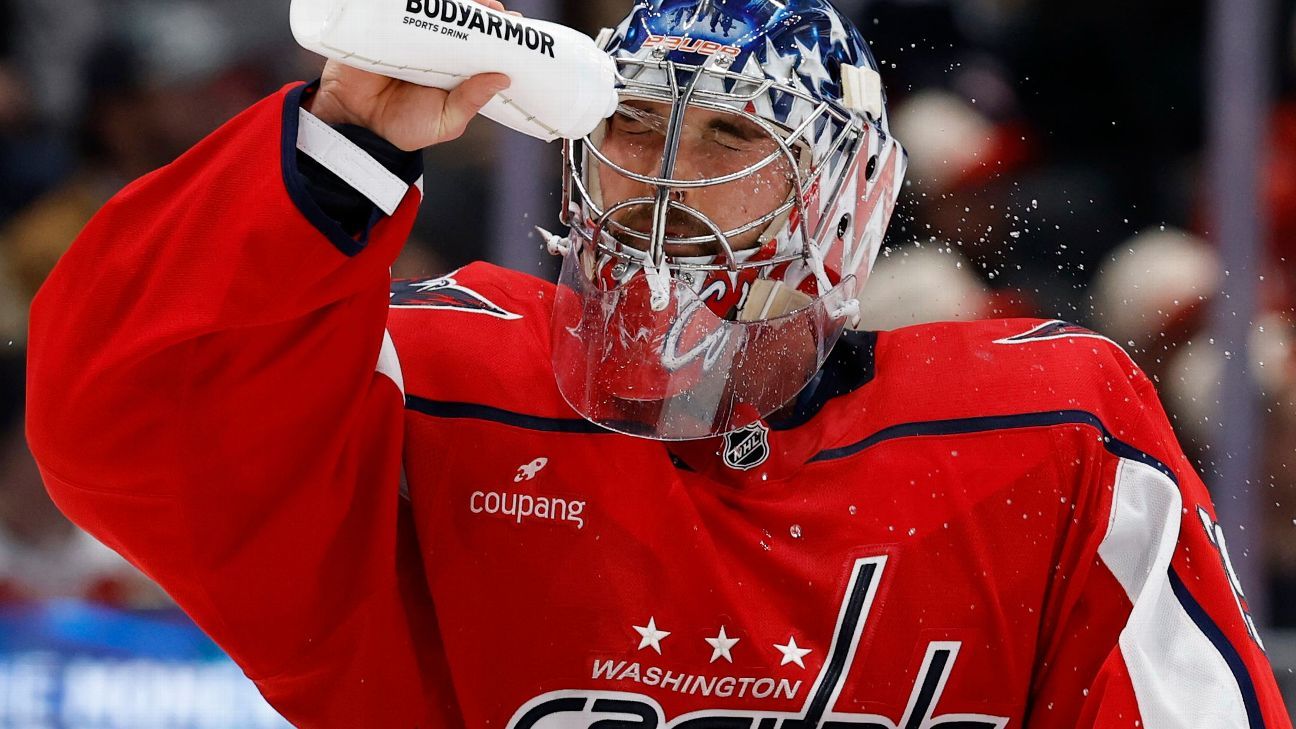

WASHINGTON — The Washington Capitals placed goaltender Charlie Lindgren and forward Ryan Leonard on injured reserve Sunday night before their game against the Columbus Blue Jackets.
Washington recalled forward Bogdan Trineyev and goaltender Clay Stevenson from Hershey of the American Hockey League.
Lindgren (upper body) was a late scratch Friday night before a 4-3 shootout loss at Anaheim. Leonard (upper body) didn’t return after his face was bloodied on an unpenalized first-period check from Jacob Trouba.
“He’s going to miss an extended period of time,” Capitals coach Spencer Carbery said about Leonard, the rookie who has seven goals and 11 assists after having two each Wednesday night in a 7-1 win at San Jose.
Lindgren is 5-3 with a 3.11 goals-against average in his 10th NHL season and fifth with Washington.
“We’ll see once he gets back on the ice,” Carbery said. “But [we] put him on the IR, so he’s going to miss, what is it, seven days at the bare minimum. And then we’ll see just how he progresses.”
-
Bradford Doolittle
ORLANDO, Fla. — Jeff Kent, who holds the record for home runs by a second baseman, was elected to the National Baseball Hall of Fame on Sunday.
Kent, 57, was named on 14 of 16 ballots by the contemporary baseball era committee, two more than he needed for induction.
Just as noteworthy as Kent’s selection were the names of those who didn’t garner enough support, which included all-time home run leader Barry Bonds, 354-game winner Roger Clemens, two MVPs from the 1980s, Don Mattingly and Dale Murphy, and Gary Sheffield, who slugged 509 career homers.
Bonds, Clemens, Sheffield and Dodgers great Fernando Valenzuela were named on fewer than five ballots. According to a new protocol introduced by the Hall of Fame that went into effect with this ballot, players drawing five or fewer votes won’t be eligible the next time their era is considered. They can be nominated again in a subsequent cycle, but if they fall short of five votes again, they will not be eligible for future consideration.
The candidacies of Bonds and Clemens have long been among the most hotly debated among Hall of Fame aficionados because of their association with PEDs. With Sunday’s results, they moved one step closer to what will ostensibly be permanent exclusion from the sport’s highest honor.
If Bonds, Clemens, Sheffield and Valenzuela are nominated when their era comes around in 2031 and fall short of five votes again, it will be their last shot at enshrinement under the current guidelines.
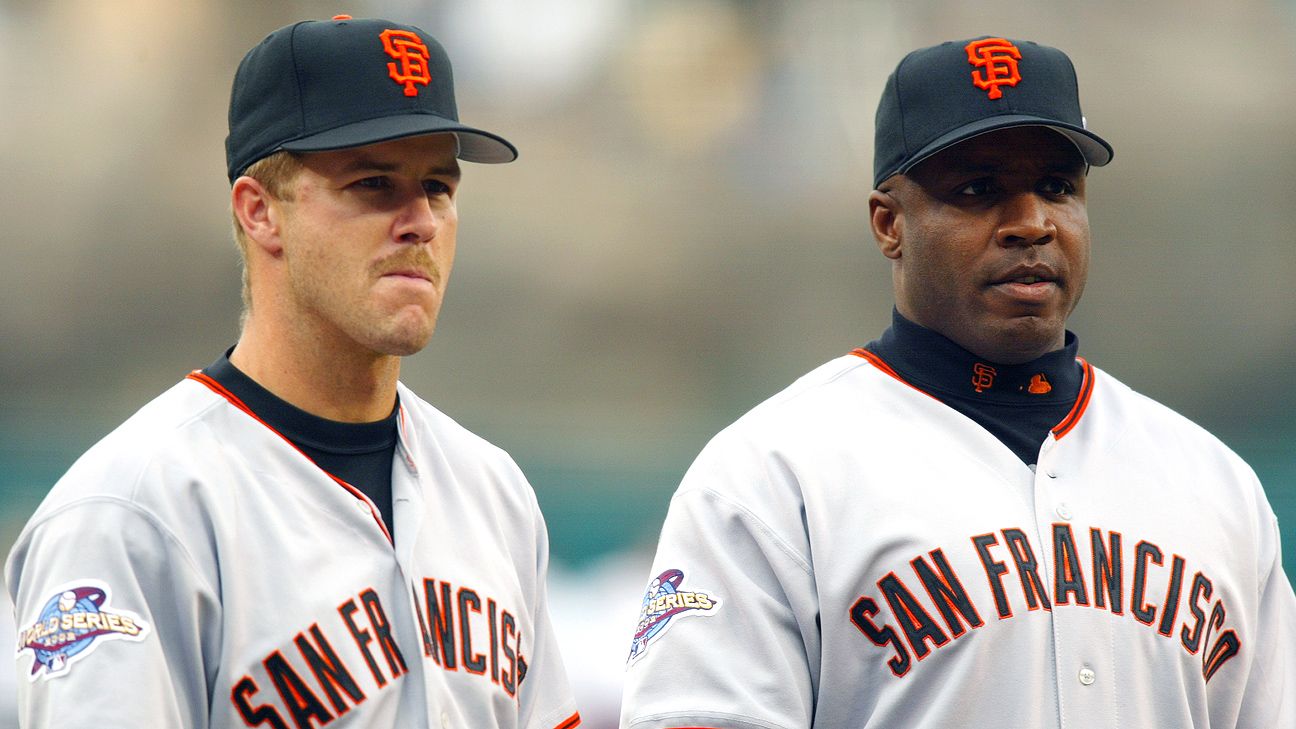
Kent, whose best seasons were with the San Francisco Giants as Bonds’ teammate, continued his longstanding neutral stance on Bonds’ candidacy, declining to offer an opinion on whether or not he believes Bonds should get in.
“Barry was a good teammate of mine,” Kent said. “He was a guy that I motivated and pushed. We knocked heads a little bit. He was a guy that motivated me at times, in frustration, in love, at times both.
“Barry was one of the best players I ever saw play the game, amazing. For me, I’ve always said that. I’ve always avoided the specific answer you’re looking for, because I don’t have one. I don’t. I’m not a voter.”
Kent played 17 seasons in the majors for six different franchises and grew emotional at times as he recollected the different stops in a now-Hall of Fame career that ended in 2008. He remained on the BBWAA ballot for all 10 years of his eligibility after retiring, but topped out at 46.5% in 2023, his last year.
“The time had gone by, and you just leave it alone, and I left it alone,” Kent said. “I loved the game, and everything I gave to the game I left there on the field. This moment today, over the last few days, I was absolutely unprepared. Emotionally unstable.”
A five-time All-Star, Kent was named NL MVP in 2000 as a member of the Giants, who he set a career high with a .334 average while posting 33 homers and 125 RBIs. Kent hit 377 career homers, 351 as a second baseman, a record for the position.
Kent is the 62nd player elected to the Hall who played for the Giants. He also played for Toronto, the New York Mets, Cleveland, Houston and the Dodgers. Now, he’ll play symbolically for baseball’s most exclusive team — those with plaques hanging in Cooperstown, New York.
“I have not walked through the halls of the Hall of Fame,” Kent said. “And that’s going to be overwhelming once I get in there.”
Carlos Delgado was named on nine ballots, the second-highest total among the eight under consideration. Mattingly and Murphy received six votes apiece. All three are eligible to be nominated again when the contemporary era is next considered in 2028.
Next up on the Hall calendar is voting by the BBWAA on this year’s primary Hall of Fame ballot. Those results will be announced on Jan. 20.
Anyone selected through that process will join Kent in being inducted on July 26, 2026, on the grounds of the Clark Sports Center in Cooperstown.
-
 Sports2 years ago
Story injured on diving stop, exits Red Sox game
-
 Sports3 years ago
‘Storybook stuff’: Inside the night Bryce Harper sent the Phillies to the World Series
-
 Sports2 years ago
Game 1 of WS least-watched in recorded history
-
 Sports3 years ago
Button battles heat exhaustion in NASCAR debut
-
 Sports3 years ago
MLB Rank 2023: Ranking baseball’s top 100 players
-
Sports4 years ago
Team Europe easily wins 4th straight Laver Cup
-
 Environment3 years ago
Japan and South Korea have a lot at stake in a free and open South China Sea
-
 Environment1 year ago
Here are the best electric bikes you can buy at every price level in October 2024