

Tezeus Swift review: This lightweight carbon fiber folding e-bike really surprised me

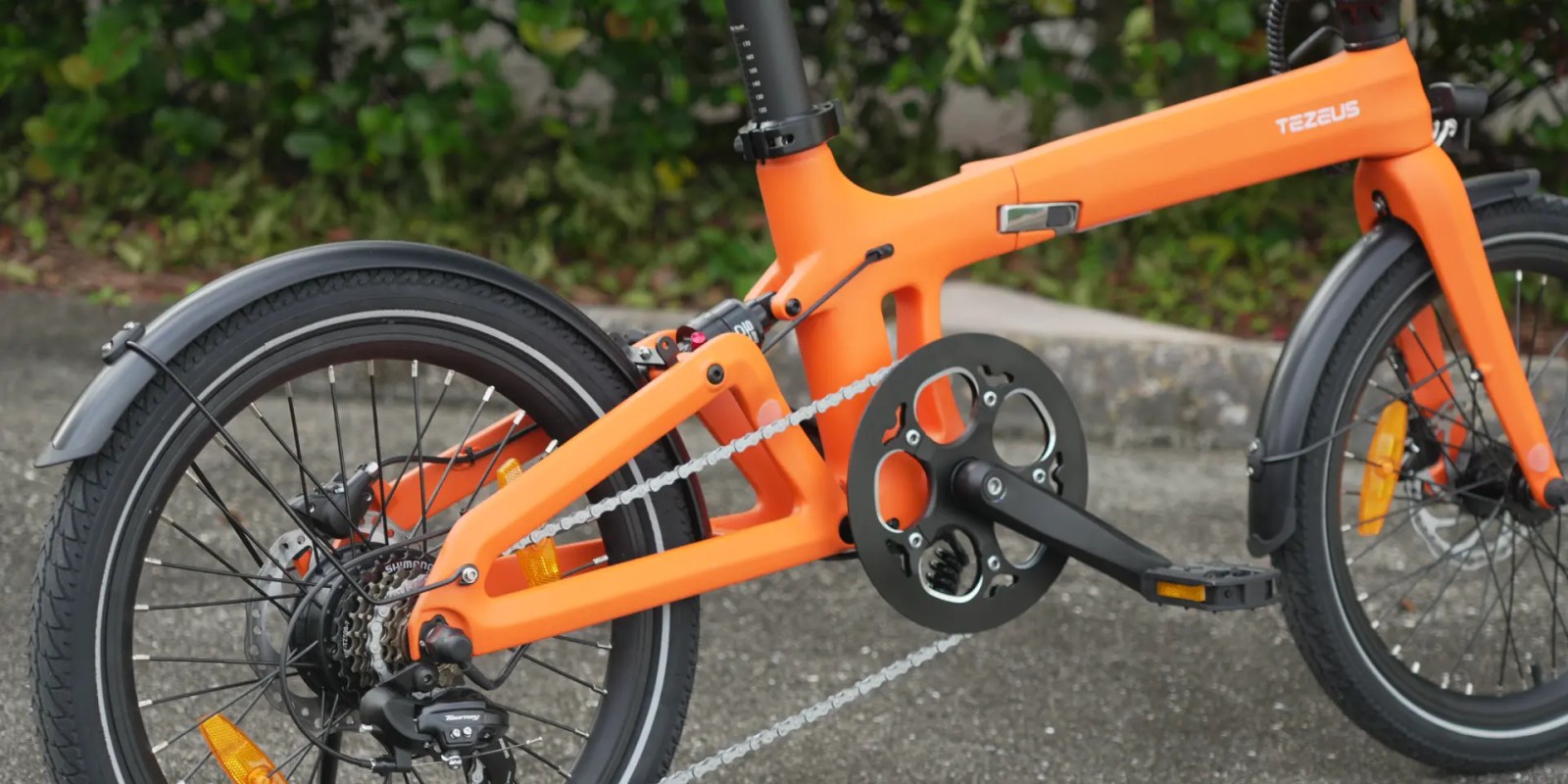
Folding e-bikes come in all shapes, sizes, and questionable design choices, but every once in a while, one comes along that makes me take a second look. After so much time on heavier folding e-bikes, that was my experience with the Tezeus Swift, a carbon fiber folding e-bike I recently spent a couple of weeks riding.
On paper, it looks like a lightweight urban commuter with modest power. In practice, it turned out to be a surprisingly polished little machine that feels far more refined than most of the budget folders we tend to see.
Let’s dive into what makes the Swift interesting, where it excels, and a couple of areas where I think Tezeus could still tighten things up.

Carbon fiber and compact practicality
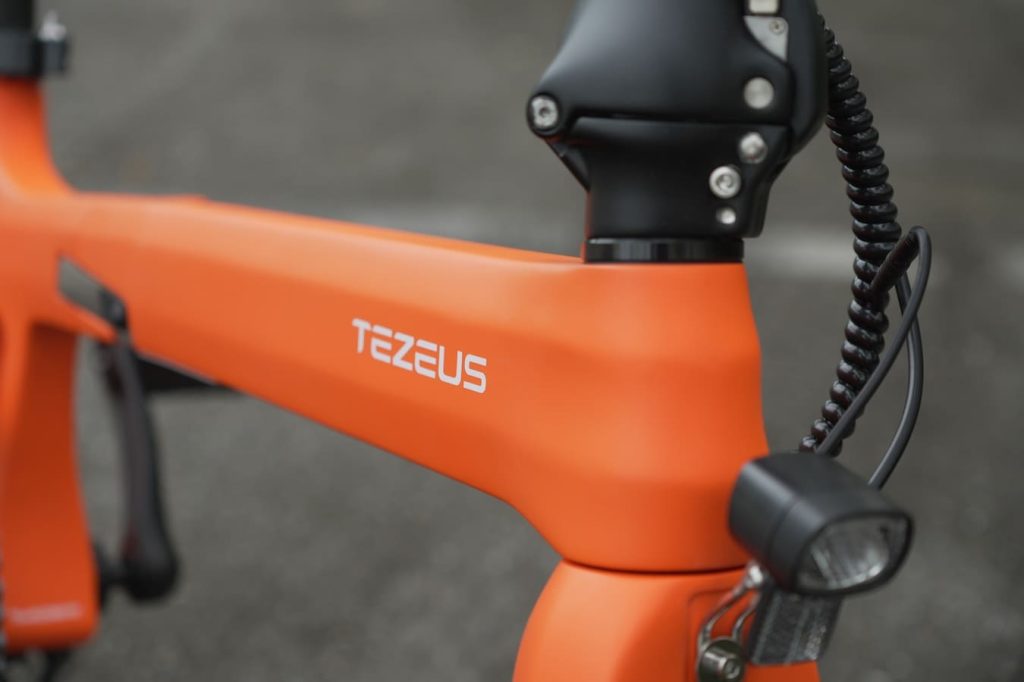
The obvious selling point here is the frame. Folding e-bikes are almost always aluminum and usually fairly chunky because they have to maintain stiffness around the folding mechanisms. Tezeus went with carbon fiber on the Swift, and the result is immediately noticeable.
At around 36 pounds, this is one of the lightest full-featured folding e-bikes I’ve tested in quite a while. This is the kind of bike you can actually carry up a flight of stairs without questioning your life choices or icing your back.
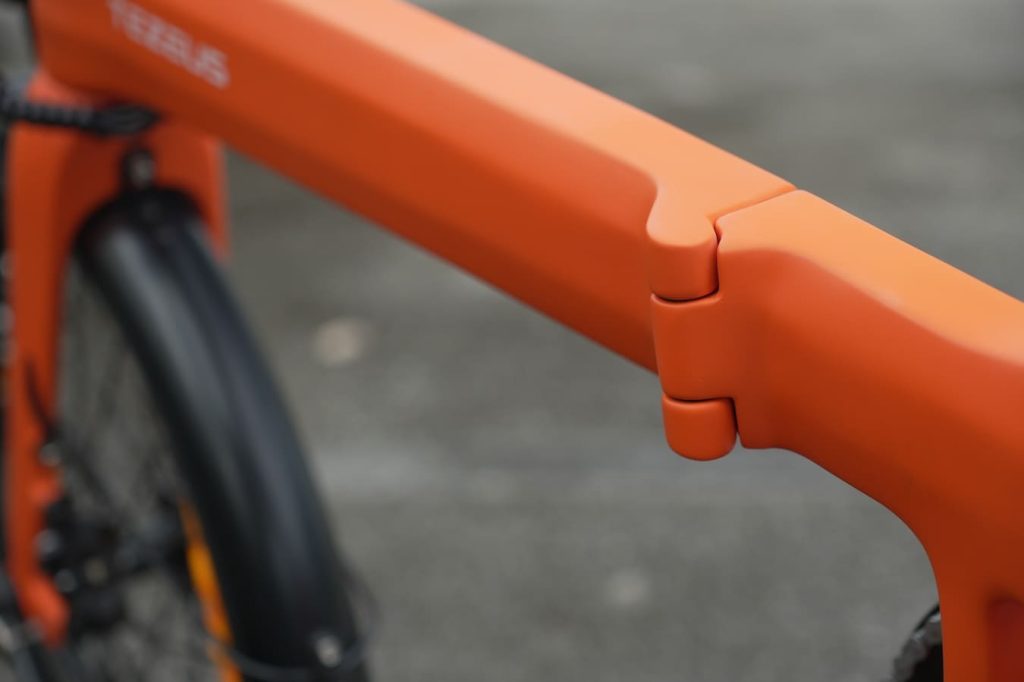
The overall shape and hinge layout are fairly typical for a 20-inch folding bike, but the execution is cleaner and the mechanism looks less bulky.
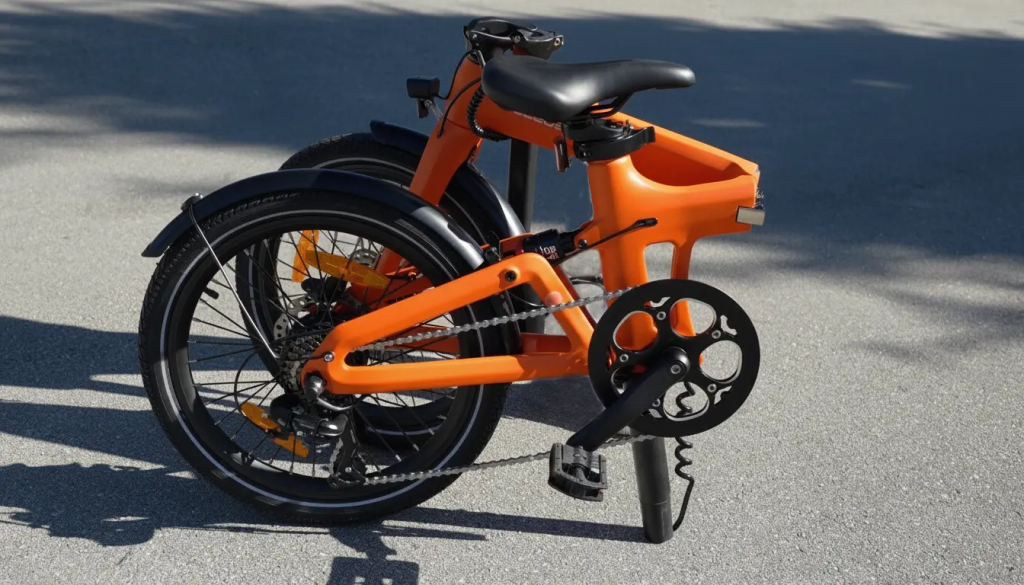
Cable routing is internal, the frame is smooth, and the whole bike feels like it got a little extra attention at the design table. It folds down reasonably compact – not tiny in the way a Brompton does, but certainly in the “subway-friendly” category. If you live in a walk-up or take public transit regularly, this bike fits that lifestyle very well.
At just $1,199, you wouldn’t expect carbon at this price, but the bike delivers!
Ride quality: small wheels, good manners
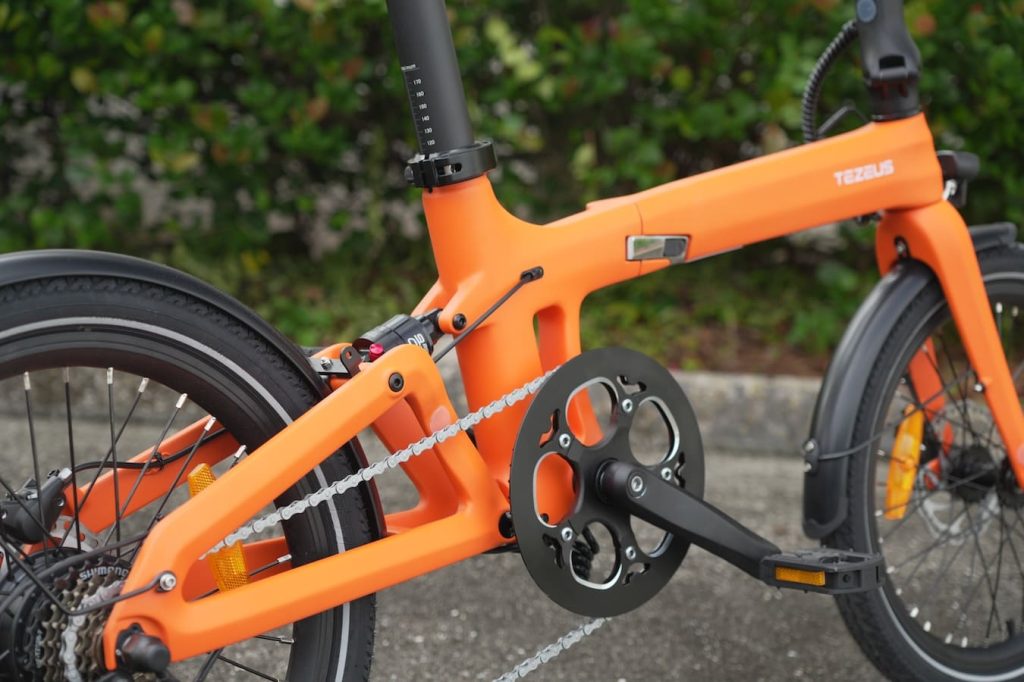
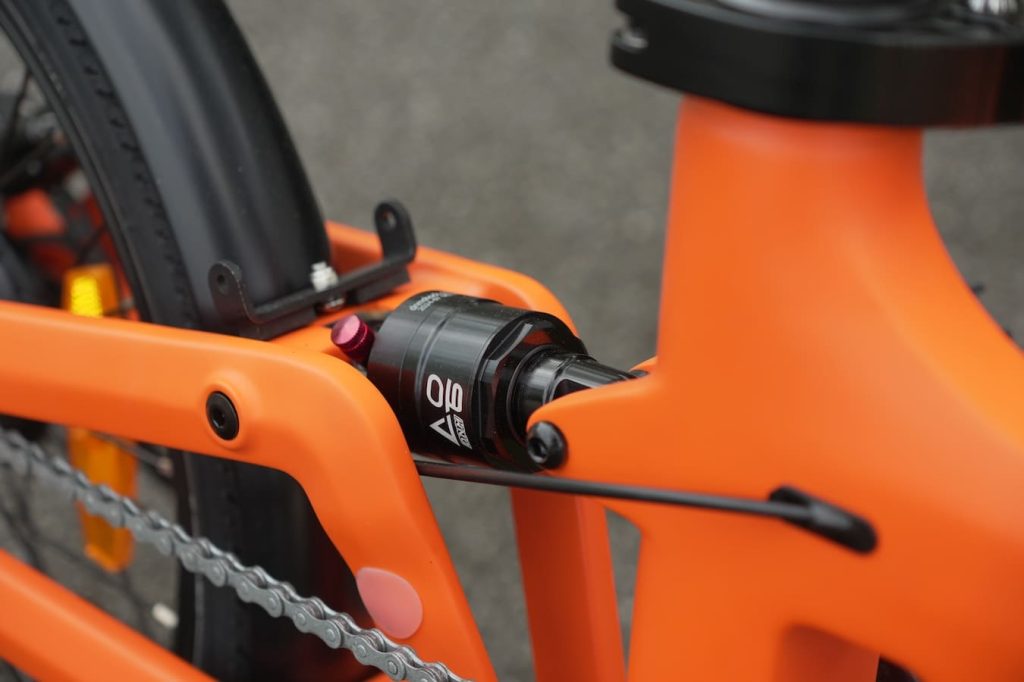
The Swift runs on 20-inch wheels paired with a rear suspension setup. Let’s be real that this isn’t exactly downhill mountain biking suspension, though.
The ride is comfortable enough to smooth out expansion joints and patchy pavement without turning the bike into a pogo stick, but it’s not going to magically make every bump and pothole disappear, that’s for sure. It’s a short travel shock in a direct suspension setup, but at least it is an adjustable air shock.
Handling is quite predictable, though, and feels confidence-inspiring. Many small-wheel folders can feel twitchy, especially at speed, but the Swift strikes a nice balance. It’s still compact and quick-steering, but never unstable.
I found myself weaving through traffic and dodging parked-car doors with the same confidence I’d expect from a larger-framed commuter bike.
Motor and power: enough for city commuting
The Swift uses a 250 W hub motor with about 30 Nm of torque, which tells you right away this isn’t a hill-crusher or a moped-wannabe.
But Tezeus tuned the controller well, and real-world performance is better than the numbers suggest. Acceleration is smooth, quiet, and linear. It’s not going to rocket you forward, but it adds just enough assist to make starts and short climbs easy without overwhelming the bike’s lightweight personality.
The assist cuts off at around 20 mph, which keeps it squarely in Class 2 territory in the US. On flat ground, I cruised comfortably in the 16–20 mph range. The Shimano 7-speed setup helps here, and it’s refreshing to see a folder that still feels like a bike rather than a throttle-dependent mini-scooter. You can genuinely ride this thing without power if you need to.
Of course, there is still a throttle, as you might have guessed by the Class 2 designation. It’s also a bit of a strange feeling thumb throttle, which isn’t my favorite style but gets the job done. The bike feels so good to pedal that I rarely go only throttle on it, and use it more just when I want to get rolling as quickly as possible. The smaller capacity battery also means that using the pedal assist is a good idea. Plus, that torque sensor does a great job of making you feel more in tune with the bike when pedaling.

Battery and range
The 36 V, 7 Ah (252 Wh) battery is hidden inside the seat tube, which is a clean design choice and keeps the bike’s silhouette tidy. It’s also removable for charging indoors.
The tradeoff, of course, is size. With 252 Wh, you’re not getting long-range weekend adventures. In my testing, riding in the city with a mix of PAS levels, I saw realistic range in the 17–25 mile (30-40 km) window.
That’s perfectly fine for the short-to-medium urban commutes this bike is designed for, but it’s worth setting expectations accordingly. This isn’t a long distance touring bike, so don’t expect to ride it like one.
Cockpit and features
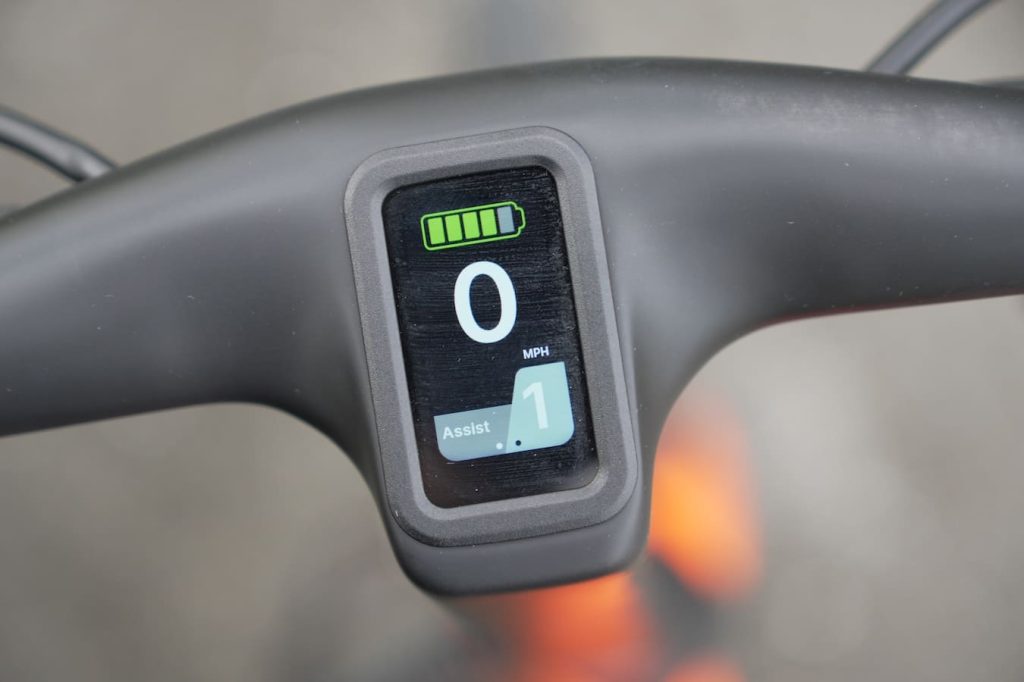
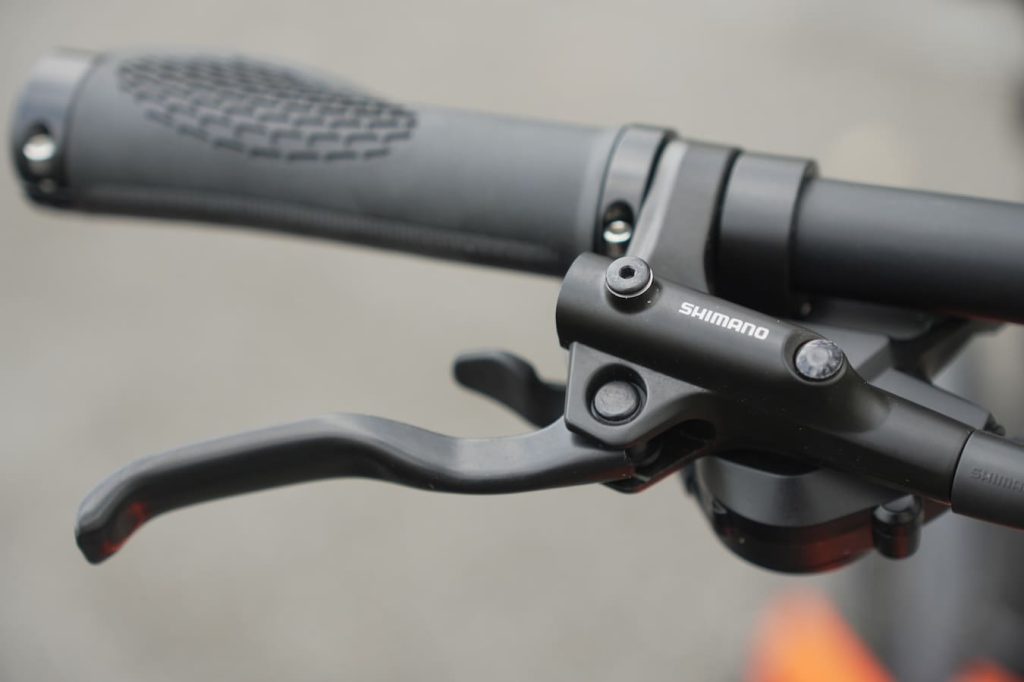
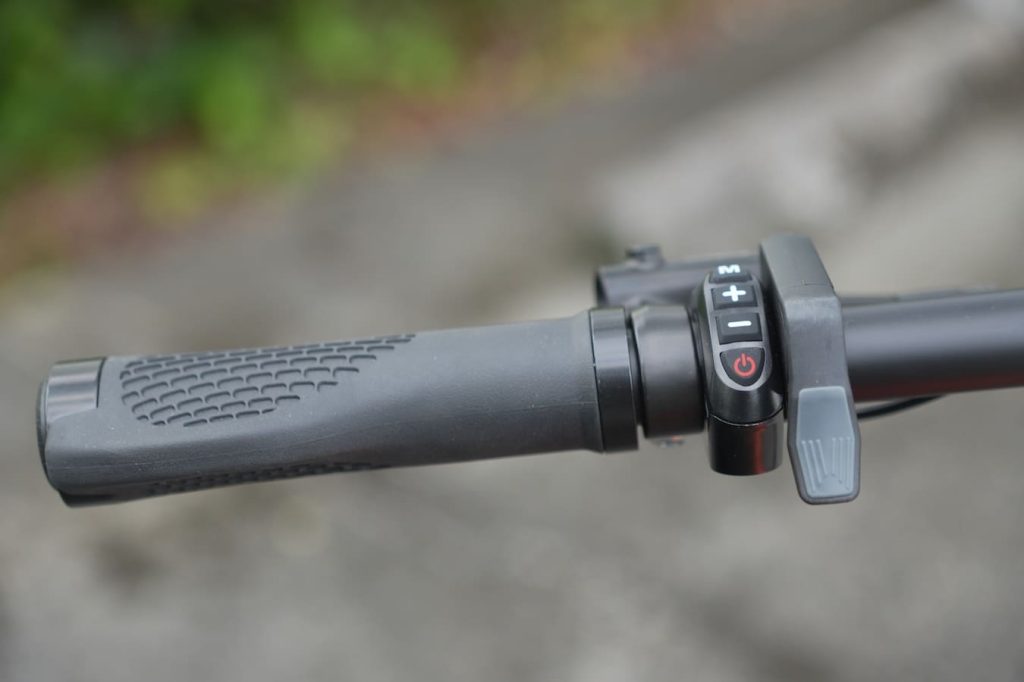
The bike includes a color display, decent-quality grips, and hydraulic disc brakes, which are a nice upgrade for more confident braking with less hand strength required. You can give a lighter pull and still get strong stopping power. The lever feel is crisp, and braking performance is solid, which matters when you’re darting between taxis and delivery vans in an urban environment.
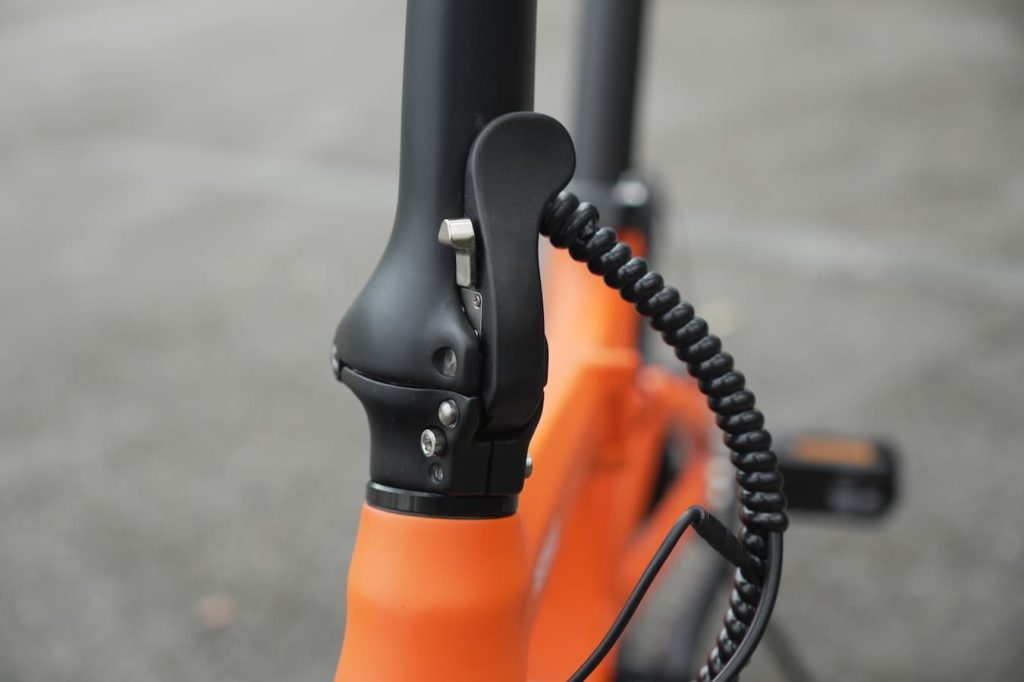
Tezeus also kept the cockpit uncluttered. Many folding bikes get messy with clamps, triggers, and hinges everywhere, but the Swift keeps things simple. I appreciated that during folding and unfolding too – the process is quick and doesn’t require a three-handed origami routine.
A few downsides
As much as I enjoyed the Swift, there are a couple of areas where the bike shows tradeoffs.
First, the small battery will be limiting for riders who want to push longer distances or who live in particularly hilly areas. It’s clearly tuned for urban environments, but a slightly larger pack option would have broadened its appeal.
Second, the small-wheel geometry means this still isn’t the plushest bike on rough pavement. The rear suspension helps, but you’ll feel cracks and potholes more than you would on a full-size commuter.
Lastly, while the carbon frame is great for weight, it also means repairs or replacement in the event of damage could be more expensive than with a simple aluminum folder. Sure, aluminum repairs aren’t something most people are going to want to deal with either, but an aluminum frame can at least take a bit more of a beating.
Final thoughts
I went into this review expecting another generic folding e-bike with a quirky frame and middling performance. Instead, the Tezeus Swift feels like a thoughtfully executed lightweight commuter that prioritizes practicality, ride quality, and clean design. It’s not built for speed demons or range-hungry riders, but for people who want a portable, well-mannered e-bike for real urban use, it hits a sweet spot.
At $1,199, there are better watt-per-dollar deals out there, but bikes like this one don’t compete on performance. Instead, they do it for the lightweight and convenience.
If you value low weight, compact storage, and a bike-like ride over brute force or big battery numbers, the Tezeus Swift is absolutely worth a look.


FTC: We use income earning auto affiliate links. More.

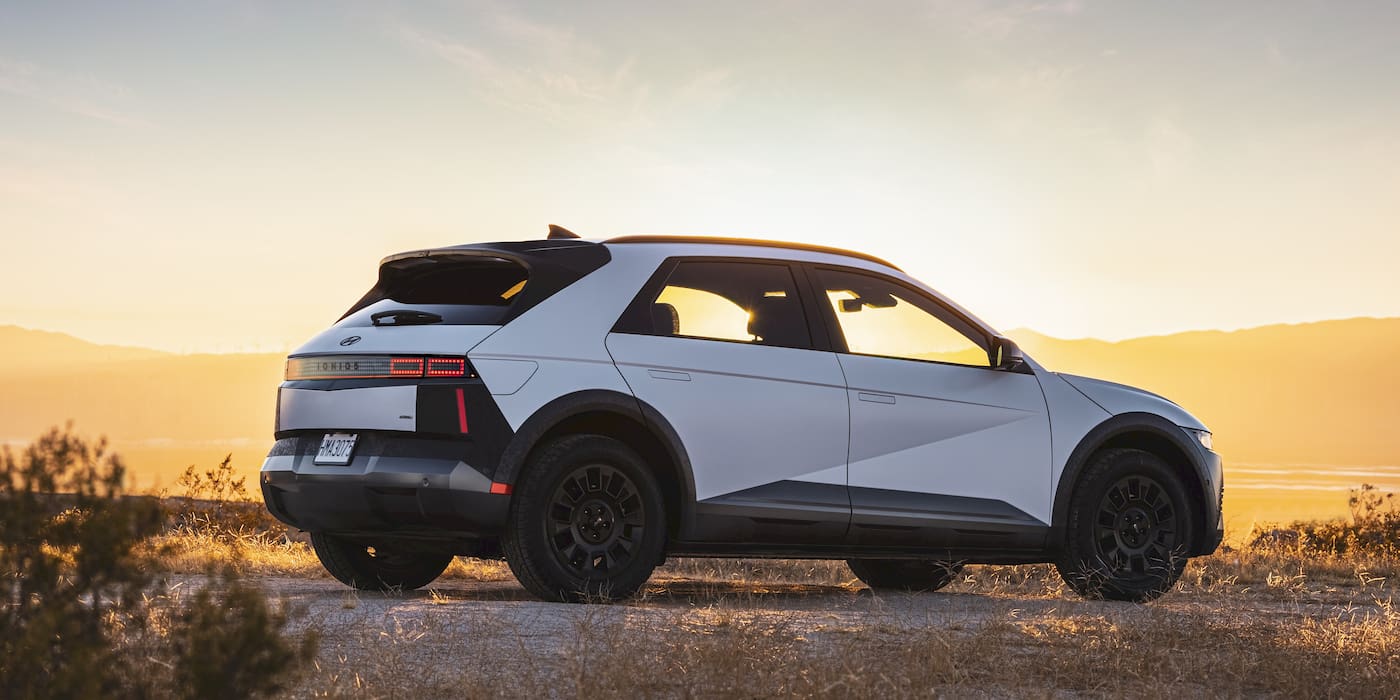
Hyundai is the biggest winner from the US and South Korea’s new trade deal, lowering the tariff rate on imported vehicles to 15%.
Hyundai gets a break with lower US tariffs
Hyundai has committed $26 billion toward its US operations, among the biggest of any automaker. Despite this, the automaker has shelled out billions since the Trump administration slapped a 25% tariff on South Korean imports earlier this year.
The Korean auto giant is catching a break after the US and South Korea signed a new trade deal that lowered the tariff rate to 15%.
A notice posted on the Federal Register on Thursday confirmed the rate cut and other adjustments under the new deal.
Hyundai took a 1.8 trillion won ($1.2 billion) hit from the added tariffs in the third quarter, up from just 828 billion won ($565 million) in Q3 2024.
Although it’s a lower rate, bringing it in line with Japan, which announced a similar deal in September, Hyundai will still have to pay billions in extra costs.
“Fifteen percent is still 15%,” Randy Parker, Hyundai North America CEO, told CNBC during an interview this week.
Parker said the tariffs will be a challenge, but Hyundai is aiming for a sixth consecutive record year of US retail sales in 2026.

Hyundai Motor, including Kia and Genesis, is expected to import nearly 1 million vehicles into the US this year, or about 40% of its sales. By 2030, Hyundai aims to have more than 80% of the cars it sells in the US manufactured locally.
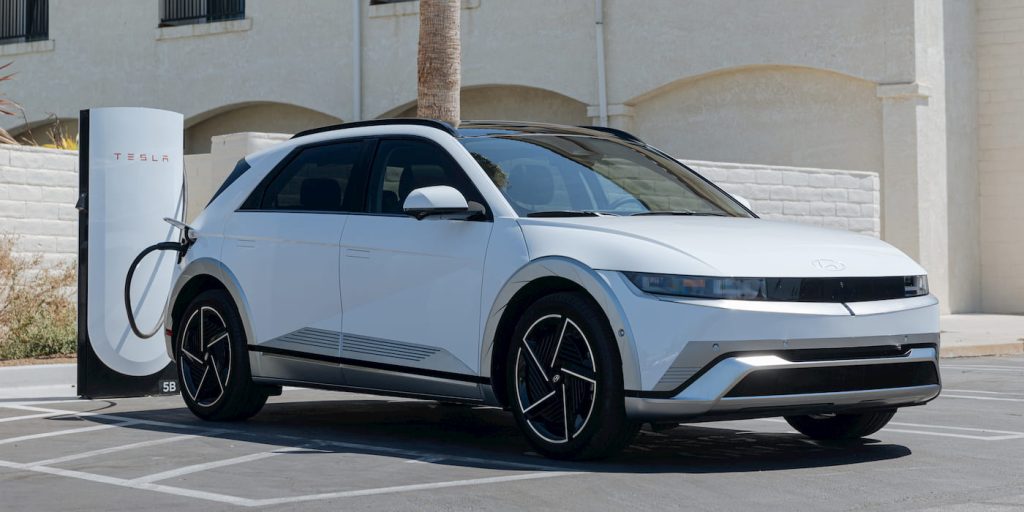
Through November, Hyundai has sold nearly 823,000 vehicles in the US, up 8% from the same period in 2024, putting it on pace for its fifth consecutive annual retail sales record. Parker said Hyundai is “on a record pace and fully expect to go ‘5 for 5 in 2025.’”
To offset the loss of the $7,500 federal tax credit, Hyundai has been offering some of the largest discounts on electric vehicles.
The IONIQ 5, which has consistently been a top-selling EV in the US, is among the most affordable options with leases starting at just $189 a month.
Interested in a test drive? We can help you get started. Check out our links below to find Hyundai’s EVs near you.
FTC: We use income earning auto affiliate links. More.


Elon Musk has confirmed that Tesla’s Full Self-Driving (Supervised) system now allows drivers to text and drive, though he added a caveat that it depends on the “context of surrounding traffic.”
This comes just a month after the CEO promised the feature was coming, despite the obvious legal and safety concerns surrounding it.
Does the law agree with this?
In a post on X (formerly Twitter) today, Musk responded to a question about whether the latest FSD v14.2.1 update allows for texting and driving. The CEO replied:
“Depending on context of surrounding traffic, yes.”
This confirmation follows a statement Musk made at a shareholder meeting in early November, which we reported on at the time. Back then, Musk claimed that Tesla would “allow you to text and drive” within “a month or two” after looking at safety statistics.
It appears Tesla is moving forward with this timeline, even as FSD remains a Level 2 driver-assist system.
Currently, Tesla’s driver monitoring system uses the cabin camera to track eye movement. If a driver looks down at their phone for too long, the system issues a “pay attention” warning (often called a “nag”) and can eventually disengage the system and issue a “strike.” Five strikes result in a suspension of FSD features.
Musk’s comment suggests that Tesla is relaxing these monitoring parameters in specific scenarios, likely in stop-and-go traffic or at red lights, where the system deems it “safe” for the driver to look away.
However, this doesn’t change the legal reality. As we noted last month, texting and driving is illegal in most jurisdictions, including almost all US states. A software update from Tesla does not supersede state laws.
As we suspected at the time, instead of classifying FSD as a level 3 or 4 system, where Tesla takes responsibility for the vehicles under certain conditions and allow the driver not to pay attention, the automaker is instead simply relazing its driver monitoring rules and leaving it to the driver to take on the risk of texting and driving under its level 2 driver assistance system.
This development also comes amidst a rough few weeks for Tesla’s self-driving credibility. Late last month, Musk finally admitted that no other automakers want to license Tesla FSD, a long-time hope for bulls. Furthermore, we just reported on Tesla hinting at a new camera upgrade, casting more doubt on the promise that current hardware (HW3/HW4) is sufficient for true unsupervised autonomy.
To “allow” texting and driving in a legal sense, Tesla would need to take liability for the vehicle and operate at SAE Level 3 or higher. Since FSD is still “Supervised,” the driver is 100% responsible for the vehicle. If you text and drive because Elon Musk said you could, and you crash or get pulled over, it is entirely on you.
Electrek’s Take
This is another dangerous blurring of the lines by Elon Musk.
Let’s be clear: You cannot legally text and drive just because your car’s CEO says it’s okay “depending on context.” If a police officer sees you looking at your phone, they aren’t going to care what version of FSD you are running.
What Musk really means here is that Tesla is disabling the safety feature that stops you from texting and driving in certain situations. He is removing the “nag” that detects phone use. That doesn’t make it legal, and it certainly doesn’t make it safe in a system that still requires constant supervision.
We have seen this pattern before. Tesla makes the driver monitoring looser to make the system feel more capable than it is, encouraging complacency. With FSD v14.2.1, it seems Tesla is confident enough to let you look at your phone at a red light without yelling at you. That’s a convenience feature at the cost of safety, not a step toward autonomy.
Until Tesla is willing to take liability for the drive, which they absolutely are not doing here, FSD is a Level 2 system. Eyes on the road, folks.
FTC: We use income earning auto affiliate links. More.
Environment
Tern’s NYC delivery e-bike fleet crosses 1 million miles, with some bikes rolling past 30k

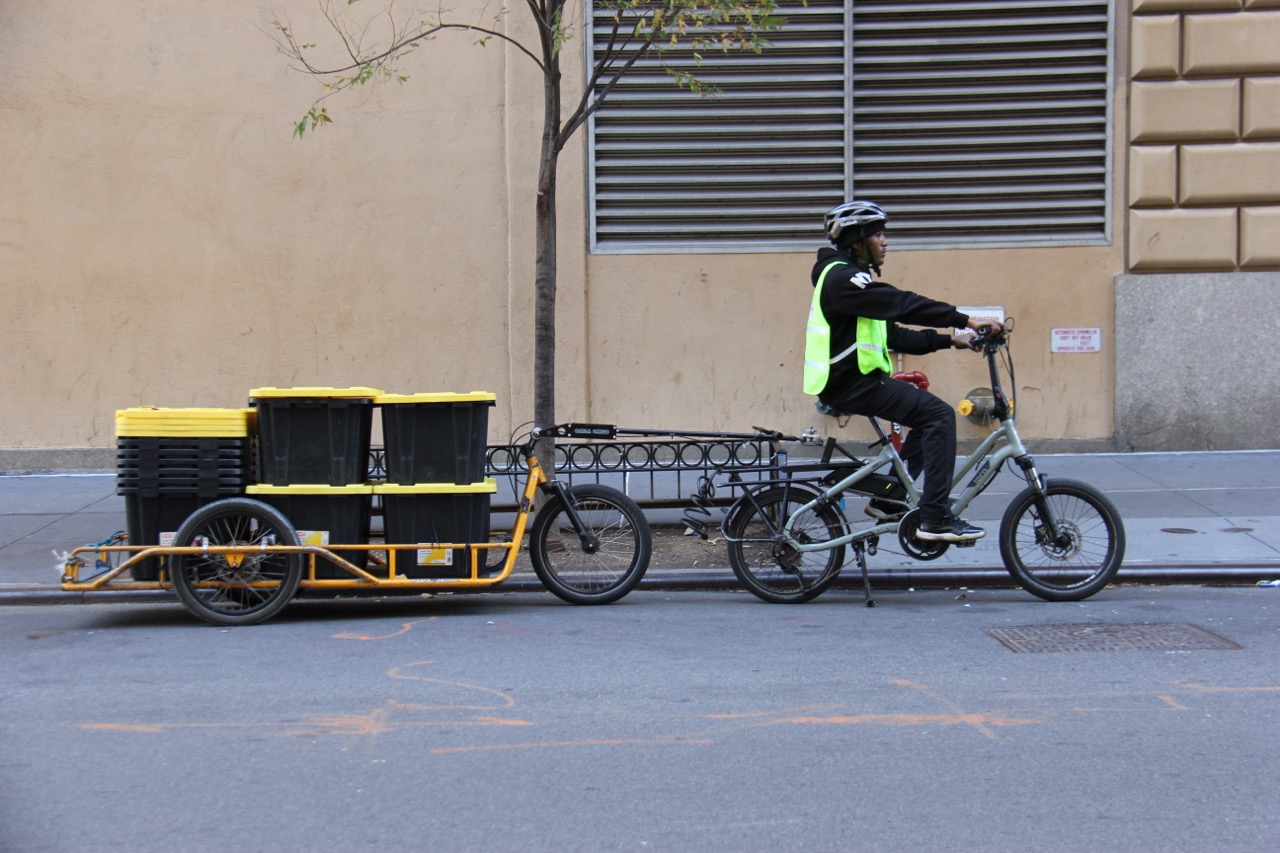
Urban e-bike maker Tern just hit a major milestone in one of the toughest proving grounds on the planet: New York City. The company announced that its fleet partners have now logged more than one million miles (1.6 million km) using Tern electric cargo bikes for commercial delivery work in the city – a figure that reflects not only enormous demand for e-bike logistics, but also the durability of the hardware behind it.
According to Tern, those same cargo bikes are now completing over 13 million deliveries per year in NYC, making the bright-vested riders pulling Carla Cargo trailers an increasingly familiar sight on Manhattan streets. Many of these rigs have been in near-continuous use since their rollout in 2021, sometimes operating 16 to 20 hours a day during peak periods. In the words of Steve Boyd, Tern’s North America GM, “These bikes get hammered, and they have the scars to prove it… but they’re engineered to keep on grinding away, mile after mile.”
Delivery vans, meet your match
One of the most striking takeaways is how closely e-cargo bike efficiency now mirrors that of traditional delivery vans. Tern reports that some fleets are pulling 300-pound (136 kg) loads and hitting 360 deliveries per day, averaging more than 22 deliveries per hour.
That puts these pedal-assist workhorses squarely in van territory – but with far lower operating costs, zero tailpipe emissions, and a much smaller footprint on crowded city streets.

NYC as the ultimate torture test
New York’s harsh winter freeze, summer heat, potholes, and relentless usage have turned the city into a stress test for every part of these bikes. Tern says that some individual units have already surpassed 30,000 miles (48,000 km) while remaining fully operational, with key components like frames and forks showing no failures. And unlike many purpose-built commercial machines that rely on proprietary parts, Tern emphasizes serviceability – most components can be maintained or replaced quickly using standard tools and off-the-shelf parts.
The Bosch motor systems powering the fleet have also held up under extreme use. According to the company, motor failures are rare, batteries continue delivering consistent performance well beyond their rated life, and Bosch’s service network has proven fast and reliable when issues do arise.
Charging at scale – safely
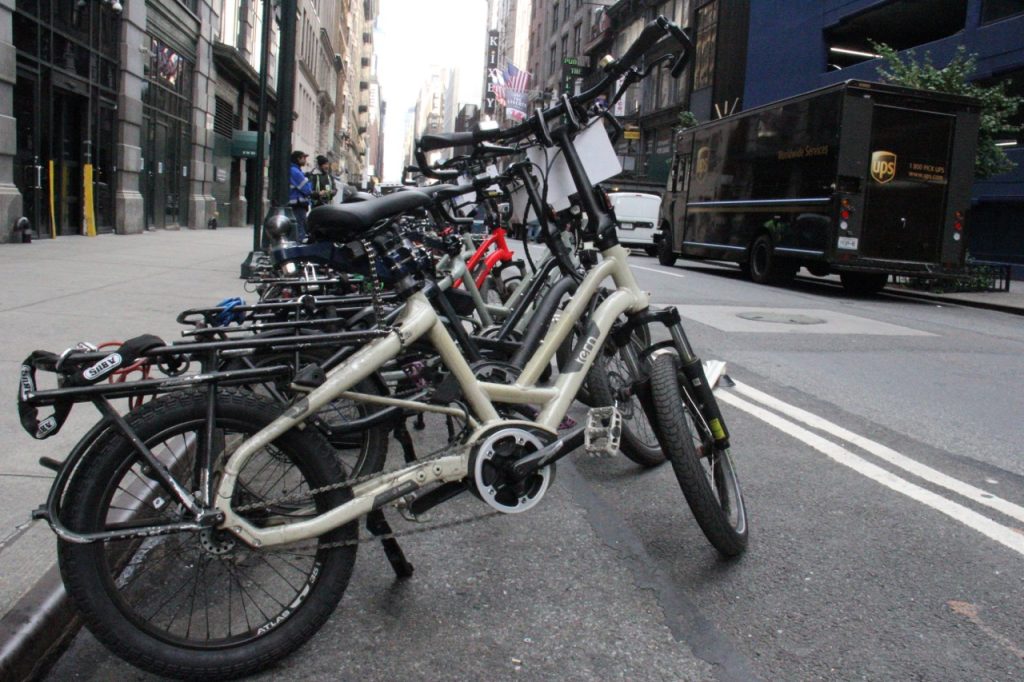
Operating a fleet of cargo bikes in NYC means charging hundreds of batteries every day, often simultaneously. Tern highlights that long before New York mandated UL-certified e-bikes, the company already equipped its commercial bikes exclusively with UL 2849-certified Bosch systems. After hundreds of thousands of charge cycles in dense depot environments, Tern reports zero thermal incidents across the entire fleet.
From delivery fleets to families
While these systems are clearly built to withstand commercial punishment, Tern notes that this is the same hardware sold through its consumer dealers. “Running sixteen hours a day and racking up more than ten thousand miles a year is exactly the kind of performance that shows we designed, tested, and built the bike right,” Boyd said.
That’s huge, since generally speaking, we usually see commercial bikes produced separately from consumer models, but Tern applies its same high standards to all of its bikes.
Electrek’s Take
It’s hard to find a harsher testbed than NYC delivery work. If a cargo bike can survive 20-hour days hauling 300-pound loads over Manhattan potholes, it can survive your grocery runs. What we’re really seeing here is proof that commercial e-bike logistics are scaling, are durable, and are beating vans at their own game in dense cities.
Part of that is due to the advantages of the two-wheeled model, and part of it is due to the extremely high standards to which Tern produces its bikes. I definitely feel better than ever recommending these things when someone asks me about a bike built for the long term. Sure, you pay more. But you also get more.
FTC: We use income earning auto affiliate links. More.
-
 Sports2 years ago
Story injured on diving stop, exits Red Sox game
-
 Sports3 years ago
‘Storybook stuff’: Inside the night Bryce Harper sent the Phillies to the World Series
-
 Sports2 years ago
Game 1 of WS least-watched in recorded history
-
 Sports3 years ago
Button battles heat exhaustion in NASCAR debut
-
 Sports3 years ago
MLB Rank 2023: Ranking baseball’s top 100 players
-
Sports4 years ago
Team Europe easily wins 4th straight Laver Cup
-
 Environment3 years ago
Japan and South Korea have a lot at stake in a free and open South China Sea
-
 Environment1 year ago
Here are the best electric bikes you can buy at every price level in October 2024