

SOLARCYCLE’s new plant will recycle 25% of all US end-of-life solar panels by 2030

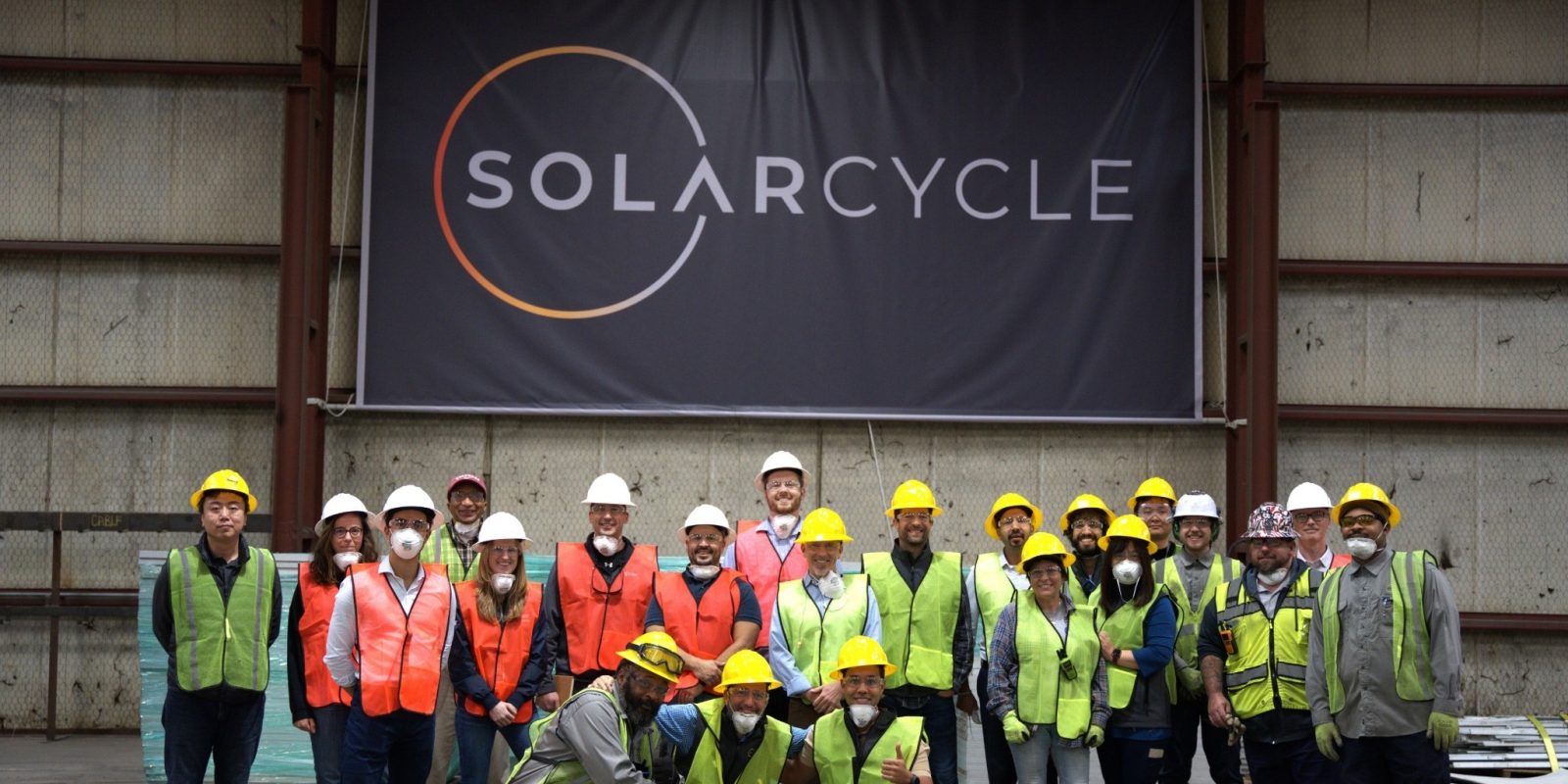
SOLARCYCLE is building a huge solar recycling plant in Cedartown, Georgia, which will recycle 10 million solar panels a year.
The company says it will be able to process around a quarter of all the solar panels that are expected to reach end-of-life in the US by 2030.
The new facility, which is set to open in mid-2025, will start with the capacity to recycle 2 million panels annually and expand as demand grows. It will be adjacent to SOLARCYCLE’s already planned solar glass factory, which was announced earlier this year.
The glass factory will be the first of its kind in the US, producing specialized glass for crystalline silicon (c-Si) solar panels. Together, these two factories will employ over 1,250 people once they’re running at full capacity.
SOLARCYCLE CEO Suvi Sharma said that the Cedartown site is meant to close a major gap in the US solar supply chain: “By scaling recycling and solar glass manufacturing through a vertically integrated process, we are filling a critical gap in America’s solar supply chain and closing the loop for domestic solar manufacturing.”

Sharma credited the support from Governor Brian Kemp (R-GA) and the Biden-Harris administration’s clean energy policies for making the new factories possible.
The solar recycling company is also bringing Microsoft on board as a strategic investor, joining the ranks of investors like Fifth Wall, HG Ventures, and Closed Loop Partners. Brandon Middaugh, senior director of sustainability markets at Microsoft, said, “It’s important to us that companies like SOLARCYCLE are developing innovative solutions for ensuring that the raw materials required for this build-out and deployment are returned to the supply chain.”
The Cedartown recycling factory is designed to recover up to 99% of the materials from solar panels, including bifacial panels, which have been harder to recycle efficiently. Most recyclers today use the same approach for both monofacial and bifacial panels, but SOLARCYCLE’s new process is supposed to be far more flexible and efficient. The company plans to turn the recovered materials into new solar glass right next door, and then they’ll go straight back into the US solar market.
With facilities already operating in Odessa, Texas, and Mesa, Arizona, SOLARCYCLE is expanding its footprint to tackle one of the solar industry’s biggest challenges: dealing with end-of-life panels. The 255,000-square-foot Cedartown facility is move-in ready, and the company has long-term partnerships with over 70 major US energy companies to handle their panel recycling.
If you live in an area that has frequent natural disaster events, and are interested in making your home more resilient to power outages, consider going solar and adding a battery storage system. To make sure you find a trusted, reliable solar installer near you that offers competitive pricing, check out EnergySage, a free service that makes it easy for you to go solar. They have hundreds of pre-vetted solar installers competing for your business, ensuring you get high quality solutions and save 20-30% compared to going it alone. Plus, it’s free to use and you won’t get sales calls until you select an installer and share your phone number with them.
Your personalized solar quotes are easy to compare online and you’ll get access to unbiased Energy Advisers to help you every step of the way. Get started here. –trusted affiliate link*
FTC: We use income earning auto affiliate links. More.


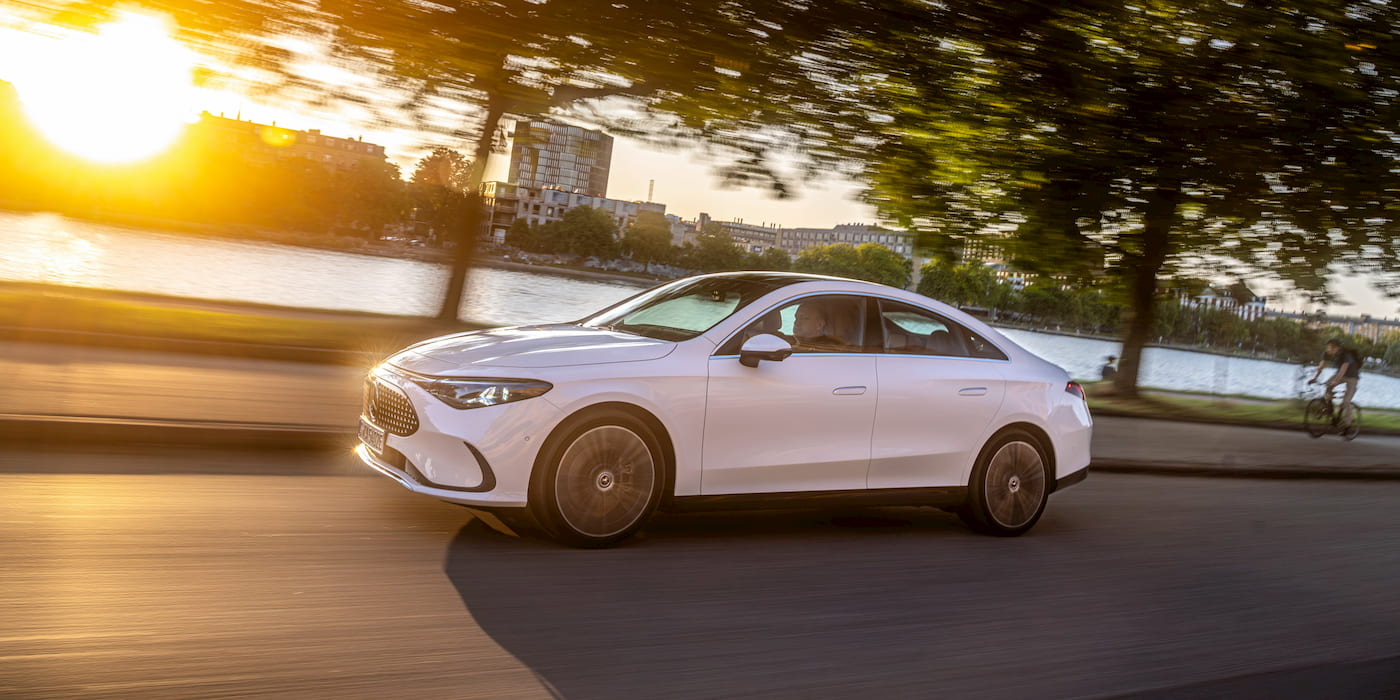
Mercedes calls it the “one-liter” car for a reason. The new Mercedes CLA EV has an impressive EPA range of 374 miles, but in real-world driving, it can go even further.
Mercedes CLA EV beats EPA range in real-world driving
The new CLA EV might just be the most critical Mercedes model yet. It’s the first of the luxury brand’s latest generation of electric vehicles, promising to be much more advanced, efficient, and refined than ever before.
Powered by an 85 kWh battery pack, the 2026 Mercedes-Benz CLA 250+ has an EPA-estimated range of 374 miles.
Although that’s already among the highest for any 2026 model-year EV in the US, the electric CLA can drive even further in the real world.
The folks at Edmunds just got their hands on one to test it out. In the Edmunds EV Range Test, the 2026 Mercedes CLA EV crushed its EPA figures, driving an impressive 434 miles on a single charge, beating its official ratings by 16%.
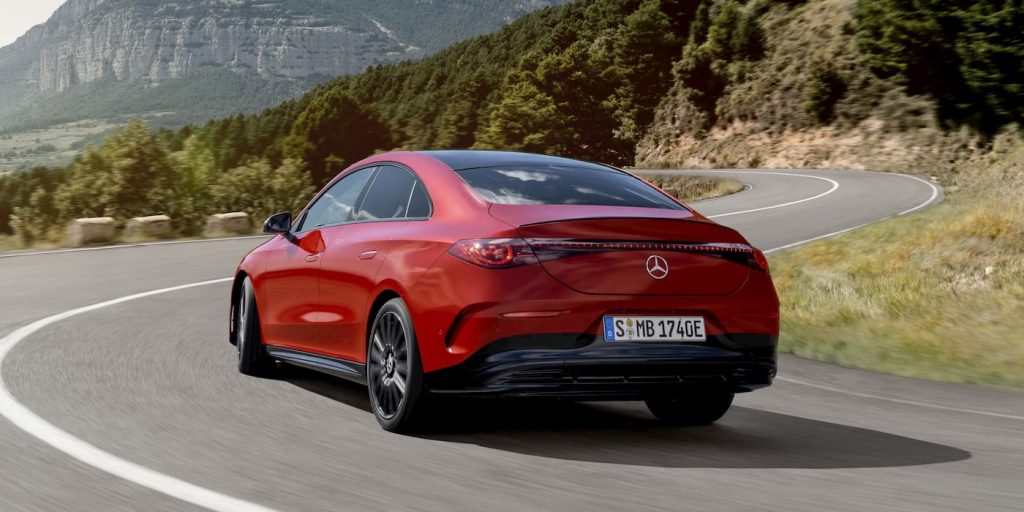
Out of 13 Mercedes models Edmunds has tested, the new CLA EV had the second-longest driving range, trailing only the EQS 450+. However, given that the EQS is a full-size sedan and significantly more expensive than the CLA, it’s expected.
The 2026 Tesla Model 3 Standard went 339 miles, while the 2026 Audi A6 E-tron drove 402 miles during the EV Range Test.

The Edmunds EV Range Test is 60% city and 40% highway driving with an average speed of 40 mph. Each vehicle is set to the most efficient drive setting, while the climate control is set to 72 degrees to reflect the most accurate real-world driving conditions drivers encounter each day.
During the test, the electric CLA used 23.2 kWh per 100 miles of driving, beating the EPA’s estimates by 16.5%.
On the Edmunds EV Charging Test, it had an average charge rate of 193 kW from 10% to 80%, earning a score of 833 miles per hour. That’s the second-best of those tested, behind the Hyundai IONIQ 6.
| 2026 Mercedes-Benz CLA trim | Starting Price* | Driving Range |
| CLA 250+ | $47,250 | 374 miles |
| CLA 350 4MATIC | $49,800 | 312 miles |
The new Mercedes CLA EV is now the least expensive car they’ve tested, with over 400 miles of range. Last week, Mercedes launched the 2026 CLA 250+ EV, starting at $47,250.
Mercedes said it will begin delivering the first customer models this month, with output ramping up throughout early 2026.
Ready to test one out for yourself? We can help you get started. Check out our link to find the 2026 Mercedes-Benz CLA EV in your area.


FTC: We use income earning auto affiliate links. More.


Tesla is pulling every demand lever available as we head into the final weeks of the year. The automaker has launched a new set of aggressive incentives in the US, including free upgrades on inventory vehicles, 0% APR financing, and $0 down leases.
It’s the end of the quarter (and year), and as per usual, Tesla is trying to empty its inventory, but it’s more difficult this year due to the end of the tax credit in Q3 pulling a lot of demand away from Q4.
We have regularly reported on Tesla ramping up incentives at the end of the year, but this new batch is arguably the most aggressive we have seen in a long time.
First off, Tesla is offering one free upgrade on eligible inventory vehicles.
If you go to Tesla’s inventory page for Model 3 or Model Y, you will see a lot of vehicles listed with a “Free Upgrade” tag. This basically means that if you pick a car that has a paid option, like a premium paint color (Ultra Red or Quicksilver), 20″ Induction wheels, or the White interior, Tesla is waiving the cost of that option.
That’s a value of anywhere from $1,000 to $2,500 depending on the option.
On top of that, Tesla has expanded its financing offers. The company is now offering 0% APR financing for up to 72 months on Model 3 and Model Y purchases.
This is a significant move. We have seen low interest rates before, but 0% for 72 months is basically free money, especially in the current interest rate environment.
But wait, there’s more.
For those looking to lease, Tesla has introduced $0 down leases for the Model Y.
Previously, Tesla required a down payment of at least $3,000 for its best lease rates. Now, you can drive off the lot with a Model Y for $0 down, though the monthly payments will obviously be higher than with a down payment.
Tesla writes on its website regarding the new push:
“Take delivery by December 31, 2025 to take advantage of these limited-time offers. Available on select inventory vehicles while supplies last.”
The automaker is clearly trying to deliver as many cars as possible before the ball drops on 2025.
Electrek’s Take
The end-of-year push is in full swing.
When you see Tesla stacking incentives like this, 0% financing, zero down, and free options, it tells you one thing: they have inventory to move.
With a lot of demand in the US pulled forward into Q3 due to the end of the tax credit for electric vehicles, it was always clear that Tesla would have trouble moving cars in Q4.
These are roughly the best end-of-quarter incentives we have ever seen, and even then, I’d be surprised if Tesla can come close to its record deliveries of last year’s Q4: 495,000 vehicles.
If you drive an electric vehicle, make charging at home fast, safe, and convenient with a Level 2 charger installed by Qmerit. As the nation’s most trusted EV charger installation network, Qmerit connects you with licensed, background-checked electricians who specialize in EV charging. You’ll get a quick online estimate, upfront pricing, and installation backed by Qmerit’s quality guarantee. Their pros follow the highest safety standards so you can plug in at home with total peace of mind. Ready to charge smarter? Get started today with Qmerit.
FTC: We use income earning auto affiliate links. More.
-
 Sports2 years ago
Story injured on diving stop, exits Red Sox game
-
 Sports3 years ago
‘Storybook stuff’: Inside the night Bryce Harper sent the Phillies to the World Series
-
 Sports2 years ago
Game 1 of WS least-watched in recorded history
-
 Sports3 years ago
Button battles heat exhaustion in NASCAR debut
-
 Sports3 years ago
MLB Rank 2023: Ranking baseball’s top 100 players
-
Sports4 years ago
Team Europe easily wins 4th straight Laver Cup
-
 Environment3 years ago
Japan and South Korea have a lot at stake in a free and open South China Sea
-
 Environment1 year ago
Here are the best electric bikes you can buy at every price level in October 2024