
The team that absolutely cooked, most frustrated fan bases and more: Passan’s 2025 MLB trade deadline awards


What the 2025 Major League Baseball trade deadline lacked in blockbusters it made up for in volume. From the first deal on July 24 to the last at 5:59 p.m. ET on July 31, teams made 63 trades and exchanged 179 players (including those to be named later).
One team dealt away 10 players from its big league roster. Another added seven new faces. Every team made at least one move. All of it served to reinforce an indisputable truth: Nobody does a deadline like baseball.
To honor that, we present an award ceremony like no other: Honors for the dozen most interesting elements of the 2025 deadline, starting with an atypical biggest winner.
The Best Deadline Belonged To A Dealer Award: The Athletics
Plenty of impact players moved to contenders at this year’s deadline, so for the A’s to be the big winners took the sort of trade that almost never gets made anymore. Heading into deadline season, Leo De Vries, the 18-year-old, switch-hitting shortstop who was the prize of the San Diego Padres’ farm system, was considered off-limits in any trade conversation. Three days before the deadline, though, Padres president of baseball operations A.J. Preller showed a willingness to discuss him in potential deals for A’s closer Mason Miller and Guardians left fielder Steven Kwan. The A’s pounced, including Miller and left-hander JP Sears to net De Vries and a trio of right-handed pitching prospects: Braden Nett, Henry Baez and Eduarniel Nunez.
De Vries is the No. 3 prospect in baseball on Kiley McDaniel’s updated top 50 ranking. He has more than held his own in High-A as a teenager and figures to be in the big leagues — perhaps as a shortstop, perhaps at third base — by the time he’s 21. And there, he would join what’s quickly becoming one of the best lineups in baseball, loaded with Nick Kurtz, Brent Rooker, Jacob Wilson, Lawrence Butler, Shea Langeliers, Tyler Soderstrom and Denzel Clarke.
“I’m so pissed we didn’t get De Vries,” one evaluator said.
“They got De Vries for a guy who pitches one inning at a time,” another lamented.
These sorts of deals simply don’t happen. In a prospect-hugging world, deals that include top-five prospects are once-in-a-decade occurrences. Literally. The previous time a prospect of De Vries’ caliber moved was when the Chicago White Sox landed the consensus No. 1 in MLB, Yoan Moncada, from the Boston Red Sox in the 2016 deal for Chris Sale. Sale was coming off five consecutive seasons receiving Cy Young votes.

The Who Needs Those Kids Anyway Award: The San Diego Padres
De Vries & Co. were not the only Padres prospects to move. In deals that netted them Ryan O’Hearn, Ramon Laureano, Freddy Fermin, Nestor Cortes and Will Wagner, San Diego dealt 10 more players still rookie-eligible. Nobody is willing to sacrifice the future for the present quite like Preller.
Even if the A’s letter grade for the deadline matches their nickname, it doesn’t doom the Padres to an F. On the contrary, there are situations that warrant risky decision-making, and San Diego exemplifies that. Michael King, Dylan Cease, Robert Suarez and Luis Arraez are headed to free agency. Manny Machado isn’t getting any younger. The Padres’ window is now. In the franchise’s 56-year history, it has made two World Series and won none. The previous time the Padres participated in the World Series, the year’s first two digits were 19.
The Padres now have the best bullpen in baseball, and O’Hearn, Laureano and Fermin round out a lineup with Machado, Arraez, Fernando Tatis Jr., Jackson Merrill, Jake Cronenworth and Xander Bogaerts. There is not a weak spot in their order or bullpen — and if King gets healthy, Nick Pivetta keeps shoving and Cease or Yu Darvish find themselves, they will be as dangerous as anyone in the National League come October. San Diego might wind up the No. 6 seed, but so were the Texas Rangers in 2023, and that didn’t stop them from getting their franchise’s first ring.

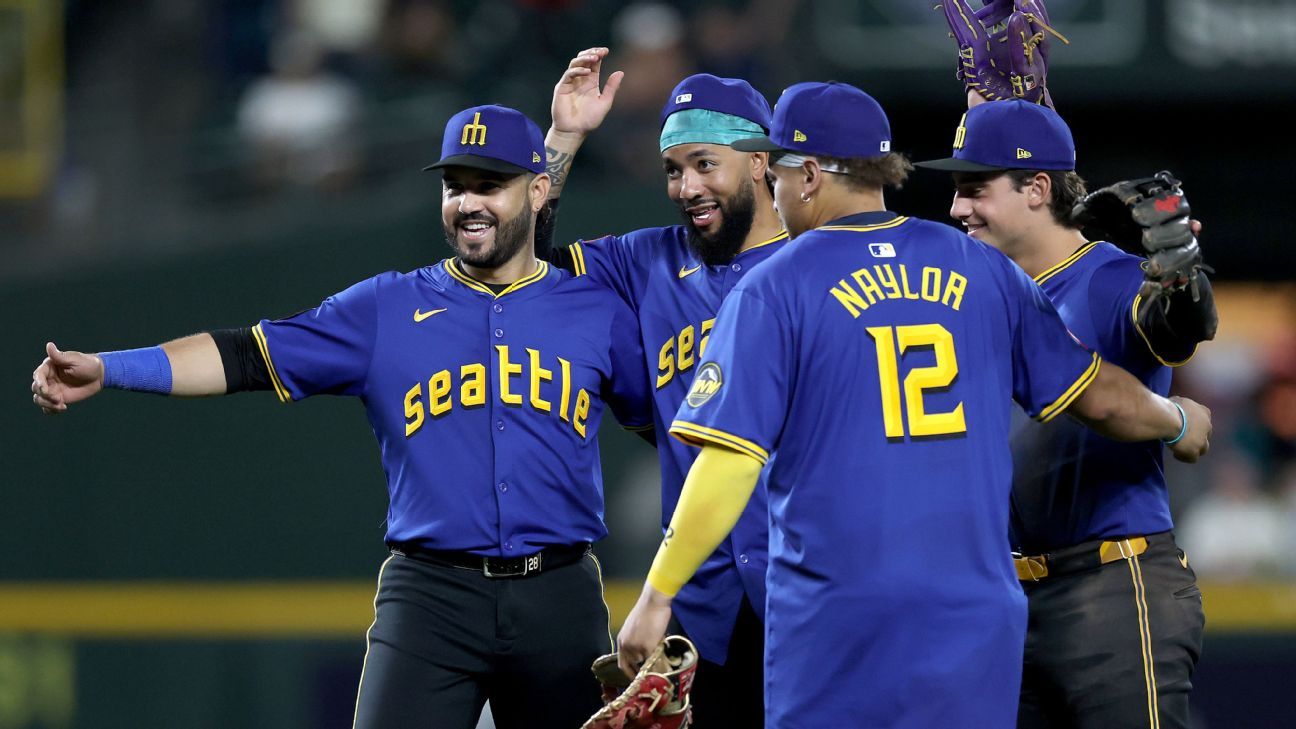
The Joël Robuchon Award for absolutely cooking: The Seattle Mariners
Give the Mariners credit. They got the best bat at the deadline in Eugenio Suárez, filled a position of need at first base with Josh Naylor, deepened their bullpen with left-hander Caleb Ferguson and did so without sacrificing Colt Emerson, Jonny Farmelo, Ryan Sloan, Jurrangelo Cijntje, Michael Arroyo, Lazaro Montes, Harry Ford or Felnin Celesten, all top 100-caliber prospects.
The new-look Mariners took three of four from the Rangers, with whom they entered their series tied, over the weekend. Seattle is almost fully healthy — and with Bryce Miller carving in his rehab assignment with a fastball tickling 98 mph and Victor Robles potentially back in September, the Mariners are two recalls away from having the scariest squad they have had since their resurgence started in 2021.
By no means did they fleece the Diamondbacks for Suárez and Naylor. Arizona needed pitching and got quality arms in both deals, and Tyler Locklear should be the team’s first baseman for the next half-decade. But this deadline was about an organization that has drafted as well as any in the 2020s shedding its relative conservatism to take a run in a year where there is no favorite. That’s worthy of some Robuchon potatoes.


The Cubs and Red Sox entered deadline season in search of the same archetype: a high-end starting pitcher with multiple years of club control. Both exited with that need unfulfilled.
Boston came close. The Red Sox were willing to part with a number of high-end prospects to land right-hander Joe Ryan from the Minnesota Twins. But that wasn’t expressed until the deadline was nearing, and the Twins were so deep in other talks to disassemble their roster, the prospect of moving Ryan had lost appeal. The Cubs landed Michael Soroka from the Washington Nationals the day before the deadline, but the prices on Ryan, Nationals left-hander MacKenzie Gore and right-handers Sandy Alcantara and Edward Cabrera of the Miami Marlins were too high for Chicago’s liking.
The balance the majority of front offices try to strike is not easy. They want to win this year, but they also want to win going forward. What’s most telling is that these are two organizations with enormous expectations — and limitations. When the Red Sox dealt Yoan Moncada in 2016, they were consistently a top-five payroll team. Hoarding young, affordable players wasn’t nearly the imperative it is now, when for the past three seasons Boston has entered Opening Day with a payroll outside the top 10. When the Cubs made the Aroldis Chapman deal in 2016 and the Jose Quintana deal the next season, they were consistently a top-six payroll team. Over the past five years, their Opening Day payrolls have ranked 12th, 14th, 11th, ninth and 12th, respectively.
Could their front offices have ignored those realities and gone for broke? Sure. And none of their fans would have minded. For now. But if they lost in October this year and one of the prospects they moved broke out, not only would the deals be seen as failures, but because they would’ve been made against the advice of analytical models, they would’ve been of the you-should’ve-known variety.
Running a team isn’t easy. Running a team that has pulled back on payroll for seemingly no good reason is a particular sort of challenge. The fact that there is no true World Series favorite this year makes the frustration from fans especially warranted, but it’s also a reminder that no decision is made in a vacuum. Context with the Red Sox and Cubs matters.

The Juggling Octopus Award: The Minnesota Twins
The Twins are for sale. What had one meaning going into the deadline — the franchise has been on the market since this past October — took on a completely different one in the final 48 hours of trade season, when Minnesota shipped off 10 big leaguers and completely altered its trajectory.
The bloodletting was stunning in its scope. The Twins traded their highest-paid player, shortstop Carlos Correa, to Houston. They moved their closer, Jhoan Duran, to Philadelphia, which later acquired center fielder Harrison Bader from Minnesota. They sent right-hander Chris Paddack to Detroit, unloaded their bullpen of Brock Stewart (Los Angeles Dodgers), Danny Coulombe (Texas) and Louie Varland (Toronto Blue Jays, along with first baseman Ty France). Super-utility man Willi Castro went to the Cubs. And finally — and most surprising — relief ace Griffin Jax landed in Tampa Bay.
Just like that, players making around $65 million this year were gone in an instant, replaced by a mixture of big leaguers (right-hander Taj Bradley and outfielders James Outman and Alan Roden), high-end prospects (catcher Eduardo Tait, right-hander Mick Abel, left-hander Kendry Rojas) and lottery tickets. Days later, the industry remains stunned by the extent of the dump.
How much of it is attributable to clearing the books for the sale of the team is unclear. But what shouldn’t be lost in it is that the Twins still find themselves in a reasonable position to compete going forward. Joe Ryan and Pablo Lopez are an excellent 1-2 atop the rotation. The everyday lineup, with Byron Buxton, Royce Lewis, Matt Wallner and Ryan Jeffers, will soon be complemented by top prospects like Walker Jenkins, Emmanuel Rodriguez, Luke Keaschall and Kaelen Culpepper. They’ve got excellent starting-pitching depth. And suddenly they’ve got plenty of payroll flexibility for the winter.
Will the new owner use it? That’s the key, of course. A fire sale is to tear down. A recommitment of resources is a strategy most teams don’t have the gumption to undertake. Which course the Twins chart won’t be clear until next spring.

When it was first reported that the Astros were keen on re-acquiring Correa, a linchpin of Houston’s run to seven consecutive AL Championship Series, the news registered as a shock. Correa’s journey — free agent market craters, signs short-term with the Twins, opts out, has deals with San Francisco and the New York Mets fall apart, returns to Minnesota — felt like it had reached an end.
Particularly when the Astros insisted on the Twins eating upward of $50 million of the $104 million owed Correa through the end of 2028 and throwing in a reliever like Jax. Minnesota wasn’t against trading Correa; it was against stupidity. The deal looked dead going into the last 24 hours before the deadline.
It was defibrillated when the Astros moved off the additional-player ask and upped their end of covering Correa’s salary to $71 million. The deal came together about two hours before the deadline, helping Houston get past the season-ending right hamstring tear of third baseman Isaac Paredes and bolster itself as Houston’s two closest competitors, the Mariners and Rangers (who acquired right-hander Merrill Kelly and right-handed reliever Phil Maton along with Coulombe), saw the AL West crown within reach.
To pave the way for the deal, Correa waived his no-trade clause. He never left Houston, keeping a home there, and when the Astros return from their current nine-game road trip on Aug. 11, the ovation will be deafening. For all the foundational pieces that have left the Astros, the sight of Correa and Jose Altuve sharing an infield will conjure memories Houstonians won’t ever forget.

For all the talks Cleveland held with other teams about left fielder Steven Kwan — and there were plenty — the Guardians wound up not moving the two-time All-Star despite a number of strong offers. Perhaps no team in MLB navigates trade talks of veteran players with the discipline and conviction of the Guardians. They set an asking price on Kwan. No one met it. So, they held him.
And that’s a good thing for a city like Cleveland, which has never gotten used to its team’s propensity to extract value out of tenured players before they reach free agency. There is a specific sort of pride in Cleveland, which has suffered without a championship longer than any other baseball team, and the prospect of kicking the can down the road again invoked painful memories of the departures of CC Sabathia, Francisco Lindor, Cliff Lee and plenty of others.
Between José Ramírez and Kwan, the Guardians have two of the steadiest players in the game. Building a lineup around them — and fashioning a proper rotation as well — is the trick on a skimpy payroll. A deal for Kwan could materialize again over the winter, which tends to be when position players get a greater return than at the deadline. Might the bridesmaids for free agent Kyle Tucker see Kwan — a lesser player, but a damn good one still — as a reasonable fallback plan? Sure.
It’s all part of life for the Guardians, who reflexively shuffle as if they’re stuck in an endless game of three-card monte. For now, they held off. And perhaps they can use the next three months to fashion the sort of contract-extension offer that would convince Kwan to remain in a Guardians uniform for a long time to come.

The One Big Move Can Change Everything Award: The Philadelphia Phillies
The Phillies wanted — needed — a late-inning relief solution after the past calendar year reminded them of the necessity of bullpen stability. As good as their relievers were this past year during the regular season, the bullpen faltered spectacularly during their division series loss against the Mets. Compound that with the struggles of closer Jordan Romano, the loss of José Alvarado for the coming October due to a previous performance enhancing drug suspension and the fragility of their other relievers, and there was no team that needed a player more than the Phillies did a fireman.
Enter Jhoan Duran. The fit was perfect. It cost the Phillies in Tait and Abel — a prospect price they were willing to pay because it didn’t include Andrew Painter, Aidan Miller or Justin Crawford, their top three. And it gave them a lockdown closer with arguably the best pure stuff in baseball. His “splinker” and curveball are his two best pitches, which is saying something considering Duran runs his fastball up to 103 mph and has hit triple digits 161 times this season.
Beyond Duran, the Phillies can turn to Orion Kerkering and Matt Strahm and hope they fare better this October than last. David Robertson will arrive soon to bolster the group. Tanner Banks has been good. They’re not the Padres. They’re not the Brewers. But with the best starting rotation in the NL, they don’t need to be. Philadelphia’s relievers simply need to be good enough, and after the addition of Duran, they are.


The October Is For Relievers Award: The New York Mets and Yankees
About 59% of innings this year have been thrown by starting pitchers. In recent seasons, that percentage has dropped demonstrably come the postseason. Relievers account for around 50% of the innings pitched in the playoffs. And teams at this deadline acted like they understood the necessity for bullpen help.
Nobody added more relief help than the New York teams. The Mets gave up a lot to add Ryan Helsley and Tyler Rogers to a bullpen that already includes Edwin Díaz, Brooks Raley and Reed Garrett, and as much as it cost in prospects, they didn’t have to move any of their troika of top-flight starting pitchers (Jonah Tong, Nolan McLean and Brandon Sproat) or their positional standouts (Jett Williams and Carson Benge).
The Yankees not only got relief arms in former Pirates closer David Bednar, Giants closer Camilo Doval and Rockies setup man Jake Bird, but control them for multiple years. As grisly as Bednar, Doval and Bird’s debuts were with the Yankees — the sweep at Miami’s hands over the weekend was the nadir of New York’s season — they ultimately will make the bullpen better.
Is it good enough to help them traverse the AL? The team that has spent most of the season atop the standings table, Detroit, thought enough of bullpen depth to acquire four relief arms at the deadline. The Astros, currently atop the West, have the second-best bullpen ERA in the AL — behind the Red Sox, who leapt ahead of the Yankees in the standings over the weekend. And the Blue Jays’ relief corps has the second-highest strikeout rate of any big league bullpen. The Mets and Yankees simply did what they needed to do to compete.

Cardinals president of baseball operations John Mozeliak could have gone out and floated any number of desirable players, from Brendan Donovan to Ivan Herrera to Lars Nootbaar, and found a market worth pursuing. Instead, Mozeliak kept things simple, and it was the right thing to do.
He’s leaving his position at the end of the season, ceding to former Red Sox chief baseball officer Chaim Bloom, and in unloading only Helsley, Maton and Steven Matz — all impending free agents — Mozeliak did not overstep his bounds and make deals that should be the purview of his replacement. Other executives might have let ego get in the way in trying to put one final stamp on a franchise they’ve run for more than a decade. Mozeliak instead recognized this is Bloom’s team going forward, and figuring out how to pilot a group that’s good but not good enough is no longer Mozeliak’s responsibility.
There is urgency for change with the Cardinals; it’s just not the sort of urgency that needed to be met by an outgoing executive. For all the disappointment the Cardinals have provided in the last three seasons — attendance is down in that time from more than 40,000 per game to less than 29,000 — they’ve got plenty of room to expand their payroll, a future star on the cusp of the big leagues in JJ Wetherholt and a wide suite of options going into this winter. In a division as competitive as the NL Central will be over the next half-decade, they’re going to need everything they can get.

Know thyself. It’s perhaps the most important characteristic for any front office. Know the quality of your big league team, know your personnel, know your strengths, know your weaknesses, know your purpose. A cursory glance at the Royals could have left outsiders wondering what business a sub-.500 team had adding at the deadline. And yet it was the perfect example of the Royals understanding themselves.
Even with ace Cole Ragans sidelined and All-Star left-hander Kris Bubic out for the season, both with left shoulder injuries, the Royals know their market. They know Kansas City suffered too many non-competitive seasons to spend the final two months of this season reliving those memories. They know that they want to get a new stadium built, and the first effort at that led to voters rejecting a proposal that would have helped erect one. They know that they’ve got only so many years of Bobby Witt Jr. before he can opt out of his contract. They know, more than anything, that a wild card spot in the AL can be back-doored — because they saw Detroit, nearly 10 games under at the deadline this past year, do just that.
So, yeah, if the price isn’t prohibitive, why not try to win? Kansas City got outfielders Mike Yastrzemski and Randal Grichuk along with pitchers Bailey Falter, Ryan Bergert and Stephen Kolek without giving up a top prospect. The best player the Royals dealt was catcher Freddy Fermin, and considering their top two prospects are catchers Carter Jensen and Blake Mitchell, they moved from a position of strength. The Royals telegraphed this tack when they signed right-hander Seth Lugo to a two-year, $46 million extension, but it still caught some in the industry off-guard.
Perhaps it shouldn’t have. The desire to win is easy to talk about and far tougher to prove through action. The Royals remain a long shot to make the postseason, but inside the clubhouse, the players are appreciative of that shot, and it’s the sort of goodwill that, while immeasurable, is absent in the clubhouses of the teams that closed the deadline with a whimper.

The Let’s Win One For The Gipper Award: The Tampa Bay Rays
The Rays could have been the Twins. They could have gotten a huge return for Yandy Diaz and Brandon Lowe, moved closer Pete Fairbanks, made a half-dozen other moves and culled their already-low payroll to an embarrassingly low mark — under that of what Juan Soto makes all by himself.
Instead, the Rays played the deadline like only the Rays can. They got rid of their two most desirable expiring contracts in starter Zack Littell and catcher Danny Jansen. And they backfilled those spots via a deal for right-hander Adrian Houser (who has been tremendous this year), a three-way deal that landed them a controllable catcher (Hunter Feduccia) and the most surprising non-Correa trade, landing Griffin Jax for Taj Bradley at the deadline buzzer.
Why didn’t they go full dump mode? Beyond a similar rationale to that of the Royals — the league puts the AL in awful — they wanted to give owner Stu Sternberg, whose sale of the team should be complete sooner than later, one last shot at a playoff run.
Sternberg is beloved by Rays employees who appreciate his willingness to allow them to run an experiment in baseball operations. Under Sternberg, the Rays have managed to remain among the most successful teams in the game despite a distinct lack of payroll resources. What Sternberg gave them was leeway. To value things other teams didn’t. To build a front office that has figured out how to marry scouting and analytics to great effect. To create a culture that has kept employees engaged where in other organizations they would have grown bitter.
He was not the best owner, by any objective measure. He was far from the worst, though. And even if the Rays don’t claw their way back in the standings — at 55-58, they’re five games back of the final wild-card spot and must leap four teams to get there — they’ve got a chance, and that’s all they ever really want.


On Monday, the next installment of the Battle of Florida will be contested between the Tampa Bay Lightning and Florida Panthers, a rivalry that has certainly intensified in recent years.
The two teams entered the league one year apart. The Bolts in 1992 and the Cats a year later.
Although the Panthers miraculously made it to the Stanley Cup Final in their third season, the state of Florida wasn’t truly on the hockey map until the Lightning won the title in 2004.
But for most of the two teams’ existence, the rivalry was purely geographical, with the hockey world largely focusing on other feuds or thriving franchises. Despite achieving far less success in the 23 years after they made the Cup Final in 1996, the Panthers won the lion’s share of games against the Lightning. In that same 23-year span, the Cats had a sub-.500 record against the Lightning in only seven seasons, and the club’s all-time record against their in-state rival is 79-54-29.
But this truly became the “Battle” when both teams became great, and that has been in the past six seasons. The pair met in the playoffs for the first time in 2021, which is the perfect start of this era — Tampa Bay was coming off a Stanley Cup win in 2020 (in the bubble) and dispatched Florida in six games en route to their second straight Cup. The Lightning would sweep the Panthers the next season before bowing out to Colorado in the Cup Final, marking three straight trips to the Final.
Then it was Florida’s turn to do the exact same thing, making their three straight trips to the Cup Final (with the streak still active), and beating Tampa Bay 4-1 in back-to-back first rounds in 2024 and 2025 en route to Cup wins. Their playoff records against each other are identical: two series wins, 10-10 overall.
And this feud has turned ugly, bloody and downright nasty. Two preseason games (!) this October saw Lightning and Panthers players maul each other on the ice to the tune of a combined 508 penalty minutes and 26 misconducts. “It just got silly, got stupid,” lamented Panthers forward Evan Rodrigues, describing the chaos that some hockey fans absolutely relish. There were so many ejections that Florida’s Niko Mikkola got ejected, didn’t leave and then assisted on a goal, that had to be called back upon review.
It took a while to get there, but the Battle of Florida is now one of the most bitter rivalries in hockey and has no signs of slowing down. Both teams have thrown haymakers (literally and figuratively) at the other throughout the years. Although this might hurt many traditionalists to hear, the rivalry is an offshoot of both team’s playoff and championship success and that means — if you’re judging this purely on glory at the highest levels — Florida is cemented as the current “State of Hockey.” I don’t make the rules, people, I just bring them to light.
The Panthers and Lightning drop the puck on Monday in Tampa Bay. It’s without a doubt one of the biggest games of the week.
Jump ahead:
Games of the week
What I loved this weekend
Hart Trophy candidates
Social post of the week
Stick taps
Biggest games of the week
I have my eyes firmly on every game the Minnesota Wild, Pittsburgh Penguins and Edmonton Oilers play this week. Purely because I want to see the immediate impact the traded players will be making. And there’s some overlap!

The Quinn Hughes trade was a Friday night shocker. Minnesota! What a coup!
The Wild play the Washington Capitals on Tuesday (one of the teams rumored to be in on the Hughes trade talks), followed by the the Columbus Blue Jackets on Thursday, and the Colorado Avalanche on Sunday (a big test). Before the Avs, they’ll host the Oilers on Saturday … when I hope Tristan Jarry will be starting, and we get some sort of Hughes scoring chance on the new Oilers goalie.

Aside from the showdown in Minnesota, the Oilers have the Boston Bruins on Thursday and Vegas Golden Knights on Sunday (a big offensive test).
Jarry won his first game with the Oilers on Saturday, a 6-3 victory in Toronto.

The Penguins, with Stuart Skinner and Brett Kulak now in the mix, face the Ottawa Senators on Thursday, then have a home-and-home series against the Montreal Canadiens on Saturday and Sunday.
But I have a big red circle around Tuesday on my calendar, because the Oilers face the Penguins. Hockey trade bingo! It’s always awesome when traded players face their old teams right away. It’s like getting early and tangible “who won the trade?” argument fodder based on how the traded players perform. Let’s hope the coaches help out the narrative and start both Jarry and Skinner in this one.
Other key games this week
MONDAY
8 p.m. ET | ESPN+
TUESDAY


7 p.m. ET | ESPN+


7 p.m. ET | ESPN+

7 p.m. ET | ESPN+
WEDNESDAY
7 p.m. ET | ESPN+
THURSDAY

7 p.m. ET | ESPN+
FRIDAY

7 p.m. ET | ESPN+

10 p.m. ET | ESPN+
SATURDAY

12:30 p.m. ET | NHL Network
7 p.m. ET | ESPN+
SUNDAY
1 p.m. ET | NHL Network
What I loved this weekend
The San Jose Sharks are a lot of people’s second favorite team, and they made a whole bunch of fans happy — outside of Pittsburgh, of course — on Saturday. Down 5-1 with 12 minutes to play in the game, the Sharks scored four unanswered goals in the third period, then won the game in overtime. And no, this was not Stuart Skinner‘s debut — his immigration paperwork was held up, so it was Arturs Silovs in goal for the Penguins.
1:51
Sharks score 5 unanswered to rally for OT win vs. Penguins
The Sharks put five unanswered goals past the Penguins over the third period and overtime in a huge comeback win.
This marks only the 26th time in NHL history a team was down four goals in the third period and won the game.
This is where I tell Maple Leafs fans to look away. Because the ESPN Research team dug even deeper, and found that there were only two instances of teams that came back from five-goal deficits in the third period and won the game.
The two teams that pulled off this feat were the Calgary Flames in 1986-87 and the St. Louis Blues in 2000-01.
Their opponents on both occasions? Yes, the Toronto Maple Leafs.
Hart Trophy contenders if the season ended today
Nathan MacKinnon obviously gets a spot. He still leads the league in points and in goals, and has points in five straight games, with nine points total in that span.
Connor McDavid is second in scoring, back to his “I’ll score at will” video game mode, and is also on a five-game point streak, where he has a silly 15 points. Casual Connor, no big deal.
0:49
Connor McDavid lights the lamp for Oilers
Connor McDavid lights the lamp for Oilers
Finally, enough is enough; I’m putting Logan Thompson on my Hart Trophy list! I’m all for goalie Hart pushes. Deal with it.
The Caps are third in the Metro Division, and Thompson has an excellent .922 save percentage through 23 games. Scott Wedgewood will likely rotate into this spot on occasion given how much of an absolute wagon the Avs are this season. Aside from his last game where he let in five goals, Wedgewood has had a terrific stretch, including a shutout.
Social media post of the week
I said this last week, and I’m serious — the 6-7 trend is getting out of control! Now it’s on the back of warmup jerseys. STOP IT NOW!
On to my actual favorite social media from this week. As my fellow pro wrestling heads out there know, John Cena’s final WWE match took place on Saturday (and Cena’s submission to Gunther ignited a reaction from the WWE crowd more heinous than a lengthy offside review). A part of the homage this week was reflecting on the jerseys Cena wore over the years, including a few hockey ones. The Oilers, Kings, Jets and Canadiens were among the pro teams to share posts with Cena wearing their threads:
The funniest one was the Habs, because Cena mimics shooting a puck in his entrance. Which confirms in WWE retirement he will be signing with Montreal, adding bottom-six depth for a playoff push.
Stick taps
I’m going to give my ESPN colleague (and, of course, Stanley Cup champion) T.J. Oshie a lot of credit. He had a “welcome to TV” moment where, because he’s a retired NHL player-turned-citizen of hockey by being on national broadcasts, he received a Stadium Series jersey like the rest of us:
We revealed the #StadiumSeries jerseys! @espnSteveLevy @TJOshie77 @espn @NHL @NHLBruins @TBLightning https://t.co/3nlxP4pgFf pic.twitter.com/sCy6CJ0H5W
— ᴀʀᴅᴀ Öᴄᴀʟ (@Arda) December 12, 2025
The problem is, Oshie never played for the Lightning or the Bruins. But we egged him on and like the true good sport that he is, he put on the Boston jersey, explaining that it resembled his old Warroad team colors.
“I did put it on, somewhat against my will.” 😅@TJOshie77 and @Arda broke down the fine details on the Boston Bruins’ 2026 NHL Stadium Series jerseys 🐻 pic.twitter.com/XuCg9lTzCl
— SportsCenter (@SportsCenter) December 12, 2025
What a sight. I’m sure it was equally jarring to see “Oshie” on the back of the Boston jersey, and perhaps more jarring to see No. 77, Oshie’s number in the NHL that also happened to be Ray Bourque’s number — which the Bruins retired in 2001.
I will jump in here and say that I believe that the retired number rule applies only for active players on that team. Celebrities, analysts, media types, or really anyone that wants to customize a jersey … pick whatever number you want. You’re not suiting up for the team with that number. It’s fine. We can let that one go.
If you want to nominate someone for stick taps in a future column, reach out to me on social media.

-
Bill Connelly
The new era of college football features a larger College Football Playoff and a lower bar (and more forgiveness) for inclusion. Meanwhile, the transfer portal and increased freedom of movement for players have meant that today’s best teams can’t quite stockpile awesome backups as easily as they could in the past.
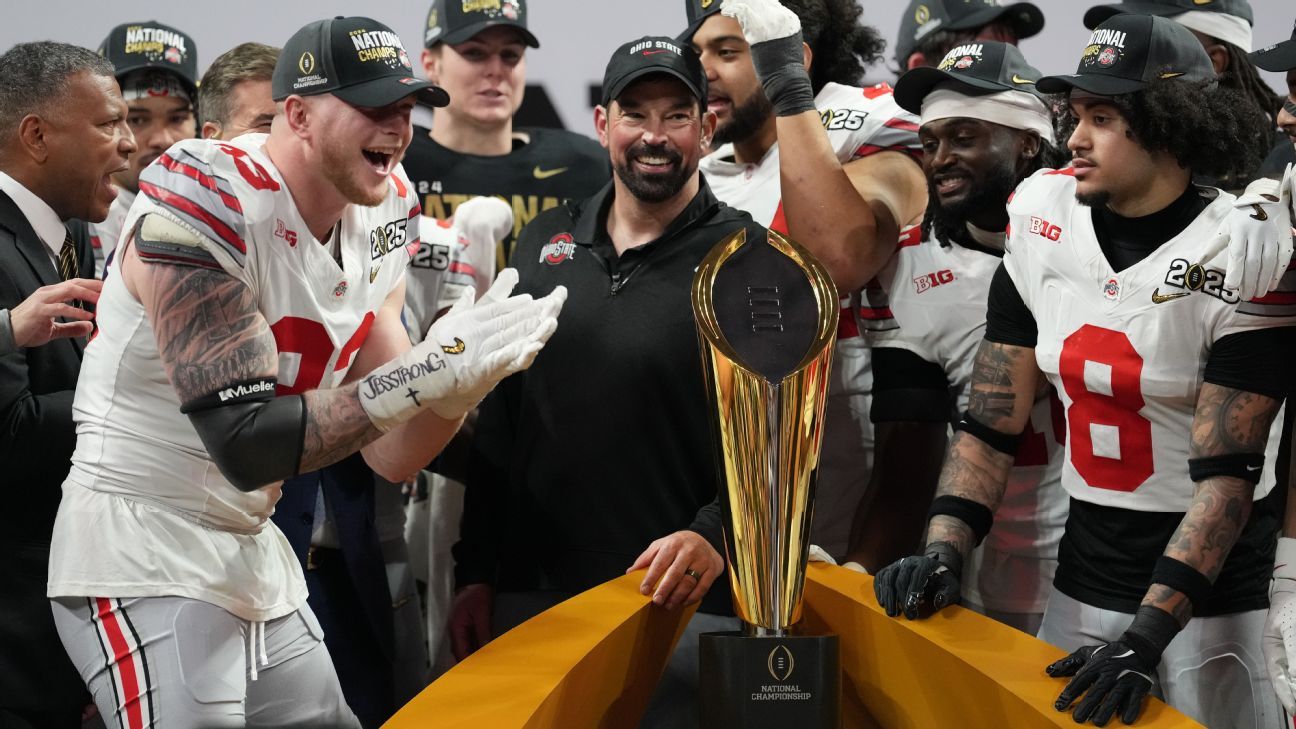
The idea of greatness has, therefore, also changed a bit. As we saw with Ohio State’s incredible national title run in 2024, it’s more about when you peak and less about how high and how long that peak might be.
It might be more difficult, then, for a team to rise to the top of this list, in other words.
It is once again time for me to rank every College Football Playoff team to date. Is it an awkward mix of 40 teams that cleared one bar during the four-team playoff era and 24 teams that cleared a lower bar in the new 12-team era? Absolutely. Is that stopping me from continuing this tradition? Absolutely not. As always, this list is derived through a combination of numbers and my own personal opinions. I start out using my SP+ ratings as a guide, then steer whichever way I want to steer with it. The rankings for 2025’s playoff participants will obviously shift in the future, once we’ve seen how this year’s four-round tournament plays out.
Jump to:
Top 10 CFP teams


64. 2025 Tulane (11-2)
CFP matchup: First round at Ole Miss
Jon Sumrall’s final Tulane team is adaptable and resilient and certainly clears a physicality bar that not every awesome Group of 5 team might. But the Green Wave’s two losses — 45-10 against first-round opponent Ole Miss, 48-26 at UTSA — were a sign that when things go awry, the ceiling is much, much lower than what we might expect from a playoff team.
 63. 2024 Clemson (10-4)
CFP result: Lost to Texas 38-24 in the first round
The first official bid thieves of the 12-team era, Dabo Swinney’s Tigers looked like their hopes were finished after an end-of-regular-season loss to South Carolina. But upsets elsewhere placed them in the ACC championship game, and they won the league with a last-second field goal. That gave them a shot at Texas in the CFP first round, and although they played well while behind, the game was never truly in doubt.
 62. 2024 SMU (11-3)
CFP result: Lost to Penn State 38-10 in the first round
Rhett Lashlee’s Mustangs made the absolute most of their first power conference campaign in three decades, going 8-0 in the regular season and falling just six points short of a 13-0 start. But they didn’t beat any teams that finished in the SP+ top 20, and they were utterly overwhelmed in the first round in State College, throwing two pick-sixes, suffering countless other miscues and trailing big most of the way.
 61. 2024 Boise State (12-2)
CFP result: Lost to Penn State 31-14 in the Fiesta Bowl quarterfinal
Behind Ashton Jeanty and his 2,601 rushing yards (not to mention a fierce pass rush), Boise State nearly took down Oregon in Week 2 and headed into the CFP having won 11 straight games. The Broncos couldn’t overcome a slow start in the Fiesta Bowl, however, trailing PSU 14-0 after about 11 minutes, clawing to within three points in the third quarter and eventually falling because of turnovers and red zone failures.

60. 2025 James Madison (12-1)
CFP matchup: First round at Oregon
Bob Chesney’s final JMU team faced only one power conference opponent and suffered offensive ups and downs early on, but the Dukes have risen to 24th in SP+ because of a dynamite homestretch. They’ve outscored their past seven opponents by an average of 28 points with aggressive defense and increasingly explosive offense. Do they have the upside to scare Oregon? Probably not, but they earned their spot.

59. 2015 Michigan State (12-2)
CFP result: Lost to Alabama 38-0
Mark Dantonio’s 2015 Spartans are proof that no matter what the committee said, it was picking the four “most deserving” teams rather than the four “best” — MSU was definitively the former and in no way the latter. And that’s fine! The Spartans finished 18th in FPI and 15th in SP+ but beat a dynamite Ohio State team and outlasted unbeaten Iowa to win the Big Ten. Then they did exactly what was expected of them against Alabama in the Cotton Bowl: They lost big.

58. 2025 Alabama (10-3)
CFP matchup: First round at Oklahoma
Alabama basically earned its playoff spot in October, beating Georgia, Vanderbilt, Missouri and Tennessee to craft a dynamite résumé. But due primarily to increasing numbers of offensive mistakes, the Tide’s form slipped dramatically. The committee did them a massive favor by completely ignoring poor late performances against Auburn (narrow win) and Georgia (blowout loss). Will Alabama reward the committee for its faith?

57. 2025 Oklahoma (10-2)
CFP matchup: First round vs. Alabama
The Sooners’ defense is playoff worthy by any definition, and the offense has mastered the art of opportunism — it doesn’t create nearly enough chances, but makes the most of what it creates. Tight November wins over Tennessee and Alabama drove some late résumé boosting, and a clutch, season-ending win over LSU kept Oklahoma in the field. But that offense sure looks like a fatal flaw.

56. 2019 Oklahoma (12-2)
CFP result: Lost to LSU 63-28
After three years at No. 1, Lincoln Riley’s 2019 Sooners slipped to third in offensive SP+, and the defense wasn’t good enough to make up for this smidgen of offensive mortality. They rolled to 7-0 but stumbled against Kansas State and had to survive four tight wins in their final five games. That was enough to earn the Sooners their fourth CFP appearance in five years, but they got destroyed in the Peach Bowl.
55. 2020 Notre Dame (10-2)
CFP result: Lost to Alabama 31-14
Brian Kelly’s Irish beat Trevor Lawrence-less Clemson in overtime, and behind consensus All-America offensive linemen Aaron Banks and Liam Eichenberg, they proved physical, mature and adaptable while starting the season 10-0. But in their final two games, against a full-strength Clemson team in the ACC championship game and Alabama in the Rose Bowl, the Irish were outscored 65-24.
 54. 2024 Indiana (11-2)
CFP result: Lost to Notre Dame 27-17 in the first round
Curt Cignetti’s first Hoosiers team benefited from a pretty easy Big Ten schedule but won seven games by at least 24 points and finished the regular season second in the country in points per drive and sixth in points allowed per drive. Unfortunately, quarterback Kurtis Rourke‘s season-long ACL injury finally caught up to him with a poor CFP performance, and the Hoosiers couldn’t overcome a slow start in South Bend.

53. 2025 Miami (10-2)
CFP matchup: First round at Texas A&M
The Hurricanes started and finished the season looking the part and overcame a midseason funk that included timid, turnover-plagued losses to Louisville and SMU. A smart, aggressive defense gives them the upside to compete with anyone, and the offense enjoys long runs of efficiency thanks to quarterback Carson Beck and receiver Malachi Toney. Do they have the close-game chops required to make a run? We’ll see.
 52. 2024 Arizona State (11-3)
CFP result: Lost to Texas 39-31 in the Peach Bowl quarterfinal
It’s tricky figuring out where to place a team that didn’t look the part until November, then very much looked the part. As late as Week 12 in 2024, ASU’s playoff odds were minuscule. But the Sun Devils won six straight down the stretch, and star Cam Skattebo almost took them even further. Behind his 242 yards from scrimmage against Texas, they were one play away from the semifinals but fell agonizingly short.
 51. 2024 Tennessee (10-3)
CFP result: Lost to Ohio State 42-17 in the first round
Despite Josh Heupel’s offensive tendencies, his Vols reached the CFP in 2024 by fielding their best defense since 1999. They ran the ball well, defended the run better than anyone and rode a home win over Alabama to a playoff berth. Unfortunately, their limitations were made clear in Columbus. They punted three straight times to start the game, found themselves quickly down 21-0 and couldn’t recover.

50. 2025 Texas A&M (11-1)
CFP matchup: First round vs. Miami
With bursts of spectacular upside countering frustrating funks — most vividly captured by a 27-point comeback against South Carolina — Mike Elko’s Aggies went 4-0 in one-score games; avoided Georgia, Alabama and Ole Miss in SEC play; and began the season 11-0. They have a speedy skill corps, a beautifully structured offense, a fierce pass rush and a first-round home game. But a playoff tends to punish funks.

49. 2014 Florida State (13-1)
CFP result: Lost to Oregon 59-20
The Seminoles returned lots of key figures from their 2013 national title romp, but they had to eke out tight win after tight win — seven one-score games in all. While the BCS would have given us a Bama-FSU title game that year, the CFP gave the Noles the No. 3 seed and sent them to the Rose Bowl, where a 34-0 Ducks run ended Florida State’s 29-game winning streak in stark fashion.
48. 2018 Notre Dame (12-1)
CFP result: Lost to Clemson 30-3
The Fighting Irish earned their spot in the playoff with increasingly dominant wins over quality Michigan, Stanford and Syracuse teams. The defense was solid and excellent (second in defensive SP+), but the offensive limitations were made crystal clear when the Irish had to face Clemson in the Cotton Bowl. The game was tied after one quarter, but it got much, much worse from there.

47. 2025 Ole Miss (11-1)
CFP matchup: First round vs. Tulane
The Rebels’ stay in the 2025 playoffs might forever be defined by who wasn’t there — Lane Kiffin left for LSU after the regular season — and they probably don’t have the same raw upside as the 2024 team that fell just short of a bid. But Ole Miss can both run through and pass over opponents, and the only test the Rebels haven’t passed this year is “Can you survive a rugged fourth quarter in Athens?” They’re capable of a run.

46. 2021 Cincinnati (13-1)
CFP result: Lost to Alabama 27-6
Even adjusting for strength of schedule, Luke Fickell’s CFP debutants finished sixth in SP+. The Bearcats physically dominated a strong Notre Dame squad and absolutely earned their playoff spot, and once there, they hemmed in Bryce Young and the Alabama passing attack. The problem: They got gashed by the Bama run game and, more importantly, couldn’t even slightly protect quarterback Desmond Ridder in a Cotton Bowl loss.
45. 2018 Oklahoma (12-2)
CFP result: Lost to Alabama 45-34
OU lost Baker Mayfield but somehow improved offensively. Kyler Murray threw for 4,361 yards and rushed for 1,001, but unfortunately, the defense was dreck. Lincoln Riley fired coordinator Mike Stoops six games in, but the Sooners allowed 44 points per game over their final six contests and gave up 31 first-half points to Alabama in the Orange Bowl. That was too much for even Murray to overcome.
44. 2015 Oklahoma (11-2)
CFP result: Lost to Clemson 37-17
Bob Stoops’ Sooners headed into 2015 with a new offensive coordinator (Lincoln Riley) and a transfer quarterback (Baker Mayfield), and after a disappointing 2014, OU reignited. The Sooners won a loaded Big 12 and were 3.5-point favorites against Clemson in the Orange Bowl. They took a 17-16 lead into halftime, but Clemson shifted into fifth gear in the second half and sent the Sooners home with a 20-point loss.

43. 2016 Ohio State (11-2)
CFP result: Lost to Clemson 31-0
After what might have been Urban Meyer’s most talented Ohio State team missed the CFP in 2015, the most offensively limited one made it the next year. The defense was strong enough to limit Deshaun Watson and Clemson to just two touchdowns in the Tigers’ first 10 drives in the semifinal, but the Buckeyes’ offense, which ranked 20th in offensive SP+ (terrible by their standards), got embarrassed.

42. 2017 Clemson (12-2)
CFP result: Lost to Alabama 24-6
You know your program is in great shape when “transition year” means “only making the CFP semis.” The Tigers boasted perhaps the best defense of the Dabo Swinney era, but Deshaun Watson was gone, and Trevor Lawrence wouldn’t arrive in town for another year. Clemson was too good for the rest of the ACC but gained just 188 yards against Alabama in the Sugar Bowl, bowing out slightly earlier than normal.
41. 2023 Alabama (12-2)
CFP result: Lost to Michigan 27-20
Nick Saban’s final team was maybe his worst since 2007 and ranked just eighth in the CFP rankings before an SEC championship upset of Georgia. The Tide mastered the art of surviving, advancing and saving their best performance for the most important games. And when they were given a lifeline by snagging a CFP spot over Florida State, they nearly made the most of it, leading eventual champ Michigan into the final two minutes before succumbing in overtime.
40. 2021 Michigan (12-2)
CFP result: Lost to Georgia 34-11
A loss to Michigan State set Jim Harbaugh’s Wolverines back early on, but they took down Ohio State for the first time in a decade, then stomped Iowa to win their first outright Big Ten title since 2003. This was an excellent team and the champion of an excellent conference, but the Wolverines ran into a slight problem in the Orange Bowl: They weren’t better than Georgia at a single thing. That will catch up to you.
 39. 2024 Penn State (13-3)
CFP result: Beat SMU 38-10; beat Boise State 31-14; lost to Notre Dame 27-24 in the Orange Bowl semifinal
James Franklin’s Penn State tenure was defined by an extreme ability to control the controllables and a failure to rise to the biggest occasions. The Nittany Lions beat SMU and Boise State as comfortable favorites to reach the 2024 semis and came achingly close to beating Notre Dame. But they came up short, and their attempt to keep the band together and go all-in in 2025 crumpled to the ground too.

38. 2023 Texas (12-2)
CFP result: Lost to Washington 37-31
Steve Sarkisian’s Longhorns gave Alabama its first double-digit home loss of the entire Nick Saban era. They beat seven other bowl-eligible teams by an average of 24 points and pummeled Oklahoma State by 28 in the Big 12 championship game. They returned to relevance in a major way, but they couldn’t slow Michael Penix Jr. and Washington in the Sugar Bowl. The Huskies quarterback threw for 430 yards and made Texas’ first playoff stay a one-gamer.
37. 2022 TCU (13-2)
CFP result: Defeated Michigan 51-45; lost to Georgia 65-7 in the national championship
Heisman runner-up Max Duggan and the Horned Frogs were close-game masters, winning five one-score games during a 12-0 start and losing only to a top-10 Kansas State team in the Big 12 championship. Their big-play ability and volatility were fully on display in the CFP, where they pulled off an upset of Michigan in maybe the best game of 2022, then got absolutely trounced by Georgia in the national title game.
 36. 2024 Texas (13-3)
CFP result: Beat Clemson 38-24; beat Arizona State 39-31; lost to Ohio State 28-14 in the Cotton Bowl semifinal
With a dynamite defense and an occasionally wobbly offense, Steve Sarkisian’s Longhorns went 13-0 against teams not named Georgia or Ohio State in 2024. They narrowly survived Arizona State in the quarterfinals thanks to clutch late play from quarterback Quinn Ewers, and they were driving to tie their semifinal late against Ohio State before a Jack Sawyer scoop-and-score touchdown sealed their fate.

35. 2016 Washington (12-2)
CFP result: Lost to Alabama 24-7
Chris Petersen’s Huskies sent a message by beating a top-20 Stanford squad by 28 points in September, then finished up by felling Colorado by 31 in the Pac-12 championship game. An outstanding defense led by Budda Baker and Greg Gaines mostly controlled Alabama in the Peach Bowl, too; Washington trailed just 10-7 late in the first half before a Ryan Anderson pick-six changed the game.
 34. 2024 Georgia (11-3)
CFP result: Lost to Notre Dame 23-10 in the Sugar Bowl quarterfinal
Georgia survived upset bids and a late-season injury to quarterback Carson Beck to still brawl its way to the SEC title despite lacking the elite-level talent that won it the 2021 and 2022 national titles. But the Bulldogs couldn’t do Gunner Stockton enough favors against Notre Dame, in his first career start, and allowing 17 points in 56 seconds in the middle of the game was too much to overcome.
33. 2025 Georgia (12-1)
CFP matchup: Sugar Bowl quarterfinal vs. Ole Miss or Tulane
The current version of the Dawgs scraped by early with nothing but guile and second-half adjustments, then kicked into gear late. An inexperienced defense established a high level in November, and Georgia avenged its lone loss, to Alabama, with an SEC championship game blowout. Do the Dawgs have the big-play capabilities for a playoff run? I’m not sure, but as always, you do not want to find yourself in a brawl with Georgia.

32. 2025 Oregon (11-1)
CFP matchup: First round vs. James Madison
Oregon’s 2025 outfit combines the offensive upside we’re used to seeing from the Ducks — especially from a run game featuring Noah Whittington, Jordon Davison and Dierre Hill Jr. — with a Big Ten-level defense capable of driving rock-fight wins. Dan Lanning’s team fell only to Indiana in the regular season, but of the teams that didn’t receive a first-round bye this year, the Ducks are the most likely to make a big run.
31. 2017 Oklahoma (12-2)
CFP result: Lost to Georgia 54-48
After a bumpy start, Lincoln Riley’s first Sooners squad found its top gear midway through 2017, winning its final six Big 12 games by an average of 23 points, earning Baker Mayfield the Heisman Trophy and surging to a 31-14 first-half lead over Georgia in the Rose Bowl. The Sooners couldn’t hold on, though. Georgia came back twice to force overtime and won what still is one of the best games of the CFP era.

30. 2025 Texas Tech (11-1)
CFP matchup: Orange Bowl quarterfinal vs. Oregon or James Madison
Tech has beaten the spread in 12 of 13 games this season, a sign that we continue to underestimate just how impressive the Red Raiders are. They might have the two best defensive players in the sport in Jacob Rodriguez and David Bailey, and despite multiple injuries to QB Behren Morton (who was hurt during their lone loss), they’ve scored fewer than 29 points just once. Each of their 12 wins has come by at least 22 points.
29. 2023 Washington (14-1)
CFP result: Beat Texas 37-31; lost to Michigan 34-13
The TCU of 2023, Washington boasted both an explosive passing game — Michael Penix Jr. threw for 4,903 yards, mostly to the incredible trio of Rome Odunze, Ja’Lynn Polk and Jalen McMillan — and exquisite timing: The Huskies won eight games by one score, including two wild wins over a dynamite Oregon team and a 37-31 thriller over Texas in the CFP semifinals. They couldn’t keep up with Michigan in the national title game, but that only dampened the run so much.
28. 2022 Ohio State (11-2)
CFP result: Lost to Georgia 42-41
After face-planting against Michigan for the second straight year, no team stood to gain more from a CFP bid than Ryan Day’s Buckeyes. And they almost gained everything. Thanks to an incredible performance from quarterback C.J. Stroud, Ohio State held a 38-24 Peach Bowl lead on the champs heading into the fourth quarter. And even when Georgia charged back, the Buckeyes had a field goal try at the buzzer to win it. But it missed badly.
27. 2020 Clemson (10-2)
CFP result: Lost to Ohio State 49-28
It’s hard to properly grade a team that was without its star quarterback for one of its two losses (Trevor Lawrence vs. Notre Dame). But while Lawrence threw for 3,153 yards in just 10 games and Travis Etienne was dangerous as both a receiver and a runner, the Tigers’ defense had a bit of a big-play issue at times. And in the semifinal at the Sugar Bowl, they got dominated in the trenches, which made the biggest difference in a 21-point loss to Ohio State.
26. 2022 Michigan (13-1)
CFP result: Lost to TCU 51-45
Jim Harbaugh’s Wolverines improved significantly after their brief stay in the 2021 CFP. They were even better at their go-to manball routine, and they proved to have more explosive offensive weapons as well. (Just ask Ohio State.) They were well-rounded and probably the second-best team of 2022, but they fell victim to an onslaught of TCU big plays and couldn’t pull off a last-minute comeback.
 25. 2024 Notre Dame (11-2)
CFP result: Beat Indiana 27-17; beat Georgia 23-10; beat Penn State 27-24; lost to Ohio State 34-23 in the national championship
With explosive running backs and dynamite defense, Marcus Freeman’s Fighting Irish overcame a baffling early loss to Northern Illinois — and a lack of high-level passing — to roll to a playoff berth. After comfortable wins over Indiana and Georgia, they overcame multiple deficits to beat Penn State and reach the championship game. Only the best team in the country was going to take them down at that point.

24. 2014 Oregon (13-2)
CFP result: Beat Florida State 59-20; lost to Ohio State 42-20
Marcus Mariota combined 4,454 passing yards with 770 rushing yards and 57 total touchdowns (and duly won the Heisman), and the Ducks ranked second in offensive SP+. They scored at least 42 points in nine straight games and put up 59 on defending national champion Florida State … but weren’t able score over the final 20 minutes of the national title game. An overwhelmed Ducks defense couldn’t hold Ohio State back.
23. 2024 Oregon (13-1)
CFP result: Lost to Ohio State 41-21 in the Rose Bowl quarterfinal
In their first Big Ten season, the Ducks won their first 13 games behind Dillon Gabriel‘s ruthlessly efficient passing, a 1,200-yard season from Jordan James and one of the best pass defenses in the country. They beat Ohio State and Penn State and earned the No. 1 seed in the CFP, but luck of the draw was not on their side: They were swarmed by a revenge-minded Buckeyes team in the Rose Bowl quarterfinal.

22. 2025 Ohio State (11-1)
CFP matchup: Cotton Bowl quarterfinal vs. Texas A&M or Miami
The Buckeyes began the regular season with a tight win over Texas, ended it with a tight loss to Indiana and won 11 straight in between by an average score of 39-8. They might have the most talented players in the country on both offense (Jeremiah Smith) and defense (Caleb Downs), and they head into the CFP knowing that peaking now is what matters. It would be a surprise if we didn’t see the Buckeyes’ best in December.
21. 2014 Alabama (12-2)
CFP result: Lost to Ohio State 42-35
The 2014 season saw both the dawn of the CFP era and the beginning of the Great Nick Saban Offensive Evolution. He hired Lane Kiffin to modernize a stale offense, and after an early loss to Ole Miss, the Tide won eight straight to earn the No. 1 seed in the first CFP. They jumped out to a 21-6 lead on Ohio State, but three turnovers and a famous Ezekiel Elliott touchdown run did them in.
20. 2015 Clemson (14-1)
CFP result: Beat Oklahoma 37-17; lost to Alabama 45-40
Eight years ago, Clemson was still an upstart. Quarterback Deshaun Watson was healthy and dominant, and the Tigers began to look the part of a contender. They outlasted Notre Dame in an October monsoon and blew most of a huge lead against North Carolina before surviving. In the CFP, the Tigers surged past Oklahoma in the second half and led Bama before succumbing in what might have been the greatest fourth quarter in CFP history.
19. 2017 Georgia (13-2)
CFP result: Beat Oklahoma 54-48; lost to Alabama 26-23
Kirby Smart’s second UGA team all but ended a 37-year national title drought. The Dawgs won at Notre Dame in September, destroyed all comers in the SEC East and avenged their lone loss with a dominant SEC championship game win over Auburn. They outlasted Oklahoma in the greatest game in CFP history and had Alabama all but beaten in the championship game … until Tua Tagovailoa came onto the field.
18. 2020 Ohio State (7-1)
CFP result: Beat Clemson 49-28; lost to Alabama 52-24
The Buckeyes played only eight games, but they won four by at least 21 points, including a 49-28 victory over Trevor Lawrence and Clemson in the semifinals. They lived up to most of their preseason hype and avenged their 2019 semifinal loss to the Tigers. They also lost the national title game by 28 points. Still, in a year of abbreviated schedules and limited two-deeps, Ohio State was a poster child of sorts, and the Buckeyes looked the part until the final act.
17. 2021 Alabama (13-2)
CFP result: Beat Cincinnati 27-6; lost to Georgia 33-18
Nick Saban’s Crimson Tide had maybe the best offensive (Bryce Young) and defensive (Will Anderson Jr.) players in the country but didn’t enjoy as much depth and experience as normal and were lucky to reach 11-1. But they walloped Georgia in the SEC championship game, then beat Cincinnati with pure physicality to reach the final. They led Georgia in the fourth quarter of the championship game, too, but the Dawgs scored the final 20 points.
16. 2025 Indiana (13-0)
CFP matchup: Rose Bowl quarterfinal vs. Oklahoma or Alabama
It’s hard to tentatively rank a team much higher than this, knowing that up to three more games will be needed to tell the entire tale. But the Hoosiers have the only unbeaten record this season, they just beat Ohio State in one of the more impressive proof-of-concept games in recent memory, and their quarterback just won the Heisman. With three more wins, they would end up well into the single digits here.
15. 2016 Alabama (14-1)
CFP result: Beat Washington 24-7; lost to Clemson 35-31
Freshman quarterback Jalen Hurts took over as Alabama’s starter. A rebuilding season in Tuscaloosa? Hardly. Hurts won SEC Offensive Player of the Year, and the Tide rolled to the CFP final unbeaten, with only one win by single digits. They couldn’t finish the job, though. With star running back Bo Scarbrough hurt, the Alabama offense couldn’t stay on the field, and an exhausted defense gave up three late scores to fall to Clemson.
14 and 13. 2019 Ohio State (13-1) and 2019 Clemson (14-1)
CFP result: Clemson beat Ohio State 29-23, then lost to LSU 42-25
It was overshadowed by LSU’s late-season brilliance, but both the Buckeyes and Tigers were unreal for most of 2019. They went a combined 26-0 in the regular season; 22 of the wins were by at least 24 points, and only one was by single digits. And in the Fiesta Bowl semifinal, they played one of the most even and compelling games in recent college football memory.
Ohio State dominated the early proceedings, going up 16-0 but settling for field goals; that offered Clemson a lifeline, and the Tigers charged back. The second half featured three scores and three lead changes, and after controversy and countless plot twists, Nolan Turner‘s interception of Justin Fields made the difference. If they’d played 100 times, each team would have won 50.
12. 2015 Alabama (14-1)
CFP result: Beat Michigan State 38-0; beat Clemson 45-40
The second Saban-Kiffin mashup showed plenty of early flaws. New starting quarterback Jake Coker was shaky early on and briefly got benched, and while the defense was mostly solid, it got torched by Ole Miss in an early loss. But the Tide manhandled No. 2 LSU in early November, and Coker caught fire down the stretch. Thanks in part to a classic surprise onside kick, Bama outlasted Clemson in a title-game thriller.
11. 2016 Clemson (14-1)
CFP result: Beat Ohio State 31-0; beat Alabama 35-31
Clemson nearly lost to Auburn, Troy and Lamar Jackson‘s Louisville teams early and did lose to Pitt in mid-November. But as would become a Dabo Swinney custom, the Tigers turned into Angry Clemson after their loss, humiliating South Carolina, keeping Virginia Tech mostly at arm’s reach and shutting out Ohio State. Trailing Bama by 10 in the final, the Tigers played a nearly perfect fourth quarter, exhausting the Tide’s defense and scoring the title-winning touchdown with one second remaining.
10. 2014 Ohio State (14-1)
CFP result: Beat Alabama 42-35; beat Oregon 42-20
The ultimate “peak when you most need to” team. Ranked 16th in the initial CFP rankings, Ohio State kept getting better and rising down the stretch. Needing a huge statement in the Big Ten championship game, the Buckeyes unleashed the hugest statement, beating Wisconsin 59-0 to eke out the No. 4 CFP seed. They then proceeded to beat Bama with a 28-0 run and take down Oregon with a late 21-0 run. Late-arriving? Nope, just in time.
9. 2024 Ohio State (10-2)
CFP result: Beat Tennessee 42-17; beat Oregon 41-21; beat Texas 28-14; beat Notre Dame 34-23 in the national championship
Apparently the trick is finishing with a loss. Guess it adds motivation. The 2022 Ohio State team lost to Michigan, then nearly beat an incredible Georgia team in the CFP. The 2024 team lost to Michigan, then ripped off a four-game run that will stand as the model moving forward: Four top-10 opponents stood in the way, and four fell by an average of 17 points.
Hmm … Ohio State finished the 2025 regular season with a loss, too. Huh …
8. 2018 Alabama (14-1)
CFP result: Beat Oklahoma 45-34; lost to Clemson 44-16
The 2018 Bama squad was just as good as the 2020 Tide on paper but couldn’t clear the final hurdle. The Tide destroyed their first 14 opponents by an average of 32 points, and only Georgia in the SEC championship game offered any resistance (though the Dawgs offered quite a bit). The Tide combined Nick Saban’s best offense yet with a top-10 defense … but they laid the ultimate egg in the CFP finale.
7. 2017 Alabama (13-1)
CFP result: Beat Clemson 24-6; beat Georgia 26-23
Bama went scorched earth during an 11-0 start, but the offense grew rickety late. The Tide barely eked out a CFP bid after a 26-14 loss to Auburn, and they trailed Georgia 13-0 at halftime in the championship game before freshman Tua Tagovailoa tagged in, led Bama on a 20-7 run and — after the Tide nearly won in regulation — threw a famous second-and-26 strike to DeVonta Smith to win Nick Saban his sixth national title.
6. 2021 Georgia (14-1)
CFP result: Beat Michigan 34-11; beat Alabama 33-18
Kirby Smart’s Bulldogs were far and away the best team of the season’s first three months, combining steady and efficient offense with college football’s most consistently dominant defense in years. Only Bama scored more than 17 points on the Dawgs, who lost to the Tide in the SEC championship game but rebounded to pen a happy ending and, with help from a game-clinching Kelee Ringo pick-six, win their first national title in 41 years.
5. 2018 Clemson (15-0)
CFP result: Beat Notre Dame 30-3; beat Alabama 44-16
Clemson barely survived September unbeaten, needing a 2-point-conversion stop to escape Texas A&M and a rousing comeback led by backup quarterback Chase Brice to beat Syracuse. But once Trevor Lawrence was healthy and established in the starting lineup, no one had any hope against the Tigers. They beat Florida State by 49, Wake Forest by 60 and Louisville by 61, and they won two CFP games by a combined 74-19. Goodness.
4. 2023 Michigan (15-0)
CFP result: Beat Alabama 27-20; beat Washington 34-13
The Wolverines beat Penn State and Ohio State without suspended head coach Jim Harbaugh, and even with off-the-field matters swirling in the background, they were rarely challenged on the field, winning 11 games by at least 21 points. They extended their Big Ten winning streak to 25 games, they handed Nick Saban a Rose Bowl loss in his final game as a head coach, and with the national title on the line, they put on a defensive clinic. They dominated a brilliant Washington offensive line, holding the prolific Huskies to just 301 total yards and rolling to their first national title in 26 years.
3. 2022 Georgia (15-0)
CFP result: Beat Ohio State 42-41; beat TCU 65-7
Only twice did the defending national champs find themselves in a down-to-the-wire game, and only once did they have to lean on the college football gods for help (with Ohio State’s last-second field goal miss in the semifinals). They scored at least 37 points in 11 games and allowed 14 or fewer in nine. They didn’t have quite the level of high-end talent their 2021 team boasted, but they were an even more dominant team.
2. 2019 LSU (15-0)
CFP result: Beat Oklahoma 63-28; beat Clemson 42-25
Plenty of coaches have attempted to modernize their offenses in the hopes of giving their programs a shot in the arm. Ed Orgeron’s 2019 team set the bar impossibly high for any future modernizers. With help from an elite skill corps, Joe Burrow threw for 5,671 yards and 60 touchdowns (!!!). Once LSU’s defense got healthy late in the year, the Tigers were untouchable, beating Alabama in Tuscaloosa, then winning their last six games by an average of 30 points.
1. 2020 Alabama (13-0)
CFP result: Beat Notre Dame 31-14; beat Ohio State 52-24
The Crimson Tide had the Nos. 1, 3 and 5 finishers in the Heisman voting. They played one game decided by fewer than 14 points. They bested an SEC-only schedule by an average of 30.2 points per game. Their defense struggled early but allowed only 15 points per game after mid-October. This was the best Nick Saban team ever and quite possibly the best of the 21st century.
Best team … from the best coach … with the best dynasty of the 21st century (at the very least)? Sounds like the best team of the CFP era.
-
 Sports2 years ago
Story injured on diving stop, exits Red Sox game
-
 Sports3 years ago
‘Storybook stuff’: Inside the night Bryce Harper sent the Phillies to the World Series
-
 Sports2 years ago
Game 1 of WS least-watched in recorded history
-
 Sports3 years ago
Button battles heat exhaustion in NASCAR debut
-
 Sports3 years ago
MLB Rank 2023: Ranking baseball’s top 100 players
-
Sports4 years ago
Team Europe easily wins 4th straight Laver Cup
-
 Environment3 years ago
Japan and South Korea have a lot at stake in a free and open South China Sea
-
 Environment1 year ago
Here are the best electric bikes you can buy at every price level in October 2024