

Huffy’s latest cruiser e-bike costs just $299 – but what’s the catch?


Huffy, the classic bicycle brand that became a staple of so many childhoods, is selling its Coastal Cruiser e‑bike for an enticing $299.
That sale price is marked down from an MSRP of $899 – which is much closer to what you’d expect to pay for something like this.
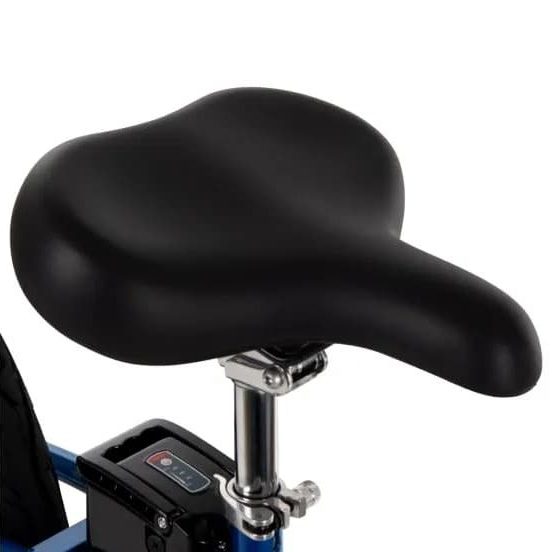
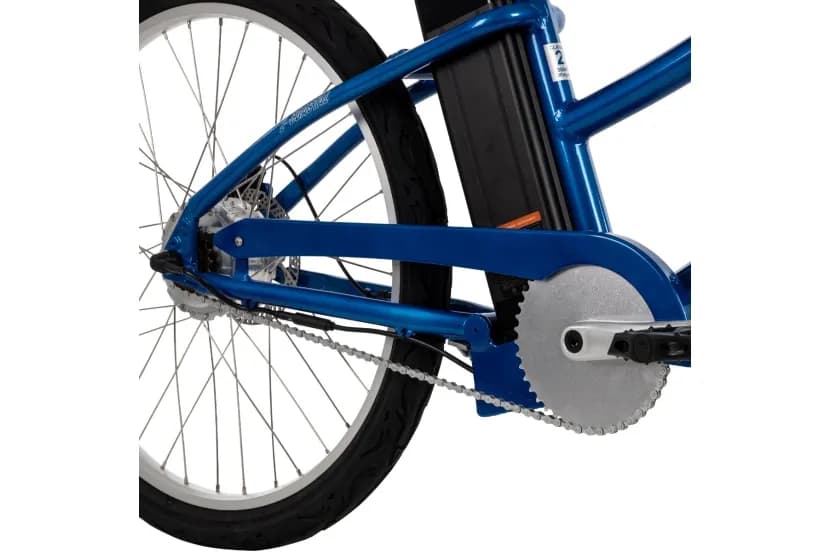
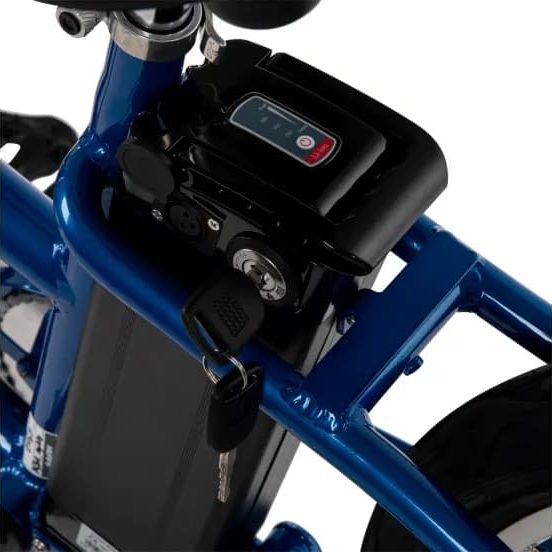
On the surface, $299 is pretty remarkable value. For less than most basic electric scooters (or even most decent pedal bikes), you’re getting a 26‑inch wheel electric cruiser with a 36V battery with a claimed 40-mile (64 km) range, a 350W rear‑hub motor, front and rear disc brakes, a comfort saddle, LCD display, and an LED headlight, all with free shipping. At 53 pounds (24 kg), that’s actually lighter than most electric cruisers out there.
But before you think you’ve stumbled on some too‑good‑to‑be‑true deal, it’s worth asking: why is it so cheap?
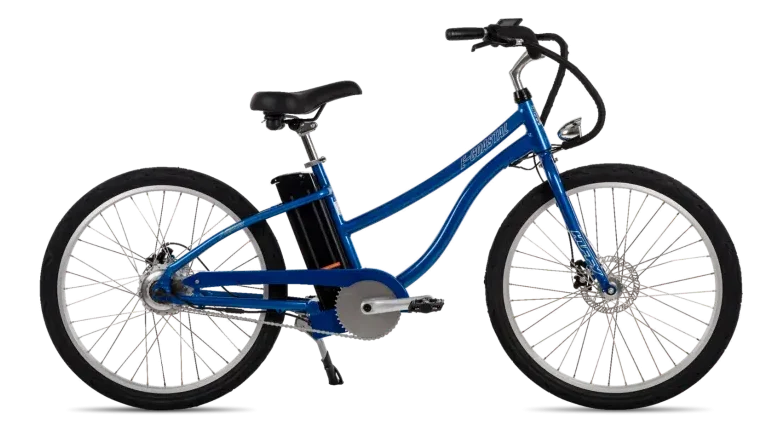
First, caveats aside, Class 2 e‑bike compliance means it’s limited to 20 mph (32 km/h), so there’s no classic ‘Murican high-speed Class 3 riding here. You do get a throttle, but it’s 20 mph unless you’re going downhill. And if you do prefer Class 1 compliance, the right side thumb throttle looks easy enough to remove.
Then there’s the parts spec. While workable, the loadout is far from premium: mechanical disc brakes, single‑speed drivetrain, and no suspension. It’s clearly built for casual beachside or neighborhood cruising, not serious hills or daily commuting. At least Huffy does say it comes with an anti-corrosion coating, which should be good for seaside communities with salty air.
There is no word on the brand of the battery or motor, and there is no discussion of potential UL certification or other safety compliance for the battery or electrical system.
Then there’s the question of availability: Huffy is known for heavy discounting and frequent clearance moves. This may simply be them clearing out stock – possibly from overstock or just clearing warehouse space for new models. And while their 10-year warranty sounds generous, check the fine print: It’s only the frames that get the 10 years, while smaller components and the electrical system come with a six-month warranty.
Still, at $299, even a stripped-down, no-frills electric bike is tempting. For riders who just want a comfortable, simple, leisurely ride, like something for a relaxing cruise on the boardwalk to finish out the summer, this might be a compelling entry point. But go in expecting more of a relaxing cruiser than a performance commuter.

Electrek’s Take
I was pretty surprised to see this pop into my inbox, especially since past major sales from big bike companies are usually still twice this price.
Huffy’s Coastal Cruiser e-bike at $299 is definitely an attention-grabber, and maybe a bargain, but it’s worth a second look before assuming it’s a steal. As always, consider what you need in terms of power, range, quality, and long-term reliability. I’ve written before about the hidden cost of cheap e-bikes, and it’s something to keep in mind.
To be honest, I’m thinking of snagging one at this price, though almost more out of a sense of morbid curiosity for what $299 gets you (and I can hope that an article and video on the topic will come close to covering the outlay – an advantage not afforded to most people). It wouldn’t be the first time I’ve bought an ultra-low-cost e-bike just to see what I get.
FTC: We use income earning auto affiliate links. More.
![Hyundai's small new EV has a wild aero hatch design and ducktail spoiler [Image]](https://i0.wp.com/electrek.co/wp-content/uploads/sites/3/2025/12/Hyundai-small-EV-design.jpeg?resize=1200,628&quality=82&strip=all&ssl=1)
The IONIQ 3 is set to arrive as a smaller sibling to the IONIQ 5, but it will look a little different from other Hyundai EVs.
The Hyundai IONIQ 3 will debut a new EV design
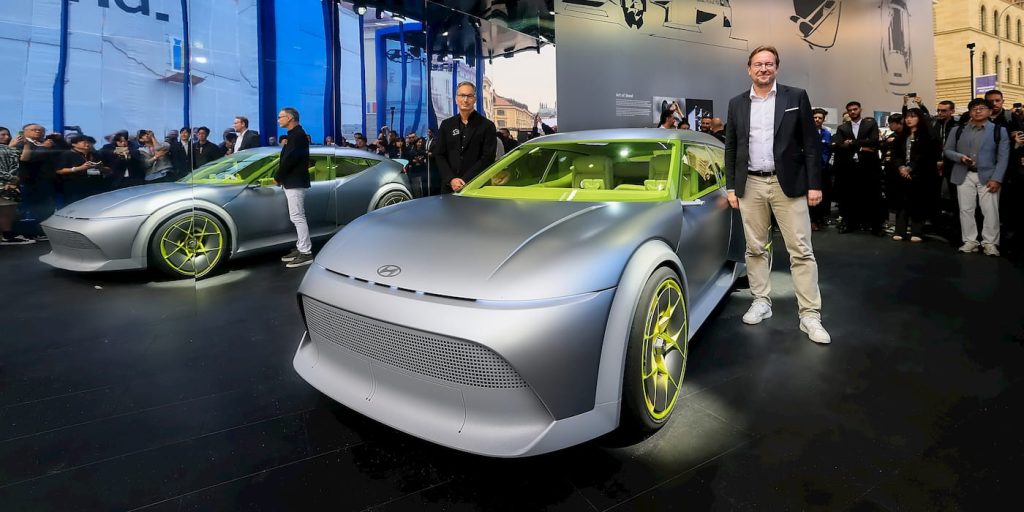
Hyundai previewed the new electric hatchback, dubbed the Concept Three, at the Munich Motor Show in September.
The “Three” is Hyundai’s first compact electric vehicle concept under the IONIQ series, set to bring a radical new design to the family.
According to Hyundai, the Concept Three “represents the next step in the company’s electrification journey.” Production is expected to begin in early 2026 at Hyundai’s manufacturing plant in Turkey, with deliveries starting shortly thereafter.
The new design, “Art of Steel,” is inspired by Hyundai’s advanced steel technology. Hyundai calls the Aero Hatch profile “a new typology that reimagines the compact EV silhouette.”
Hyundai kept a few of its signature design elements from other IONIQ EV models, like the Parametric Pixel lights at the front and rear.
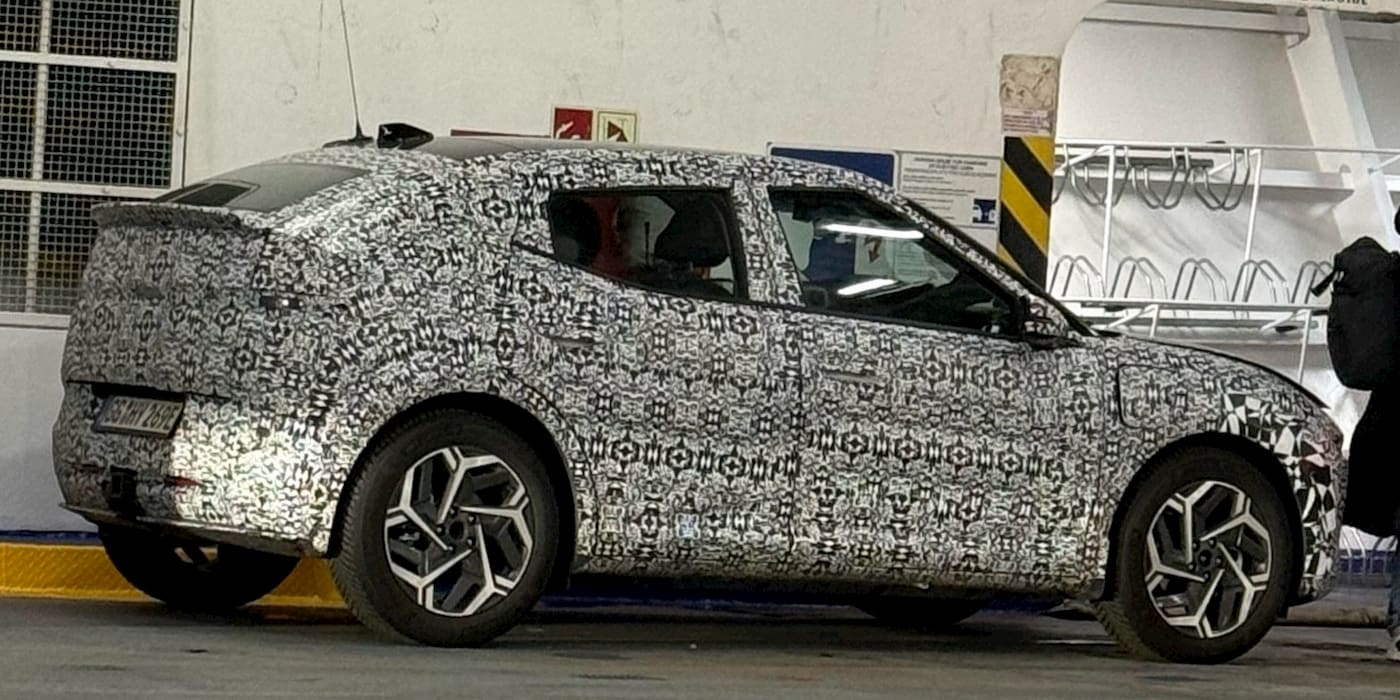
With its official debut approaching, a few IONIQ 3 prototypes have been spotted driving in public in South Korea. Despite heavy camouflage, you could tell the production version was shaping up to be nearly identical to the Concept Three.
A new image from KindelAuto offers a closer look at the IONIQ 3, spotted in Europe with barely any camouflage.
You can clearly see the vehicle’s profile stays close to the concept, with a sleek, hot-hatch design and a ducktail spoiler.
The compact EV is 4,287 mm long, 1,940 mm wide, and 1,428 mm tall, with a wheelbase of 2,722 mm, or about the size of the Kia EV3 or Volkswagen ID.3.

Hyundai has yet to reveal battery specs or prices, but it’s expected to offer 58.3 kWh and 81.4 kWh battery packs, like the Kia EV3, providing a WLTP range of around 365 miles. Given the Kona Electric starts at £35,000 ($47,000), the IONIQ 3 will likely be priced closer to £25,000 ($33,700).
For those in the US, sadly, the IONIQ 3 is not expected to make the trip overseas, given America’s growing love for bigger trucks and SUVs.
The IONIQ 5 does, however, remain one of the most affordable EVs in the US, starting at under $35,000 with leases as low as $189 per month.
If you’re considering an EV, Hyundai’s lineup is absolutely worth checking out — offering over 300 miles of range, fast charging, modern tech, at a price that’s actually reasonable. Check out the links below to see what’s available by you.


FTC: We use income earning auto affiliate links. More.

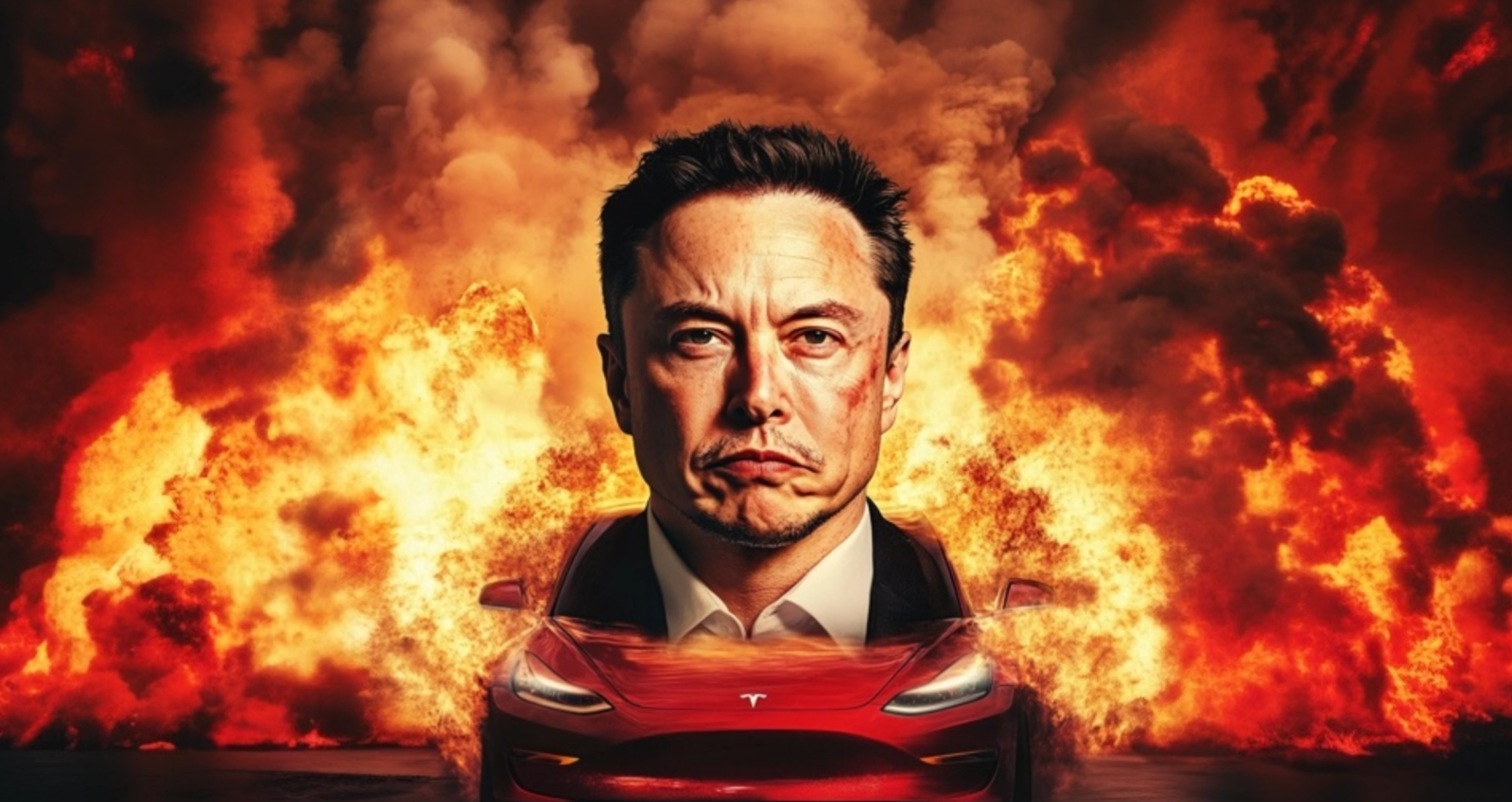
Tesla CEO Elon Musk went on a podcast this week to express regret over the time he spent trying to destroy the American government, claiming that he wouldn’t do it again.
In the first half of this year, Musk took a position advising convicted felon Donald Trump (who cannot legally hold office in the US) on what essential government jobs to trim.
He named the group he led the “Department of Government Efficiency,” despite that it was never an actual government department, nor did it do a whole lot to increase efficiency as we will see below.
Musk claimed before taking the position that he could save the government $2 trillion – which was always going to be literally impossible, given the amount of discretionary spending in the US budget, as anyone with a passing interest in American government could have told you at the time.

Unsurprisingly, Musk was unable to succeed in the impossible cuts he had proposed. After less than half a year (incidentally, not far off from the 130-day cap for unofficial advisory positions), Musk left the position amid a fiery breakup with Mr. Trump. The breakup led to a big drop in Tesla stock, which had been inflated due to expectations of corruption.
All in all, Musk claims that he cut around $200 billion from the government’s budget, but actual analyses show that those numbers were fake and in fact that his actions likely increased the budget deficit, rather than decreasing it. This is due to the disruption in necessary government services, higher costs for employee severance, and lost revenue for the government as ultra-wealthy tax cheats will be able to get off without paying their fair share.
And, in the interim, republicans passed a law that gives away $4 trillion to those same wealthy elites, adding $3.3 trillion to the deficit. That number is 16 times larger than even the inflated $200 billion “savings” number Musk claims.
How Musk’s actions harmed Tesla, not just the US
But Musk’s actions cosplaying as a government official had other effects than his failure to effectively cut waste: they turned public opinion against his companies, mainly Tesla.
Over the last couple years, Musk has increasingly tried to involve himself in politics, both in the US and abroad. His politics have largely focused on pushing white supremacist nonsense including support for German neo-Nazis and agreeing with a defense of Hitler, and funding and supporting groups that oppose renewable energy and vehicle electrification. He’s even rhetorically got into climate change denial himself.
These actions have directly harmed Tesla through loss of expected revenue, and have also reduced the brand’s profile in the public eye. Tesla is now the only EV brand with negative perception, and it’s due to Musk himself. His actions have driven protests against the company, embarrassed owners and pushed many customers away – including business customers.
As a result, Tesla’s sales have been falling both in the US and around the globe in a rising EV market. All told, one study found that he cost Tesla over 1 million sales in the US alone with his braindead political takes. Even his own company had to chide him.
It wasn’t hard to see this coming
These results were eminently foreseeable – anyone can tell you that business leaders typically should remain neutral on politics as a rule, and generally only speak on issues that directly involve their company or industry.
Wading into wedge issues and identity politics as a business leader can only serve to turn off customers, and since negative motivations are generally stronger than positive ones, you will net lose sales even if you appeal to some portion of the population with your advocacy.
And if you do advocate for something, it should probably be for something that will help your companies, rather than hurt them.
But Elon Musk is different. Unlike most business leaders, he has millions of useful idiots at his beck and call on twitter at any time (and it is indeed where he spends all of his time), ready and willing to tell him that all of his ideas are genius, no matter how braindead they are, or how recycled they are from his rage-filled feed which seems to be his only source of information these days. Why should conventional wisdom apply to someone who is constantly told conventional wisdom doesn’t apply to him?
And so, he ignored – or rather, probably didn’t even see, given the echo chamber he has formed around himself – the conventional wisdom telling him what a bad idea all of this was. And now, years later, he’s finally showing the slightest moment of lucidity that perhaps all of the above was not a great use of time.
Musk finally recognizes what we’ve been telling him all along
This week, Musk went on a podcast (hosted by Katie Miller, wife of American white supremacist Stephen Miller) and claimed that his advisory board was “a little bit successful. We were somewhat successful,” which is a rather middling assessment given his big initial claims of being able to save the government trillions of dollars.
But further, he went on to say that he wouldn’t do it all over again, and that “instead of doing DOGE, I would have, basically, built … worked on my companies.”
He said that if he had done that instead, “they wouldn’t have been burning the cars.” This is a reference to Tesla protests, which have largely not included burning anything, but which have been widespread globally.
We, of course, agree that that would have been a better course of action. Which is why we said it at the time. Perhaps it’s time to get off twitter and read some real thoughts for once, Mr. Musk. We’re not sure if the damage you’ve done is repairable (though it was certainly preventable), but as they say, “garbage in, garbage out” – the more nonsense you read, the more nonsense you’ll continue to get up to.
The 30% federal solar tax credit is ending this year. If you’ve ever considered going solar, now’s the time to act. To make sure you find a trusted, reliable solar installer near you that offers competitive pricing, check out EnergySage, a free service that makes it easy for you to go solar. It has hundreds of pre-vetted solar installers competing for your business, ensuring you get high-quality solutions and save 20-30% compared to going it alone. Plus, it’s free to use, and you won’t get sales calls until you select an installer and share your phone number with them.
Your personalized solar quotes are easy to compare online and you’ll get access to unbiased Energy Advisors to help you every step of the way. Get started here.
FTC: We use income earning auto affiliate links. More.


BMW is the latest major automaker to officially gain access to the Tesla Supercharger network in North America. Starting today, BMW EV drivers in the US can access over 25,000 Tesla Superchargers, adding a massive boost to the charging options for owners of the i4, iX, and other electric models from the German automaker.
It follows a wave of other automakers gaining access over the last year as the industry transitions to NACS (North American Charging Standard), Tesla’s proprietary connector that has now become the standard.
BMW confirmed today that the update is effective immediately. Owners can find Tesla Superchargers directly in their vehicle’s navigation system and the My BMW app.
However, like most other automakers making this transition, there is hardware involved. Current BMW EVs, which are equipped with CCS ports, will require a CCS-to-NACS adapter to use the vast majority of Tesla’s V3 and V4 Superchargers.
According to BMW, official adapters will go on sale as accessories starting in Q2 2026. That is a bit of a wait, but in the meantime, some third-party adapters are already on the market.
For those lucky enough to live near one of Tesla’s few “Magic Dock” locations (Superchargers with a built-in CCS adapter), any BMW EV can charge immediately without needing to buy extra hardware.
BMW also clarified its timeline for native NACS ports, which will eliminate the need for an adapter entirely. The transition begins with the 2026 BMW i5 M60, followed by other models throughout the year, including the highly anticipated Neue Klasse iX3, which is expected to be a competitor of the higher-end trims of Tesla’s popular Model Y.
Interestingly, there is a software hurdle for some specific 2026 models. BMW noted that the 2026 iX and i5 eDrive40 will not be able to use Tesla Superchargers until they receive a remote software upgrade, also scheduled for Q2 2026.
One of the biggest pain points for non-Tesla EVs using the Supercharger network has been the user experience. Tesla has set a high bar with its “plug and play” ecosystem.
BMW seems to have done a good job integrating this. The automaker says that its Plug & Charge is supported at Tesla stations. You won’t need the Tesla app to start a session. Instead, billing is handled through the customer’s Shell Recharge account, which is integrated into the My BMW app.
Pricing will follow Tesla’s standard rate structure for non-Tesla vehicles, which is generally higher than what Tesla owners pay unless you pay a monthly membership fee.
FTC: We use income earning auto affiliate links. More.
-
 Sports2 years ago
Story injured on diving stop, exits Red Sox game
-
 Sports3 years ago
‘Storybook stuff’: Inside the night Bryce Harper sent the Phillies to the World Series
-
 Sports2 years ago
Game 1 of WS least-watched in recorded history
-
 Sports3 years ago
Button battles heat exhaustion in NASCAR debut
-
 Sports3 years ago
MLB Rank 2023: Ranking baseball’s top 100 players
-
Sports4 years ago
Team Europe easily wins 4th straight Laver Cup
-
 Environment3 years ago
Japan and South Korea have a lot at stake in a free and open South China Sea
-
 Environment1 year ago
Here are the best electric bikes you can buy at every price level in October 2024