
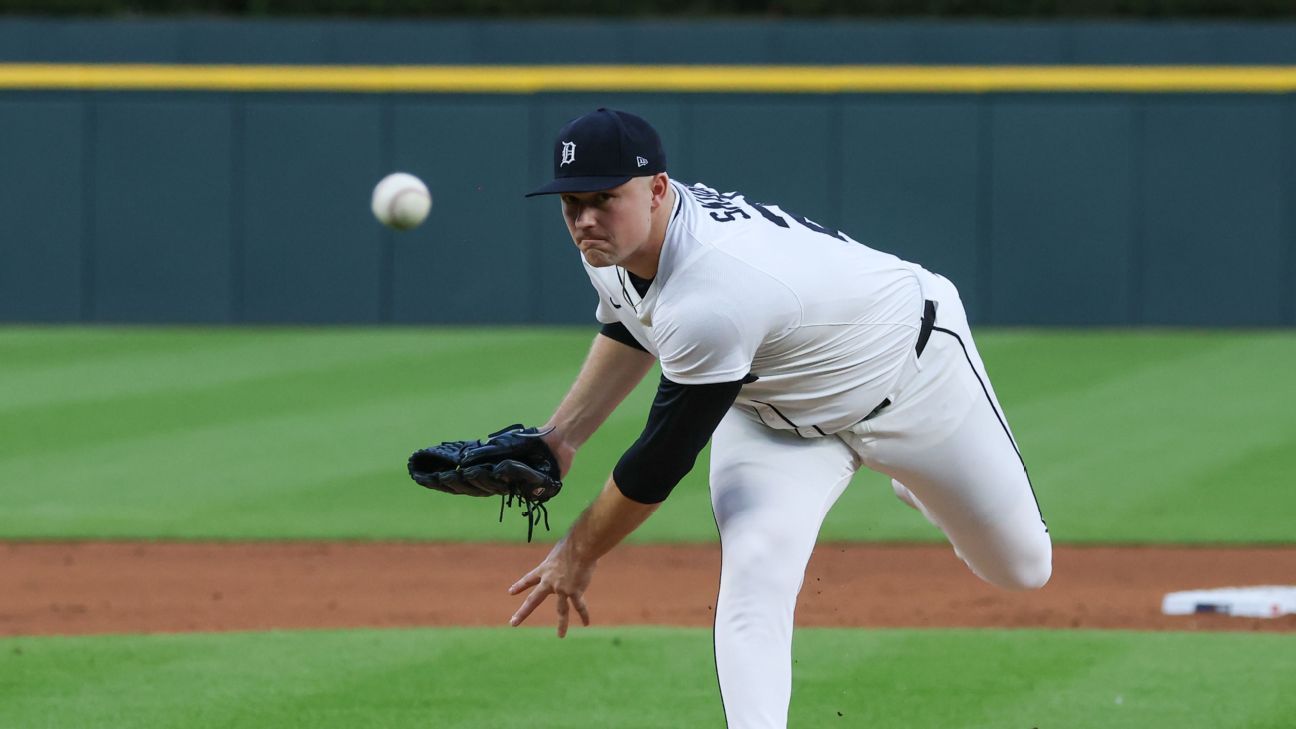
What makes Tarik Skubal and Paul Skenes the best pitchers on the planet


-
Jesse Rogers
Editor’s note: This story originally published on Aug. 19, 2025. Paul Skenes and Tarik Skubal are both finalists for the 2025 Cy Young awards to be announced on Nov. 12, 2025.
Both of MLB’s 2025 Cy Young favorites came from humble pitching beginnings. Pittsburgh Pirates ace Paul Skenes started his meteoric rise to stardom at the Air Force Academy, while Detroit Tigers lefty Tarik Skubal came of age at Seattle University. Neither place screams baseball immortality, but both pitchers could be flirting with historic achievements for the rest of their careers provided they stay healthy.
Skenes was the 2024 National League Rookie of the Year, while Skubal won the American League Cy Young Award last season — and their paths recently crossed as the 2025 All-Star Game starting pitchers in Atlanta. As they head down the stretch with the opportunity to collect more hardware this season, ESPN asked their teammates, team personnel and Skubal and Skenes themselves what makes the two best pitchers in the sport so special.
“Really advanced stuff and fill up the strike zone; they go right at guys,” Tigers starter Casey Mize said, summing up the feelings of those who have watched both aces. “So, they’re in advantageous counts a lot, applying a lot of pressure. The biggest thing to worry about is getting jumped early in counts, so they have to be good early on. But it feels like when they get strike one, the at-bat is over.”
‘He’s a guy that you can talk to when he’s starting’
The similarities between the two pitchers begin with the vibe they generate throughout the stadium when it’s their turn to pitch. There’s a different feeling in the clubhouse on a Skenes or Skubal day because of how games play out when they’re on the mound.
“You just know the other team isn’t going to do very much,” Tigers infielder Zach McKinstry said when it’s a Skubal day. “Defense is kind of boring that game.”
As a smiling teammate Spencer Torkelson added, “You can almost be blindfolded playing behind him.”
Pirates outfielder Tommy Pham has his own way of recognizing when Pittsburgh’s ace is pitching. It begins when Pham gets dressed to come to the park.
“He wears a suit to the field, so I started trying to keep up with him on ‘Skenes Day,'” Pham said. “I call out Skenes Day by wearing a suit with him so he’s not the only one.
“And we normally don’t need to score a lot of runs that day.”
Despite Skenes’ formal attire and nasty stuff, it stands out to his teammates that Skenes is still approachable when it is his day to take the mound.
“He’s a guy that you can talk to when he’s starting,” Pham stated. “I’ve played with guys, when they’re starting, you can’t talk to them, which I feel is bulls—. But he’s not like that.”
Skubal exhibits that trait, as well, according to Detroit infielder Zach McKinstry. Skubal will talk to teammates like it’s any other game.
The confidence in each pitcher’s crafts allows for a normal day, according to the players in both locker rooms.
The Tigers also get an extra jolt of energy during their pennant race as they play meaningful games down the stretch: Comerica Park comes alive when their ace takes the mound.
“Every jersey you see is a No. 29 jersey,” McKinstry said. “They love him. And he loves what he does. And we love to play behind him.”
‘We play a defensive position, but he makes it look like offense’
If there is one difference between Skubal and Skenes, it is that Skubal is in attack mode more than anyone in the league. He leads MLB in throwing his first pitch for a strike at 70% of the time. Overall, he throws strikes 55% of the time — good for third most in baseball.
Being in the zone so often is one reason Skubal is third in the majors in innings pitched this season, after finishing eighth in that category last season.
“When it gets to those later innings, you do feel like he has a chance to go the distance,” Tigers reliever Will Vest said. “It’s because he’s so efficient with his pitches.”
Skubal has pitched at least seven innings in 10 starts this season, including his signature outing: a 13-strikeout shutout against the Cleveland Guardians on May 25. That performance still resonates in the Tigers’ clubhouse three months later, especially after his last pitch registered at 103 mph.
“The aggressiveness,” Mize explained. “We play a defensive position, but he makes it look like offense. He’s going at everybody. He doesn’t care. That game illustrated that.”
Skenes, on the other hand, ranks 33rd in first-strike percentage (62.1) with a full arsenal that allows him to attack hitters differently.
“He has a larger tool box,” Pirates assistant pitching coach Brent Strom said. “It enables him to have weapons against different types of hitters. He pitches to his strengths.”
According to Baseball Savant, Skenes has thrown seven different types of pitches this season — as compared with Skubal’s five — and Skenes’ swinging-strike percentage ranks seventh. It all adds up to a pitch mix that keeps hitters baffled, even when they get pitches to hit.
“It’s full-on ‘here it is, hit it,'” Pirates catcher Joey Bart said. “He’s not scared of anyone.”
‘Everything is by the numbers, and he leaves nothing to chance’
Every player, no matter the position, has a routine to prepare for competition. But Skenes is especially unique in that regard.
One day, between starts, Pham asked to stand in the batter’s box while Skenes threw a bullpen session.
“Then the next day, I asked who’s throwing a pen because I needed to test out my contact lenses again,” Pham explained. “And Skenes says, ‘Hey, I’m throwing a pen.'”
Pham gave him a confused look, knowing Skenes had thrown the day before.
“He’s like, ‘Yeah, I throw every day, except for the day before my start,'” Pham recalled. “When I found that out, I was like, yeah, he’s different. I’ve never seen anybody do that.”
Strom noted that not every bullpen session is built the same. There’s purpose to the preparation.
“His work is very organized,” Strom said. “Very thoughtful. Everything is by the numbers, and he leaves nothing to chance. He’s very cerebral. He understands what’s necessary.”
Bart recalled Skenes’ early days with the club after getting called up in May 2024. The catcher recognized the detailed preparation of the former LSU star even then, including how Skenes readied for his very first outing against the Chicago Cubs.
“I remember the first pregame meeting last year,” Bart said. “He ran the meeting in his debut. I was like, ‘Go ahead and take it, dude. You got it.’ He has been groomed for this.”
That kind of intense and directed preparedness has gained attention and admiration around the league, and it is what Skubal identified as Skenes’ most impressive trait.
“He seems like he has his routine and preparation already figured out at a young age,” Skubal said. “It took me until I was 26 to be a good big league baseball player and figure that out. And he’s doing it at 23. That’s four years faster than me. Yeah, that’s really impressive.”
‘He just wants to show that there is something memorable about greatness’
There’s an aura of self-assuredness to Skubal that stands out as compared with even other aces, according to those around him. He has been called a “bulldog” with a “killer” mentality by his teammates: He won’t back down, no matter the circumstance.
“He comes after you,” Torkelson said. “In big situations, he trusts his best stuff. You kind of know what you’re going to get, and it’s still hard to hit.”
That confidence enables Skubal to put himself in pitcher’s counts (0-1, 0-2, 1-2, 2-2) 45.7% of the time, more than any other hurler in the game, according to ESPN Research. And until you show you can hit one of his best offers, he’ll just keep throwing it. He has 93 strikeouts on his changeup, second only to Philadelphia Phillies starter Cristopher Sanchez.
That mindset is what stands out most about Skubal to Skenes.
“He can go after hitters straight up,” Skenes said. “He gets them out quickly, which is why he pitches deep in games. He does that better than anyone else in the game. But it starts with going right at them. That takes confidence.”
Skubal has a commanding presence, according to Tigers play-by-play announcer Jason Benetti. It doesn’t hurt that his size (6-foot-3 and 240 pounds) naturally creates some intimidation when he is on the mound, but he makes himself known whenever he is in the game.
“On the day the All-Stars were announced last year, the Tigers were in Cincinnati, and he struck out [Elly] De La Cruz and there was this big primal scream — and that’s this indelible memory for me,” Benetti said of Skubal. “Because that is a guy that people hear about that there’s noise about, and he wants that.
“He ends innings and outings at 102 mph because he just wants to show that there is something memorable about greatness, is the way I would put it. He has greatness.”


-
Bradford Doolittle
ORLANDO, Fla. — There were a number of ironies surrounding the results of the contemporary baseball era committee’s Hall of Fame ballot, announced Sunday night at MLB’s winter meetings.
Perhaps the most poignant is this: If not for Barry Bonds, Jeff Kent — the only one of the eight players under consideration selected Sunday — might not be bound for Cooperstown. While Kent is the all-time home run hitter among second basemen, he was on the same ballot as Bonds — who hit more homers than anyone, at any position.
During a post-announcement news conference, Kent recalled the way he and Bonds used to push, prod and sometimes annoy each other during their six seasons as teammates on the San Francisco Giants. Those were Kent’s best seasons, a fairly late-career peak that ran from 1997 to 2002, during which Kent posted 31.6 of his 55.4 career bWAR.
The crescendo was 2000, when Kent enjoyed his career season at age 32, hitting .334 with a 1.021 OPS, hammering 33 homers with 125 RBIs and compiling a career-best 7.2 bWAR. Hitting fourth behind Bonds and his .440 OBP, Kent hit .382 with runners on base and .449 with a runner on first base.
During Kent’s six years in San Francisco, he was one of five players in baseball to go to the plate with at least one runner on base at least 2,000 times, and the other four all played at least 48 more games than he did. Turns out, hitting behind Bonds is a pretty good career move.
To be clear, Kent was an outstanding player and the numbers he compiled were his, and his alone. When you see how the news of election impacts players, it’s a special thing. I am happy Jeff Kent is now a Hall of Famer.
But I am less happy with the Hall of Fame itself. While Kent’s overwhelming support — he was named on 14 of the 16 ballots, two more than the minimum needed for induction — caught me more than a little off guard, what didn’t surprise me was the overall voting results. In what amounted to fine print, there was this mention in the Hall’s official news release: “Barry Bonds, Roger Clemens, Gary Sheffield and Fernando Valenzuela each received less than five votes.”
By the new guidelines the Hall enacted for its ever-evolving era committee process — guidelines that went into effect with this ballot — Bonds, Clemens, Sheffield and Valenzuela aren’t eligible in 2028, the next time the contemporary era is considered. They can be nominated in 2031, and if they are, that’s probably it. If they don’t get onto at least five ballots then, they are done. And there is no reason to believe they will get more support the next time.
I thought that the makeup of this committee was stacked against the PED-associated players, but that’s a subjective assessment. And who knows what goes on in those deliberations. With so many players from the 1970s and 1980s in the group, it seemed to bode well for Don Mattingly and Dale Murphy. But they were both listed on just six ballots. Carlos Delgado had the second most support, at nine.
Why? Beats me. I’ve given up trying to interpret the veterans committee/era committee processes that have existed over the years. But the latest guidelines seem perfectly designed to ensure that for the next six years, there’s no reason to wail about Bonds and Clemens being excluded. Then in 2031, that’s it.
Meanwhile, the classic era will be up for consideration again in 2027, when Pete Rose can and likely will be nominated. Perhaps Shoeless Joe Jackson as well. What happens then is anybody’s guess, but by the second week of December 2031, we could be looking at a Hall of Fame roster that includes the long ineligible (but no more) Rose and maybe Jackson but permanently excludes the never-ineligible Bonds and Clemens — perhaps the best hitter and pitcher, respectively, who ever played.
If and when it happens, another kind of symbolic banishment will take place: The Hall will have consigned itself, with these revised guidelines, to always being less than it should be. And the considerable shadows of Bonds and Clemens will continue to loom, larger and larger over time, just as they happened with Rose and Jackson.
Ironic, isn’t it?
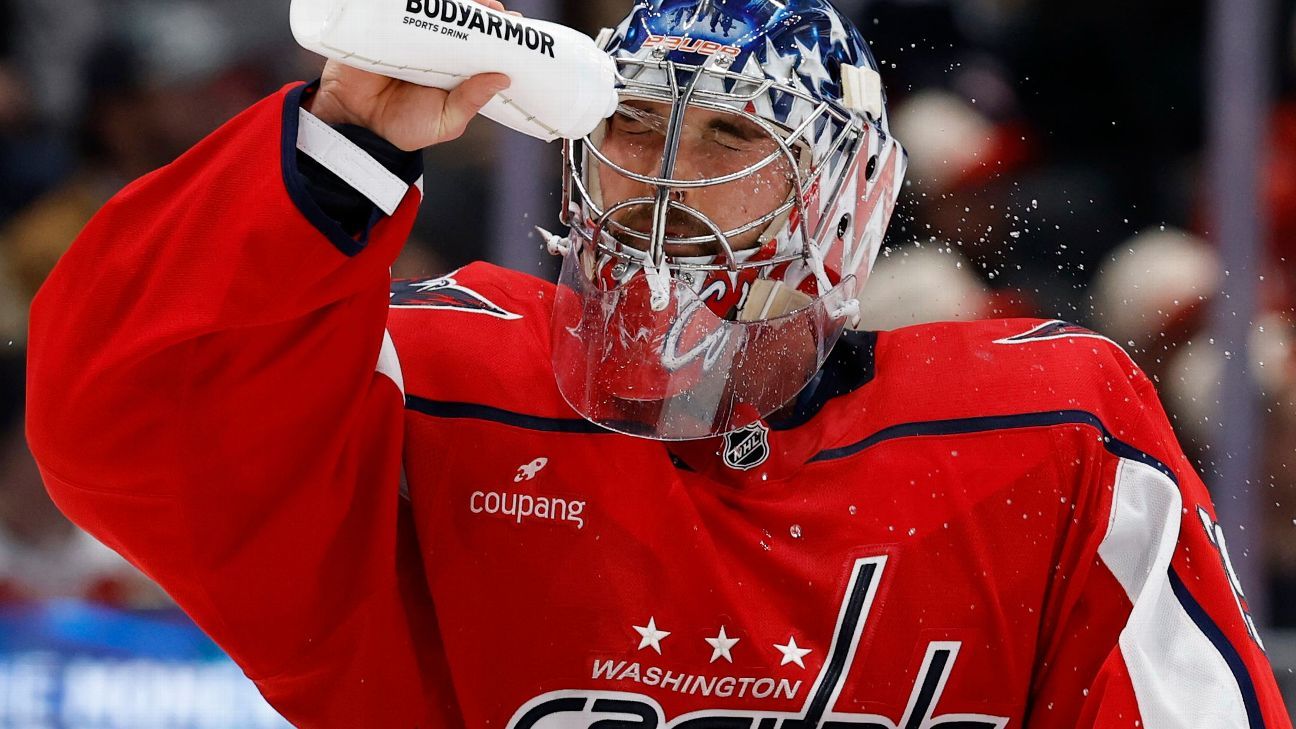

WASHINGTON — The Washington Capitals placed goaltender Charlie Lindgren and forward Ryan Leonard on injured reserve Sunday night before their game against the Columbus Blue Jackets.
Washington recalled forward Bogdan Trineyev and goaltender Clay Stevenson from Hershey of the American Hockey League.
Lindgren (upper body) was a late scratch Friday night before a 4-3 shootout loss at Anaheim. Leonard (upper body) didn’t return after his face was bloodied on an unpenalized first-period check from Jacob Trouba.
“He’s going to miss an extended period of time,” Capitals coach Spencer Carbery said about Leonard, the rookie who has seven goals and 11 assists after having two each Wednesday night in a 7-1 win at San Jose.
Lindgren is 5-3 with a 3.11 goals-against average in his 10th NHL season and fifth with Washington.
“We’ll see once he gets back on the ice,” Carbery said. “But [we] put him on the IR, so he’s going to miss, what is it, seven days at the bare minimum. And then we’ll see just how he progresses.”
-
Bradford Doolittle
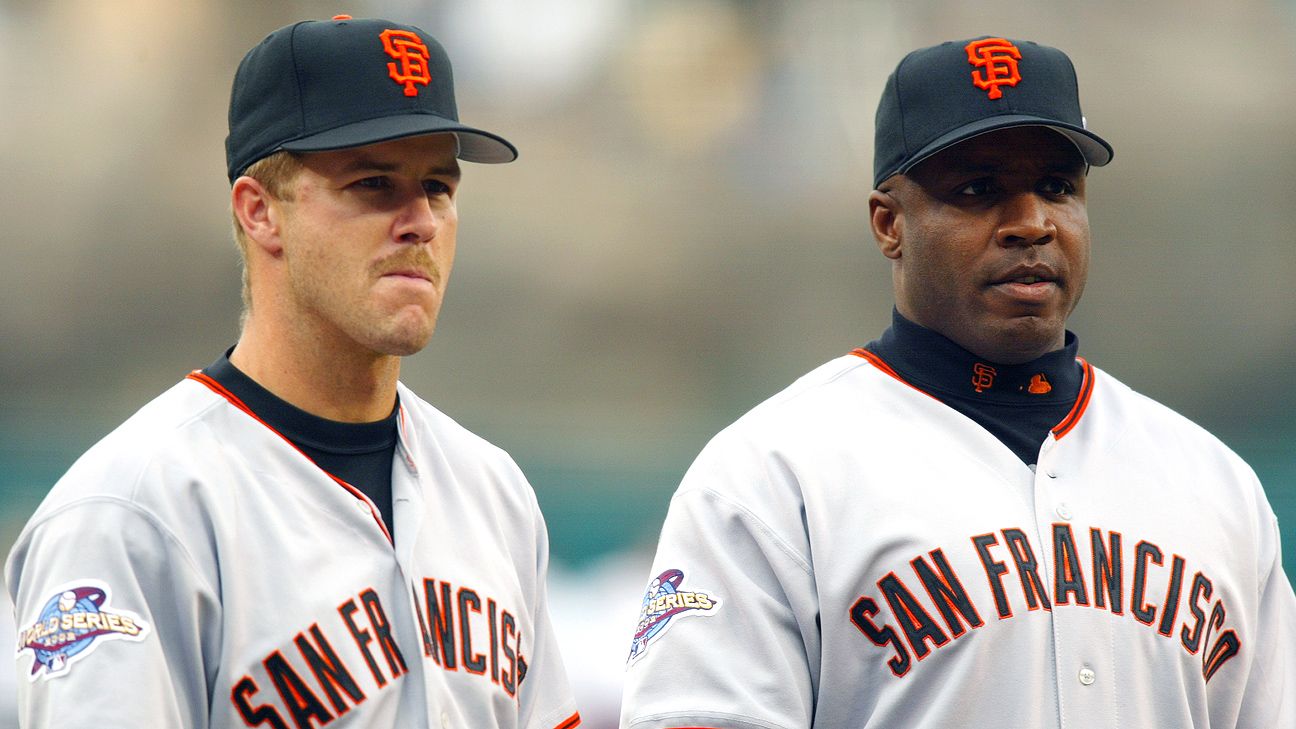
ORLANDO, Fla. — Jeff Kent, who holds the record for home runs by a second baseman, was elected to the National Baseball Hall of Fame on Sunday.
Kent, 57, was named on 14 of 16 ballots by the contemporary baseball era committee, two more than he needed for induction.
Just as noteworthy as Kent’s selection were the names of those who didn’t garner enough support, which included all-time home run leader Barry Bonds, 354-game winner Roger Clemens, two MVPs from the 1980s, Don Mattingly and Dale Murphy, and Gary Sheffield, who slugged 509 career homers.
Bonds, Clemens, Sheffield and Dodgers great Fernando Valenzuela were named on fewer than five ballots. According to a new protocol introduced by the Hall of Fame that went into effect with this ballot, players drawing five or fewer votes won’t be eligible the next time their era is considered. They can be nominated again in a subsequent cycle, but if they fall short of five votes again, they will not be eligible for future consideration.
The candidacies of Bonds and Clemens have long been among the most hotly debated among Hall of Fame aficionados because of their association with PEDs. With Sunday’s results, they moved one step closer to what will ostensibly be permanent exclusion from the sport’s highest honor.
If Bonds, Clemens, Sheffield and Valenzuela are nominated when their era comes around in 2031 and fall short of five votes again, it will be their last shot at enshrinement under the current guidelines.
Kent, whose best seasons were with the San Francisco Giants as Bonds’ teammate, continued his longstanding neutral stance on Bonds’ candidacy, declining to offer an opinion on whether or not he believes Bonds should get in.
“Barry was a good teammate of mine,” Kent said. “He was a guy that I motivated and pushed. We knocked heads a little bit. He was a guy that motivated me at times, in frustration, in love, at times both.
“Barry was one of the best players I ever saw play the game, amazing. For me, I’ve always said that. I’ve always avoided the specific answer you’re looking for, because I don’t have one. I don’t. I’m not a voter.”
Kent played 17 seasons in the majors for six different franchises and grew emotional at times as he recollected the different stops in a now-Hall of Fame career that ended in 2008. He remained on the BBWAA ballot for all 10 years of his eligibility after retiring, but topped out at 46.5% in 2023, his last year.
“The time had gone by, and you just leave it alone, and I left it alone,” Kent said. “I loved the game, and everything I gave to the game I left there on the field. This moment today, over the last few days, I was absolutely unprepared. Emotionally unstable.”
A five-time All-Star, Kent was named NL MVP in 2000 as a member of the Giants, who he set a career high with a .334 average while posting 33 homers and 125 RBIs. Kent hit 377 career homers, 351 as a second baseman, a record for the position.
Kent is the 62nd player elected to the Hall who played for the Giants. He also played for Toronto, the New York Mets, Cleveland, Houston and the Dodgers. Now, he’ll play symbolically for baseball’s most exclusive team — those with plaques hanging in Cooperstown, New York.
“I have not walked through the halls of the Hall of Fame,” Kent said. “And that’s going to be overwhelming once I get in there.”
Carlos Delgado was named on nine ballots, the second-highest total among the eight under consideration. Mattingly and Murphy received six votes apiece. All three are eligible to be nominated again when the contemporary era is next considered in 2028.
Next up on the Hall calendar is voting by the BBWAA on this year’s primary Hall of Fame ballot. Those results will be announced on Jan. 20.
Anyone selected through that process will join Kent in being inducted on July 26, 2026, on the grounds of the Clark Sports Center in Cooperstown.
-
 Sports2 years ago
Story injured on diving stop, exits Red Sox game
-
 Sports3 years ago
‘Storybook stuff’: Inside the night Bryce Harper sent the Phillies to the World Series
-
 Sports2 years ago
Game 1 of WS least-watched in recorded history
-
 Sports3 years ago
Button battles heat exhaustion in NASCAR debut
-
 Sports3 years ago
MLB Rank 2023: Ranking baseball’s top 100 players
-
Sports4 years ago
Team Europe easily wins 4th straight Laver Cup
-
 Environment3 years ago
Japan and South Korea have a lot at stake in a free and open South China Sea
-
 Environment1 year ago
Here are the best electric bikes you can buy at every price level in October 2024