
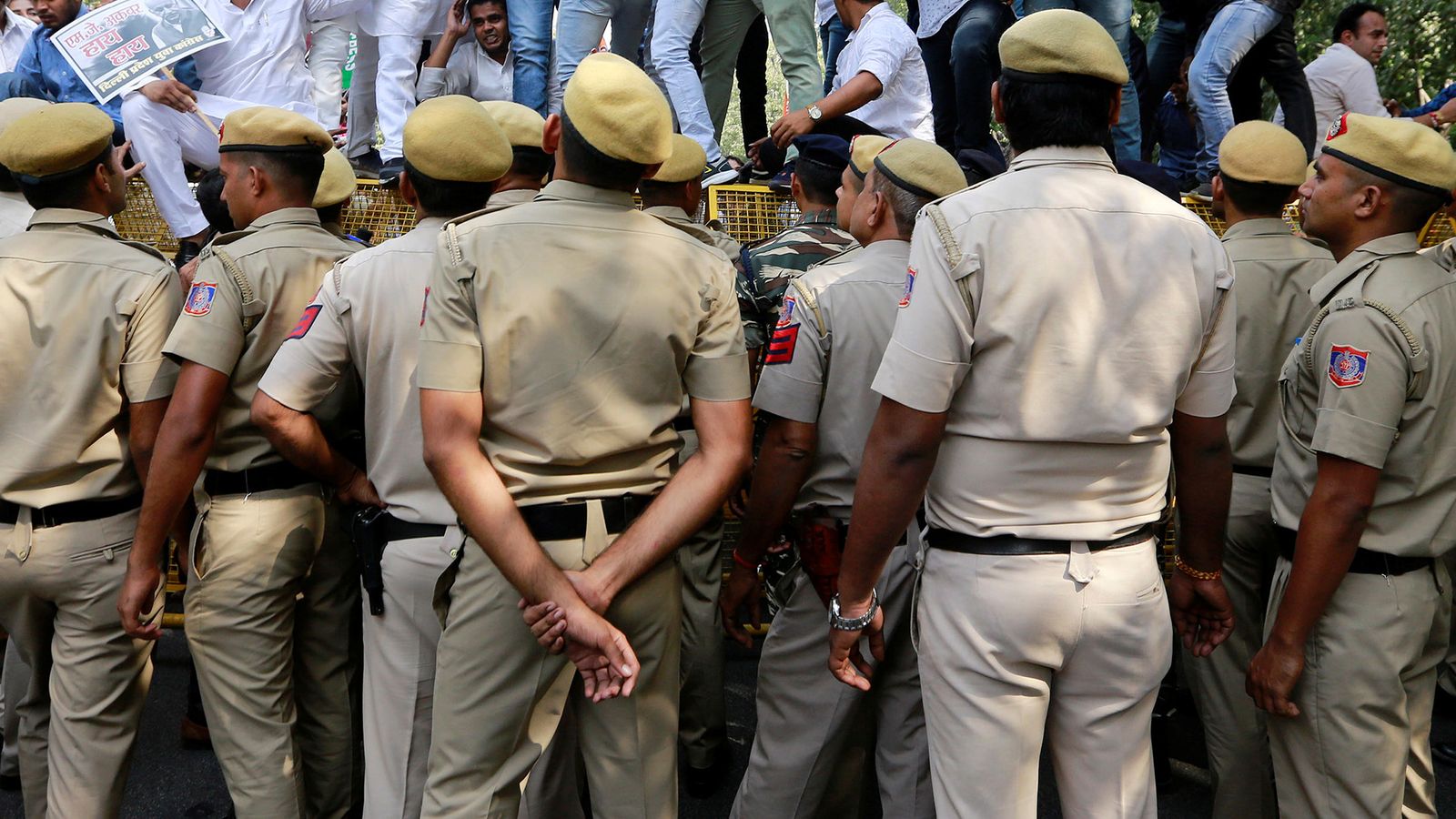
Protests in India after woman dies after being dragged for miles in hit-and-run

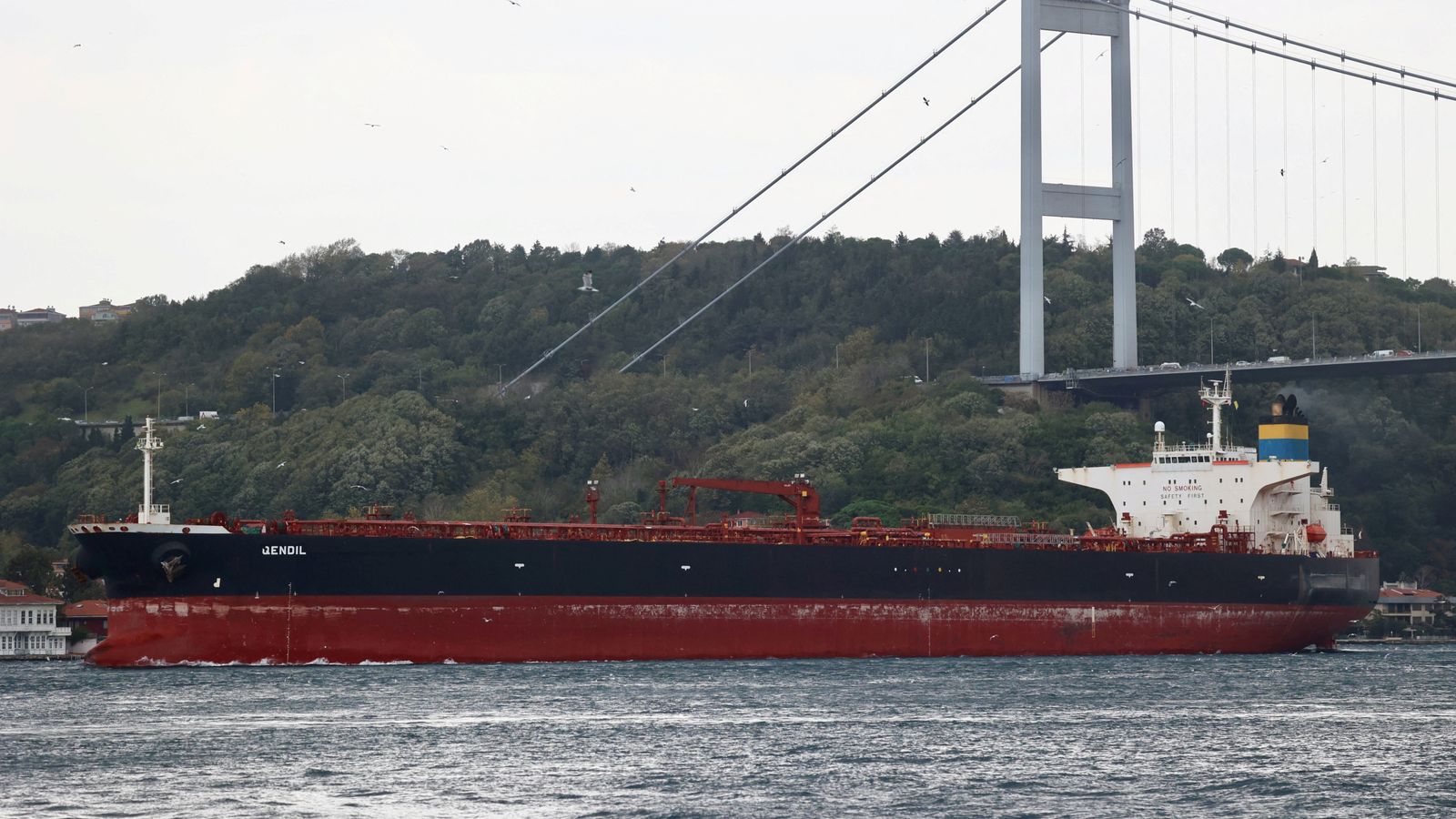
Ukraine has struck a Russian tanker in the Mediterranean Sea for the first time, a Kyiv intelligence source has said.
The ship, called the Qendil, suffered “critical damage” in the attack, according to a member of the SBU, Ukraine’s internal security agency.
The tanker is said to be part of Russia’s so-called “shadow fleet” – a group of ageing vessels that Kyiv alleges helps Moscow exports large quantities of crude oil despite Western sanctions.
The SBU source said Ukrainian drones hit the ship in neutral waters more than 2,000 kilometres (1,243 miles) from Ukraine.
They said: “Russia used this tanker to circumvent sanctions and earn money that went to the war against Ukraine.
“Therefore, from the point of view of international law and the laws and customs of war, this is an absolutely legitimate target for the SBU.
“The enemy must understand that Ukraine will not stop and will strike it anywhere in the world, wherever it may be.”
The vessel was empty at the time of the attack, the Ukrainian source added.
Speaking during a live TV event, Vladimir Putin, the Russian president, claimed the attack would not disrupt supplies, but vowed that Russia would retaliate nonetheless.
He added that Russia regularly responded with “much stronger strikes” against Ukraine.
Putin also warned against any threat to blockade Russia’s coastal exclave Kaliningrad, which he said would “just lead to unseen escalation of the conflict” and could trigger a “large-scale international conflict”.
Read more:
The mercenaries fighting for Russia
British man who fought for Ukraine jailed
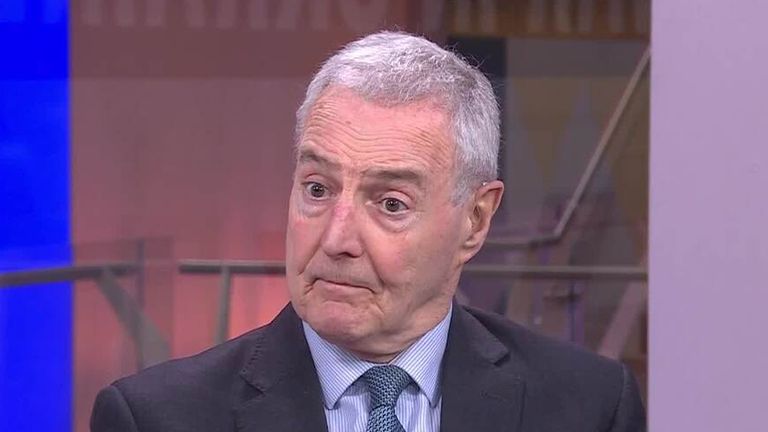
Sky military analyst Michael Clarke said Ukraine’s claim about causing significant damage to the ship was “probably true”.
He added: “The Ukrainians obviously feel that they can legitimise this sort of operation.”

The Qendil, pictured near Istanbul last month. Pic: Reuters
The attack comes after the European Union announced it would provide a €90bn (£79bn) interest-free loan to Ukraine.
Oleksandr Merezhko, the chairman of the foreign affairs committee in the Ukrainian parliament, told Sky News that the money would “tremendously enhance” Kyiv’s defensive capabilities.
However, he said the International Monetary Fund estimated that Ukraine needed $137bn to “keep running”.
“The aggressor should be punished”, Mr Merezhko added, as he argued that frozen Russian assets in Europe should be used to help fund his country’s defence.
He vowed that Ukraine would “continue to fight” for the move, adding that it was “a matter of justice”.
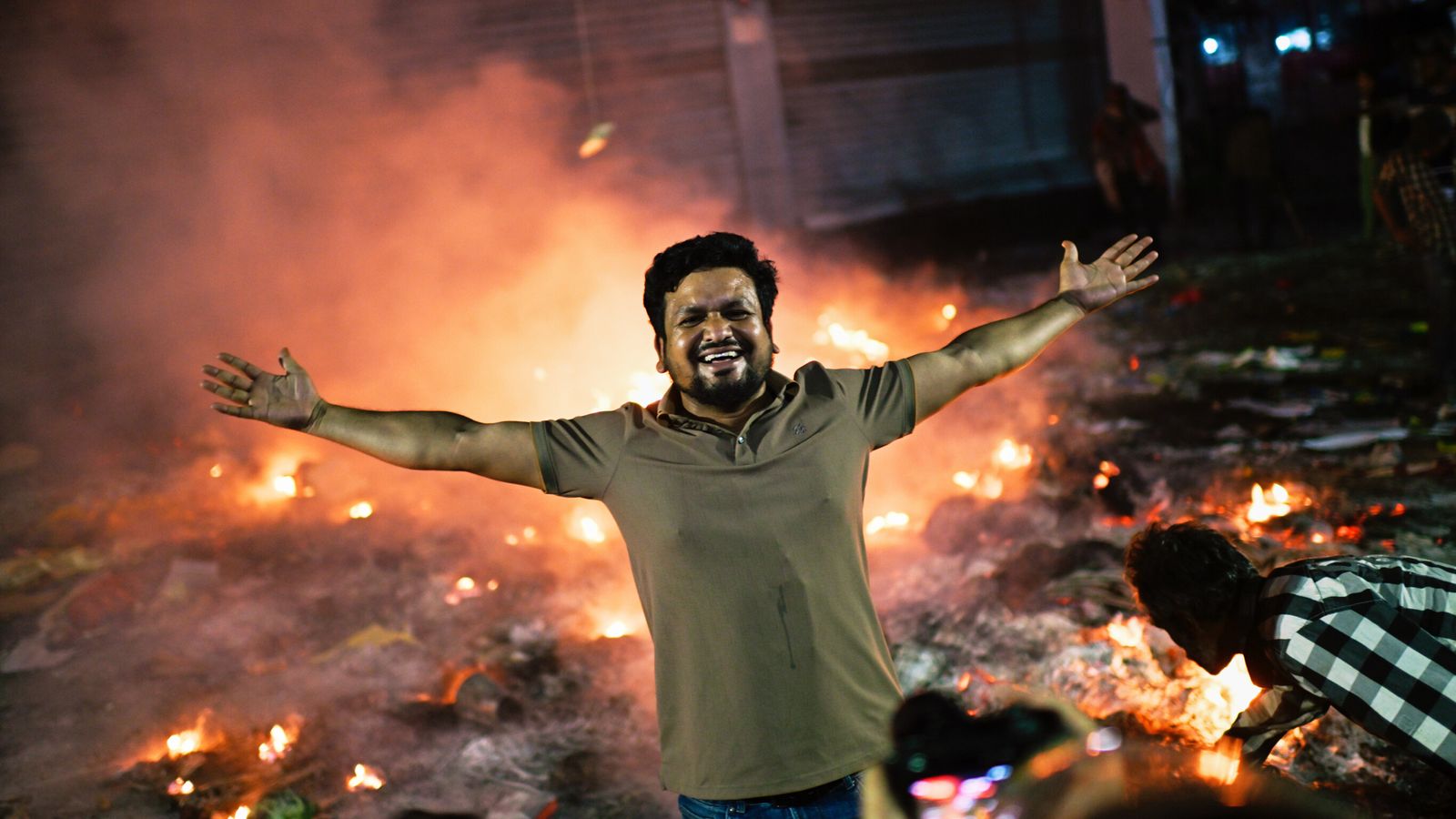
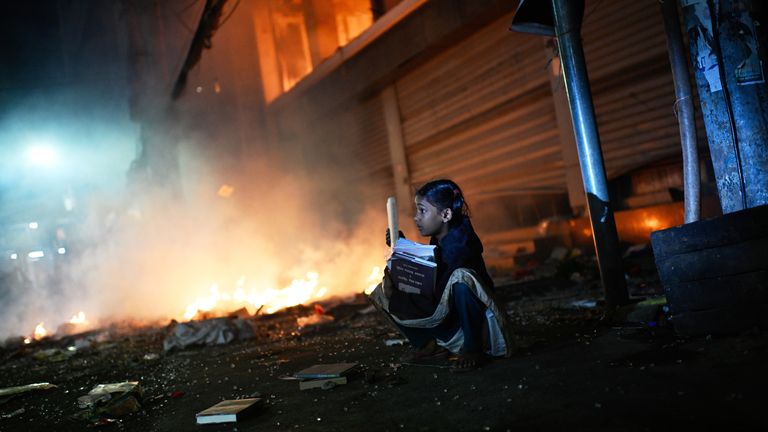
Protesters have stormed the headquarters of two major newspapers in Bangladesh, amid widespread unrest following the death of a political activist.
A mob set fire to the offices of the Bengali-language Prothom Alo daily newspaper and the English-language Daily Star in the capital Dhaka, leaving journalists and other staff stuck inside.
The Bengali-language Prothom Alo daily was one of the two newspapers that were targeted. Pic: AP.
One of the Daily Star’s journalists, Zyma Islam, wrote on Facebook: “I can’t breathe anymore. There’s too much smoke.”
Both dailies stopped updating their online editions after the attacks and did not publish broadsheets on Friday.
Troops were deployed to the Star building and firefighters had to rescue the journalists trapped inside. The blaze was brought under control early on Friday.
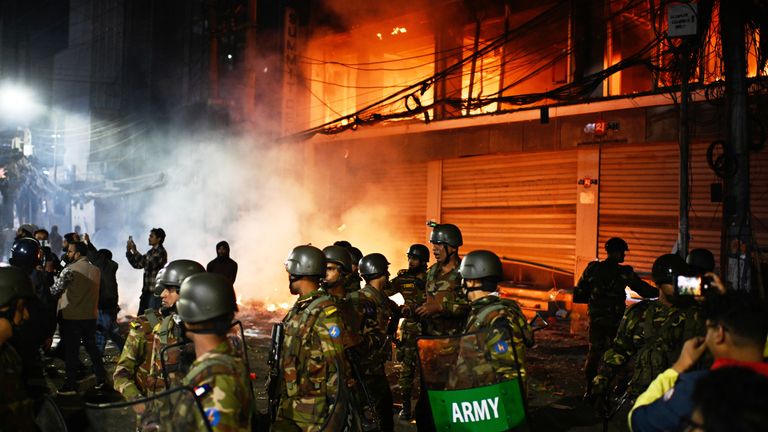
The latest protests erupted a year after the July Revolution ousted PM Sheikh Hasina. Pic: PA.
Political activist Sharif Osman Hadi died in hospital late on Thursday, six days after the youth leader was shot while riding on a rickshaw in Dhaka.
Bangladesh’s interim government urged people on Friday to resist violence as police and paramilitary troops fanned out
across the capital and other cities following the protests overnight. They have sparked concerns of fresh unrest ahead of national elections, which Mr Hadi had been due to stand in.
He was a prominent activist in the political uprising last year that forced the then Prime Minister Sheikh Hasina to flee the country. Mr Hadi spent six days on life support in a hospital in Singapore before he succumbed to his injuries.
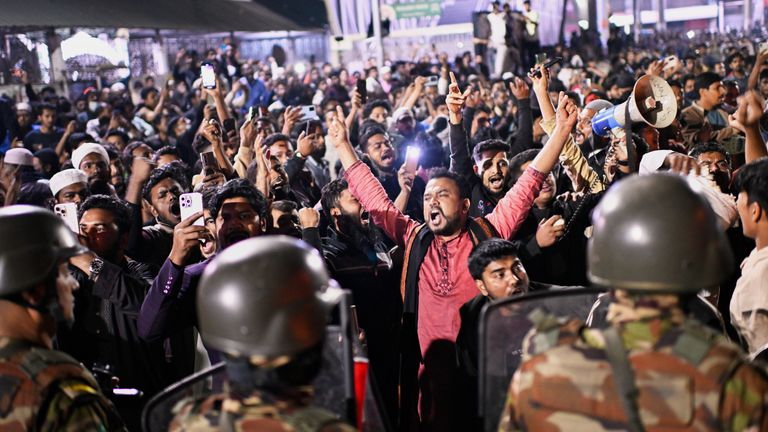
Mr Hadi died a week after he was shot by a man on a motorbike. Pic: PA.
Hundreds of protesters took to the streets following news of Mr Hadi’s death on Thursday night, where they rallied at Shahbagh Square near the Dhaka University campus, according to media reports.
A group of demonstrators gathered outside the head office of the Muslim-majority country’s leading Bengali-language Prothom Alo daily, before vandalising the building and setting it on fire.
A few hundred yards away, another group of protesters pushed into the Daily Star offices and set fire to the building. The protesters are believed to have targeted the papers for their alleged links with India and closeness to Bangladesh‘s interim leader, Nobel Peace Prize laureate Muhammad Yunus.
Read more:
Ex-Bangladesh PM Sheikh Hasina sentenced to death
UK MP Tulip Siddiq sentenced by Bangladeshi court
Although calm had returned to much of the country on Friday morning, protesters carrying national flags and placards
continued demonstrating at Shahbagh Square in Dhaka, chanting slogans and vowing not to return until justice was served.
👉 Tap here to follow The World with Richard Engel and Yalda Hakim wherever you get your podcasts 👈
Last year’s mass uprising erupted from student protests against a quota system that awarded 30% of government jobs to relatives of veterans.
The July 2024 protest, which resulted in as many as 1,400 deaths according to the United Nations, was dubbed the first “Gen Z” revolution.
Bangladesh’s former prime minister Sheikh Hasina Wazed was forced to resign in August 2024 and fled to India. She was later sentenced to death in absentia.
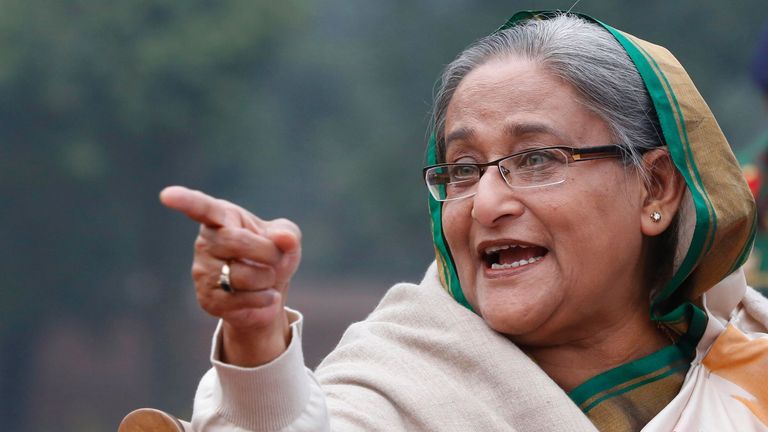
Sheikh Hasina was sentenced to death in absentia. Pic: AP
Dr Yunus was then sworn in as interim leader.
The country’s Islamists and other opponents of Ms Hasida have accused her government for being subservient to India.
Mr Hadi was a fierce critic of Ms Hasina and neighbouring India.
He had planned to run as an independent candidate in a constituency in Dhaka at the next national elections due to be held in February.
Authorities said they had identified the suspects in Mr Hadi’s shooting, and the assassin was also likely to have fled to India. Two men on a motorbike followed Hadi and one opened fire before they fled the scene.

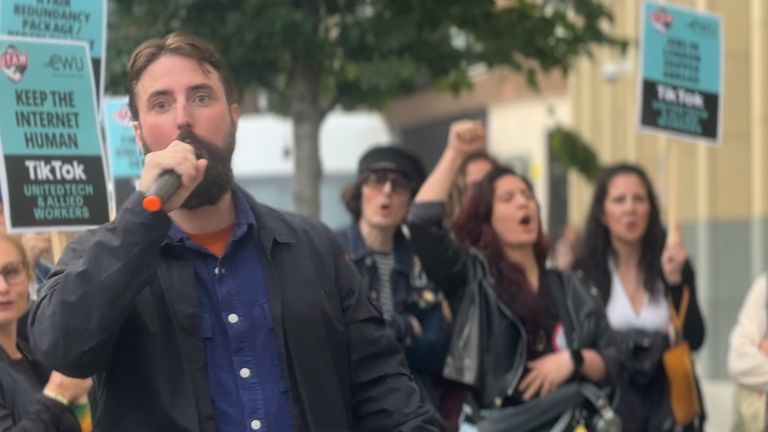
TikTok is being threatened with legal action over cuts to its UK online safety teams.
In August, the social media company announced more than 400 workers would lose their jobs, with AI replacing some of the workers and other jobs being rehired abroad.
TikTok is being accused of threatening those safety workers with redundancy days before they were due to vote on forming a union.
Read more: TikTok moderators warn users may be at risk
Now, two moderators have sent a legal letter to TikTok laying out the terms of a potential legal case on grounds of unlawful detriment and automatic unfair dismissal.
Unlawful detriment is when an employer treats a worker unfairly because they used a protected employment right, for example, being a union representative, asking for flexible working or whistleblowing about the company.
“In June, TikTok said it was going to hire hundreds more content moderators, then two months later, they fired everyone,” said Stella Caram, head of legal at Foxglove, a non-profit supporting the moderators.
“What changed? Workers exercised their legal right to try to form a trade union. This is obvious, blatant and unlawful union-busting,” she said.
Moderators gathered to protest the redundancies in London
TikTok has been given one month to respond to the legal claim.
A TikTok spokesperson said: “We once again strongly reject this baseless claim.
“These changes were part of a wider global reorganisation, as we evolve our global operating model for Trust and Safety with the benefit of technological advancements to continue maximising safety for our users.”
As well as Foxglove, the two moderators launching the case are working with the United Tech & Allied Workers (UTAW), part of the Communication Workers’ Union, and law firm Leigh Day.
In exclusive interviews last month, three whistleblowers told Sky News the cuts would put UK users at risk, a claim repeated by Julio Miguel Franco, one of the moderators behind the legal action.
“TikTok needs to tell the truth,” he said.
“When it says AI can do our job of keeping people safe on TikTok, it knows that’s rubbish.
“Instead, they want to steal our jobs and send them to other countries where they can pay people less and treat them worse. The end result is TikTok becomes less safe for everyone.”
Read more on social media:
Online sleuths and fake news: The world of missing people
Parents of sextortion victim who took his own life sue Meta
Internal documents seen by Sky News show that TikTok planned to keep its human moderators in London for at least the rest of 2025.
The documents lay out the increasing need for dedicated moderators because of the growing volume and complexity of moderation.
TikTok’s head of governance, Ali Law, also told MPs in February that “human moderators … have to use their nuance, skills and training” to be able to moderate hateful behaviour, misinformation and misleading information.
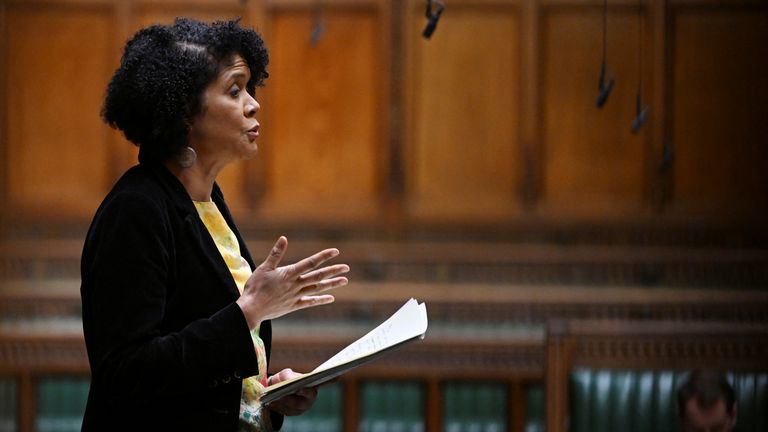
Dame Chi Onwurah speaks at the House of Commons. File pic: Reuters
After a series of letters between TikTok and MPs, Dame Chi Onwurah, chair of the science and technology select committee, said she was “deeply” concerned about the cuts.
“There is a real risk to the lives of TikTok users,” she said.
Last month, in an exclusive sitdown with Sky News, however, Mr Law said user safety would not be compromised.
“We set a high benchmark when it comes to rolling out new moderation technology.
“In particular, we make sure that we satisfy ourselves that the output of existing moderation processes is either matched or exceeded by anything that we’re doing on a new basis.
“We also make sure the changes are introduced on a gradual basis with human oversight so that if there isn’t a level of delivery in line with what we expect, we can address that.”
-
 Sports2 years ago
Story injured on diving stop, exits Red Sox game
-
 Sports3 years ago
‘Storybook stuff’: Inside the night Bryce Harper sent the Phillies to the World Series
-
 Sports2 years ago
Game 1 of WS least-watched in recorded history
-
 Sports3 years ago
Button battles heat exhaustion in NASCAR debut
-
 Sports3 years ago
MLB Rank 2023: Ranking baseball’s top 100 players
-
Sports4 years ago
Team Europe easily wins 4th straight Laver Cup
-
 Environment3 years ago
Japan and South Korea have a lot at stake in a free and open South China Sea
-
 Environment1 year ago
Here are the best electric bikes you can buy at every price level in October 2024