
Midseason takeaways: Taking stock of Colorado, Penn State, USC, Notre Dame

With the college football season at its midpoint, it’s a good time to assess what we’ve seen so far and what it might mean the rest of the way.
Is the bubble bursting for Deion Sanders and Colorado after a scintillating start to the season? Can USC fix its offensive line and protect Caleb Williams in his quest for another Heisman Trophy? And will we be fortunate enough to see a rematch of Week 7’s Washington-Oregon thriller?
Can Penn State take the next step and make it to the College Football Playoff? Will Notre Dame continue to progress after its big win over USC? And could the ACC get two teams in the CFP?
ESPN’s college football reporters examine these questions in the aftermath of Week 7.
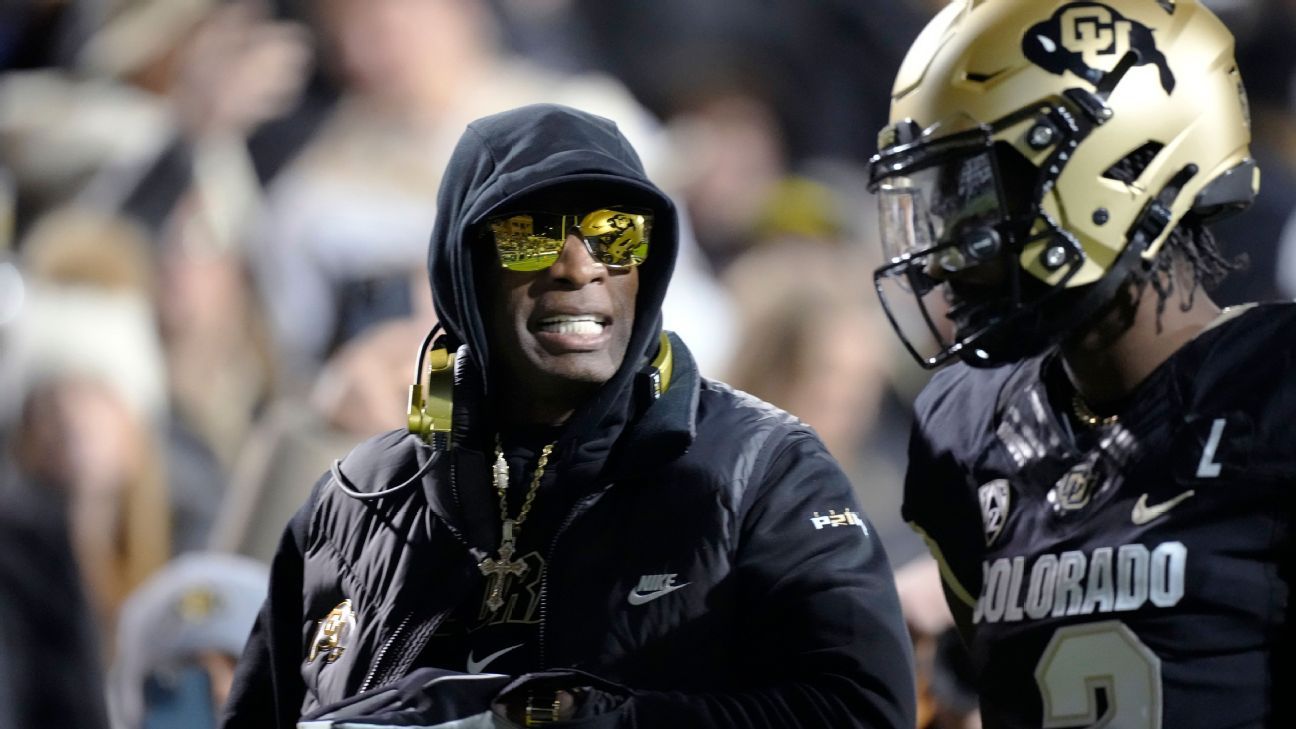
Colorado’s poor finish could be a bad omen
From the moment Colorado rallied past Arizona State on Oct. 7, Deion Sanders focused on the team’s habit for slow starts, saying he was “sick of it,” even after the Buffaloes rallied for their fourth win. Colorado answered its coach Friday night, storming out to a 29-0 halftime lead against one-win Stanford, scoring touchdowns on its first four possessions and outgaining the Cardinal 324-114. “Finally put it together … like I desired,” Sanders said. The Buffs were 30 minutes away from a 5-2 start — well ahead of every external prediction for the season — and a well-timed open week. For a team that had outscored its first six opponents 126-84 in the second half, and 89-42 from the third quarter on, victory seemed secure.
But the Buffs unraveled in the second half and overtime, allowing Stanford to score on its final six possessions, including a 97-yard drive. There were substitution errors, penalties and other mistakes. Quarterback Shedeur Sanders, who had shown his standard brilliance with five touchdown passes, made a rare poor decision in overtime, flinging the ball toward the end zone, where it was easily intercepted. Colorado’s flaws have been there all season, even in the first half Friday, as Stanford receivers sneaked behind Travis Hunter and others. But the Buffs had masked them fairly well, mainly because of Shedeur Sanders.
“When you’re playing like you’re playing, you don’t want a bye week, you want to work it out, you want to make it happen,” a visibly frustrated Deion Sanders said. “I wish we could play next week, I really do.”
Instead, they have two weeks to stew as bowl eligibility is suddenly in doubt. For all the hype about the September schedule, Colorado’s slate is truly backloaded. Four of the Buffs’ remaining opponents — UCLA, Oregon State, Washington State and Utah — entered Saturday ranked in the top 20, and the fifth, Arizona, is clearly improved. Although the excitement and attention around Deion Sanders and his team likely will remain, the tone of the season seemed to shift early Saturday morning at Folsom Field. — Adam Rittenberg
Cascade Clash redux in the desert?
That purple-clad field storm late Saturday afternoon in Seattle at Husky Stadium was a sight to see after Washington beat Oregon in a 36-33 instant classic. The Oregon fans who made the trek from Eugene had to be disappointed, with the Ducks having come agonizingly close to forcing overtime.
The Pac-12’s farewell tour has been a joy to watch and the beauty of what awaits during the home stretch is that Dan Lanning’s team could get another crack at Kalen DeBoer’s team in 48 days when the conference crowns its final champion Dec. 1 in Las Vegas. The conference going without divisions for its last season may give college football fans a tremendous parting gift.
There’s a lot of work to be done between now and the first Friday in December, and the focus will be on each team’s defense to continue to complement two of the nation’s top three offenses. The Ducks, who have permitted their first six opponents to average 15.8 points (11th in FBS), sit 13th in total defense (282.2 yards per game), and the Huskies are 87th in the country at 394.3 YPG, allowing only 20.8 points a game.
Washington still has trips to USC and Oregon State and an Apple Cup matchup with Washington State to deal with, while Oregon visits two-time defending conference champ Utah to close out October and has USC and Oregon State on the docket in two of the last three weeks of the season. But if Washington and Oregon are the two teams left standing from a grueling regular season, get your popcorn ready. — Blake Baumgartner
Moment of truth looming for Penn State
James Franklin has been in Happy Valley for 10 years now and has won 70% of his games while at the helm (84-36). Four times he has led the Nittany Lions to 11-win seasons, including in 2022, and he has a trio of New Year’s Six victories to his credit. While he has accomplished a lot, his revitalization of the program has included only one Big Ten title (2016).
This year, however, presents a unique opportunity as Penn State looks to take that next step toward gaining entry into the College Football Playoff for the first time, beginning with Saturday’s game against Ohio State in Columbus, Ohio. Through seven weeks, the Nittany Lions own the nation’s top units in both in total defense (193.7 YPG) and passing defense (121.2 YPG) and are second only to Michigan in scoring defense (8.0 PPG). Coordinator Manny Diaz’s impact can’t be understated as the former Miami head coach has breathed new life on that side of the ball over the last two years. What transpires in the Horseshoe in five days and then three weeks later when Michigan comes calling Nov. 11 may go a long way in defining Franklin’s tenure, especially with realignment dramatically changing the look of the Big Ten in 2024 and beyond. — Blake Baumgartner
USC’s offensive line is a problem it needs to solve
As we saw all of last season, USC’s success relies largely on Caleb Williams being Caleb Williams. What that means, however, isn’t just Williams playing up to his Heisman level, but also being allowed to work his magic thanks to an offensive line that protects him well. In 2022, Williams had plenty of time to dissect defenses in and out of the pocket behind an experienced line. This year, after key departures in center Brett Neilon and guard Andrew Vorhees, the Trojans’ offensive line has devolved from a relative strength to a question mark, at best.
1:31
Caleb Williams throws 3 INTs for first time in USC’s loss to Notre Dame
Caleb Williams throws a trio of interceptions in the first half as USC falls to Notre Dame 48-20.
With Justin Dedich moving to center and other reshuffling of the line with players such as Florida transfer Michael Tarquin and Mason Murphy, the line has allowed 2.43 sacks per game this season for a total loss of 124 yards — the latter is 105th in the country. On Saturday night against a feisty Notre Dame defense determined to get to Williams, the unit surrendered six sacks while accounting for a handful of penalties as well. Dedich, in particular, has had several penalties called on him in recent weeks.
“I think the biggest thing that we did was we put ourselves in so many situations where we were backed up in long-yardage situations,” USC head coach Lincoln Riley said postgame. “It becomes almost like third-and-long ball and they’re pinning their ears back. Do we need to protect better? Yes. But there’s a lot of things that go into that. The big thing is you can’t continually put yourself in just bad situations against a good defense.”
Williams was far from good Saturday, and he took plenty of the blame for some of his throws, including three interceptions. But with USC playing from behind from the first quarter on, the running game was never established (103 total yards) while Williams was put in a position where he needed to press. Without much time to throw, any chance at a comeback was sapped.
Now USC’s offensive line will have to deal with defenses just as tough, if not tougher, in Utah, UCLA, Cal, Oregon and Washington. As Riley said Saturday night, there’s no “magic pill” that will allow them to improve, just work. For the offensive line, however, that work needs to happen fast. — Paolo Uggetti
Marcus Freeman’s signature wins help the learning curve
After listening to Notre Dame coach Marcus Freeman and several players describe a historic win over USC, athletic director Jack Swarbrick left the team’s media room and walked into the brisk night, still buzzing in celebration. Swarbrick, a 1976 Notre Dame graduate who will step down as AD in 2024, told me that wins over USC are especially sweet for alums. This one was also validating.
In December 2021, Swarbrick gave Freeman a chance to lead the Notre Dame program, understanding that there would be a learning curve. Only 35, Freeman had been a Group of 5 defensive coordinator less than a year earlier. “I have no reason to suspect it’s a bigger learning curve or a smaller one in Marcus’ case, but there has to be one,” Swarbrick told me then.
Freeman has had some difficult moments in his first year-plus on the job: losing to Marshall at home to drop to 0-2; losing to a bad Stanford team, also at home, midway through last season; the 10 defenders on the field fiasco against Ohio State on Sept. 23; getting drubbed by Louisville two weeks later. But his teams have responded admirably and recorded two dominant signature wins — 35-14 over Clemson last November and 48-20 against USC — that show the potential of Freeman’s program. Notre Dame fans want to embrace Freeman, perhaps more than his undeniably successful predecessor, Brian Kelly. That much became clear Saturday night with the chants and high-fives he received after he came up the famous stadium tunnel.
Like all coaches at programs like Notre Dame, Freeman will be judged on CFP appearances. Kelly had two in his final four seasons. Freeman told me before the season that he’s less focused on tangible goals and more on getting his team to its full potential. He echoed that feeling Saturday.
“There is a process to guarantee you have a chance to have success,” he said. “That’s what we couldn’t cheat. I’m proud of the way the coaches and the players really attacked it.”
Freeman’s process to become a top-level coach might not be linear, but growth spurts like the USC and Clemson wins show he’s on his way. — Adam Rittenberg
Two ACC playoff contenders?
One of the biggest knocks against the ACC in the College Football Playoff era — or really in any era — is that the conference never had multiple teams in the hunt for a national championship in the same season. This could be that season.
Both Florida State and North Carolina hit the midway point undefeated and have each scored more than 30 points in all their games thus far. They have some remaining tests along the way: Both teams play Duke, Florida State still has Miami and Florida and North Carolina still has Clemson.
But they don’t play each other in the regular season, so the possibility exists that they could end up in the ACC championship game, both as undefeated teams. If this scenario were to unfold in any other conference, there would already be talk about possibly getting two teams into the playoff. It happened to the ACC in the pandemic year in 2020. One-loss Clemson avenged its loss to Notre Dame in the conference championship game, handing the Irish their first loss. But both teams ended up making it into the playoff.
But the narrative around this conference makes talk of getting two teams in the playoff premature. Part of that is because Florida State has looked shaky at times, part of it is because North Carolina has not been able to sustain early success in recent years, part of it is because the rest of the conference outside the top five is mediocre.
If both teams keep winning, then perhaps the conversation changes in the second half of the season. But this is the ACC, of course, and fans have been scarred into believing the worst will happen at any moment (#goacc anyone?) For the latest examples, see undefeated Miami blowing the game versus Georgia Tech two weeks ago, and undefeated Louisville losing on the road to 1-4 Pitt on Saturday.
That leaves the last two standing. As of right now, ESPN’s Football Power Index gives Florida State a 30.1% chance to win out, and North Carolina a 7.9% chance. Not great odds, but certainly better than at any point last season for two teams. The ACC will take that. — Andrea Adelson
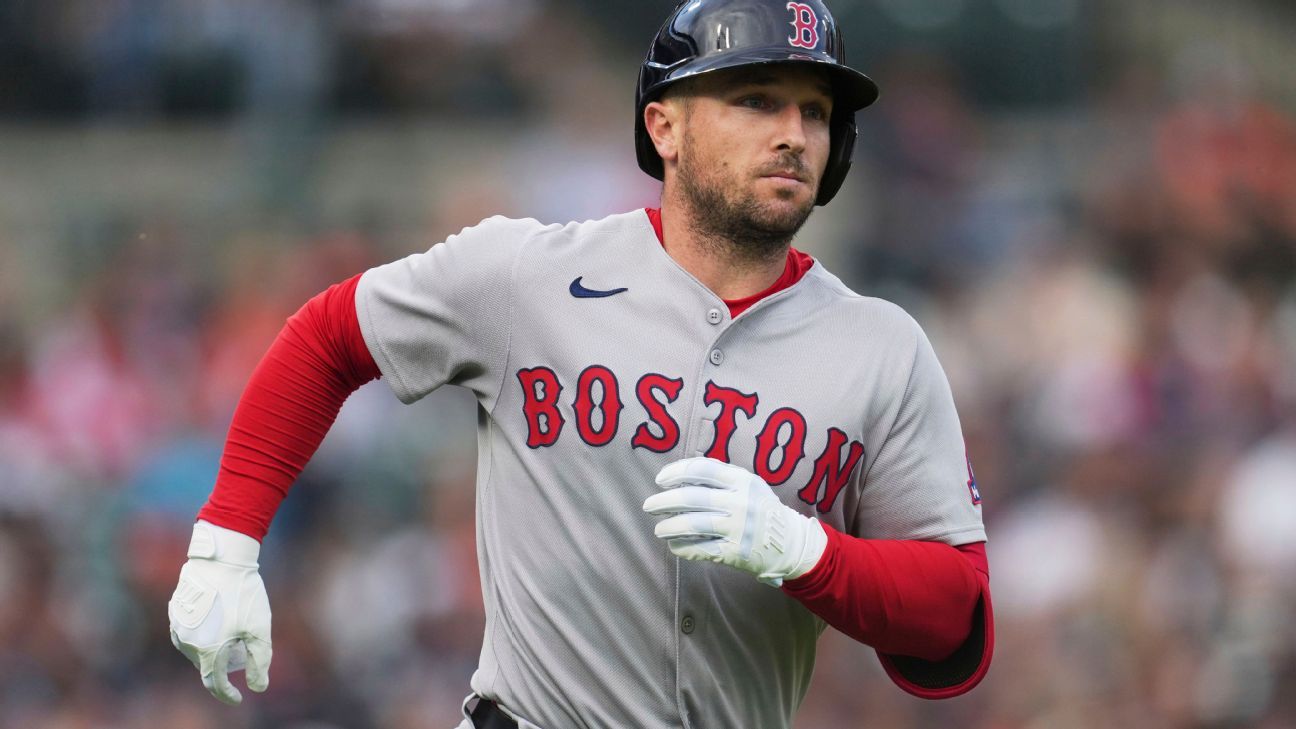

The 2025-26 MLB hot stove was lit just days after the Los Angeles Dodgers hoisted their second consecutive World Series championship trophy.
All eyes this winter are on a free agent hitting class featuring Kyle Tucker, Kyle Schwarber (who is returning to the Phillies on a five-year deal), Cody Bellinger, Alex Bregman and Pete Alonso. But they’re not the only ones who will make a splash in the market.
Which teams will go big to contend for the 2026 World Series title? And who will make the trades and signings that have everyone buzzing?
Below is a running list of notable transactions and updates from throughout the MLB offseason.
Key links: Offseason grades | Top 50 free agents | Fantasy spin | Best fits
Notable MLB offseason transactions
Dec. 9

Closer Edwin Diaz and the Dodgers are in agreement on a three-year, $69 million deal, sources tell ESPN.

Kyle Schwarber and the Philadelphia Phillies are in agreement on a five-year, $150 million contract, sources told ESPN, reuniting the National League home run leader with the team he has played for the past four seasons.
Dec. 8

Left-hander Steven Matz and the Tampa Bay Rays are in agreement on a two-year contract, pending physical, sources tell ESPN.

Free agent pitcher Michael Soroka and the Arizona Diamondbacks are in agreement on a one-year deal, pending a physical, sources tell ESPN.
Dec. 6


The Washington Nationals traded left-hander Jose Ferrer to the Seattle Mariners for top catching prospect Harry Ford and minor league pitcher Isaac Lyon, the teams announced Saturday.
Dec. 4


The Boston Red Sox acquired right-hander Johan Oviedo from the Pittsburgh Pirates in a five-player trade that sent heralded outfield prospect Jhostynxon Garcia to Pittsburgh, the teams announced Thursday.
Dec. 3
Outfielder Cedric Mullins has agreed to a one-year deal with the Tampa Bay Rays, according to multiple reports.

Free agent closer Emilio Pagan has agreed to return to the Cincinnati Reds on a $20 million, two-year contract, according to multiple reports.
World Series hero Miguel Rojas is returning to the Dodgers in 2026, for what will be his final season in the major leagues, sources told ESPN. The infielder agreed to terms on a one-year, $5.5 million deal, after which he will be assisting the front office and helping in player development.

Left-handed reliever Sam Hentges and the San Francisco Giants agreed to a $1.4 million, one-year contract.

Left-hander Anthony Kay and the Chicago White Sox are in agreement on a two-year, $12 million contract with a club option for a third season, sources told ESPN.
Dec. 2

Right-hander Cody Ponce, who won KBO MVP honors last season, and the Toronto Blue Jays are in agreement on a three-year, $30 million contract, sources told ESPN

Former KBO pitcher Ryan Weiss is in agreement with the Houston Astros on a one-year contract that guarantees him $2.6 million, sources told ESPN.

Right-hander Alek Manoah and the Los Angeles Angels are in agreement on a one-year, $1.95 million contract, a source tells ESPN.
Dec. 1

Reliever Devin Williams and the New York Mets are in agreement on a three-year contract that guarantees more than $50 million, sources tell ESPN.
Nov. 29

Closer Ryan Helsley and the Baltimore Orioles agreed on a two-year contract that includes an opt-out after the first season.
Nov. 26
Right-hander Dylan Cease and the Toronto Blue Jays agreed on a seven-year, $210 million contract.
Nov. 25

The Boston Red Sox acquired veteran right-hander Sonny Gray in a trade with the St. Louis Cardinals.
Nov. 23

The New York Mets and Texas Rangers agreed to a trade that would send second baseman Marcus Semien to the Mets and outfielder Brandon Nimmo to the Rangers.
Nov. 21

The Chicago Cubs and right-handed reliever Phil Maton agreed on a two-year deal.

The Giants acquired outfielder Joey Wiemer from the Marlins for cash and agreed to terms with right-hander JT Brubaker on a one-year contract.
The Arizona Diamondbacks agreed to a one-year, $2.75 million deal with veteran catcher James McCann.
Nov. 19

The Braves re-signed closer Raisel Iglesias to a one-year, $16 million contract.
The Atlanta Braves acquired Mauricio Dubon from the Houston Astros for Nick Allen in an exchange of infielders.
Nov. 18
The Baltimore Orioles acquired outfielder Taylor Ward from the Los Angeles Angels in exchange for right-hander Grayson Rodriguez.


New York Yankees outfielder Trent Grisham, Detroit Tigers infielder Gleyber Torres, Milwaukee Brewers pitcher Brandon Woodruff and Chicago Cubs pitcher Shota Imanaga accepted their qualifying offers, meaning they’ll return to their respective teams in 2026 at salaries of $22.025 million.
Nov. 17
Reliever Ryan Yarbrough will be back in the Bronx after agreeing to a one-year deal with the New York Yankees.
Nov. 16
First baseman Josh Naylor and the Seattle Mariners have finalized a five-year, $92.5 million contract that has a full no-trade clause and no deferrals, sources tell ESPN.
Nov. 4
Chicago Cubs SP Shota Imanaga becomes free agent after team, player reject options for 2026
Nov. 3
Milwaukee Brewers exercise option on SP Freddy Peralta; SP Brandon Woodruff declines option
Boston Red Sox 3B Alex Bregman opts out of contract; SP Lucas Giolito declines option
New York Yankees OF Cody Bellinger declines option
New York Mets 1B Pete Alonso, RP Edwin Díaz opt out of contracts
Key offseason dates
Nov. 6: Free agency begins at 5 p.m. ET
Nov. 10-13: GM meetings in Las Vegas
Nov. 18-20: Owners meetings in New York
Nov. 18: Deadline to accept or reject qualifying offer
Nov. 21: Non-tender deadline
Dec. 8-10: Winter meetings in Orlando
Dec. 9: MLB draft lottery
Dec. 10: Rule 5 draft
-
 Sports2 years ago
Story injured on diving stop, exits Red Sox game
-
 Sports3 years ago
‘Storybook stuff’: Inside the night Bryce Harper sent the Phillies to the World Series
-
 Sports2 years ago
Game 1 of WS least-watched in recorded history
-
 Sports3 years ago
Button battles heat exhaustion in NASCAR debut
-
 Sports3 years ago
MLB Rank 2023: Ranking baseball’s top 100 players
-
Sports4 years ago
Team Europe easily wins 4th straight Laver Cup
-
 Environment3 years ago
Japan and South Korea have a lot at stake in a free and open South China Sea
-
 Environment1 year ago
Here are the best electric bikes you can buy at every price level in October 2024