
Breaking down the latest in 2024 football recruiting, from top commits to March visits


As the page officially closed on college football’s 2023 recruiting class, the 2024 cycle is slowly beginning to take shape.
So far, 83 recruits in the 2024 ESPN Junior 300 have already offered up their commitments, including eight in February. Those eight players pledged to seven different schools.
We break down what has happened over the past month since national signing day and which prospects are taking visits.
Early look at top classes in 2024
ESPN released its first class rankings for 2024 on Feb. 2, and Georgia, which ended the 2023 cycle with its seventh straight top-three class, is at the top.
Georgia’s nine ESPN 300 prospects lead the way, while Notre Dame and LSU aren’t far behind with seven and six, respectively.
South Carolina has landed five commits, all of whom are ranked in the ESPN 300, as the Gamecocks are seventh in the class rankings.
Florida, Alabama, Clemson, Florida State and Michigan each have four ESPN 300 commits thus far.
Five-star cornerback picks two-time defending champions
It may have been the traditional signing day for the 2023 class, but five-star 2024 cornerback Ellis Robinson IV‘s decision to commit to Kirby Smart and Georgia on Feb. 1 only bolstered a class that’s getting deep on defense.
“They told me I’m the best DB in the 2024 class and one of the best in the 2023 class,” Robinson told ESPN. “They valued my skill set and always showed me how I fit in the defensive scheme. I was a priority from the start, and they were pretty consistent throughout the process.”
Robinson (No. 5 overall) joined ESPN 300 safeties Jaylen Heyward (No. 40) and Peyton Woodyard (No. 43), who both committed within the same week in January, as the newest members of the Bulldogs’ secondary.
Auburn secures pledges from pair of 2024 ESPN 300 prospects
Hugh Freeze’s first full recruiting class on the Plains is off to a good start with the commitments of four-star cornerback Jayden Lewis (No. 291) on Feb. 1 and four-star quarterback Walker White (No. 217) on Feb. 3.
White, a product of Little Rock Christian Academy (Arkansas), is the Tigers’ third ESPN 300 quarterback in the past four recruiting classes, joining Dematrius Davis (No. 214, 2021) and Holden Geriner (No. 190, 2022). White threw for 1,975 yards and 25 touchdowns while churning out 837 yards and 16 TDs on the ground as a high school junior in 2022.
Since finishing with the No. 7-ranked recruiting class in the 2020 cycle, the Tigers have finished 28th (2021), 18th (2022) and 21st (2023).
Three teams that landed notable commits
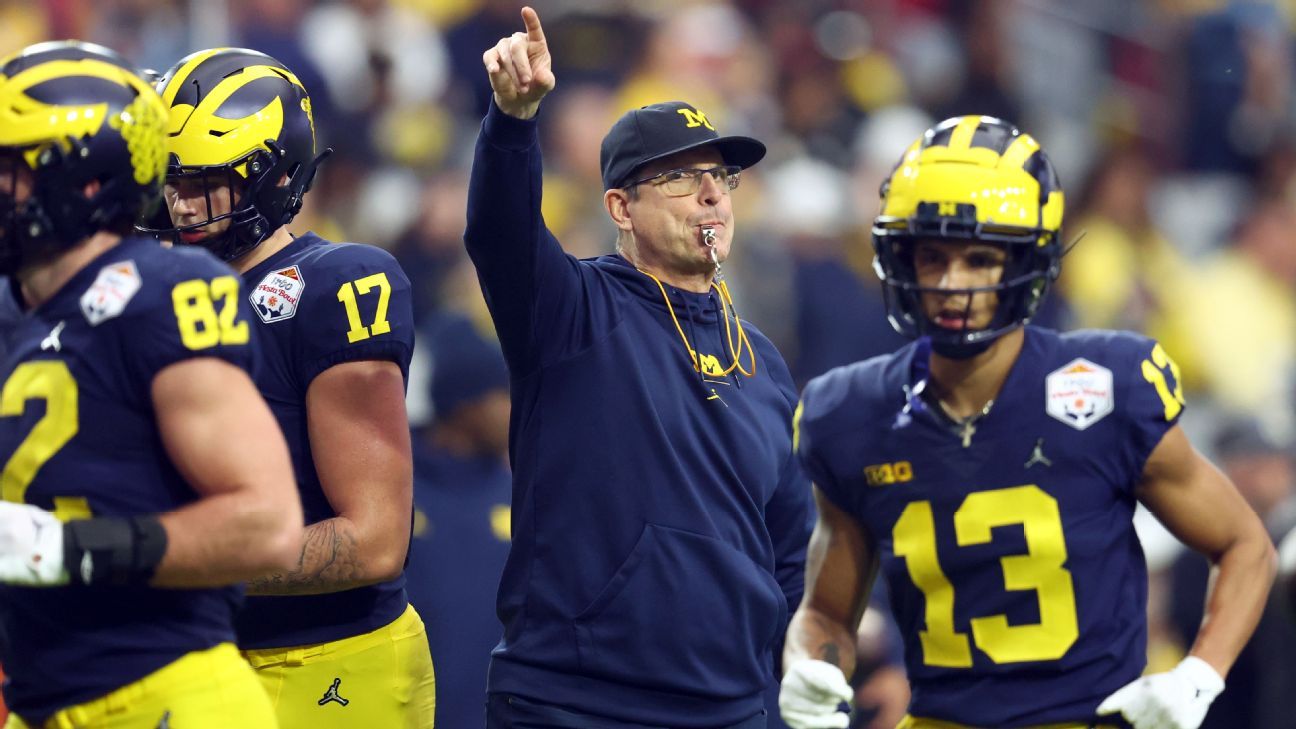
Michigan: On the heels of back-to-back College Football Playoff appearances, Jim Harbaugh and the Wolverines aren’t slowing down on the recruiting trail. Jacob Oden (No. 153) from in-state Harper Woods High School became the first ESPN 300 safety to commit to Michigan since Keon Sabb and Zeke Berry in 2022. Harbaugh brought in eight ESPN 300 prospects in the 2022 cycle (finished eighth) and six in the 2023 cycle (17th). So far, the Wolverines have four ESPN Jr. 300 commits.

SMU: The Mustangs landed only their second top-300 prospect since ESPN began ranking players in 2006 when athlete Jamyri Cauley (No. 143) committed. A product of South Oak Cliff High School (Texas), Cauley pledged to SMU on Feb. 6 and is the program’s first ESPN 300 prospect since quarterback Preston Stone in 2021. Landing Cauley is a big first step for coach Rhett Lashlee, whose 2023 class finished 65th overall.

Arizona State: On the heels of emerging with 2023 ESPN 300 quarterback Jaden Rashada‘s commitment, new Sun Devils coach Kenny Dillingham grabbed a pledge from North Mesquite High School (Texas) wide receiver Elijah Baesa (No. 244) on Feb. 1. After signing three ESPN 300 players in 2021, Arizona State had only one ESPN 300 prospect in each of its past two recruiting classes (Rashada in 2023 and running back Tevin White in 2022). The Sun Devils relied heavily on the transfer portal under coach Herm Edwards, so Dillingham figures to improve on ASU’s recruiting efforts.
Five teams to watch

Purdue: New coach Ryan Walters isn’t wasting time in trying to procure high-level talent to West Lafayette, Indiana. The Boilermakers plan to host cornerback Bryce West (No. 23 overall) in March, his father, Bryce West Sr., told ESPN. Walters will have competition, as West Sr. added they also plan on visiting Oregon and USC later this month.
Alabama: Fresh off securing 2023’s top class, Nick Saban isn’t letting up in inviting high-end prospects to come to campus. Wide receiver Ryan Wingo (No. 18), cornerback Charles Lester III (No. 25) and athlete Aaron Butler (No. 76) are among the players who will visit Tuscaloosa in March or April.

Colorado: Aaron Butler and cornerback Marcelles Williams (No. 92) are two players Deion Sanders and his staff have their eyes on, as both will visit Boulder this month. Sanders, after being hired in December from Jackson State, brought in the 23rd-best class in 2023 — the program’s first top-25 class since 2008 (No. 24).

Ohio State: Ryan Day and the Buckeyes will host Charles Lester III for an official visit in April while cornerbacks Marcelles Williams and Jordon Johnson-Rubell (No. 55) will both be on campus for an unofficial visit this month.
Michigan: Jeremiah Davis, the father of quarterback Jadyn Davis (No. 35), told ESPN that his son plans on visiting sometime this month. Aaron Chiles Sr. told ESPN his son, linebacker Aaron Chiles (No. 57), will be on campus March 10. A week later, offensive guard DeAndre Carter (No. 39) is scheduled to visit, his father, Antoine, told ESPN. Jordon Johnson-Rubell also is supposed to visit Ann Arbor in March.

-
Dan Murphy
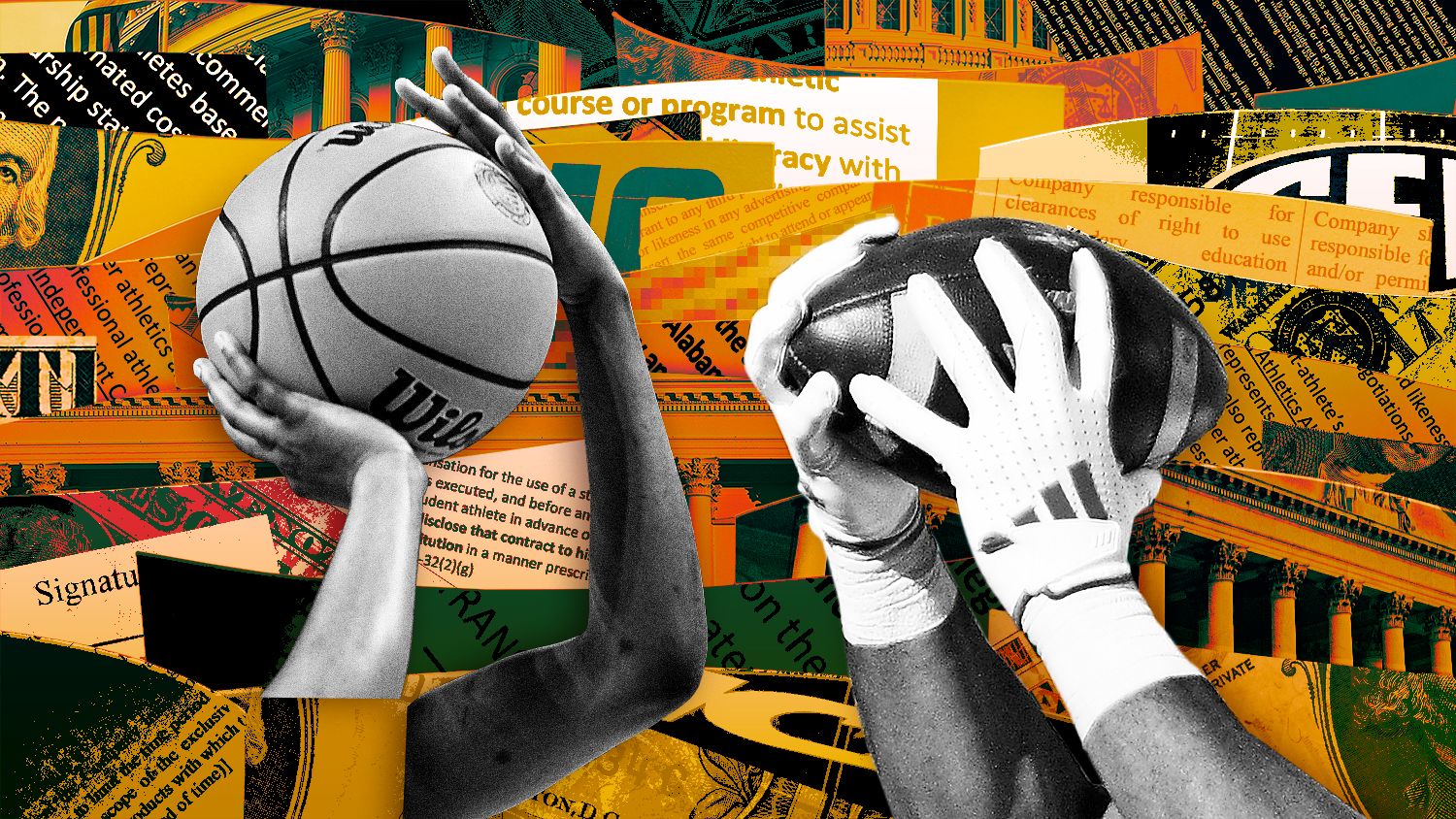
After another week of frustrating setbacks, at the end of a frustrating year trying to bring stability to their industry, a growing number of college athletic directors say they are interested in exploring a once-unthinkable option: collective bargaining with their players.
Dozens of athletic directors will gather in Las Vegas over the next few days for an annual conference. They had hoped to be raising toasts to the U.S. House of Representatives. But for the second time in three months, House members balked last week at voting on a bill that would give the NCAA protection from antitrust lawsuits and employment threats. So instead, they will be greeted by one of the Strip’s specialties: the cold-slap realization of needing a better plan.
“I’m not sure I can sit back today and say I’m really proud of what we’ve become,” Boise State athletic director Jeramiah Dickey told ESPN late last week. “There is a solution. We just have to work together to find it, and maybe collective bargaining is it.”
Athletic directors see only two paths to a future in which the college sports industry can enforce rules and defend them in court: Either Congress grants them an exemption from antitrust laws, or they collectively bargain with athletes. As Dickey said, and others have echoed quietly in the past several days, it has become irresponsible to continue to hope for an antitrust bailout without at least fully kicking the tires on the other option.
“If Congress ends up solving it for us, and it ends up being a healthy solution I’ll be the first one to do cartwheels down the street,” said Tennessee athletic director Danny White when speaking to ESPN about his interest in collective bargaining months ago. “But what are the chances they get it right when the NCAA couldn’t even get it right? We should be solving it ourselves.”
Some athletic directors thought they had solved their era of relative lawlessness back in July. The NCAA and its schools agreed to pay $2.8 billion in the House settlement to purchase a very expensive set of guardrails meant to put a cap on how much teams could spend to acquire players. The schools also agreed to fund the College Sports Commission, a new agency created by the settlement to police those restrictions.
But without an antitrust exemption, any school or player who doesn’t like a punishment they receive for bursting through those guardrails can file a lawsuit and give themselves a pretty good chance of wiggling out of a penalty. The CSC’s plan — crafted largely by leaders of the Power 4 conferences — to enforce those rules without an antitrust exemption was to get all their schools to sign a promise that they wouldn’t file any such lawsuits. On the same day that Congress’ attempt crumbled last week, seven state attorneys general angrily encouraged their schools not to sign the CSC’s proposed agreement.
In the wake of the attorneys general’s opposition, a loose deadline to sign the agreement came and went, with many schools declining to participate. So, college football is steamrolling toward another transfer portal season without any sheriff that has the legal backing to police how teams spend money on building their rosters.
That’s why college sports fans have heard head football coaches like Lane Kiffin openly describe how they negotiated for the biggest player payroll possible in a system where all teams are supposed to be capped at the same $20.5 million limit. Right now, the rules aren’t real. The stability promised as part of the House settlement doesn’t appear to be imminent. Meanwhile, the tab for potential damages in future antitrust lawsuits continues to grow larger with each passing day.
Collective bargaining isn’t easy, either. Under the current law, players would need to be employees to negotiate a legally binding deal. The NCAA and most campus leaders are adamantly opposed to turning athletes into employees for several reasons, including the added costs and infrastructure it would require.
The industry would need to make tough decisions about which college athletes should be able to bargain and how to divide them into logical groups. Should the players be divided by conference? Should all football players negotiate together? What entity would sit across from them at the bargaining table?
On Monday, Athletes.Org, a group that has been working for two years to become college sports’ version of a players’ union, published a 35-page proposal for what an agreement might look like. Their goal was to show it is possible to answer the thorny, in-the-weeds questions that have led many leaders in college sports to quickly dismiss collective bargaining as a viable option.
Multiple athletic directors and a sitting university president are taking the proposal seriously — a milestone for one of the several upstart entities working to gain credibility as a representative for college athletes. Syracuse chancellor and president Kent Syverud said Monday that he has long felt the best way forward for college sports is a negotiation where athletes have “a real collective voice in setting the rules.”
“[This template] is an important step toward that kind of partnership-based framework,” he said in a statement released with AO’s plan. “… I’m encouraged to see this conversation happening more openly, so everyone can fully understand what’s at stake.”
White, the Tennessee athletic director, has also spent years working with lawyers to craft a collective bargaining option. In his plan, the top brands in college football would form a single private company, which could then employ players. He says that would provide a solution in states where employees of public institutions are not legally allowed to unionize.
“I don’t understand why everyone’s so afraid of employment status,” White said. “We have kids all over our campus that have jobs. … We have kids in our athletic department that are also students here that work in our equipment room, and they have employee status. How that became a dirty word, I don’t get it.”
White said athletes could be split into groups by sport to negotiate for a percentage of the revenue they help to generate.
The result could be expensive for schools. Then again, paying lawyers and lobbyists isn’t cheap either. The NCAA and the four power conferences combined to spend more than $9 million on lobbyists between 2021 and 2024, the latest year where public data is available. That’s a relatively small figure compared to the fees and penalties they could face if they continue to lose antitrust cases in federal court.
“I’m not smart enough to say [collective bargaining] is the only answer or the best answer,” Dickey said. “But I think the onus is on us to at least curiously question: How do you set something up that can be sustainable? What currently is happening is not.”
Players and coaches are frustrated with the current system, wanting to negotiate salaries and build rosters with a clear idea of what rules will actually be enforced. Dickey says fans are frustrated as they invest energy and money into their favorite teams without understanding what the future holds. And athletic directors, who want to plan a yearly budget and help direct their employees, are frustrated too.
“It has been very difficult on campus. I can’t emphasize that enough,” White said. “It’s been brutal in a lot of ways. It continues to be as we try to navigate these waters without a clear-cut solution.”
This week White and Dickey won’t be alone in their frustration. They’ll be among a growing group of peers who are pushing to explore a new solution.

-
Andrea Adelson
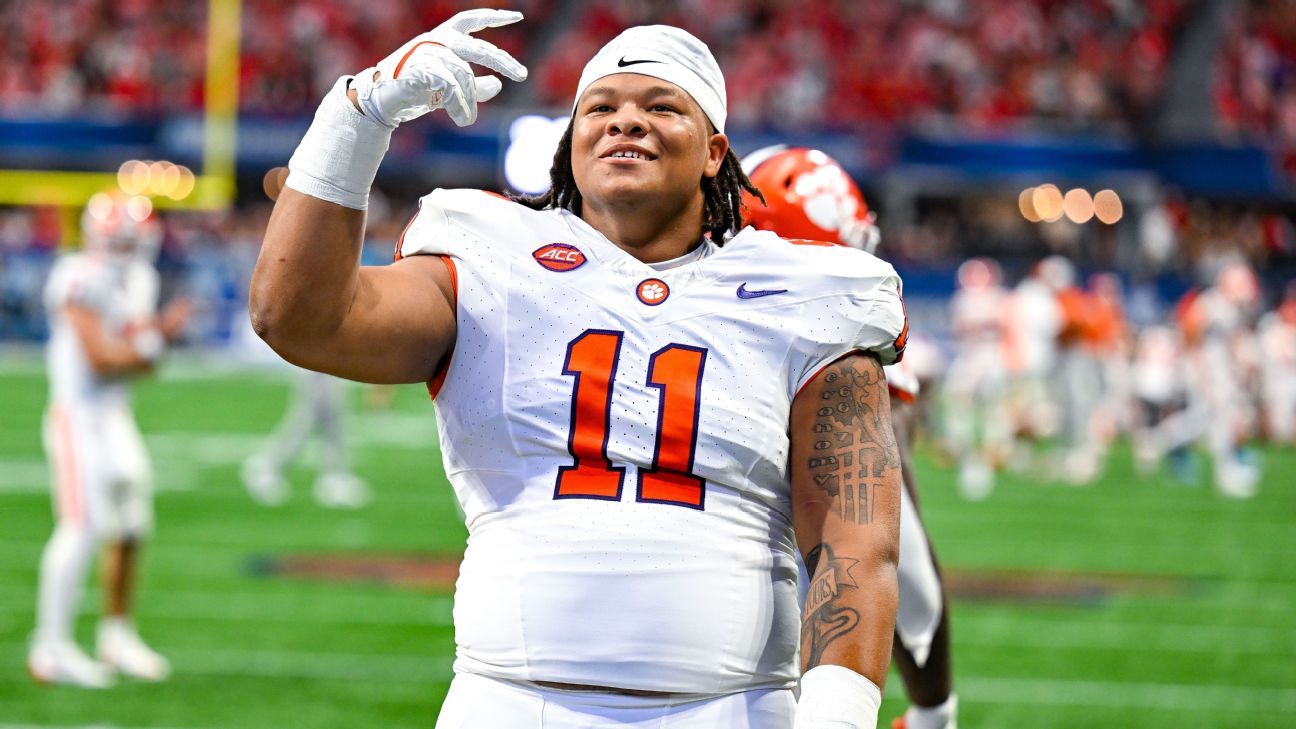
Clemson defensive tackle Peter Woods declared for the NFL draft on Tuesday.
The No. 1-ranked defensive tackle and No. 13 overall ranked player on Mel Kiper Jr.’s 2026 Big Board rankings, Woods was a first-team All-ACC selection this year, with 30 tackles, 3.5 tackles for loss and two sacks.
In a post on social media making the announcement, Woods thanked his family, friends, teammates and coaches. “It has been an honor to wear the paw these last few years, and it will always be a part of me, but the time has finally come.”
Thank You Clemson Family 🧡. pic.twitter.com/ibamSl7xtq
— Peter Woods (@35Pwoo) December 9, 2025
In three years at Clemson, the 6-foot-3, 310-pound Woods made his presence felt — earning FWAA Freshman All-America honors in 2023, then splitting time between tackle and end last season, showing off his versatility. He also scored two rushing touchdowns this past season when he lined up in goal-line packages.

-
Adam Rittenberg
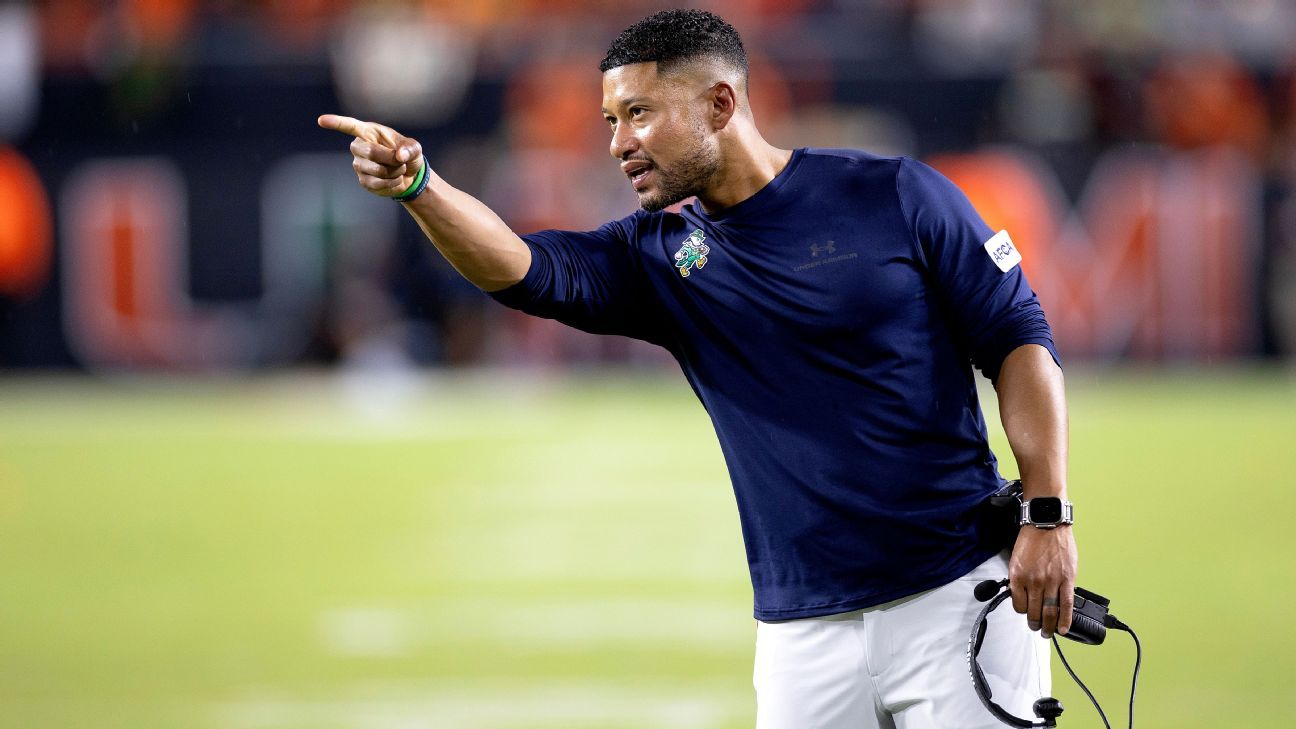
SOUTH BEND, Ind. — Notre Dame athletic director Pete Bevacqua said the ACC engaged in a sustained, targeted social media campaign against the school’s football team late in the season that has forever changed the relationship between Notre Dame and the league.
Bevacqua said the ACC, in the process of promoting football member Miami for College Football Playoff inclusion, also damaged Notre Dame, which lost the season opener to the Hurricanes. Miami made the CFP field as the No. 10 seed, while Notre Dame dropped from No. 9 to No. 11 in the final standings and was left out. The Irish on Sunday declined an invitation to play in the Pop-Tarts Bowl, through an ACC tie-in, and ended their season at 10-2.
Notre Dame is an independent in football but has 24 of its sports teams in the ACC. In 2014, the Irish entered into a scheduling agreement with the ACC where they play at least five conference members per season.
“I understand they have to stand up for their teams in football,” Bevacqua said. “We just think there’s other ways to do it, and it has created damage. I’m not going to shy away from that, and that’s just not me speaking. People a lot more important at this university than me feel the same way. So I think it has done some real damage, and I think the ACC knows that.”
Bevacqua outlined a multiweek social media campaign, during which he communicated with the ACC. He said an initial post from the ACC’s official X account that appeared on Nov. 10, which included a side-by-side comparison of Miami and Notre Dame, caught his attention but attributed it to an individual staffer overstepping.
“Quite frankly, I was kind of expecting a phone call saying, ‘Hey, sorry about that, it won’t happen again,'” Bevacqua said. “But then it did happen again, and we started to communicate with the ACC, texts that I sent, emails that I sent, and it continued to happen.”
Bevacqua said he spoke with ACC commissioner Jim Phillips, and while he didn’t detail their phone conversation, he expressed Notre Dame’s displeasure with the social media posts. Another X post from the ACC account on Nov. 17 showed posts from media members citing Miami’s head-to-head edge against Notre Dame.
“We were definitely being targeted,” Bevacqua said. “And for better or for worse, we have a different relationship with the ACC than any other team in college football, other than the [football] teams that are in the ACC. Because we’re in the ACC for 24 sports, we have a scheduling agreement with the ACC. The ACC does wonderful things for Notre Dame, but we bring tremendous football value to the ACC, and we didn’t understand why you would go out of your way to try to damage us in this process.”
Phillips on Monday released a statement, in response to comments Bevacqua made on “The Dan Patrick Show,” that read in part, “The University of Notre Dame is an incredibly valued member of the ACC and there is tremendous respect and appreciation for the entire institution. With that said, when it comes to football, we have a responsibility to support and advocate for all 17 of our football-playing member institutions, and I stand behind our conference efforts to do just that leading up to the College Football Playoff committee selections on Sunday. At no time was it suggested by the ACC that Notre Dame was not a worthy candidate for inclusion in the field.”
After the initial tweet comparing Miami and Notre Dame’s profiles, the ACC had similar posts about other CFP contenders, including Alabama and BYU. On Dec. 1, the ACC account had a post entitled “Head to Head Matters” with Miami and Notre Dame, while several other posts mentioned Notre Dame but also Alabama and BYU. Phillips did not disparage Notre Dame in any of his media interviews leading up to the selections. The ACC Network, which is owned by ESPN and generally handles its own programming, re-aired the Miami-Notre Dame game more than a dozen times last week, which led to more communication between Bevacqua and Phillips, sources said.
Bevacqua has not communicated with Phillips since the selections, saying he has only spoken with SEC commissioner Greg Sankey — whom he talks to regularly — about the CFP format and process. Bevacqua said “all things can be healed” and that while he’s not necessarily looking for an apology from the ACC, he will “sit down with ACC leadership and have a very frank, honest, hopefully productive conversation.”
Notre Dame is tied into the ACC’s grant of media rights, which run through 2036.
“Up until this moment, I think the relationship between Notre Dame and the ACC has been unbelievably healthy and mutually beneficial,” Bevacqua said. “That’s, I think, one of the reasons why we were so flabbergasted by this.”
ESPN senior writer Andrea Adelson contributed to this report.
-
 Sports2 years ago
Story injured on diving stop, exits Red Sox game
-
 Sports3 years ago
‘Storybook stuff’: Inside the night Bryce Harper sent the Phillies to the World Series
-
 Sports2 years ago
Game 1 of WS least-watched in recorded history
-
 Sports3 years ago
Button battles heat exhaustion in NASCAR debut
-
 Sports3 years ago
MLB Rank 2023: Ranking baseball’s top 100 players
-
Sports4 years ago
Team Europe easily wins 4th straight Laver Cup
-
 Environment3 years ago
Japan and South Korea have a lot at stake in a free and open South China Sea
-
 Environment1 year ago
Here are the best electric bikes you can buy at every price level in October 2024