
Passan: Surrounded by October chaos, the Astros find a way


-
Jeff Passan, ESPN
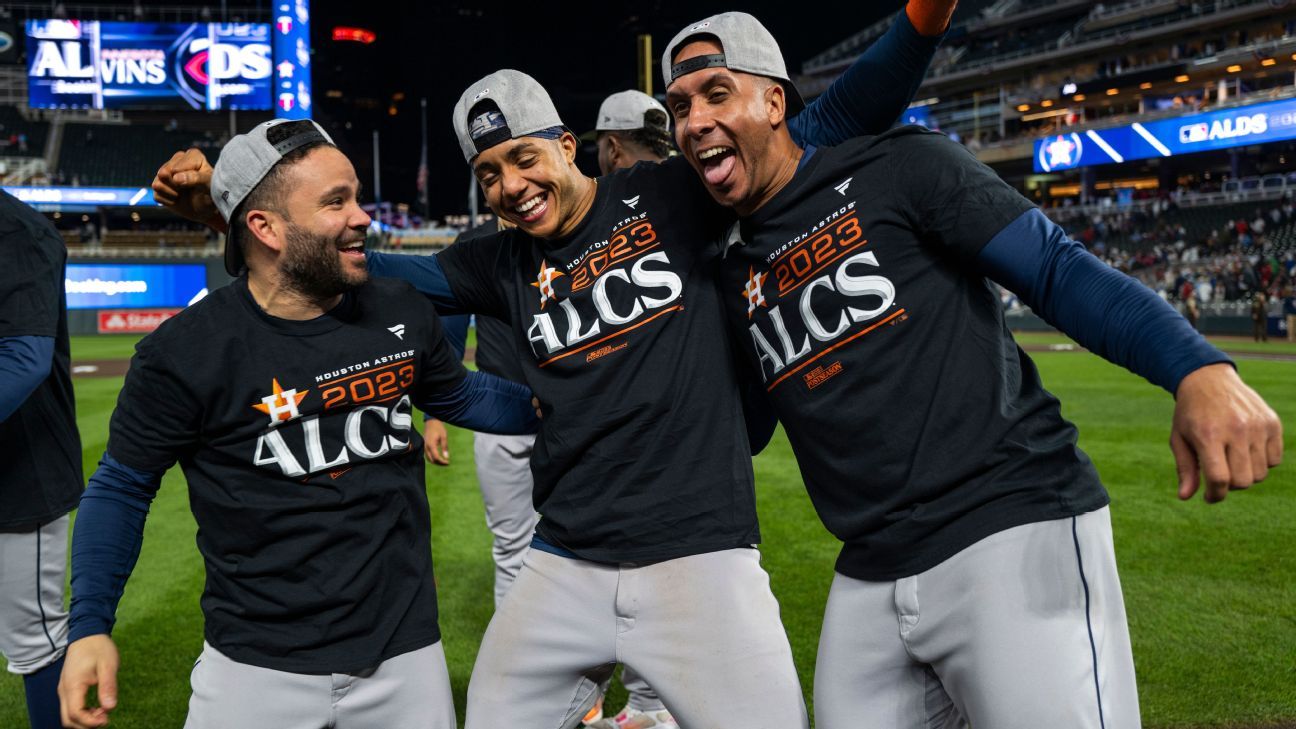
MINNEAPOLIS — In this October of chaos, of 100-win teams swept and a winless American League East and lower-seed dominance, there is but one constant. The Houston Astros are doing what the Houston Astros do, which is to say they are owning the most important month on the baseball calendar.
In this time when there is bellyaching about the game’s playoff format, in which the best teams sit for a week while the laggards fight for their season in the wild-card round, there is the outlier. The Astros illustrated that a bye does not necessarily equal bye-bye.
In this moment of profound questions across the sport, about strategy and analytics and the challenges of building a team to succeed in the playoffs like it does over a 162-game season, there is the team that for seven straight years has found itself in the American League Championship Series. The Astros were once upon a time the most analytically inclined organization in baseball. Even as in recent years they’ve receded from that, they still just win.
Baseball is on one. Up is down and right is left and sliders are sweepers and nobody can quite put together what’s going on. The 84-win Arizona Diamondbacks are in the National League Championship Series after dismantling the Los Angeles Dodgers, who finished 16 games ahead of them in the NL West. The 104-win Atlanta Braves are on the precipice of getting beat after their shortstop loud-talked Bryce Harper in the clubhouse, a reporter printed the ill-advised chirping and Harper had the vengeance game to end all vengeance games that staked his Philadelphia Phillies, who finished 14 games behind Atlanta in the NL East, a chance to finish off their series on Thursday.
All of that came a day after the 101-win Baltimore Orioles saw their season end at the hands of the buzz saw that is the Texas Rangers. After gagging away the AL West crown in the final week of the season, Texas proceeded to sweep the Tampa Bay Rays in the wild-card round then bushwhack the Orioles to set up one whale of an ALCS.
Never have the Rangers and Astros played in the postseason, and for all of the upsets thus far — if Philadelphia closes out Atlanta, the lower seed will have prevailed in five of eight series — to be gifted this sort of ALCS speaks to the drama that exists when chalk goes to dust.
It’s the Battle of Texas, the Silver Boot Series gone prime time.
It’s a pair of fearsome offenses that will make 27 outs painful for opposing pitchers.
It might even be Justin Verlander vs. Max Scherzer.
A little more than two months ago, the two wizened aces were New York Mets teammates. The Mets’ deadline reckoning sent Verlander back to Houston and Scherzer off to Texas. And while a shoulder strain has shut down Scherzer for the past month, he could return and bring even more verve to a series teeming with it.
That’s the thing about this October. It doesn’t have the New York Mets. Or the New York Yankees. Or the Boston Red Sox. Or the Chicago Cubs. Or the San Diego Padres. Or the San Francisco Giants. Or the Los Angeles Angels. Even the juggernauts who did make it are falling on their faces. Should Philadelphia beat Atlanta, the win totals of the final four teams will be 90, 90, 90 and 84.
That’s baseball. For all those who care to complain about how winning a division doesn’t mean anything anymore, understand this: Every single team — every single team — would rather have a week off after the season to rest and reset its rotation than play a best-of-three series against another quality team with its season on the line.
Teams aren’t losing because they had a week off.
They’re losing because the MLB postseason is a tournament with three-, five- and seven-game series, in which getting hot at the right time matters far more than what a team has done over a six-month grind.
It’s what makes the Astros’ run all the more impressive. For seven years — one short of Atlanta’s record eight straight championship series appearances — the Astros have managed to win at least one playoff series. And as dissatisfying as that might be for those who harbor resentment against the organization for its cheating in 2017, anyone who refuses to acknowledge the Astros’ exceptional staying power is just willfully ignorant.
Only three players, Jose Altuve, Alex Bregman and Verlander, remain from the 2017 team. The Astros have added the magnificent Yordan Álvarez, who might be the scariest hitter in the world, and Kyle Tucker, a perennial standout. They’ve brought in Michael Brantley, the epitome of a professional, and supplemented him with Jose Abreu, and both, now 36 years old, homered in their series-clinching triumph on Wednesday at Target Field, where the Astros took both games from the Minnesota Twins. Houston has developed Framber Valdez and Cristian Javier and Jeremy Peña and Chas McCormick and Jose Urquidy, who hadn’t pitched in 12 days and locked down the Twins to secure the Game 4 victory.
The conversations in sports always change, and today it’s going to be about Mookie Betts and Freddie Freeman going 1-for-21; and the Diamondbacks, with the fewest home runs in the regular season of any remaining playoff team, becoming the first ever to hit four in one postseason inning; and whether Spencer Strider can weather Citizens Bank Park and send the Braves home for a Game 5.
The Astros will hover above it all, readying for Sunday, when they will host Game 1 of the ALCS for the fourth time in five years. It will be the latest step toward the ultimate do-what-they-do goal: becoming baseball’s first back-to-back World Series champions since the Yankees won three in a row from 1998 to 2000.
It might be the most normal thing to happen yet.

-
Bill Connelly
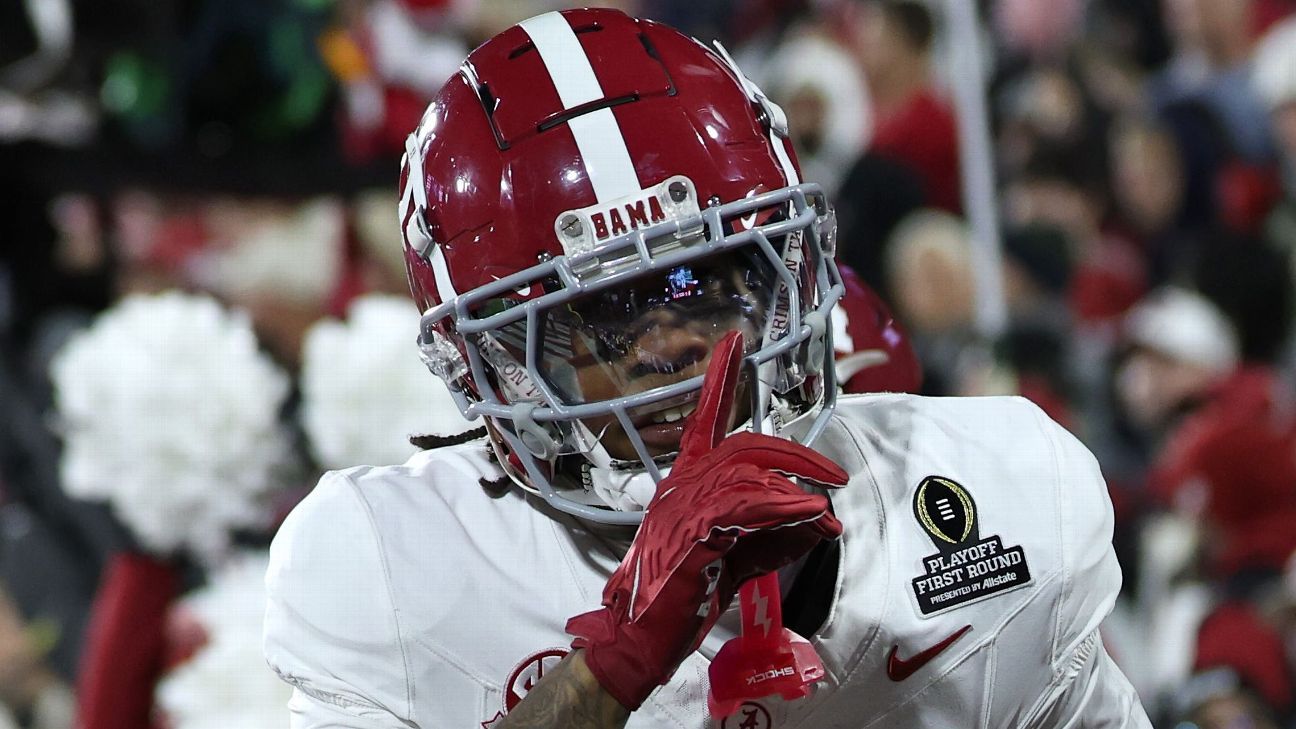
The 2025 College Football Playoff got underway in Norman, Oklahoma, on Friday night, and we’ve already seen a first. After all four home teams won by demonstrative margins in last year’s first round, Alabama became the first road team to prevail in a playoff game with a stirring comeback against Oklahoma and a 34-24 win.
Here are the main takeaways. We will update this with each completed game.



What just happened?
Oklahoma’s offense only had 20 minutes in it. The Sooners were perfect out of the gate, bursting to a 17-0 lead against an Alabama team that looked completely unprepared for the moment. But the Crimson Tide adjusted and rallied, and OU had only a brief answer. From 17 down, Bama outscored its hosts by a 34-7 margin from there.
We use the word “momentum” far too much in football, but this was an extremely momentum-based game.
1. Over the first 19 minutes, Oklahoma went up 17-0 while outgaining Bama by a stunning 181-12 margin. It could have been worse, too, as the Sooners’ Owen Heinecke came within millimeters of a blocked punt that might have produced a safety or a touchdown.
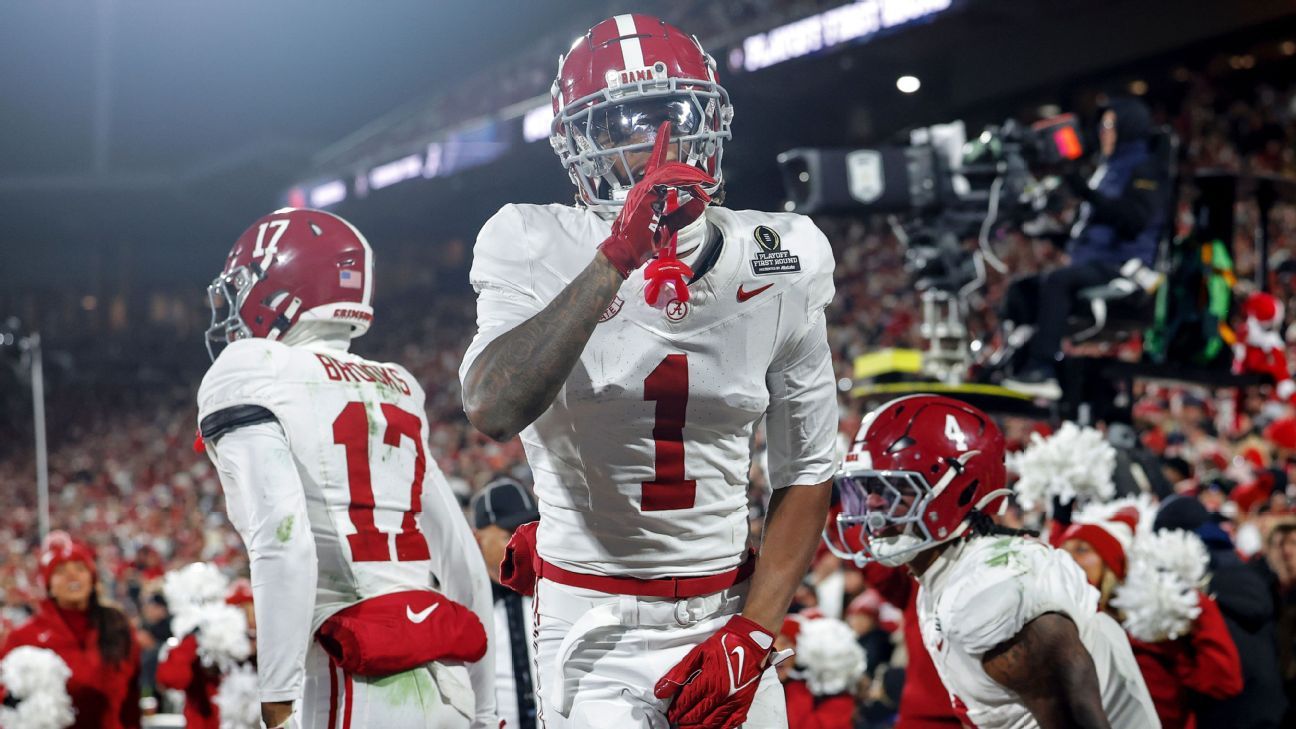
2. Over the next 21 minutes, Bama outscored the Sooners 27-0, outgaining them, 194-59. Freshman Lotzeir Brooks caught two touchdown passes — the first on a fourth-and-2 to finally get Bama on the board (after he caught a huge third-down pass earlier in the drive), and the second TD came on a 30-yard lob that put the Tide up for good. The Tide defense got pressure on John Mateer, and his footwork and composure vanished. An egregious pick-six thrown directly to Zabien Brown tied the game, and Bama scored the first 10 points of the second half as well.
0:58
Zabien Brown stuns OU with game-tying pick-six before halftime
Zabien Brown takes a big-time interception 50 yards to the house to tie the score before halftime.
OU responded briefly, cutting the margin to three points early in the fourth quarter thanks to a 37-yard Deion Burks touchdown. But the Sooners’ offense couldn’t do enough, and kicker Tate Sandell, the Groza Award winner, missed two late field goals to assure a Bama win.
1:25
Tate Sandell’s back-to-back FG misses help Alabama secure 1st-round win
Tate Sandell misses a pair of late field goals as Alabama holds on to beat Oklahoma 34-24 in the CFP first round.
Impact plays
Oklahoma beat Alabama in Tuscaloosa in November — in the game that eventually certified the Sooners’ CFP bid — thanks to a pick-six and special teams dominance. But the tables turned completely in Norman. Brown’s pick six was huge, and special teams completely abandoned the Sooners, both with Sandell’s misses and with a botched punt in the second quarter.
The botched punt was actually the second of a two-part sequence that turned the game against the Sooners. First, Mateer passed up an easy third-and-3 conversion to throw downfield to a wide open Xavier Robinson, but he short-armed the pass and dropped it. On the very next snap, punter Grayson Miller dropped the ball moving into his punting motion. Bama’s Tim Keenan III recovered the ball at the OU 30, and while OU’s defense held the Tide to a field goal, what could have been a 24-3 OU lead turned instead into a 17-10 advantage. That set the table for Brown’s pick-six and everything that followed.
The blown early lead leaves Oklahoma with quite the ignominious feat: In the history of the College Football Playoff, teams are 28-2 with a 17-point lead: OU is 0-2, and everyone else is 28-0. Ouch.
See you next fall, Sooners
We knew that whenever Oklahoma’s season ended, offense would be the primary reason. The Sooners survived playing with almost no margin for error for most of the year. Their No. 49 ranking in offensive SP+ was the worst of any CFP team, but they got enough defense (third in defensive SP+), special teams (21st in special teams SP+) and quality red zone play to overcome it.
The Sooners’ defense still played well on Friday night — Bama gained only 260 total yards (4.8 per play) — but the special teams miscues put more pressure on the offense to come through, and after a brilliant start, it ran out of steam. Mateer began the game 10-for-15 for 132 yards with a touchdown, 26 rushing yards and a rushing TD, but his last 31 pass attempts gained just 149 yards with five sacks and the pick, and his last nine non-sack rushes gained just 15 yards.
Brent Venables therefore heads into the offseason with some decisions to make. OU’s offense technically improved after the big-money additions of coordinator Ben Arbuckle and Mateer, but Mateer was scattershot before his midseason hand injury and poor after it. Do the Sooners run it back with the same roster core, hoping that better health and a theoretically improved run game can give the defense what it needs to take OU to the next level? Does Venables hit the reset button again? Can he ever get all the arrows pointed in the right direction at the same time?
What’s next
Alabama’s reward for the comeback win is a trip out West: The Tide will meet unbeaten and top-seeded Indiana in the Rose Bowl on January 1. Bama’s defense will obviously face a stiffer test from Heisman winner Fernando Mendoza and the Hoosiers attack, but Bama’s defense has been mostly up for the test this season. Their ability to pull an upset will be determined by Ty Simpson and the Alabama passing game.
Simpson began Friday night’s win just 2-for-6 with a sack, and while he improved from there and didn’t throw any interceptions — his final passing line: 18-for-29 for 232 yards, two touchdowns and four sacks (6.0 yards per attempt) — his footwork still betrayed him quite a bit over the course of the evening, and he misfired on quite a few passes. Oklahoma’s pass rush is fearsome, but Indiana’s defense ranks seventh in sack rate itself, and with almost no blitzing whatsoever. The Hoosiers generate pressure and clog passing lanes, and they held Oregon‘s Dante Moore and Ohio State‘s Julian Sayin to 5.1 yards per dropback with 11 sacks and two touchdowns to three picks. Bama will be an underdog for a reason.
That said, kudos to the Tide for getting off the mat. They were lifeless at the start, missing tackles and blocks and looking as unprepared as they did in their season-opening loss to Florida State. But Brooks’ play-making lit the fuse, and Bama charged back.
-
 Sports2 years ago
Story injured on diving stop, exits Red Sox game
-
 Sports3 years ago
‘Storybook stuff’: Inside the night Bryce Harper sent the Phillies to the World Series
-
 Sports2 years ago
Game 1 of WS least-watched in recorded history
-
 Sports3 years ago
Button battles heat exhaustion in NASCAR debut
-
 Sports3 years ago
MLB Rank 2023: Ranking baseball’s top 100 players
-
Sports4 years ago
Team Europe easily wins 4th straight Laver Cup
-
 Environment3 years ago
Japan and South Korea have a lot at stake in a free and open South China Sea
-
 Environment1 year ago
Here are the best electric bikes you can buy at every price level in October 2024