
‘We had no sense this was coming’: Inside the Pac-12’s four-team expansion


-
Kyle Bonagura, ESPN Staff Writer
LATE WEDNESDAY AFTERNOON, Pac-12 commissioner Teresa Gould touched down at Los Angeles International Airport after a chaotic few days. For months, she had worked to help the league’s remaining two schools — Oregon State and Washington State — position themselves for the future, and things were finally falling into place.
When she arrived at baggage claim, Gould received confirmation via email that the Pac-12 board had unanimously approved official applications for conference membership from Boise State, Colorado State, Fresno State and San Diego State, which had been submitted earlier in the day.
For the 35-year collegiate sports veteran and someone who had spent the bulk of the past 25 years affiliated with the Pac-12, it was hard to contain her excitement. Since stepping into the role in February, it was not always clear whether the conference had a future, and this ensured it would.
“We have a real opportunity to write a new story for the future and the new Pac-12,” Gould told ESPN the next day.
The Pac-12’s expansion efforts had been going on for weeks, but it wasn’t until early last week that all parties felt confident the moves were going to happen. By that point, the general framework of the new-look conference was agreed upon, and it became a matter of hammering out the details.
With university presidents and legal teams involved, the four Mountain West athletic directors remained in constant contact.
“Those conversations were being had multiple times a day, morning, noon and night,” Boise State athletic director Jeramiah Dickey said. “We were together in terms of jumping on calls and just talking through the what-if scenarios and potential opportunities that could exist and concerns and those type of things.”
Any concerns were outweighed by the potential of building something new. These schools had invested in their athletic department and football programs for years in preparation for this kind of opportunity, and while this wasn’t the same as joining the Pac-12 before its collapse, they strongly felt this move offered a better future than what they had in the Mountain West.
Those athletic directors’ counterparts around the conference were left in the dark, and when the news leaked late Wednesday night, several administrators at other Mountain West schools were caught off guard.
“There were some things after the fact that became more clear,” one Mountain West school administrator told ESPN. “Like certain people from those four schools not being present at meetings or generally unresponsive. It makes sense now, but we had no sense this was coming.”
For over a year, Oregon State and Washington State operated in the wilderness without a clear picture of what was ahead. During that time, they battled the departing schools — and absentee commissioner George Kliavkoff — in court for the Pac-12 assets and operational control. They chased television deals on their own, came to a scheduling agreement with the Mountain West in football, joined the West Coast Conference as affiliate members in other sports for two years and saw major leadership changes at the conference and institutional levels, with Gould replacing Kliavkoff and Anne McCoy replacing Pat Chun as the athletic director at WSU in March. Pac-12 staffing shrunk from about 190 at its peak to a skeleton crew of just over 30.
ESPN spoke with nearly two dozen sources familiar with the process to reveal how the Pac-12 emerged from that uncertainty and what comes next.
ON THE EVENING of July 10, at the Bellagio Hotel in Las Vegas, the Pac-12 hosted an event called “After Hours with the Beavs & Cougs.” The room was down the hall from where the United States men’s Olympic basketball team was headquartered in advance of the Paris games, and the hotel was also the designated media lodging for the Big 12 media days that wrapped up earlier in the day.
With only two schools, it didn’t make sense to hold a full-fledged media day. But with so many media members and others in the college athletics industry already in Vegas, the conference saw a chance to create some buzz with a more intimate gathering. The two head football coaches, OSU’s Trent Bray and WSU’s Jake Dickert, made the rounds. As did the two mascots, Benny and Butch. In the wake of the conference’s collapse the previous summer, though, there was also a somber tone.
After around 45 minutes of mingling, Gould addressed the room of about 100 people.
“This is supposed to be a fun night, and that’s why it looks different, it feels different,” she said. “We want you all to let your hair down and have a good time. … We have a bar in the back. Yes, we are drinking tonight during this event, and I would venture to say that if anyone has earned the right to drink, it’s the Pac-12.”
Always a great time After Dark 😏
More to come from tonight’s After Hours with the Beavs & Cougs! pic.twitter.com/JAc8Xd7W4g
— Pac-12 Conference (@pac12) July 11, 2024
The line killed, but no one left the Bellagio that night with a better understanding about what the future looked like. If anything, there was a growing sense in Las Vegas that OSU and WSU were being backed into the Mountain West and Gould’s role would be to spend the next two years tending to the dying embers of a conference with over a century of history.
If the Pac-12 were to survive, multiple industry sources presumed to ESPN at the time, it would likely have to come through a so-called reverse merger with the Mountain West. In that scenario, the Mountain West would have added OSU and WSU, continued to be operated by its current leadership — including commissioner Gloria Nevarez — and adopt the Pac-12 branding. That was never the preferred outcome of OSU and WSU, however, and over the past two months, Gould — as she was tasked to do when she was hired in February — worked to secure an outcome more favorable for the two schools.
On the same day the Pac-12 held its “After Hours” event, Nevarez kicked off her conference’s media day across town at the Circa Resort and Casino with a state of the conference address. She spoke confidently about the future of the conference and its strength and positioning.
“In this environment, our mantra is to be proactive and strategic to best position ourselves to navigate the future of college athletics,” Nevarez said. “Certainly transformation has hit [college athletics] pretty big in the last couple of years, and more is on its way, no doubt.”
To that end, Nevarez touted a presidential initiative intended to help the conference in the era of college realignment: a process known as “threatcasting.” The conference retained the help of Brian David Johnson, whom Nevarez described as an “internationally renowned threatcaster.”
Johnson serves as the director of the Threatcasting Lab at Arizona State, which states it strives to “provide a wide range of organizations and institutions actionable models to not only comprehend these possible futures but to a means to identify, track, disrupt, mitigate and recover from them as well.”
“He worked with us to model all the different futures in and around the college athletic space,” Nevarez said. “He’s providing us signals and wavefinders so that we have early detection for the more dire outcomes.”
To industry veterans, though, the need to hire an expert to outline the biggest threat to the Mountain West was puzzling. Oregon State and Washington State had already spelled out in a lawsuit for control of the Pac-12 filed last year their desire to rebuild the conference, in part, with conference assets. No other scenario that could threaten the Mountain West was remotely more plausible.
The Mountain West, sources said, felt protected by its bylaws and a poaching fee included in a football scheduling agreement it signed with the Pac-12 in December. To leave the conference, a school is required to pay roughly $18 million with two years of notice and $36 million with a one-year notice. And if the Pac-12 accepted a Mountain West school as a new member, the Pac-12 would be required to pay a $10 million fee, with escalators of $500,000 more for each additional school. (The four-school fee for Boise State, Colorado State, Fresno State and San Diego State is $43 million.)
When the conferences signed the scheduling agreement in early December that added six Mountain West opponents for OSU and WSU this season, the Mountain West was operating from a position of strength and required a $14 million payment from the Pac-12. OSU and WSU needed a quick solution to fill their 2024 football schedules, and they were still fighting an appeal from the 10 departing Pac-12 members of a superior court ruling that granted them control of the conference. Even if the departing schools’ appeal failed — which it later did — there wasn’t a great sense of what the remaining assets would be.
Even so, when the scheduling agreement was announced, it included an instructive comment from Oregon State athletic director Scott Barnes: “We are still focused on re-building the Pac-12.”
At the time, the idea that in less than a year the Pac-12 would be willing to pay roughly $115 million for one-third of the Mountain West seemed unrealistic. For Mountain West leadership, that remained the case in July.
“We have a mutual desire to extend that relationship [with the Pac-12], and we’re currently in discussions about year two,” Nevarez said in her address in Las Vegas. “But for the time being, we’re really excited about playing them.”
In an interview with ESPN the next day, Nevarez reaffirmed her belief that a deal to extend the scheduling agreement with the Pac-12 would get done. The contract included an Aug. 1 date to open a window in which the conferences could execute a second year, she said, adding she was hopeful they could come to an agreement before then.
“We just have to connect, sign some docs and go,” she said.
IN DECEMBER, WHEN the scheduling agreement was signed, Kliavkoff was still technically the commissioner of the Pac-12. He would remain in the role until February, but after Oregon and Washington walked away from a media rights deal he put together with Apple on Aug. 4 — ensuring the conference’s collapse — Kliavkoff was mostly checked out.
With Oregon and Washington headed to the Big Ten, Arizona, Arizona State and Utah quickly followed Colorado to the Big 12. A month later, California and Stanford completed a move to the ACC, leaving OSU and WSU behind.
“Not only did it go down to two, but it felt like we didn’t have leadership,” Barnes told ESPN last month. “So [former WSU athletic director] Pat Chun and myself felt like we were co-commissioners for several months until Teresa was hired. We just didn’t feel like we had the support.”
It went so far that Kliavkoff was named in the lawsuit the two schools filed against the Pac-12 for operational control.
“It felt like he paid more attention to the teams that were exiting and placating the teams exiting than the two that were remaining,” Barnes said. “Why? It’s beyond me. I don’t know, but we literally fought for ourselves and in certain instances [Kliavkoff] came to the table late, but right out of the gate, I feel very strongly that he was advocating behind the scenes or elsewhere for the teams that were leaving and that we were not seeing a leader that was stepping up and helping protect our future the way that I believe a capable leadership should.”
When Gould was elevated from deputy commissioner to replace Kliavkoff in February, Barnes felt they had someone who was genuinely invested in helping their cause. Unlike Kliavkoff, who had no background in college sports when he was named commissioner in July 2021, Gould had worked her way up the ranks over the past 35 years.
Before being hired as the conference’s deputy commissioner in 2018, Gould was the interim athletic director at UC Davis, spent 14 years in various roles in the athletic department at Cal and had another eight years prior at the West Coast Conference, where she was an associate commissioner.
“Yeah, it’s been refreshing,” Barnes said. “I feel like we know we have a partner that is looking out for our best interests and one that has the leadership capacity to execute on the things that we prioritize, and she has done a fabulous job and just her short few months that she’s been here.”
After Gould was hired, the schools’ goal of rebuilding the Pac-12 wasn’t the primary focus. Both schools felt they belonged in a power conference, with their peers of the past 100 years.
“When I got this job, I had a lot of people kind of in the background cheering me on going, ‘We can’t wait to see you rebuild the Pac-12,'” Gould told ESPN two weeks ago. “I’ve been in this league for 25 years. There’s certainly a lot of nostalgia around that idea, but that’s not what I was hired to do. What I was hired to do is figure out a future conference path for these two institutions that achieves the guiding principles we’ve agreed on.”
(The leadership structure changed again in March, when Chun left for rival Washington. He was replaced on an interim basis by McCoy, the school’s senior deputy AD, who was named to the job on a permanent basis in June.)
After OSU and WSU’s desire to join the Big 12 was firmly rebuffed, sources said, they gamed out possible scenarios that could come in the wake of various rulings in the four lawsuits related to Clemson and Florida State’s attempts to exit the ACC. None of those amounted to more than a gamble, and didn’t fit their timeline.
WHEN TALKS ABOUT extending the scheduling agreement started a few weeks after media day, little progress was made. The Mountain West overestimated how vulnerable the Pac-12 was from a negotiating position and asked for more than the $14 million it received last year, with the Pac-12 countering with less than half that.
“We just never could really seem to gain a lot of traction for year two so that everybody felt really good about it,” McCoy told ESPN at the Apple Cup on Saturday. “I think, and I can’t speak for the Mountain West, but I know from the Pac-12, in our perspective, it just seemed like we always were just so far apart in what we thought should happen.”
Unlike when the initial deal was signed with Kliavkoff in charge, OSU and WSU were now in control of the Pac-12 assets — they secured roughly $250 million when the departures were finalized — and had more time to make alternative scheduling plans for 2025. When it became clear the Sept. 1 deadline to extend the agreement would pass, the Pac-12 became more serious about attempting a true rebuild.
Much of the vetting of potential candidates and outreach was handled by Navigate, a private sports consulting firm, sources said. The Pac-12 would be willing to help fund the exit fees, the schools were told, which took away the primary risk factor. Had the four been required to come up with a combined $72 million on their own, it would have been much more difficult to justify the jump — especially without a firm understanding of what kind of media deal the new-look conference could command.
The schools also knew to expect the Mountain West to attempt to withhold media rights distributions for departing schools over the next two years — roughly $5 million per school, per year — as it did when BYU, TCU and Utah all left in 2011. It’s unclear what the total cost will be to the schools and Pac-12 to the Mountain West when the dust settles.
“There is a lot of negotiation that still needs to happen between the Pac-12 and the Mountain West and among the various schools on what that exit is going to look like, what scheduling alliances are going to look like and all sorts of different details,” Colorado State president Amy Parsons said. “We have some time on that. We’re playing out the Mountain West all of next year and into the following. We will not have those details pinned down for some time.
“We are grateful to the Pac-12 that they’re investing in the four schools who are leaving the Mountain West in a way that makes us feel comfortable that we’re going to come out strong and ready to really compete at that level. But a lot of details [to get figured out] going forward.”
For years, the teams at the top of the Mountain West in terms of investment had grown tired of the bottom third’s inability to keep up, which contributed to the appeal of this model as opposed to adding OSU and WSU to the Mountain West, sources said.
Another theory that had been floating around since last year is the possibility that nine Mountain West schools could vote to dissolve the conference, freeing them up to move to the Pac-12 together without being required to pay exit fees. It was a possibility that received some informal discussion, a source said, but it never progressed to the point where anyone seriously considered pushing for it.
Once the Pac-12 fully committed to the rebuild, things moved quickly. Last Monday, there was a growing sentiment among stakeholders on both sides that it was likely to happen, and by Tuesday it was nearly a done deal. On Wednesday, the four schools all formally applied for membership, which required approval of the four-person Pac-12 board — made up of the presidents and athletic directors at OSU and WSU.
Nevarez caught wind of the possibility early last week, sources said, but the departing schools did not communicate their intention to leave before the deals were done.
With six schools, the Pac-12 still has to add at least two more by July 1, 2026, and there is not a firm timeline for when those additions will be made.
“I would like to move as swiftly as we can,” Barnes said. “Sort of the old John Wooden adage, ‘Be quick, but don’t hurry,’ in that regard. We don’t have any limitations on who we may visit with and we’ll move as quickly and thoroughly as we can. On the other side of that certainly is a chance to go out to market for a new media deal.”
The conference is expected to explore options in the American Athletic Conference — namely Tulane and Memphis — but it’s too early to say what the true appetite will be. Without a significant increase in their current media deal — AAC schools receive about $7 million annually — it becomes tougher to justify the added logistical hurdles of playing in a conference with a larger footprint, especially as a geographic outlier.
There is a good chance additional Mountain West schools could eventually find their way to the Pac-12. UNLV, for example, was a surprising omission this round for many industry sources given its relatively similar profile to the four departing schools, but the conference was steadfast in starting with this group.
“I can’t say I’m surprised [UNLV was not included] because I was pleased with the configuration, and actually the metrics and the metrics spoke to the decision-making process, and I and they were very, very objective in that sense,” San Diego State president Adela de la Torre said. “So in my mind, I think it was the best four that were selected.”
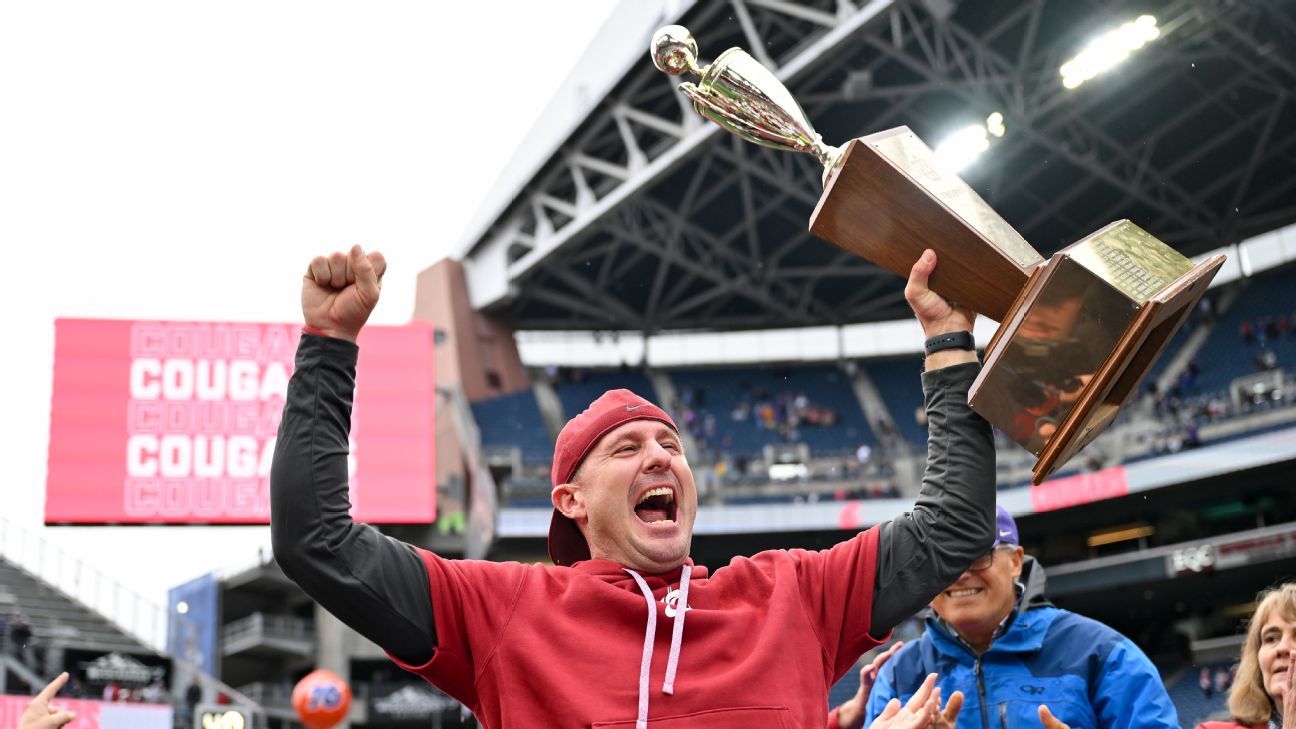
TWO DAYS AFTER the announcement, Washington State capped off the week with a victory in the Apple Cup against Washington at Lumen Field in Seattle. The Cougars’ goal-stand with 1:12 left to preserve the 24-19 win ignited a memorable celebration that started in the field and carried into the locker room and, for coach Jake Dickert, the postgame news conference.
To Dickert, the conference news was a welcome development, but what happens next, he said, is more important.
“This is the critical point for Washington State athletics right now. What are we going to do to invest in the future?” he said. “We let some new teams in, we have an opportunity to stay ahead of the curve to compete for championships if we want to invest, right?
“I don’t get my check from Washington State athletics. I get it from Washington State University. The university needs to invest in the athletics program and this football team every step of the way. That’s exactly what it’s going to take and you’re going to see more days just like this, but where we’re currently at is not enough so we’re putting in a big picture. If you can’t be proud of what the Cougs are doing right now, I can’t really help you.”
It’s a similar perspective at the conference level in that the developments from last week are important, but only foundational in nature.
“The outreach and the outpouring of people that are not only cheering us on saying, ‘This is awesome, we’re so excited about this,’ has been really significant,” Gould said. “And I think it just supports what I already knew, which is that people really care about the Pac-12 and about the brand and about it continuing long into the future.”
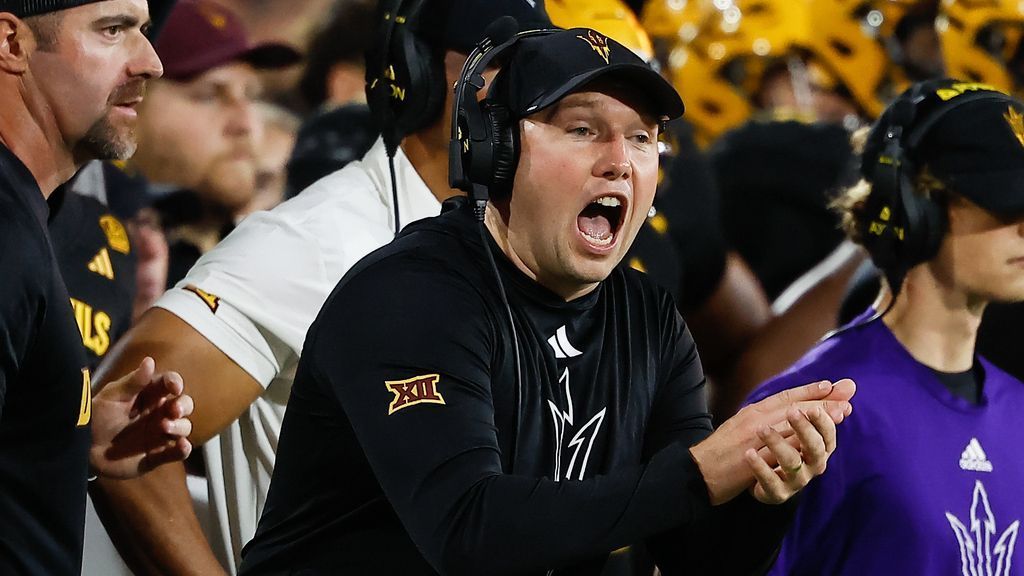
Arizona State coach Kenny Dillingham has signed a new five-year contract that will average nearly $7.5 million over the course of the deal, sources told ESPN on Saturday.
The deal prioritized resources for the staff, as the salary pool increases $11 million, which puts it near the top of the Big 12.
The extension takes Dillingham out of the conversation for the Michigan job. He had been in the top group of candidates considered for it.
The deal remains for five years, as longer ones aren’t allowed by Arizona state law, but there are incentives to extend the contract up to 10 years. The deal is pending board approval.
Dillingham signed a new deal a year ago that made him the second-highest-paid coach in the Big 12 in 2025. While there are increases in salary, the heart of this new deal was resources for the program.
“We have the perfect coach for ASU,” a school source said. “We want to give him the tools to do his job the best way possible. That’s giving him resources to put into the staff and program and giving him longevity.”
The deal shows how Arizona State has prioritized football in recent years, as it won the Big 12 last season and reached the College Football Playoff for the first time in school history. It marked the first time the Sun Devils won a conference title outright since 1996.
It is also significant for athletic director Graham Rossini, who made it clear this week that retaining Dillingham was the top priority.
As the Michigan job lingered in the wake of Sherrone Moore’s firing, Dillingham got emotional talking about Arizona State. He is a graduate who long called the school his dream job and said on Dec. 13, “I love this place.”
He added: “That doesn’t change how I feel about here. That doesn’t change that my sister’s my neighbor. That doesn’t change that my parents live three doors down. … [Michigan] is one of the best jobs in America, it’s an unbelievable brand, an iconic brand, so a great opportunity for somebody.”
Arizona State is 22-16 under Dillingham, including a 19-7 record over the past two seasons. The Sun Devils play Duke in the Tony the Tiger Sun Bowl on Dec. 31.

-
Eli Lederman
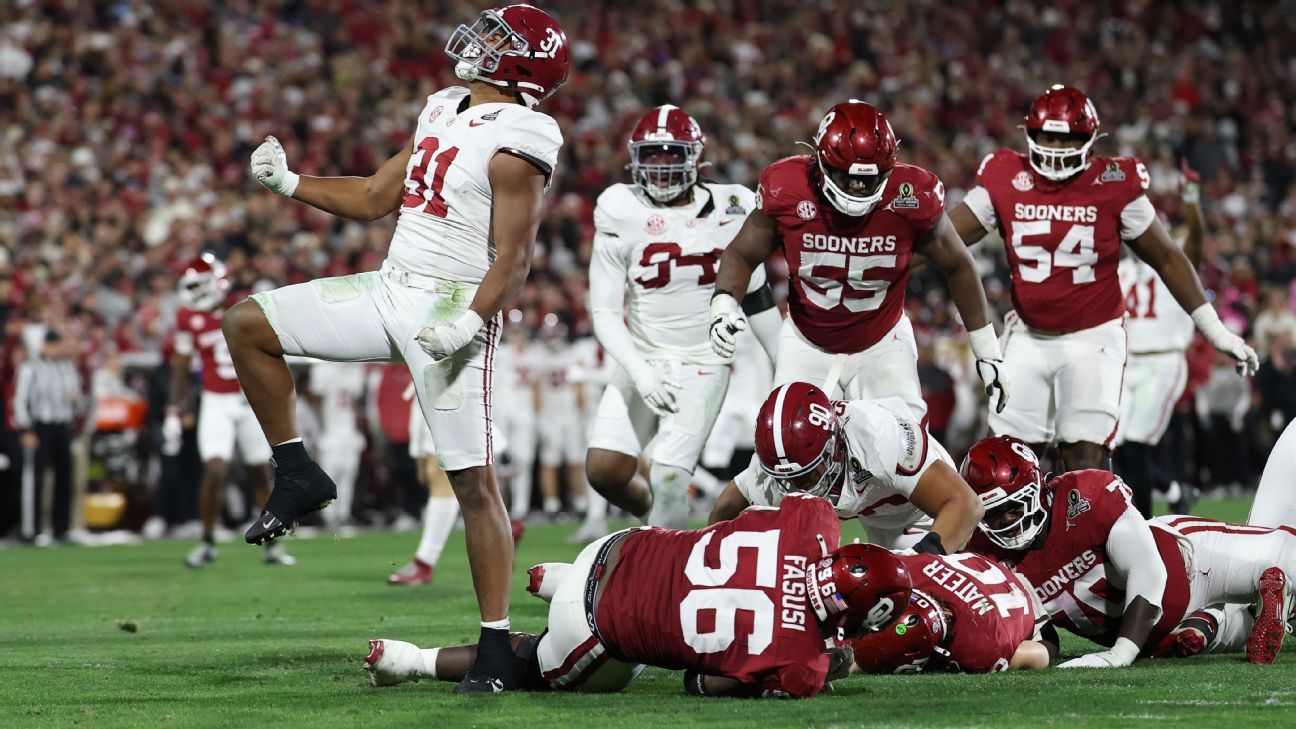
NORMAN, Okla. — Back in the College Football Playoff for the first time since 2019, No. 8 Oklahoma earned an unwanted distinction Friday night. After squandering a 17-point advantage in a 34-24 loss to No. 9 Alabama, the Sooners now own the two largest blown leads in playoff history.
A month after Crimson Tide miscues fueled the defining win of Oklahoma’s 2025 season on Nov. 15, Alabama flipped the script inside Oklahoma Memorial Stadium, feasting on errors by quarterback John Mateer and the Sooners’ special team to bounce the hosts in the CFP first round and secure a Rose Bowl quarterfinal date with No. 1 Indiana on Jan. 1.
Down 17-0 early in the second quarter, the Crimson Tide scored on five of their next seven possessions and rattled off 27 unanswered points to match the largest comeback in CFP history, tying the 17-point deficit Georgia overcame to top Oklahoma in a double-overtime, Rose Bowl thriller on New Year’s Day 2018. According to ESPN Research, teams that have led by 17 or more in a CFP game are 28-2 all time. The two losses belong to the Sooners.
Additionally, Friday’s result marked the program’s second-largest blown lead at home since Oklahoma Memorial Stadium opened in 1923. Winless in five playoff trips since 2015, Oklahoma now holds the most losses of any program in CFP history.
“We had the ability and the opportunities to overcome it all even in just the last several minutes of the game, despite some just incredibly critical mistakes,” Sooners coach Brent Venables said. “But it just wasn’t in the cards for us tonight.”
The Sooners’ adopted team motto this fall was “Hard to Kill.” On the same night rap legend 50 Cent performed inside Oklahoma Memorial Stadium with those words emblazoned on his sweater, the Sooners buried themselves with a parade of errors.
An Oklahoma offense that began the postseason ranked 90th nationally scored on three of its first four possessions. By the time wide receiver Isaiah Sategna III caught a 7-yard touchdown from Mateer to open a 17-0 lead with 10:51 remaining in the second quarter, the Sooners had forced three consecutive three-and-outs and were outgaining Alabama 135-12.
After Alabama responded with a nine-play, 75-yard touchdown drive, the dynamics of the second meeting between the two programs in the past 34 days swung on three plays.
Facing third-and-3 from midfield, Mateer evaded a sack and rolled out of the pocket with open space in front of him. He could have run for a first down. Instead, Mateer fired 40-plus yards downfield to running back Xavier Robinson, who failed to haul in the throw. On the next snap, Oklahoma punter Grayson Miller dropped his punt attempt and turned the ball over on downs, setting the stage for a 35-yard field goal from Alabama’s Conor Talty that cut the lead to 17-10.
“Field position against an Oklahoma team is so critical with their defense, so that was huge,” Alabama coach Kalen DeBoer said. “That was really huge for us.”
On the ensuing series, Alabama ran a disguised defensive look that appeared to confuse Mateer. With a safety dropped into coverage and Oklahoma wide receiver Keontez Lewis streaking downfield, Mateer fired, inexplicably, to no one other than Alabama defensive back Zabien Brown, who intercepted the pass and streaked down the Sooners sideline for a 50-yard pick-six.
Suddenly, the game sat level at 17-17 with 1:18 remaining in the second quarter. Of the 15 teams that have gone behind by at least 17 in the first half of a CFP game, the Crimson Tide became the first not to be trailing, courtesy of Mateer’s fourth interception in his past two games.
“I got tricked, and it’s pretty bad,” Mateer said. “I mean, you watch the tape. It was obvious it wasn’t a Cover 0. I got tricked, and it happens sometimes. But when you get tricked, you’ve got to mitigate the damage, and I didn’t do it.”
DeBoer described Alabama’s first-round win as “the opposite of the first game back at home.” Indeed, the Crimson Tide were statistically dominant in Oklahoma’s 23-21 win in Tuscaloosa last month. But the Sooners left with a signature win by taking advantage of mistakes.
In Friday’s rematch, the roles reversed. Second-half touchdowns from Lotzeir Brooks and Daniel Hill thrust the Crimson Tide to a 34-24 lead with 7:24 remaining. Pushing to close the gap, Oklahoma reached field goal position twice in the final three minutes, setting the stage for Lou Groza Award winner Tate Sandell, who had converted on each of his past 24 field goal attempts.
Battling gusting winds, Sandell pushed the first attempt — a 36-yarder — wide left. Ninety seconds later, he came up short on a 51-yard attempt, his first miss from 50-plus yards this season.
Sandell’s pair of misses were the final markers of a night that simply stopped going Oklahoma’s way following a scorching opening 20 minutes. After stunning wins over Tennessee and Alabama in November, and the similarly astonishing appearance of 50 Cent in Norman on Friday night, the Sooners ran out of magic, ultimately beaten at their own game by Alabama.
“When we needed to, we couldn’t pull one out like we have in several other games this year,” Venables said.
-
 Sports2 years ago
Story injured on diving stop, exits Red Sox game
-
 Sports3 years ago
‘Storybook stuff’: Inside the night Bryce Harper sent the Phillies to the World Series
-
 Sports2 years ago
Game 1 of WS least-watched in recorded history
-
 Sports3 years ago
Button battles heat exhaustion in NASCAR debut
-
 Sports3 years ago
MLB Rank 2023: Ranking baseball’s top 100 players
-
Sports4 years ago
Team Europe easily wins 4th straight Laver Cup
-
 Environment3 years ago
Japan and South Korea have a lot at stake in a free and open South China Sea
-
 Environment1 year ago
Here are the best electric bikes you can buy at every price level in October 2024