
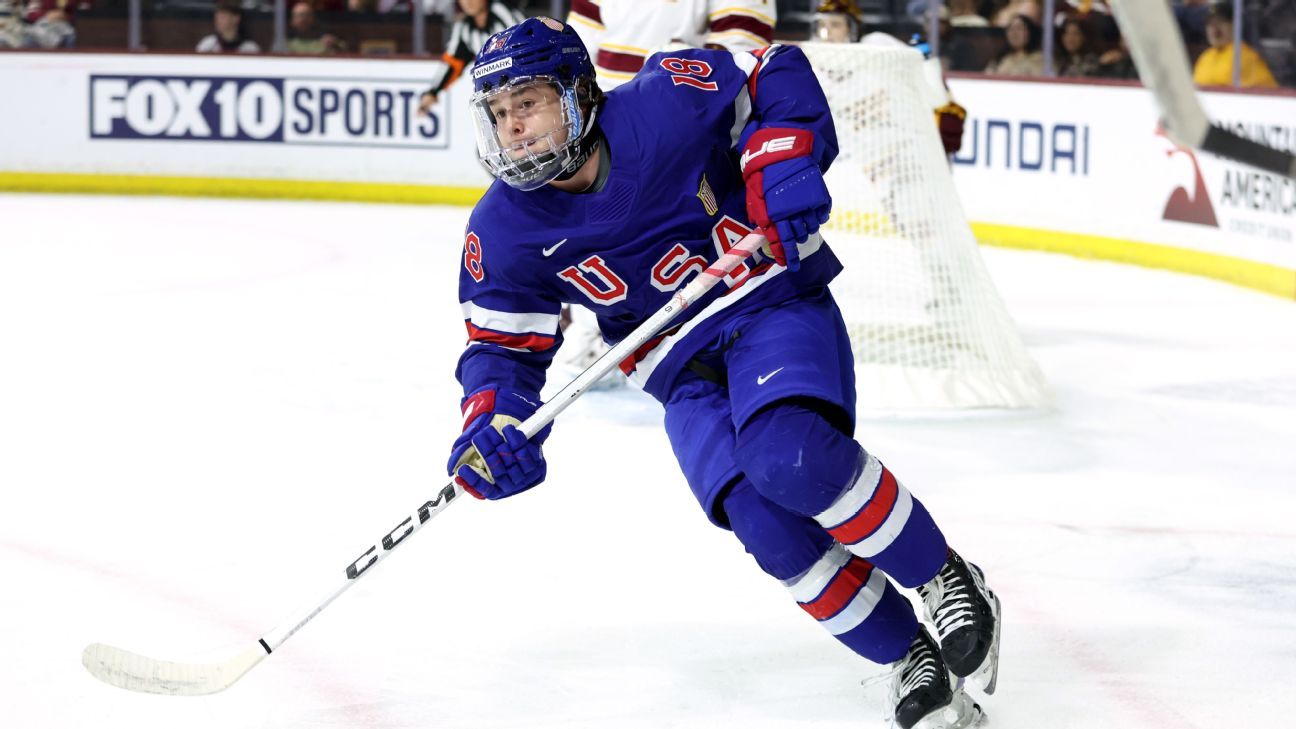
Diamonds in the rough: Late-round gems of the 2025 NHL draft


-
Rachel Doerrie
There are late-round gems in every NHL draft class that go on to have impactful careers. With the increase in scouting coverage and analytics, teams do a better job of drafting those players earlier, but inevitably, a few of these late-round diamonds in the rough emerge.
Gone are the days of getting Pavel Datsyuk, Henrik Lundqvist or Brett Hull in the late rounds. However, smaller players who possess skill seem to be drafted much later. The reigning Calder Trophy winner Lane Hutson is hardly a late-round pick — he went 62nd overall in 2022 — but he should’ve been selected a lot earlier.
Some recent late-round gems include Troy Terry (No. 148 in 2015), Andrew Mangiapane (No. 166, 2015), Jesper Bratt (No. 162, 2016), Brandon Hagel (No. 159, 2016) and Mark Stone (No. 178, 2010). There were concerns about all of them in the draft process, whether it was size, skating or questions about the translatability of their game to the NHL. But each has far exceeded their draft expectations and gone on to represent their country on the international stage. Your draft slot does not make or break you. The earlier picks will get more chances while the later picks have to earn their looks, but there is a pathway to success.
The common denominator in a late-round pick’s success is that they are elite in at least one category; or as one NHL executive put it, “they possess a separating skill that differentiates them from others.”
This year, there are a few players who may end up as the diamonds in the rough. Generally speaking, a player drafted after the third round has a less than 3% chance of playing 200 games in the NHL, which means it is likely that only four or five players drafted after pick No. 96 will make it. There is a less than 1.5% chance of that player becoming an impact player, goaltenders not included. The darts at the board are worth throwing, but a few players in this class have separating skills that may give them a better chance.

Cameron Schmidt, RW, Vancouver Giants (WHL)
While Schmidt is rated much higher in public rankings — and remained a first-rounder in those rankings for the majority of the season — NHL teams with which I spoke do not view him in the same light. Many scouts believe Schmidt will be selected between the third and fifth rounds because he’s much smaller than the average NHL player at 5-foot-7.
Still, Schmidt’s ceiling as a second-line scoring winger in the vein of Alex Debrincat should excite teams. It is understandable that teams would be hesitant to select a player of his stature with an early pick because of the rarity of success for player shorter than 5-9. Schmidt is arguably the fastest player in the draft, with an elite shot. He has more than one “separating skill” that scouts look for, with one opining that if he were 6-1, he may be in the conversation for being picked in the 10-15 range.
Netting 40 goals in 61 games makers him one of the best goal scorers available in the draft. He can score multiple ways; off the rush in stride, on one-timers, by net-front finishing and a smooth but powerful catch and release. There is a high likelihood that Schmidt leads the CHL in goals over the next two seasons with his separating speed and well-rounded finishing ability.
Debrincat is 5-8, and if Schmidt grows to that height or even 5-9, there’s a real chance he becomes a reliable goal-scorer at the NHL level. Instead of drafting for physicality and size, taking a chance that someone grows who already possesses elite talent could be very rewarding for a team.

Jacob Rombach, D, Lincoln Stars (USHL)
A defenseman who is nearly 6-7 with punishing physical traits and the potential to become a shutdown defender will be very attractive to teams. Rombach lacks a lot of the offensive skill that teams like to see in their top-end defenseman, but there is a real path to becoming a No. 4/5 defender in the NHL.
Defensively, he possesses one of the most complete skill sets in the draft, which will only improve as he refines those skills. He has impressive puck-retrieval ability, scanning for threats and allowing him to pre-emptively escape pressure situations. He employs head fakes to shake forecheckers, and makes a simple and efficient pass when the lane opens.
When defending, he uses his frame to disrupt plays on the rush, kill plays on the wall and makes it difficult for teams to generate off the cycle. He isn’t overly physical, and while that is easily developable at his size, scouts like that he doesn’t get caught out of position trying to make a big hit. When he closes gaps on players all over the ice, he leads with a strong stick and smothers them, forcing turnovers or dump-ins.
If his skating and physicality improve, Rombach has the tool kit to be an effective shutdown defender who can kill penalties and play secondary matchups.
David Bedkowski, D, Oshawa Generals (OHL)
The old-school hockey types love Bedkowski because he loves physicality. He is a throwback in the sense that he lives for the violence. A menacing defenseman at nearly 6-5 and 215 pounds, Bedkowski is the most punishing defender in the draft class. While that doesn’t always equate to NHL success, the Florida Panthers‘ blueprint will surely have executives thinking about Bedkowski’s ability to play highly effective transition defense while inflicting significant pain on opponents with his physical play.
He is one of the best zone-entry defenders in the draft class, and if he can pick his spots a little better in terms of stepping up to make contact, there is a path to becoming an effective bottom-pair defender.
His ceiling isn’t high in terms of becoming a No. 4/5 guy, but teams need depth and brute force to win in the playoffs, and Bedkowski may develop into a defenseman who can reliably provide that.

Viktor Klingsell, LW, Skelleftea AIK (J20)
Another candidate to be a steal in the later rounds is world under-18 championships standout Klingsell. He didn’t produce at the level Jesper Bratt did in Sweden, but he outperformed Bratt when playing against his peers. Given the similarity in height, the high-end playmaking and vision, it isn’t surprising to see some believe Klingsell could be a “Bratt lite” in the NHL. He lacks physicality — which isn’t particularly surprising given his stature — but his instincts and offensive tool kit are amongst the best available among European skaters.
The main concern is his pace. Klingsell has a boom-or-bust type of profile. If he hits, he’ll be a second-line offensive facilitator who notches 50-plus assists every year. If he doesn’t, he’s likely to become a very good SHL player. That is the type of swing you take in the later rounds, especially when speed is the concern. But it is much easier to develop skating and speed than it is to find a player with the natural offensive instincts and playmaking capabilities that Klingsell possesses.
Filip Ekberg, LW, Ottawa 67’s (OHL)
Another Swede with a chance to make a team very happy is dual-threat forward Ekberg. The first half of the season was plagued by illness and a limited role. As the calendar flipped, Ekberg’s play took off, culminating in a standout performance at the U18s, where he tallied 18 points in seven games and earned himself an invite to Sweden’s World Junior summer team.
There is real reason to believe Ekberg is on the cusp of a major scoring breakout in the OHL that would vault his projection to a middle-six scorer at the NHL level.
Ekberg is a well-rounded forward anticipates and reads the play, facilitates offense and owns an excellent catch and release. He lacks dynamism that you’d like to see, but showed legitimate flashes of ability when healthy at the U18s. If he can improve his skating, he has all the hallmarks of a smaller player who can succeed in the NHL, in a secondary scoring and power-play role.
Aidan Lane, RW, Saint Andrew’s College/Brampton Steelheads (OHL)
If not for a standout performance in the OHL at the end of the season, Lane’s NHL projection would not exist. The CHL/NCAA rule change allowed the Saint Andrew’s College graduate to play the final 13 games in Brampton, where he tallied a point per game.
It is very difficult to project prep school players, as there is limited sample size. However, the high-motor winger looked every bit the part in a top-six role for Brampton. He has a chance to become a power winger in the bottom six at the NHL level, with his strength, physicality and his ability to generate offense.
He was smooth in transition, was able to draw defenders to him and make positive value plays. He was also able to use his physical package to overpower seasoned OHL players. Lane has the motor, physical tools and displayed promising offensive tools that could make him a high value pick beyond the fourth round. His speed and explosiveness will need to improve if he is to effectively use his tools to forecheck and create offence in a secondary role at the NHL level.
Given his chosen path to play in the NCAA at Harvard, he will have plenty of time to develop against the best amateur competition.
L.J. Mooney, RW, USNTDP (USHL)
Another diminutive winger, Mooney is one of my personal favorites in the draft class. He’s a dynamic skater and gets fans out of their seats with his puck handling skill. At 5-7, possessing multiple separating skills should be enough for a team to take a chance on him in the middle rounds.
He’s a non-stop player who is constantly drawing the viewer’s eye. His blistering speed is immediately noticeable, especially when combined with fantastic puck skill. There is real potential for him to become a transition nightmare for defenders. For that to happen, Mooney will need to improve his ability to facilitate offense and read the play. He needs to utilize his elite skating and puck skill to attack the middle of the ice to create high-danger scoring chances.
Given his size and questions about playmaking ability, he’s close to a boom-or-bust player. However, many players with that skill level do not possess the motor and inner drive to compete. Mooney does not leave any doubts about his will to compete given his fearless play, consistent pace, and willingness to play both sides of the puck.
If a team has multiple second- or third-round picks and lacks a dynamic skater, as well as someone who could be a legitimate contributor — the Philadelphia Flyers, Montreal Canadiens and Detroit Red Wings are in this boat — Mooney is a worth a shot.

-
Michael Rothstein
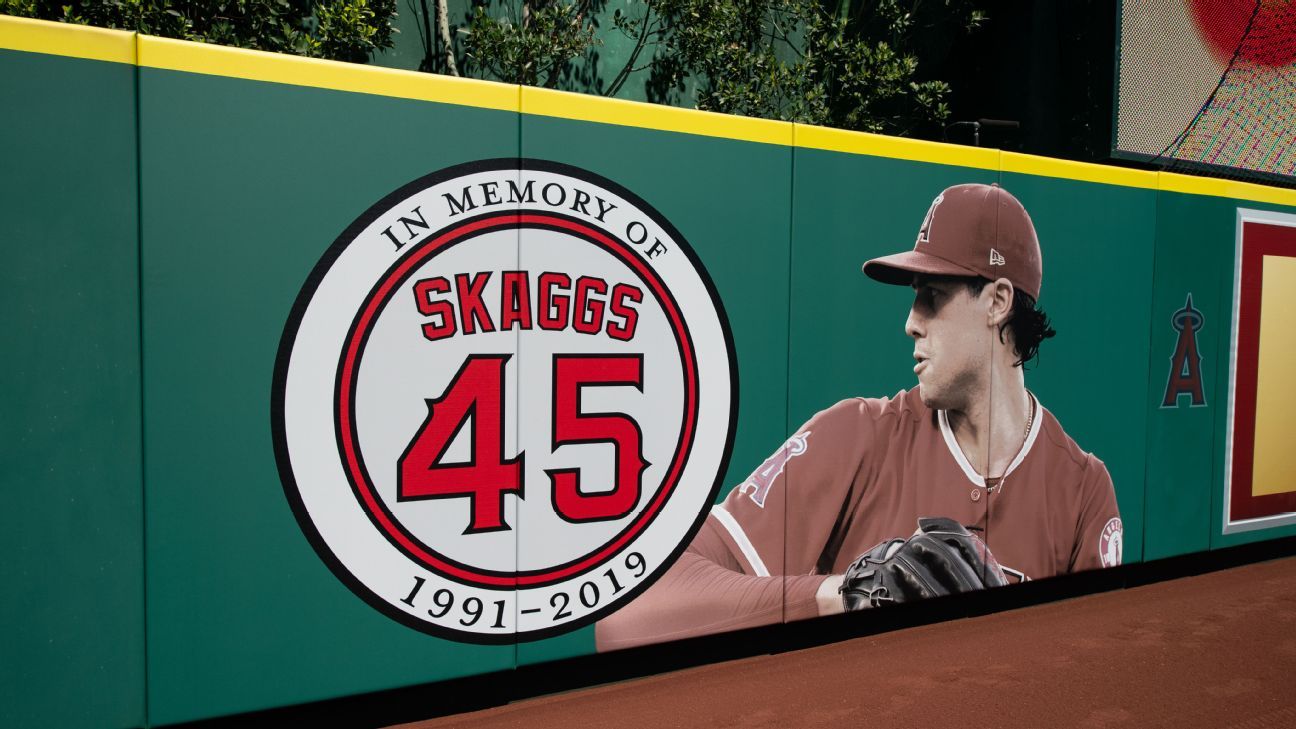
SANTA ANA, Calif. — The Los Angeles Angels agreed Friday to a last-minute settlement with the family of deceased pitcher Tyler Skaggs after jurors, deliberating for more than two days, sent queries that suggested the verdict might go in the family’s favor.
The amount and terms of the settlement — ending a yearslong battle over culpability in Skaggs’ death — were not immediately disclosed. The Skaggs family had been seeking $118 million in potential lost earnings plus added damages.
“The Skaggs family has reached a confidential settlement with Angels Baseball that brings to a close a difficult six-year process, allowing our families to focus on healing,” the family said in a statement. “We are deeply grateful to the members of this jury, and to our legal team. Their engagement and focus gave us faith, and now we have finality. This trial exposed the truth and we hope Major League Baseball will now do its part in holding the Angels accountable. While nothing can bring Tyler back, we will continue to honor his memory.”
Skaggs’ family sued the Angels after Tyler Skaggs died in 2019 after an Angels employee, Eric Kay, gave him a fentanyl-laced pill that killed him. Kay is serving a 22-year federal prison sentence for his role in Skaggs’ death. If Kay hadn’t provided that pill, jurors were instructed, Skaggs would not have died that night.
Lawyers for the Skaggs family and the Angels were in discussions Friday morning both outside the courtroom and privately in front of Judge H. Shaina Colover as the jury began its third day of deliberations. Settlement talks picked up in earnest Thursday, according to a source.
On Wednesday, the jury asked questions about the testimony of the five wage experts and about whether the jury would also be allowed to award punitive damages. Throughout the trial, the jury heard baseball wage experts testify that Skaggs’ lost career wages ranged from $21 million to nearly $125 million.
Jurors sat through 31 days of courtroom drama, which included testimony and depositions from 44 witnesses and arguments from attorneys. They viewed 312 exhibits.
The jury instructions required answers of up to 26 questions that varied from easy-to-answer stipulations of fact to more complicated assessments of negligence or culpability. Nine of 12 jurors had to agree on each question — but not necessarily the same nine jurors.
In the end, the jury did not get to render a verdict or assign “percentages of responsibility” among Skaggs, Kay and the Angels.
Angels lead attorney Todd Theodora argued it was “undisputed in this case that Eric was doing this on his own” and that the Angels were unaware Kay was distributing pills.
Plaintiffs attorney Daniel Dutko argued that the Angels knew of Kay’s drug problem, pointing to a Drug Enforcement Agency interview with Kay after Skaggs’ death that stated Kay had told his superior in 2017 that he and Skaggs were doing drugs.
The Skaggs family argued the Angels did nothing to prevent or monitor Kay’s drug abuse and did not discipline or terminate him. By doing so, the family said, the team put Skaggs in harm’s way.
“We’ve spent two months in trial,” Dutko said during his closing argument. “At any point have the Angels taken any responsibility?”
The Angels claimed they were not aware of Skaggs’ drug addiction and that he concealed it from the team. Theodora said the club signed Skaggs “under false pretenses” because he did not disclose his prior addiction to Percocet and that not even his wife knew about his previous addiction.
Angels attorneys said Kay was not operating in the scope of his employment when he provided pills to Skaggs and other players and that team officials were unaware of Kay’s illicit drug activity. The Angels argued it was Skaggs’ reckless decisions that led to his death.
-
 Sports2 years ago
Story injured on diving stop, exits Red Sox game
-
 Sports3 years ago
‘Storybook stuff’: Inside the night Bryce Harper sent the Phillies to the World Series
-
 Sports2 years ago
Game 1 of WS least-watched in recorded history
-
 Sports3 years ago
Button battles heat exhaustion in NASCAR debut
-
 Sports3 years ago
MLB Rank 2023: Ranking baseball’s top 100 players
-
Sports4 years ago
Team Europe easily wins 4th straight Laver Cup
-
 Environment3 years ago
Japan and South Korea have a lot at stake in a free and open South China Sea
-
 Environment1 year ago
Here are the best electric bikes you can buy at every price level in October 2024