
NASCAR teams pick car numbers, not drivers. Do they care?


-
Alanis King, Racing columnist
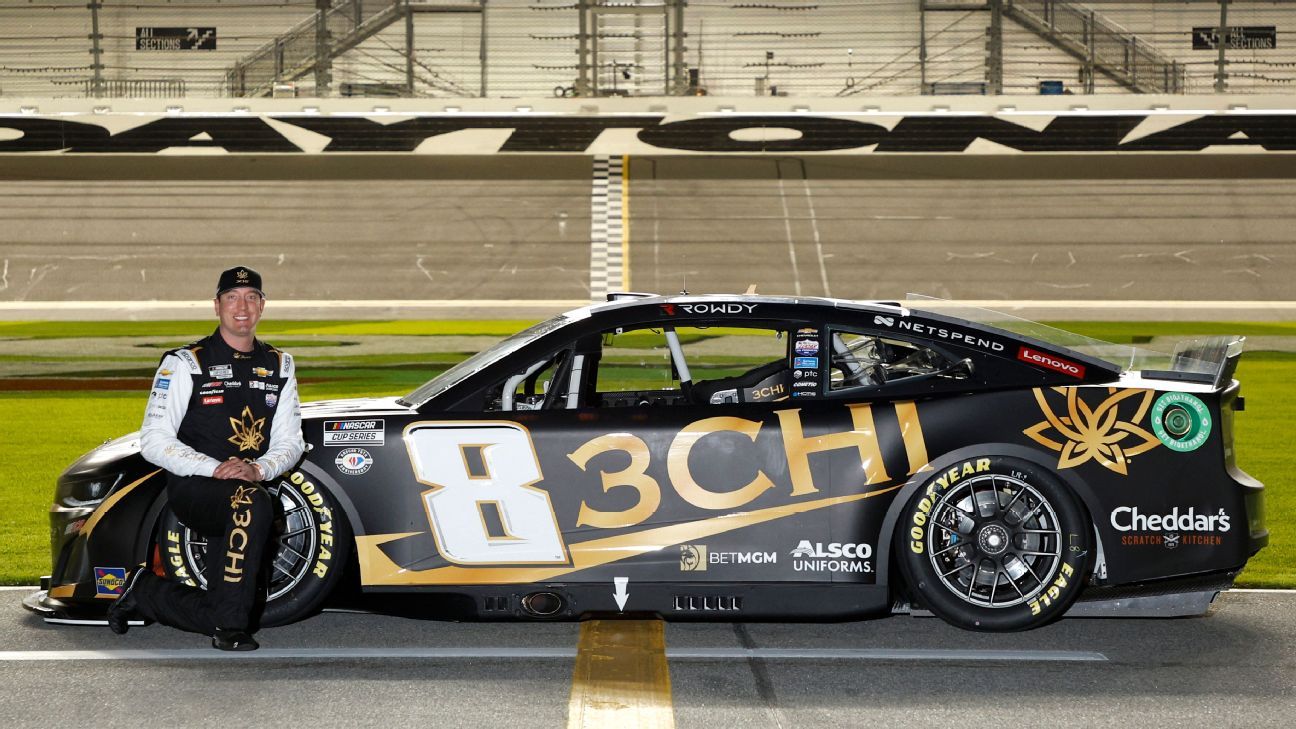
In November, Kyle Busch reached a milestone he didn’t expect to hit until his NASCAR Cup Series retirement: his last race in the No. 18. It was the season finale at Phoenix Raceway, and the car he had become synonymous with — a yellow Toyota Camry sprinkled with M&M’s — would soon be gone for good. The weekend was full of tearful goodbyes, both to Busch’s teammates and to the athlete he’d been for 15 years.
The night before the race, Busch thought about the gravity of it all.
“I’m like, ‘Tomorrow’s the last time I’m in the M&M’s car. Tomorrow’s the last time I’m in the 18,'” Busch told ESPN. “I wanted to run the whole rest of my time in the 18, but the cards weren’t on the table.”
Unlike in so many other sports, NASCAR grants numbers to teams, not athletes. Busch drove for Joe Gibbs Racing from 2008 through 2022, becoming a two-time Cup champion and Toyota’s winningest NASCAR driver. He was the No. 18. But when M&M’s parent company, Mars Inc., decided to leave the sport after 2022, Busch had to look for new teams.
One of his first thoughts was: “What number am I going to be?”
“There are drivers who come up through the ranks who have numbers that are close to them,” Busch said. “But a lot of times, up at the top level, the NASCAR Cup Series, you just get in there with whatever the number is. When I joined Hendrick Motorsports, it was the 5 car. When I joined Joe Gibbs Racing, it was 18. Now, at [Richard Childress Racing, I’m] the 8.”
NASCAR’s system might seem counterintuitive, considering athletes build empires around names and numbers, but it allows teams to build empires instead, and the best teams outlast their drivers. Dale Jarrett and Bobby Labonte drove the Gibbs No. 18 before Busch, and Mark Martin, Kasey Kahne and Kyle Larson drove the Hendrick No. 5 after him.
That’s why Justin Marks, who founded Cup team Trackhouse Racing in 2020, chose numbers and built his empire around them.
“I wanted the numbers to be endemic to the team, because numbers don’t travel with the drivers,” Marks told ESPN. “Two of the most iconic numbers between 1 and 100, independent of what they’ve done in NASCAR, are the 1 and the 99.”
Both numbers had history in NASCAR. To rebrand them for Trackhouse and its drivers, Ross Chastain and Daniel Suarez, Marks stylized them with a slash to match the team’s logo.
“It was important for us to do a brand element in the number itself,” Marks said. “In a lot of other forms of motorsport, the liveries on cars tend to be endemic to the teams. When the McLaren goes by in IndyCar and Formula One, you immediately know it’s a McLaren.
“In our sport, we’ve gotten to a place where there’s nothing sacred about these schemes as far as how they relate to the teams, because the entire race car is a sellable asset. So then, you look for opportunities to have some sort of continuity across all of the race cars and across the season. We can have a different sponsor every week, but it’s instantly identifiable as a Trackhouse car.”
Marks plans to keep the Nos. 1 and 99 forever, but he knows that can be tricky. When Busch left for Richard Childress Racing, the Gibbs team shelved the No. 18 — for now. His replacement, Ty Gibbs, took the No. 54 instead.
“When the 18 is on the track, it’s burned in everybody’s mind that it’s Kyle Busch,” Marks said. “If the number is so closely associated with the history of a single driver, sometimes it’s hard to start a new chapter. It would be more difficult to put Ty Gibbs in the 18 and start to tell the story of Ty Gibbs.
“If we win five championships with Ross Chastain, and he races for us until the age of 44 and retires, that’s a long time from now, but I imagine we’d have a discussion around whether we want to continue running the 1.”
Busch’s No. 8 has its own lore. It is famously associated with Dale Earnhardt Jr., who drove the No. 88 when he moved to Hendrick Motorsports.
“When Dale Jr. switched, all the fans who had the 8 tattooed on them were wondering what the hell they were going to do,” Busch said. “I actually had a couple fans ask me: ‘Hey, you’re not 18 anymore. You’re 8. What should we do with our tattoos?’ I told them: ‘You can put the [dates] underneath it, from 2008 to 2022, or take the 1 and make it the new Cup Series trophy. You could have the 8 next to it.'”
Busch doesn’t run his Cup number everywhere. In lower divisions, he runs the No. 51 — an ode to Rowdy Burns, a character in his favorite movie growing up, “Days of Thunder.” Busch’s son, Brexton, runs the No. 18B, and Busch has noticed other drivers’ children doing the same.
“Kyle [Larson] was always No. 1 when he grew up,” Busch said. “I don’t know why he was No. 1, but now that his kid’s racing, Owen, he’s 01. I think it’s like the ‘little one.’ But I think they also did it because his initials are ‘O,’ which is a zero, and ‘L,’ which is a one.”
“I was number 1K,” Larson told ESPN. “I didn’t pick that number. My dad did, and it just became my number. The original go-kart we bought was the 1. Rather than changing the number, we just threw a ‘K’ on it.”
Just like his dad, Larson picked Owen’s number.
“There are a few reasons,” Larson said. “My dad’s hero growing up was LeRoy Van Conett. He drove the 01 sprint car. My dad owned a dirt midget that he would run people at the Chili Bowl [Nationals] with, and it would be the 01. When I started owning my own midget for the Chili Bowl, somebody already had the 1K.
“I was like, ‘Well, I’ll just use the 01.’ I really liked it. I won both Chili Bowls that I ran as the 01, and not many people I know of have run an 01. So when Owen started racing, I was like: ‘We’ll make it 01.’ It kind of sounds like ‘Owen’ — ‘O-wen,’ ‘Oh-one.'”
Larson drives the No. 5 Cup car, just like Busch did almost two decades ago. When Larson joined Hendrick Motorsports, the team asked what number he wanted. He responded: “Whatever you want to give me.”
“I wouldn’t say, ever, do I feel like I own that number over anybody else who’s been the 5,” Larson said. “In dirt racing, you can share a number with somebody. You just have to have a letter separating it. In NASCAR, nobody can have the same number as you.
“So I think in NASCAR, for the time you’re in the car, that’s your number. Hopefully, you have a lot of success and people remember you. Like Kyle Busch, I think of him as 18. If he wins tons of races and more championships in the 8, it could sway what I remember him as.”
Larson has had a lot of numbers, including 1K, 01, 83V, 99 and 71. The Nos. 5 and 57 are special because he runs them now, and because 5/7 ended up being his daughter’s birthday. But he’ll run anything, often without a preference.
There’s just one exception.
“If I could hand select a number and be 1K in the Cup Series, I would love that,” Larson smiled. “That would be my number.”
Busch didn’t hand select the No. 8, but the more he wins in the car, the more it feels like his own, he said. It was also a bit of fate.
“My son’s birthday is 5/18,” Busch said. “The 5 and 18 were my first two Cup Series numbers, and it’s 51 and 8 now. It’s kind of ironic how things — and numbers — work out sometimes.”

-
Jorge Castillo
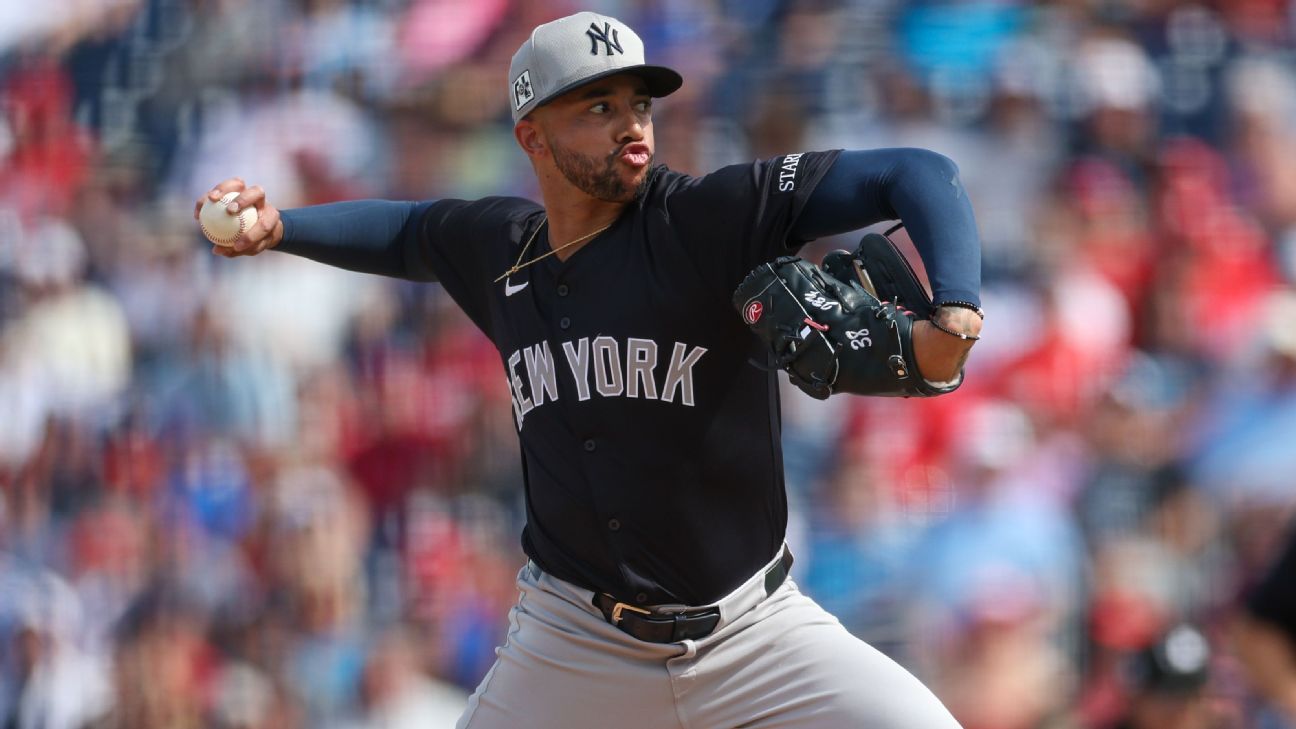
The New York Mets and reliever Devin Williams agreed to a three-year, $51 million deal, league sources told ESPN’s Jeff Passan on Monday night, giving the club a replacement for Edwin Diaz should the All-Star closer sign elsewhere.
The contract has no opt-outs or options but includes a $6 million signing bonus spread over the three seasons.
Williams will bolster the back end of a bullpen that the Mets are determined to substantially improve this winter. The question is whether he will be used as a setup man or a closer.
Williams’ role depends on whether the Mets re-sign Diaz, who opted out of his contract last month and is considered the top free agent reliever this offseason. The addition of Williams does not erase the possibility of a reunion with Diaz, and the Mets remain interested in bringing him back, sources told Passan.
Williams, 31, hit free agency after his lone season with the New York Yankees. Acquired last December from the Milwaukee Brewers for pitcher Nestor Cortes and National League Rookie of the Year finalist Caleb Durbin, Williams struggled to a career-worst 4.79 ERA over 67 appearances for New York. But underlying metrics — including a 2.68 FIP, a .195 expected batting average against, and elite strikeout, whiff and chase rates — suggest the bloated ERA is misleading.
He saved 18 games in 22 chances for the Yankees, but despite entering the season as the designated closer, he shared the role for most of the season after his rough start to 2025. Williams recorded four scoreless outings during the Yankees’ postseason run, but David Bednar earned both of New York’s playoff saves.
Before joining the Yankees, Williams was a premier back-of-the-bullpen pitcher during his six seasons with Milwaukee, first as a setup reliever for star closer Josh Hader and then as Hader’s replacement in the role.
After winning the NL Rookie of the Year in 2020 — when he posted a 0.33 ERA over 22 outings — Williams was named to two NL All-Star teams. During the three seasons before being dealt to the Yankees, Williams went 15-7 with 65 saves and a minuscule 1.66 ERA.
Williams has had an unorthodox style as a closer. Despite a fastball velocity below the big league average, he flourished thanks to one of the game’s best changeups, an offering so distinct that it acquired a nickname — “The Airbender.”
Now, Williams will be reunited with Mets president of baseball operations David Stearns, who was in that role for the Brewers for Williams’ first four seasons in Milwaukee.
Williams’ agreement with the Mets was first reported by The Athletic.
ESPN MLB Writer Bradford Doolittle contributed to this report.

The Orioles signed closer Ryan Helsley to a two-year contract Monday, continuing the remaking of their beleaguered pitching staff with one of the most sought-after relievers on the free agent market.
Sources told ESPN’s Jeff Passan that the deal is for $28 million and includes an opt-out after the first season.
While multiple teams sought to sign Helsley as a starter, the 31-year-old right-hander chose to remain in the role that made him a two-time All-Star and will hand him the ninth inning for the Orioles while retaining the ability to reach the open market after 2026.
Helsley, whose deal is pending a physical, is the second bullpen addition of the winter for Baltimore, which reacquired right-hander Andrew Kittredge from the Cubs after dealing him to Chicago at the trade deadline. With a moribund pitching staff, the Orioles went 75-87 and finished in last place in the American League East after consecutive postseason berths.
Orioles president of baseball operations Mike Elias trawled the free agent market for a late-inning option and landed on Helsley, who over his seven-year career has a 2.96 ERA in 319⅔ innings with 377 strikeouts, 133 walks and 105 saves.
Among the lowest points were the final two months of Helsley’s 2025 season, when, following a deadline deal from St. Louis to the New York Mets, he posted a 7.20 ERA and allowed 36 baserunners in 20 innings. Coming off an All-Star showing for St. Louis in 2024, which included a National League-leading 49 saves and a 2.04 ERA, Helsley saved 21 games with a solid 3.00 ERA for the Cardinals before the deadline, when he was sent to the Mets for three prospects.
Acquired to deepen a New York bullpen anchored by closer and fellow free agent Edwin Diaz, Helsley struggled badly during his time with the Mets. He blew saves in three straight appearances in mid-August and spent most of the past month working in low-leverage situations as New York collapsed down the stretch and missed the postseason.
Baltimore saw more noise than signal in Helsley’s downturn and is banking on Helsley’s stuff — which pitch-quality metrics rate as some of the best in the game — returning him to dominance. Helsley deploys one of baseball’s hardest fastballs, which averaged 99.3 mph in 2025, according to Statcast, ranking in the 99th percentile of all pitchers.
With incumbent closer Felix Bautista expected to miss the 2026 seasons following rotator cuff and labrum surgeries in August, the Orioles entered the winter with only right-hander Yennier Cano and left-hander Keegan Akin as veteran bullpen options. Beyond Helsley and Kittredge, Baltimore could add another reliever, sources said. The Orioles’ need for pitching help isn’t limited to their bullpen, either. Following the trade of Grayson Rodriguez to the Los Angeles Angels for left fielder Taylor Ward, Baltimore continues to pursue starting-pitching options to join left-hander Trevor Rogers and right-hander Kyle Bradish at the top of their rotation, sources said.
A fifth-round pick out of Northeastern State in Oklahoma, Helsley was a full-time starter throughout the minor leagues until he joined the Cardinals’ big league roster. From 2022 to ’24, he was arguably the most valuable reliever in the NL, alongside right-hander Devin Williams, a free agent with whom the Orioles spoke as well.
ESPN’s Bradford Doolittle contributed to this report.
-
 Sports2 years ago
Story injured on diving stop, exits Red Sox game
-
 Sports3 years ago
‘Storybook stuff’: Inside the night Bryce Harper sent the Phillies to the World Series
-
 Sports2 years ago
Game 1 of WS least-watched in recorded history
-
 Sports3 years ago
Button battles heat exhaustion in NASCAR debut
-
 Sports3 years ago
MLB Rank 2023: Ranking baseball’s top 100 players
-
Sports4 years ago
Team Europe easily wins 4th straight Laver Cup
-
 Environment3 years ago
Japan and South Korea have a lot at stake in a free and open South China Sea
-
 Environment1 year ago
Here are the best electric bikes you can buy at every price level in October 2024