Connect with us

Published

on

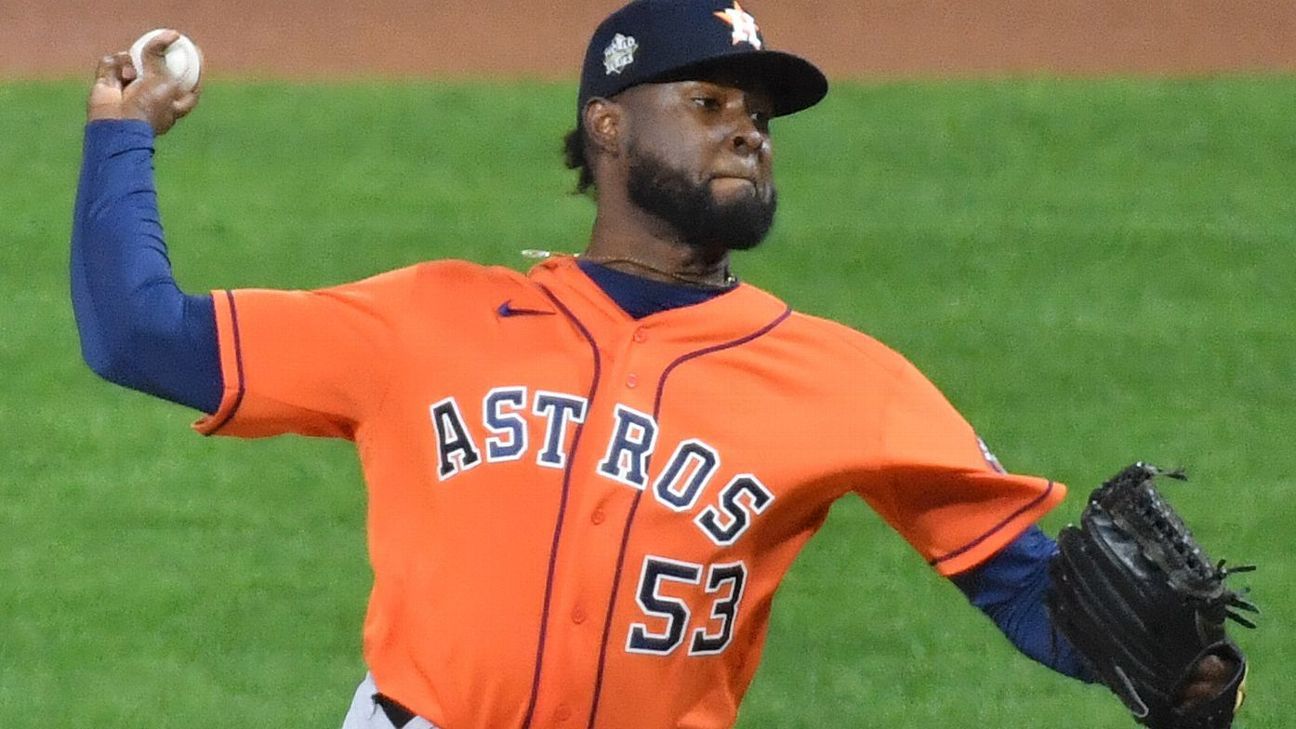
PHILADELPHIA — Cristian Javier‘s parents, Trinidad Mieses and Cecilio Javier, flew from the Dominican Republic to Philadelphia and sat in his hotel room late Tuesday night, in the buildup to the biggest outing of his life. The Houston Astros were coming off a difficult loss and needed Javier to rescue them from an overwhelming World Series deficit, but Trinidad and Cecilio attempted to strike an optimistic, supportive tone.

They proved to be prophetic.

“Let’s try to stay positive,” Javier recalled hearing from his mother and father. “God willing, you’ll throw a no-hitter.”

Less than 24 hours later, Javier teamed with Astros relievers Bryan Abreu, Rafael Montero and Ryan Pressly in completing the first combined no-hitter in postseason history, using his devastating fastball to vex a helpless Philadelphia Phillies lineup through the first six innings of what became a 5-0 Astros victory in Game 4 on Wednesday. The win tied the Series at two games apiece and placed Javier in exceedingly rare company, joining former New York Yankees right-hander Don Larsen — author of a perfect game in 1956 — as the only pitchers in World Series history to finish an outing with no hits allowed in six or more innings.

“This is the best gift I could have ever given my family, my parents,” Javier said in Spanish. “To me, it’s even more special knowing that they were able to see that in person.”

Javier’s start was a reenactment of the combined no-hitter he played a key role in against the Yankees on June 25, making Javier the first pitcher to start multiple combined no-hitters within a career, let alone the same season. He set the tone for what became the third no-hitter of any kind in the 119 years that Major League Baseball has staged the postseason, and the second — along with Roy Halladay’s in the 2010 National League Division Series, against a Cincinnati Reds team managed by current Astros manager Dusty Baker — that took place at Citizens Bank Park.

“That’s what’s strange about life,” Baker said of finally getting on the right side of a postseason no-hitter. “I remember being on the other end of that. It was the seventh inning and it seemed like it was the second inning, and I looked up on the board and it’s the seventh inning already. Then you’re trying not to be no-hit and then you’re trying to win the ballgame and — yeah, that’s pretty remarkable.”

Javier himself is remarkable. He was signed for $10,000 seven years ago from La Victoria, a small town within Santo Domingo known mostly for the notorious prison that shares its name. He was nearing his 18th birthday then, old in an international market where prospects agree to deals at 12 and 13 years old, and he threw only in the mid-80s. But his fastball was already extremely difficult to hit. As he got stronger, his velocity continued to increase. He became the organization’s Minor League Pitcher of the Year in 2019, established himself as a dynamic weapon — in the rotation or out of the bullpen — in 2020 and 2021, and reached a new level in 2022, posting a 2.54 ERA in 148⅔ regular-season innings.

As the year went on, Javier only got better.

Dating back to Sept. 14, the 25-year-old right-hander has thrown at least five scoreless innings and allowed no more than two hits in six consecutive starts. He is now the first pitcher in postseason history with at least five innings and no more than one hit allowed in back-to-back starts.

“Just going into today’s game, we had so much confidence in him,” Astros center fielder Chas McCormick said. “Even coaches, I had a feeling — Javier’s going to shove today. And he’s been shoving.”

Javier struck out nine batters and issued just two walks through the first six innings. At the start of the fourth, he began a stretch of five consecutive strikeouts. In the sixth, the pitcher with the lowest groundball rate in the majors during the regular season — among those who compiled at least 140 innings — benefitted from three consecutive groundouts. At that point, Javier became the first pitcher to reach six no-hit innings in the World Series since Jerry Koosman in 1969.

Javier did it, of course, with his four-seam fastball. He threw it 72% of the time, the highest percentage of his major league career, and recorded 14 of his 18 outs — including two-thirds of his strikeouts — with that pitch. He also got 27 foul balls off it, the most of any pitcher on a singular pitch in a game this season, according to research by ESPN Stats & Information. It was a sign that the Phillies were consistently late, the main characteristic Astros co-pitching coach Joshua Miller looks for in Javier.

“It’s a good fastball,” Phillies left fielder Kyle Schwarber said. “He’s got good extension, good ride, things like that. When it says ’92’ up on the board, it’s playing a little bit harder than that.”

The Astros let Javier extend all the way to 115 pitches while recording the first 21 outs of the combined no-hitter at Yankee Stadium in late June. A little more than four months later, he was pulled after throwing 97 pitches through 18 outs, in part, Miller said, so they could potentially use him out of the bullpen later in this series.

By that point, the Astros’ offense had already scored five runs — all in the fifth, when Jose Alvarado inherited a bases-loaded, none-out situation and proceeded to plunk Yordan Alvarez, then gave up a two-run double to Alex Bregman, a sacrifice fly to Kyle Tucker and a run-scoring single to Yuli Gurriel. Abreu entered in the bottom of the seventh and struck out the side despite facing the heart of the Phillies’ order.

He said he had no idea that he had inherited a no-hitter in progress. He found out an inning later, when he was in the clubhouse and heard his teammates get really animated as Montero took the ball for the eighth inning.

“I was shocked,” Abreu said in Spanish.

Montero followed suit by retiring all three batters, the last on a 99 mph Jean Segura line drive hit directly at Astros right fielder Tucker — a batted ball that came with an expected batting average of .910. Pressly, the Astros’ dominant closer, then finished it off in the ninth, just like he did in late June, this time working around a walk to record three outs on a Brandon Marsh strikeout, a Rhys Hoskins flyout and, lastly, a J.T. Realmuto groundout.

“You get slapped in the face yesterday and go back today and make a statement,” said Pressly, who watched the Phillies crank out five home runs against Lance McCullers Jr. in the Game 3 loss. “You try to have the mind of the goldfish in this game. You try not to think about anything. You just want to go out there and try to produce and put a ‘W’ in the column.”

There have been 18 combined no-hitters throughout major league history, but none have come particularly close to occurring in the postseason. The only other one that extended through seven innings was done by the Atlanta Braves, against these Astros, in Game 3 of last year’s World Series. Javier, Abreu, Montero, Pressly and Astros catcher Christian Vazquez, who filled in for Martin Maldonado largely because of how well he works with Javier, all posed with the baseball on the field postgame. The National Baseball Hall of Fame preserved one of the baseballs Javier pitched with and got it signed by all five players, also keeping a rosin bag and John Smoltz’s scoresheet.

“It’s a very special day for us,” Vazquez said.

It was even more special for Javier because of who attended. His mother, Trinidad, has been able to see him a handful of times, but Wednesday marked the first time his father, Cecilio, has been able to take in one of his major league games in person. Their prediction ultimately helped.

“I knew I had a very important start in front of me,” Javier said. “When they told me [that I was going to throw a no-hitter], it gave me faith.”

Continue Reading

Sports

Daly: NHL players won’t play if Olympic ice unsafe

Published

on

By

Daly: NHL players won't play if Olympic ice unsafe

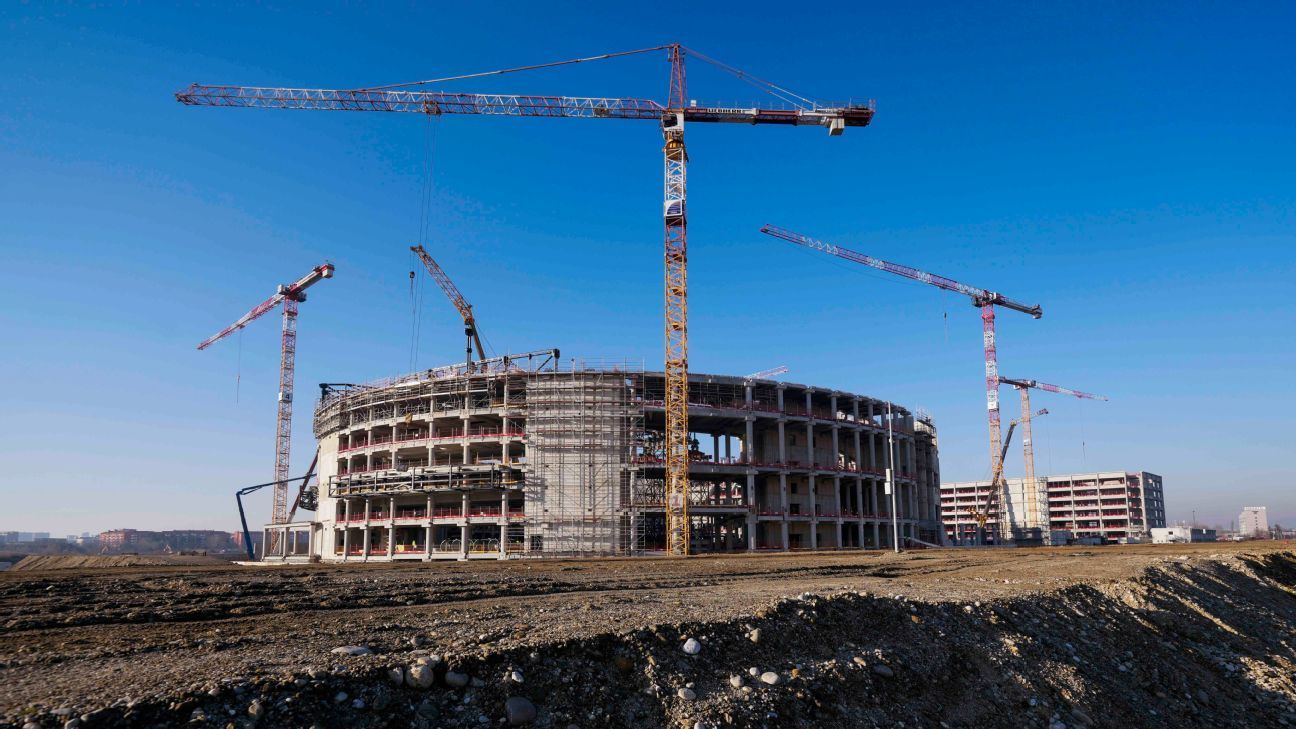
COLORADO SPRINGS, Colo. — NHL deputy commissioner Bill Daly said that if the league’s players feel the quality of the ice at the Olympics in Milan is unsafe, “then we’re not going to play.”

“It’s as simple as that,” Daly told reporters after the NHL board of governors meetings on Monday.

Daly told league owners Monday that he didn’t believe construction issues with the Olympic ice hockey rink were “insurmountable.”

The main hockey arena in Milan is scheduled to be finished Feb. 2. The women’s hockey tournament begins three days later, and the men’s tournament, with NHL players set to participate in the Olympics for the first time in over a decade, begins Feb. 11, leaving very little wiggle room.

The Olympic arenas will feature three games a day for nearly three weeks, which will challenge the resiliency of the ice. Daly categorized the updates the NHL and NHLPA received last week as positive, but said the league was upping its efforts to help see through the arena.

“We have offered and they’re utilizing our ice experts and technicians and outside providers,” Daly said. “We’re basically moving everybody there to try to help get this done in a way that’s acceptable for NHL athletes. And I’m cautiously optimistic it will be fruitful.”

The NHL will have ongoing access to the ice. That will include being on site for a test event scheduled for the main rink from Jan. 9-11.

On Monday, the IIHF acknowledged the two rinks in Milan would be about 3 feet shorter than a standard NHL rink (196.85 feet by 85.3 feet, instead of 200 feet by 85 feet) — which goes against the agreement the NHL and NHLPA signed with the IIHF in July.

Daly said the league found out about the skewed dimensions last week, and he was not sure how it happened. Some federations were made aware earlier, but Daly said nobody raised the issue to him and the league did not notice the difference in several site visits because it wasn’t anything “perceptible to anybody. It’s not like people bring tape measures there.”

But the NHL and NHLPA are willing to look past that for now — though they will insist the rink for the 2030 Olympics in France is built to NHL standards.

“The players association has canvassed the players and apparently they did not believe it to be a big issue, health and safety issue or a competitive issue,” Daly said.

The Pittsburgh Penguins and Nashville Predators played games on a similar-sized rink last month at the Global Series in Sweden; the solution was to move the lines so the missing ice was accounted for in the neutral zone rather than either offensive zone. Daly said they did not receive any feedback from players after those games.

Organizers have insisted there is no Plan B for the Olympic hockey tournament to be held elsewhere if the rink is not ready. Daly said the NHL also doesn’t have a contingency plan yet if it decides the ice is not suitable.

“I mean, it kind of is what it is,” Daly said. “Having said that, if you’re faced with that being the reality, then you have to think about what you do next. “

The NHL will go dark for a two-week period during the Games. Asked if it was possible to reconfigure the schedule if necessary, Daly said he wasn’t sure yet.

“Well, I can’t tell you exactly what we do,” he said. “What I’d say is, I think in emergency-type situations like that in the past, I think we’ve responded appropriately, came up with good solutions and I have no doubt that we’ll be able to come up with good solutions if we’re faced with that.”
Continue Reading

Sports

Bruins’ McAvoy nears return after face injury

Published

on

By

Bruins' McAvoy nears return after face injury

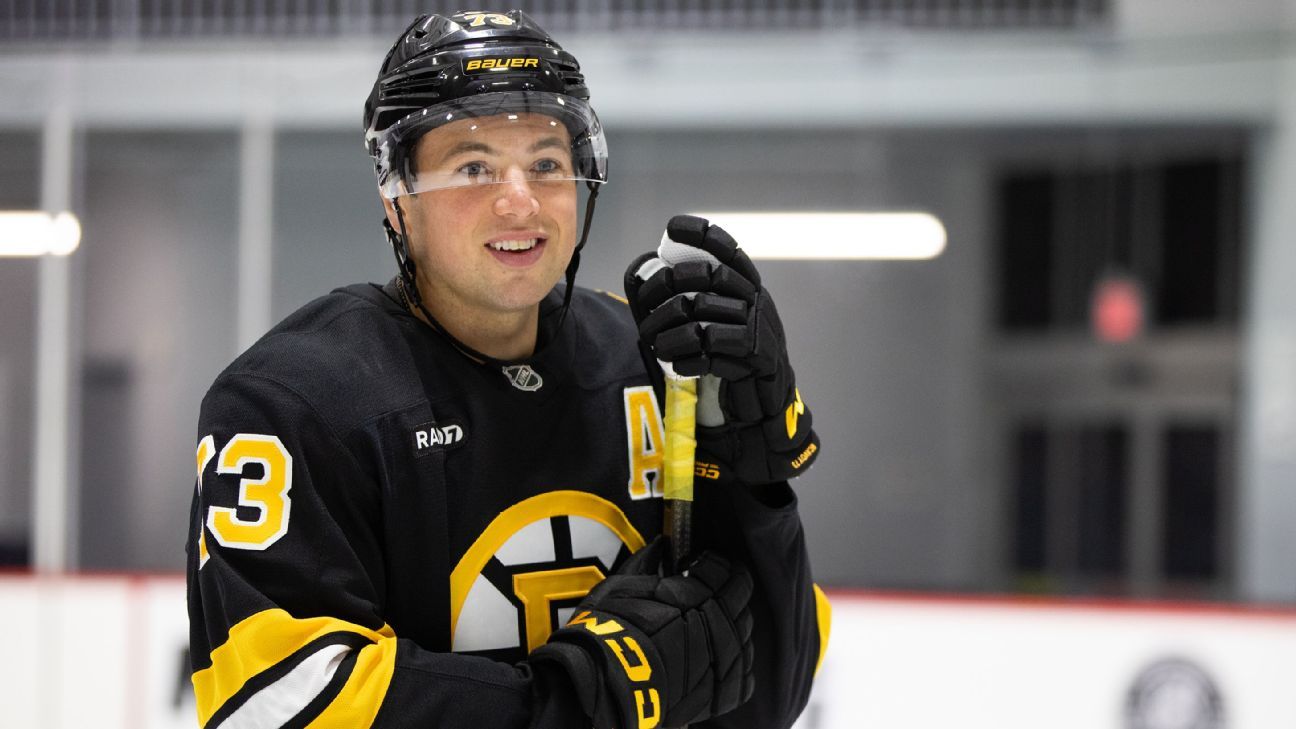
Charlie McAvoy is on the road to recovery and close to rejoining the Boston Bruins’ lineup.

Boston’s top defenseman has been sidelined since taking a slap shot to the face from Montreal Canadiens defenseman Noah Dobson on Nov. 15. McAvoy suffered what he recently described as a “linear fracture” to the left side of his face that included, he said, “some displacement, and I lost a lot of teeth on the bottom.”

The blueliner was instructed not to eat solid foods until at least six weeks after suffering the injury. He lost 20 pounds in the first week and a half afterward while relegated to a liquid diet. McAvoy said on Monday that he’s mending nicely now though and, after shedding his noncontact jersey at practice, was looking forward to getting back to work with the Bruins.

“Every day I feel better,” he said. “We’re getting it back. We’re getting the chance to do more, skate more, skate longer, and work out off the ice. All those things. We’re making strides, and I’m healing on the fly.”

McAvoy will be on Boston’s upcoming three-game road trip starting on Tuesday in St. Louis, although it’s still unclear when he’ll get the green light to suit up.

“We’ll see,” said McAvoy when asked if he would be ready to face the Blues. “Going on the trip with the expectation and hoping that some point along the way on the trip I’ll be able to get back in.”

It’s not the first time McAvoy has missed time with a significant injury — he just had shoulder surgery in February after getting hurt while representing Team USA at the 4 Nations Face-Off — but this particular ailment was something entirely new.

“It’s been one of the weirdest injuries I’ve ever had,” he said last week. “The feeling of having so much trauma in your mouth. It’s a wild feeling. But we’re doing everything we can to get back fast.”

McAvoy has been forced to consume only what could be made in a blender. He tried some creative options at first — including pulverized chicken and vegetables — but called that a “nonstarter” and carried on with classic soft foods.

“Soups have been my go-to,” said McAvoy, who has gained back about half of the weight he lost. “Early on a lot of milkshakes and ice cream.”

Considering the force of Dobson’s shot — which knocked McAvoy directly onto his back — the Bruins’ blueliner admitted he “knew right away I was in trouble” and is grateful to finally have enough energy to anchor Boston’s backend again.

McAvoy has 14 points in 19 games this season, while pacing the club in ice time with 23:46 per game. The Bruins are 4-5-0 since McAvoy went down and are currently second in the Atlantic Division.

McAvoy isn’t the only injured party Boston hopes to get back soon. David Pastrnak — the Bruins’ leading scorer — has been out since Nov. 26, but he will be on Boston’s road trip as well with sights set on a return.
Continue Reading

Sports

Binnington focused on Blues, not Olympics for now

Published

on

By

Binnington focused on Blues, not Olympics for now

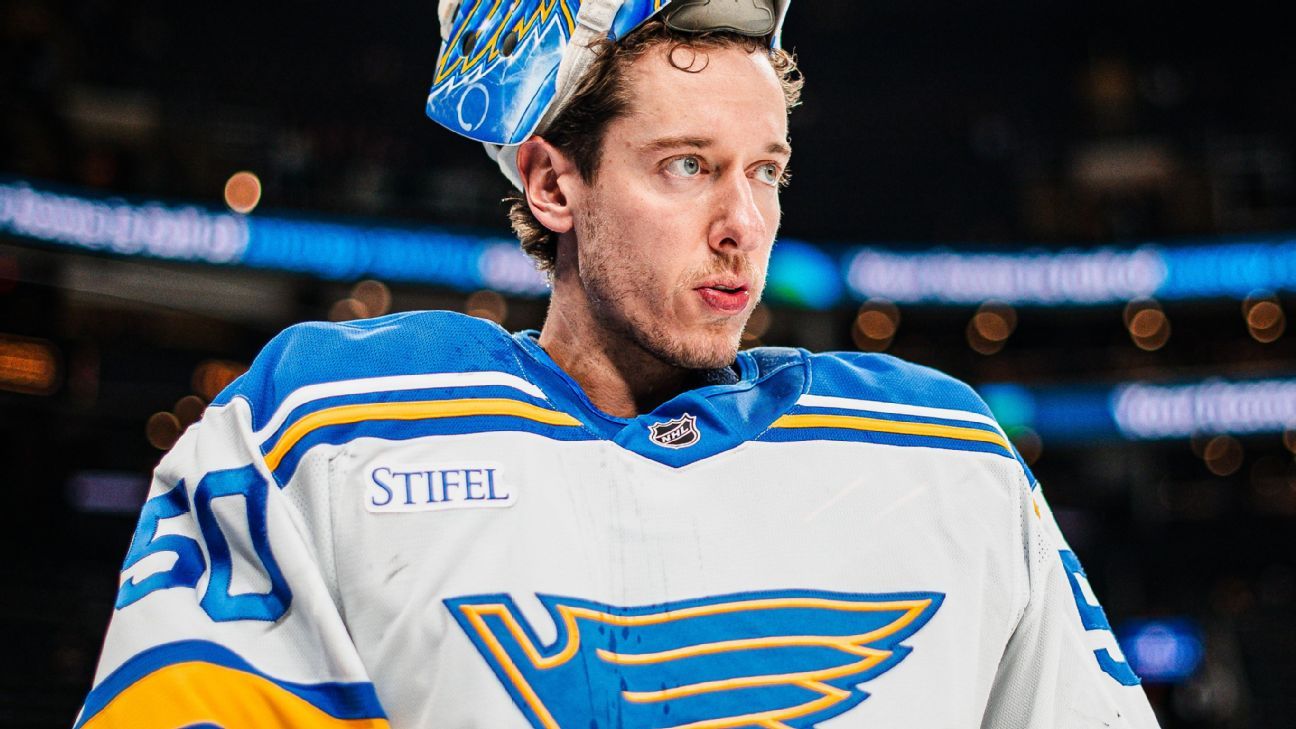
MONTREAL — Jordan Binnington knows the chatter is out there. He’s leaning on the mindset that’s pulled him through tough stretches before.

The goaltender who backstopped Canada at the 4 Nations Face-Off opened the NHL season as the front-runner to start in February’s Milan-Cortina Games. But a sluggish start — for both him and the St. Louis Blues — has raised questions about where he fits in Canada’s Olympic plan.

“I’m aware of what’s going on, and you want to put yourself in the best position to make that team and make it easy for people making the decision,” he told The Canadian Press. “At the same time, I feel like I’ve been around the league for a decent amount of time and I know that if I control my inner world and what I need to do to feel at my best, then the rest will take care of itself. That’s where my focus goes.”

Sunday night was a step in that direction. Binnington made 23 saves in a 4-3 victory over the Montreal Canadiens, thwarting several Grade-A chances — including a last-second look from Canadiens sniper Cole Caufield in the crease — to earn his seventh win this season.

It was a strong outing amid a difficult campaign for the 32-year-old from Ontario, who’s posting career-low stats across the board.

Binnington has a .875 save percentage, ranking 68th leaguewide and sixth-last among goalies with at least 10 games played. His minus-10.86 goals-saved above average, measuring how a goalie compares to the league average, is also fifth-worst according to analytics website Natural Stat Trick.

“Numbers aren’t necessarily where you want them to be,” the 6-foot-2, 172-pound netminder said. “I’ve been approaching it as just focusing on my own process and what I need to feel good at the right time. I’m building my game every day, and that’s all I can do is control what I can control. The more I do that the more things will come out and fall into place.”

Binnington said he hasn’t spoken to Canada’s management team about the Olympic selection less than a month away — Doug Armstrong is both the general manager for St. Louis and the Canadian team.

“We haven’t talked about it at all. I think nothing needs to be said really, just do your job, focus here and the better the St. Louis Blues do, the better that is for that situation as well,” he said.

One thing working in Binnington’s favor is his proven ability to step up in big moments. He led St. Louis to the Stanley Cup in 2019, rising from minor-league goalie to season savior and playoff hero in a few short months.

The fiery netminder — also known for his short temper — showed the same clutch play during the 4 Nations final, turning aside 31 of 33 American shots in Canada’s 3-2 win, including a game-saving desperation glove stop on Auston Matthews in overtime.

“If you’re looking at statistics, you would, you know … but Binnington is such a winner,” Blues coach Jim Montgomery said. “It doesn’t matter the stage, he always has the ability to bounce back because of his mental toughness, his belief in himself, and he was outstanding (Sunday).”

Continue Reading

Trending