
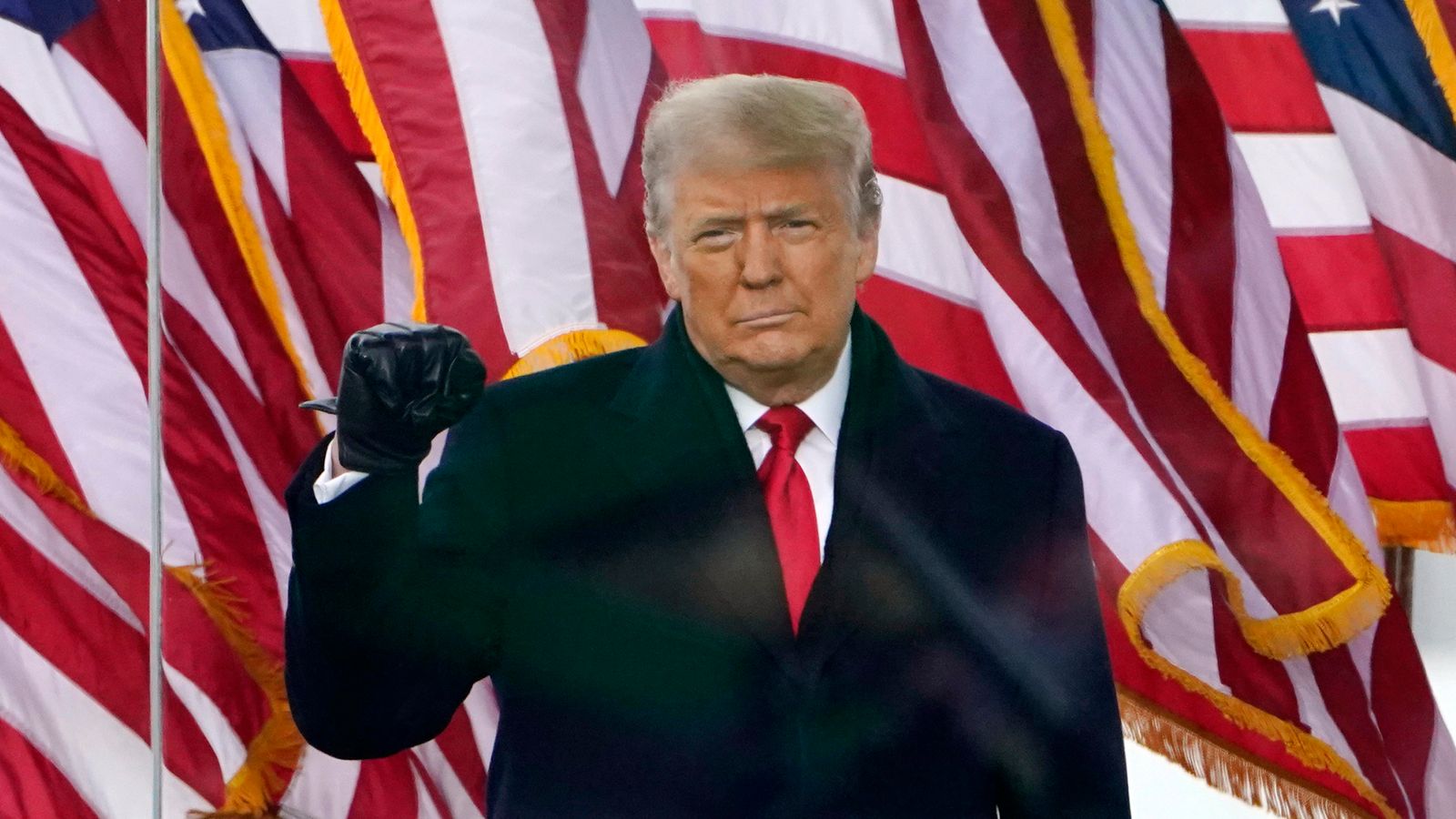
Donald Trump’s reacted to the BBC resignations on Truth Social – and didn’t hold back


What did the BBC do to anger Donald Trump? And what has he said about the resignations?
It didn’t take long for the White House to react – and that’s unsurprising given that the resignations were driven, on the face of it at least, by the BBC’s splicing together of that Trump speech from January 2021.
It was clear on Friday that the White House was keen to weigh into the BBC row, with the White House press secretary using an interview with The Daily Telegraph to slam the BBC.
“This purposefully dishonest, selectively edited clip by the BBC is further evidence that they are total, 100% fake news that should no longer be worth the time on the television screens of the great people of the United Kingdom,” Karoline Leavitt told the newspaper.
Donald Trump during the speech on January 6, 2021. AP file pic
After last night’s resignations, Mr Trump posted a lengthy statement on Truth Social.
“The TOP people in the BBC, including TIM DAVIE, the BOSS, are all quitting/FIRED, because they were caught “doctoring” my very good (PERFECT!) speech of January 6th,” he wrote.
“Thank you to The Telegraph for exposing these Corrupt ‘Journalists.’ These are very dishonest people who tried to step on the scales of a Presidential Election. On top of everything else, they are from a Foreign Country, one that many consider our Number One Ally. What a terrible thing for Democracy!”
It was the Telegraph that leaked the internal memo last week in which it was revealed that a BBC Panorama report – aired just before the election last year – had spliced together two parts of a long Trump speech which he made on 6 January 2021.
That was the day of the storming of the Capitol building in Washington by Trump supporters who believed the 2020 election had been stolen by Joe Biden.
Mr Trump gave a speech that day. In a Panorama report broadcast just before the US election last year, the BBC aired a clip from the speech.
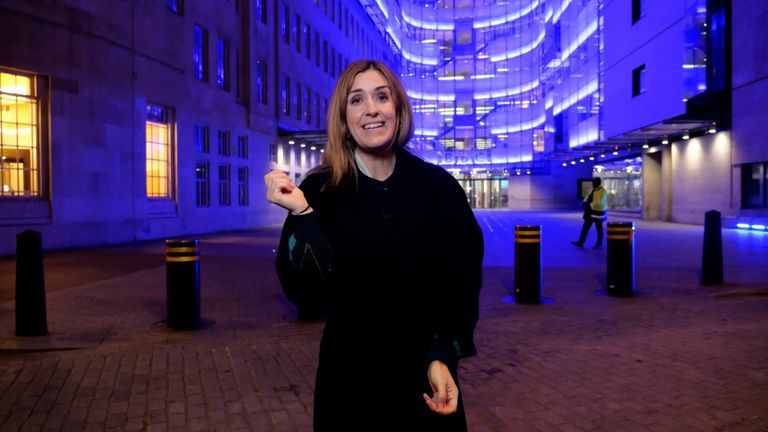
Why ‘Teflon Tim’ resigned from BBC
The following is the transcript of that clip.
“We’re gonna walk down to the Capitol and I’ll be with you and we fight. We fight like hell and if you don’t fight like hell, you’re not gonna have a country anymore.”
The clip was presented as one sentence – one thought. However, it was actually two distinct parts of the speech spliced together, reordered and covered with pictures of the crowd to hide the join – known as the edit point or cut.
Had the Panorama production team not edited the clip ,this is what viewers would have heard. The sections used by Panorama are in bold for clarity.
“After this, we’re going to walk down – and I’ll be there with you – we’re gonna walk down, we’re gonna walk down anyone you want, but I think right here, we’re going to walk down to the Capitol, and we’re going to cheer on our brave congressmen and women, and we probably not gonna be cheering so much for some of them. Because you’re never going to take back our country with weakness you have to be strong. We have come to demand that Congress do the right thing, and only count the electors who have been lawfully slated. I know that everyone will soon be marching down to the Capitol building to peacefully and patriotically make your voices heard.”
The “fight like hell” line came about an hour later – right at the end of the speech. Here it is in full. Again, the section used by Panorama are in bold for clarity.
“And again, most people would stand there at 9 o’clock in the evening and say I want to thank you very much, and they go off to some other life. But I said something’s wrong here, something is really wrong, can’t have happened. And we fight. We fight like hell. And if you don’t fight like hell, you’re not going to have a country anymore. Our exciting adventures and boldest endeavours have not yet begun. My fellow Americans, for our movement, for our children, and for our beloved country. And I say this despite all that’s happened. The best is yet to come. So we’re going to, we’re going to walk down Pennsylvania Avenue. I love Pennsylvania Avenue. And we’re going to the Capitol. The Democrats are hopeless, they never vote for anything. Not even one vote. But we’re going to try and give our Republicans, the weak ones because the strong ones don’t need any of our help. We’re going to try and give them the kind of pride and boldness that they need to take back our country. So let’s walk down Pennsylvania Avenue. I want to thank you all. God bless you and God Bless America.”
The riot at the Capitol building unfolded that afternoon.
Read more:
‘Teflon Tim’ has finally come unstuck
In full: The BBC resignation letters
Past controversies faced by Tim Davie
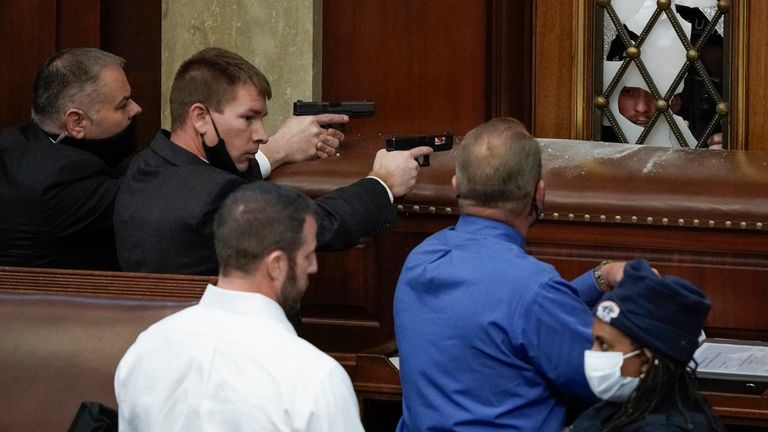
2021: How chaos unfolded at the US Capitol
The president and his team have always claimed the “fight like hell” comment was purely rhetorical, and they have dismissed accusations that Mr Trump encouraged the unrest.
Trump’s alleged role in the unrest and his broader efforts to overturn the results of the 2020 election were the subject of a federal criminal case. The president was indicted on four felony counts.
The case was dismissed by federal prosecutors following his 2024 election victory because of a long-standing policy that prohibits the prosecution of sitting presidents.
But in a final report released last January, federal prosecutor Jack Smith said he believed there was enough evidence to convict Mr Trump in a trial had it happened.
There is a legitimate and enduring debate over Mr Trump’s role in the events of January 6th. But that does not in any way explain or excuse BBC’s decision to splice together and reorder two distinct parts of the president’s speech.
US
Jeffrey Epstein’s most lucrative currency was people – six years after his death, he continues to haunt those who knew him
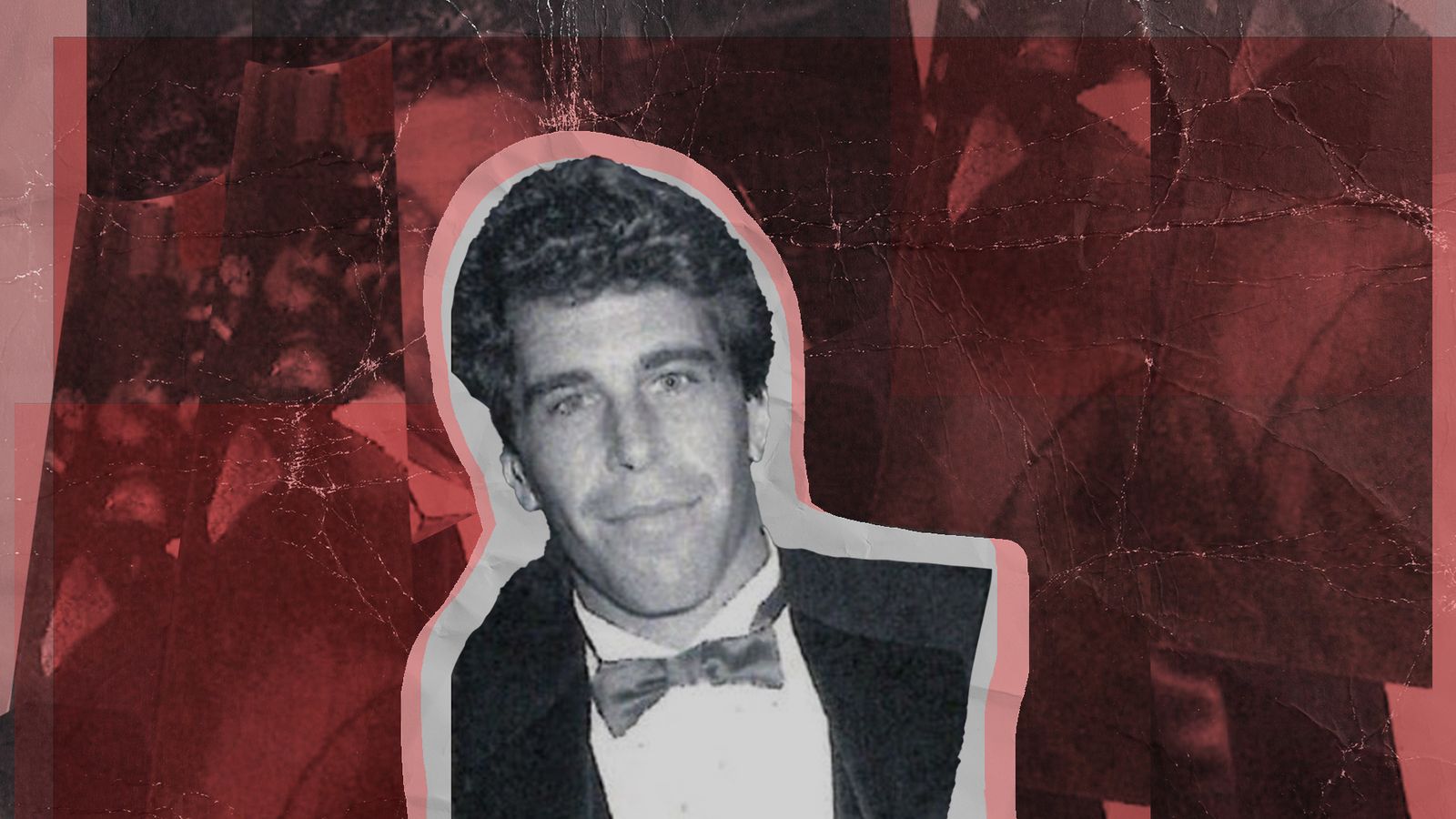
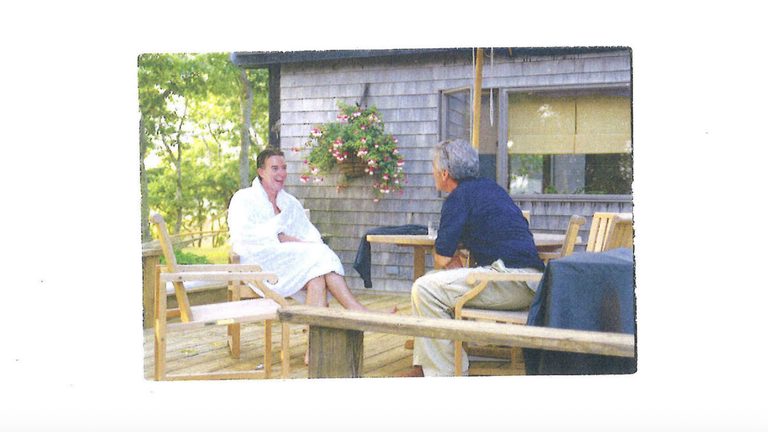
Framed photos with presidents, princes and even the pope adorned the many homes of Jeffrey Epstein.
This article contains images and language that some readers may find disturbing.
The disgraced New York financier’s most lucrative currency was people. He made a career out of connections with world leaders in politics, business titans and science’s most lauded brains.
The man formerly known as Prince Andrew, Andrew Mountbatten-Windsor, described Epstein‘s appeal in his infamous TV interview: “He had the most extraordinary ability to bring extraordinary people together and that’s the bit that I remember, going to the dinner parties where you would meet academics, politicians, people from the United Nations. It was a cosmopolitan group of what I would describe as US eminence.”
His network was not just US-based but the global elite – among them hedge fund owners, bankers and hoteliers.
But as more and more new documents and photos are made public, we can build up an intimate portrait of a man who kept so much private.
Read more: Dozens more images of Epstein’s island released
Another man once called a prince, but of darkness this time, Peter Mandelson, described his “best pal” as a “prolific networker”. Epstein’s friends crossed political parties – Republican and Democratic – and continents.
Epstein and Mandelson. Pic: US House Oversight Committee
Epstein’s Palm Beach mansion was just a seven-minute drive from Donald Trump‘s Mar-a-Lago. In 2002, Mr Trump told New York Magazine: “I’ve known Jeff for 15 years. Terrific guy. He’s a lot of fun to be with. It is even said that he likes beautiful women as much as I do, and many of them are on the younger side.”
They are said to have fallen out while competing to purchase a mansion in 2004.
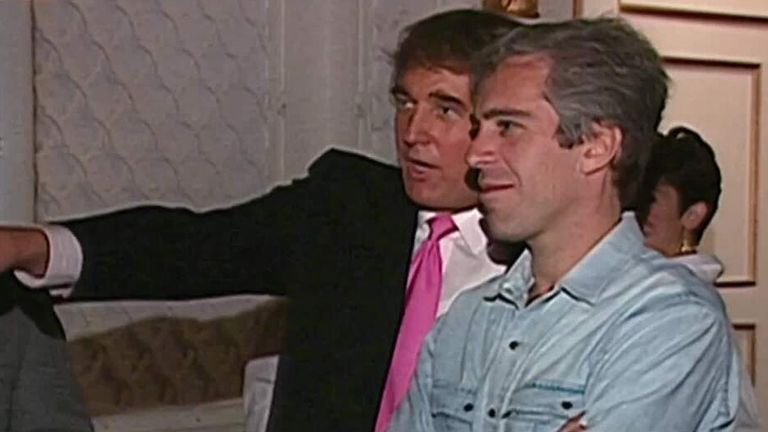
Trump and Epstein at a party together in 1992. Pic: NBC News
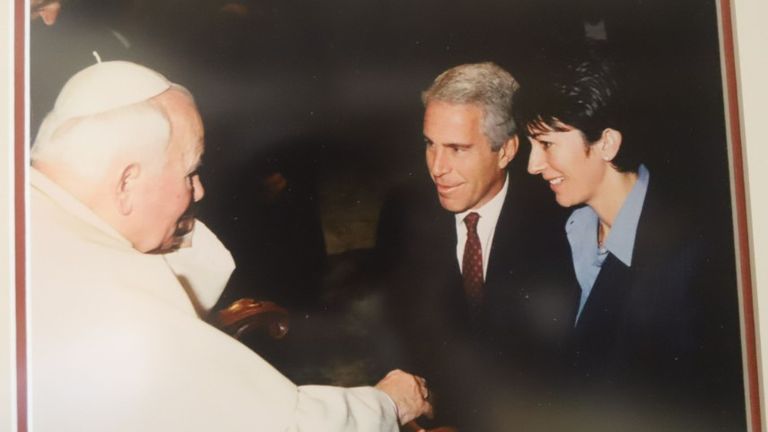
Jeffrey Epstein and Ghislaine Maxwell meeting Pope John Paul II
The release of thousands of Epstein’s personal emails shows he had had plenty of world leaders in his inbox.
The former prime minister of Norway and former president of the Maldives sought his advice on politics and finance respectively.

Inside Jeffrey Epstein’s private island
An enigma
Epstein’s emails are short, often abrupt and riddled with spelling mistakes. The impression he wanted to give: he was a busy man, an enigma. You were lucky to be getting a reply.
He cared about appearances – his own and of the women he abused. He dated many models, including a former Miss Sweden. He followed a strict diet to keep lean and insisted the women in his life did the same.
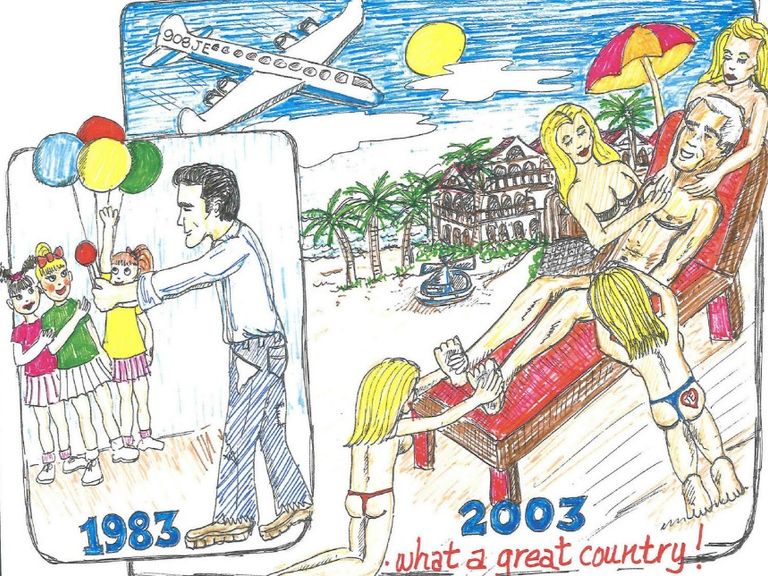
A drawing in Epstein’s 50th birthday book
His now notorious 50th birthday book is packed full of candid snaps, some featured here, that flaunt his lavish lifestyle. It is also brazen in its relishing of Epstein’s proclivity for young women. Images of scantily clad women are included in photos and doodles.
The anecdotes from his wealthy, powerful friends are often smutty or innuendo-led. “It’s no secret that Jeffrey appreciates beautiful women. But not many people know that he can create them out of thin air,” reads one.
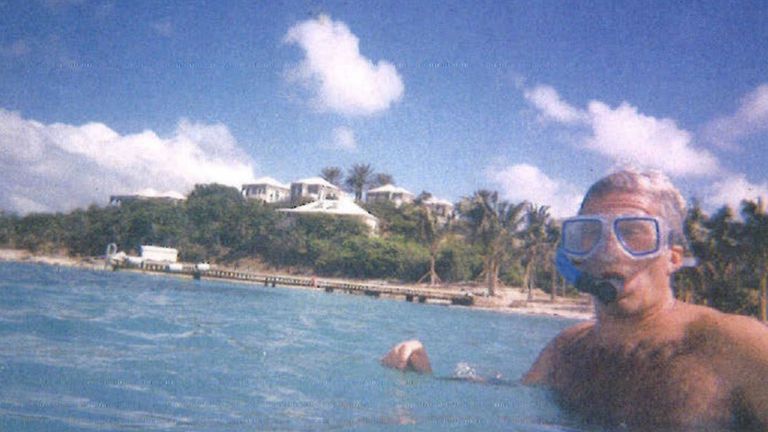
Massages were entry route to abuse
Epstein’s black book of contacts had lengthy lists of women lined up for “massages” in Florida, California, New Mexico, New York, London, Paris and his island.

At least 152 women are named in it with phone numbers – they were available on speed dial.
The premise of a massage was often his entry route to abuse. The massages were scheduled, part of his daily routine. Whether on a private jet or his private island, he acted with impunity for far too long.
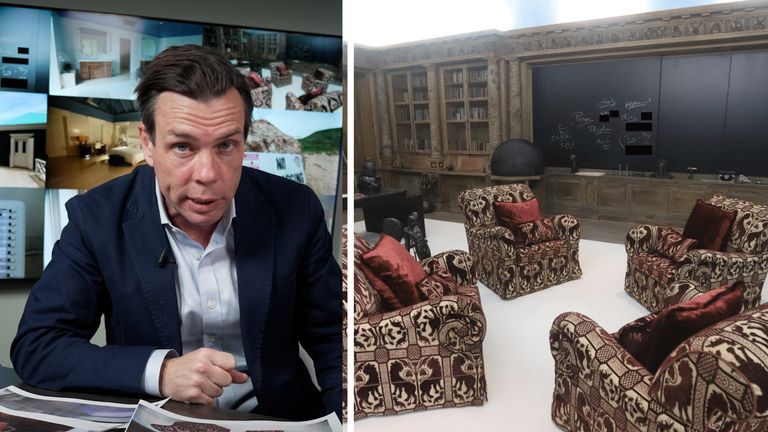
Inside Epstein’s island: What do new images tell us?
Epstein did not show remorse for his crimes
Multiple women went to the police to report his actions over the years. But the only jail time he was ever sentenced to was in 2008 after a controversial deal where he pleaded guilty to state charges of soliciting a minor for prostitution. He was sentenced to 18 months in jail, but only served 13 and negotiated the ability to leave the jail six days a week for up to 12 hours a day for work.
Despite becoming a registered sex offender in 2008, he was far from a social pariah. Nor did he show remorse for his crimes.
Even a decade after his conviction, he was still mocking sexual abuse. He wrote in a message to a friend in 2018, “so many guys caught in the me too, reaching out to me. Asking when does the madness stop. Funny,” and then that “breast cancer was easier to cure than the me too movement”.
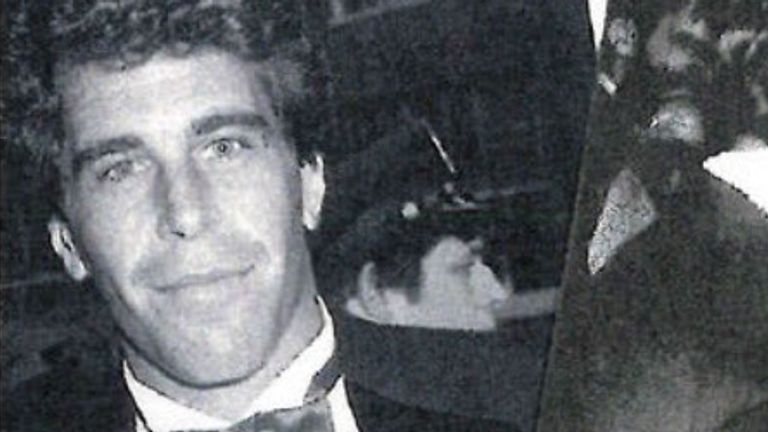
A picture of Jeffrey Epstein from his 50th birthday book

‘Epstein claimed if girls had started menstruating they were of age to have sex’
Virginia Giuffre revealed in her memoir that Epstein would say that criminalising sex with teenage girls was a cultural aberration. He would point to different US states having different ages of consent – in Florida it was 18. He claimed if girls had started menstruating they were biologically of age to have sex.
Documents released by the House Oversight Committee reveal he paid to “clean up” what came up about him on Google after his conviction. On 11 December 2010 he bemoaned that despite forking out thousands, “the google page is not good” in an email.
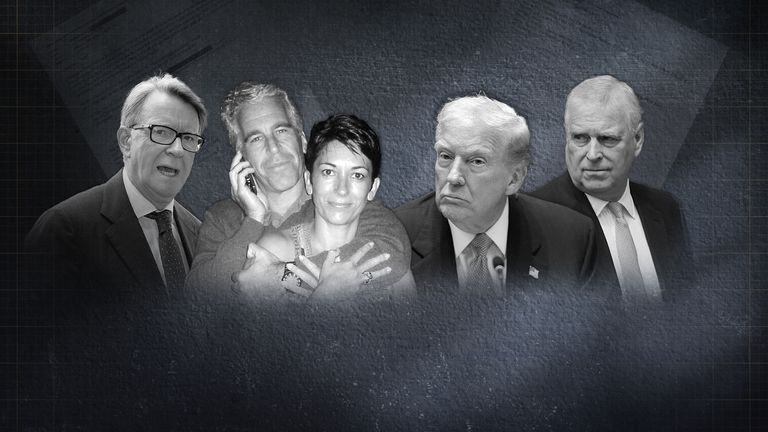
The Epstein files released last month: Sky’s US correspondent Mark Stone explains
‘An extraordinary volume’ of naked photos of young girls
On 6 July 2019, Epstein was arrested on federal charges related to sex trafficking after his private jet flew into the US from Paris.
“An extraordinary volume” of naked photos of young girls were found in his New York town house. Authorities also found a safe containing 48 loose diamonds, $70,000 (£52,000) in cash and three passports belonging to the sex offender. The expired Austrian passport had a photo of Epstein, but a different name and an address in Saudi Arabia.
👉 Follow Trump100 on your podcast app 👈
On 10 August 2019, Epstein was found dead in his New York prison cell while awaiting trial. Forty-eight hours before he died he signed a will which put his assets in a trust, the beneficiaries of which remain private.
Epstein’s most vocal victim, Ms Giuffre, who took her own life this year, closes her memoir Nobody’s Girl saying: “Epstein is dead but the attitude that allowed him to do what he did, it’s alive and well.”
Six years after his death, Epstein continues to haunt those who knew him. Some may be scared – for their reputation, careers and for what more could still come out.

Americans will be able to visit national parks for free on Donald Trump’s birthday next year, but will no longer be able to do so on Martin Luther King Jr Day or Juneteenth.
The Department of the Interior has released a list of what it calls “resident-only patriotic fee-free days” for next year.
Mr Trump‘s birthday, which falls on the Flag Day national holiday, has been added to the list, as has the Fourth of July weekend and President Theodore Roosevelt’s birthday.
However, Martin Luther King Day and Juneteenth have been removed. Juneteenth was recognised in 2021 under Joe Biden’s administration and commemorates the end of slavery in the US.
Also removed are the anniversary of the Great American Outdoors Act in August and the National Public Lands Day in September.
“President Trump’s leadership always puts American families first,” the US interior secretary Doug Burgum said.
“These policies ensure that US taxpayers, who already support the National Park System, continue to enjoy affordable access, while international visitors contribute their fair share to maintaining and improving our parks for future generations.”
Read more from Sky News:
White House: Europe ‘unrecognisable in 20 years or less’
Trump awarded FIFA peace prize at World Cup draw
The department said it was also introducing “America-first entry free policies”, which means US residents will continue to “enjoy affordable pricing” while international visitors “will pay a higher rate to help support the care and maintenance of America’s parks”.
It said the annual pass will cost $80 (£60) for US residents and $250 (£187) for nonresidents, with nonresidents without an annual pass paying a $100 (£75) per person fee to enter 11 of the most visited national parks, in addition to the standard entrance fee.
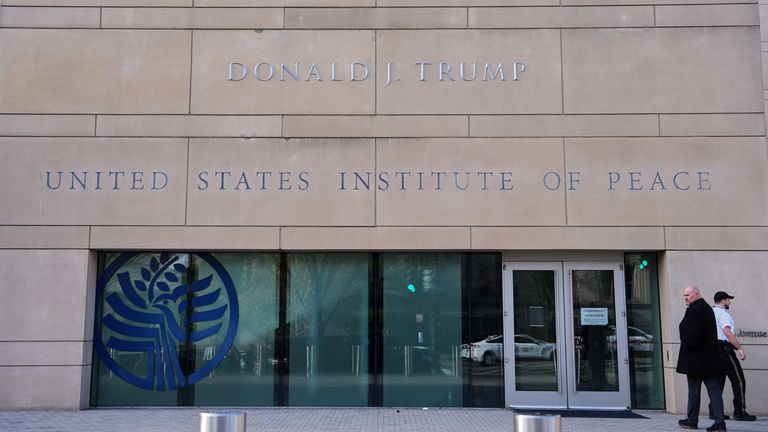
The US Institute of Peace. Pic: AP
Trump renames US Institute of Peace after himself
The decision to make his birthday a ‘free’ day comes after Mr Trump’s name was added to the sign on the headquarters building of the United States Institute of Peace in Washington DC.
The State Department shared a photo of the building’s new facade and called Mr Trump “the greatest dealmaker in our nation’s history”.
He has also unsuccessfully put himself forward for the Nobel Peace Prize, sought to put his name on the planned NFL stadium in Washington DC, and had a new children’s savings programme named after him.
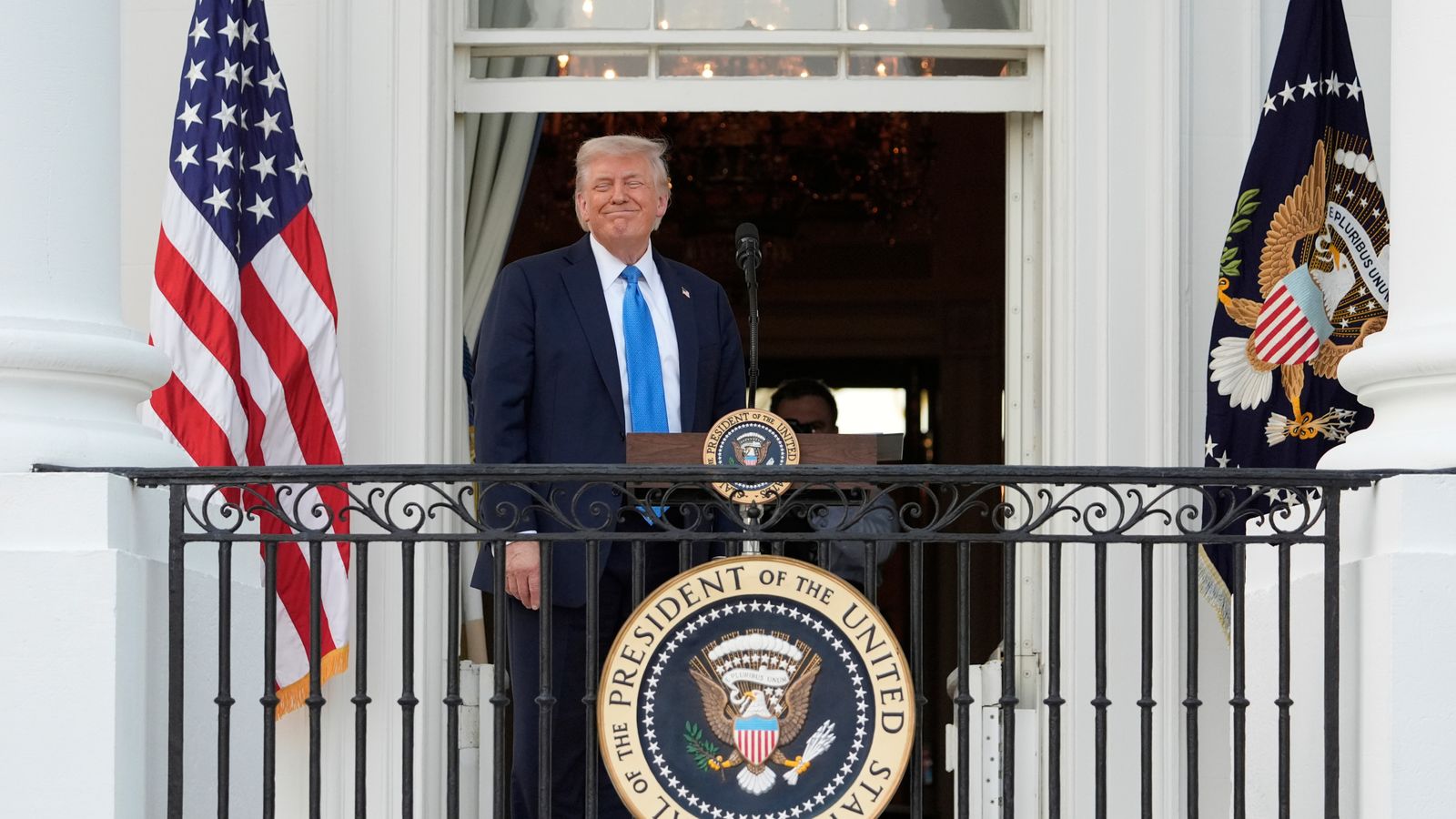
President Trump’s “America First” agenda has been spelt out in a new White House National Security Strategy that should make stark reading for allies and foes of the United States alike.
The new 33-page document outlines an upending of American foreign policy objectives and priorities which have stood largely unchanged through different administrations stretching back decades.
The document says American strategy went “astray” over many years. It seeks to reframe America’s strategic interests as being far narrower now than at any time in its modern history.
Among the key points, the document says:
• Europe faces “civilizational erasure” and could be “unrecognisable in 20 years or less”
• “Certain NATO members will become majority non-European” within a few decades
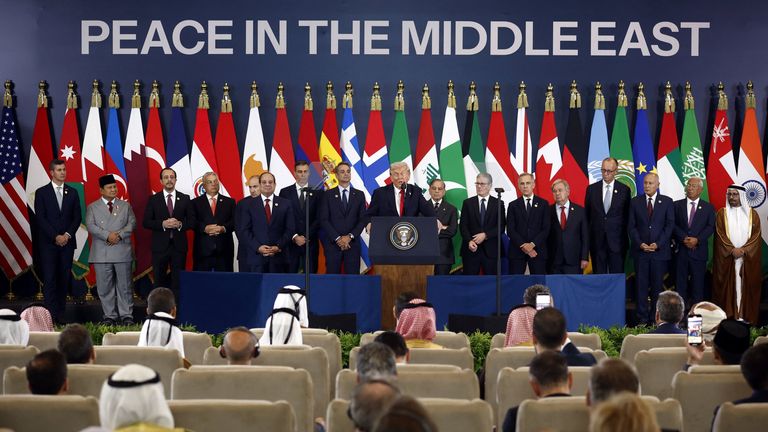
• America will “shift away” from the “burden” of the Middle East seeing it now as a “source and destination of international investment”
• In the Western hemisphere, America should pursue a policy of “enlist and expand… restoring American pre-eminence”
• In Africa, American policy focus should be on trade not “providing and spreading liberal ideology”
America will ‘shift away’ from the ‘burden’ of the Middle East. Pic: Reuters
In black-and-white, the text articulates a dramatic strategic shift which has been playing out at lightning speed over the past year.
The document underlines the end of the concept of America as an arbiter of the democratic rules-based order.
“American foreign policy elites convinced themselves that permanent American domination of the entire world was in the best interests of our country. Yet the affairs of other countries are our concern only if their activities directly threaten our interests,” the paper says.
Every US administration publishes at least one National Security Strategy during a presidential term.
The focus of this one is starkly different from that published by President Biden in 2022.
It’s also notably different from the document which President Trump published during his first term. His 2017 paper cast the world as a contest between “repressive regimes” and “free societies”.
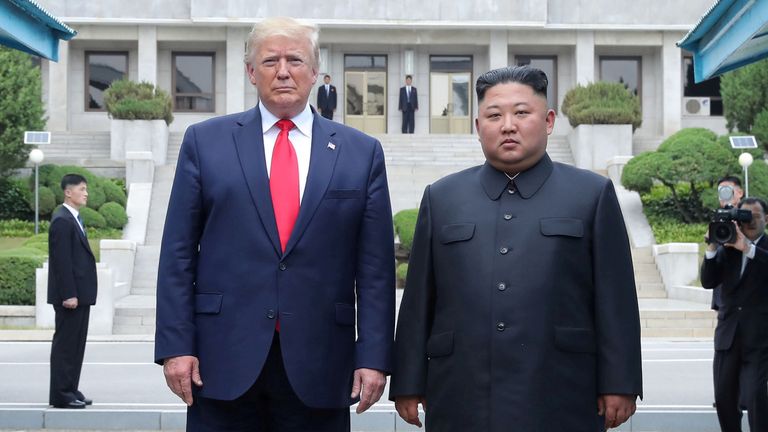
Trump doesn’t want the US to be the arbiter of the democratic rules-based order. Pic: Reuters
This new one places the necessity to do trade above the imposition of values.
“We seek good relations and peaceful commercial relations with the nations of the world without imposing on them democratic or other social change that differs widely from their traditions and histories.”
Mass migration and Europe
The new document is highly critical of mass migration.
It warns that uncontrolled migration is destroying the concept of nation states which could impact America’s strategic alliances and the countries it counts as reliable allies.
The paper is particularly critical of Europe, of the European Union as a concept and of individual European nations.
“Should present trends continue, the continent will be unrecognizable in 20 years or less,” the paper says.
It continues: “As such, it is far from obvious whether certain European countries will have economies and militaries strong enough to remain reliable allies.
“Many of these nations are currently doubling down on their present path. We want Europe to remain European, to regain its civilizational self-confidence, and to abandon its failed focus on regulatory suffocation.”
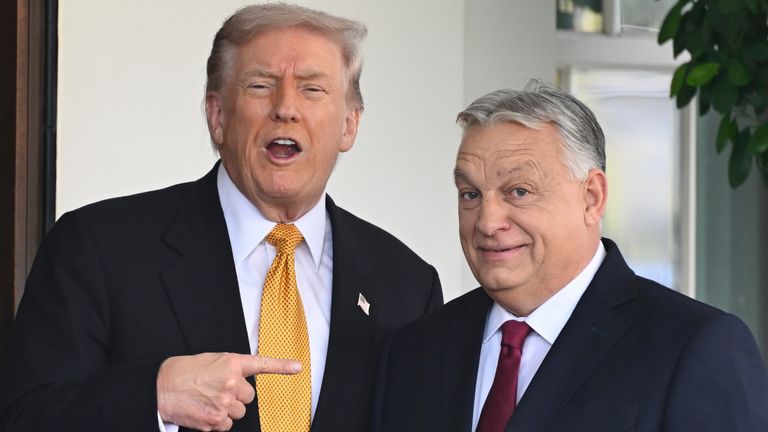
Trump will seek to support ‘patriotic European parties’. Pic: AP
The document’s language around the politics of governing parties across Europe is particularly stark.
Regarding Ukraine, the document says: “The Trump Administration finds itself at odds with European officials who hold unrealistic expectations for the war perched in unstable minority governments, many of which trample on basic principles of democracy to suppress opposition.
“A large European majority wants peace, yet that desire is not translated into policy, in large measure because of those government’s subversion of democratic processes.”
👉 Tap to follow Trump100 wherever you get your podcasts👈
The document outlines how his administration will seek to support “patriotic European parties”.
This is entirely in line with President Trump’s rhetoric but still represents a major departure from the longstanding principle of not interfering in the politics of allies.
It says: “American diplomacy should continue to stand up for genuine democracy, freedom of expression, and unapologetic celebrations of European nations’ individual character and history.
“America encourages its political allies in Europe to promote this revival of spirit, and the growing influence of patriotic European parties indeed gives cause for great optimism.”

Trump has at times had a fiery relationship with Ukraine’s President Zelenskyy. Pic: Reuters
Ukraine and Russia
On European-Russia relations, the document raises the prospect of war but curiously does not presume that such a conflict would involve America.
“Managing European relations with Russia will require significant US diplomatic engagement, both to reestablish conditions of strategic stability across the Eurasian landmass, and to mitigate the risk of conflict between Russia and European states.”
Read more from Sky News:
Germany introduces controversial military service law
Netflix agrees $72bn deal for Warner Bros studios
By contrast, President Biden’s National Security Strategy, published in 2022, underlined repeatedly the “iron-clad” commitment the United States had to Europe’s security.
Chinese risk and opportunity
The document presents Asia and the Indo-Pacific region as a source of opportunity for strategic and economic cooperation.

Maintaining US military strength over China is also outlined. Pic: Reuters
“President Trump is building alliances and strengthening partnerships in the Indo-Pacific that will be the bedrock of security and prosperity long into the future…”
And specifically on China, the paper presents a goal of “economic vitality” achieved through a balanced economic relationship between the two countries combined with an “ongoing focus on deterrence to prevent war”.
Deterrence would be achieved, it outlines, by maintaining preeminent military strength over China.
It says: “This combined approach can become a virtuous cycle as strong American deterrence opens up space for more disciplined economic action, while more disciplined economic action leads to greater American resources to sustain deterrence in the long term.”
Hemispheres of influence
In line with President Trump’s focus on spheres of influence, particular focus is given to the western hemisphere.
There are clear references to the impact of drugs from south and central America into the US and more subtle references to control of the arctic.
“The United States will reassert and enforce the Monroe Doctrine to restore American pre-eminence in the Western Hemisphere, and to protect our homeland and our access to key geographies throughout the region,” the paper says.
It continues: “We will deny non-Hemispheric competitors the ability to position forces or other threatening capabilities, or to own or control strategically vital assets, in our hemisphere.”
-
 Sports2 years ago
Story injured on diving stop, exits Red Sox game
-
 Sports3 years ago
‘Storybook stuff’: Inside the night Bryce Harper sent the Phillies to the World Series
-
 Sports2 years ago
Game 1 of WS least-watched in recorded history
-
 Sports3 years ago
Button battles heat exhaustion in NASCAR debut
-
 Sports3 years ago
MLB Rank 2023: Ranking baseball’s top 100 players
-
Sports4 years ago
Team Europe easily wins 4th straight Laver Cup
-
 Environment3 years ago
Japan and South Korea have a lot at stake in a free and open South China Sea
-
 Environment1 year ago
Here are the best electric bikes you can buy at every price level in October 2024